Understanding Termite Risks in Buford, GA
Common Termite Species in Georgia
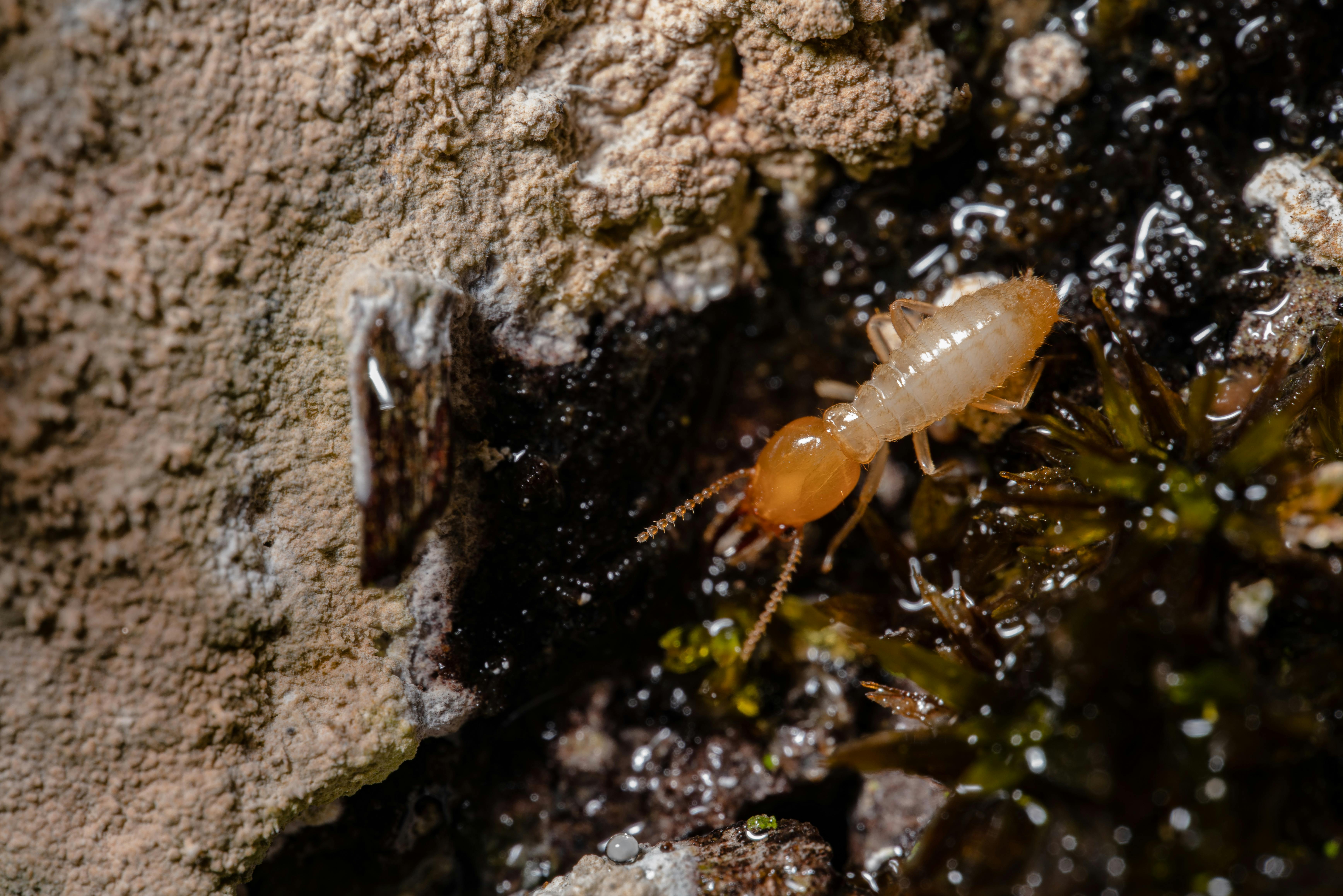
Georgia’s warm climate supports two primary termite culprits: the subterranean termite (Reticulitermes flavipes) and the drywood termite (Incisitermes minor). Subterranean termites build expansive colonies underground, sending thin, mud-lined tunnels up through concrete slabs and wooden foundations to reach wood above ground. Their diet consists of any cellulose-rich material, from structural beams to picture frames, which directly influences the termite control cost Buford homeowners may face if an infestation goes undetected. Drywood termites, by contrast, live entirely inside the wood they consume. They do not require soil contact, which makes them harder to detect until visible damage appears. Both species thrive on moisture, but subterranean termites are especially attracted to damp soil and leaky foundations.
Statewide Infestation Statistics
Termite activity isn’t a localized quirk—it’s a statewide challenge. According to the U.S. Environmental Protection Agency, termites cause an estimated $5 billion in property damage annually across the United States, with the southeastern states accounting for the largest share. The National Pest Management Association’s 2023 report confirms that Georgia ranks among the top three states for reported termite claims, with over 1.2 million residential infestations recorded in the past year alone. Complementing these figures, the Georgia Department of Agriculture lists termites as the leading pest affecting homes, noting a steady increase in reports during the humid months of May through September.
Typical Structural Damage and Cost Implications
Termites are often called “silent destroyers” because they work unnoticed until the damage becomes severe. A mature colony can chew through up to 2 inches of wood per year, compromising load‑bearing beams, floor joists, and roof trusses. Homeowners in Buford who discover a termite problem often face repair bills ranging from $3,000 to $15,000, depending on the extent of the damage and the need for structural reinforcement. Beyond monetary loss, weakened components pose safety hazards—sagging floors, cracked walls, and compromised roof integrity can lead to accidents and costly insurance claims. Early detection and preventive treatments are therefore far more economical than reactive repairs.
How Buford’s Climate and Soil Favor Termites
Buford sits in the foothills of the Blue Ridge Mountains, where average annual rainfall exceeds 50 inches and summer humidity regularly tops 70 percent. These conditions keep the soil consistently moist—an ideal environment for subterranean termites, which require a water source to survive. The region’s clay‑rich soils also retain moisture longer than sandy substrates, creating a stable underground habitat. Additionally, Buford’s mix of older homes with wooden foundations and newer constructions featuring crawl spaces provides ample entry points for both subterranean and drywood species. Seasonal temperature swings are mild enough that colonies can remain active year‑round, meaning the risk of infestation doesn’t pause with the cooler months.
How to Spot Early Signs of Termite Activity
Mud Tubes: The Termite Highway
Termites build tiny, pencil‑thin tunnels called mud tubes to travel between the soil and the wood they’re feeding on. In Buford’s humid climate these tubes are often found on the foundation, along exterior walls, and inside crawl spaces. Look for a smooth, earthen line that may be a few inches long or stretch across a whole wall. The tubes are usually darker than surrounding concrete and may have a slightly raised edge. If you see them, it’s a clear sign that a colony is already active nearby.
Wood Damage You Can Hear and See
Infested wood doesn’t always look rotten. Tap a piece of wood with a hammer or a screwdriver—healthy timber gives a solid “thud,” while termite‑eaten wood sounds hollow. Inside your home, watch for floorboards that feel spongy or begin to buckle under weight. Exterior siding or trim may develop blistered paint that lifts away from the surface; termites push moisture through the wood, causing paint to bubble and peel. These visual clues often appear before structural damage becomes obvious.
Swarmers: The Seasonal Warning Flag
In late spring and early summer, winged termites—known as swarmers—emerge from the colony to start new families. They look like small, brown‑gray flies with two equal‑sized wings that shed quickly after landing. Finding a cluster of discarded wings near a light fixture, window, or on the ground outside your home is a red flag that a mature colony exists somewhere in the property. In Georgia, the peak swarming window is typically mid‑April through early June.
DIY Visual Inspection: A Quick Homeowner Walk‑Through
- Start at the exterior: Walk around the house and examine the foundation for mud tubes or cracks where soil meets the wall.
- Check crawl spaces and basements: Lift any floorboards you can access and look for tunnels, damp wood, or discarded wings.
- Inspect wooden structures: Examine door frames, window sills, and deck posts for hollow sounds, blistered paint, or surface damage.
- Look for swarmers: Scan light fixtures, window sills, and outdoor porch railings during the swarming season.
- Document findings: Take photos of anything suspicious and note the location for a professional’s reference.
If you encounter more than one of these signs, or if the damage appears extensive, it’s time to call a licensed termite specialist. Professionals have the tools to confirm activity, locate hidden colonies, and recommend treatment options that protect your home.
Monthly Red‑Flag Checklist
- Visible mud tubes on foundation, walls, or crawl spaces.
- Hollow or spongy sounding wood when tapped.
- Blistered, bubbling, or peeling paint on wooden surfaces.
- Floorboards that feel soft, flex, or show buckling.
- Clusters of discarded wings or live swarmers near lights.
- Unexplained moisture or water stains on wood.
Keeping this checklist handy and scanning your property once a month can catch a termite problem early, saving you thousands in repair costs. When in doubt, reach out to Anthem Pest Control—our local experts in Buford can perform a thorough inspection and recommend the most cost‑effective, safe solution for your home.
Seasonal Patterns of Termite and Other Pests in Buford
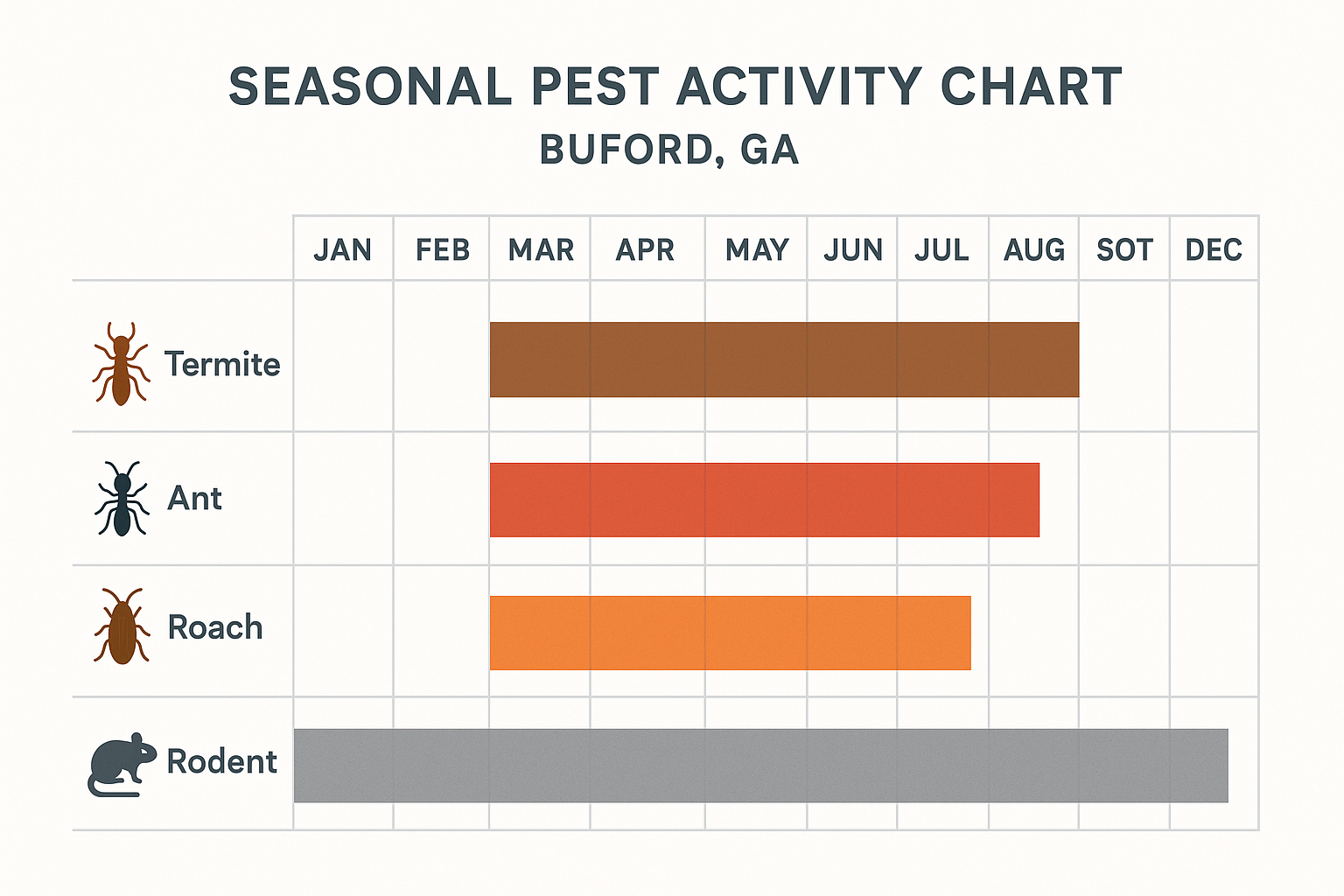
Understanding when pests are most active helps you plan inspections and treatments before damage takes hold. In Buford, the climate creates distinct peaks for termites, ants, roaches, and rodents. The chart above highlights those high‑risk months, giving you a visual roadmap for a proactive pest‑management calendar.
Peak Activity by Month
| Pest | Peak Months | Activity Level (Low‑Medium‑High) |
|---|---|---|
| Termites | April – October | High |
| Carpenter Ants | May – September | Medium‑High |
| German Cockroaches | June – August | Medium |
| Rodents (Rats & Mice) | September – February | High (Fall/Winter) |
Why Termites Thrive Late Spring Through Early Fall
Termites are cold‑blooded insects, so their activity spikes when soil temperatures rise above 55 °F (13 °C). In Buford, that threshold is typically reached in late April and stays favorable through early October. Warm temperatures accelerate the colony’s metabolism, while summer rains increase soil moisture—both essential for termites as they need water to travel and feed.
Weather’s Direct Influence on Foraging Behavior
Moisture is the hidden driver behind termite foraging. After a series of rain showers, the ground softens, allowing subterranean colonies to extend mud tubes toward wooden foundations. Conversely, a dry spell forces termites to dig deeper, often bringing them into direct contact with your home’s crawl space. The combination of 70‑90 °F daytime highs and 50‑70 % relative humidity creates the perfect corridor for workers to scout for food.
Optimal Inspection Windows
For homeowners, the smartest times to schedule a professional inspection are early spring (mid‑March to early April) and late summer (late August to early September). In early spring, technicians can catch colonies before they expand, making spot treatments more effective and less costly. Late summer inspections are valuable because termites have already been active for months, revealing any hidden damage that may have gone unnoticed during the peak season.
How Seasonal Trends Shape Treatment Choices
When you book a service during the high‑activity window, we often recommend a liquid termiticide barrier combined with bait stations. The barrier protects the foundation while the bait targets foraging workers that are out in full force. In contrast, a winter inspection—when termite activity is low—might favor a more focused bait‑only approach, since the colony’s movement is limited and the bait can be placed directly in active tunnels.
Treatment Options and Cost Comparison for Buford Homeowners
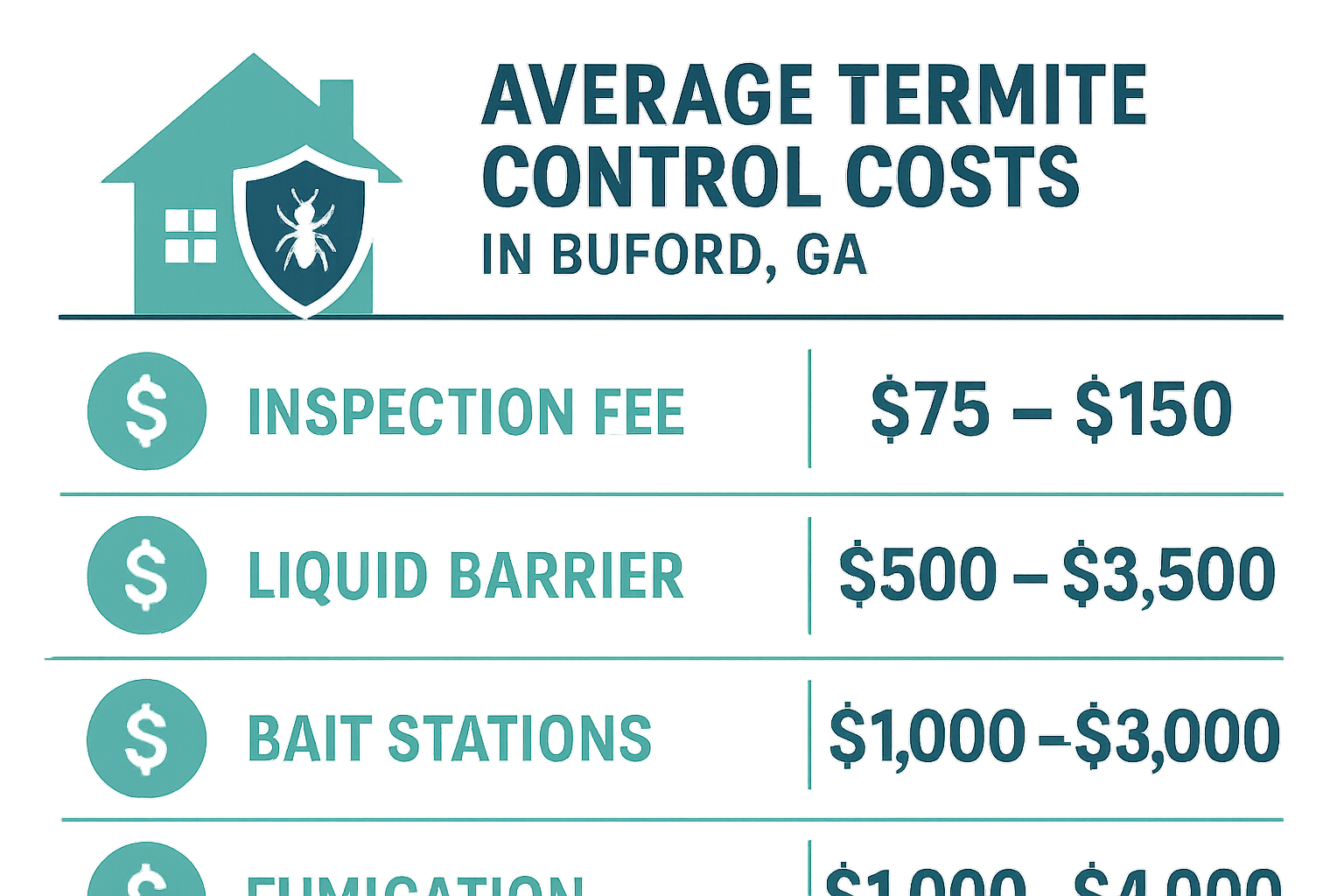
Choosing the right termite solution in Buford isn’t just about stopping an infestation—it’s about fitting a plan to your home’s structure, budget, and the severity of the problem. Understanding the termite control cost Buford homeowners typically encounter helps set realistic expectations before treatment begins. Below, we break down the four most common treatments, what each includes, and the price ranges you can expect from a reputable provider like Anthem Pest Control.
Inspection Fee: What It Covers and Typical Cost Range
Before any work begins, a certified technician conducts a thorough inspection. This service includes:
- Visual examination of interior and exterior wood components.
- Moisture meter readings to spot hidden damage.
- Identification of active colonies, mud tubes, and potential entry points.
- A written report with treatment recommendations.
In Buford, most companies charge an inspection fee between $80 and $150. Many providers waive this fee when you schedule a full treatment, so ask your technician about bundled pricing.
Liquid Barrier Treatments
Liquid termiticides create a chemical moat around or beneath your home, preventing termites from crossing into the structure. The product is applied to the soil, crawl spaces, and foundation walls using a spray or injection system.
Pros: Immediate protection, long‑lasting (often 5‑10 years), works against both subterranean and dry‑wood species. Cons: Requires professional equipment, may need re‑application after major landscaping changes.
Average cost for a full‑home liquid barrier in the Buford area runs from $1,200 to $2,500, depending on square footage and soil conditions.
Bait Station Systems
Bait stations are placed strategically around the property—usually 5‑10 stations for an average home. Each station contains cellulose material infused with a slow‑acting insecticide that termites share with the colony.
Placement strategy: Stations are positioned near known entry points, along foundation walls, and in shady, moist areas where termites travel. Technicians monitor stations every 3‑6 months, replacing or adjusting baits as needed.
Cost considerations: Installation typically costs $500‑$900, with ongoing monitoring fees of $100‑$150 per visit. The system’s advantage is its adaptability; if a colony shifts, the bait can be moved without re‑treating the entire perimeter.
Fumigation (Tenting)
Fumigation, or tenting, is reserved for severe infestations where termites have colonized large sections of the structure. The entire house is sealed under a gas‑tight tarp, and a vapor—usually sulfuryl fluoride—is released to penetrate wood, killing termites at all life stages.
When necessary: Extensive dry‑wood damage, active colonies in multiple rooms, or when other methods have failed.
Price brackets for a typical 2,000‑sq‑ft home in Buford range from $3,500 to $6,000. The cost reflects labor, tent rental, gas, and post‑treatment ventilation.
Quick Comparison Table
| Method | Effectiveness | Duration | Price Range (USD) |
|---|---|---|---|
| Inspection Only | Diagnostic only | N/A | $80‑$150 |
| Liquid Barrier | High (prevents entry) | 5‑10 years | $1,200‑$2,500 |
| Bait Station System | Medium‑High (colony elimination) | 3‑5 years (with monitoring) | $500‑$900 (install) + $100‑$150/visit |
| Fumigation (Tenting) | Very High (eradicates existing colony) | 1‑2 years (post‑treatment) | $3,500‑$6,000 |
While the numbers give you a baseline, the most cost‑effective plan is rarely a one‑size‑fits‑all. A small, well‑sealed ranch‑style home with minimal moisture may thrive on a liquid barrier plus annual monitoring. Conversely, a larger historic property with existing dry‑wood damage might need bait stations for ongoing control and a targeted fumigation to wipe out a deep‑seated colony.
Anthem Pest Control tailors every proposal to the property type, infestation level, and the homeowner’s long‑term goals. By combining a precise inspection with the right mix of treatments, you protect your investment without paying for unnecessary services.
Professional Smoke Treatments and Choosing a Reliable Provider
Smoke, also called fog or vapor, has become a go‑to tool for termite specialists who need to reach the hidden tunnels and voids that traditional liquid sprays often miss. A handheld fogger or a motor‑driven fog‑machine creates a dense cloud of microscopic droplets that can slip through the tiniest cracks, travel along mud tubes, and saturate the interior of galleries without the mess of a wet spray. Because the droplets are so fine, they settle quickly, delivering an even dose of termiticide directly to the pest’s refuge.
Why Homeowners Favor Smoke Applications
- Rapid knock‑down: The fog penetrates deep into active colonies, causing immediate disorientation and mortality.
- Lower chemical residues: Since the treatment is applied as a vapor, there’s little standing liquid left on surfaces, reducing the risk of surface staining or lingering odors.
- Ideal for outdoor perimeters: Fog can be directed around foundation walls, crawl‑space vents, and landscape beds where termites often enter the home.
Safety Protocols and Technician Certification
Professional pest‑control firms must follow strict safety standards when handling foggers. Technicians are required to hold a valid Georgia pesticide applicator license, complete continuing‑education courses on fog technology, and wear personal protective equipment (gloves, respirators, and eye protection) during application. The termiticide used in fog treatments is EPA‑registered, and the concentration is calibrated to be effective yet safe for occupants and pets when the area is vacated for the recommended re‑entry time.
What to Expect During a Smoke Treatment Visit
- Pre‑treatment preparation: The technician will ask you to clear the immediate work area—move outdoor furniture, trim low vegetation, and ensure pets and children stay indoors.
- Equipment deployment: A portable fogger is positioned near the foundation or in the crawl space. The device releases a controlled plume that drifts into cracks, voids, and termite tunnels.
- Post‑treatment follow‑up: After the fog dissipates, the technician conducts a visual inspection, provides a written report, and schedules a re‑inspection to confirm colony elimination.
Key Factors When Selecting a Pest‑Control Partner
- Licensing and certification: Verify the company holds a Georgia state pesticide license and that its technicians are certified in fog applications.
- Local experience: Firms that have served Buford for several years understand the specific termite species and seasonal patterns in the area.
- Transparent pricing: Look for detailed estimates that break down equipment costs, labor, and any follow‑up visits—no hidden fees.
- Customer reviews: Check online testimonials and ask for references; consistent five‑star feedback on punctuality and effectiveness is a good sign.
- Guarantee and after‑care: A solid warranty that includes a free re‑treatment if termites reappear within a set period shows confidence in the work.
Anthem Pest Control: Your Buford Smoke‑Treatment Specialist
At Anthem Pest Control, our certified technicians use state‑of‑the‑art foggers to deliver a precise, low‑residue termiticide treatment that targets colonies where they hide. Because we’ve serviced homes throughout Buford for over a decade, we know the local soil composition, common entry points, and the best times of year to apply fog for maximum impact. Our pricing is upfront, our service schedule is flexible, and we back every smoke treatment with a satisfaction guarantee.

Protect Your Home with Anthem Pest Control Today
Early detection, timing the treatment to the season, and applying the right method are the three pillars that keep termites from turning a sturdy Buford home into a costly repair project. Spotting activity before the colony spreads gives you a price‑advantage, scheduling treatment in spring or early summer hits the insects when they’re most active, and using a proven, EPA‑registered product ensures the infestation is eliminated, not just masked.
Anthem Pest Control brings that exact formula to every Buford residence, combining locally‑trained technicians with a safety‑first approach. Our treatments are tailored to the construction style and soil conditions of your neighborhood, so you receive a solution that is both effective against subterranean and dry‑wood termites and gentle on pets and family members. Because we believe transparency matters, you’ll receive a detailed, upfront quote—no hidden fees, no surprise add‑ons. Pricing starts as low as $199 for a comprehensive termite barrier, and we work with most major insurers for added savings.
Take the first step toward peace of mind by scheduling a free, no‑obligation inspection. Our experts will walk your property, identify any early signs of activity, and present a clear, written estimate so you can decide with confidence. During the visit we’ll examine foundation cracks, moisture‑prone areas, and wood‑to‑soil contact points—common hotspots where termites gain entry.
For immediate assistance, call us today at 877-371-8196. Our friendly team is ready to answer questions, book your inspection, and get your home protected before the next termite season begins. We proudly serve the entire Buford metro area, including surrounding neighborhoods such as Dacula, Braselton, and Oakwood.
Protect your Buford home now—visit Anthem Pest Control and claim your free inspection to get a clear breakdown of your termite control cost Buford homeowners can expect. Your protection is just a click away.