Understanding Moth Infestations in the Home
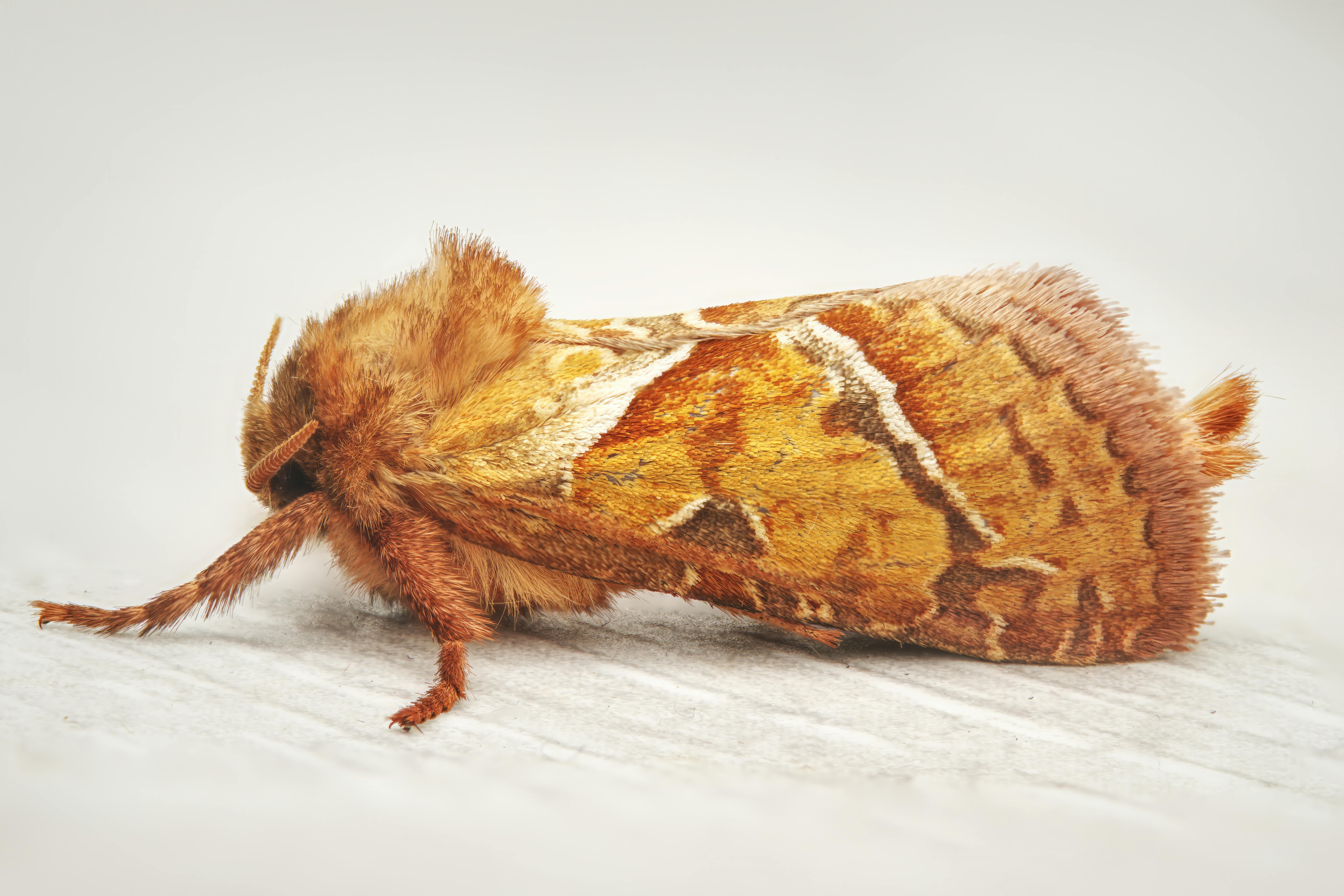
When you hear the soft flutter of wings in a closet or find silvery threads in your pantry, it’s a clear sign that moths have moved from a harmless visitor to a costly pest. Knowing which species you’re dealing with, how they live, and where they love to hide is the first step toward a lasting solution.
Common Indoor Moth Species
- Clothes moths (e.g., Webbing and Case moths) – target wool, silk, and other natural fibers.
- Pantry moths (e.g., Indian meal moth) – infest stored grains, cereals, nuts, and dried fruit.
- Carpet moths (e.g., Carpet moth) – prefer wool‑rich carpets, rugs, and upholstery.
Life Cycle and Why Larvae Matter
A moth’s life unfolds in four stages: egg, larva, pupa, and adult. While the adult flies around looking innocuous, the real damage happens during the larval phase. Tiny, hair‑like caterpillars chew through fibers, grain kernels, and even paper, leaving behind irregular holes, webbing, and a lingering odor. A single female can lay up to 200 eggs, meaning an infestation can explode before you even notice the first adult.
Where Moths Slip Inside
Understanding entry points helps you block their path. Typical habitats include:
- Wardrobes and dresser drawers where natural fabrics are stored.
- Pantry shelves, especially in cardboard boxes or loosely sealed containers.
- Carpets, rugs, and upholstered furniture that retain moisture.
- Air vents and HVAC ducts that move warm, humid air throughout the house.
What Draws Them In
Moths are instinctively drawn to two things: food and shelter. Pantry moths sniff out sugars and starches, while clothes and carpet moths seek out keratin and animal‑derived fibers. Warm, humid environments accelerate their development, which is why basements, attics, and poorly ventilated rooms become hotspots.
Did you know? In the United States, moths cause an estimated $2 billion in damage to homes and stored goods each year. A single pantry moth infestation can ruin up to 50 pounds of food, and a clothes moth colony can destroy a full‑size wool coat in just a few months.
Spotting the Signs – How to Identify a Moth Problem Early
Even a single moth sighting can signal a larger problem brewing behind your walls. By learning the visual and behavioral clues that moths leave behind, you can catch an infestation before it damages clothing, food, or upholstery.
Physical signs to look for
Moth activity leaves unmistakable evidence:
- Webbing and silk threads – thin, silvery strands in closet corners, under drawers, or along pantry shelves.
- Cocoons or larval cases – small, oval packets that feel like tiny beads, often hidden in garment seams or stored grain.
- Adult moths – flutter at night or rest on light fixtures; many species are attracted to indoor lighting.
- Larval tunnels – tiny, sand‑like frass trails left as larvae chew through fabric or dried goods.
Damage clues
When moths start feeding, the damage becomes obvious:
- Irregular holes or “cheese‑like” nibbles in wool, silk, or cashmere garments.
- Webbing mixed with food debris in pantry items such as cereal, flour, or dried fruit.
- Faded or spotted patches on carpets and rugs where larvae have burrowed.
Behavioral clues
Unlike many pests, moths reveal themselves through movement:
- Increased activity near lamps, especially after dusk – moths use light as a navigation aid.
- Seasonal spikes: late summer and early fall are prime time for pantry moths, while clothing moths peak in cooler months when wardrobes are stored.
Inspecting high‑risk areas
Focus your quick walk‑through on the spots moths love most:
- Closets and wardrobes – pull garments apart, check seams, and examine stored blankets.
- Pantry and kitchen cabinets – empty boxes, look for webbing in corners, and shake dry goods.
- Attic and crawl spaces – these dry, undisturbed zones can harbor cocoons.
- HVAC vents – moths may use ductwork to travel between rooms.
Quick‑inspection checklist
- Turn on a bright light and scan for flying adults.
- Run a hand over fabrics; feel for silky cocoons.
- Open pantry packages; look for webbing or frass.
- Check corners of closets, under shelves, and behind baseboards.
- Note any seasonal increase in sightings and record the locations.
Use this checklist during a routine sweep. Spotting any sign calls for a professional assessment – Anthem Pest Control will confirm the species and recommend an effective, affordable treatment.
Treatment Options – DIY Traps, Heat Treatment, and Professional Services

DIY Pheromone Traps
Homeowners often start with pheromone traps because they’re inexpensive and easy to set up. These traps release a synthetic scent that mimics the moth’s mating signal, luring adults into a sticky surface or a collection cup. For best results, place traps near windows, closets, and pantry corners where moths are most active. Keep them at eye level—about 4 to 6 feet off the floor—to intersect the flight path of adult moths.
- Effectiveness: Traps can reduce adult populations by 30‑50 % when used consistently for 4‑6 weeks.
- Limitations: They don’t eradicate larvae hidden in fabrics or food storage, and a single trap can’t handle heavy infestations.
- Maintenance: Replace the pheromone cartridge every 2‑3 months and clean the sticky surface to maintain attraction.
Heat Treatment Basics
Heat treatment works by raising the ambient temperature in an affected area to a level lethal for all life stages of moths—typically 120 °F (49 °C) sustained for at least 30 minutes. Portable heat chambers or industrial‑grade heaters can be used for closets, attics, or entire rooms. Safety is paramount: always monitor temperature with calibrated sensors, keep flammable items out of the heated zone, and ensure proper ventilation to avoid overheating.
- Equipment needed: Electric or propane heaters, temperature probes, and insulated barriers.
- Pros: Kills eggs, larvae, and adults in one pass without chemicals.
- Cons: Requires professional‑grade gear, can be time‑consuming, and may not be suitable for delicate items that can’t withstand high heat.
Professional Extermination
When the infestation surpasses a DIY threshold, a licensed technician conducts a thorough inspection. The process begins with identifying breeding sites—often hidden in seams of carpets, under appliances, or in stored clothing. Targeted sprays, typically low‑toxicity insect growth regulators (IGRs) combined with a residual insecticide, are applied directly to cracks, crevices, and infested materials.
Most reputable firms, including Anthem Pest Control, follow an Integrated Pest Management (IPM) approach. IPM blends chemical treatments with cultural controls such as vacuuming, laundering, and sealing entry points, reducing reliance on pesticides and minimizing risk to residents and pets.
DIY vs. Professional: How to Decide
Consider the following factors before choosing a method:
- Severity: Light sightings (1‑2 moths) → DIY traps may suffice. Moderate to heavy activity (multiple moths, visible larvae) → professional help.
- Location: Small, isolated spaces (wardrobes) are ideal for traps. Large, hard‑to‑reach areas (attic, HVAC ducts) often need heat or spray treatments.
- Homeowner comfort: If you’re uneasy handling chemicals or heat equipment, a certified exterminator provides peace of mind and liability coverage.
Real‑World Example
Jane, a homeowner in Buford, first installed two pheromone traps in her master closet. After three weeks she noticed a steady decline, but a sudden surge of larvae in stored sweaters forced her to call Anthem Pest Control. The technician performed a detailed inspection, applied a targeted IGR spray, and recommended a short heat treatment for the attic where moths were nesting. Within ten days, Jane’s moth problem was eliminated, and she now follows a quarterly preventive plan to keep the insects at bay.
Cost Comparison – Moth Control Pricing Infographic
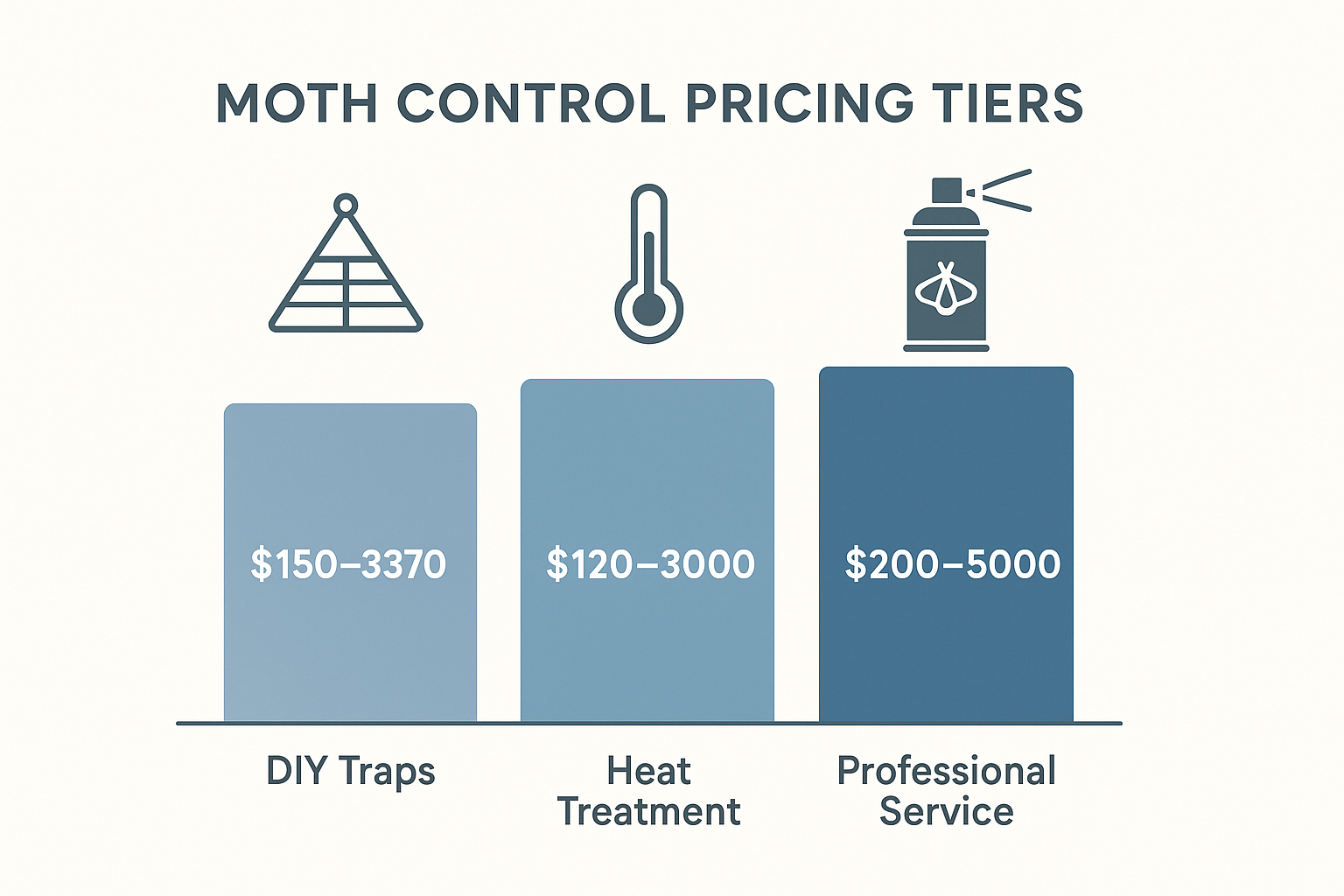
Understanding the price landscape makes it easier to budget for a moth‑free home. Below is a quick visual guide that breaks down the three most common treatment tiers: DIY traps, heat treatment, and full‑service professional solutions.
Pricing tiers at a glance
- DIY traps: $150 – $370 – Ideal for homeowners who prefer a hands‑on approach and have a modest infestation.
- Heat treatment: $120 – $300 – A chemical‑free option that targets larvae hidden in fabrics, carpets, and insulation.
- Professional services: $200 – $500 – Comprehensive inspection, treatment, and follow‑up from certified technicians.
These ranges aren’t set in stone. Several factors can push the final bill up or down:
- Home size: Larger square footage means more product and labor.
- Infestation severity: A light presence may only need a few traps, while a heavy outbreak often requires heat or professional intervention.
- Geographic location: Buford’s local market rates and seasonal demand influence pricing.
Our numbers align with industry research from HomeAdvisor’s moth extermination cost guide, which provides a reliable benchmark for homeowners across the United States.
Quick tip: When you call local providers, ask for a detailed, written estimate that lists the treatment method, number of visits, and any warranty or follow‑up services. Comparing at least three quotes will give you a clear picture of the true market rate in Buford.
Seasonal Activity and Timing – When to Treat Your Home
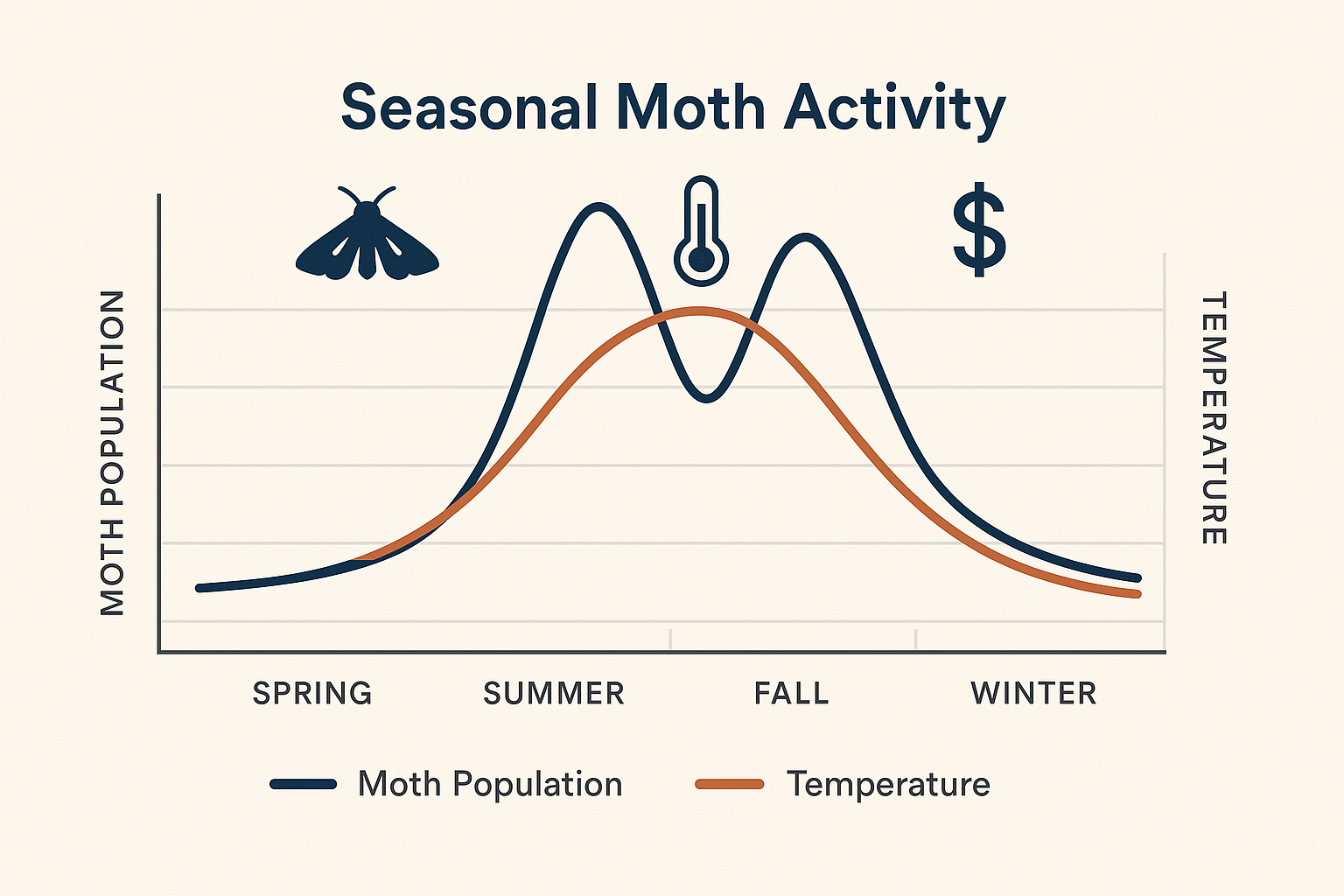
In Buford, Georgia, moths don’t stay dormant all year. Their numbers rise and fall with the weather, creating distinct peaks that signal the best moments to intervene. The chart above shows three clear activity windows:
- Early Spring (March‑April): Adult moths emerge from overwintering sites, and females begin laying eggs.
- Mid‑Summer (June‑July): Larvae are actively feeding on fabrics, stored grains, and pantry items, driving the highest infestation reports.
- Early Fall (September‑October): A second wave of adults seeks shelter for the winter, often invading attics and closets.
Temperature’s Role in the Life Cycle
Moth development is temperature‑dependent. When daily highs consistently sit above 70°F (21°C), eggs hatch faster, and larvae mature in weeks instead of months. Conversely, a sudden cold snap can stall growth, giving homeowners a brief reprieve but also encouraging moths to seek indoor warmth and humidity.
Optimal Treatment Windows
- DIY Traps & Preventive Sprays – Early Spring: Deploy pheromone traps and apply low‑toxicity sprays to closets before the first generation lays eggs.
- Heat Treatment – Mid‑Summer: Professional heat‑treatment units raise ambient temperature to 120‑130°F (49‑54°C), killing larvae hidden in carpets, upholstery, and stored foods.
- Year‑Round Monitoring – Professional Services: Schedule quarterly inspections so technicians can spot early infestations, adjust humidity controls, and apply targeted baits when needed.
Weather, Humidity, and Indoor Attraction
Warm, moist air is a magnet for moths. Summer thunderstorms raise indoor humidity, softening natural fibers and encouraging larvae to feed. Using dehumidifiers, fixing leaks, and ensuring proper ventilation can dramatically reduce the allure of your home.
Seasonal Maintenance Checklist
| Season | Key Tasks |
|---|---|
| Spring | Inspect closets, replace worn fabrics, set pheromone traps, run a light cleaning cycle on stored garments. |
| Summer | Monitor humidity, use dehumidifiers, schedule professional heat treatment if larvae are detected. |
| Fall | Seal cracks around windows/doors, store seasonal clothing in airtight containers, perform a final trap check before winter. |
| Winter | Maintain low indoor humidity, keep lights off in storage areas, schedule an annual professional inspection. |
By syncing your moth‑control actions with these seasonal patterns, you’ll cut down on unnecessary pesticide use, lower overall costs, and keep your home comfortable year‑round.
Protect Your Home with Anthem Pest Control – Get a Free Quote Today
Early detection is the cornerstone of any successful moth control strategy. Spotting the first signs—such as webbing, damaged fabrics, or a sudden increase in adult activity—gives you a window to intervene before an infestation spreads to structural wood or stored goods. Pairing that vigilance with the right treatment method—whether a targeted bait, a spot‑on spray, or an integrated prevention plan—keeps damage costs low and peace of mind high.
Anthem Pest Control brings that exact level of precision to every moth job. Our technicians are trained to identify the species—clothes moth, pantry moth, or carpet moth—and to select the safest, most effective product for your home’s layout and family’s health. Because we believe pricing should never be a surprise, each quote breaks down labor, materials, and follow‑up visits so you know exactly what you’re paying for.
What sets Anthem apart is our nationwide reach backed by locally certified technicians. No matter if you’re in a suburban Buford home or a rural property on the city’s edge, our network can dispatch a specialist within 24 hours. Every service is backed by a satisfaction guarantee—if the moths return within the warranty period, we’ll retreat at no extra charge, reinforcing our commitment to lasting results.
Ready to protect your home before moths become a costly problem? Request a free, no‑obligation quote today and let our experts design a plan that fits your budget and schedule. Call us now at 877-371-8196 or visit Anthem Pest Control to get started. Our friendly team is standing by to answer questions, schedule an inspection, and give you the confidence that your home is moth‑free.