Understanding Moth Problems in Druid Hills, Georgia
Pantry Moths vs. Carpet and Clothing Moths
When you hear “moth” in a Druid Hills home, two very different culprits are usually at work. Pantry moths, most commonly the Indian meal moth (Plodia interpunctella), infest dry goods such as grains, cereals, nuts, and pet food. Their larvae spin silken tunnels that look like webbing inside packages, contaminating food and making it unsafe to eat. In contrast, carpet and clothing moths—especially the webbing clothes moth (Tineola bisselliella)—target natural fibers like wool, silk, and cashmere. Their larvae feed on the keratin in fabrics, leaving behind irregular holes, a fine powdery frass, and a faint, unpleasant odor.
Climate Factors That Favor Moth Activity in Druid Hills
Druid Hills experiences warm, humid summers and relatively mild winters—conditions that create an ideal breeding ground for moths year‑round. Temperatures consistently between 70°F and 85°F accelerate egg development, while humidity above 60 % prevents larvae from desiccating. Even the short, cool spells in winter rarely drop low enough to halt a moth life cycle, allowing populations to rebound quickly when spring arrives. This climate edge means that a single unnoticed infestation can multiply before you even notice the first sign.
Typical Damage You Might See
- Fabric weakening: Moth larvae chew tiny, irregular holes in sweaters, curtains, and upholstered furniture, eventually compromising structural integrity.
- Food contamination: Pantry moth larvae leave behind silky webs, fecal pellets, and shed skins that render stored foods inedible and attract other pests.
- Secondary infestations: The organic debris left by moth larvae can attract beetles, ants, and even rodents, turning a simple moth problem into a broader pest issue.
Local Statistics and Community Complaints
Recent data from the Georgia Department of Agriculture and local pest‑reporting platforms show a steady rise in moth‑related calls throughout the Atlanta metro area. In 2023, the region logged over 1,200 confirmed moth infestations, with Druid Hills accounting for roughly 8 % of those reports—an outsized share given the neighborhood’s size. Homeowners cite “unexplained holes in clothing” and “webby food packages” as the most common complaints, underscoring how quickly a minor issue can become a visible nuisance.
Why Proactive Control Matters
Understanding the species involved and the local climate helps you act before damage spreads. Early detection—such as checking pantry items for webbing or inspecting closets for fine, silvery threads—allows a targeted treatment that’s far less invasive and more cost‑effective than a full‑scale eradication after the infestation has taken hold. By partnering with a local expert who knows Druid Hills’ micro‑climate, you can implement preventive measures like proper food storage, regular vacuuming of closets, and strategic pheromone traps.
For a deeper dive into regional pest trends and specific moth‑control recommendations, visit the Anthem Pest regional data page. Our team is ready to tailor a plan that protects both your wardrobe and your pantry, keeping Druid Hills homes comfortable and moth‑free.
Spotting Early Signs of a Moth Infestation
Before a moth problem turns into a costly repair, the first line of defense is noticing the subtle clues they leave behind. In Druid Hills homes, moths often hide in the very places we store our most cherished belongings—closets, wardrobes, and pantry shelves. By learning the visual cues and adopting a systematic inspection routine, you can catch an infestation while it’s still manageable and avoid expensive treatments later.

Common Warning Signs in Closets and Wardrobes
Clothing and fabric storage areas are moth hot spots because the larvae feed on natural fibers such as wool, silk, and cashmere. Keep an eye out for the following tell‑tale signs:
- Silken tubes or webs draped across garment hangers, seams, or the interior of drawers.
- Small, cigar‑shaped cocoons that may appear as pale, ivory beads tucked into folds or pockets.
- Tiny holes in fabrics, often just a millimeter wide, that look like pinpricks but can quickly enlarge as larvae grow.
- Visible larvae—caterpillars that are creamy‑white to light brown, sometimes with a dark head capsule.
Pantry Clues
While many associate moths with clothing, pantry moths (often called Indian meal moths) thrive in stored dry goods. The following indicators suggest a hidden infestation in your kitchen:
- Fine webbing lining the inside of grain containers, flour bags, or spice jars.
- Live larvae crawling on the surface of flour, cornmeal, or rice; they resemble tiny, translucent worms.
- Foul, musty odor emanating from opened packages—this is a by‑product of larval secretions and mold growth.
- Empty husks or shed skins near the opening of containers, a sign that moths are completing their life cycle.
Step‑by‑Step Homeowner Inspection Checklist
Armed with a flashlight and a systematic approach, you can scan your home quickly and efficiently. Follow these steps:
- Clear the area: Remove all clothing, linens, or pantry items from the space you’re inspecting.
- Illuminate: Use a bright flashlight to highlight silken threads and tiny holes that are hard to see in ambient light.
- Shake and sift: Gently shake garments and sift through dry goods. Watch for larvae that fall out or for debris that clings to the material.
- Inspect seams and folds: Pay special attention to seams, cuffs, and hidden pockets where larvae love to hide.
- Record findings: Note the locations, types of damage, and any live insects. This information speeds up professional treatment if you need it.
- Return items: After inspection, place cleaned and inspected items back, using airtight containers for pantry goods and garment bags for vulnerable clothing.
How to Differentiate Moth Damage from Other Pests
Not all holes or webbing mean you have moths. Here’s a quick comparison to avoid false alarms:
| Pest | Typical Damage | Visible Signs |
|---|---|---|
| Clothes moths | Irregular holes in natural fibers | Silken tubes, cocoons, creamy larvae |
| Carpet beetles | Round, punched‑out holes in wool or fur | Adult beetles, dark specks of frass |
| Silverfish | Chewed edges on paper, cardboard, or fabrics | Fast‑moving, fish‑shaped insects; yellowish scales |
Why Early Detection Saves Money
Finding moth activity at the first sign—whether it’s a single silken strand or a handful of larvae—means you can intervene with targeted, low‑cost measures such as thorough cleaning, airtight storage, and localized treatments. Once the population spreads, you’ll need larger‑scale chemical applications, professional fumigation, or even replacement of damaged items, all of which drive up the bill. Prompt action not only protects your belongings but also preserves your budget.
Effective Treatment Options for Homeowners

Non‑chemical Approaches
When moths first appear, the simplest weapons are often the most effective. Start by vacuuming carpets, baseboards, and closets. The suction removes both adult moths and the larvae hidden in fabric fibers. Follow up by discarding the vacuum bag or emptying the canister outdoors to prevent re‑infestation.
For isolated items—such as a sweater or a box of stored linens—freezing works wonders. Seal the item in a plastic bag and place it in a freezer set to 0 °F (‑18 °C) for at least 72 hours. The extreme cold kills all life stages without damaging delicate fabrics.
Prevention is just as important as removal. Store seasonal clothing in airtight containers or vacuum‑sealed bags. This blocks moths from accessing food sources and eliminates the humid micro‑climate they love.
Finally, pheromone traps act as both monitoring tools and low‑impact control devices. The traps emit a synthetic sex pheromone that lures male moths, disrupting the breeding cycle. Place a few traps in closets, under beds, and near pantry shelves; check them weekly and replace as needed.
Chemical Options for DIY Use
If the infestation is beyond what vacuuming and traps can handle, a carefully chosen pesticide can provide rapid relief. Pyrethrin sprays are a popular choice for homeowners because they break down quickly in the environment, reducing long‑term residue. Apply the spray directly to seams, folds, and crevices where larvae hide, following the label’s safety instructions.
Some DIYers reach for mothballs (naphthalene or paradichlorobenzene). While they emit a strong odor that repels moths, they also pose significant health risks—especially in poorly ventilated areas or homes with children and pets. Use mothballs only in sealed containers, never in open drawers or closets, and consider them a last‑resort measure.
Regardless of the product, always wear gloves, a mask, and eye protection. Keep the area well‑ventilated during and after application, and store any remaining chemicals out of reach of children.
Professional Treatments
When moth numbers surge or infest hard‑to‑reach spaces like wall voids and HVAC ducts, a licensed pest‑control professional can deliver results that DIY methods cannot match.
- Targeted insecticide applications: Technicians apply residual sprays or dusts formulated for moth control directly to baseboards, cracks, and the undersides of furniture. These products linger for weeks, killing any moth that contacts them.
- Area fumigation: For severe, whole‑home infestations, a certified fumigant is released inside a sealed structure. The gas penetrates every nook, eradicating hidden larvae and pupae in a single treatment.
- Heat treatment: Professional-grade heaters raise room temperatures to 120–130 °F (49–54 °C) for several hours. Heat is lethal to all life stages of moths and leaves no chemical residues, making it ideal for families with sensitivities.
Each method is selected after a thorough inspection, ensuring the chosen approach matches the severity and location of the problem.
Role of a Licensed Technician
A licensed technician brings three critical advantages:
- Accurate identification: They can distinguish between pantry moths, carpet moths, and other insects that may look similar.
- Safe product handling: Professionals are trained to apply pesticides and fumigants in compliance with state regulations, minimizing health risks.
- Integrated pest‑management (IPM) planning: They develop a customized schedule that combines treatment, monitoring, and preventive measures, reducing the likelihood of future outbreaks.
Choosing a reputable company like Anthem Pest Control means you benefit from local expertise, transparent pricing, and a guarantee that the work meets Georgia’s strict licensing standards.
After‑care Recommendations
Even the most aggressive treatment won’t be permanent without diligent follow‑up. Adopt a regular cleaning schedule—vacuum weekly, wash stored fabrics in hot water, and wipe down pantry shelves with a mild detergent.
Maintain a monitoring program by keeping pheromone traps active for at least three months after treatment. Replace trap liners every 30 days and note any catches; a sudden increase signals that another intervention may be needed.
Plan for seasonal re‑treatments in early spring and late fall, when moths typically emerge from overwintering sites. A brief professional visit or a DIY spray refresh can keep the population at bay without a full‑scale eradication effort.
By combining non‑chemical habits, safe DIY products, and professional expertise, homeowners in Druid Hills can protect wardrobes, linens, and pantry goods from moth damage—all while preserving a healthy indoor environment.
Comparing Moth Control Pricing Tiers
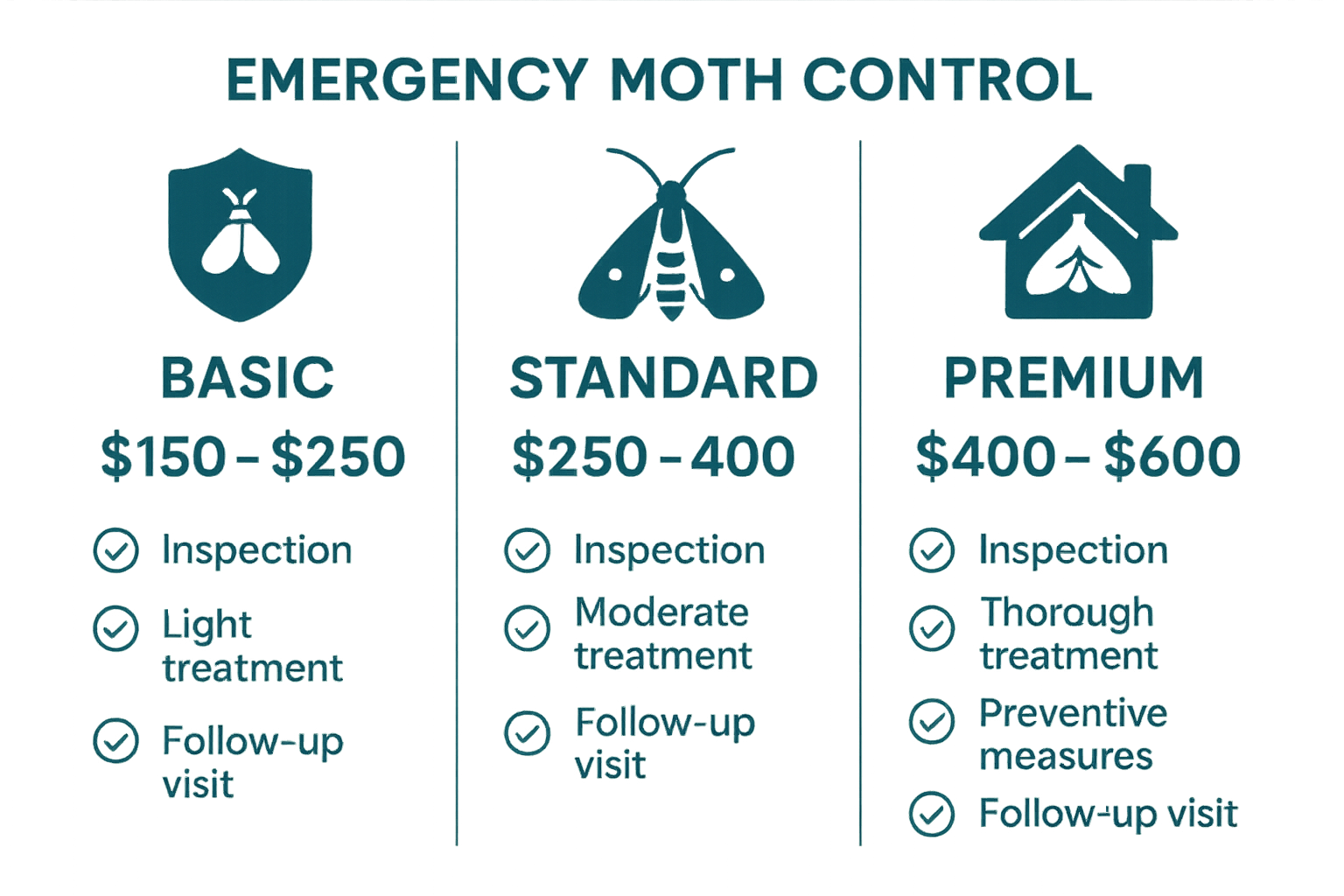
When moths start invading your closets, curtains, or pantry, the first question is usually “how much will it cost to get rid of them?” At Anthem Pest Control we simplify that decision by offering three clearly defined service packages—Basic, Standard, and Premium. Each tier is built around a specific level of inspection, treatment, and follow‑up, so you can match the plan to the severity of your infestation and your budget.
What’s included in each package?
- Basic
- Initial visual inspection of affected rooms
- One‑time, single‑visit treatment (spray or bait)
- Standard 30‑day warranty
- Standard
- Comprehensive inspection, including hidden storage areas
- Two treatment visits (initial + 2‑week follow‑up)
- Three‑month warranty with one complimentary re‑treatment
- Priority scheduling within 48 hours
- Premium
- Full‑home inspection with infrared detection for larvae
- Three treatment visits (initial, 1‑week, and 3‑week)
- Six‑month warranty, unlimited re‑treatments for moth activity
- Express service—same‑day appointment when possible
- Annual preventive check‑up to keep future outbreaks at bay
Price ranges for Druid Hills homeowners
| Package | Price Range (USD) | Typical Infestation Level |
|---|---|---|
| Basic | $120 – $180 | Isolated pockets (e.g., a single closet) |
| Standard | $250 – $340 | Multiple rooms or moderate larval buildup |
| Premium | $480 – $620 | Widespread infestation, including hard‑to‑reach spaces |
Why consider a higher‑tier plan?
The Premium package may look pricier, but it delivers comprehensive coverage that can save you money in the long run. With unlimited re‑treatments and a six‑month warranty, you avoid repeat service calls that add up quickly. Priority scheduling also means you won’t be stuck waiting weeks while moths continue to damage fabrics and stored food.
Standard offers a balanced approach—enough follow‑up to catch hidden larvae without the full expense of Premium. It’s ideal for homes where moths have spread beyond a single area but aren’t yet entrenched throughout the structure.
Quick decision‑making tip
Match the package to the infestation severity:
- If you see only a few adult moths in one closet, the Basic plan is usually sufficient.
- If you’ve discovered larvae or damage in several rooms, step up to Standard for the extra follow‑up visit.
- If moths are everywhere—especially in hard‑to‑reach attics, basements, or wall voids—choose Premium to ensure thorough eradication and ongoing protection.
By comparing these tiers side‑by‑side, Druid Hills homeowners can confidently select the plan that fits both their pest pressure and their wallet.
Seasonal Moth Activity and Timing for Georgia
Life Stages and Temperature
Moths in Georgia move through four distinct stages: egg, larva (caterpillar), pupa, and adult. Each stage is temperature‑dependent. Eggs hatch faster when daytime highs stay above 70°F, while cooler nights prolong the larval period. In the spring, when soil and indoor temperatures rise, you’ll see a rapid surge in egg‑to‑larva development. Conversely, a cold snap in late fall can stall pupation, causing adults to emerge later than usual. Understanding this temperature link helps you predict when an infestation will become visible.
Reading the Seasonal Activity Chart
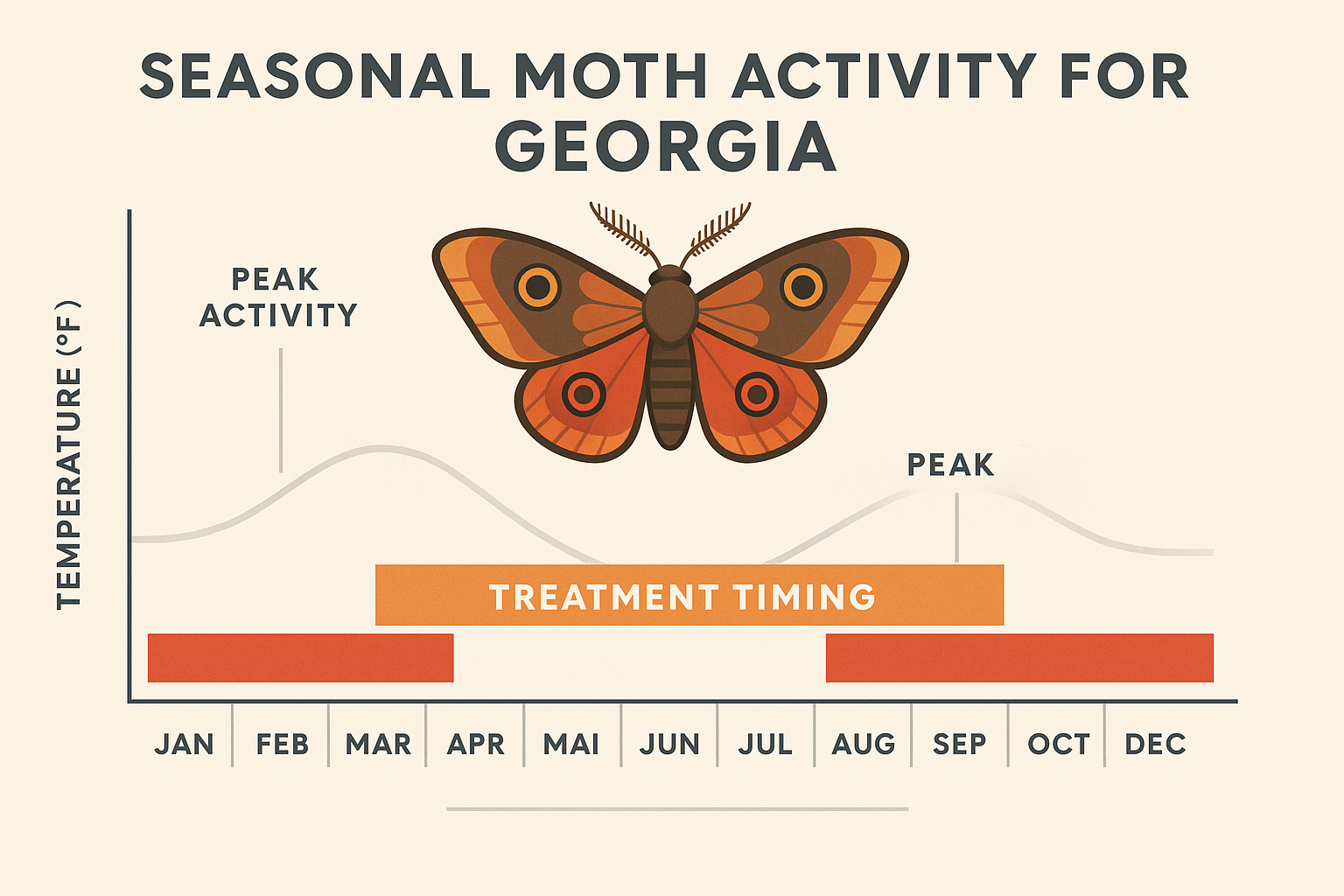
The chart above breaks Georgia’s moth calendar into three zones. Peak activity runs from late March through early May for pantry moths and from late July through September for clothing moths. Low‑risk periods are the deep winter months (December‑February) and the early summer lull (June). If you notice adult moths fluttering near pantry shelves in April, you’re in the high‑risk window for food‑storage species. Likewise, a sudden increase in webbing around woolen garments in August signals the clothing‑moth peak.
Optimal Treatment Windows
- Early spring (March–April): Ideal for pantry‑moth inspections and treatments. At this stage, larvae are still small and confined to food sources, making baits and targeted sprays most effective.
- Late summer (August–September): The best time to address clothing moths. Adults are laying eggs on natural fibers, so a thorough cleaning, pheromone traps, and professional insecticide applications can stop the next generation before it spreads.
- Mid‑season check‑ins (May–June): Use this window for a quick follow‑up after spring treatments. It helps catch any late‑emerging larvae before they mature.
When Weather Throws a Curveball
Georgia’s climate isn’t always predictable. An unusually warm winter can accelerate egg hatch, pushing the pantry‑moth peak into February. Similarly, a wet, mild summer may extend the clothing‑moth season into October. When you notice “out‑of‑season” moth activity—such as adult pantry moths in December—adjust your inspection schedule accordingly. Keep a simple log of sightings; over time you’ll see patterns that guide you toward proactive, rather than reactive, treatment.
Plan Ahead with a Pro
Professional pest‑control visits should be booked at least two weeks before the anticipated peak. This gives technicians time to assess vulnerable areas, set up monitoring traps, and apply the most appropriate treatment—whether it’s a low‑toxicity pantry spray or a specialized clothing‑moth aerosol. Scheduling early also secures your preferred appointment slot, which can fill up quickly during the March and August rushes. A timely, expert intervention not only curbs the current infestation but also builds a preventive barrier for the next season.
Why Choose Anthem Pest Control for Moth Management
Local Roots, Local Results
When a moth infestation strikes, you need a partner who knows the neighborhood as well as you do. Anthem Pest Control has been serving the Atlanta metro area for over a decade, and Druid Hills is one of our most familiar territories. Our technicians have mapped out the historic homes, modern townhouses, and lush gardens that define the community, so they recognize the entry points and breeding habitats unique to this area. That local insight lets us design a treatment plan that targets moths where they hide—whether it’s the attic insulation of a Victorian‑era home or the ornamental shrubs bordering a newer condo complex.
Certified Technicians & Safe Products
Every Anthem field agent holds industry‑recognized certifications and undergoes continuous training on the latest moth‑control techniques. We only apply EPA‑approved products that have been rigorously tested for efficacy and human safety. Our safety protocol includes:
- Pre‑treatment walkthroughs with the homeowner to identify pets, children’s play zones, and food‑prep areas.
- Use of low‑residue, low‑odor formulations that minimize disruption to daily life.
- Post‑treatment verification checks to ensure no residue remains on surfaces where families gather.
This combination of expertise and caution means you can breathe easy knowing the moths are gone and your loved ones are protected.
Transparent, Tiered Pricing You Can Trust
We understand that budgeting for pest control can feel like a guessing game. That’s why Anthem offers a clear, tiered pricing structure that mirrors the infographic you’ve already seen. Each tier outlines exactly what you receive, so there are no surprise fees at checkout.
| Tier | What’s Included | Price Range |
|---|---|---|
| Basic | Initial inspection, one‑time treatment, safety briefing | $149–$199 |
| Standard | All Basic services + follow‑up visit, protective barrier, pet‑friendly option | $219–$279 |
| Premium | All Standard services + quarterly monitoring, 24/7 emergency hotline, guaranteed moth‑free result | $349–$429 |
Proven Track Record & Happy Customers
Numbers speak louder than marketing copy. In Druid Hills, Anthem averages a response time of 2.3 hours from the moment you call until a technician is on your doorstep. Our repeat‑customer rate sits at an impressive 87 %, a testament to the lasting confidence homeowners place in our work.
“We called Anthem after discovering moths in our pantry. Within an hour, a friendly tech arrived, explained the process, and had the problem under control by the next day. The kids and our dog were never at risk, and we haven’t seen a single moth since.” – Laura M., Druid Hills
Another homeowner shared, “The transparent pricing made it easy to choose the Standard tier. The follow‑up visit caught a few stray larvae before they could spread. I feel secure knowing Anthem stands behind their service.”
Our Guarantee & Free Follow‑Up Inspection
We back every moth‑management job with a 100 % satisfaction guarantee. If moth activity reappears within 30 days, we’ll return at no extra charge to re‑treat the affected area. Additionally, every service includes a complimentary follow‑up inspection to verify that the infestation is truly eradicated and to advise on preventative measures that keep future moths at bay.
Choosing Anthem Pest Control means you’re partnering with a locally rooted, certified, and transparent team that treats your home with the same care you would. Let us handle the moths so you can get back to enjoying the beautiful Druid Hills lifestyle—free of winged intruders and with complete peace of mind.
Protect Your Home Today – Get a Free Quote
When moths invade your closet or pantry, the fastest way to stop the damage is to act before the infestation spreads. Early detection paired with professional treatment gives you a clean break in the life cycle, eradicating eggs, larvae, and adult moths before they can reproduce. That’s the most reliable path to protecting your clothing, food stores, and peace of mind.
A timely inspection catches the tell‑tale signs—tiny webbing, shed skins, or a faint, buttery odor—long before you notice holes in sweaters or damaged grain. By nipping the problem in the bud, you avoid costly replacements, reduce the risk of allergic reactions, and keep your home’s interior looking fresh throughout the season.
Anthem Pest Control makes that quick response effortless. Our technicians are on call for same‑day scheduling, so you don’t have to wait days for a service window. Whether you’re dealing with a surprise sighting in the attic or a growing problem in the kitchen, we arrive promptly, assess the situation, and deploy a targeted solution on the spot.
We also understand that budgeting for pest control can feel like another chore. That’s why Anthem offers flexible payment plans and transparent, upfront pricing—no hidden fees, no surprise invoices. You can choose a one‑time treatment or a seasonal protection package that fits your calendar and your wallet, all backed by a satisfaction guarantee.
Ready to lock down your home before the next moth season begins? Call now for a free, personalized quote and let our local experts design a protection plan that matches your specific needs. Dial 877‑371‑8196 or visit Anthem Pest Control to get started—no obligation, just peace of mind.
Choosing Anthem means you’re partnering with a nationwide network of certified technicians who stay current on the latest, environmentally responsible moth‑control methods. From pheromone traps to targeted baits, we apply the right tool at the right time, ensuring long‑lasting results without compromising the safety of your family or pets. Let us handle the moths so you can enjoy a clean, worry‑free home all year round.