Why Moth Control Matters in Druid Hills

When you hear the soft flutter of a moth inside your living room, it’s easy to dismiss it as harmless. In Druid Hills, however, that tiny visitor can be the first sign of a larger, hidden problem that threatens your wardrobe, pantry, and even the wooden framework of your home.
Common household moths you’ll meet in Georgia
- Webbing (clothes) moth – attracted to natural fibers such as wool, silk, and cashmere.
- Carpet moth (often confused with carpet beetles) – prefers stored grains, dried fruit, and pantry items, but will also gnaw on upholstery.
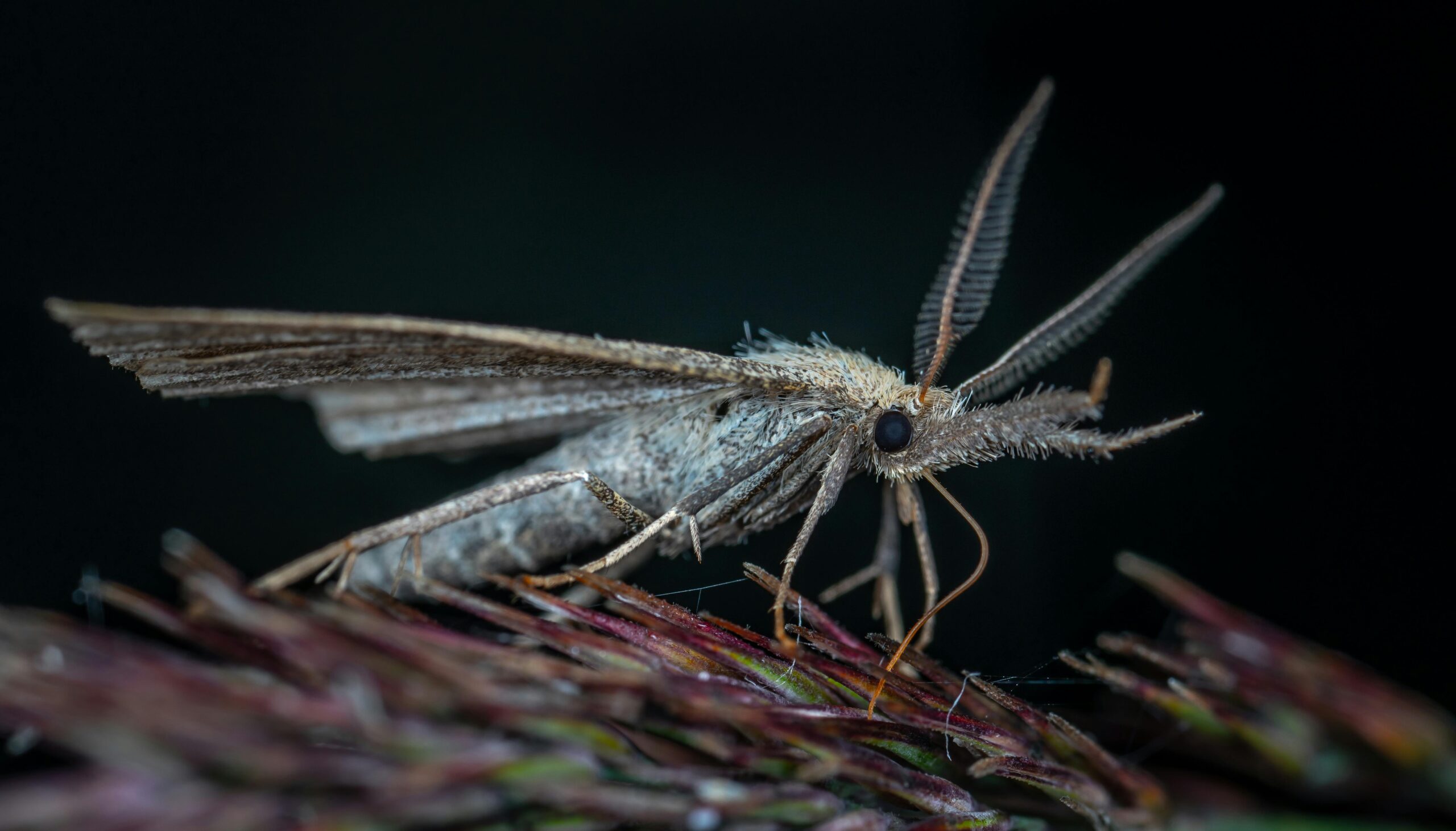
Both species lay eggs in the crevices of closets, cabinets, and baseboards. The larvae, not the adult moths, do the real damage. As they feed, they create irregular holes in clothing, shred stored foods, and can even tunnel into untreated wood, weakening structural components over time.
How damage spreads beyond the obvious
Imagine finding a few tiny holes in a favorite sweater. That’s just the tip of the iceberg. The larvae can:
- Consume up to 30% of a garment’s fibers before the damage becomes visible.
- Contaminate pantry goods, leading to waste and potential food‑borne issues.
- Infest wooden window frames or baseboard trims, creating hollowed sections that attract termites or moisture‑related rot.
Why Druid Hills is a moth‑friendly zone
The local climate acts like a perpetual invitation:
- Humid summers keep indoor humidity levels high, providing the moisture larvae need to thrive.
- Mild winters mean moths never truly go into deep dormancy; they remain active in heated homes year‑round.
- Frequent rainstorms increase indoor dampness, especially in older homes with older insulation.
These conditions create a near‑continuous breeding cycle, so a small infestation can explode into a full‑blown problem before you even notice the first sign.
Rising moth complaints in Druid Hills
According to Anthem Pest’s “Top Rated Moth Control” page, homeowner inquiries about moth issues in Druid Hills have climbed by 27% over the past two years. Neighbors report discovering larvae in closets during routine spring cleaning, and local housing forums echo similar stories of pantry infestations that went unnoticed until food spoilage became evident.
What’s coming next in this guide
Now that you understand the stakes, the rest of this article will walk you through:
- Identification – spotting the tell‑tale signs of different moth species.
- Seasonal timing – when to act for maximum effectiveness.
- Pricing – transparent cost breakdowns for inspection, treatment, and follow‑up.
- Anthem Pest’s solution – how our locally trained technicians use safe, targeted treatments to eliminate moths and protect your home.
By the end of this guide, you’ll have a clear roadmap to reclaim your closets, pantry, and woodwork from these silent destroyers—without guesswork or costly trial‑and‑error.
Spotting a Moth Infestation Early
The sooner you catch a moth problem, the easier it is to stop it from turning your home into a pantry for larvae. Moths are tiny, but their damage can be huge—especially when they go unnoticed for weeks.
Visual clues you can’t ignore
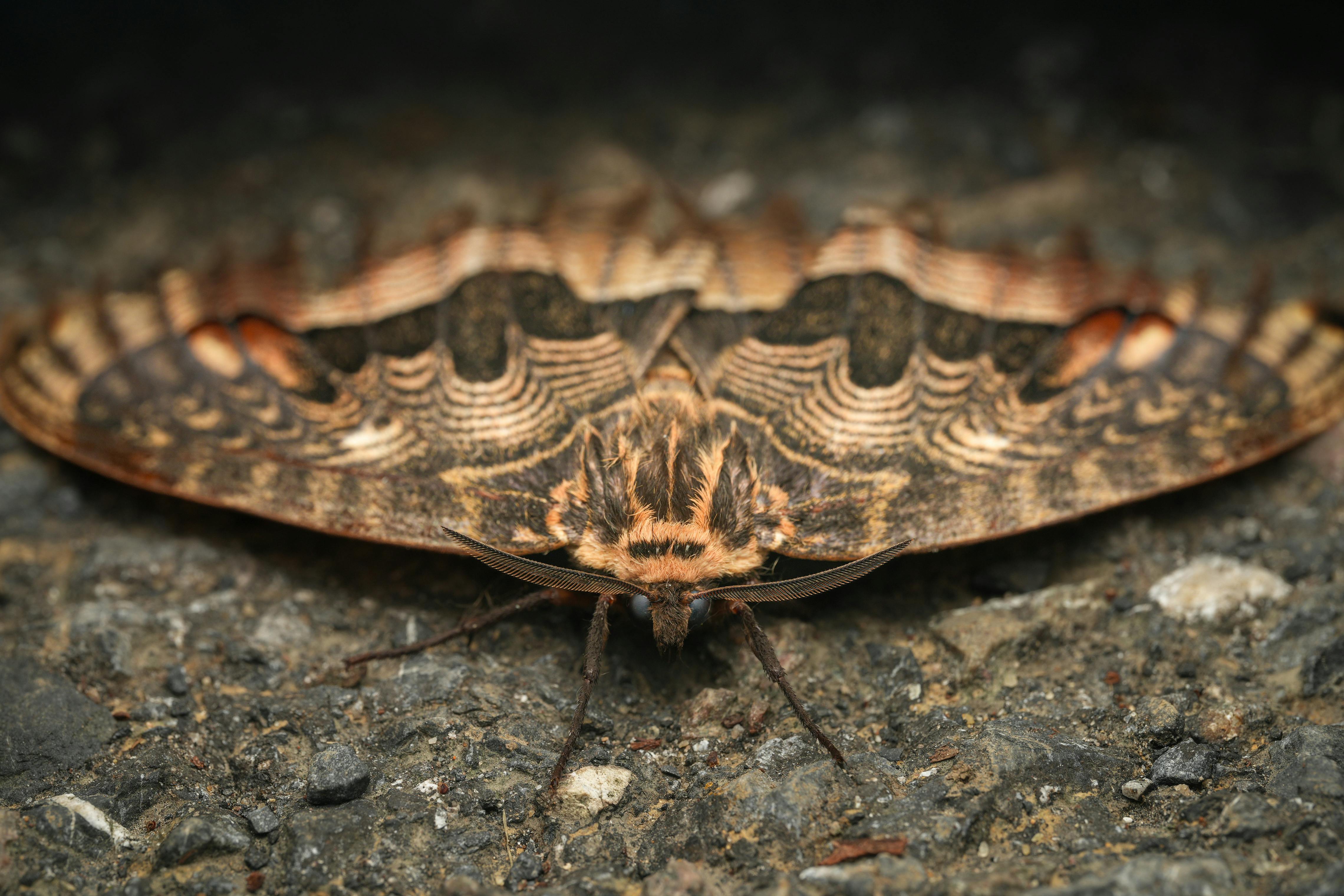
Small, cream‑colored larvae are the first red flag; they look like tiny, wiggling worms about a quarter inch long. Look for silken threads that resemble spider webs, especially in corners of closets or on the backs of stored fabrics. Shed skins—thin, translucent shells left behind as the caterpillars grow—are another giveaway. Adult moths are most active after dark, so you’ll often spot them fluttering around light fixtures, windows, or the open doors of wardrobes.
Where moths like to hide
Closets are prime real estate because wool, cashmere, and silk provide a perfect food source. Pantry shelves packed with flour, cereal, or dried fruit attract pantry moths, while attics and crawl spaces stay cool and dark—ideal for breeding. Don’t forget the HVAC ducts; dust and fibers give larvae a place to travel unseen. Kitchen cabinets, laundry rooms, and even basement storage boxes can harbor hidden infestations.
Tell the difference: moths vs. other bugs
Beetles have hard, shell‑like wing covers and a more rounded body, while flies buzz and have only one pair of wings. Moths, on the other hand, feature feathery or thread‑like antennae and a fuzzy body. Their flight pattern is a characteristic “flutter‑and‑rest” that ends with wings spread flat, and they’re strongly attracted to light—something you rarely see with beetles or flies.
When the problem is getting serious
Extensive webbing that coats entire shelves or drapes signals a growing population. Holes, yellowing, or shredded fibers in wool sweaters, silk curtains, or stored grain indicate that larvae are feeding heavily. In pantry infestations, you may notice clumped flour or a faint, musty odor as the larvae break down the product. When these signs appear together, the infestation has moved beyond a few stray larvae and requires prompt professional treatment.
Early‑detection tools
Sticky pheromone traps placed near closets or pantry corners can capture adult moths before they lay eggs. Checking the traps weekly gives you a clear picture of activity levels without any chemicals.
DIY inspection checklist
Use this simple list the next time you do a seasonal walk‑through. Mark any location where you spot the items below and call Anthem Pest Control for a targeted plan.
- Turn on a bright flashlight and scan all closet rods, shelves, and the backs of doors.
- Pull clothing and fabrics away from walls; examine seams and folds for larvae, webbing, or shed skins.
- Open pantry boxes and inspect grains, flour, cereal, and dried herbs for tiny caterpillars or silken strands.
- Check attic insulation, roof joists, and any stored boxes for clusters of webbing or moth clusters.
- Run a hand‑held vacuum over HVAC vent grilles and duct openings to capture hidden larvae.
- Place sticky traps near light sources and review them after 7‑10 days for adult moth captures.
If any of these steps reveal more than a few stray signs, it’s time to call a local expert like Anthem Pest Control for a targeted treatment plan.
Seasonal Moth Activity and Optimal Treatment Times
Understanding the Moth Life Cycle in Druid Hills
In the world of moths, the cycle runs like a clock: egg → larva → pupa → adult. Each stage is temperature‑dependent, which means the warm, humid days of Druid Hills can accelerate development, while cooler evenings slow it down. Eggs hatch faster when daytime highs stay above 68°F (20°C). Larvae, the real culprits that chew on fabrics and stored foods, grow most rapidly between 70‑80°F (21‑27°C). Once they spin a cocoon, the pupa stage can last from a few weeks to several months, depending on how quickly the weather warms again. Finally, adult moths emerge ready to mate and lay the next batch of eggs, completing the loop.
Peak Activity Periods in Our Neighborhood
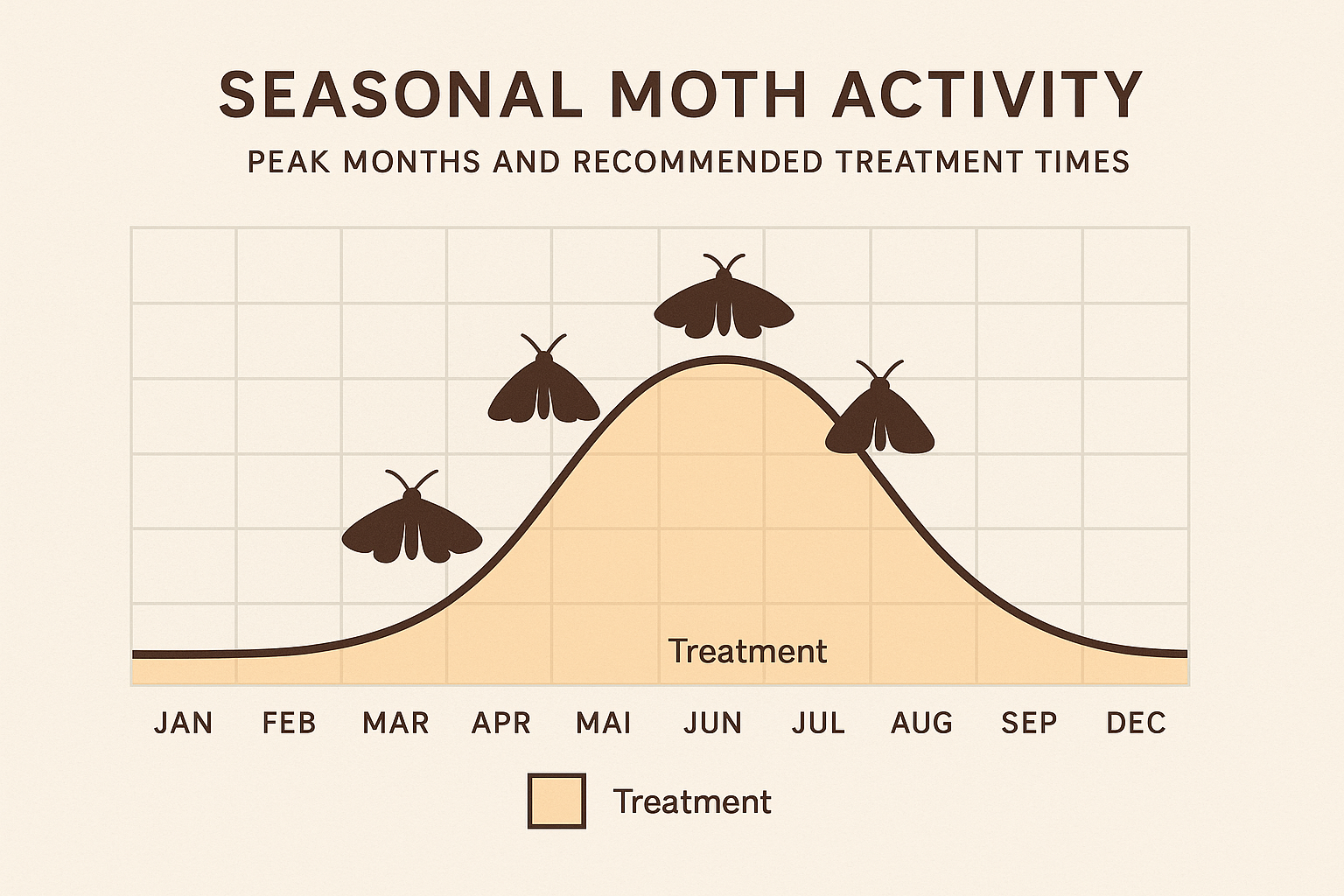
Local climate data shows that Druid Hills experiences its longest stretch of favorable conditions from late spring through early fall. From mid‑May to early September, average temperatures hover in the sweet spot for egg hatching and larval feeding. This is when you’ll most likely notice increased moth sightings, webbing in closets, or the occasional “silky” residue on stored pantry items. By late October, cooler nights and shorter days signal the moths to enter diapause—a dormant state—making it a natural lull before the next season.
Optimal Treatment Windows
- Early‑spring pre‑emptive spray (late March – early April): Apply a residual insecticide before the first eggs are laid. This creates a protective barrier on baseboards, attic joists, and storage areas, catching the first wave of emerging larvae.
- Mid‑summer follow‑up (mid‑July – early August): A second application targets any second‑generation larvae that survived the first treatment. At this point, the adult population is at its peak, so a booster ensures you’re not left with a hidden infestation.
- Fall final inspection (late September – early October): Conduct a thorough walkthrough, checking for lingering pupae and adult moths preparing for overwintering. A light-touch treatment or spot‑spray can seal any gaps before the colder months set in.
How Weather Patterns Influence Treatment Efficacy
Rainfall and humidity are double‑edged swords. A heavy downpour within 24 hours of spraying can wash away surface residues, reducing the residual effect by up to 40 %. Conversely, moderate humidity (45‑60 %) actually helps the insecticide bind to porous surfaces, extending its protective life. When planning a service, our technicians monitor the local forecast and may adjust timing to avoid excessive rain or extreme dryness. For indoor applications, ensure good ventilation but keep windows closed for at least two hours after treatment to allow the product to cure properly.
Why Timing Matters for Homeowners
Choosing the right months isn’t just about killing moths; it’s about protecting your investment. Early‑spring treatment prevents eggs from ever hatching, saving you from costly fabric repairs or pantry contamination. A mid‑summer touch‑up catches any survivors before they turn into full‑blown infestations, while a fall inspection guarantees you start the winter with a clean slate. By aligning your pest‑control schedule with Druid Hills’ seasonal rhythm, you enjoy a moth‑free home without the guesswork.
Understanding Moth Extermination Costs in Druid Hills
Service tiers you’ll encounter
When you call a professional moth control company, you’ll typically hear three service levels. The basic inspection is a walkthrough where a certified technician identifies the species, checks for larvae, and pinpoints hot spots. A full‑home treatment follows the inspection and includes targeted sprays, dusts, or traps applied to closets, attics, and any infested wall voids. Finally, an ongoing prevention plan schedules periodic visits—usually quarterly—to keep the moth population below damaging levels and to protect new fabrics you bring into the house.
What Druid Hills homeowners pay
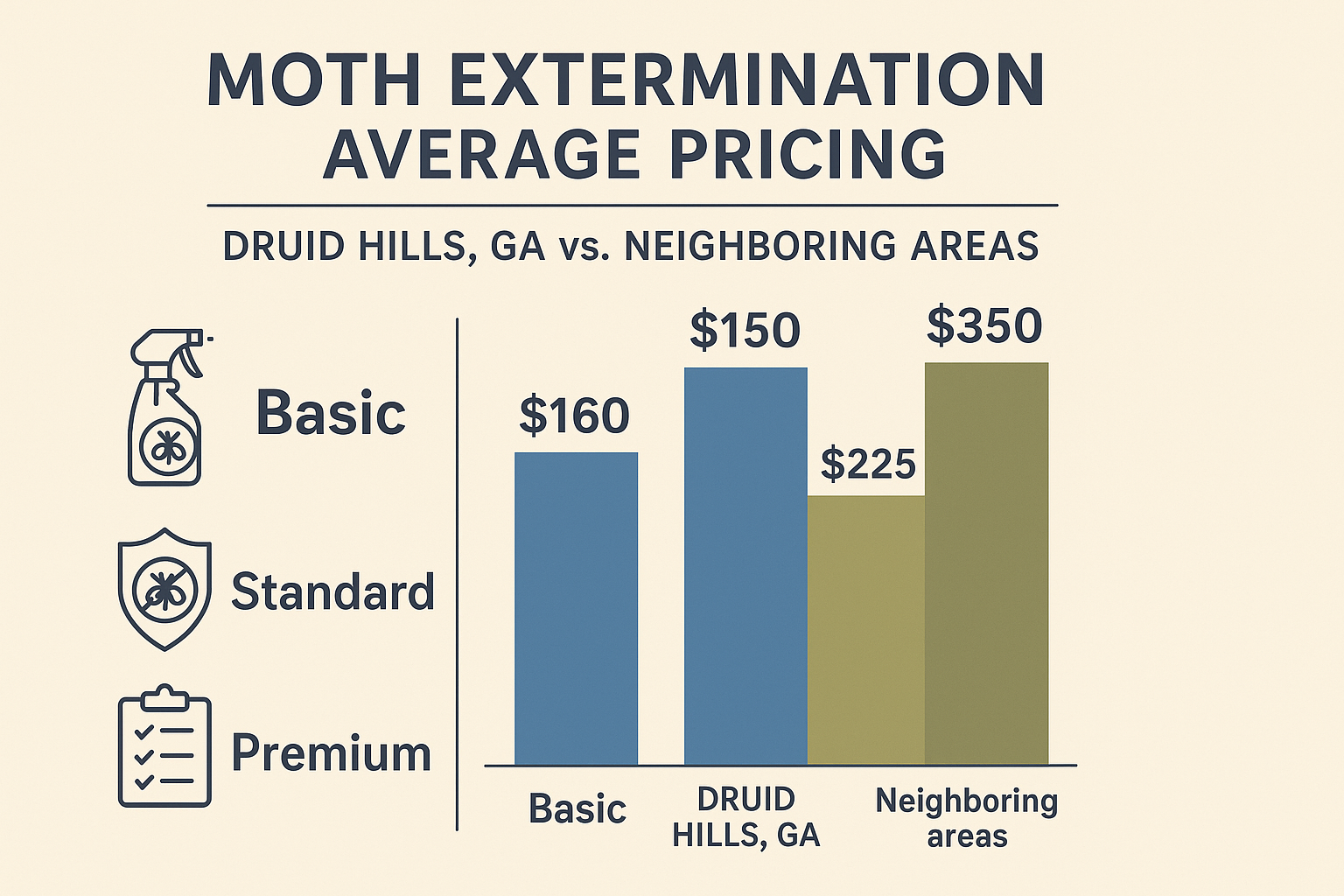
| Service Tier | Druid Hills (USD) | Neighboring Suburbs (USD) |
|---|---|---|
| Basic Inspection | $80 – $120 | $90 – $130 |
| Full‑Home Treatment | $250 – $400 | $280 – $460 |
| Ongoing Prevention Plan (quarterly) | $120 – $180 per visit | $130 – $200 per visit |
These figures come from recent quotes gathered across Druid Hills, Decatur, and the broader Atlanta metro area. Notice that Druid Hills sits slightly below the regional average, reflecting the competitive market and Anthem Pest’s commitment to affordable, high‑quality service.
What drives the price tag?
Several variables can push a quote up or down. Severity of infestation is the biggest factor—heavy moth populations require more product and longer labor hours. Square footage matters, too; a 2,500‑sq‑ft home will cost more to treat than a 1,200‑sq‑ft bungalow because technicians must cover more surface area and access additional closets. Finally, the choice of treatment influences cost: eco‑friendly, low‑toxicity options such as botanical sprays or pheromone traps tend to be a bit pricier than traditional chemical formulations, but they offer peace of mind for families with children or pets.
Anthem Pest’s transparent pricing model
At Anthem Pest, the estimate you receive on the day of the inspection is the final price—there are no surprise add‑ons hidden in the fine print. The company breaks each line item down: inspection fee, treatment materials, labor, and any optional follow‑up visits. If you opt for an eco‑friendly product, the additional cost is shown clearly before any work begins. This upfront approach lets homeowners compare quotes confidently and budget without fearing unexpected charges after the job is done.
Quick tip for budgeting
Ask for a free on‑site quote during your first call. A technician will walk your home, discuss the level of infestation, and propose a customized maintenance schedule that matches your budget. Pairing a one‑time treatment with a quarterly prevention plan often yields the best value—protecting your fabrics long‑term while spreading the cost across manageable intervals.
Protect Your Home with Professional Moth Control
Early detection, timing the treatment to the moth life cycle, and knowing exactly what you’ll pay are the three pillars of a successful moth‑control program. Spotting a few larvae or webbing before they spread, scheduling service during the peak breeding season, and receiving a clear, upfront quote prevent surprises and keep your home safe.
Why Choose a Licensed, Locally‑Experienced Provider?
- Safety first. Certified technicians use EPA‑approved products that protect your family, pets, and the environment while targeting moths where they hide.
- Proven effectiveness. Local experts understand Druid Hills’ climate patterns and the species that thrive here, allowing them to select the most potent treatment methods for your specific situation.
- Warranty protection. A reputable company backs its work with guarantees, so if moths return after the initial service, you’re covered without extra cost.
- Transparent pricing. No hidden fees—just a straightforward estimate that matches the scope of work, giving you confidence before any chemicals are applied.
Ready for a Free Inspection?
Anthem Pest Control invites you to schedule a complimentary home inspection. During the visit, a certified specialist will assess any current moth activity, identify vulnerable entry points, and design a customized treatment plan that fits your budget.
Call us today at 877‑371‑8196 or click the link below to request your free quote. Our friendly team will respond promptly, answer any questions, and set up a convenient appointment time.
Get your free moth‑control quote now
Anthem Pest Control – Your Trusted Partner
When it comes to moths and every other household pest, Anthem Pest Control stands out as the reliable, local ally you can count on. Our blend of expertise, safety‑focused methods, and transparent pricing ensures you receive lasting protection without the guesswork. Let us handle the unwanted guests so you can enjoy a clean, comfortable home year‑round.