Why Crickets Become a Homeowner’s Concern in Decatur, GA
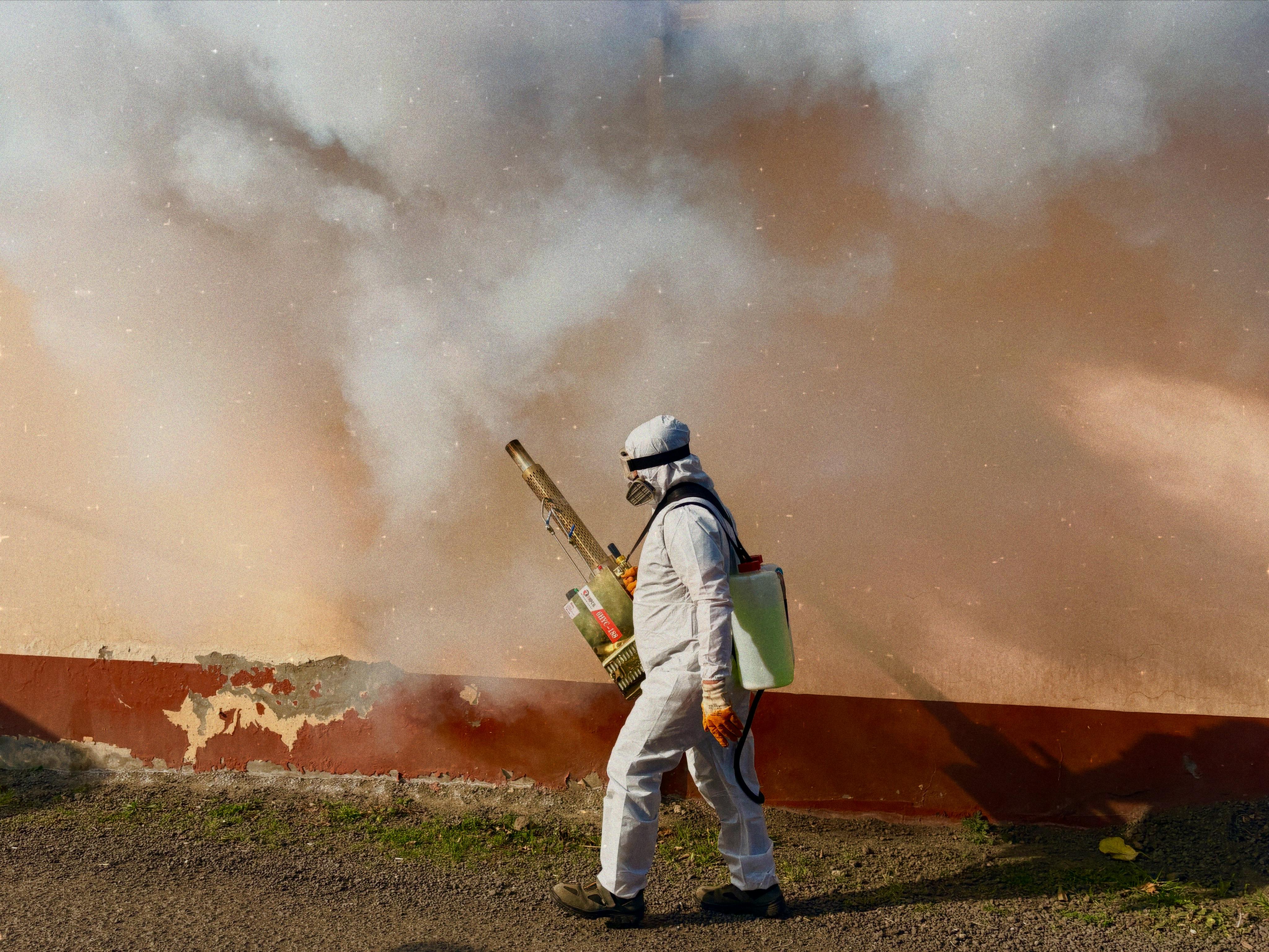
Cricket Inspection Decatur GA services are especially important because two cricket species dominate residential yards across North Georgia: the field cricket (Gryllus assimilis) and the house cricket (Acheta domesticus). Field crickets favor open, sunny patches of grass and leaf litter, while house crickets are more comfortable inside walls and basements, especially where moisture lingers. Both species thrive in warm, humid environments—exactly what Decatur’s climate provides.
Decatur’s climate and landscaping: a perfect cricket nursery
Decatur experiences long, hot summers with average highs in the low 90s °F and plentiful rainfall in spring and early fall. Those conditions keep lawns, garden beds, and ornamental shrubs moist and lush—ideal feeding grounds for crickets. Homeowners who maintain a well‑kept lawn, a vegetable garden, or even a few ornamental flower beds inadvertently create the shelter and food sources crickets need to thrive.
How homeowners first notice the invasion
Most residents become aware of crickets through three tell‑tale signs:
- Loud chirping at dusk. Male crickets rub their wings together to attract mates, producing a rhythmic, high‑pitched trill that can fill a quiet backyard.
- Visible swarms. When populations explode, crickets gather in groups on walls, fences, or under porch lights, creating a startling visual “cloud.”
- Damage to plants and structures. Crickets chew tender foliage, seedlings, and even soft wood, leaving ragged edges that can weaken young plants and decorative wooden features.
Indoor comfort takes a hit
While crickets are primarily an outdoor nuisance, they can slip inside through open doors, windows, or cracks. Once inside, their constant chirping disrupts sleep and relaxation. Moreover, crickets are opportunistic feeders; they may nibble on stored grains, pet food, or uncovered pantry items, contaminating them with droppings and bacteria. Their presence also invites secondary pests such as spiders and ants, which are drawn to the organic debris crickets leave behind.
“Crickets are attracted to warm, moist environments and will congregate in areas where food and shelter are abundant. Effective control requires both habitat modification and targeted treatment.” – Smart Solutions Pest Control
Smart Solutions’ guide underscores that simply “shooing” crickets isn’t enough—homeowners need a comprehensive approach that tackles the underlying conditions encouraging cricket activity.
Why professional help matters
DIY methods like sticky traps or household insecticides may reduce numbers temporarily, but they rarely address the root causes: excess moisture, overgrown vegetation, and structural gaps. A professional pest‑control team can assess your property, identify breeding hotspots, and apply treatments that target crickets while preserving the safety of your family and pets. In Decatur, where cricket populations can surge quickly during the summer months, early professional intervention prevents a minor annoyance from becoming a full‑blown infestation.
Understanding the species present, the environmental factors that favor them, and the signs of an emerging problem sets the stage for the next step: learning how to accurately identify cricket damage and recognize when it’s time to call in Anthem Pest Control for a thorough inspection.
Spotting Crickets and Recognizing Damage
What an Adult Cricket Looks Like
Adult house crickets are easily distinguished by their slender bodies that range from ½‑inch to 1‑inch in length. Their coloration varies from pale tan to deep brown, often with a faint, glossy sheen. The most striking features are the long, powerful hind legs—built for jumping—and the pair of wings that lie flat over the abdomen. While many species have fully developed wings, the ones you’ll encounter in Decatur typically have short, leathery fore‑wings and longer hind‑wings that may be folded or slightly raised when the insect is at rest.
How to Identify Them in Your Home
Crickets are primarily nocturnal, so the first clue is often a soft, rhythmic chirping that starts after sunset. Males produce this sound by rubbing the edges of their fore‑wings together, creating a pattern that sounds like a steady “crick‑et‑crick‑et.” Look for activity near moisture sources—basements, crawl spaces, and the underside of garden mulch are favorite hideouts. They love tight, dark crevices where they can stay hidden during daylight.
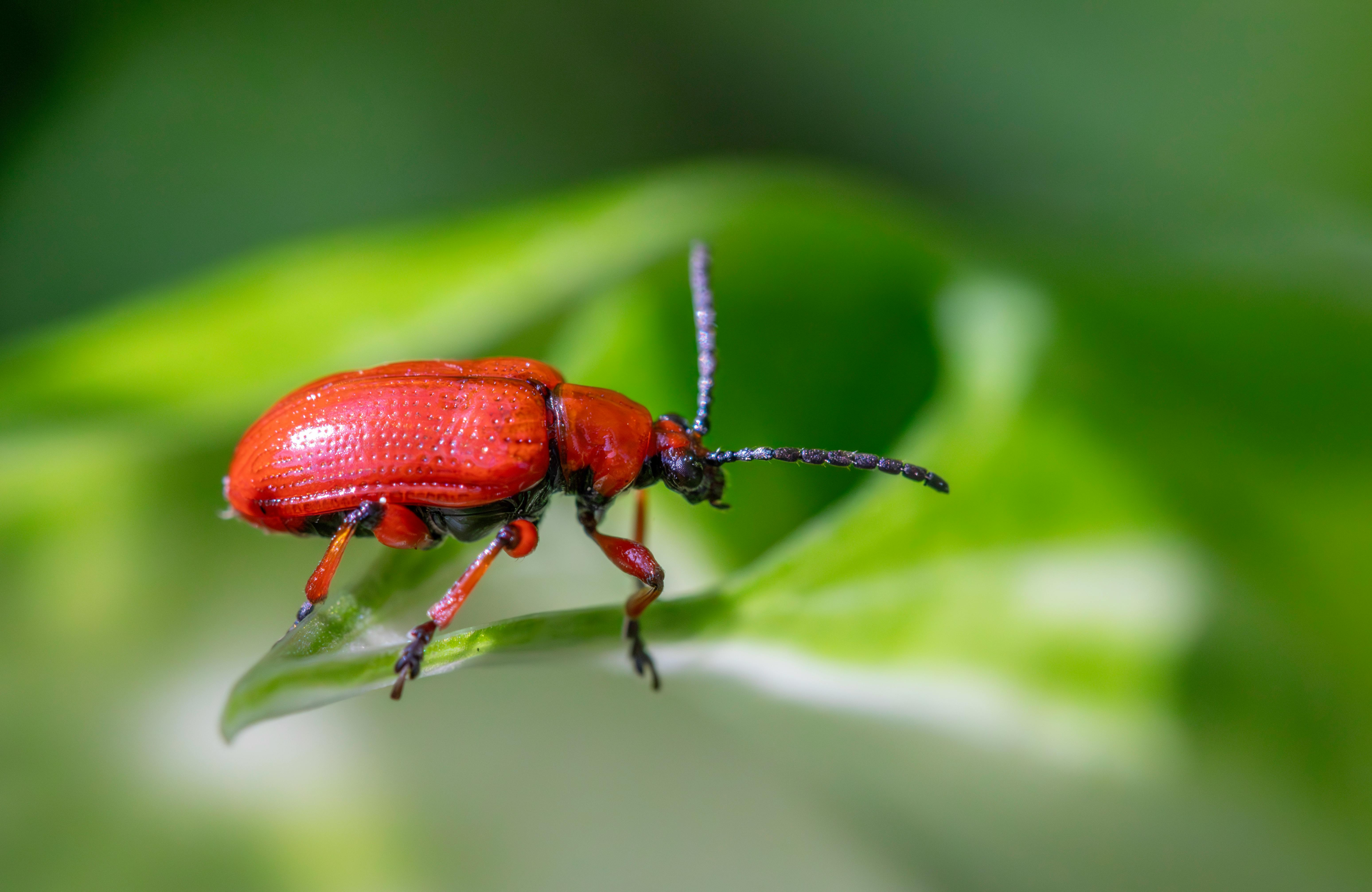
Even though the photo shows a red lily beetle, it serves as a perfect reminder of why macro images are invaluable. When you zoom in on an insect’s tiny features—leg spines, wing veins, or body segmentation—you can compare those details to a cricket’s anatomy and confirm the identification with confidence.
Typical Damage Crickets Can Cause
While crickets are not as destructive as termites, they can still leave noticeable damage:
- Ornamental plants: Crickets chew on tender foliage, especially young leaves and flower buds, creating ragged edges that stunt growth.
- Wooden structures: In rare cases, they feed on soft, decayed wood in decks, fences, or interior trim, creating small, irregular holes that can weaken the material over time.
- Stored food: Droppings—tiny black specks—can contaminate pantry items, especially grains, flour, or pet food left in open containers.
Warning Signs Inside the House
If crickets have taken up residence inside, you may notice several tell‑tale signs:
- Faint chirping that seems to echo from within walls or ceiling voids.
- Small, neat holes (about ¼‑inch wide) in wooden trim, baseboards, or window frames.
- Fine, black specks resembling pepper on countertops, shelves, or near food packages—these are cricket droppings.
Quick Inspection Checklist
- Listen for chirping after dusk; pause and locate the source.
- Inspect basements, crawl spaces, and garage corners for live crickets or shed exoskeletons.
- Examine garden mulch and flower beds for feeding damage and egg‑laying sites.
- Check interior woodwork for tiny holes or frass (insect droppings).
- Look for black specks on pantry shelves; seal food in airtight containers.
- Use a flashlight to spot movement in dark crevices; a handheld UV light can highlight droppings.
When to Inspect – Seasonal Activity and Timing
Life‑Cycle Overview
Crickets in Decatur follow a simple three‑stage life cycle: egg, nymph, and adult. Females lay eggs in moist soil or leaf litter in late summer. When temperatures rise above 68 °F (20 °C), the eggs hatch into nymphs that molt several times before reaching adulthood. Warmer weather accelerates development, while cooler temperatures slow it down, causing a noticeable seasonal rhythm in cricket populations.
Seasonal Activity Chart
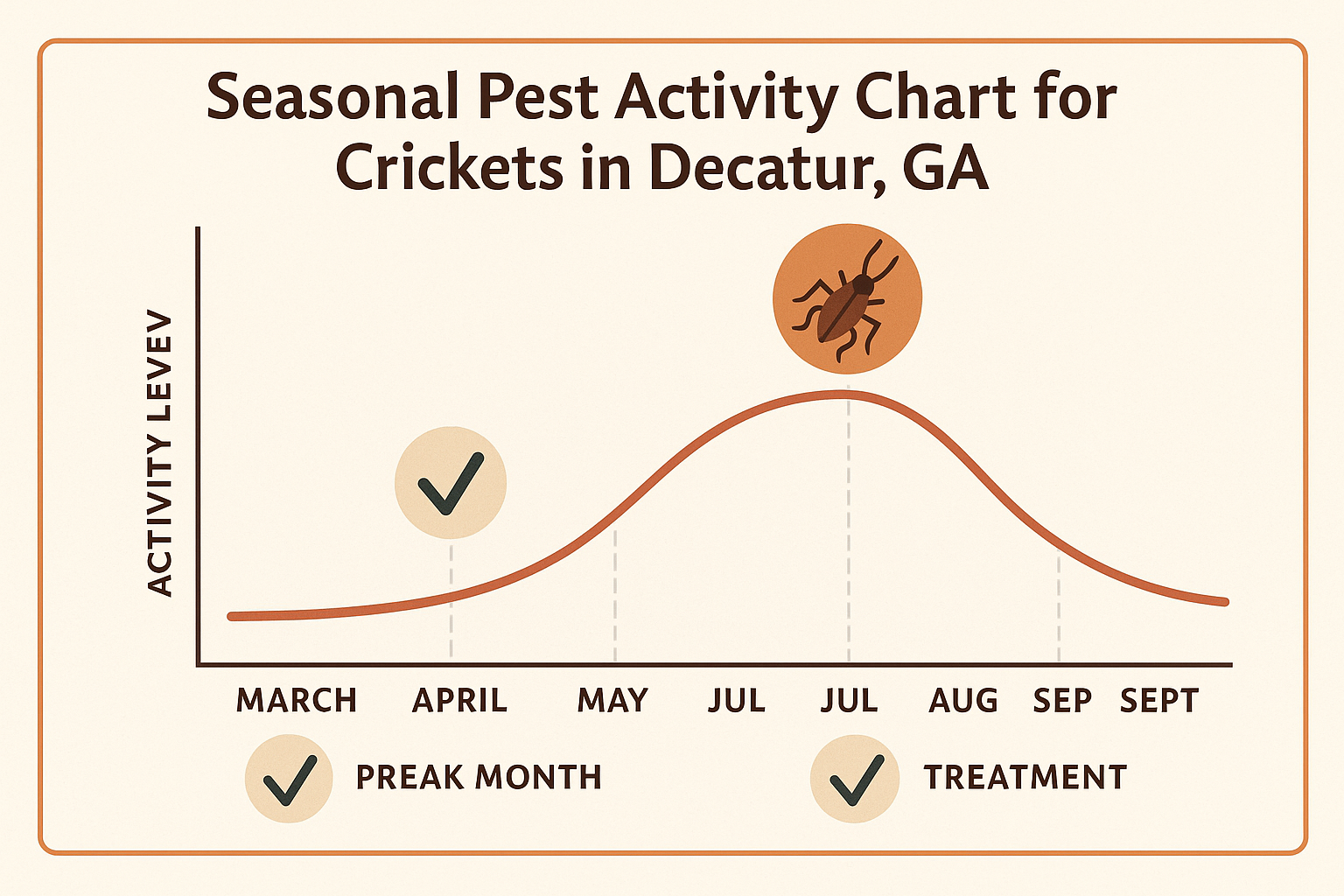
The line graph above illustrates typical cricket activity in Decatur. Peaks occur from May to August when daytime highs regularly exceed 80 °F (27 °C). Activity drops sharply after the first frost, reaching a lull from September through April.
Timing Your Inspections
Early‑summer inspections are crucial because they catch crickets before the exponential population boom. By late March, nymphs are emerging but numbers are still low, giving pest‑control professionals a window to apply preventative treatments that target young insects and their breeding sites. Waiting until July means dealing with a full‑blown infestation, which often requires multiple applications and higher costs.
The Georgia Structural Pest Control Commission recommends aligning treatments with temperature thresholds and humidity patterns (see the commission’s guidelines here). Their data show that effective cricket control is most reliable when applied during a sustained period of three consecutive days with average highs above 75 °F (24 °C) and nighttime lows above 55 °F (13 °C).
Recommended Two‑Step Inspection Schedule
- Pre‑season inspection (late March): A thorough walk‑through of the property’s exterior, focusing on mulch beds, foundation cracks, and shaded damp areas where eggs are likely to be deposited.
- Mid‑season inspection (early July): Re‑evaluate high‑risk zones after the first generation of adults appears. This visit confirms whether the pre‑season treatment held and determines if a follow‑up application is needed.
Following this two‑step schedule aligns with the peak activity window shown in the chart and maximizes the impact of both preventative and curative measures.
Homeowner Monitoring Tips
Even with professional services, homeowners can stay ahead of crickets by keeping an eye on activity levels. Here are simple, low‑cost methods to monitor your yard:
- Listen for the characteristic chirping after sunset; a sudden increase signals a rising adult population.
- Place sticky traps along foundation walls, under decks, and near garden beds. Check them weekly and replace as needed.
- Inspect mulch and leaf piles for egg clusters—small, oval, white capsules about 1 mm in diameter.
- Record temperature and humidity trends; warm, humid nights often precede spikes in cricket noise.
By combining these observations with the recommended inspection dates, homeowners can work hand‑in‑hand with Anthem Pest Control to keep cricket numbers low and avoid the nuisance of late‑summer chirping swarms.
What a Professional Cricket Inspection Looks Like
Our Inspection Protocol
When a certified Anthem Pest Control technician arrives at a Decatur home, the first step is a systematic exterior perimeter sweep. We walk the foundation, check window sills, door frames, and any cracks where crickets could slip inside. Next, we move indoors for a cavity check, opening wall voids and attic spaces with a flashlight to spot hidden activity. Finally, a moisture assessment pinpoints damp areas that attract crickets, allowing us to address the underlying cause before treatment.
Tools and Techniques
Our team relies on a handful of specialized tools to ensure nothing is missed:
- High‑intensity flashlights for spotting insects in dark voids.
- Moisture meters that quantify humidity levels in walls and crawl spaces.
- Bait stations placed strategically to monitor cricket populations and confirm activity.
- Infrared thermometers to detect temperature variations that often indicate hidden nests.
These devices work together to create a complete picture of the infestation, rather than relying on guesswork.
Documenting Findings & Crafting a Treatment Plan
Every observation is recorded on a digital inspection sheet, complete with photos of problem spots and notes on moisture readings. This data is instantly uploaded to our secure client portal, where you can review the findings in real time. Based on the evidence, the technician designs a customized treatment plan—choosing between perimeter sprays, interior fogging, or targeted bait placement—to eliminate crickets while preserving the safety of your family and pets.
Transparent Pricing
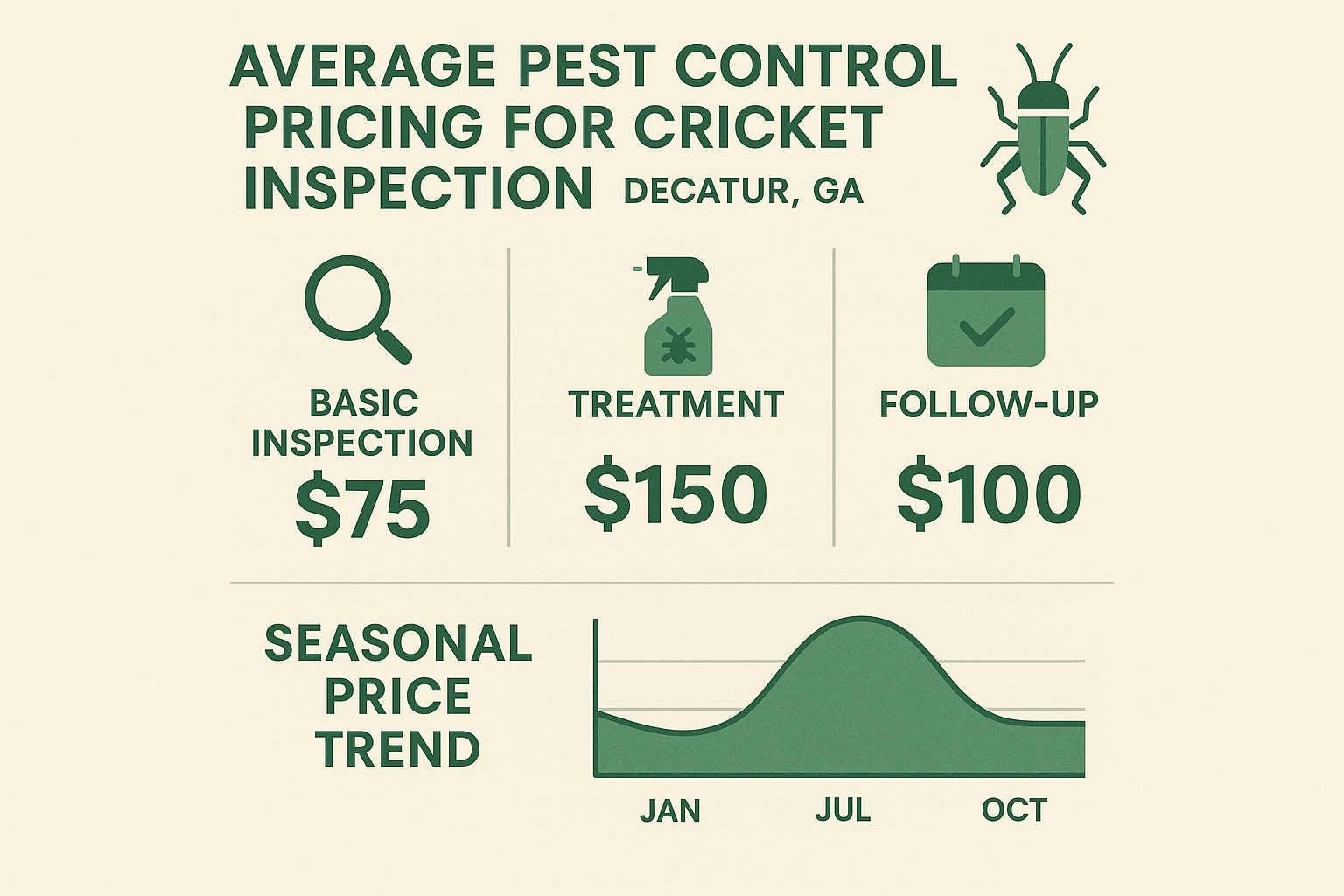
Our pricing model is straightforward and broken down into three core components. Below is a quick reference table that mirrors the infographic above:
| Service | What’s Included | Average Cost |
|---|---|---|
| Basic Inspection | Exterior sweep, interior cavity check, moisture assessment | $95 – $115 |
| Standard Treatment | Targeted perimeter spray, interior fogger, bait stations | $150 – $200 |
| Follow‑Up Visit | Re‑inspection, additional bait placement, guarantee verification | $75 – $90 |
All prices are quoted up front, and any additional services—such as moisture remediation or structural repairs—are discussed before work begins.
Seasonal Pricing Factors
Cricket activity spikes in late summer and early fall, which means demand for inspections rises. During these peak months, you may notice a modest premium of 5‑10 % on the standard rates. Conversely, scheduling an inspection in the off‑season (early spring) often secures the lowest price and gives us a head start on preventing a future outbreak.
Guarantee and Ongoing Monitoring
Every treatment comes with a written guarantee: if crickets return within 90 days, we’ll re‑treat at no extra charge. In addition, we set up post‑treatment monitoring using discreet bait stations that report activity back to our team. This proactive approach ensures you stay cricket‑free long after the initial visit, delivering real value for the investment.
Treatment Options and Ongoing Prevention
Chemical Treatments: What Works Best
When crickets invade your home, the quickest way to knock them down is with EPA‑approved chemical products. Most professional crews use a three‑pronged approach:
- Perimeter sprays: A fine mist applied around the foundation, driveway, and any exterior walls where crickets are likely to enter. These sprays create a protective barrier that remains active for 2‑4 weeks, depending on weather.
- Indoor residual sprays: Low‑odor formulations placed in cracks, baseboards, and wall voids. They continue to kill crickets that wander inside for up to 30 days.
- Bait formulations: Gel or granule baits positioned near entry points. Crickets ingest the toxin and carry it back to hidden colonies, helping to collapse the population from the inside.
Safety is paramount. Professionals wear protective gear, follow label directions, and keep children and pets out of treated zones until the product dries. Homeowners can request products that are specifically labeled for low toxicity around families and pets.
Non‑Chemical Alternatives: Working with Nature
If you prefer a greener route, several non‑chemical tactics can keep crickets at bay without a single spray:
- Habitat modification: Crickets love damp, cluttered spaces. Reduce moisture by fixing leaky gutters, using dehumidifiers in basements, and ensuring proper drainage away from the house.
- Physical barriers: Seal foundation cracks, install door sweeps, and fit window screens. Even a thin layer of sand around the foundation can deter the insects from climbing.
- Biological controls: Entomopathogenic nematodes (e.g., Steinernema carpocapsae) are microscopic worms that infect and kill crickets in the soil. They’re applied like a water‑based spray and break down naturally, leaving no chemical residue.
These methods work best when combined with regular monitoring. A homeowner who trims vegetation and removes debris will see far fewer crickets returning, even without chemicals.
Post‑Treatment Checklist: Seal the Deal
After a professional treatment—or after you’ve applied a DIY solution—follow this checklist to lock in the results:
- Clear away debris: Remove leaf piles, wood stacks, and old furniture that provide shelter.
- Trim vegetation: Keep shrubs, grass, and vines at least 12 inches away from the house to eliminate bridges for crickets.
- Repair foundation cracks: Use a concrete sealant or expandable foam to fill gaps larger than ¼ inch.
- Ventilate treated areas: Open windows for at least 30 minutes after indoor sprays to disperse any lingering vapors.
- Inspect regularly: Walk the perimeter weekly for the first month, looking for new activity or fresh entry points.
Seasonal Maintenance Plan: Stay Ahead of the Chorus
Crickets are most active in late summer and early fall, but a year‑round plan keeps them from establishing a foothold:
- Quarterly inspections: A licensed technician checks for signs of cricket activity, assesses the integrity of your barrier, and tops up any residual treatments.
- Annual perimeter treatment: Schedule a full‑coverage spray in early spring, just before crickets emerge from overwintering sites.
- Homeowner‑performed monitoring: Keep a simple log of any chirping sounds or sightings. Early detection lets you act before numbers explode.
By pairing professional services with a few simple chores—like sweeping away yard waste after each storm—you create a hostile environment that crickets simply won’t tolerate.
Transparent Pricing: Know What You’re Paying For
Understanding the cost of cricket control helps you budget wisely. Anthem Pest follows a clear, upfront pricing model, and you can see how it compares to other services. For example, our moth control cost guide breaks down fees so you never face surprise charges. The same transparency applies to cricket treatments, whether you choose chemical, non‑chemical, or a hybrid approach.
Legal and Safety Considerations for Pest Control in Georgia
Georgia Structural Pest Control Commission (GSPCC) Rules
The GSPCC sets the baseline for every pest‑control operation in the state. All companies must hold a valid Structural Pest Control License, which requires a background check, proof of liability insurance, and completion of a state‑approved training program. Once licensed, technicians are required to maintain detailed treatment records for at least three years, documenting the product used, application method, dosage, and the exact location treated. These records are subject to inspection and must be made available to homeowners upon request, ensuring transparency and accountability.
Mandatory Disclosures to Homeowners
Georgia law obligates pest‑control providers to give homeowners two critical pieces of information before any application:
- Product labels that list active ingredients, concentration, and any restricted uses.
- Safety Data Sheets (SDS) that outline health hazards, first‑aid measures, and proper disposal instructions.
These disclosures empower you to understand exactly what is being applied in your home and how to protect your family and pets.
Protective Measures Taken by Technicians
Professional technicians follow strict safety protocols. They wear personal protective equipment (PPE) such as gloves, goggles, and respirators when handling concentrated chemicals. Many companies, including Anthem Pest Control, now favor low‑odor, reduced‑toxicity formulations that minimize indoor air impact while remaining effective against pests. Application methods are calibrated to use the minimum effective dose, reducing residue and the need for extensive post‑treatment ventilation.
Homeowner Responsibilities
While technicians handle the chemicals, you play a crucial role in ensuring a safe environment:
- Provide clear access to all treatment areas, removing clutter that could impede spray coverage.
- Secure or remove pets and livestock from the premises during and for the recommended period after treatment.
- Ventilate treated rooms by opening windows and running fans as instructed, which helps dissipate any residual vapors.
- Follow any post‑treatment guidelines, such as avoiding cleaning surfaces until the product has fully dried.
How Anthem Pest Control Goes Beyond the Minimum
Anthem Pest Control doesn’t just meet Georgia’s regulatory standards—we exceed them. Every technician participates in ongoing education that covers the latest low‑impact products, advanced application techniques, and emerging safety protocols. Our team also provides homeowners with a personalized treatment summary that includes the exact product name, concentration, and a plain‑language safety guide.
Beyond paperwork, Anthem offers proactive client education workshops and digital resources that explain how to prepare your home before a visit and what steps to take afterward. This commitment to transparency and continuous improvement helps you feel confident that your pest problem is being handled safely, legally, and with the utmost professionalism.
Protect Your Home with Anthem Pest Control Today
In Decatur, Georgia, the warm months turn our neighborhoods into a welcoming stage for crickets. While their chirping may sound like a summer soundtrack, an unchecked cricket population can quickly become a nuisance—invading walls, nesting in attics, and even contaminating food sources. Because crickets thrive when humidity rises and temperatures stay above 70°F, the window for effective control is narrow. Early, professional inspection catches the problem before it spreads, saving you from costly damage and sleepless nights.
Why Anthem Pest Control Is Your Best Defense
Choosing a partner who understands the local climate and the biology of crickets makes all the difference. Anthem brings three core strengths to every inspection:
- Licensed, locally trained technicians: Our team knows Decatur’s micro‑climates and can pinpoint hidden entry points that a DIY approach often misses.
- Transparent pricing: You’ll receive a clear, itemized quote before any work begins—no hidden fees, no surprise charges.
- Satisfaction guarantee: If crickets return within the warranty period, we’ll re‑treat your home at no extra cost, reinforcing our commitment to lasting results.
Beyond these guarantees, Anthem employs EPA‑approved products that are safe for children, pets, and the surrounding environment. Our integrated pest‑management plan combines targeted treatment with preventive measures, such as sealing cracks and reducing outdoor lighting that attracts insects, ensuring a cricket‑free home season after season.
Take the First Step—No Obligation, No Pressure
Ready to protect your property without the guesswork? Request a free, no‑obligation quote today and schedule your first professional inspection at a time that fits your busy life. Simply call 877‑371‑8196 or visit Anthem Pest Control to fill out the quick online form. Our friendly staff will confirm your details, explain the inspection process, and set up a convenient appointment—usually within 24‑48 hours.
When you choose Anthem, you’re not just hiring a service; you’re gaining a local partner who watches over your home as diligently as you do. Let us handle the crickets so you can enjoy a quiet, comfortable Decatur evening—free from the constant chirp and the hidden damage that comes with it.