Recognizing Crickets and Their Signs in Buford Homes
Common House Cricket Species in Buford
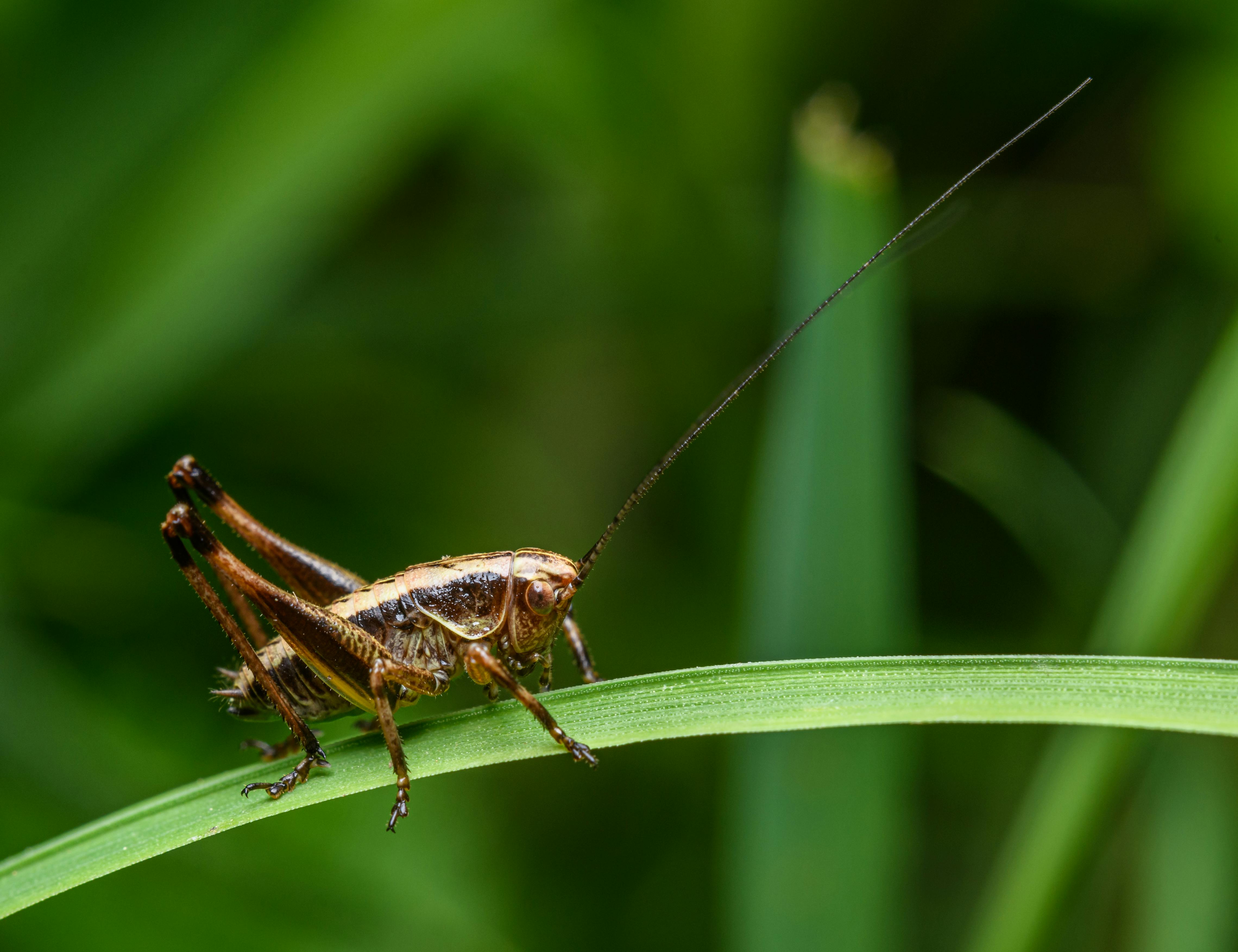
In Buford, Georgia, the most frequently encountered indoor pest is the field cricket (Gryllus assimilis). This species thrives in warm, humid environments and often slips inside when outdoor conditions become too hot or rainy. While they’re harmless to humans, their presence can become a nuisance if left unchecked.
Physical Characteristics to Spot
Field crickets are medium‑sized insects, typically ranging from 1.5 to 2.5 inches (4–6 cm) in length. Their bodies are a muted brown or tan, blending easily with wooden floors or drywall. Look for long, segmented antennae that extend well beyond the head, and robust hind legs built for powerful jumps. The wings are usually short and may be partially hidden, giving the insect a slightly “flattened” appearance when at rest.
Where They Hang Out
These crickets favor moist, sheltered spots. Outdoors, you’ll find them in lawns, under leaf litter, or along the foundation of a home. Inside, they gravitate toward crawl spaces, basements, and even kitchens where crumbs provide a food source. They love the darkness under appliances, behind cabinets, and near any cracks that lead to the exterior.
Behavioral Cues
Field crickets are primarily nocturnal. As dusk falls, males begin a rhythmic chirping that can carry across a quiet neighborhood. The chirp is produced by rubbing their forewings together—a sound most noticeable near exterior lights or open windows. Their activity peaks in late spring through early fall, coinciding with the warmest months in Buford.
Early Warning Signs for Homeowners
- Audible chirping at night: A steady, high‑pitched trilling near light fixtures is often the first clue.
- Droppings: Small, dark specks resembling ground coffee can appear on countertops, floors, or pantry shelves.
- Damaged plant foliage: Crickets may nibble on indoor houseplants, leaving ragged edges.
- Visible insects near lights: They are attracted to both natural and artificial light sources.
Why Early Detection Matters
Spotting these signs early can prevent a small, manageable population from exploding into a full‑blown infestation. Crickets reproduce quickly—females can lay up to 200 eggs in a single batch, and multiple batches are common during peak season. An unchecked surge can lead to increased noise, unsightly droppings, and even damage to soft furnishings or stored food.
By learning to identify the field cricket’s size, color, and habits, and by staying alert to the early warning signs listed above, Buford homeowners can act before the problem escalates. Prompt action—whether a DIY seal‑up or a professional treatment from Anthem Pest Control—keeps the home quiet, clean, and cricket‑free.
Seasonal Patterns of Cricket Activity in Buford, GA
Buford sits in a humid subtropical zone, meaning warm summers and mild winters. Crickets thrive when temperatures hover between 70‑85°F and when moisture levels stay above 50 %. Those two factors drive their life cycle, so understanding the local climate is the first step to staying ahead of an infestation.
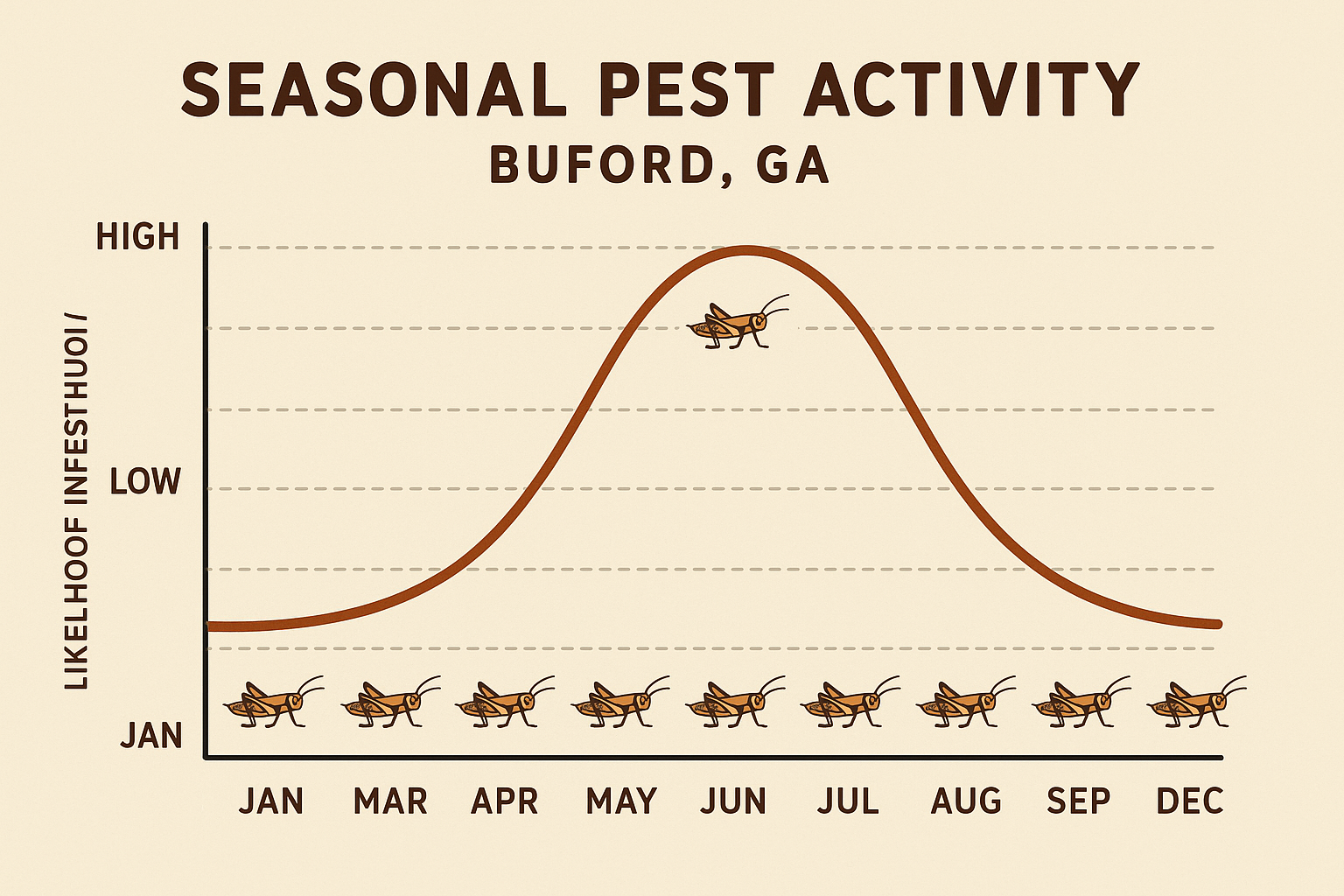
The line chart above plots the likelihood of cricket sightings month by month. The curve climbs steadily from March, peaks in July‑August, and then tapers off as the weather cools. Use this visual as a calendar guide for when to inspect and treat.
Early Spring (March‑April)
As the last frost fades, nymphs emerge from the soil. Activity is low, and you’ll hear only occasional chirps. This is the ideal window for a preventative treatment that targets the young, vulnerable population before they mature.
Late Spring to Early Summer (May‑June)
Warmer days accelerate growth, and cricket numbers can double each week. Their songs become louder, especially near outdoor lights. Homeowners often notice the first indoor entries during this period, making it a crucial time for monitoring.
Mid‑Summer (July‑August)
This is the peak season. Adult crickets are at full strength, and the risk of them slipping through foundation cracks or joining indoor gatherings spikes dramatically. If you’ve not yet scheduled a professional service, now is the moment to act.
Early Fall (September‑October)
Temperatures begin to dip, but many crickets remain active. You may still see occasional indoor sightings, especially after heavy rain that forces them to seek drier shelter inside your home.
Late Fall & Winter (November‑February)
Crickets enter a dormant stage, either as eggs in the soil or as adults hidden in protected crevices. Outdoor activity is minimal, but indoor eggs can hatch when the house stays warm, so a quick visual check is still wise.
Tips for Seasonal Monitoring
- After each heavy rain, walk your foundation and seal any visible cracks.
- Inspect outdoor lighting fixtures; bright lights attract crickets, increasing the chance they’ll wander inside.
- Set up a simple “chirp check” by listening for sustained cricket songs after dusk—if you hear a chorus, it’s time to call a professional.
- Schedule a preventive treatment in early spring and a follow‑up in mid‑summer to cover the peak months.
Effective Treatment Options for Cricket Control

Chemical Treatments
When crickets swarm a yard or find their way indoors, many homeowners reach for a quick chemical fix. The most reliable products fall into three categories:
- Perimeter sprays: Applied around the foundation, these residual insecticides create a protective barrier that kills adults as they cross the line.
- Indoor residual sprays: Target cracks, baseboards, and wall voids where crickets hide during the day. The chemicals remain active for weeks, attacking both adults and late‑stage nymphs.
- Bait stations: Contain slow‑acting toxins that crickets carry back to their hiding spots, eventually reducing the entire colony.
All three work by disrupting the cricket’s nervous system, leading to rapid knock‑down. Proper placement and adherence to label directions are essential to avoid over‑application and protect pets or children.
Non‑Chemical Options
For homeowners who prefer a greener approach, physical barriers and habitat tweaks can be just as effective when applied consistently.
- Physical barriers: Install fine‑mesh screens over vents, seal gaps around windows, and caulk foundation cracks. These steps block adult crickets from entering the home and prevent nymphs from escaping the yard.
- Habitat modification: Crickets thrive in tall grass, leaf litter, and damp woodpiles. Keep lawn height under 3 inches, rake away debris, and trim vegetation away from the house foundation. Reducing moisture with proper drainage also makes the environment less inviting.
Non‑chemical tactics require regular upkeep but eliminate the risk of chemical exposure and can deter other pests as well.
Professional Fumigation
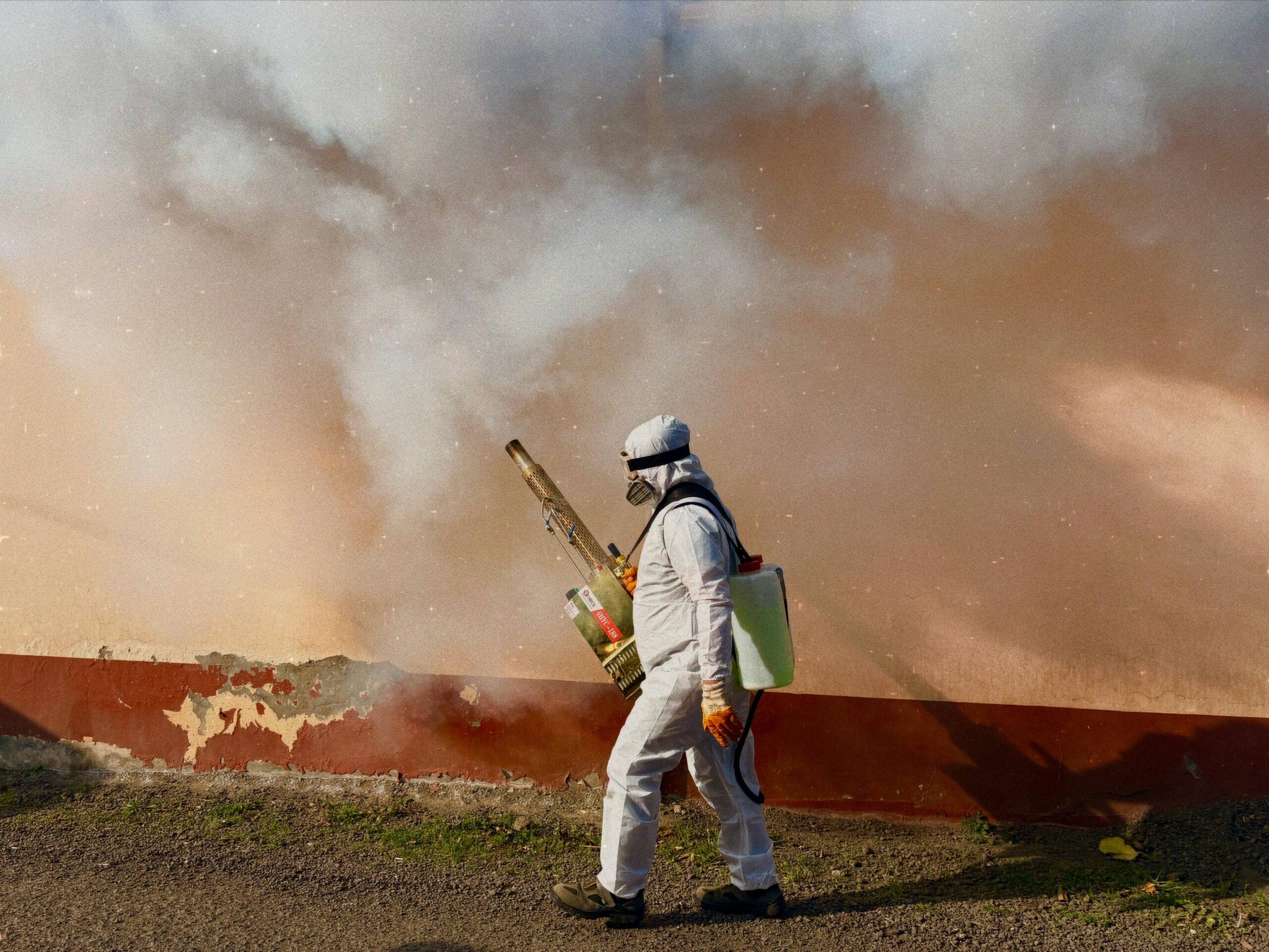
Fumigation is rarely the first line of defense for crickets, yet it becomes warranted when an infestation overwhelms DIY measures. Certified technicians use a sealed‑room approach, releasing a gas that penetrates cracks and voids where crickets hide. Safety protocols include evacuating the home, sealing doors and windows, and ventilating the space thoroughly after treatment. The result is a rapid, house‑wide knock‑down that can clear a severe outbreak in a single visit.
DIY vs. Professional Services
DIY pros: Lower upfront cost, immediate action, and full control over product choice. Cons: Inconsistent coverage, potential misuse of chemicals, and limited effectiveness against large colonies.
Professional pros: Trained application, access to EPA‑approved formulations, and a warranty that often includes follow‑up visits. Cons: Higher price tag and the need to schedule appointments.
Homeowners should weigh the size of the infestation, personal comfort with chemicals, and budget constraints before deciding. In many Buford neighborhoods, a hybrid approach—starting with non‑chemical barriers and finishing with a targeted professional spray—offers the best balance of safety and efficacy.
Post‑Treatment Monitoring
Even the most thorough treatment needs verification. Place sticky traps along baseboards, under outdoor lights, and near entry points. Check them weekly; a decline in captured crickets signals success. Pair trapping with a visual inspection of known harborage areas—under decks, in sheds, and around garden beds. If activity resurfaces, a second round of treatment or a shift to a different method may be necessary.
Understanding Cricket Control Costs in Buford
When crickets start chirping louder than a summer night in your backyard, the first question most homeowners ask is, “How much will it cost to get rid of them?” The answer isn’t a one‑size‑fits‑all figure because several variables shape the final price tag. By breaking down those variables and comparing local rates to national benchmarks, you can budget confidently and avoid surprise fees.
What Drives the Price?
Treatment type is the biggest cost driver. A simple perimeter spray, which creates a chemical barrier around the house, is less expensive than a full‑service fumigation that penetrates walls, crawl spaces, and landscaping. Property size matters, too—larger homes or yards require more product and labor, pushing the price upward. Finally, infestation severity influences how many visits are needed; a light, early‑season population may be cleared in a single application, whereas a heavy, multi‑zone outbreak often demands a series of treatments.
Cost Comparison: Buford vs. National Average
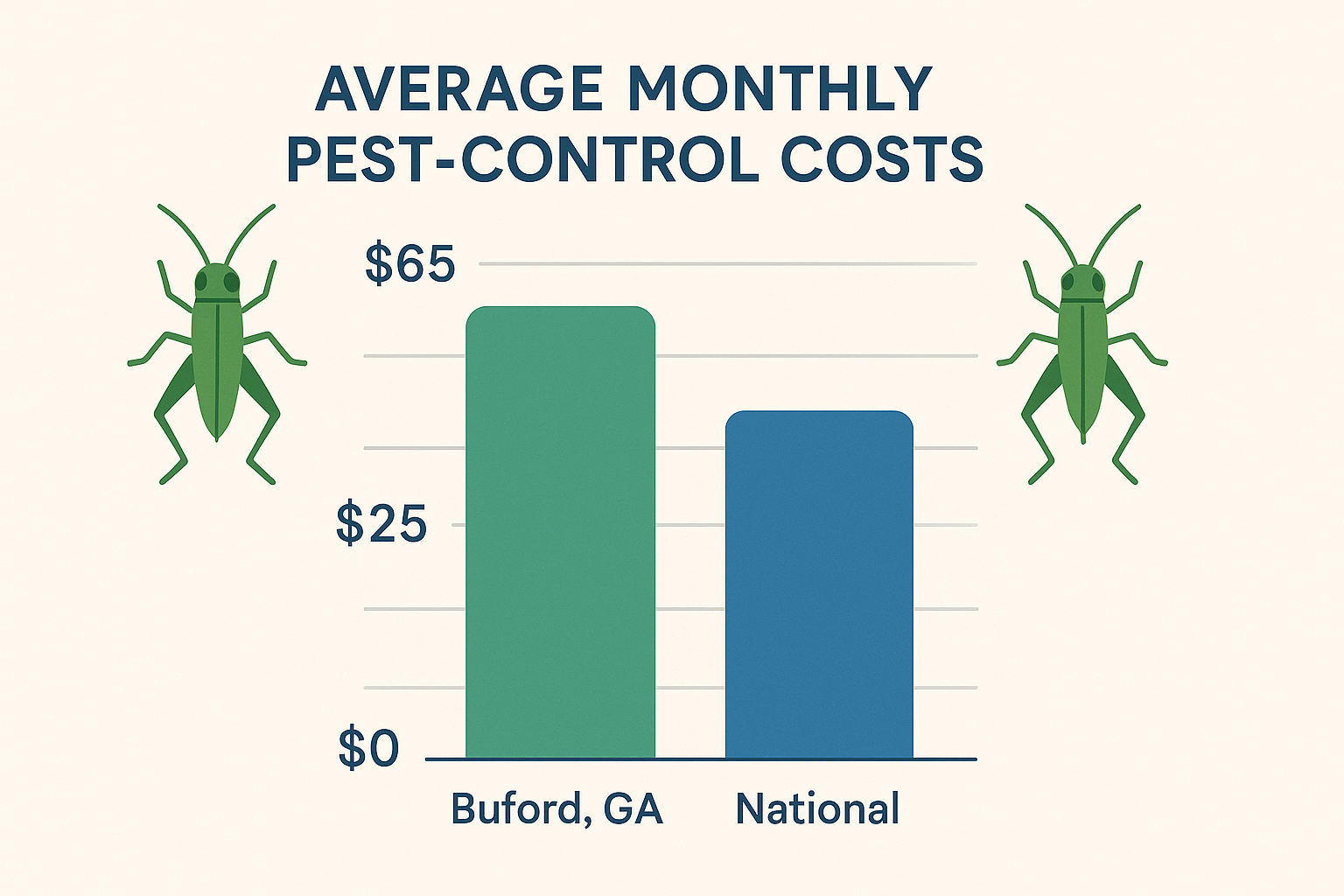
The bar chart above illustrates how Buford’s average monthly pest‑control spend stacks up against the national average. While the national figure hovers around $85 per month, Buford homeowners typically see a slightly higher range of $95‑$110. The difference reflects local demand, climate‑driven pest pressure, and the premium many residents place on rapid response services.
Typical Price Ranges for Cricket Management
- One‑time perimeter spray: $80 – $150 per application. This option is ideal for homeowners who want an immediate barrier without committing to ongoing visits.
- Quarterly maintenance plans: $30 – $60 per visit (four visits per year). Maintenance plans spread the cost over the year and keep the chemical barrier active during peak cricket season.
- Full‑service fumigation packages: $250 – $400 per treatment. Fumigation is the most thorough approach, suitable for severe infestations that have penetrated structural voids.
All of these figures are averages for typical single‑family homes in the Buford area. Larger properties, multi‑unit dwellings, or homes with extensive landscaping may see modest adjustments.
Industry Benchmark
Our pricing aligns with data from the National Pest Management Association (NPMA), which reports that the national median cost for a standard pest‑control visit sits at $85. The NPMA also notes that bundled services—combining cricket control with ant, roach, or mosquito treatments—can shave 10‑15 % off the total bill, a trend we see reflected in local pricing.
Tips for Getting the Best Value
- Bundle services: Ask your provider about combined packages. Pairing cricket control with seasonal mosquito or ant treatments often reduces the per‑service cost.
- Seasonal discounts: Many companies, including Anthem Pest Control, run spring‑time promotions when cricket activity spikes. Scheduling early can lock in lower rates.
- Guarantees and follow‑up visits: A solid guarantee means the provider will return at no extra charge if crickets reappear within a set timeframe. This protects your investment and ensures thorough eradication.
- Request a detailed estimate: A transparent quote breaks down labor, product, and travel fees. Compare multiple estimates to confirm you’re getting a fair market price.
- Maintain your property: Simple steps—like sealing cracks, trimming grass, and removing debris—reduce the need for frequent treatments, stretching your budget further.
By understanding the factors that shape cricket control costs, seeing how Buford’s prices compare nationally, and leveraging value‑adding tips, you can create a pest‑management plan that fits both your budget and your peace of mind.
Protect Your Home Today with Anthem Pest Control
Crickets are easy to miss until they start chirping through your walls or leaving unsightly droppings on your porch. If you’ve spotted any of the classic warning signs—loud night‑time chirping, small brown or black insects hiding in cracks, or tiny “chewed” spots on fabric and wood—you’re already halfway to a solution.
Quick Recap: What to Look For and When
- Identification signs: adult crickets are about ½‑¾ inch long, with long hind legs and a distinct “song” created by rubbing their wings.
- Seasonal risk periods: warm, humid evenings from late spring through early fall create the perfect breeding ground. In Buford, the peak window is May – September.
- Effective treatment strategies: targeted perimeter sprays, indoor crack‑and‑crevice applications, and habitat reduction (removing debris, trimming vegetation, and sealing entry points).
Why Early Intervention Saves Money
Addressing a few chirping guests now is far cheaper than battling a full‑blown infestation later. Early treatment typically requires a single, focused service—often under $150—whereas a severe outbreak can demand multiple visits, extensive chemical applications, and costly structural repairs. In short, a proactive approach protects both your peace of mind and your wallet.
Anthem Pest Control: Your Local Buford Experts
Our team brings more than generic solutions. Every technician is licensed, background‑checked, and trained in the latest, safest treatment methods. We use low‑impact products that protect your family and pets while eliminating crickets at the source. Because we operate throughout Georgia, we understand the unique pest cycles in Buford and can tailor a plan that fits the local climate.
Transparency is built into every quote—no hidden fees, no surprise add‑ons. You’ll know exactly what’s being applied, why it works, and how long it will protect your home.
Ready for a Cricket‑Free Home?
If you’ve noticed any of the warning signs or simply want the comfort of knowing your home is protected, our friendly staff is standing by. Give us a call for a free, no‑obligation quote and let us handle the chirping so you can enjoy a quiet night.
Call now: 877‑371‑8196
Visit Anthem Pest Control to learn more about our services and schedule your appointment today.