
Why Stink Bugs Are an Emergency Concern in Decatur, GA
The brown marmorated stink bug (Halyomorpha halys) has moved from a regional nuisance to a statewide threat in just a few short years. First detected in Georgia in the early 2010s, the species has capitalized on our state’s mild winters and abundant host plants, establishing dense populations across the metro Atlanta area—including Decatur. Unlike native stink bugs, the brown marmorated variety reproduces rapidly, tolerates a wide temperature range, and shows little natural predation, making its spread a genuine emergency for homeowners.
During the peak season—late summer through early fall—stink bugs aggressively seek shelter from dropping temperatures. They exploit the tiniest gaps: cracks around foundation walls, unscreened vents, loose window seals, and even tiny openings around utility lines. Once inside, they congregate in wall voids, attics, and closets, where they remain hidden until daylight forces them back out, often in massive numbers. This “hiding‑and‑emerging” behavior means that a few insects seen on a windowsill can signal a hidden army waiting to burst forth.
What the Infestation Looks Like Inside Your Home
- Odor: When crushed or disturbed, stink bugs release a potent, sulfur‑like smell that can linger on fabrics and furniture for days.
- Staining: Their defensive secretions can discolor upholstery, curtains, and bedding, leaving unsightly brown spots that are difficult to clean.
- Garden Damage: For homeowners who grow tomatoes, peppers, or fruiting vines, adult bugs pierce fruit and seedlings, causing rot and significant yield loss.
Population data from the University of Georgia’s Entomology Department illustrate why speed matters. A single female can lay up to 400 eggs over a three‑week period. In optimal conditions, a modest cluster of 20 bugs can swell to over 10,000 individuals within a month—a classic exponential curve that turns a minor annoyance into a full‑blown emergency almost overnight. This rapid escalation is why many Decatur residents report seeing “just a few” bugs one week and “hundreds” the next.
Decatur’s local climate amplifies the problem. Average autumn temperatures linger in the mid‑60s°F (≈18‑20°C), providing the perfect warm‑up period for breeding before winter sets in. High humidity levels in the region also boost egg viability, while the city’s mature tree canopy offers abundant feeding sites. Combined, these factors create a micro‑environment where stink bugs can reproduce continuously, outpacing the natural checks that limit their numbers elsewhere.
Because the infestation can grow so quickly, a rapid response isn’t a luxury—it’s a necessity. Homeowners who act within days of noticing the first signs dramatically reduce the chance of a massive indoor invasion and protect both their living spaces and garden harvests. Local expertise, like that offered by Anthem Pest Control, ensures that treatment is applied swiftly, safely, and effectively, keeping Decatur homes stink‑bug free.
Spotting a Stink Bug Infestation and Recognizing Early Warning Signs
Stink bugs may look harmless, but a few can quickly turn into a full‑blown nuisance. Knowing exactly what to look for lets you catch the problem before the insects multiply and start seeping their characteristic odor throughout the house.
Physical characteristics
Adult stink bugs are about a half‑inch long and sport a distinctive shield‑shaped body. Their exoskeleton is a mottled brown‑gray, and the antennae feature a thin white band near the tip—an easy visual cue that separates them from harmless beetles or moths. The insects’ flat, triangular shape makes them slip into tight cracks, so a quick glance at any small, shield‑like bug is often enough to confirm its identity.
Common locations inside the home
- Kitchen cabinets: Warm, humid corners near food storage attract feeding bugs.
- Window sills and screens: Sun‑lit ledges provide the heat stink bugs love.
- Attic and crawl spaces: These areas stay warm year‑round, making them perfect overwintering spots.
- Laundry rooms: The combination of heat from dryers and moisture from washers creates an inviting micro‑climate.
Behavioral clues
When disturbed, a stink bug releases a pungent, “rotten‑egg” odor that can linger for hours. They also tend to congregate in warm areas—especially during cooler months—forming small clusters on walls, behind appliances, or inside clothing drawers. If you notice a sudden gathering of tiny, brown insects near a heat source, it’s a strong indicator of an emerging infestation.
Early warning signs
Before you see a full swarm, look for subtle evidence:
- Minute brown spots on walls or baseboards—these are often the remnants of dead bugs.
- Faint oily stains on fabrics, especially in closets or on bedding; the bugs excrete a light oil as they move.
- An increasing, musty odor in storage areas or closets, even when no insects are visible.
These signs are easy to miss, but they signal that the population is growing. Acting at this stage can prevent a larger, more costly treatment later.
Macro photography as proof
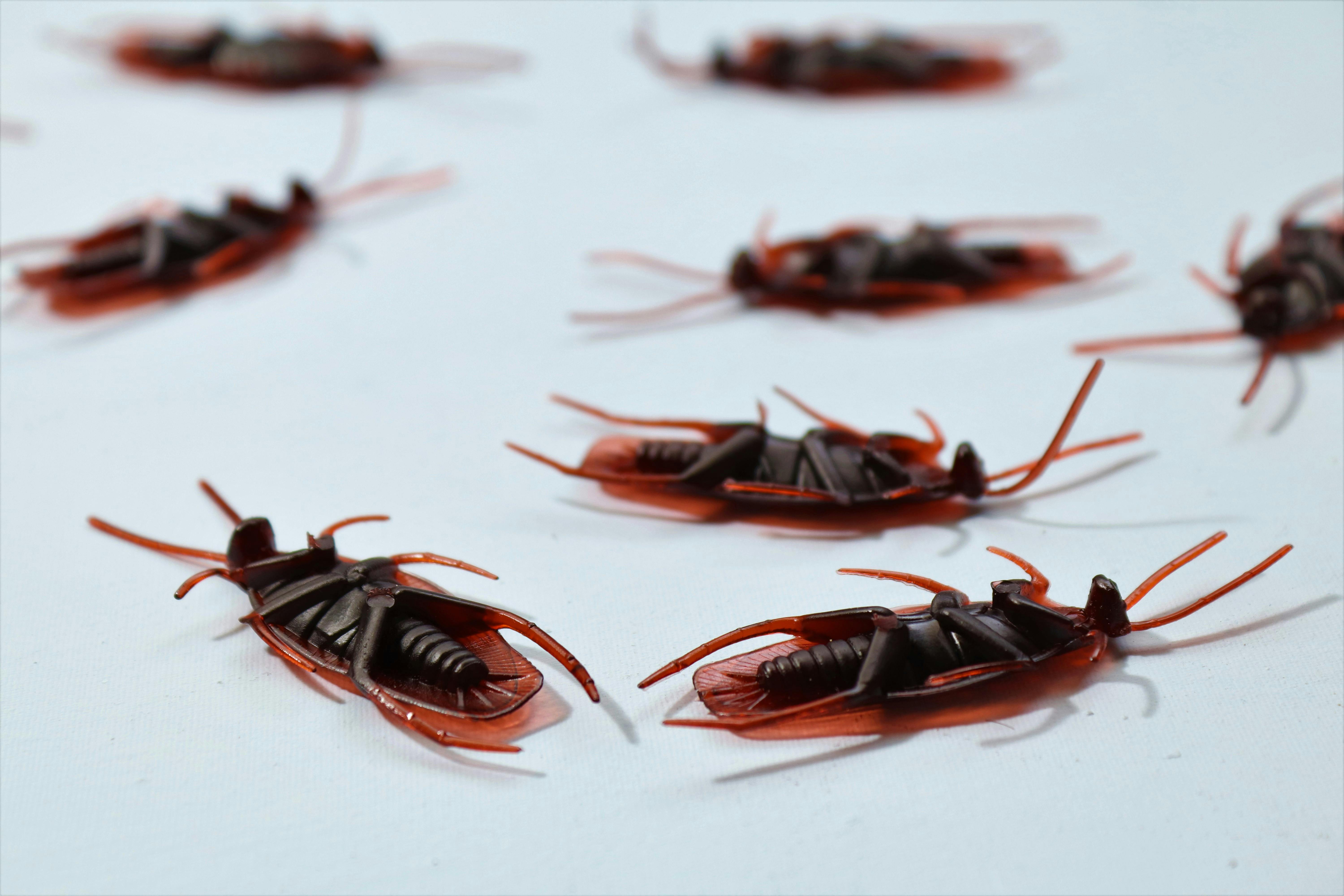
High‑resolution macro photos of dead stink bugs provide undeniable evidence of a problem that’s escalating. A single, clearly visible specimen on a countertop or inside a drawer can convince both you and a professional technician that immediate action is required. When you document the infestation, you also give your pest‑control provider a precise visual reference for targeted treatment.
Seasonal Activity of Stink Bug Season in Georgia and Preventive Actions
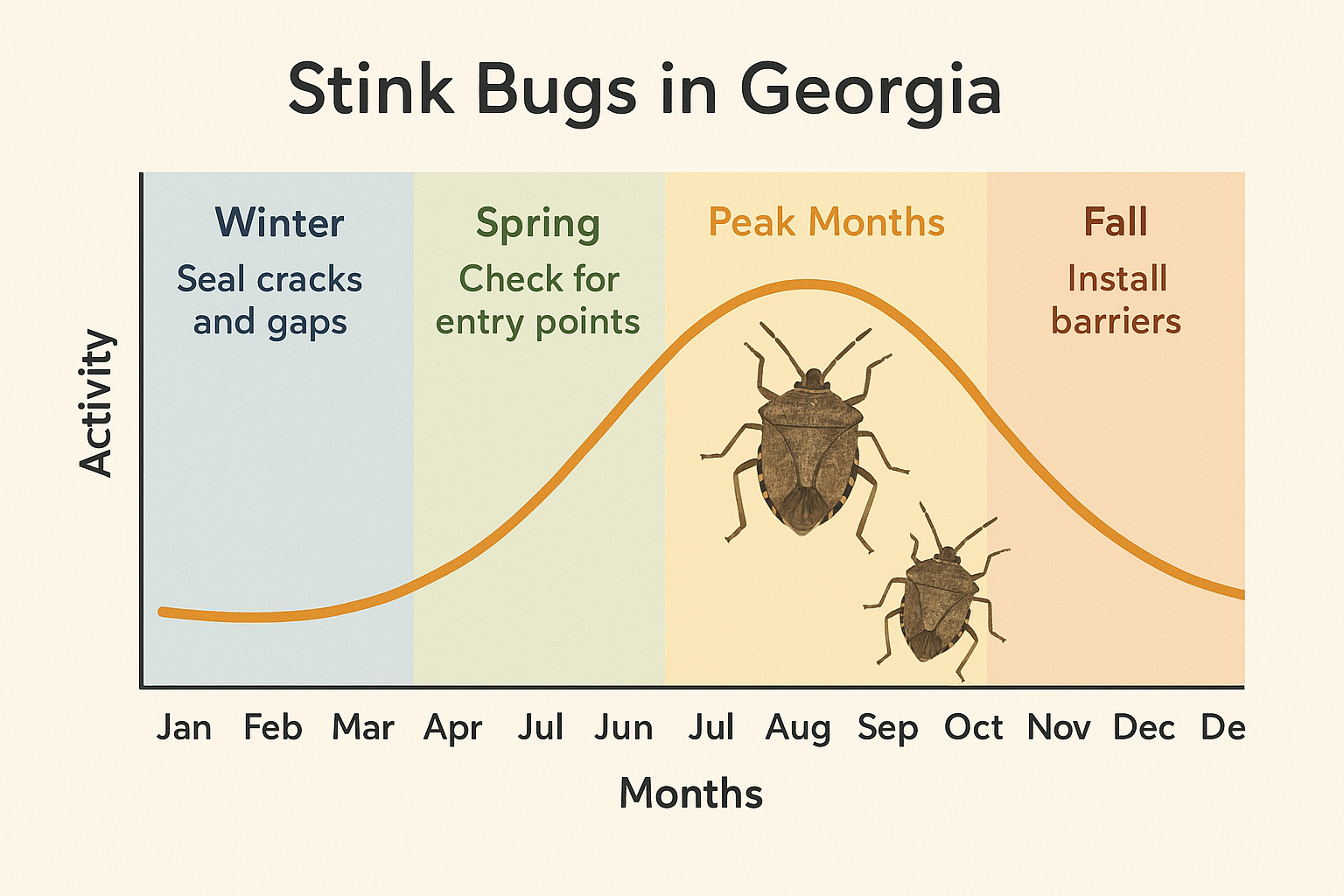
Stink bug activity in Georgia follows a predictable rhythm, and understanding that rhythms lets you act before a nuisance becomes an emergency. The insects spend the colder months hidden in attic corners or under siding, then march through spring, breed through summer, and finally congregate in the fall before slipping back into shelter for winter.
Life Cycle at a Glance
- Winter (December – February): Adult stink bugs overwinter in tight‑tipped cracks of house‑sided walls, att att att attic, and behind foundation.
- Spring (March – May): As temperatures rise above 55 °F, adults emerge, start feeding on early‑season vegetation, and begin the first round of breeding.
- Summer (June – August): The population peaks. Females lay dozens of eggs on the underside of leaves, and multiple generations can develop in a single season.
- Fall (September – November): Adults seek shelter inside homes for the winter, often in large numbers, leading to the infamous “house‑fill” that homeowners notice.
Season‑by‑Month Activity Chart
| Month | Activity | Key Concern |
|---|---|---|
| January – February | Adults deep‑sheltered, minimal activity | Potential indoor buildup |
| March – May | Seal gaps before they slip inside
| |
| June – August | Peak breeding, highest population | |
| September – November | ||
| December |
Season‑Specific Prevention Tips
- Spring: Inspect and seal foundation cracks, window gaps, and vent openings. Apply a perimeter spray on the first sign of activity to halt the first generation.
- Summer: Clear leaf litter, fallen fruit, and mulch that act as shelter. Trim shrubs away from the house to reduce bridge‑path for the bugs.
- Fall: Install door‑swe
- Fall: Install door sweeps, replace worn weather‑stripping, and apply a light perimeter treatment to catch the “first‑fall” of adults seeking shelter.
- Winter: Vacuum any sighted bugs from interior walls, ceilings, and baseboard creases. Store the vacuum bag in a sealed container and discard it outside of the home.
Landscape Practices that Deter Stink Bugs
Trim back shrubs so they do not touch the house, and keep lawn edges trimmed to eliminate bridge‑pathways. Remove fruit‑bearing trees or, at a minimum, harvest ripe fruit promptly—ripe fruit is a strong attractant. Replace mulch with gravel or stone near the foundation, as sand‑based mulch provides a sheltering “nest” for the insects.
Why Acting in Early Spring Matters
Targeting the first wave of adults before they reproduce can cut the entire season’s population by half. A professional “early‑spring” treatment seals entry points and applies a perimeter insecticide while the first adults are still few. This proactive approach prevents the explosive summer surge that typically triggers emergency call‑outs, saving you both time and money.
Emergency Stink Bug Control Options, Pricing, and What to Expect
Professional emergency treatment methods
When stink bugs breach a home’s defenses, rapid action is essential. Technicians typically start with perimeter fumigation using low‑smoke machines that push a fine, insecticidal mist around the exterior walls, sealing entry points before insects can retreat inside. Inside the house, residual sprays are applied to baseboards, window frames, and other hiding spots, creating a lasting barrier that kills bugs on contact for weeks. For immediate removal, targeted vacuuming with HEPA‑filtered units extracts insects without spreading their odor, and the collected material is sealed for safe disposal.
Step‑by‑step of a typical emergency visit
- Inspection: The pest professional conducts a quick visual sweep, noting infestation hotspots, entry routes, and any structural vulnerabilities.
- Treatment plan: Based on the findings, a customized plan is outlined—often a combo of perimeter fumigation, indoor residual spray, and spot‑vacuuming.
- Safety precautions: Residents are asked to close windows, cover food, and vacate the immediate treatment area while the smoke machine operates (usually 15‑20 minutes).
- Post‑treatment follow‑up: Within 24‑48 hours, a technician returns to assess effectiveness, re‑apply spray if needed, and advise on preventive steps such as sealing cracks or installing door sweeps.
Pricing snapshot
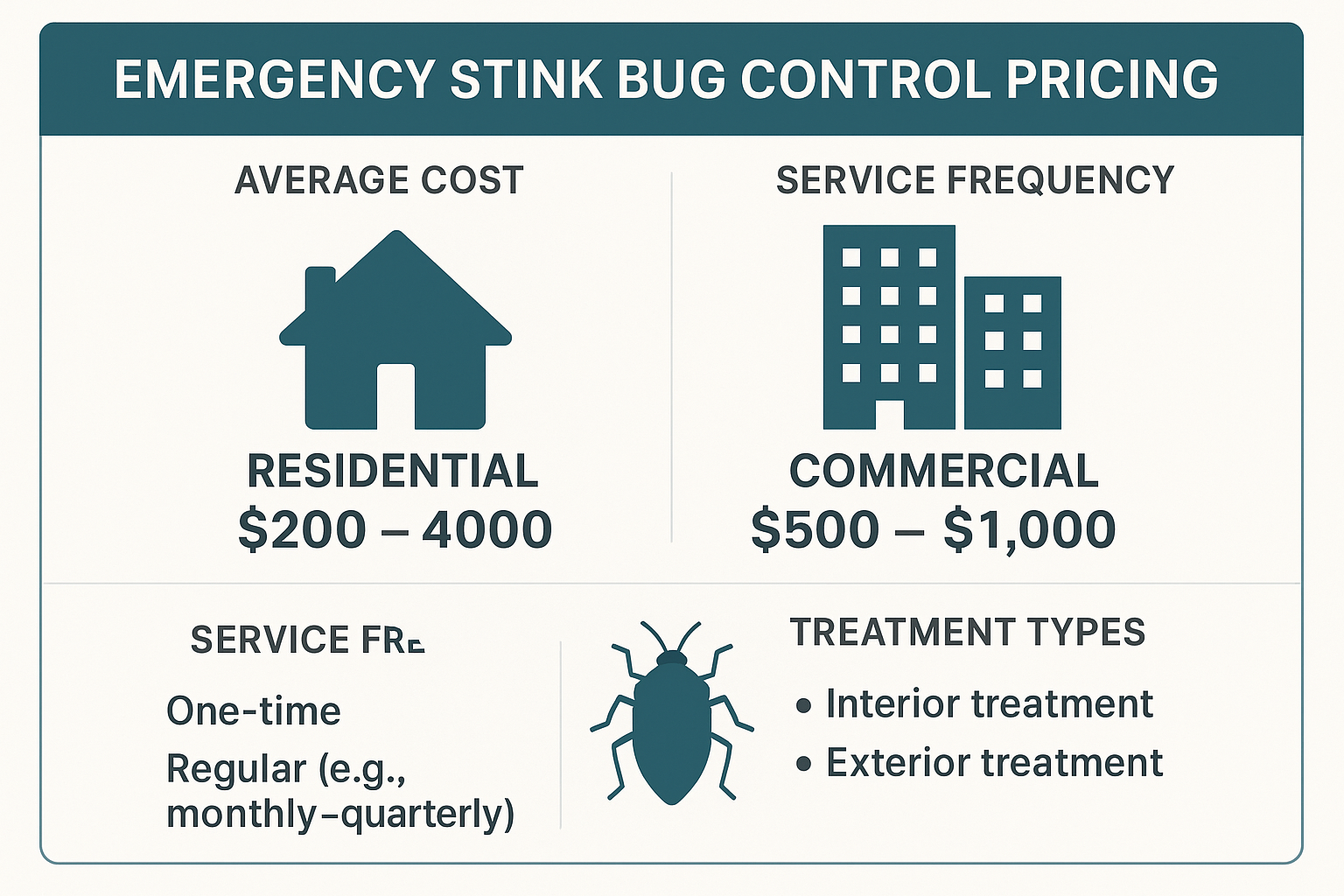
The infographic above breaks down the cost differences you’ll see whether you own a single‑family home or a commercial property. Residential emergencies typically run $150‑$300 for a one‑time visit, while commercial jobs range from $500‑$900 due to larger square footage and more extensive treatment zones.
What drives the price?
- Infestation severity: A light, localized problem requires less product and time than a full‑scale invasion.
- Property size: Bigger homes or commercial spaces need more fumigation cycles and additional spray applications.
- Repeat visits: If the first treatment doesn’t achieve the desired knock‑down, follow‑up appointments add to the total cost.
Where the numbers come from
Our pricing ranges are based on data collected from local providers, including the Anthem Pest emergency stink bug control in Decatur, GA listing. By keeping the pricing transparent, we help homeowners in Druid Hills understand exactly what they’re paying for and why.
What you can realistically expect
After an emergency visit, most homeowners notice a dramatic drop in stink bug activity within 24 hours. Residual sprays continue to work for 2‑4 weeks, reducing the chance of a quick rebound. However, because stink bugs can hide in wall voids and attic spaces, a follow‑up inspection is often recommended to ensure the colony is fully eradicated. With proper sealing and seasonal monitoring, future emergencies become far less likely.
Choose Anthem Pest Control for Fast, Reliable Stink Bug Relief

When a stink‑bug swarm invades your Druid Hills home, every hour counts. The sooner the infestation is addressed, the less damage to windows, siding, and indoor décor, and the lower the chance of bugs spreading to neighbors.
Anthem Pest Control brings certified technicians and locally‑trained staff to every emergency. Our crews follow proven treatment protocols that have been refined on thousands of Georgia homes, ensuring you get the most effective solution the first time you call. Because our technicians live and work in the Druid Hills area, they understand the unique entry points and seasonal patterns that affect stink‑bug activity here.
Safety is never an afterthought. We use only EPA‑approved, low‑odor products that protect pets and children while eliminating stink bugs. These low‑odor formulas also minimize disruption to daily life, letting you continue cooking or sleeping without the strong chemical smell.
Our pricing is transparent—no hidden fees or surprise surcharges. You receive a free on‑site quote before any work, and the estimate covers labor, materials, and follow‑up visits for lasting control. If you decide to schedule treatment, we’ll coordinate the best time for your family’s schedule, often completing the service in under an hour.
We back our service with a 24‑hour response window, a follow‑up inspection, and a satisfaction warranty that covers retreatment if bugs return within the guarantee period. Our guarantee also includes a phone‑call support line, so you can reach us any time you notice new activity. That’s peace of mind every homeowner deserves.
Ready for a stink‑bug‑free home? Call Anthem Pest Control at 877‑371‑8196 for a complimentary emergency assessment and quote. Visit Anthem Pest Control online, and our team will be on the line within hours to protect your family and property.