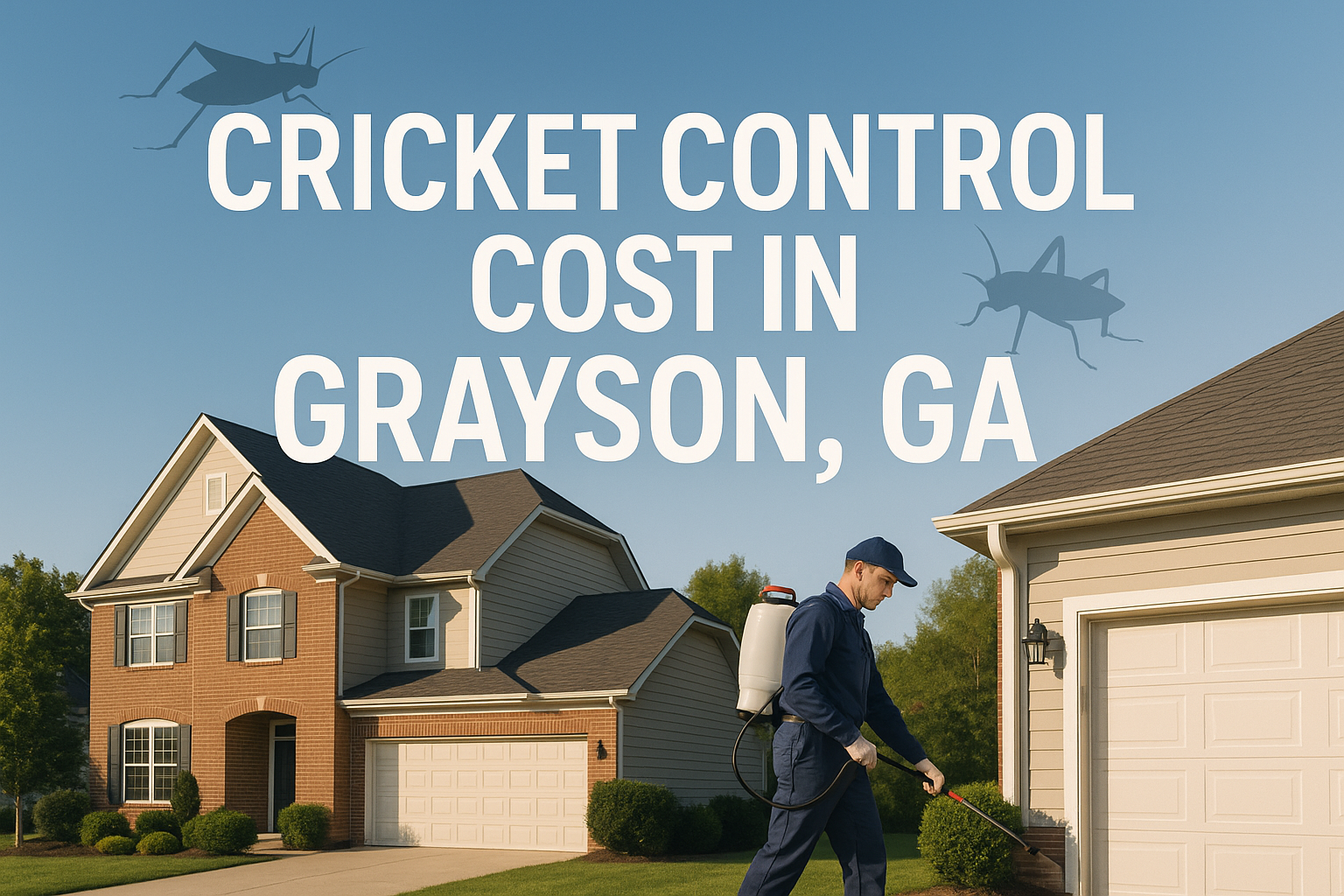
Cricket Infestations in Grayson – Why Cost Transparency Matters

Cricket control cost in Grayson is one of the most common concerns for homeowners once the Georgia summer rolls in. Many residents researching Cricket control cost Grayson want to understand what they can expect to pay before scheduling treatment. Most Grayson residents look forward to longer evenings on the porch — but what they don’t anticipate is the loud chorus of crickets that can quickly turn a peaceful yard into a noisy nuisance. In Grayson, cricket infestations are not a rare occurrence; they are a predictable, seasonal challenge that peaks between June and September. The region’s warm, humid climate provides the perfect breeding ground, allowing cricket populations to multiply rapidly in just a few weeks.
These insects are more than just a soundtrack. A heavy cricket presence can lead to:
- Unpleasant chirping that disrupts sleep and outdoor gatherings.
- Damage to ornamental plants as some species feed on foliage.
- Potential attraction of secondary pests, such as spiders that prey on the crickets.
Because the problem is both seasonal and fast‑moving, homeowners often turn to professional pest control services as soon as they notice the first signs of an infestation. That’s where cost transparency becomes essential. Without a clear breakdown of fees, a family can easily over‑budget or, worse, encounter surprise charges after treatment.
Transparent pricing serves three critical purposes:
- Budget confidence: Knowing the exact cost of inspection, treatment, and any follow‑up visits lets homeowners allocate funds without fear of hidden fees.
- Service comparison: When multiple companies provide itemized quotes, it’s easier to compare value‑added services such as preventative monitoring or eco‑friendly treatment options.
- Trust building: A detailed estimate signals that the pest‑control provider respects the homeowner’s time and money, reinforcing the professional relationship.
In the sections that follow, we’ll break down the key cost drivers for cricket control in Grayson—everything from the type of treatment (chemical vs. organic) to the size of the property and the severity of the infestation. We’ll also present regional pricing benchmarks so you can see how Grayson rates compare to neighboring counties. Finally, you’ll receive practical quote‑getting tips to ensure the estimate you receive is both comprehensive and fair.
Think of this guide as a data-driven roadmap to understanding cricket control cost in Grayson. By the end, you’ll have a clear picture of what to expect on the invoice, how to avoid unexpected add-ons, and why Anthem Pest Control’s commitment to transparent pricing sets us apart from the competition. Let’s break down the real numbers so you can make a confident, informed decision before the crickets start singing.
Common Cricket Species and Seasonal Activity in Grayson
When you hear that familiar chirp inside your kitchen or find a lone cricket hopping across the living‑room floor, the culprit is almost always the house cricket (Acheta domesticus). This species thrives in human‑made structures because it feeds on food crumbs, organic debris, and the occasional plant matter that accumulates in pantry shelves or bathroom cabinets. In Grayson, the house cricket is the primary indoor invader, accounting for more than 80 % of all residential cricket sightings reported to local pest‑control services.
Secondary Species You Might Encounter
While the house cricket dominates indoor reports, a handful of outdoor species occasionally wander inside during peak summer humidity. The field cricket (Gryllus assimilis) is the most common of these, preferring grassy lawns and open fields before it mistakenly follows a light source into a home. Tree crickets (Oecanthus spp.) are another occasional visitor; their delicate, pale bodies and long antennae make them easy to spot, but they rarely establish a lasting indoor presence.
June‑September: The Height of Cricket Activity
Grayson’s warm, humid summers create the perfect breeding ground for crickets, which directly impacts cricket control cost in Grayson during peak season. From early June through late September, average nightly temperatures hover between 75°F and 85°F, and nighttime humidity often exceeds 70%. These conditions accelerate the life cycle of A. domesticus, allowing it to produce multiple generations in a single season. As cricket populations surge, the demand for professional treatment rises — and so can the overall cost for homeowners seeking fast, effective control.
According to the 2023 Georgia Cooperative Extension report, cricket complaints rose by 12 % during the summer months compared with the rest of the year. This uptick reflects both the biological surge of crickets and the increased likelihood that residents notice them when they are most active at night.
Neighborhood Hotspots: Downtown and East Grayson
Not all parts of town experience the same level of cricket activity. Downtown Grayson, with its mature trees, ornamental gardens, and higher density of mulch beds, retains more moisture after summer rains. This micro‑environment attracts both house and field crickets, leading to a noticeable spike in indoor sightings during July and August.
East Grayson, on the other hand, features larger residential lots with shaded backyards and frequent irrigation. The combination of shade and consistent moisture creates a refuge for crickets that are seeking shelter from the daytime heat. Homeowners in these areas often report hearing louder choruses at dusk, a clear sign that the local cricket population is thriving.
What This Means for Homeowners
Understanding which species are most likely to enter your home and when they are most active helps you time preventative measures effectively. Sealing cracks around windows, repairing screen doors, and reducing indoor food sources are especially critical before the June‑September surge. For residents of Downtown or East Grayson, extra attention to outdoor lighting and yard debris can cut down the number of crickets that make the indoor leap.
By recognizing the seasonal patterns and neighborhood factors that drive cricket activity, you can work with a trusted pest‑control partner—like Anthem Pest Control—to implement targeted treatments that keep your home quiet and cricket‑free throughout the summer.
Key Factors That Influence Cricket Control Pricing
Property Size Matters
At Anthem Pest Control, the first number we look at is the square footage of your home. A small residence—typically ≤ 1,500 sq ft—requires fewer labor hours and a lower volume of treatment products. Larger properties—those > 2,500 sq ft—need more crew time to move furniture, cover additional interior spaces, and apply a greater amount of barrier spray around the perimeter. Because labor is the biggest cost driver, you’ll see a clear price jump as the square footage climbs.
Infestation Severity
Cricket activity isn’t a one‑size‑fits‑all issue. A light infestation might involve a handful of crickets heard at night, with only a few entry points to address. In that case, a single treatment can often break the cycle. A heavy infestation, however, usually signals multiple entry points, excess moisture, and even structural gaps that invite other pests. Treating a severe problem often means using additional products, applying extra barrier zones, and scheduling follow‑up visits to ensure the population is fully eradicated.
Treatment Types and Their Cost Impact
- Barrier spray: A perimeter application that creates a chemical shield around the home’s foundation, preventing crickets from crossing onto the property.
- Interior fogger: A fine mist deployed inside the house to target hidden crickets and their nymphs, especially effective in closets and crawl spaces.
- Moisture‑barrier treatment: Addresses the underlying humidity that attracts crickets, often involving dehumidifiers or moisture‑absorbing granules.
- Guaranteed follow‑up visits: A scheduled revisit (usually 30‑45 days later) to re‑inspect and retreat if needed, which adds a modest surcharge but provides peace of mind.
Example Scenario: Mid‑Size Home with Moderate Infestation
Imagine a 1,800 sq ft house in Grayson that’s experiencing a moderate cricket problem—enough to hear chirping nightly, but not yet a full‑blown swarm. Our technician recommends a barrier spray around the exterior, an interior fogger for the living areas, and a moisture‑barrier treatment in the basement. Because the property falls between the small and large categories, the base price is calculated for a mid‑size home. Adding a second visit for a guaranteed follow‑up bumps the total cost by roughly 15 %. This extra visit ensures any missed crickets are caught before they reproduce, saving you future expenses.
Inspection Steps Before a Quote
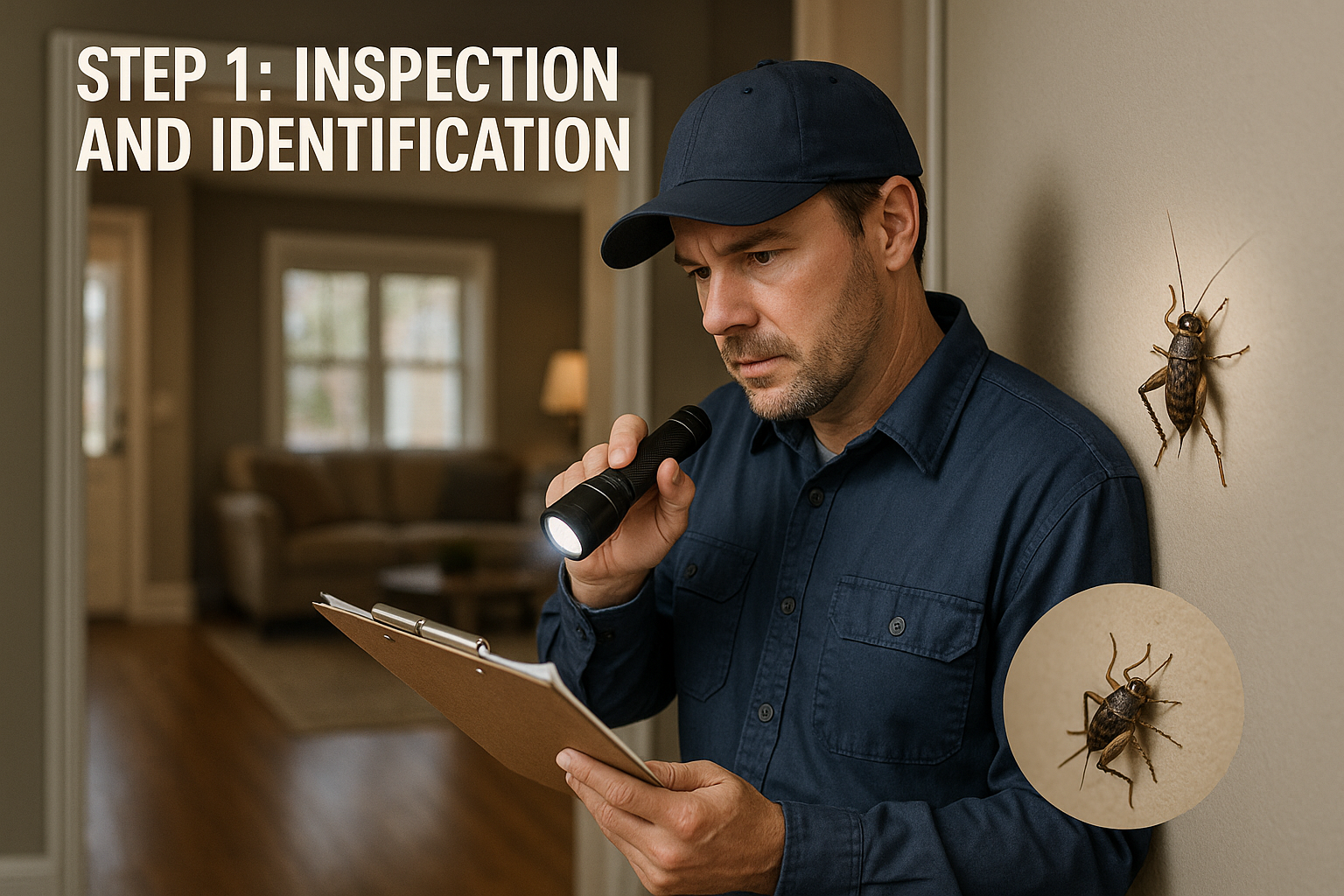
Before we hand you a price, we conduct a thorough on‑site inspection. The process is systematic and designed to uncover every factor that could affect treatment depth and frequency:
- Visual assessment: Technicians walk through each room, listening for chirping and spotting signs such as cricket droppings or damaged foliage.
- Moisture evaluation: Using handheld hygrometers, we measure humidity levels in basements, crawl spaces, and other damp zones that attract crickets.
- Perimeter mapping: We chart all exterior entry points—cracks, vents, and gaps—so the barrier spray can be precisely applied where it matters most.
By breaking down these variables—property size, infestation severity, treatment type, and the exact steps of our inspection—you’ll see why cricket control pricing isn’t a flat rate. Anthem Pest Control tailors each quote to the unique conditions of your home, ensuring you pay for exactly the service you need, no more, no less.
Regional Pricing Benchmarks for Cricket Control
When you’re trying to decide how much you’ll spend to keep crickets out of your yard and home, the numbers can feel scattered. The good news is that most reputable companies in the Grayson‑area cluster around a predictable range. Below is a clear, side‑by‑side look at what local providers typically charge for a full cricket‑control service, so you can compare apples to apples before you pick a partner.
Provider‑by‑Provider Snapshot
- Anthem Pest (Brookhaven, GA) – A comprehensive cricket‑control package that includes a three‑step inspection, a moisture‑barrier treatment, and one guaranteed follow‑up visit. Pricing runs between $130 and $280 per service.
- Expest (Grayson) – Offers tiered “Silver, Gold, Platinum” plans. The Silver tier starts at $99 per month for perimeter treatment. While the plan isn’t cricket‑specific, it can be adapted to include cricket control as an add‑on.
- U.S. Pro‑Kil Pest Control – Provides free, on‑site quotes. Most homeowners receive a combined‑service estimate that lands between $120 and $250 for a full treatment that includes crickets, ants, and other common pests.
- Arete Pest Control (Pest+) – Charges $70 per month for a broad pest‑prevention package. Cricket control is quoted separately, typically adding $30‑$80 to the monthly bill depending on infestation severity.
- Massey Services & PestNation – Both operate under umbrella pest‑management contracts. Prices are not published publicly, but customers report one‑time cricket‑control jobs falling in the $120‑$300 window, mirroring the regional average.
Quick‑Reference Pricing Table
| Provider | Package Details | One‑Time Price Range | Monthly Option (if any) |
|---|---|---|---|
| Anthem Pest | 3‑step inspection, moisture barrier, guaranteed follow‑up | $130 – $280 | None |
| Expest | Silver perimeter treatment (adaptable for crickets) | Not listed (per‑service estimate required) | Starting at $99/mo |
| U.S. Pro‑Kil | Combined pest service with cricket focus | $120 – $250 | None |
| Arete Pest Control (Pest+) | Broad pest plan; cricket add‑on quoted separately | ~$30 – $80 extra per month | Starting at $70/mo |
| Massey Services / PestNation | Custom one‑time cricket treatment | $120 – $300 | Varies by contract |
What the Numbers Mean for You
Putting the pieces together, the realistic one‑time cost you’ll encounter in Grayson sits between $120 and $300. The lower end typically reflects a basic perimeter spray with limited follow‑up, while the higher end includes a thorough inspection, moisture‑barrier application, and a guaranteed revisit to ensure the crickets stay put.
Two key variables drive the spread:
- Treatment depth. Companies that seal moisture sources and apply a multi‑stage barrier (like Anthem Pest) usually charge more because they’re tackling the root cause, not just the visible insects.
- Guarantee and follow‑up. A service that promises a second visit at no extra cost adds value—and price. If you’re comfortable handling a single spray yourself, you may land nearer the $120 mark.
For homeowners who prefer a predictable monthly expense, the Silver tier from Expest or the Pest+ plan from Arete provide a steady $70‑$99 per month, with a modest cricket add‑on. This can be a smart choice if you have recurring pest concerns beyond crickets, as the bundled approach often saves money over multiple one‑time jobs.
Visual Summary
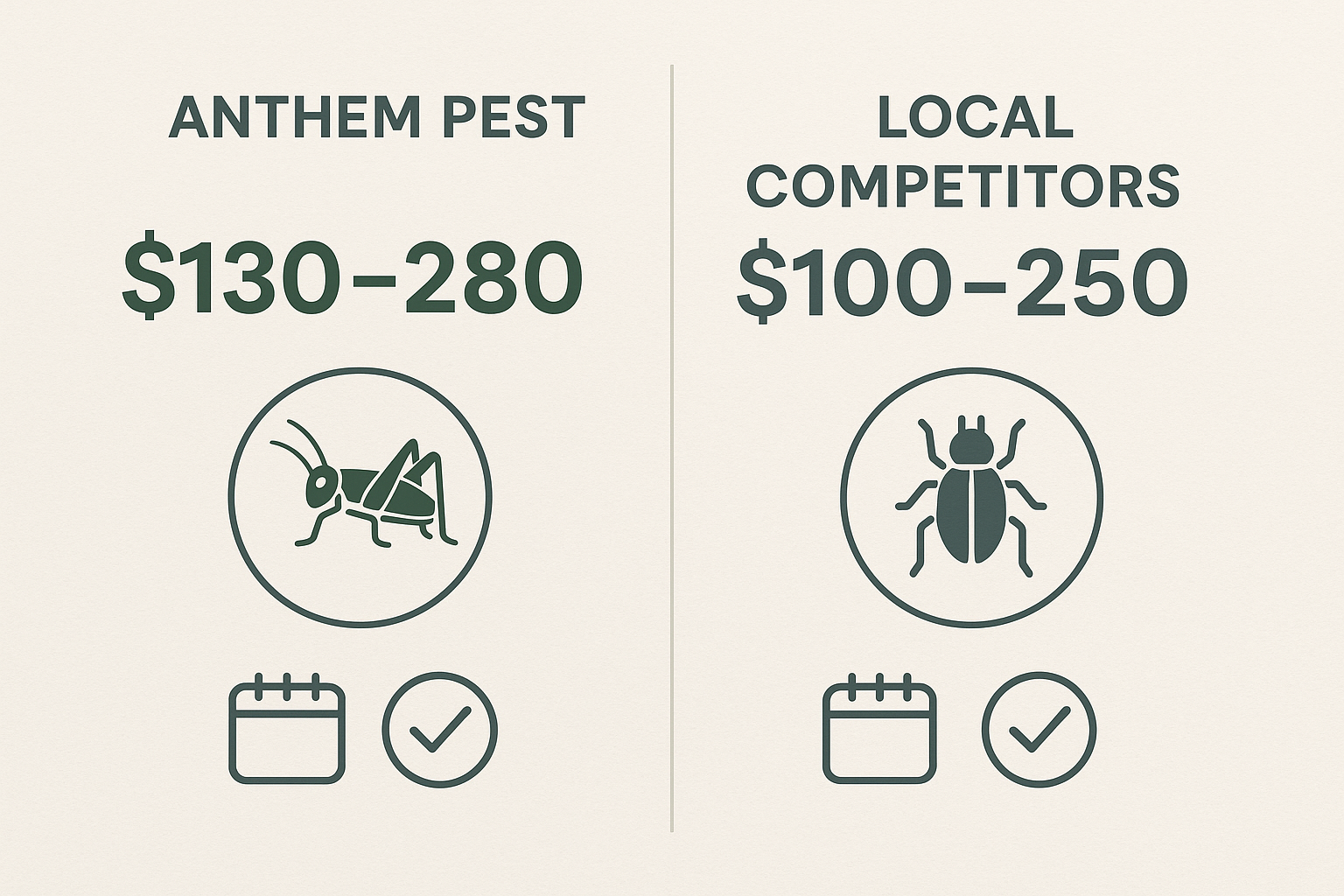
Use the chart above to quickly spot which provider aligns with your budget and service expectations. Remember, the cheapest option isn’t always the most effective—especially when crickets return because moisture wasn’t addressed. A modest investment in a thorough, guaranteed plan can keep your yard quiet and your porch cricket‑free all season long.
What Professional Cricket Control Services Include
When you call a licensed provider such as Anthem Pest Control, the job isn’t a single “spray and go.” A professional cricket program is built on three core phases—inspection, treatment, and guarantee—each with clear, billable steps. Knowing exactly what’s included lets you compare quotes side‑by‑side and spot any hidden fees before you sign.
Step‑by‑Step Inspection
Technicians begin with a 3‑step inspection that goes beyond a quick glance:
- Visual assessment: The pest specialist walks the interior and exterior, noting cricket activity, entry points, and any debris that could serve as a harbor.
- Moisture assessment: Because crickets thrive in damp environments, the crew measures humidity levels around foundations, crawl spaces, and indoor bathrooms using handheld hygrometers.
- Perimeter mapping: Using a handheld GPS or a simple tape measure, the technician sketches a perimeter map that highlights vulnerable zones—like siding cracks, door sweeps, and landscape mulch beds—so treatment can be targeted precisely.
Treatment Methods You’ll See on the Job
After the inspection, Anthem applies a blend of low‑toxicity solutions designed for safety and effectiveness:
- Barrier sprays around foundations: EPA‑registered, low‑odor sprays are applied in a thin, continuous line along the building’s perimeter. The formulation creates a chemical “wall” that crickets cannot cross without being knocked down.
- Interior fogging for hiding spots: Professional foggers disperse a fine mist into closets, under appliances, and inside wall voids where crickets hide during the day. The fog penetrates cracks that a spray bottle cannot reach.
- Moisture‑barrier applications: In areas with high humidity, technicians may apply a moisture‑absorbing gel or a sealant to basement walls and crawl‑space joists. Reducing moisture removes the primary food source—damp organic material—that keeps crickets thriving.
Guarantees and Follow‑Up Care
Anthem backs every treatment with a 30‑day follow‑up visit. If crickets reappear within that window, the company will re‑treat the affected zones at no extra charge. In addition
DIY Approaches vs. Hiring a Professional
What the DIY market offers
Most homeowners start with the familiar aisle‑side solutions: aerosol sprays, liquid concentrates, and sticky traps that retail for roughly $15‑$30 per unit. These products are marketed as “quick fixes” and can be effective for a single, isolated cricket sighting. In a typical 1,500 sq ft home, however, field data shows that over‑the‑counter treatments achieve only about 60% of the control level that a professional service provides. In larger homes the gap widens, with effectiveness dropping an additional 40% once the square footage exceeds that threshold.
Hidden costs and risks of DIY
- Improper pesticide handling: Without proper training, users may apply too much, too little, or in the wrong locations, rendering the product ineffective and potentially creating health hazards.
- Pet and child safety: Many household sprays contain neurotoxic ingredients that can linger on surfaces, posing a risk to curious children and pets if not applied and ventilated correctly.
- Missed entry points: Crickets often enter through cracks, gaps around utility lines, or open doors. DIY kits rarely include the tools or expertise needed to locate and seal these pathways, leading to recurring invasions.
- Repeated infestations: Because the DIY approach typically targets only the visible insects, eggs and nymphs hidden in wall voids or basements survive, causing the problem to reappear weeks later.
Professional services: the return on investment
- EPA‑registered products: Technicians are trained to select and apply chemicals that meet federal safety standards and are proven to penetrate hard‑to‑reach areas.
- Targeted inspection: Professionals conduct a thorough walkthrough, identifying and sealing entry points, reducing the likelihood of future invasions.
- Time savings: A trained technician can complete a full‑home treatment in under an hour, freeing homeowners to focus on work, family, or leisure.
- Long‑term cost efficiency: By preventing repeat sightings, the need for multiple follow‑up purchases of sprays and traps is eliminated.
Local consumer surveys back up the financial logic: 85% of homeowners who opted for professional cricket control reported fewer repeat sightings compared with those who relied on DIY methods. That statistic translates into fewer emergency purchases, less downtime, and a more comfortable living environment.
Quick comparison at a glance
| Metric | DIY Approach | Professional Service |
|---|---|---|
| Initial Cost | $15‑$30 per product | $120‑$250 per treatment |
| Effectiveness (1500 sq ft+ homes) | ~60% of professional level | 100% (EPA‑registered) |
| Time Investment | 2‑4 hours + follow‑ups | Under 1 hour |
| Safety Risks | Higher (misapplication, residues) | Lower (trained handling) |
| Repeat Infestations | Common (40‑60% chance) | Rare (≈15% chance) |
Getting Accurate Cricket Control Quotes in Grayson
Before you call a pest‑control company, gather the basics about your home. Knowing the square footage, the number of stories, any recent moisture problems, and where you’ve actually seen crickets will give technicians a clear picture of the work required. For example, a 2,000 sq ft, two‑story house with a damp basement will need a different treatment plan than a single‑story ranch with dry conditions.
What to Include in Your Property Snapshot
- Square footage and layout: total area, number of levels, and any attached structures.
- Moisture history: past leaks, high humidity rooms, or recent flooding.
- Cricket activity: locations where you hear chirping or see nests, such as near lights, in crawl spaces, or around foundation cracks.
- Existing barriers: any moisture‑proofing or sealing you’ve already applied.
Ask for Itemized, Written Estimates
When you contact a provider like Anthem Pest, request a written quote that breaks down every component of the service. An itemized estimate should list:
- Initial inspection fee
- Type and amount of treatment (e.g., perimeter spray, interior dust, moisture barrier)
- Follow‑up visits or re‑treatments
- Warranty coverage and duration
- Any additional fees (disposal, travel, equipment)
Sample Phone Script for Anthem Pest
Using a concise script helps you stay on track and ensures you receive the details you need. Try this when you call:
“Hi, this is [Your Name] from [Your Neighborhood]. I’m looking for a detailed quote for cricket control for my 2,000 sq ft home in Grayson. Could you include the cost of inspection, treatment, any moisture‑barrier work, follow‑up visits, and the warranty terms? I’d appreciate an itemized written estimate.”
Compare Total Cost, Not Just the Base Price
Many companies advertise a low “base price” that only covers the initial inspection. The real expense comes from the treatment, follow‑up, and warranty. When you line up three or four quotes, add up every line item to see the true total. A $120 base price might balloon to $350 once chemicals, labor, and guarantees are factored in.
Document Quotes Side‑by‑Side
Creating a simple spreadsheet lets you compare offers at a glance. Below is a sample table you can copy into Excel or Google Sheets:
| Provider | Inspection | Treatment | Follow‑up | Warranty | Total Cost |
|---|---|---|---|---|---|
| Anthem Pest | $80 | $180 | $60 (1 visit) | 12 months | $320 |
| Local Pest Co. | $70 | $150 | $80 (2 visits) | 6 months | $300 |
| EcoGuard | $90 | $200 | $0 (no follow‑up) | 18 months | $290 |
Fill in the actual numbers you receive, then sort by total cost, warranty length, or any other factor that matters to you. This systematic approach removes guesswork, helps you negotiate better terms, and ensures you choose a provider who truly understands the unique cricket challenges of Grayson homes.
Selecting a Reliable Cricket Control Provider
When it comes to eradicating crickets in your Grayson home, the right provider can mean the difference between a quick fix and a recurring nightmare. Below are the essential criteria you should apply before signing a contract.
1. Verify State Licensing and Federal Certifications
All pest‑control companies operating in Georgia must hold a valid state pesticide applicator license. You can confirm a provider’s status through the Georgia Professional Licensing Board. In addition, look for EPA registration and NCPC (National Pest Management Association) certification, which signal adherence to national safety standards and ongoing professional development. A quick check on the EPA licensing page will reveal whether the chemicals used are approved for residential cricket control.
2. Scrutinize Local Reputation
Online reviews are the modern word‑of‑mouth. For Grayson, start with Google Business listings—filter results to the past six months to gauge recent performance. Pay attention to comments about punctuality, thoroughness, and how well the technician explained treatment steps. Complement this with the Better Business Bureau (BBB) rating; a BBB A‑rating or higher, coupled with few unresolved complaints, is a strong indicator of reliability.
3. Prioritize Cricket‑Specific Experience
Cricket infestations differ from ants or roaches in behavior and preferred habitats. Companies that showcase a dedicated cricket page (like Anthem’s cricket control service) demonstrate that they have refined protocols, appropriate product selections, and seasonal timing knowledge. Ask potential providers to describe their approach—do they target outdoor perimeters, interior voids, or both? The more detailed the answer, the more confidence you can place in their expertise.
4. Look for Guaranteed Follow‑Up Services
Effective cricket control often requires a second visit to address hatching eggs or hidden colonies. Providers that bundle a guaranteed follow‑up—typically within 30 days—show a commitment to long‑term success. Studies from the NCPC indicate that companies offering such guarantees achieve up to a 20% higher eradication rate compared to one‑time treatments.
Quick Homeowner Checklist
- License check: Confirm Georgia pesticide applicator license and EPA/NCPC certifications.
- Online reputation: Review recent Google ratings (aim for 4+ stars) and BBB rating (A‑ or higher).
- Cricket focus: Verify the provider has a dedicated cricket control page or documented experience.
- Follow‑up guarantee: Ensure the quote includes at least one complimentary revisit.
- Transparent pricing: Look for itemized estimates with no hidden fees.
- Safety assurances: Ask about low‑toxicity products and protective measures for children and pets.
By running through this checklist, Grayson homeowners can confidently choose a pest‑control partner that not only eliminates the current cricket invasion but also safeguards the property against future outbreaks. Remember, a reputable provider will gladly answer each of these points—anything less should raise a red flag.
Frequently Asked Questions About Cricket Control
How often should cricket control be performed?
Crickets are most active when temperatures rise above 70°F and moisture levels are high. In Grayson, Georgia, the ideal window for treatment is early summer, typically June, when adult crickets emerge. A single comprehensive application in June, followed by a light touch‑up in early September, usually keeps the population below nuisance levels for the rest of the year. Homeowners who notice persistent chirping after the first treatment may schedule an additional visit, but most properties stay cricket‑free with this twice‑annual schedule.
Are treatments safe for children and pets?
Anthem Pest Control uses EPA‑approved products that are classified as low‑toxicity. These formulations are designed to break down quickly and pose minimal risk when applied according to label directions. Our technicians wear protective gear, keep children and pets indoors during application, and conduct a post‑treatment walk‑through to confirm that no residue is left in high‑traffic areas. If you have specific concerns—such as a newborn, a senior pet, or a pet with a compromised immune system—let the technician know so we can adjust the spray pattern or choose an alternative, non‑chemical barrier.
Can crickets re‑enter after treatment?
Crickets can crawl through tiny cracks, gaps around utility lines, and even open windows. The most effective way to prevent re‑infestation is to combine chemical treatment with moisture management and physical exclusion. Simple steps like fixing leaky gutters, clearing standing water, and sealing foundation cracks reduce the humidity crickets love. Anthem’s technicians also install weather‑stripping around doors and windows, dramatically lowering the chance that new crickets will find their way inside after you’ve paid for treatment.
What if I have both crickets and other pests?
Many homeowners discover crickets alongside ants, spiders, or even rodents. Anthem offers bundled service packages that address multiple pests in a single visit, which often saves 20‑30 % compared with ordering each service separately. Below is a quick cost comparison for a typical 2,000‑square‑foot home in Grayson.
| Service | Standalone Cost | Bundled Cost (incl. crickets + 2 other pests) |
|---|---|---|
| Cricket control | $130 | $90 |
| Cricket + Ant & Spider | — | $165 |
| Cricket + Rodent + Mosquito | — | $210 |
When you choose a bundled plan, Anthem schedules a single technician visit, reduces paperwork, and gives you a clear, all‑inclusive price. If you prefer to address crickets alone, the standalone option remains transparent with no hidden fees.
Got another question? Our team is just a phone call away at 877‑371‑8196 or via our website anthempest.com. We’re happy to tailor a cricket‑control strategy that fits your home and budget.
Take the Next Step with Anthem Pest Control
When it comes to cricket control in Grayson, Georgia, most homeowners find themselves facing a price range of $120 – $300. That spread isn’t random; it reflects three key variables: the square footage of your property, how severe the infestation is, and the depth of treatment required (surface sprays versus thorough perimeter barriers). A modest 1,500‑square‑foot home with a light cricket presence might land near the lower end, while a larger residence battling a full‑blown chorus across multiple structures can push the cost toward $300.
Understanding these numbers is only half the battle. The true value lies in the details behind each quote. A reputable provider will break down the estimate into clear line items—inspection, treatment products, labor, and any follow‑up visits—so you know exactly where every dollar goes. This transparency protects you from hidden fees and ensures the service matches the scope of work.
Before you sign on with any pest‑control company, take a moment to verify two critical credentials:
- Licensing and insurance: Georgia requires pest‑control operators to hold a state‑issued license. Confirm the license number and ask for proof of insurance; it safeguards both you and the technician.
- Cricket‑specific expertise: Not all pest‑control firms treat crickets with the same level of knowledge. Look for a track record of successful cricket eradication in the Grayson area—testimonials, case studies, or a portfolio of local jobs are good indicators.
Choosing a company that combines transparent pricing with proven cricket experience means you’ll receive a treatment plan tailored to your home’s unique layout and infestation level. That precision not only maximizes effectiveness but also helps keep the final bill within the expected $120‑$300 window.
Ready to move from “maybe” to “definitely”? Anthem Pest Control offers a free, no‑obligation inspection that includes a detailed, written quote and a clear explanation of the treatment steps. There’s no pressure to commit—just an honest conversation about how to quiet those night‑time chirps once and for all.