
Why Mouse Control Matters in Dunwoody
Rodent-borne illnesses are more than a headline—they’re a real threat to families in Dunwoody. The CDC reports that each year thousands of Americans contract diseases transmitted by mice, with Hantavirus and salmonella topping the list. In 2024, CDC data showed a 12% rise in hantavirus cases linked to indoor rodent exposure, underscoring why every homeowner should treat a mouse sighting as a health warning and consider proactive mouse control Dunwoody GA residents can rely on. The CDC’s 2024 rodent disease dashboard, which tracks over 1,200 reported cases nationwide, highlights that indoor mouse encounters are the leading source of these infections (CDC rodent data).
Beyond illness, mice are notorious property vandals. They gnaw on electrical wiring, strip insulation, and contaminate stored pantry items. Typical damage includes:
- Chewed electrical wiring that can cause shorts or fire hazards.
- Stripped insulation exposing live wires.
- Nibbled food‑storage containers leading to contamination.
- Gnawed wooden beams weakening structural integrity.
- Accumulated droppings that spread bacteria.
These problems aren’t random; they follow a seasonal rhythm across the Atlanta metro area. Spring brings new breeding cycles, while the cooler evenings of fall drive mice indoors seeking warmth. The result is a predictable surge in mouse activity during March‑May and September‑November.
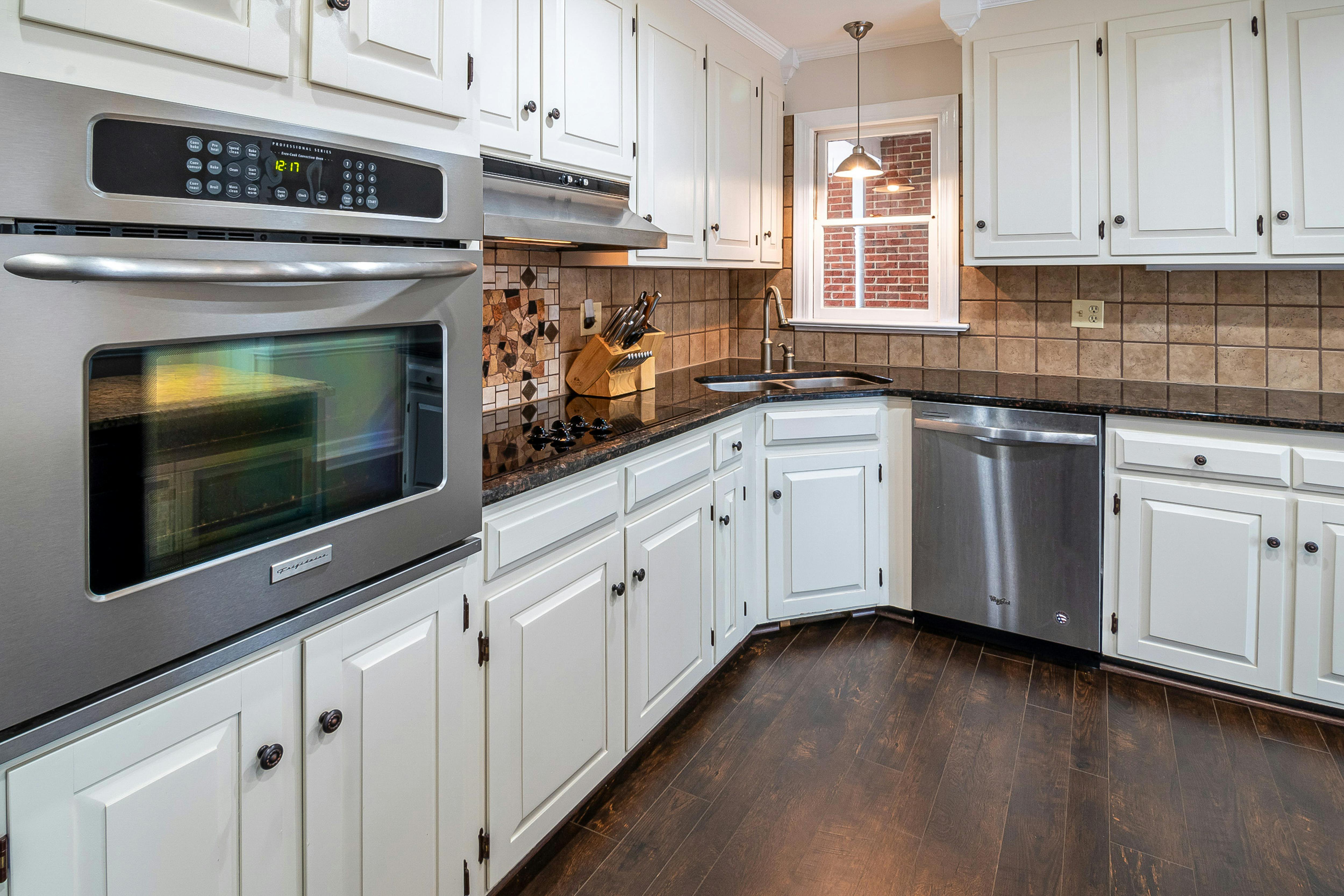
Imagine opening a kitchen cabinet on a humid July evening and spotting a fresh line of dark droppings along the back wall. The smell of urine lingers, and a tiny nibble mark on a bag of flour confirms a silent invasion. Homeowners who ignore that moment often discover chewed wiring behind the walls weeks later, leading to costly electrical repairs.
Anthem Pest Control leverages this data to tailor inspections for Dunwoody homes, focusing on entry points near foundation cracks, garage doors, and attic vents that mice favor during seasonal migrations. That why understanding Dunwoody’s local mouse patterns is the first step toward protecting your health, your home, and your peace of mind.
What Types of Mice Invade Dunwoody Homes?
House Mouse (Mus musculus)
The house mouse is the most common rodent you’ll encounter in Dunwoody. Adults measure 2‑3 inches long, with a slender tail that’s about the same length as the body. They breed rapidly—each female can produce up to ten litters per year, and a litter averages five to six pups. Their habit of nesting in wall voids, cupboards, and behind appliances makes them a frequent indoor invader.
Roof Mouse (Rattus rattus)
Often called the black rat, the roof mouse prefers higher ground. It’s slightly larger than the house mouse, reaching 6‑8 inches in total length, and is an excellent climber. Unlike the house mouse, it tends to build nests in attics, eaves, and roof spaces, using insulation and stored debris. Its strong claws allow it to exploit gaps in siding, roof vents, and even chimney crowns.
Local Sightings and Hotspots
The 2023 EPA rodent population report for Fulton County highlights a steady rise in mouse activity across the metro area (EPA rodent report). In Dunwoody, the highest concentrations are reported in:
- Brookhaven – dense housing with mature landscaping.
- Perimeter Center – mixed‑use complexes with abundant food sources.
- Peachtree Corners – newer subdivisions adjacent to wooded corridors.
Typical Entry Points in Dunwoody Housing
Older ranch‑style homes, which make up a large portion of Dunwoody’s residential stock, present several “map‑style” entry routes that mice exploit:
- Gaps under siding – tiny cracks left from settling or poor installation.
- Utility penetrations – openings around water, gas, and electrical lines that aren’t sealed.
- Attic vents and soffits – uncovered vents provide a direct highway to the roof space.
- Foundation cracks – especially around crawl‑space doors and basement windows.
These points often go unnoticed until you hear scurrying or discover droppings in hidden corners.
Seasonal Food Sources That Attract Mice
Both species are opportunistic feeders. In the spring, fresh garden produce and spilled birdseed become easy targets. Summer brings fruit trees and outdoor picnics, while fall’s fallen nuts and stored pantry items lure mice indoors. Winter forces them to seek warmth and reliable food stores, prompting a surge in indoor activity. Recognizing these seasonal patterns helps homeowners anticipate and block access before a minor nuisance becomes a full‑blown infestation.
Transparent Pricing for Dunwoody Residents
When a mouse makes its way into your kitchen, the first question most homeowners ask is “how much will it cost to get rid of it?” The cost of professional mouse control Dunwoody GA homeowners rely on depends on the severity of the infestation and the level of protection required. At Anthem Pest, we believe the answer should be crystal-clear from the moment you pick up the phone. Below is a straightforward breakdown of our most popular mouse-control packages, how they stack up against the typical DIY bait kit, and why the numbers matter for your health and wallet.
Our Service Packages
- One‑time inspection & treatment: $120 – $180. Includes a thorough walkthrough, identification of entry points, and a full‑dose application of EPA‑approved rodenticide or traps.
- 3‑month bait‑station program: $180 – $250. We place tamper‑proof bait stations, monitor them weekly, and replace consumables as needed for three months of continuous protection.
- Follow‑up visits: $30 – $50 each. Ideal for homes that need a quick check after the initial treatment or for seasonal touch‑ups.
DIY vs. Professional: The Real Cost Difference
A typical store‑bought bait kit costs $15 – $30. While the upfront price looks appealing, most DIY solutions only protect your home for a few weeks before the poison loses potency or the traps become ineffective. In contrast, our professional treatments are designed to remain active for 3–6 months, and the bait‑station program guarantees regular monitoring, dramatically extending the effective lifespan.
Industry Benchmark
The 2024 NPMA price‑trend survey (see NPMA pricing data) shows that the national average for a single‑visit rodent control service ranges from $130 to $190. Anthem Pest’s pricing sits comfortably within that range, but we add value through detailed reporting, guaranteed follow‑ups, and a health‑risk reduction plan that most DIY kits simply cannot match.
Cost‑Benefit Snapshot
| Service | Upfront Cost | Expected Lifespan | Total 12‑Month Cost |
|---|---|---|---|
| One‑time inspection & treatment | $120 – $180 | 3–4 months | $240 – $360 (includes two follow‑up visits) |
| 3‑month bait‑station program | $180 – $250 | 3 months (renewable) | $360 – $500 (four visits over 12 months) |
| DIY bait kit | $15 – $30 | 1–2 months | $90 – $180 (replace every 2 months) |
When you add up the numbers, the professional route not only saves you repeated trips to the hardware store but also cuts the risk of mouse‑borne illnesses, property damage, and the stress of a lingering infestation. In the long run, a modest investment in Anthem Pest’s transparent pricing protects your home, your family’s health, and your peace of mind.
Proven Methods to Eliminate Mice
Integrated Pest Management (IPM)
IPM starts with a thorough inspection that pinpoints entry points, nesting sites, and food sources. Our technicians in Dunwoody map out every gap—whether it’s a cracked foundation, an unsealed vent, or a gap behind baseboards—and seal it with steel‑wool, caulk, or metal flashing. Once the house is sealed, we move to sanitation: we advise homeowners to store food in airtight containers, keep countertops clear, and eliminate standing water that can attract rodents. By removing both access and incentive, IPM creates an environment where mice simply cannot survive. We also fit door sweeps on exterior doors and seal roof vents, then schedule a seasonal maintenance check to catch any new gaps before mice can re‑enter.
Low‑Toxicity Bait Stations
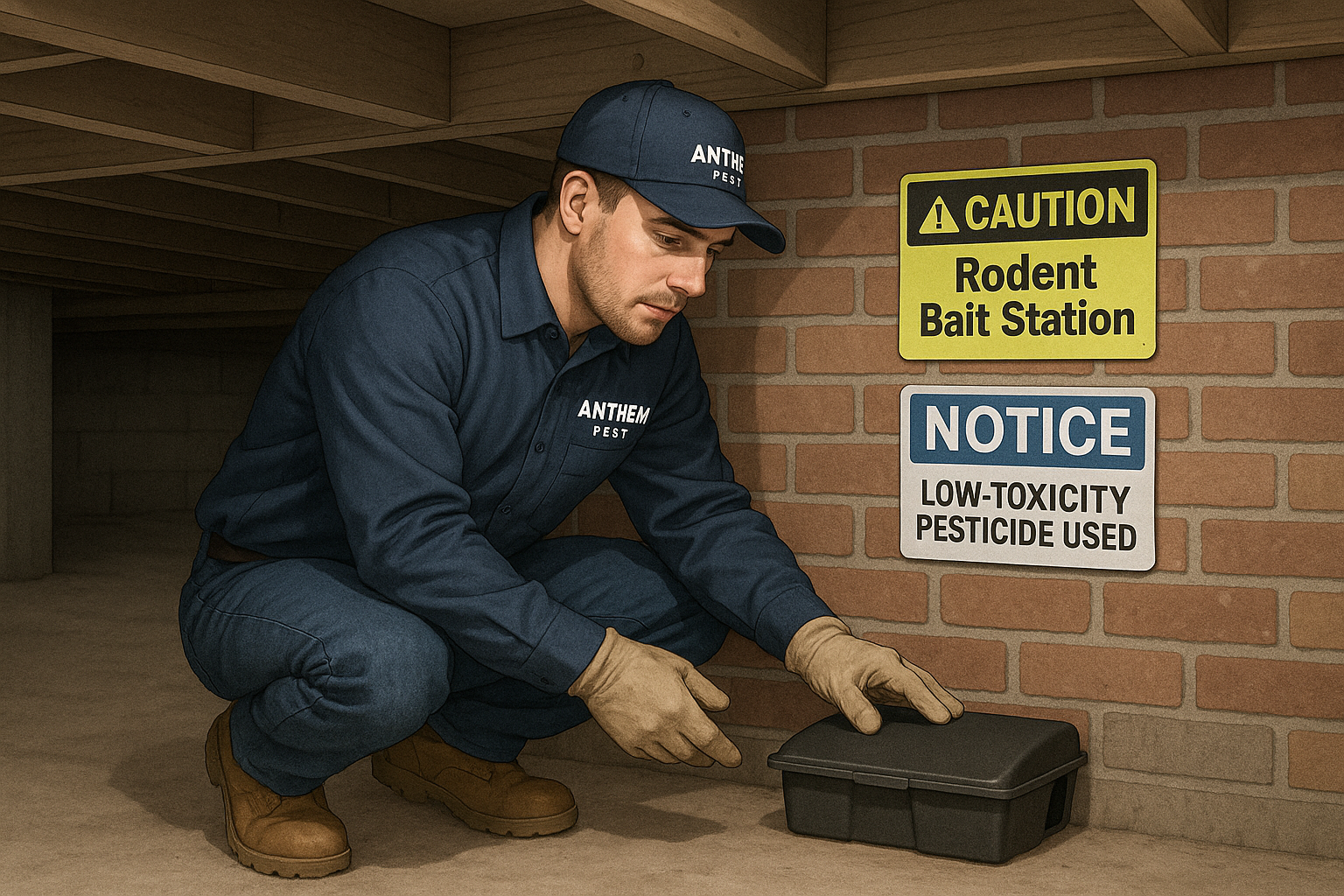
When exclusion alone isn’t enough, we deploy EPA‑approved low‑toxicity bait stations. These devices contain a measured amount of rodenticide that is inaccessible to pets and children but attractive to mice. Placement is strategic—along interior walls, behind appliances, and in crawl spaces where mice travel. Each station is locked, labeled, and checked during every service visit, ensuring consistent control while minimizing risk to the household. Bait stations are inspected weekly; if activity drops, we rotate to a different active ingredient to prevent bait shyness and maintain pressure on the remaining population.
Snap Traps & Electronic Traps
Snap traps and electronic traps are ideal for quick knock‑down in high‑traffic zones such as kitchens, garages, and attics. Snap traps provide an immediate kill with a humane, single‑strike action, while electronic traps deliver a quick, painless shock. Safety is paramount: we position traps out of reach of pets and children, use bait that doesn’t attract non‑target species, and advise homeowners to wear gloves when handling captured rodents. After a capture, we dispose of the mouse in a sealed bag, reset the trap, and record the location to fine‑tune future placements.
Real‑World Success Story
One Dunwoody homeowner reported a steady stream of mouse sightings despite using over‑the‑counter traps. After a two‑visit IPM plan—inspection, comprehensive sealing, sanitation guidance, and the installation of low‑toxicity bait stations—the homeowner saw a 90 % reduction in sightings within three weeks. Follow‑up verification confirmed that no new activity was detected, and the family felt confident that the infestation was truly under control.
Technician Safety and Follow‑Up Verification
Our technicians follow strict safety protocols: they wear protective gloves, use respirators when handling chemicals, and double‑check that bait stations are locked before leaving a property. After each treatment, we schedule a verification visit to assess rodent activity, replace any depleted bait, and re‑inspect for missed entry points. This systematic follow‑up guarantees long‑term protection and gives homeowners peace of mind.

Combining Strategies for Maximum Effect
While each method works on its own, the best results come from layering them. We start with IPM to block entry, then place low‑toxicity bait stations along the sealed pathways to catch any mice that slipped through. Snap or electronic traps are set in high‑activity zones identified during the inspection, providing immediate knock‑down while bait stations work over several days. This multi‑tiered approach minimizes rebound and shortens the treatment timeline. By the end of a typical two‑visit cycle, the mouse population is usually reduced to zero and the home stays mouse‑free for months.
When to Act and How to Keep Mice Out Year‑Round
Why Spring and Fall Matter in Georgia
The 2024 USDA Georgia seasonal pest report shows that mouse populations surge in early spring and again in early fall. During these transition periods, milder temperatures encourage rodents to leave their winter nests and explore new food sources around homes. In Georgia’s humid climate, the combination of abundant vegetation and occasional rain creates perfect cover for mice, making these months the most vulnerable for homeowners.
Seasonal Calendar Snapshot
| Season | Typical Mouse Behavior | Recommended Action |
|---|---|---|
| Early Spring (March – April) | Emerging from nests, searching for food and shelter | Seal entry points, start quarterly inspections |
| Late Summer (August – September) | Population peaks, increased foraging near foundations | Trim vegetation, reinforce door sweeps, verify pantry storage |
| Early Fall (October – November) | Seeking warm indoor environments for winter | Final seal‑up, schedule a professional follow‑up |
Year‑Round Prevention Checklist
- Seal gaps >¼″ with steel wool followed by caulk to block tiny entryways.
- Trim vegetation to at least 2 ft away from the foundation, eliminating bridge routes.
- Store pantry items in airtight containers to remove easy food sources.
- Conduct quarterly inspections of attics, basements, and crawl spaces; look for droppings, gnaw marks, and nesting material.
Printable Checklist Graphic (Suggested Layout)
Design a one‑page PDF featuring four columns: “Task,” “Season,” “Tools Needed,” and “Completed?” Use icons for steel wool, pruning shears, sealed jars, and a magnifying glass. Homeowners can print, hang on the fridge, and tick off each item as they complete it.
Winter Considerations
When temperatures drop, mice retreat indoors and become more active inside walls, attics, and basements. A single follow‑up visit after the first hard freeze helps ensure that any hidden nests are discovered and treated before the problem escalates. Scheduling this check with Anthem Pest Control gives you peace of mind and keeps your home mouse‑free throughout the cold months.
Anthem Pest’s Community‑Focused Service
For two decades Anthem Pest has served Fulton County, and our 24/7 emergency line lets a Dunwoody homeowner reach a professional at any hour. Whether a mouse appears after midnight or insects swarm the porch, you’ll hear back within minutes, not hours—providing fast, dependable mouse control Dunwoody GA homeowners can count on when it matters most.
Local expertise you can trust
Our technicians study the building codes, foundation types, and common landscaping practices that define Dunwoody homes. That knowledge lets us place bait stations, seal entry points, and apply treatments exactly where a structure is most vulnerable, reducing repeat visits. We then tailor a plan to the siding age, crawl‑space type, and seasonal weather that drives mouse activity.
Certified and compliant
Every crew member holds certifications from the National Pest Management Association (NPMA) and follows EPA‑approved handling procedures. Those credentials guarantee that we use products that meet the strictest safety standards while still delivering the potency required to eradicate rodents and other pests.
Safe‑use policies for families and pets
We prioritize low‑toxicity formulations and pet‑friendly protocols. Before any application, we walk through your home, explain where we’ll treat, and provide clear instructions for keeping cats, dogs, and children safe during the short waiting period. We never leave overnight residual chemicals; all applications dry within two hours, so you can resume normal household routines immediately.
“Anthem’s quick response saved us from a full‑blown infestation. The technician explained every step, used a product that was safe for our Labrador, and had the mice gone before the weekend.” – Jenna L., Dunwoody
Giving back to the neighborhood
Beyond pest control, Anthem Pest invests in the community. We sponsor the local youth soccer league, host free workshops at the Dunwoody Library on identifying early signs of rodent activity, and partner with the Homeowners Association to distribute seasonal prevention guides. Each spring we organize a neighborhood clean‑up day, providing free pest‑prevention kits to participants. Our goal is simple: a healthier, pest‑free Dunwoody where families feel secure in their own homes.
Quick Answers for Homeowners
We know you want fast, clear answers when a mouse problem shows up. Below are the top questions we hear from Dunwoody homeowners, answered in plain language.
- How long does treatment take? Our typical on‑site service lasts about two hours. During that time a certified technician inspects your property, identifies entry points, and places the first set of bait stations and traps. We ask you to clear a small area around baseboards and entry points so the technician can work efficiently.
- Is bait safe for pets? Yes. The bait we use is EPA‑approved and formulated with low toxicity. It is sealed inside tamper‑proof stations that are mounted high or in locations your pets cannot access, giving you peace of mind while we work. If you have especially sensitive animals, we can discuss non‑chemical options such as snap traps placed in concealed locations.
- Will I need multiple visits? Most infestations are resolved with the initial visit, but we usually schedule one to two follow‑up appointments. These visits let us monitor bait consumption, replace any depleted stations, and verify that the mice are gone. Our service includes a satisfaction guarantee; if activity persists after the scheduled visits, we’ll return at no extra charge to reassess.
- What signs indicate a mouse problem? Early warning signs include small dark droppings near food sources, fresh gnaw marks on wiring or wood, shredded paper or fabric used for nests, and faint scratching or scurrying noises in walls, ceilings or attics, especially at night. During our inspection we also look for hidden pathways, such as gaps around pipes or vents, that may need sealing to stop future invasions.
- Can I combine traps with bait stations? Absolutely. Combining snap or live traps with bait stations creates a two‑pronged attack: traps capture active foragers while bait stations lure shy mice that avoid traps. This integrated strategy speeds up elimination and reduces the chance of a rebound. After the mice are gone, we recommend keeping the bait stations in place for an additional two weeks as a preventive barrier.
Credible References
Accurate mouse‑control guidance hinges on reliable data. We’ve drawn from federal health agencies, environmental regulators, industry surveys, and our own service documentation to ensure every recommendation reflects current science and real‑world pricing. By citing these sources, homeowners can verify the numbers we present, understand the rationale behind each treatment option, and feel confident that the strategies we suggest comply with both safety standards and local market conditions.
- https://www.cdc.gov/rodents – CDC rodent‑borne disease information (2024). Used for health‑risk statistics, including incidence rates for Hantavirus and leptospirosis.
- https://www.epa.gov/rodents – EPA guidelines on safe rodent control (2023 Fulton County report). Used for best‑practice recommendations, covering approved bait types and disposal procedures.
- https://www.npmapestworld.org – NPMA industry statistics and pricing trends (2024 price‑trend survey). Used for cost benchmarks, breaking down regional pricing to reflect Fulton County market rates.
- https://anthempest.com – Anthem Pest service pages for mouse control. Used for treatment details, safety protocols, pricing, and our 24‑hour response guarantee.
These references are publicly accessible, allowing you to explore the underlying studies and guidelines at your convenience. Should you have questions about how the data translates to your home, our certified technicians are ready to discuss personalized solutions that align with the best practices outlined above. We update our guide annually to reflect any changes in regulations or market dynamics.
Take Control of Mice in Your Dunwoody Home Today
When you choose Anthem Pest, you’re opting for a proven Integrated Pest Management (IPM) program that blends inspection, prevention, and targeted treatment. Our cost‑effective packages are built for Dunwoody homeowners, combining local expertise with transparent pricing so you never face surprise fees.
- Professional IPM: A thorough inspection, customized action plan, and ongoing monitoring keep mice out for good.
- Cost‑effective packages: Clear, upfront rates let you budget confidently while receiving top‑tier service.
- Local expertise: Our technicians know Dunwoody’s unique rodent hotspots, ensuring rapid, precise interventions.
Beyond eliminating rodents, a successful mouse control program protects your family’s health. Mice can carry allergens, bacteria, and viruses that jeopardize indoor air quality. By sealing entry points and treating infestations early, you safeguard loved ones and preserve the integrity of your home’s structure.
Ready to enjoy peace of mind? Request a free, no‑obligation quote or schedule an inspection today. Call us at 877‑371‑8196 and one of our friendly specialists will walk you through the process, answer any questions, and set up a convenient appointment.
For more details, visit Anthem Pest Control for trusted mouse control Dunwoody GA homeowners rely on. We’re here to help you reclaim a mouse-free home—quickly, safely, and affordably.