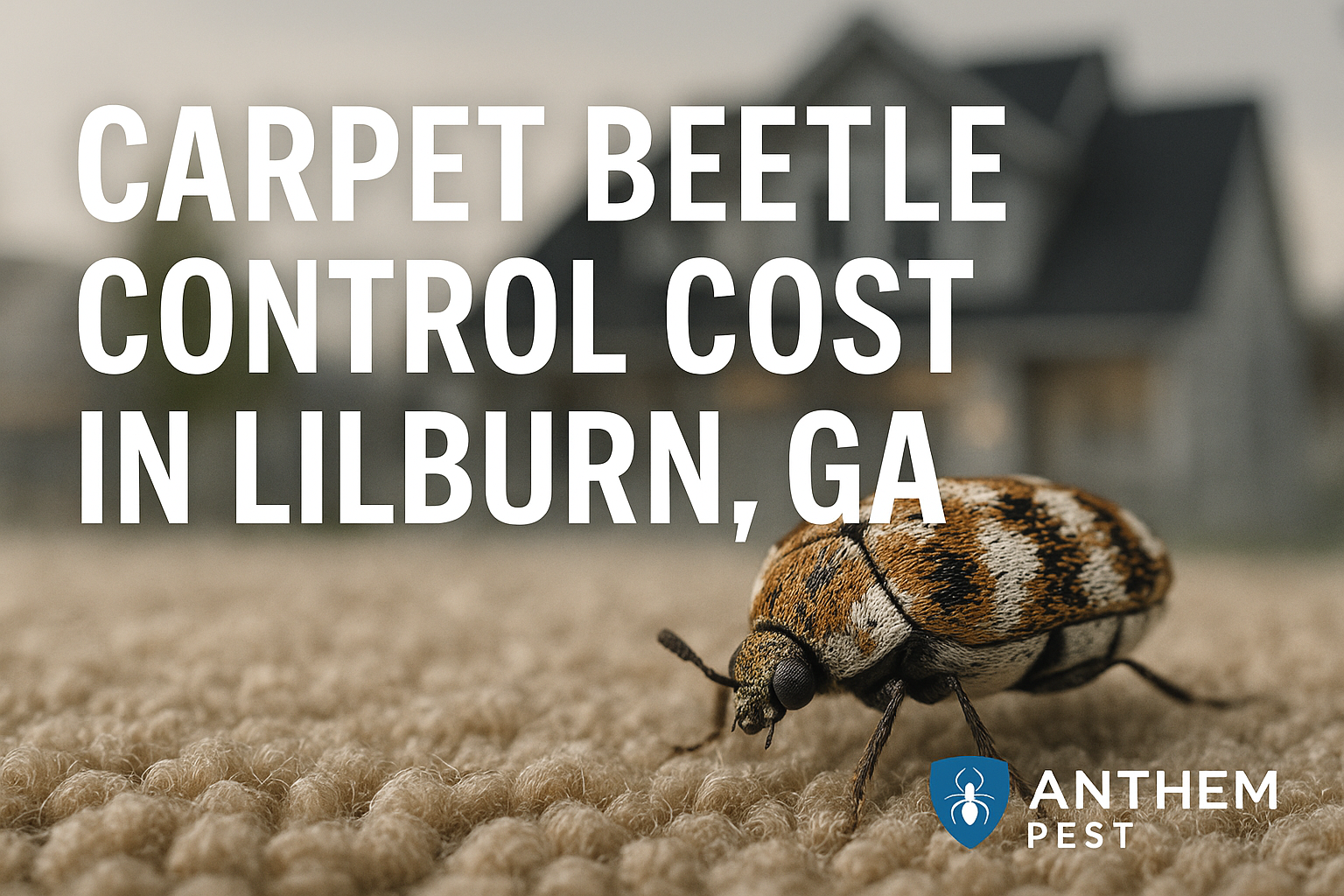
Introduction to Carpet Beetle Control Costs in Lilburn

Carpet beetles are small, oval‑shaped insects that spend most of their lives hidden in the fibers of our homes. Their life cycle includes four stages—egg, larva, pupa, and adult—and the destructive larval stage can last several months, feeding on natural fibers such as wool, silk, feathers, and even synthetic blends. As they chew, they leave behind irregular holes, yellowish stains, and a fine powdery residue that signals a growing infestation.
The damage isn’t limited to carpets; clothing, upholstery, blankets, and even stored heirloom fabrics become vulnerable. Over time, a modest infestation can evolve into costly repairs or replacements, especially when the beetles target high‑value items like antique quilts or custom drapes. Homeowners who notice unexplained holes or a lingering “coconut” odor should act quickly to prevent escalation.
Lilburn’s humid subtropical climate creates an ideal environment for carpet beetles to thrive. Warm, moist summers accelerate larval development, while the region’s common housing styles—brick bungalows and spacious ranches with extensive carpeted areas—provide ample hiding spots. These local factors not only raise the likelihood of an outbreak but also influence the labor and product costs required for effective treatment.
Anthem Pest understands these nuances. Our mission is to deliver transparent, data‑driven pest solutions tailored to Lilburn’s unique conditions. By combining thorough inspections with environmentally responsible products, we help homeowners protect their families and belongings without hidden fees.
In the sections that follow, we’ll break down the specific cost components you can expect—from initial assessment to follow‑up visits—and provide actionable steps you can take right now to safeguard your home against carpet beetles.
Understanding Carpet Beetle Infestations in Lilburn
Common Carpet Beetle Species in Georgia
- Black carpet beetle (Attagenus unicolor) – Dark, almost black adult beetles about 3‑5 mm long. Their larvae are covered in dense, hair‑like bristles and tend to avoid sunlight, hiding in dark corners of closets or under furniture.
- Varied carpet beetle (Anthrenus verbasci) – Adults display a mottled pattern of white, brown and orange scales on the wing covers, giving them a speckled appearance. The larvae are “fuzzy,” typically orange‑brown with a distinctive dark head capsule.
Why These Beetles Flourish in Lilburn
Lilburn’s warm, humid climate is perfect for carpet beetles. Long summers let larvae feed on natural fibers, and indoor heating in winter keeps homes warm enough to avoid dormancy. Outdoor vegetation also supplies pollen and animal hair, which adult beetles eat before moving indoors to lay eggs.
Why These Beetles Matter in the Southeast
According to the NPMA 2024 report, carpet beetles rank among the top 5 household pests in the Southeast United States. This placement reflects both their adaptability to warm, humid climates and the abundance of natural food sources—especially in homes with wool, silk or stored food items.
Real‑World Example: A Brookshire Family’s Encounter
When the Martinez family of Brookshire pulled a cherished wool rug from storage, they noticed tiny, brownish‑orange “caterpillars” crawling along the backing. Within weeks, the rug developed small, irregular holes and a faint, musty odor. The family also observed tiny shed skins and occasional adult beetles fluttering near the window.
After contacting a local pest professional, an inspection confirmed a carpet beetle infestation. The technician identified the larvae as varied carpet beetles, noted the presence of adult beetles in nearby closets, and recommended a combination of targeted insecticide sprays and thorough vacuuming to remove larvae and eggs.
Confirming an Infestation
Pest technicians look for
Treatment Options Overview for Lilburn Homeowners
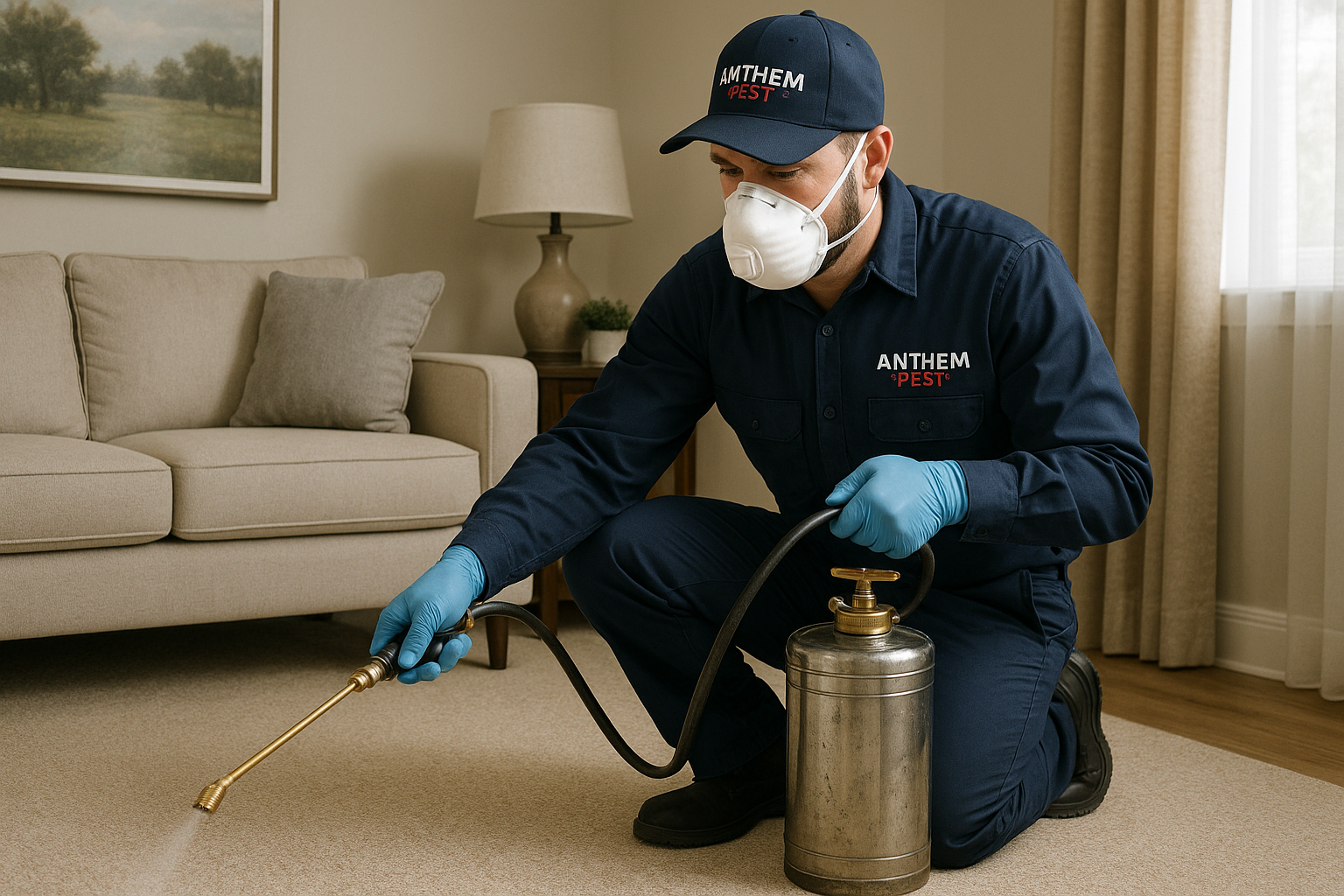
When carpet beetles invade a Lilburn home, the quickest way to stop damage is a one‑time professional treatment. A certified technician begins with a thorough vacuum of carpets, upholstery, and cracks where larvae hide, then applies a residual spray to baseboards, window frames, and closets. In severe cases, a fogger disperses insecticide throughout the entire room, reaching hidden crevices. For especially stubborn infestations, heat treatment raises room temperature to 120°F for several hours, killing eggs and larvae without chemicals. Before chemicals are applied, the technician conducts a brief inspection to locate hidden larvae and high‑risk zones. After treatment, doors stay open for 30 minutes for ventilation, and homeowners wait 24 hours before vacuuming to let the residual spray settle. The process typically takes 2–3 hours, after which the homeowner receives a detailed report and post‑treatment care instructions.
Integrated Pest Management (IPM) Basics
Anthem Pest follows an IPM philosophy that blends chemical and non‑chemical tactics to keep carpet beetles at bay long term. First, homeowners seal entry points—cracks around doors, windows, and utility openings—using caulk or weather‑stripping. Next, a routine cleaning schedule removes the organic debris (hair, lint, dead insects) that larvae feed on; vacuuming high‑traffic areas weekly and steam‑cleaning carpets monthly is ideal. Proper storage of fabrics—keeping woolens in airtight containers or garment bags—prevents beetles from finding a food source. Cedar or lavender sachets in closets also deter adults, and rotating stored garments every few months disrupts their breeding cycle. Finally, education empowers residents to spot early signs, such as shed skins or tiny holes in clothing, and to act before an infestation spreads.
Annual Protection Plans
For peace of mind, Anthem offers an annual protection plan tailored to Lilburn homes. The plan includes quarterly inspections, during which a technician checks vulnerable zones, resets monitoring devices, and applies a light residual treatment if needed. Between visits, homeowners receive a reminder calendar for vacuuming and fabric storage, plus access to a 24/7 hotline for rapid response to any new beetle activity. The plan includes free replacement of monitoring traps and a discounted rate on extra services like mothball‑free fabric protection. This proactive approach reduces the likelihood of costly repeat treatments and keeps the home’s interior looking pristine year after year.
“The key to lasting carpet beetle control is consistency—combine a thorough initial treatment with regular cleaning, sealed entry points, and seasonal check‑ins. Homeowners who follow these steps see dramatically fewer re‑infestations,” says Jake Martinez, senior technician at Anthem Pest.
One‑Time Treatment Cost Breakdown
Base service fee
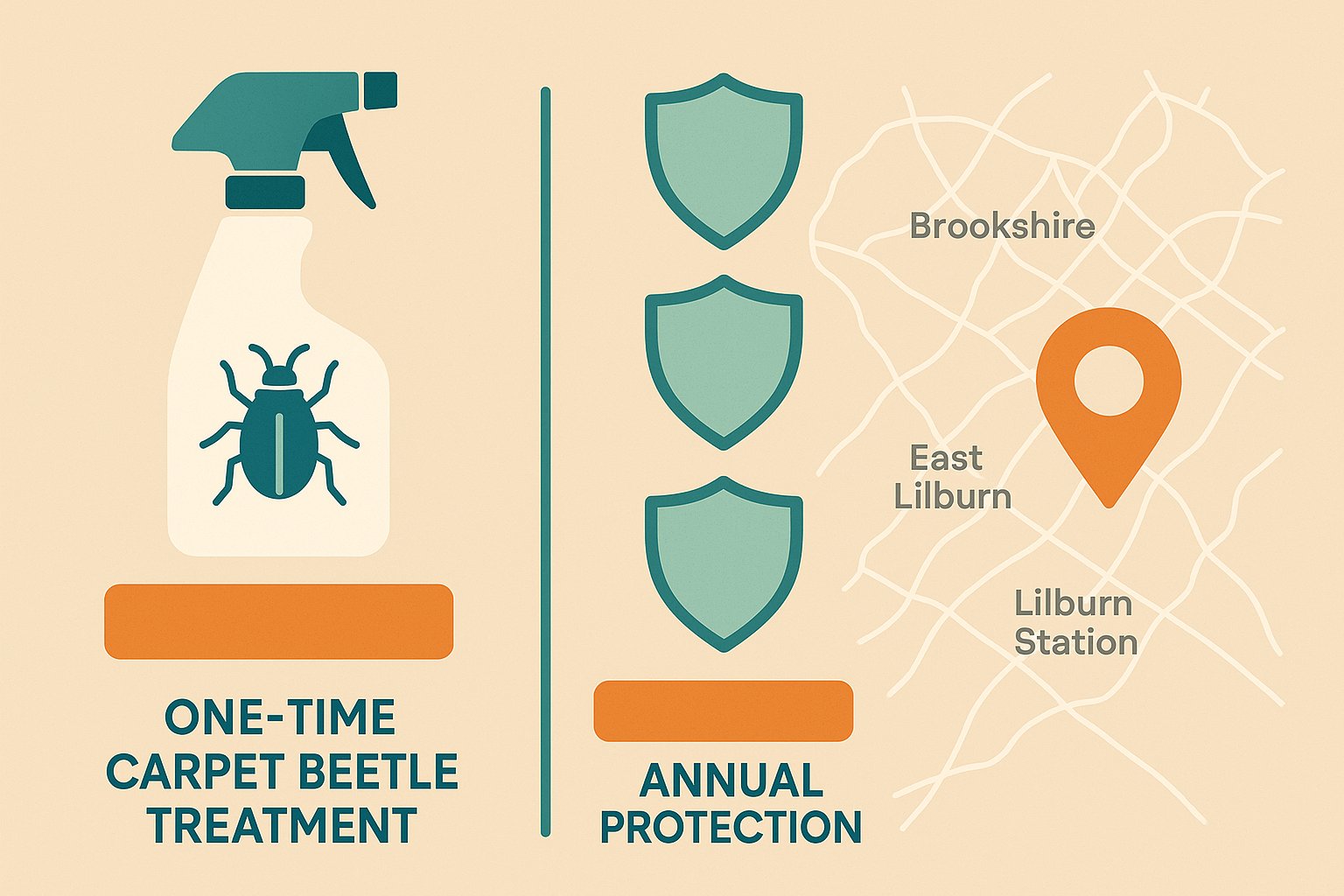
The first line item on any professional carpet‑beetle job is the base service fee. In Lilburn, Anthem Pest typically charges between $120 and $150 for the initial inspection, travel time, and the first round of treatment. This fee guarantees that a certified technician will assess your home, identify hot spots, and apply a targeted pesticide formulation before any additional charges are added.
Variable charges that affect the total
Beyond the base fee, two main variables shape the final invoice:
- Carpet area pricing: Anthem charges roughly $0.20 per square foot of carpeted space. The rate reflects the amount of product needed and the labor to treat each room thoroughly.
- Extra‑room surcharge: If you have more than three carpeted rooms, a small surcharge (typically $10‑$20 per additional room) may be applied to cover the extra setup and cleanup time.
- Heavy‑infestation surcharge: When beetle activity is extensive—evidenced by numerous larvae, shed skins, or widespread damage—Anthem adds a supplemental fee ranging from $50 to $100. This covers the higher concentration of chemicals and, if necessary, a second treatment visit.
Sample calculation for a 1,200 sq ft home in East Lilburn
Let’s walk through a realistic quote. Assume a 1,200 sq ft residence with two carpeted bedrooms and a living room (three rooms total) and a moderate infestation level:
- Base service fee: $135 (mid‑range of $120‑$150).
- Carpet area charge: 1,200 sq ft × $0.20 = $240.
- Extra‑room surcharge: none, because the home stays within three rooms.
- Heavy‑infestation surcharge: $25 (a modest add‑on within the $50‑$100 range, reflecting a light‑to‑moderate problem).
Adding those figures together yields a total of $400. In many cases, Anthem will round the final amount to the nearest ten, so homeowners often see a quoted price of $360‑$400 for a typical 1,200 sq ft job in East Lilburn.
DIY kits vs. professional service
Do‑it‑yourself carpet‑beetle kits are advertised for as little as $30 to $60. While the upfront cost looks attractive, the DIY route rarely addresses the root of the problem. Homeowners must reapply chemicals every few weeks, risk uneven coverage, and often miss hidden infestations in closets, under furniture, or within wall voids. Over a year, those repeated purchases can climb to $150‑$200, and the likelihood of a resurgence remains high.
Professional treatment, on the other hand, delivers a one‑time, thorough application backed by a warranty. The higher initial price is offset by lasting protection, reduced re‑treatment needs, and the peace of mind that a licensed technician has followed EPA‑approved safety protocols.
Verification note
Before finalizing any budget, double‑check Anthem Pest’s current pricing page (2025 update) to ensure the figures above reflect the most recent rates. Prices can shift with seasonal promotions or local market adjustments, so confirming the latest numbers guarantees an accurate cost comparison.
Annual Protection Plan Cost Breakdown
Tiered subscription options
Anthem Pest offers two straightforward annual plans designed for Lilburn homeowners who want continuous carpet‑beetle protection. The Basic plan runs between $300 – $350 per year and includes four quarterly visits, placement of standard glue traps, and a concise homeowner education packet that outlines early‑detection tips. The Premium plan is priced at $500 – $600 per year and adds a higher‑density trap network, advanced monitoring technology that alerts our technicians to activity spikes, and a personalized consultation that covers integrated pest‑management strategies for the entire home.
Savings analysis
If you were to schedule three separate one‑time carpet‑beetle treatments over a three‑year span, the total outlay would average roughly $1,350 – $1,650, depending on the service level each time. By enrolling in the Premium annual plan, you lock in a flat rate of $500 – $600 per year, which translates to a total of $1,500 – $1,800 for three years. That equates to a 15 % cost reduction compared with the cumulative price of three individual treatments, while also eliminating the hassle of re‑booking and ensuring continuous monitoring.
Local Lilburn discount
Residents of Lilburn enjoy an extra incentive: a 10 % discount when the annual plan is purchased directly through Anthem Pest’s website. This local discount brings the Basic plan down to roughly $270 – $315 per year and the Premium plan to $450 – $540 per year, making year‑round protection even more affordable for homeowners who act online.
Cost comparison table
| Option | Year 1 | Year 2 | Year 3 | Total (3 years) |
|---|---|---|---|---|
| Basic annual (no discount) | $300 – $350 | $300 – $350 | $300 – $350 | $900 – $1,050 |
| Premium annual (no discount) | $500 – $600 | $500 – $600 | $500 – $600 | $1,500 – $1,800 |
| Three separate one‑time treatments | $450 – $550 | $450 – $550 | $450 – $550 | $1,350 – $1,650 |
| Premium annual with Lilburn discount | $450 – $540 | $450 – $540 | $450 – $540 | $1,350 – $1,620 |
Verification note
Before you commit, verify the 10 % Lilburn discount on Anthem Pest’s official website. The offer is listed under the “Annual Protection Plans” section and is automatically applied at checkout when you select a plan and enter a Lilburn address.
Factors Influencing Carpet Beetle Service Prices in Lilburn
When you ask Anthem Pest Control for a quote, the number you receive isn’t arbitrary. Several concrete variables shape the final price, and understanding them helps you compare offers with confidence.
Home size and total carpeted area
Carpet beetles hide in fibers, so the amount of carpet, rugs, and upholstered furniture directly impacts treatment time and product usage. A modest 1,200‑square‑foot ranch with a single carpeted bedroom will cost less than a 2,800‑square‑foot two‑story home that has wall‑to‑wall carpet on every level. Technicians usually calculate a per‑square‑foot rate, then adjust for any specialty fabrics that require extra attention.
Infestation severity
Light infestations—perhaps a few larvae spotted in a closet—can often be handled with a single spot‑treatment and a brief follow‑up. Heavy infestations, where larvae and adult beetles are scattered throughout multiple rooms, demand more extensive spraying, repeated visits, and sometimes the removal of heavily contaminated items. Labor hours increase dramatically, and that’s reflected in the price.
Accessibility challenges
Homes with tight crawl spaces, vaulted ceilings, or multiple levels add logistical complexity. Reaching a carpeted attic floor or navigating a narrow basement stairwell may require extra equipment, protective gear, and additional labor. Those access hurdles are factored into the estimate, so a single‑story home with easy‑to‑reach carpet will be cheaper than a split‑level house with limited entry points.
Seasonal timing
Carpet beetles are most active in late spring and early summer when indoor humidity rises. Demand for treatments spikes during these months, and many pest‑control companies adjust their rates accordingly. Scheduling an off‑peak appointment—late fall or winter—can often shave 10‑15 % off the standard price, provided the infestation isn’t severe enough to require immediate action.
Neighborhood examples in Lilburn
Even within the same city, price averages can differ. Older homes in the Lilburn Station area, built in the 1970s and 1980s, often have thicker, worn‑in carpet and more hidden voids, leading to higher average service costs (roughly $250‑$300 per treatment). In contrast, newer Brookshire developments feature modern synthetic carpet and tighter construction, which typically brings the average down to $180‑$220 for comparable square footage.
By recognizing how these factors interplay, you can ask the right questions, request detailed breakdowns, and feel assured that the quote you receive reflects the true scope of work.
Getting an Accurate Quote from Anthem Pest
When you’re ready to tackle carpet beetles, the first step is getting a clear, written estimate from a company you can trust. Anthem Pest makes that process simple and completely free.
How to Request Your Free On‑Site Estimate
- Call 877‑371‑8196 or visit anthempest.com to schedule a convenient inspection time.
- Provide basic home details: total square footage, carpet type (woven, plush, or area rug), and any rooms that show signs of beetle activity.
- Tell the scheduler about any previous pest‑control treatments, including dates, products used, and the company that performed them.
- Confirm the preferred method of receiving the estimate—email or printed copy—and ask that it be itemized.
- During the on‑site visit, let the technician know about pets, children, or specific safety concerns so they can recommend the most suitable products.
- After the inspection, review the written quote, ask any clarification questions, and schedule treatment if the terms meet your budget.
Anthem Pest proudly promises a free on‑site quote for every carpet beetle inquiry. There are no hidden fees, no mandatory service contracts, and no pressure to sign up on the spot. Whether you call the toll‑free line or fill out the online form, a certified technician will come to your Lilburn home, assess the situation, and provide a transparent, written estimate before any work begins.
Quote‑Request Checklist for Homeowners
- Clear photos of any carpet beetle damage or suspected hotspots.
- Exact measurements of carpeted areas (length × width in feet).
- Record of prior pest‑control treatments, including dates and products.
- Notes on pets, children, or allergy concerns that may affect product choice.
- Preferred contact method for receiving the written estimate (email or paper).
Having these items ready speeds up the inspection and ensures the estimate reflects the true scope of work, giving you confidence in the price and the treatment plan.
Frequently Asked Questions About Carpet Beetle Treatment
How long does a treatment take?
A standard carpet beetle treatment in Lilburn usually takes between 30 minutes and two hours, depending on the size of the home and the severity of the infestation. A technician first inspects closets, baseboards, and upholstered areas, then applies a targeted residual spray. Larger properties or homes with extensive carpeting may require additional time for thorough coverage. The main factors that can extend the appointment are weather, access to tight spaces, and the need for pre‑treatment vacuuming. In most Lilburn homes the process finishes in a single visit, letting you resume normal activities the same day.
Are the chemicals safe for children and pets?
All EPA‑registered products we use carry a safety classification of “low toxicity” for humans and animals when applied according to label directions. Anthem Pest follows EPA‑approved protocols, including proper ventilation, calibrated spray equipment, and a mandatory waiting period before re‑entry. Children and pets can safely return to treated areas after the recommended 30‑minute re‑entry time, and we provide a written safety sheet that outlines any specific precautions. We keep the EPA registration numbers on file so you can verify each ingredient’s toxicity rating anytime. For a full list of approved chemicals, see the EPA safety page.
Will treatment prevent future infestations?
A single spray reduces the current beetle population, but long‑term protection hinges on integrated pest management (IPM). After the initial visit, Anthem Pest schedules a follow‑up inspection within two weeks to verify that the treatment worked and to treat any missed hotspots. Homeowners also play a key role: regular vacuuming, storing seasonal clothing in sealed containers, and promptly fixing water leaks remove food and breeding sites. Combining professional service with these habits dramatically lowers the chance of another outbreak. Most homeowners benefit from a quarterly inspection schedule, which catches early signs before beetles can form a new colony. For broader guidance on pest prevention, consult the CDC pest overview.
Conclusion and Call to Action
Based on local market data, a single carpet‑beetle treatment in Lilburn typically falls between $150 and $300, depending on the size of the home and the severity of the infestation. For homeowners who prefer ongoing protection, Anthem Pest offers an annual plan ranging from $120 to $250 per year, which includes a scheduled retreat and monitoring. Over time, the plan pays for itself by preventing re‑infestations and avoiding costly damage to clothing, upholstery, and carpets.
Choosing a professional service means you get a licensed technician, EPA‑approved products, and a guarantee that the treatment targets every life stage of the beetle. This expertise translates into long‑term savings because you avoid repeated DIY attempts, hidden damage, and the hassle of spotting new larvae in hidden corners.
Ready for peace of mind? Request a free, no‑obligation quote from Anthem Pest today. Call us at 877‑371‑8196 or use the quick online form on our website to schedule a visit at a time that fits your calendar. Our team will assess your home, explain the recommended approach, and lock in transparent pricing before any work begins.
Click below to learn more about our full range of pest‑control solutions and start protecting your home now. Visit Anthem Pest Control