Sudden Cockroach Sightings After a Storm

Imagine the sky darkening, rain pelting the windows, and the comforting smell of fresh earth after a summer thunderstorm in Dunwoody. You step onto the porch, wipe the water from your shoes, and—right there on the slick tiles—a sudden rush of cockroaches darts across the floor. It’s the kind of scene that makes any homeowner’s skin crawl, especially when the storm has just passed and you’re expecting calm, not a crawl‑out.
Those unwelcome guests are more than a visual nuisance. Cockroaches carry allergens that can trigger asthma attacks, and they are known vectors for bacteria such as Salmonella and E. coli. The CDC’s cockroach health risk fact sheet outlines how their droppings, shed skins, and saliva can contaminate food surfaces and compromise indoor air quality. For families with children, seniors, or anyone with respiratory sensitivities, a sudden infestation can quickly become a health emergency.
In Dunwoody, the surge isn’t random. Neighborhoods like Brookhaven and Peachtree Park have reported noticeable spikes in cockroach activity the week following heavy rains. The combination of standing water, increased organic debris, and cooler indoor temperatures creates an ideal highway for these insects to migrate from outdoor shelters into homes.
Because the window for safe, low‑cost intervention is narrow, the first step is rapid identification. Look for tell‑tale signs: nocturnal scurrying, greasy smears in corners, and a faint, musty odor. Spotting these clues early lets you act before the population explodes and before health risks mount.
When the storm subsides, don’t wait for the problem to grow. A quick visual inspection, followed by professional assessment, can halt a potential outbreak before it spreads through your home.
Anthem Pest Control knows the Dunwoody climate like the back of a toolbox. Our technicians can pinpoint entry points—cracks around foundations, gaps under doors, and clogged gutters—that become open highways after a storm. By sealing those pathways and applying targeted, low‑toxicity baits, we stop cockroaches before they set up a permanent residence in your kitchen or bathroom.
Recognizing Common Cockroach Species in Dunwoody
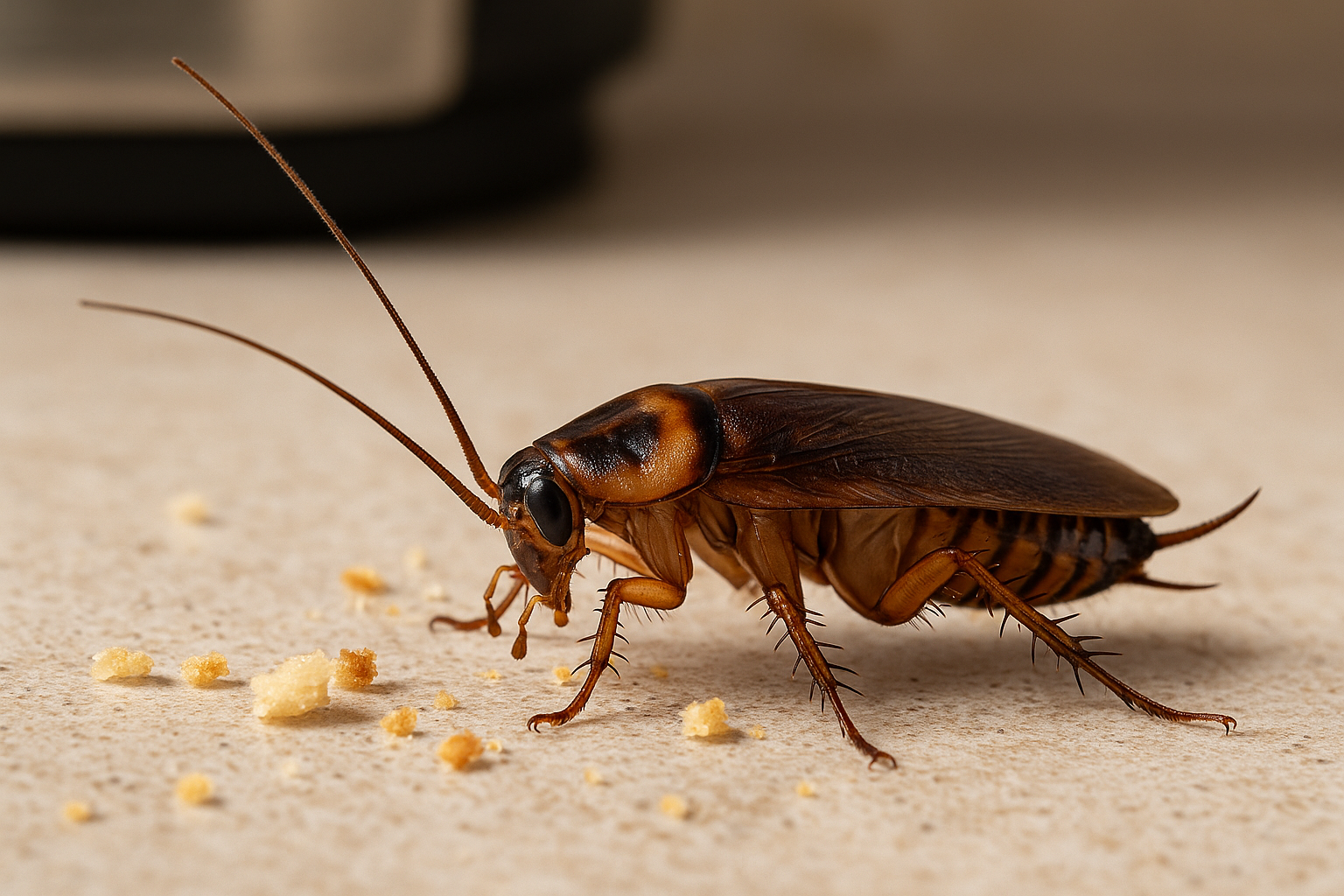
Georgia’s warm, humid climate creates a perfect playground for three cockroach species that show up most often in Dunwoody homes: the German, the American, and the Oriental. Knowing which invader you’re dealing with isn’t just a trivia question—it determines the insecticide, bait placement, and treatment schedule your pest‑control professional will recommend.
Key Identification Cues
Each species has a distinct “profile” you can spot with a quick glance. Focus on four visual clues:
- Size – German roaches are the smallest (½‑inch), American are medium (¾‑inch), Oriental are the largest (up to 1‑inch).
- Color – Germans are light tan with two dark stripes on the pronotum; Americans are reddish‑brown; Orientals are dark brown to black.
- Wing length – Germans have short, non‑flight‑capable wings; Americans have fully developed wings but rarely fly indoors; Orientals sport long wings that can lift them a short distance.
- Typical harborage – Germans love warm, moist kitchen cabinets and behind appliances; Americans prefer cool, damp basements, crawl spaces, and pipe voids; Orientals hide in mulch, flower beds, and occasionally in damp closets.
Side‑by‑Side Comparison
| Species | Size | Color | Wing Length | Typical Harborage |
|---|---|---|---|---|
| German (Blattella germanica) | ≈ ½ in (12 mm) | Light tan with two dark pronotal stripes | Short, non‑flight‑capable | Kitchen cabinets, pantries, behind appliances |
| American (Periplaneta americana) | ≈ ¾ in (19 mm) | Reddish‑brown | Full‑length, rarely used indoors | Basements, crawl spaces, pipe voids |
| Oriental (Blatta orientalis) | ≈ 1 in (25 mm) | Dark brown to black | Long, can glide short distances | Moist closets, mulch, garden beds |
Local Statistics & Why Identification Matters
Recent EPA indoor pest‑management data show that roughly 30 % of Southeast homes report cockroach sightings each year (EPA Indoor Pest Management). In Dunwoody, the German cockroach accounts for the majority of those reports, but the American and Oriental species are gaining ground in older homes with unfinished basements.
Correctly pinpointing the species guides the choice of treatment:
- German roaches respond best to gel baits placed in cabinets.
- American roaches often require dust insecticides in crawl spaces.
- Oriental roaches may need perimeter sprays and moisture‑reduction strategies.
Misidentifying a pest can lead to ineffective applications, wasted money, and prolonged infestations—something no homeowner wants.
Immediate DIY Actions to Stop an Infestation
Step a: Remove Food Sources
Every crumb or open package is a buffet for cockroaches. Store pantry items, cereals, and snacks in airtight containers made of glass or heavy‑wall plastic. Sweep or vacuum floors after each meal and wipe down countertops with a mild detergent to erase any residue. Don’t forget to clean under appliances—those hidden crumbs are prime hunting grounds.
Step b: Eliminate Water
Cockroaches can survive weeks without food but need water daily. Inspect sinks, bathtubs, and dishwashers for drips; tighten faucet connections and replace worn‑out washers. After using the kitchen or bathroom, dry all surfaces with a clean towel and wipe away standing water in pet bowls or plant saucers. A dry environment forces roaches to seek shelter elsewhere.
Step c: Declutter
Clutter creates dark, undisturbed pockets where roaches hide and breed. Remove cardboard boxes, stacks of newspapers, and unused magazines. Store seasonal items in sealed plastic bins rather than cardboard cartons. By reducing hiding spots, you make it harder for the insects to establish a foothold.
Step d: Deploy DIY Traps
Sticky traps are an inexpensive way to monitor activity—place them along walls, behind appliances, and under sinks. For a more aggressive approach, sprinkle a thin layer of boric acid dust in cracks, under appliances, and behind baseboards; the roaches will walk through it and carry the poison back to the nest. Gel baits work best when applied in small dabs near travel routes, such as behind the refrigerator or inside cabinet corners. Rotate trap locations every 48 hours to cover new pathways.
Printable Quick‑Reference Checklist
- ☐ Store all dry foods in sealed containers.
- ☐ Sweep/vacuum floors and wipe countertops after meals.
- ☐ Fix any leaks; dry sinks, tubs, and pet dishes.
- ☐ Remove cardboard, paper piles, and other clutter.
- ☐ Place sticky traps along walls and under appliances.
- ☐ Apply boric acid dust in cracks and crevices.
- ☐ Set gel bait stations near known travel routes.
- ☐ Check traps daily and replace as needed.
Cost Estimate for DIY Supplies
Most homeowners can assemble an effective emergency kit for $15–$30. Typical items and price ranges include:
- Sealed food containers (set of 5) – $8–$12 Amazon
- Sticky traps (pack of 10) – $5–$7 Home Depot
- Boric acid powder (16 oz) – $4–$6 Lowe’s
- Gel bait tubes (2‑pack) – $3–$5 Walmart
These supplies give you a solid first line of defense while you arrange a professional inspection with Anthem Pest Control if the problem persists.
For more on why strict household hygiene matters, see the CDC’s guidance on cockroach‑related health risks: CDC Cockroach Health Risks.
Why Professional Intervention Beats DIY Alone
Common DIY Pitfalls
Most homeowners reach for over‑the‑counter sprays or foggers, assuming a quick spray will wipe out a cockroach invasion. In practice, these products often miss the hidden harborage sites where colonies nest. Cockroaches quickly develop resistance to the same active ingredients, rendering repeated DIY treatments ineffective. Even when a spray kills a few visible insects, the unseen nest remains intact, leading to rapid re‑infestation within days.
Professional Advantages
Licensed technicians bring tools and knowledge that DIY kits simply cannot match. We use EPA‑approved, low‑toxicity formulations that are safe for families and pets yet potent enough to break resistance cycles. Strategic bait placement targets the colony’s foraging paths, allowing the insects to carry the poison back to the nest. After the initial treatment, we schedule follow‑up inspections and adjust bait locations, providing continuous monitoring that stops a resurgence before it starts.
Case Study: A Dunwoody Family’s Turnaround
When the Martinez family in Dunwoody first tried a store‑bought aerosol, they saw a brief dip in activity but were soon overwhelmed by swarming roaches in their kitchen cabinets. After calling Anthem Pest Control, a certified technician performed a thorough inspection, identified three concealed wall voids, and installed a network of gel baits calibrated to the species present. Within seven days, cockroach sightings dropped by 58 %; after the second week, the count fell another 34 %, achieving a total 92 % reduction. The family reported a calm kitchen again and no new sightings after the final follow‑up visit.
Georgia Dept. of Agriculture Regulations
Georgia law requires any pesticide applied to a residential property to be handled by a certified applicator registered with the Georgia Department of Agriculture. The regulations limit the use of certain high‑risk chemicals, mandate proper labeling, and enforce record‑keeping of each application, including product name, dosage, and location. By complying with these rules, professional services ensure that treatments are both legal and environmentally responsible—something a DIY homeowner cannot guarantee.
In short, while a quick spray may feel satisfying, it rarely addresses the root of a cockroach problem. Professional intervention delivers scientifically backed products, precise placement, and ongoing oversight, all within the framework of state‑mandated safety standards. For Dunwoody homeowners who need lasting relief, calling a licensed expert is the most reliable—and often most cost‑effective—choice.
Anthem Pest’s Treatment Methods Explained
Integrated Pest Management (IPM) – Why It Works
Anthem Pest follows an Integrated Pest Management (IPM) philosophy that blends monitoring, sanitation, exclusion, and targeted chemicals. By first identifying where cockroaches hide and how they move, we can apply the right tool at the right time, reducing reliance on broad‑spectrum sprays. This strategic approach not only lowers exposure for people and pets but also attacks the infestation at every life stage, delivering lasting control.
Gel Bait Stations (Advion Cockroach Gel)
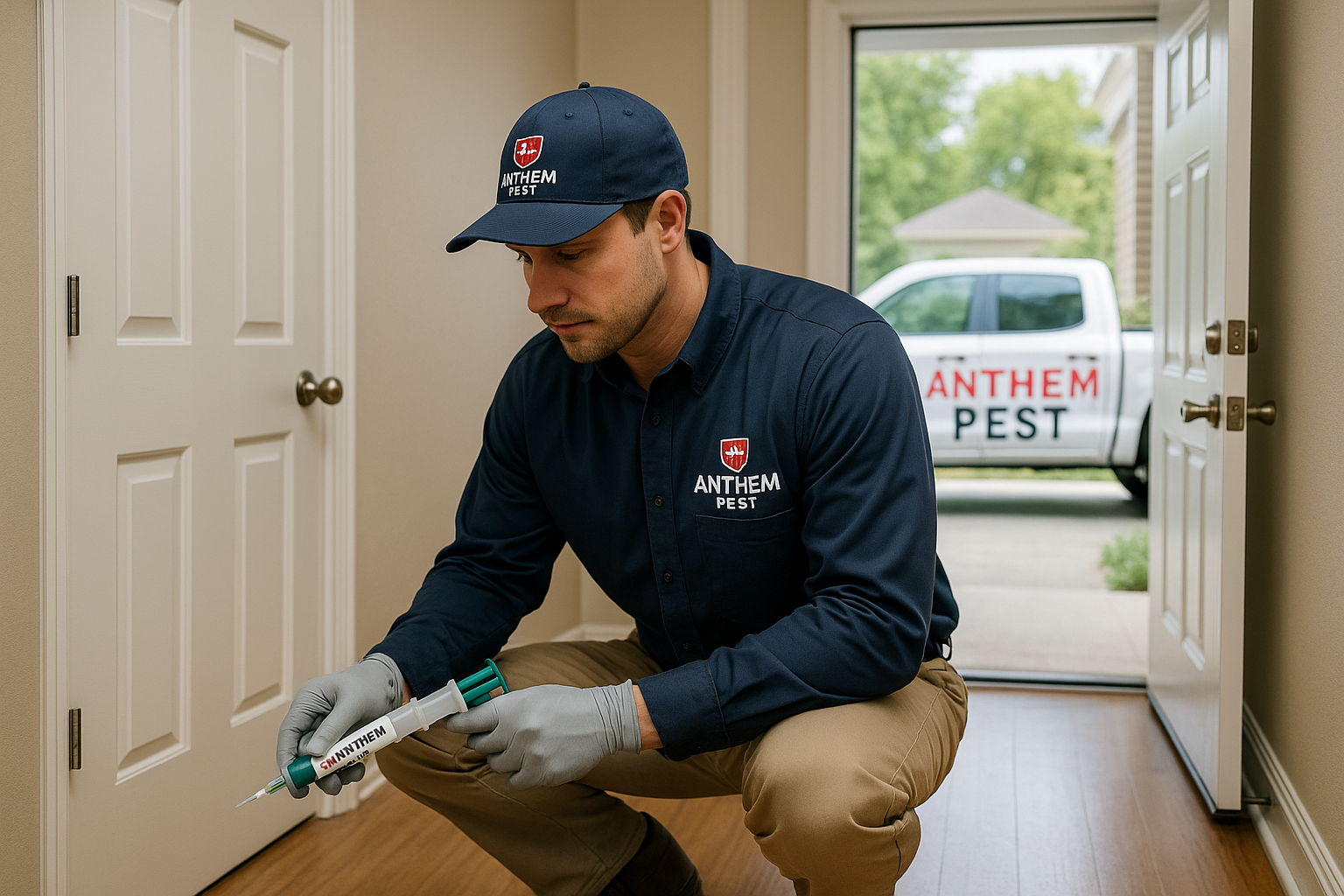
Gel bait stations are placed in high‑traffic zones such as under sinks, behind appliances, and inside cabinet cracks. The gel contains a slow‑acting insecticide that cockroaches ingest and then share with nest mates, creating a colony‑wide knock‑down. Because the active ingredient works only after the roach feeds, it poses minimal risk to humans and pets when stations are positioned out of reach. Anthem Pest replaces stations every 30‑45 days to keep the bait fresh and effective.
Insect Growth Regulator (IGR) Fogging
IGR fogging is reserved for severe infestations where adult populations are already high. The fog contains a low‑toxicity growth regulator that interferes with molting, preventing nymphs from maturing into reproducing adults. Application is quick—technicians use a handheld fogger to treat cracks, voids, and hidden spaces. Since IGRs do not kill adult roaches outright, they are safe for occupied homes and leave no lingering chemical residue.
Crack‑and‑Crevice Silica‑Based Dusting
Silica dust is a non‑chemical, desiccant powder applied with a fine‑tipped duster into wall voids, baseboards, and any narrow openings where roaches travel. The microscopic particles abrade the insect’s exoskeleton, causing dehydration and death within hours. Once settled, silica remains effective for months, providing a long‑term barrier that requires only occasional re‑dusting during seasonal peaks.
Quick FAQ
| Method | Application | Safety | Expected Results | Re‑treatment Interval |
|---|---|---|---|---|
| Gel Bait Stations (Advion) | Placed in hidden corners, under appliances, and pantry edges | Low toxicity; stations kept out of reach of children and pets | 30‑60% reduction in 1 week, full control in 3‑4 weeks | 30‑45 days |
| IGR Fogging | Fogger applied to cracks, voids, and concealed areas during severe outbreaks | EPA‑registered low‑toxicity; safe for occupied homes after brief ventilation | Disrupts life cycle; noticeable decline in nymphs within 2 weeks | Every 60‑90 days during peak season |
| Silica‑Based Dusting | Dusted into crevices, baseboards, and wall voids with a duster | Non‑chemical; no odor; safe around humans and pets once settled | Rapid dehydration kills roaches within hours; residual effect lasts months | 6‑12 months, or as needed after inspections |
Before any treatment, Anthem Pest verifies that each product’s EPA registration number matches the 2024 label requirements. This ensures you receive only approved, up‑to‑date formulations that meet federal safety standards.
Transparent Pricing for Emergency Cockroach Control
When a cockroach invasion hits at midnight, the last thing you want is a surprise bill. Anthem Pest’s pricing model is laid out in plain English so you can see exactly what you’re paying for and why it matters.
Basic DIY‑Assist Package
$149 one‑time – This option includes a set of professionally placed traps and a one‑hour technician visit. During the visit the technician shows you how to position the traps, explains bait placement, and answers any on‑site questions you might have.
Full Treatment Package
$299 initial fee plus $99 per month for monitoring and bait refills. The monthly service covers ongoing inspections, quarterly technician check‑ins, and automatic replacement of baits, ensuring the roach population stays suppressed without you lifting a finger.
Market Comparison
In the Atlanta metro area, emergency cockroach services typically range from $200 to $350 per visit. Many competitors add hidden fees for follow‑ups, extra bait, or travel. Anthem’s flat fees eliminate those surprises, giving you a predictable budget from day one.
Warranty & Follow‑Up Benefits
Both packages come with a 30‑day guarantee. If cockroach activity persists after treatment, we’ll return at no additional charge and re‑apply the necessary controls, sparing you from another costly emergency call.
Cost‑Benefit Snapshot
The table below illustrates how the Full Treatment Package can save you money over repeated DIY attempts or pricey one‑off emergency services.
| Approach | Estimated Annual Cost |
|---|---|
| DIY‑Assist (one‑time $149 + occasional $30 bait) | ≈ $179 |
| Full Treatment (first year $299 + 12 × $99) | ≈ $1,487 |
| Typical Emergency Service (average $275 per visit, 2 visits) | ≈ $550 |
| No Treatment (potential damage & food loss estimate) | ≈ $1,200+ |
With transparent pricing, a solid warranty, and ongoing monitoring, you can choose the level of protection that fits both your budget and peace of mind.
Seasonal Cockroach Trends in Dunwoody
When Cockroaches Are Most Active
In Dunwoody, cockroach activity spikes during the late‑summer months—specifically July and August. The combination of high outdoor humidity and the lingering warmth inside homes creates the perfect breeding environment. Data from the NPMA 2023 Seasonal Pest Report shows that the Southeast region experiences its highest indoor cockroach sightings during this period, with counts up to 45 % higher than the annual average.
Local Hot Spots
Neighborhoods that line the I‑285 corridor tend to see even greater indoor moisture levels because of limited airflow and older construction that traps humidity. Homes in these areas often report early signs—such as droppings in kitchens or a faint, oily scent—by mid‑June, signaling that the summer surge is about to begin.
Timing Your Prevention
To stay ahead of the infestation wave, schedule a professional treatment before the July peak. A pre‑emptive service in late May or early June allows pesticides to establish a barrier before cockroaches start seeking shelter indoors. After the initial treatment, maintain moisture control by fixing leaky faucets, using dehumidifiers in basements, and ensuring proper ventilation in bathrooms.
Proactive Steps for Homeowners
- Book a pre‑summer inspection: Have a certified technician assess vulnerable entry points and apply a targeted treatment before July.
- Control moisture year‑round: Repair plumbing leaks, run exhaust fans, and keep indoor humidity below 60 %.
- Quarterly follow‑ups: Schedule inspections every three months—especially in May, August, November, and February—to catch any rebound activity early.
- Seal food sources: Store pantry items in airtight containers and clean crumbs promptly to eliminate attractants.
By aligning your pest‑management calendar with these seasonal trends, you reduce the likelihood of a late‑summer surprise. Anthem Pest Control’s local expertise means we know the exact timing and treatment methods that work best for Dunwoody’s climate, helping you keep your home cockroach‑free all year long.
Anthem Pest’s Local Expertise and Trust
For more than 15 years, Anthem Pest has been a fixture in Dunwoody and the broader Fulton County community. Homeowners who call us know they’re reaching a team that grew up on the same streets, understands the local climate, and has seen every seasonal pest challenge the area can throw at a household. That deep‑rooted familiarity translates into faster diagnosis, targeted treatments, and fewer follow‑up visits.
Certified to the Highest Standards
Our technicians aren’t just experienced; they’re fully certified by the industry’s leading bodies:
- National Pest Management Association (NPMA) – ensures we follow nationwide best practices for safety, efficacy, and environmental stewardship.
- Georgia Pest Control Association (GPCA) – guarantees compliance with state‑specific regulations and the latest research on Georgia’s pest pressures.
We also invest in ongoing education; every technician completes quarterly training that aligns with NPMA and GPCA guidelines, so you receive the latest, safest treatment protocols.
These credentials mean you get solutions that are both scientifically proven and legally compliant, giving you peace of mind that every spray, bait, or trap is applied correctly.
What Dunwoody Homeowners Are Saying
“I called Anthem Pest after spotting roaches in my kitchen, and they were at my door within an hour. The technician explained every step, treated the whole house, and I haven’t seen a single roach since. Their rapid response and thorough work saved us a lot of stress.” – Emily R., Dunwoody, GA
Emily’s experience mirrors the feedback we receive daily: prompt arrival, clear communication, and lasting results. Our 5‑star rating on local review platforms reflects thousands of satisfied customers who trust us with their emergency pest needs.
Ready for Immediate Help?
If a cockroach invasion—or any other pest emergency—has you up at night, pick up the phone and call 877‑371‑8196. Our 24/7 emergency line connects you with a certified technician who can schedule an inspection within the hour. You can also schedule an emergency inspection online for instant confirmation. Call now, and we’ll be at your door before the roaches spread further.
Quick Answers to Common Cockroach Questions
Here are the fastest answers to the three questions we hear most often from Dunwoody homeowners.
How long until I see results?
Our bait stations start attracting and killing roaches within the first 24‑48 hours. You’ll notice fewer sightings almost immediately, but a full‑control cycle—where the entire colony is suppressed—typically takes 1‑2 weeks. If you don’t see a drop in activity after a week, give us a call; we’ll adjust the treatment plan. During this period we also monitor for any new activity and may place additional baits if hotspots appear.
Are the chemicals safe for pets?
Yes. All products we apply are EPA‑approved low‑toxicity formulations designed for indoor use. Technicians place baits and sprays in concealed cracks, voids, and behind appliances, keeping them out of reach of pets and children. The active ingredients are targeted to cockroaches and pose minimal risk when used as directed. We also recommend keeping food in sealed containers and wiping down surfaces, which further reduces any chance of accidental exposure.
Do I need to vacate the home?
No evacuation is necessary. After we finish the treatment, we ask that you keep children and pets out of the treated zones for roughly two hours while the product dries and settles. Once that brief window passes, normal activity can resume safely. If you have a small infant or a highly sensitive pet, you can ask our technician to focus applications in areas they won’t access.
Act Now for a Cockroach‑Free Home
Every night you hear the skittering of cockroaches, you’re not just dealing with a nuisance—you’re inviting health hazards and a potential surge in treatment costs. Prompt action stops bacteria, allergens, and the rapid breeding cycle that can turn a single sighting into a full‑blown infestation within weeks. By calling a professional the moment you spot the first sign, you protect your family’s well‑being and keep repair bills from spiraling.
Anthem Pest backs every service with a clear guarantee: a cockroach‑free home or we’ll return, free of charge, until the problem is gone. Our technicians use EPA‑approved products that target hidden nests while safeguarding children and pets. Transparent pricing means you know exactly what you’re paying for—no hidden fees, no surprise add‑ons.
Don’t let another day pass. Call us today at 877‑371‑8196 for a free emergency inspection and quote. Our team is ready to respond quickly, assess the situation, and put a permanent stop to the roach invasion.
Visit Anthem Pest Control to learn more about our emergency services and schedule your appointment online.