Subterranean Termites in Norcross – An Overview
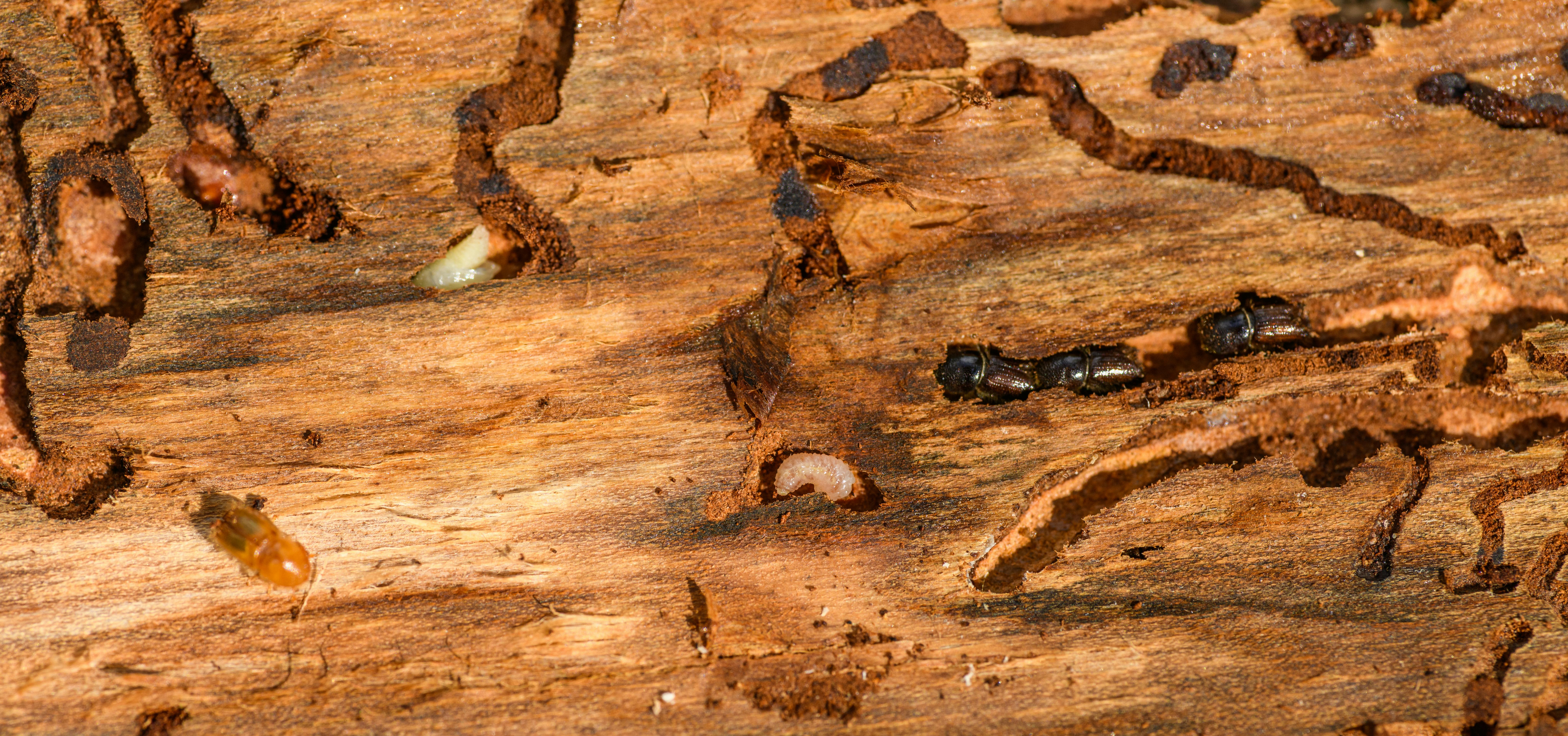
Norcross sits squarely in the heart of the Atlanta metro’s humid subtropical climate. Warm summers, mild winters, and year‑round moisture create a perfect banquet for subterranean termites. These pests thrive in soil that stays damp enough for their colonies to expand beneath foundations, crawlways, and wooden structures. For homeowners, that means the very ground your house stands on can become a hidden highway for damage.
Recent EPA/USDA 2024 data underscores just how serious the threat is. Georgia ranks third nationwide in termite‑damage claims, trailing only Texas and Florida. In the broader Atlanta area, studies show that roughly 1 in 4 homes experiences some form of subterranean termite activity over a ten‑year span. Those numbers translate into millions of dollars in repair costs each year, making termite awareness a budget‑critical issue for anyone protecting a property in Norcross.
Why does budgeting matter? Subterranean termites don’t just chew through wood—they compromise structural integrity, lower resale value, and can lead to costly repairs that far exceed the price of preventive treatment. A single compromised support beam can trigger a cascade of repairs, from drywall replacement to foundation reinforcement. By allocating funds for regular inspections and timely interventions, homeowners safeguard both their safety and their investment.
Average treatment can range from $1,200 to $4,500, but local factors shift the price. That price band reflects everything from the size of the home and extent of infestation to the specific treatment method—whether it’s a liquid barrier, baiting system, or a combination approach. In Norcross, soil composition, property age, and proximity to wooded areas can nudge the cost toward the higher end of the spectrum.
What This Guide Covers
- Key factors that influence termite‑control pricing in Norcross.
- A detailed breakdown of common treatment options and their typical costs.
- How to compare local providers, including what to ask during a quote.
- Frequently asked questions about inspection frequency, warranty coverage, and long‑term prevention.
Understanding the local termite landscape is the first step toward a smart, cost‑effective plan. With the climate, statistics, and price range laid out, you’ll be better equipped to decide when to act, how much to set aside, and which professional service—like Anthem Pest Control—can deliver the protection your home deserves.
Why Termites Are a Major Threat in Norcross, GA
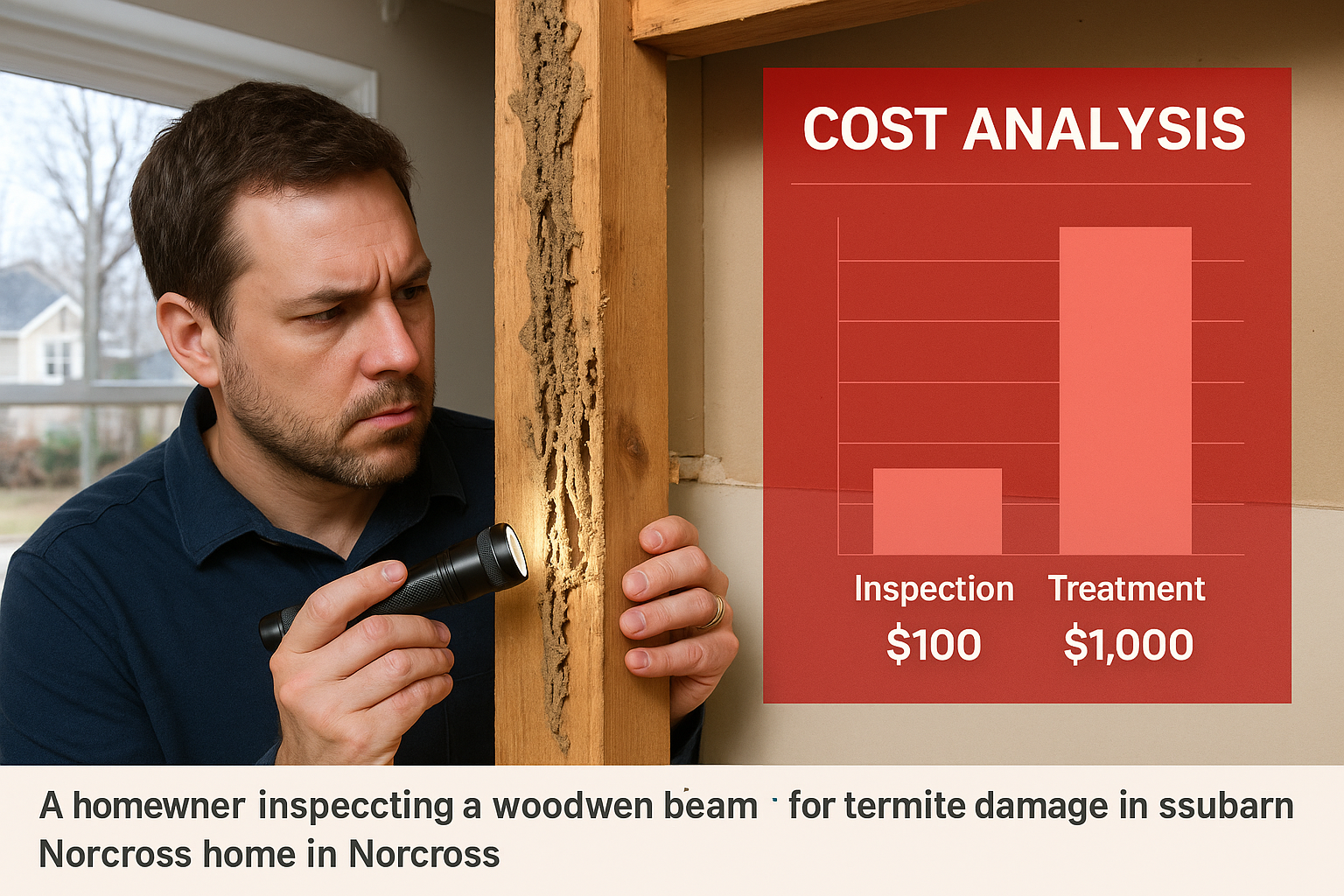
Climate conditions that supercharge termite activity
Norcross sits in the heart of Gwinnett County, where the climate is a perfect storm for termites. The region enjoys high humidity year‑round, with summer heat often topping 90°F and winters that stay mild enough for termites to remain active. Abundant rainfall—averaging more than 50 inches annually—keeps the soil consistently moist, which accelerates the metabolism of subterranean colonies. In these conditions, termites can chew through wood up to three times faster than in drier, cooler climates.
Soil composition that nurtures underground colonies
The soil in and around Norcross is primarily clay‑loam, a blend that retains moisture while still providing enough aeration for termite tunnels. This high moisture retention means that even during brief dry spells, the ground stays damp enough for colonies to thrive beneath foundations, decks, and crawl spaces. The clay component also creates a stable environment where termites can build extensive tunnel networks without collapsing, making detection difficult until serious damage occurs.
Georgia’s standing in termite damage claims
According to a 2024 EPA/USDA report, Georgia ranks third nationwide for termite damage claims. The study attributes the high claim rate to the state’s combination of warm, humid weather and soils that favor subterranean species such as the eastern subterranean termite (Reticulitermes flavipes). This ranking underscores that Norcross homeowners are part of a broader regional challenge, not an isolated problem.
Real‑world cost: a Norcross homeowner’s nightmare
Consider the case of a Norcross family who discovered, after a routine home inspection, an extensive underground infestation that had gone unnoticed for years. The termites had hollowed out support beams in the main floor and compromised the integrity of the garage’s load‑bearing walls. Repairing the structural damage required professional engineers, new lumber, and a full termite remediation—totaling $15,000 in labor and materials. The family’s experience illustrates how quickly a hidden colony can translate into a six‑figure repair bill if left unchecked.
Early warning signs you can spot yourself
Before the damage becomes catastrophic, termites leave tell‑tale clues. Mud tubes—smooth, pencil‑thin tunnels made of soil and saliva—often appear along foundation walls, under siding, or on porch steps. Inside the home, you might notice tiny, winged swarmers near light fixtures in late summer, or hear a faint clicking sound when tapping on wood. Recognizing these visual and auditory cues early gives you a critical window to call a professional service like Anthem Pest Control before the infestation spreads.
Core Factors Influencing Termite Control Pricing
Property Size
Most Norcross homes average about 2,000 sq ft, and size directly drives material and labor costs. A larger footprint requires more liquid barrier product, additional bait stations, or extra fumigation gas to reach every corner. Expect the per‑square‑foot price to rise incrementally as the square footage climbs beyond the typical 2,000‑sq‑ft baseline.
Infestation Severity
Termite damage is classified into three severity levels, each with distinct visual cues:
- Light: You may spot a few mud tubes along foundation walls or in crawl‑space corners.
- Moderate: Mud tubes become abundant, and you might find small swarms or visible wood damage.
- Severe: Active colonies are evident, with extensive mud tubes, large swarms, and structural damage visible in joists or support beams.
Higher severity means more product, longer treatment times, and often a combination of methods, which pushes the quote upward.
Treatment Types
Choosing the right method balances effectiveness, disruption, and cost. Below is a quick comparison of the three most common approaches in Norcross:
| Method | Pros | Cons |
|---|---|---|
| Liquid Barrier | Provides immediate, long‑lasting protection; works well for slab and crawl‑space foundations. | Requires trenching; may need re‑application every 2‑3 years. |
| Bait System | Targets the colony directly; minimal disruption to landscaping. | Effectiveness depends on colony size; can take several weeks to months to eliminate. |
| Fumigation | Eliminates all active termites in a single event; ideal for severe infestations. | Requires vacating the home for 24‑48 hours; higher upfront cost. |
Foundation Accessibility
How easily technicians can reach the foundation dramatically influences labor time. Crawl spaces grant direct access to joists and subfloor, making liquid applications straightforward. Concrete slabs often need core drilling or specialized equipment to inject barrier chemicals. Pier‑and‑beam homes may require additional bait stations placed beneath each pier, adding both material and labor expenses.
Seasonal Timing
Termite activity peaks between May and July, when colonies are most active. During this window, demand for treatment spikes, and many companies apply a premium to cover the higher workload. Conversely, winter months see lower demand, and some providers offer discounts or bundled pricing to keep their schedules full. Planning a pre‑emptive treatment in late fall can net you a better rate while still protecting your home before the spring surge.
Local Labor Rates
Certified technicians in Norcross charge between $75 and $100 per hour. This range reflects the cost of specialized training, state licensing, and the need for ongoing safety certifications. Labor makes up a sizable portion of the total quote, especially for labor‑intensive methods like fumigation or extensive barrier installations.
Gwinnett County Permits & Inspections
Norcross falls under Gwinnett County regulations, which require a permit for any chemical barrier or fumigation work. The permit fee typically runs $30‑$50 per job, and a post‑treatment inspection may be mandated for resale or rental properties. These administrative costs are usually rolled into the final invoice, so be sure to ask your provider for a line‑item breakdown.
Putting It All Together
When you receive a quote, compare it against these variables. A 2,500‑sq‑ft home with moderate infestation treated via a liquid barrier in July will naturally cost more than a 1,800‑sq‑ft home with a light infestation treated with bait stations in December. Understanding each factor empowers you to ask the right questions, negotiate confidently, and choose a solution that fits both your budget and your home’s protection needs.
2024‑2025 Price Breakdown by Service
When you ask a pest‑control pro for a quote, the numbers can feel like a maze of decimals and fine print. The good news? In Norcross, Georgia, most termite‑treatment services fall into predictable price bands. Below you’ll find the latest 2024‑2025 cost ranges for the major options Anthem Pest Control and its local competitors typically charge. Use this data as a yardstick when you collect quotes—if a provider’s numbers sit far outside these ranges, ask for a detailed explanation.
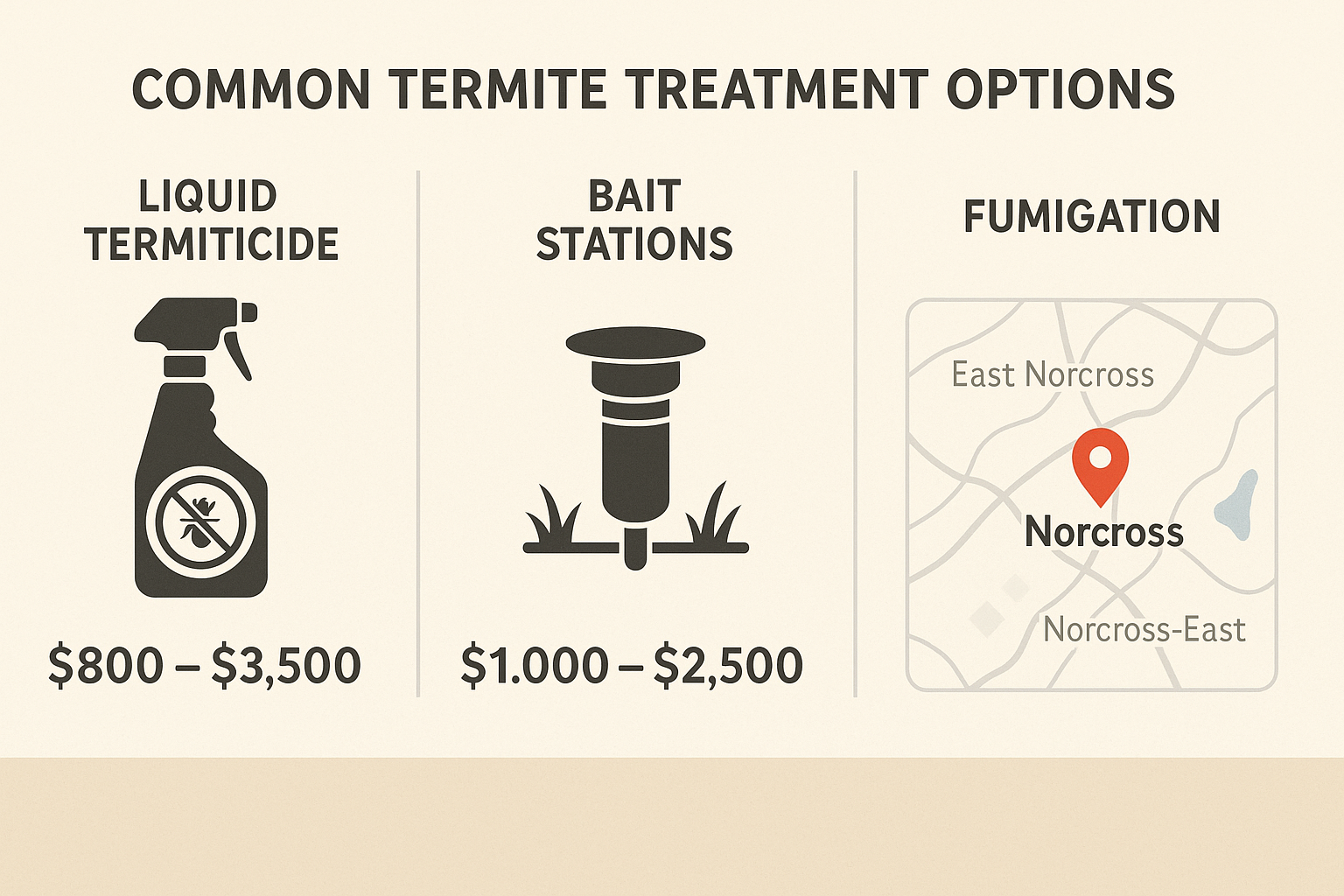
| Service | Typical Cost Range | What’s Included | Frequency / Re‑treatment |
|---|---|---|---|
| Initial Inspection | $75 – $150 | Visual walk‑through, moisture meter reading, wood sampling, written report | One‑time; recommended annually |
| Liquid Termiticide Barrier | $1,200 – $2,200 | Application of EPA‑registered termiticide around foundation (≈2,000 sq ft home) | Re‑treatment every 5–7 years |
| Bait Station System | $1,500 – $3,000 (install) + $100 – $150 (annual monitoring) | Placement of 4–6 bait stations, termite activity monitoring, report updates | Monitoring each year; stations may be repositioned as needed |
| Whole‑House Fumigation | $3,500 – $4,500 | EPA‑approved gas (usually sulfuryl fluoride), full‑home sealing, post‑treatment clearance | Rarely needed for single‑family homes; used for severe infestations |
| Warranty & Service Plans | $200 – $400 per year | Annual inspections, priority scheduling, discounted re‑treatments | Renewable each year |
How to Use This Table When Comparing Quotes
Start by matching each line item on a contractor’s proposal to the corresponding row above. If a company lists a “comprehensive termite solution” without breaking down inspection, barrier, and monitoring fees, ask for the individual components—this prevents hidden mark‑ups. For example, a quote that shows a $1,800 barrier but no mention of re‑treatment intervals may be omitting future costs that a competitor would include in a service plan.
Next, consider the value of ongoing protection. A $250 annual warranty may look like an extra expense, but it guarantees yearly inspections and priority service, often saving you $100‑$200 in ad‑hoc calls later. Similarly, the bait‑station system’s monitoring fee is a small price for early detection before a colony spreads.
Finally, remember that local market conditions—such as soil type and historic termite activity in Norcross—can shift prices slightly. Use the ranges as a baseline, not a hard rule, and feel confident asking any provider to justify why their numbers sit at the high or low end of the spectrum.
How Anthem Pest Stands Out Among Local Providers
When Norcross homeowners compare pest‑control quotes, the first thing they notice is how clearly Anthem Pest lays out its costs. No hidden fees, no surprise add‑ons—just a straightforward price sheet that lets you decide what protection your home truly needs.
Transparent, Up‑Front Pricing
Anthem Pest’s pricing model is built around transparency. A typical homeowner can schedule a $149 termite inspection that includes a detailed report, photos of any activity, and a customized treatment plan. If the inspection reveals a need for a barrier, Anthem offers a flat‑rate $1,899 liquid barrier that covers the entire property, regardless of square footage. This single price includes all labor, materials, and a one‑year warranty, eliminating the “price‑plus‑tax‑plus‑service‑fee” confusion that often plagues larger chains.
Industry‑Recognized Certifications
Anthem Pest’s technicians are not only trained—they are certified by two of the most respected organizations in the field:
- National Pest Management Association (NPMA) – ensures adherence to national best practices for safety and efficacy.
- Georgia Pest Control Association (GPCA) – validates state‑specific knowledge of local pest species, regulations, and environmentally responsible treatments.
These credentials mean the team that arrives at your door is vetted, continuously educated, and held to rigorous industry standards.
What Norcross Homeowners Are Saying
“Anthem Pest showed up within 24 hours of my call, completed the inspection on schedule, and gave me a clear, written plan. The $1,899 barrier was exactly what we needed, and we haven’t seen a single termite since.” – Emily R., Norcross, GA
Cost Comparison with National Chains
| Provider | Inspection Fee | Liquid Barrier Price | Quote Source |
|---|---|---|---|
| Anthem Pest | $149 | $1,899 (flat‑rate) | Anthem Pest website – “Transparent Pricing” page |
| Terminix | $199 (often billed as “inspection + service”) | $2,350 – $2,750 (variable based on square footage) | Terminix GA pricing guide, accessed 2024 |
| Orkin | $179 (inspection fee applied toward treatment) | $2,200 – $2,600 (custom quote per home) | Orkin Georgia service brochure, 2024 edition |
Local Expertise and Rapid Response
Beyond price, Anthem Pest’s advantage lies in its deep roots in the Norcross community. Technicians are familiar with the area’s older wood‑frame homes, common construction gaps, and the seasonal patterns that drive termite activity in Fulton County. Because the company operates regionally rather than nationally, dispatch teams can often arrive within 12‑18 hours of a service request—far quicker than the 48‑hour windows typical of larger franchises.
In practice, this means a homeowner who discovers mud tubes on a porch or notices wood damage can expect a same‑day call, a next‑day inspection, and a treatment plan that’s both affordable and backed by certified expertise. Anthem Pest’s blend of transparent pricing, recognized certifications, genuine customer praise, and a rapid, locally‑focused response makes it the clear choice for Norcross residents who want to protect their homes without paying for unnecessary extras.
Seasonal Discounts, Promotions, and Financing Options
Early‑Spring Inspection Savings
Termite activity spikes as soil temperatures rise above 55°F, which typically occurs in early March for Norcross. Because the insects are just emerging, a thorough inspection and preventive treatment require less chemical material and labor. Anthem Pest leverages this natural lull by offering a 10‑15% discount on all early‑spring inspections booked before April 1. Homeowners who act quickly lock in a lower price while also catching colonies before they spread to foundations, walls, or decks.
Local Summer Promotion
During the hottest months, termites move deeper into wood to escape surface heat, making bait stations especially effective. To encourage proactive protection, Anthem Pest runs the “Norcross Homeowner Summer Savings” campaign each year. The promotion provides a flat 5% off the cost of any bait‑station system installed between June 1 and August 31. The discount is automatically applied at checkout, and no coupon code is required—just mention the promotion when you schedule your service.
Financing Made Simple
Even with seasonal discounts, a full termite protection package can feel like a sizable expense. Anthem Pest partners with a reputable financing provider to offer 0% APR for 12 months on qualified treatment plans. The application is quick, can be completed online, and approval decisions are typically provided within minutes. Homeowners may also use major credit cards—including Visa, Mastercard, and Discover—to cover the upfront portion, then spread the balance interest‑free over a year. For full details, visit Anthem Pest financing options. Additional safety information about the chemicals used in bait stations is available through the EPA pesticide safety sheet.
Preparation Checklist for Your Appointment
Before the technician arrives, a few simple steps can keep the job smooth and prevent extra charges:
- Clear all furniture, toys, and stored items away from baseboards and crawl spaces to give the technician unobstructed access.
- Secure or temporarily relocate pets to a quiet room; this reduces stress for both animals and the service crew.
- Trim vegetation, mulch, and any garden beds that touch the house foundation, as these can serve as termite bridges.
- Ensure exterior doors and garage entryways are closed but unlocked, allowing the crew to move equipment in and out without delay.
By timing your inspection, taking advantage of local promotions, and using the 0% financing plan, Norcross homeowners can protect their homes from termites while keeping out‑of‑pocket costs manageable.
DIY vs Professional Treatment – Cost vs Risk
When termites start whispering beneath your floorboards, the first instinct for many homeowners is to reach for a cheap, off‑the‑shelf kit. A typical DIY termite kit in Norcross ranges from $100 to $300. These kits usually contain a liquid termiticide, a spray bottle, and a set of instructions promising “complete protection.” In reality, they offer only a surface‑level barrier and often leave hidden galleries untreated. Because the product is applied by an untrained hand, manufacturers refuse to back it with a warranty, and coverage is limited to the areas you can physically reach.
Professional treatment, on the other hand, is an investment that pays off when you consider the potential damage. A single colony can compromise structural beams, flooring, and even foundation walls, resulting in $10,000 – $30,000 in repair costs. Licensed technicians use a combination of liquid termiticides, bait stations, and, when necessary, structural fumigation—methods that reach the hidden tunnels a DIY spray simply cannot. Most reputable companies, including Anthem Pest Control, bundle a multi‑year warranty and ongoing monitoring into the service package, turning a one‑time expense into long‑term peace of mind.
Safety considerations
Applying termiticides yourself isn’t just a question of effectiveness; it’s also a matter of safety. The EPA termiticide safety sheet warns that improper mixing, over‑application, or inadequate ventilation can expose occupants to toxic fumes and increase the risk of skin irritation. The CDC echoes these concerns, recommending that only certified professionals handle concentrated pesticides. When you hire a licensed operator, you avoid the health hazards associated with DIY handling and ensure that the product is applied according to state‑mandated safety protocols.
Quick decision matrix for homeowners
| Factor | DIY Kit | Professional Service |
|---|---|---|
| Up‑front cost | $100 – $300 | $1,200 – $2,500 (incl. warranty) |
| Coverage | Surface‑only, limited to accessible areas | Complete structural treatment, hidden galleries included |
| Warranty | None | 2–5 year guarantee, with annual inspections |
| Risk of structural damage | High – damage can reach $10k‑$30k | Low – proactive protection minimizes damage |
| Safety | Homeowner handles toxic chemicals; higher exposure risk | Licensed technicians follow EPA/CDC protocols; minimal exposure |
In short, the allure of a low‑cost DIY kit often fades once you factor in limited coverage, no warranty, and the potential for costly repairs. Professional termite control may require a larger upfront spend, but it safeguards your home’s structural integrity, protects your family’s health, and delivers a clear return on investment through reduced risk and ongoing support. When the choice comes down to “save a few bucks now” versus “protect your home for years to come,” the professional route consistently proves its worth.
Frequently Asked Questions
How long does a typical treatment last?
- Liquid termiticides applied to the soil around your home protect against subterranean termites for 5‑10 years, depending on the product and soil conditions.
- Foam or spray barrier treatments on foundations and crawl spaces usually carry a 3‑year warranty from the date of service.
- Termite bait stations are inspected quarterly; each station can remain effective for 5‑7 years before replacement is needed.
- Anthem Pest offers a homeowner warranty that covers re‑treatment if activity is detected within the guaranteed period.
Will my pets be safe?
- All EPA‑registered termiticides we use meet strict safety standards for humans and animals.
- After a liquid or foam application, we recommend keeping pets away from treated zones for at least 2‑4 hours, or until the product dries, whichever is longer.
- For bait stations, there is no direct exposure, so pets can roam freely around them.
- For detailed safety guidelines, see the EPA termite‑control safety sheet.
What signs indicate a hidden infestation?
- Mud tubes – ear‑shaped tunnels on exterior walls, foundations, or crawl‑space walls.
- Winged termites (swarmers) – discarded wings near windows, light fixtures, or entry points.
- Wood damage – hollowed or blistered wood, especially in support beams, floor joists, or window frames.
- Moisture spots – persistent dampness or water stains in basements and crawl spaces, which attract termites.
- Frass – pellet‑like droppings near wood surfaces or in galleries.
Can I combine termite treatment with other pest services?
- Yes. Anthem Pest follows an Integrated Pest Management (IPM) approach, allowing termite control to be coordinated with mosquito, rodent, or ant treatments.
- Scheduling multiple services on the same visit reduces travel time and often qualifies for combined‑service discounts.
- We prioritize non‑conflicting chemicals; for example, a liquid termiticide applied to the perimeter will not interfere with indoor ant baits.
- Plan your annual pest‑prevention calendar with us—spring is ideal for mosquito and ant control, while early summer is optimal for termite inspections.
Protect Your Norcross Home Today
Understanding the exact cost of termite control in Norcross isn’t just a budgeting exercise—it’s a protective strategy. Local soil composition, historic rainfall patterns, and the age of your home all influence how quickly termites can establish a colony. When you know the price drivers—inspection fees, treatment type, and follow‑up visits—you can allocate funds before an infestation turns a small expense into thousands of repair bills.
Anthem Pest Control backs that strategy with crystal‑clear pricing and industry‑recognized certifications. Every quote you receive breaks down labor, materials, and any necessary warranties, so there are no surprise line‑items at checkout. Our technicians hold Georgia‑approved licenses and are members of the National Pest Management Association, guaranteeing you’re working with vetted professionals. Over the past decade we’ve helped dozens of Norcross families keep their foundations termite‑free, and our local reputation is built on repeat referrals, not aggressive sales tactics.
Budgeting Tips for Termite Prevention
- Allocate 1‑2% of your home’s value each year for pest‑management reserves.
- Schedule inspections early in the year to lock in off‑season pricing.
- Combine termite treatment with other pest services for bundled discounts.
- Keep records of past treatments; they help technicians target vulnerable zones efficiently.
Because termite activity spikes after the Georgia rainy season, a prompt, no‑cost inspection can catch colonies before they cause structural damage. Call us today at 877‑371‑8196 to book your free walkthrough; our certified inspector will assess vulnerable zones, explain any recommended treatments, and provide a written, no‑obligation quote on the spot. We stand by our free‑quote guarantee—if you find a lower price for the same service, we’ll match it.
If you’re ready to safeguard your home before the next rainy season, give us a call or visit our site for a no‑obligation quote.
Visit Anthem Pest Control to learn more about our termite protection plans.