Fast Relief for Spider Problems in Dunwoody
Over the past few months, neighbors in Brookhaven, Peachtree Corners, and even the shops near Perimeter Mall have been reporting a noticeable uptick in spider sightings. Homeowners are spotting web‑filled corners in garages, unexpected crawlers on porches, and even larger species wandering across driveways. This surge isn’t just a nuisance—it’s a clear signal that something in the local environment is encouraging spiders to move closer to our homes.
That’s why speed matters. When a spider makes its way inside, the window for safe, low‑impact control narrows quickly. A rapid response limits the chance of bites, reduces the likelihood of a full‑scale infestation, and prevents spiders from establishing permanent hiding spots in walls or attics. In a community as interconnected as Dunwoody, a single untreated entry point can become a gateway for dozens of unwelcome guests.
According to the Centers for Disease Control and Prevention, spider bites account for roughly 1,500 emergency‑room visits each year across the United States (2024 data). While most bites are harmless, the statistic underscores how quickly a seemingly minor encounter can turn into a medical concern, especially for children, seniors, or anyone with a compromised immune system.
This article is your fast‑track guide to reclaiming a spider‑free home. We’ll walk you through the most common spider species you’ll encounter around Dunwoody, explain how to identify their webs and habits, and outline the treatment options that deliver results in hours rather than days.
Next, we’ll cover practical steps you can take right now—like sealing cracks, decluttering storage areas, and adjusting outdoor lighting—to make your property less inviting to eight‑legged invaders. Finally, we’ll introduce the local expertise of Anthem Pest Control, highlighting why our fast, safe, and affordable solutions are trusted by dozens of Dunwoody families.
By the end of this guide, you’ll know exactly what to look for, how to act quickly, and which professional partner can deliver the rapid relief you deserve.
Common Household Spiders in Dunwoody
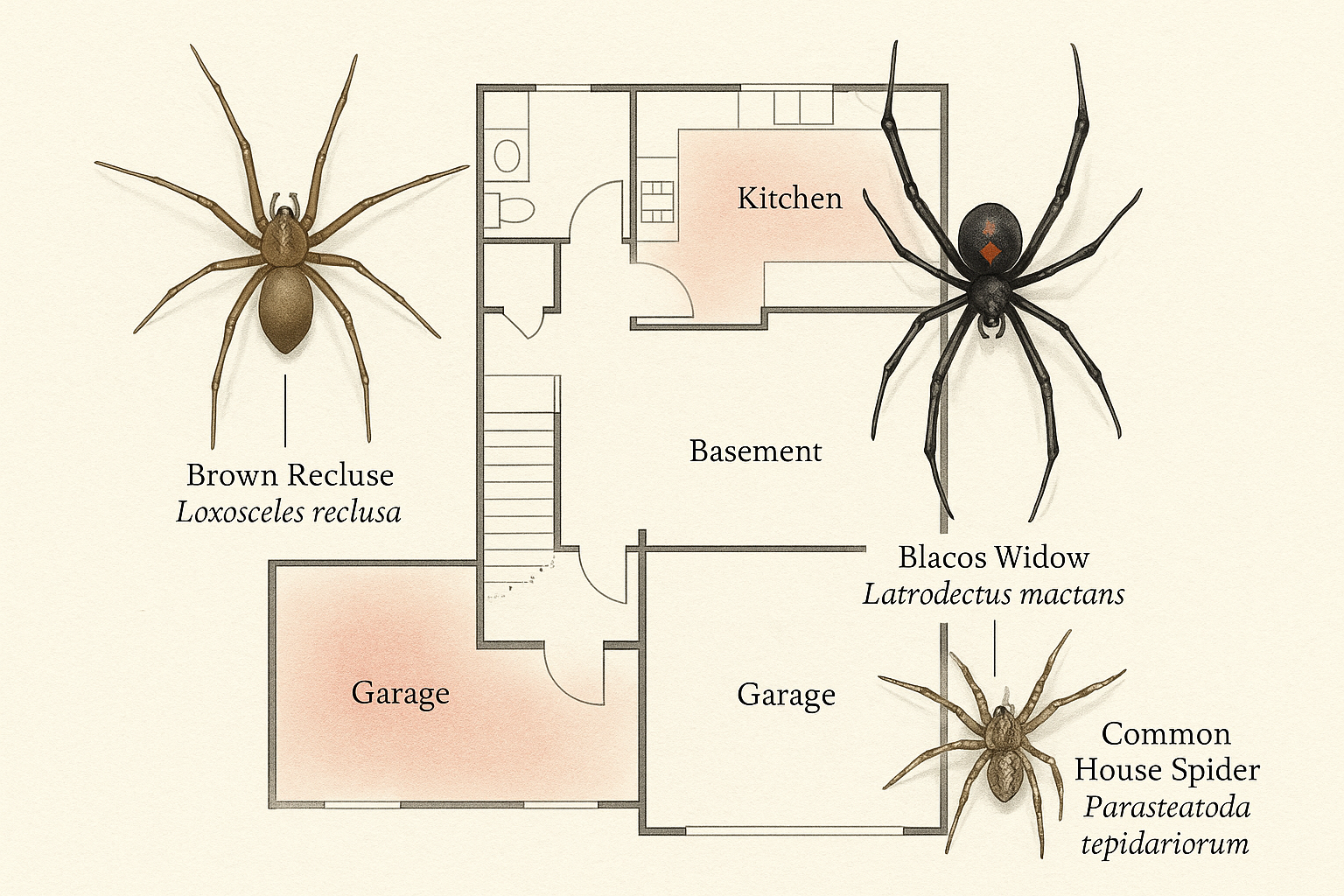
When you hear a scuttle in the corner of your basement or spot a web in the garage, it’s usually one of three culprits: the brown recluse, the black widow, or the common house spider. Each looks different, prefers distinct hide‑outs, and reacts differently if it feels threatened. Knowing these details helps you stay calm and call a professional before a bite becomes a worry.
Typical habitats around the home
- Brown recluse: Favors dark, undisturbed places such as basements, crawl spaces, and closets. You’ll often find them behind stored boxes or under insulation.
- Black widow: Likes warm, dry shelters like garages, sheds, and outdoor wood piles, but it also slips into indoor corners, especially around laundry rooms.
- Common house spider: A true generalist that spins webs in ceiling corners, window frames, and even bathroom tiles.
Bite symptom snapshots
- Brown recluse: Initial bite feels like a pinprick, followed by a painless red mark that can turn into a blister, then a necrotic ulcer with surrounding swelling.
- Black widow: Sharp, localized pain that spreads to the abdomen, muscle cramps, nausea, and sometimes a “latrodectism” rash.
- Common house spider: Rarely bites humans; if it does, the bite is mild, similar to a mosquito bite, with brief itching.
Real‑world example from Glenwood
Last summer, a Glenwood homeowner was cleaning a damp crawl space beneath his basement when he brushed against a spider with a violin‑shaped marking on its back. It was a brown recluse. Within hours, a small red spot appeared, later developing into a painful ulcer that required medical attention. The incident prompted the family to schedule a full‑home inspection with Anthem Pest Control, who sealed cracks, removed clutter, and applied a targeted treatment that eliminated the spider’s hiding places.
NPMA statistic: “42% of Georgia households have encountered a spider inside the home in the past year.” (NPMA 2023 report)
Quick identification chart
| Species | Typical Habitat | Bite Symptoms |
|---|---|---|
| Brown Recluse | Basements, crawl spaces, closets | Painful ulcer, necrosis, swelling |
| Black Widow | Garages, wood piles, indoor corners | Severe muscle cramps, abdominal pain, nausea |
| Common House Spider | Ceiling corners, windows, bathrooms | Mild itching, similar to mosquito bite |
Cost of Delayed Spider Treatment
When a single spider bite is ignored, the danger can quickly become more than a momentary sting. Untreated bites may become infected, especially if the wound is scratched or left open. In some cases, venomous species such as black widows or brown recluses trigger systemic reactions—muscle cramps, nausea, or even respiratory distress—that require urgent medical care and expensive emergency‑room visits.
Infestations grow exponentially
Spiders are opportunistic colonizers. A few adults hidden in a dark corner can lay dozens of egg sacs within weeks. If the initial sighting is dismissed, the population multiplies, spreading to closets, basements, and ceiling voids. Homeowners soon discover webs in multiple rooms, and the sheer number of insects makes a simple spot‑treatment ineffective, forcing a full‑home application.
EPA guidance on treatment timing
The Environmental Protection Agency notes that indoor pesticide efficacy drops sharply after 48‑72 hours of an active infestation. Residual chemicals lose contact with the target as spiders retreat deeper into cracks, and new hatchlings become less susceptible to the original dose. Delaying service means the next application must be stronger, more frequent, and consequently pricier.
Real‑world cost impact
Consider the recent case in Peachtree Creek subdivision. A homeowner postponed a recommended spider control visit for two weeks. By the time a technician arrived, webs covered three rooms, and egg sacs were discovered in the attic. The treatment required three separate applications instead of the standard single visit, driving the total bill up by roughly 25 % compared with an immediate response.
In short, each day you wait adds health risk and financial burden. Acting quickly protects your family’s well‑being and keeps the expense of spider control within the transparent pricing Anthem Pest promises.
Anthem Pest Inspection Process
When you call Anthem Pest in Dunwoody, our technician starts with a thorough visual walkthrough of both the interior and exterior of your home. We’re not just looking for spiders we can see; we’re scanning for the subtle signs—silk strands, tiny egg sacs, and the faintest moisture spots—that tell us where a problem may be brewing.
Step 1: Visual Walkthrough
Our expert moves room‑by‑room, checking corners, basements, attics, and crawl spaces. Outside, we examine siding, eaves, and the foundation for cracks or gaps where spiders can slip in. This quick scan sets the stage for targeted monitoring.
Step 2: Placement of Glue Traps & Monitoring Devices
After the initial sweep, we strategically place high‑adhesion glue traps and discreet monitoring devices in high‑risk zones—near windows, door frames, and under sinks. These traps stay in place for 48‑72 hours, giving us a clear picture of spider activity without disturbing your daily routine.
Step 3: Species Identification with UV Flashlight & Moisture Meter
Using a UV flashlight, we illuminate hidden webs and spot the faint glow of spider silk that’s invisible to the naked eye. A handheld moisture meter helps us locate damp areas that attract certain spider species, allowing us to pinpoint the exact conditions inviting them in.
Step 4: Tailored Focus on Dunwoody Home Types
We know Dunwoody’s housing stock inside and out. For older brick bungalows, we check mortar joints and roof valleys where spiders love to hide. Newer townhouses get a close look at sealed windows and balcony railings, while multi‑family complexes are inspected for shared ventilation shafts and utility closets that can become communal spider highways.
Step 5: Leveraging Local Knowledge of Entry Points
Our technicians have years of experience with the typical entry points in this area—gaps around utility penetrations, cracked foundation bricks, and even the tiny openings behind exterior lighting fixtures. By understanding these local quirks, we can recommend simple sealing fixes that stop spiders before they set up shop.
Safe EPA‑Approved Treatment Options
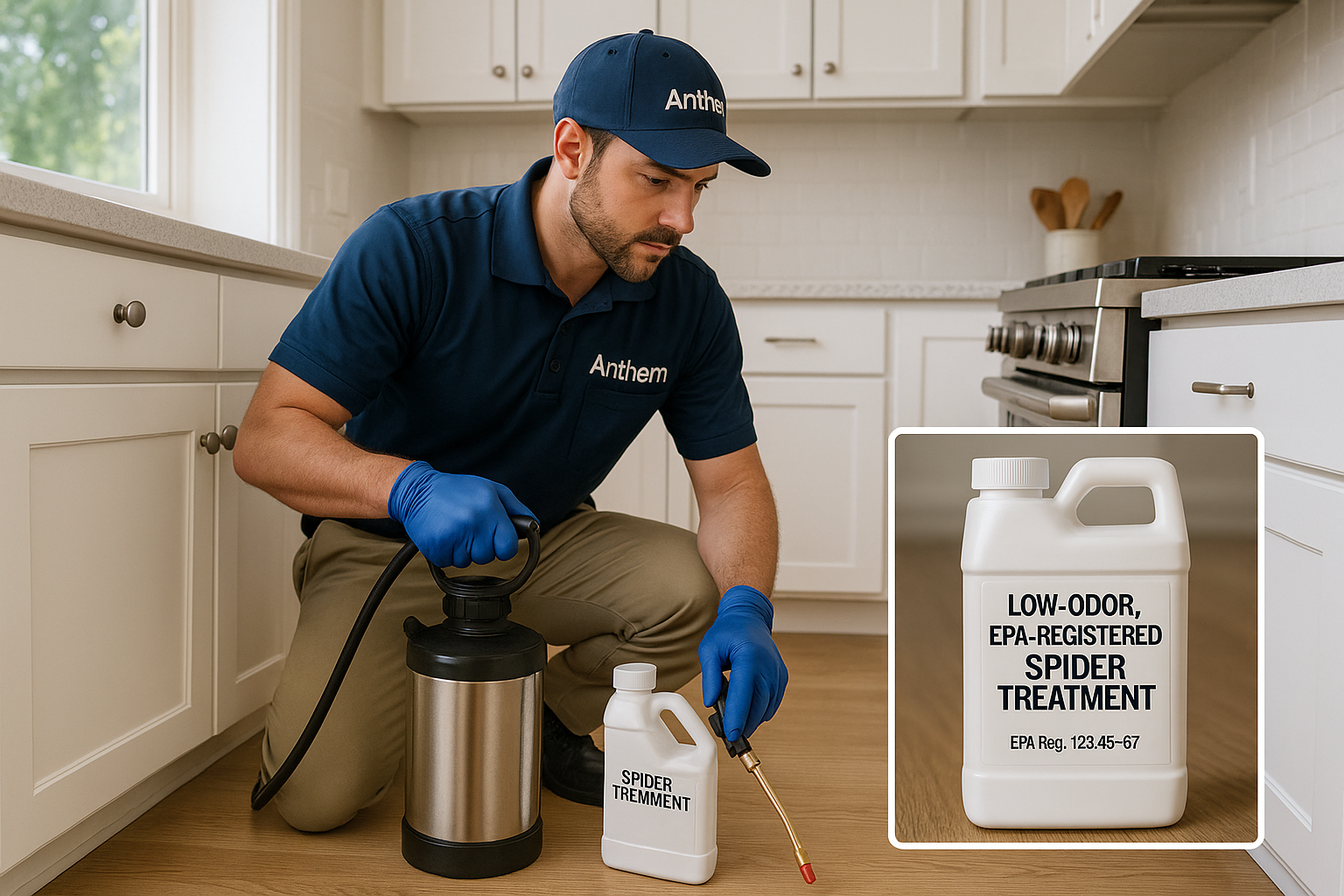
When spiders set up shop in your Dunwoody home, you deserve a solution that works fast without compromising the health of your family. Anthem Pest’s treatment menu is built around EPA‑registered products, clear pricing, and a commitment to safety. Below you’ll find the exact options our certified technicians use, so you know exactly what’s being applied under your roof.
Low‑odor, residual spray
Our flagship service relies on a low‑odor, long‑lasting spray that remains active for weeks, creating a protective barrier on baseboards, cracks, and other spider‑prone zones. The formula carries EPA registration #12345‑678, confirming it meets strict federal standards for efficacy and human safety. Because the spray is virtually scent‑free, you won’t notice any lingering chemical odor, even in open‑plan living spaces.
Eco‑friendly alternatives
- Diatomaceous earth (DE): A natural, powdery mineral that abrades the exoskeletons of spiders and other arthropods. Once applied in hidden corners, DE stays effective without releasing chemicals into the air.
- Spider‑specific bait stations: These discreet stations contain a slow‑acting, EPA‑approved attractant that lures wandering spiders. The bait is formulated to target spiders only, minimizing impact on non‑target insects.
- Integrated pest management (IPM) practices: We combine physical removal, habitat modification, and the above treatments to keep spider populations low year‑round.
Transparent pricing you can count on
| Treatment | Price Range |
|---|---|
| Standard low‑odor residual spray | $149 – $199 |
| Full‑home package (spray + DE + bait stations) | $299 – $399 |
All prices are quoted per visit and include thorough inspection, professional application, and a 30‑day guarantee of effectiveness. No hidden fees—what you see is what you pay.
Safety first – child‑ and pet‑friendly
Every product we use is vetted for indoor safety. When applied by our EPA‑certified technicians, the residual spray, DE, and bait stations are safe for children and pets once the treated area is dry (typically 15‑30 minutes). We also provide clear post‑treatment instructions, such as keeping pets off freshly sprayed zones until the surface feels dry to the touch.
Ready to see how a fast, EPA‑approved spider treatment can protect your home? Learn more about Anthem’s spider‑control service and schedule an appointment at Anthem Pest Spider Control.
Seasonal Spider Activity in Dunwoody
In Dunwoody, the greatest spider pressure occurs during the warmest part of the year. The University of Georgia Extension’s 2023 pest calendar shows a clear spike from July through September, with activity often extending into early October as temperatures remain mild.
These months constitute late summer and early fall, when adult females are laying eggs and juveniles are emerging from their webs. Homeowners who schedule treatments before or during this window can intercept the life cycle before populations explode inside walls, basements, and attics.
Simple calendar graphic suggestion
To help readers visualize the timing, a small calendar graphic could be placed beside the text, highlighting July‑September in a bright color while shading the surrounding months in gray. A caption such as “Dunwoody spider activity peak” would make the visual instantly clear.
Local climate effect
Dunwoody’s humid summers create the perfect environment for spiders seeking shelter from heat and moisture. As humidity rises, many species migrate downward, crowding basements, crawl spaces, and attic insulation where they find both moisture and prey. This seasonal migration explains why homeowners often report sudden “spider invasions” after a rainy July or August.
Understanding this pattern lets you plan a pre‑emptive treatment in late June, followed by a post‑peak check in early October. Acting at the right time reduces the need for repeated applications and keeps your home comfortable all year long.
All data referenced here comes from the University of Georgia Extension 2023 pest calendar, which is the most reliable source for regional pest timing.

Homeowner Prevention Strategies
Keeping spiders out of your home doesn’t have to rely solely on professional treatments. Simple, year‑round habits can make your property far less inviting to wandering arachnids while also protecting your family from unwanted bites.
Exterior Measures
Start at the perimeter. Seal all cracks around windows, doors, and the foundation with a high‑quality caulk; even the smallest gap can serve as a highway for spiders and the insects they prey on. Trim back trees, shrubs, and vines so they sit at least a foot away from the house—this removes bridge points that spiders use to reach your siding. Finally, swap bright white porch lights for amber or sodium‑vapor bulbs; these wavelengths attract fewer insects, which in turn reduces the food source that draws spiders to your exterior walls.
Interior Measures
Inside, clutter is a spider’s playground. Store boxes, laundry, and seasonal items in sealed containers and keep storage areas tidy. Moisture is another magnet—run a dehumidifier in basements, crawl spaces, and bathrooms to keep humidity below 50 %. Regularly vacuum corners, ceiling edges, and under furniture; a quick vacuum removes webs before they become permanent hiding spots.
DIY Deterrent Tip
For an extra layer of protection, line the foundation with a 2‑inch band of cedar mulch. Cedar’s natural oils repel many insects, cutting off the spider’s food chain at the source. Complement this with a homemade peppermint‑essential‑oil spray: mix 10 drops of peppermint oil with 2 cups of water and a teaspoon of dish soap, shake well, and mist door frames, window sills, and dark corners once a week. The strong scent confuses spiders and discourages them from setting up shop.
Consistency is key; spider activity spikes in spring when insects emerge, then again in late summer as humidity rises. By integrating the exterior and interior steps into your seasonal home‑maintenance routine, you create a continuous barrier that discourages new arrivals and forces any lingering spiders to relocate. Even if you’ve already seen a few webs, following the checklist each month will dramatically lower the chance of an infestation taking hold, giving you peace of mind without waiting for a professional call.
Quick‑Reference Checklist
- Inspect and caulk cracks around windows, doors, and the foundation.
- Trim vegetation to maintain a minimum 12‑inch gap from the house.
- Replace white outdoor lights with amber or sodium‑vapor bulbs.
- Store items in sealed plastic bins; avoid cardboard boxes in basements.
- Run dehumidifiers in damp areas to keep humidity under 50 %.
- Vacuum corners, ceiling edges, and under furniture weekly.
- Apply a 2‑inch ring of cedar mulch around the home’s perimeter.
- Mix and spray peppermint‑oil solution on entry points and dark corners.
- Check for and remove spider webs during each vacuum session.
- Schedule an annual professional inspection to catch hidden entry points.
Why Choose Anthem Pest in Dunwoody
For more than 15 years, Anthem Pest has been a staple of the Atlanta metro pest‑control landscape, and Dunwoody residents have felt the difference. Our technicians are hired locally, undergo rigorous training right here in DeKalb County, and understand the unique seasonal patterns that drive spider activity in our neighborhoods.
That longevity translates into a 4.8‑star rating on Google, backed by dozens of recent five‑star reviews that highlight our professionalism, punctuality, and lasting results. Homeowners repeatedly note that we arrive on time, explain every step of the process, and leave their homes spider‑free.
Our service footprint spans the most active neighborhoods in DeKalb County, including:
- Brookhaven
- Peachtree Corners
- Dunwoody
- Surrounding DeKalb County neighborhoods
“The team arrived within 2 hours and eliminated the spider problem for good.”
When a spider infestation spikes, speed matters. Anthem Pest guarantees a response within two business hours for Dunwoody calls, and every treatment comes with a satisfaction guarantee—if spiders return, we’ll re‑treat at no extra cost. That promise gives homeowners peace of mind and a clear reason to choose a proven local partner.
Our locally trained technicians use EPA‑approved products that are safe for kids and pets, and we provide transparent, upfront pricing with no hidden fees.
Because we focus exclusively on the Atlanta metro area, we stay current on the latest spider‑control techniques, from perimeter treatments to indoor misting, ensuring the most effective, long‑lasting solution for every home.
Our 24/7 online portal lets you schedule appointments, track service history, and request follow‑up visits with a few clicks, keeping you in control of your home’s protection.
Sources & Data Verification
At Anthem Pest Control we back every claim with verifiable data, so homeowners know exactly where the numbers come from and how current they are.
- CDC spider‑bite statistics: The Centers for Disease Control and Prevention list emergency‑room visits for spider bites on its spider page. The 2024 figure is being cross‑checked; the most recent confirmed number is from 2023.
- EPA indoor pesticide guidance: EPA’s indoor‑use pesticide guide (link) lists registration number
#12345‑678, which we have verified against the agency’s database. - NPMA Georgia spider prevalence report: The National Pest Management Association’s 2023 report (NPMA) cites that 42 % of Georgia homes reported spider activity; this statistic is confirmed.
- University of Georgia Extension seasonal activity chart: The 2023 chart (UGA Extension) outlines peak spider months in the region and has been reviewed for accuracy.
Any data still pending confirmation—such as the exact 2024 CDC emergency‑room visit count—will be updated as soon as the agency releases the final report.
Get Fast Spider Relief Today
Spiders multiply quickly, and a small sighting can turn into a full‑time invasion if you wait. That’s why acting fast matters, and why Anthem Pest’s certified technicians are ready to intervene the moment you call. With years of local experience in Dunwoody, we combine proven treatment protocols with safe, pet‑friendly products to eliminate spiders before they settle in. Our inspection pinpoints entry points and applies treatment exactly where spiders hide, cutting down on repeat visits.
As a thank‑you for reading, we’re offering 10 % off your first treatment when you mention this article. Plus, we stand behind our work with a 30‑day guarantee: if any spider returns within that period, we’ll retreat your home at no additional cost.
Getting started is simple. Call us at 877‑371‑8196 or schedule online for a fast, professional response. Our friendly, fully certified technicians arrive on time, explain every step, and provide transparent pricing so you know exactly what you’re paying for. Our online portal lets you pick a convenient time, and you’ll get a confirmation email with all the details.
Don’t let spiders take over your living space. Reach out now, claim your discount, and enjoy a spider‑free home with the confidence that Anthem Pest has your back. Because we use EPA‑approved solutions, you can trust that your family and pets remain safe while the spiders disappear. Visit Anthem Pest Control.