Stink Bug Issue in Dunwoody – Why It Matters
The brown marmorated stink bug (Halyomorpha halys) has quietly become one of Georgia’s most talked‑about pests. Though originally an Asian traveler, it now shares our yards with native stink‑bug species, turning a harmless summer nuisance into a full‑blown household problem. These insects are easily recognized by their shield‑shaped, mottled‑brown bodies and the unmistakable odor they release when disturbed.
From 2022 through 2024 the region experienced a dramatic population surge, fueled by unusually warm winters and a long, moist growing season in 2023‑2024. The bugs found abundant food—fruit trees, ornamental shrubs, and even our kitchen leftovers—allowing numbers to explode. In Dunwoody, sightings have jumped from occasional backyard visitors to frequent indoor guests, especially as temperatures dip in late summer and they seek shelter.

This surge is why our article matters. We’ll demystify the stink‑bug inspection process, walk you through the signs that warrant a professional look‑over, and help you decide when it’s time to call Anthem Pest Control. Understanding the steps—visual inspection, trap placement, and moisture checks—means you can protect your home before the bugs turn a minor annoyance into a costly infestation.
Imagine a typical Dunwoody homeowner, Sarah, who notices a faint, sour smell wafting from her kitchen while preparing dinner in late August. A quick glance reveals a few brown, shield‑shaped insects hiding behind the baseboard. The odor isn’t just unpleasant; it signals that the bugs are feeling threatened and may release their defensive scent throughout the house. Sarah’s experience mirrors a growing pattern across neighborhoods like Brookhaven Village, Peachtree Park, and Dunwoody Forest, where residents report late‑summer sightings and lingering odors.
For those living in these communities, the stink‑bug issue isn’t just a seasonal inconvenience—it’s a signal that your home’s entry points may be compromised. Cracks around windows, gaps in siding, and unsealed attic vents become highways for these pests. By recognizing the problem early and opting for a thorough inspection, you safeguard your family’s comfort, preserve food stores, and avoid the embarrassment of a lingering stink that can linger for days.
Understanding Stink Bugs in Georgia
Biology: Brown‑marmorated vs. native stink bugs
The brown‑marmorated stink bug (Halyomorpha halys) is an invasive species that looks slightly larger and more shield‑shaped than Georgia’s native stink bugs. While the native varieties sport a mottled brown‑gray hue with subtle white markings, the brown‑marmorated version displays a glossy, uniform brown shell with a faint white “V” on the back. Both species undergo five life stages—egg, five nymphal instars, and adult—but the invasive bug matures faster, often reaching adulthood by early summer.
Feeding habits also differ. Native stink bugs primarily nibble on plant sap from weeds and ornamental shrubs, rarely causing noticeable damage. In contrast, the brown‑marmorated stink bug is a polyphagous feeder; it attacks a wide range of crops (peaches, apples, soybeans) and ornamental plants, piercing fruit and leaving brown, sunken spots. Understanding these distinctions helps homeowners recognize which pest they’re dealing with and why the brown‑marmorated variety can become a bigger problem.
Seasonal behavior in the Atlanta metro area
Stink bugs follow a predictable seasonal rhythm. Eggs are laid on the underside of leaves in late spring. Nymphs emerge in June, feeding aggressively as they grow. By mid‑summer, adults are abundant in gardens and orchards, but as temperatures dip in late August, they begin their “fall migration”—seeking warm, sheltered spots inside homes.
In the Atlanta metro area, including Dunwoody, the peak indoor sightings typically occur in September. You’ll often find them gathering in wall voids, attics, and even kitchen cabinets. The migration is driven by the need to survive the cooler months, and the bugs can remain dormant indoors until spring, when they emerge to resume feeding.
Local statistics and insights
According to the U.S. Environmental Protection Agency, Georgia saw a 38% increase in stink‑bug‑related service calls between 2021 and 2023 (EPA source). This surge reflects both the expanding range of the brown‑marmorated stink bug and heightened homeowner awareness.
Homeowners near the Dunwoody Nature Preserve report earlier indoor migrations than those farther east. The preserve’s cooler micro‑climates—thanks to dense canopy cover and nearby water features—prompt bugs to seek warmth inside homes a few weeks sooner, often starting in late August.
Why the odor matters
When threatened, stink bugs release a pungent, sulfur‑like odor that can linger in a room for hours. While the smell is primarily a nuisance, some individuals experience mild allergic reactions, such as skin irritation or respiratory discomfort, especially in poorly ventilated spaces. Prompt identification and professional treatment can prevent both the visual infestation and the lingering odor from becoming a household annoyance.
Benefits of a Professional Inspection
When it comes to stink bugs, a quick visual sweep of your home may feel reassuring, but the numbers tell a different story. According to a recent NPMA study, DIY visual checks catch only about 45% of infestations, while a certified technician identifies roughly 92% of active colonies. That gap can mean the difference between a single night of odor and a full‑blown invasion that spreads to neighboring rooms.
Health considerations you can’t ignore
Stink‑bug odor isn’t just unpleasant; it can trigger allergic reactions in roughly 12% of sensitive individuals (CDC). A professional inspector knows how to locate hidden nests before the bugs release their defensive chemicals, reducing exposure for family members with asthma, eczema, or other respiratory sensitivities.
Cost‑benefit in plain dollars
Think of the inspection as an insurance policy. A standard $150 professional assessment often uncovers problems that, if left unchecked, require a treatment ranging from $800 to $1,200. By catching the issue early, you avoid the higher labor, material, and repeat‑visit costs that DIY attempts typically incur.
EPA‑registered products and safety protocols
Anthem Pest Control only applies EPA‑registered treatments, ensuring each product meets rigorous safety standards for humans, pets, and the environment. Technicians follow strict application guidelines—ventilation, protective equipment, and precise dosage—to minimize any residual risk.
Peace of mind with documented results
After the inspection, you receive a detailed written report that includes photo evidence of identified hotspots, a clear risk rating, and tailored recommendations. This documentation not only validates the work performed but also serves as a reference for future maintenance, insurance claims, or resale discussions.
- Higher detection accuracy (92% vs. 45%) – NPMA source
- Allergy trigger for 12% of sensitive people – CDC source
- Potential savings of $650‑$1,050 with early professional detection
- Use of EPA‑registered, safety‑first products
- Written report with photos and risk rating for lasting confidence
Identifying Stink Bugs & Signs of Infestation
What a Stink Bug Looks Like
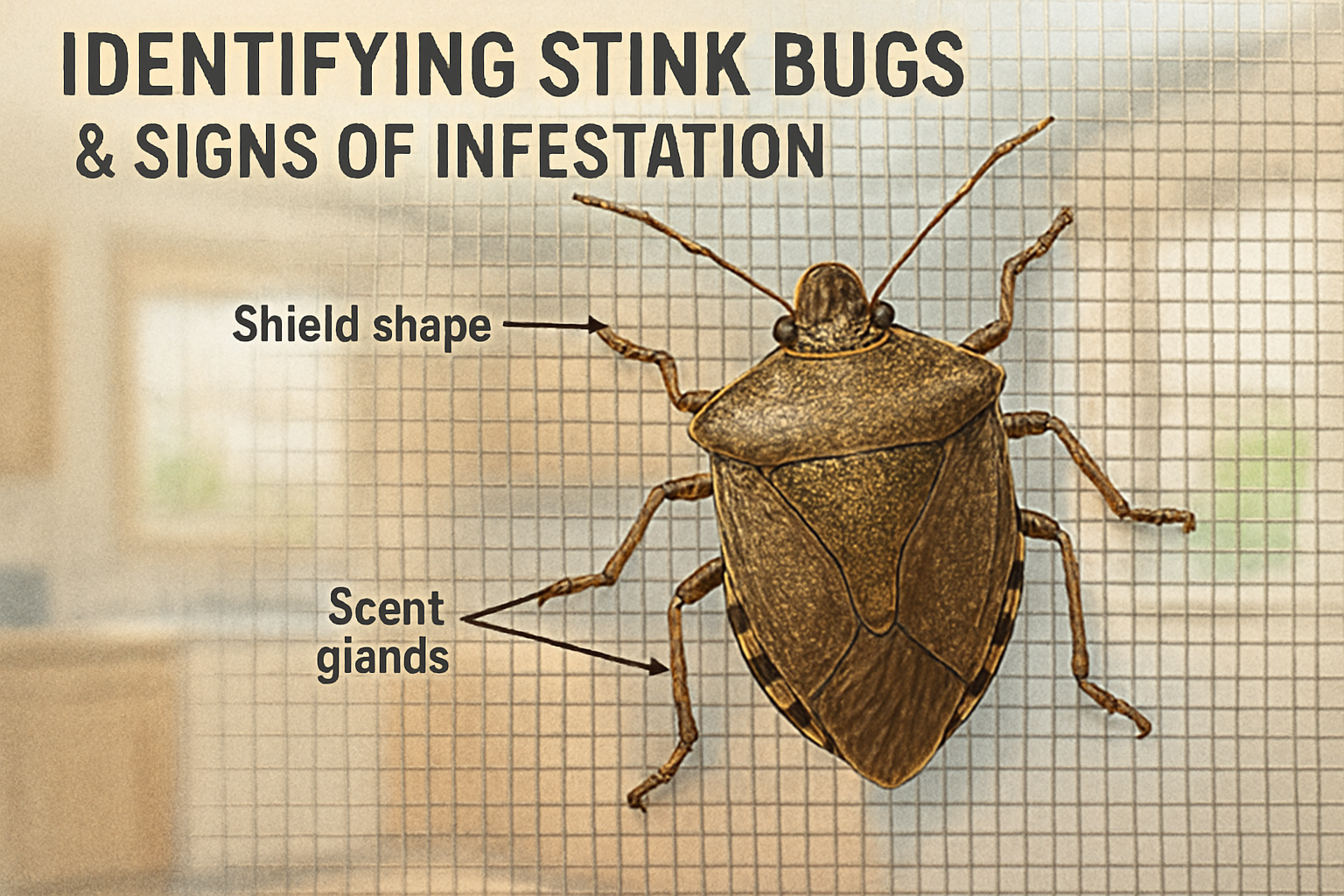
Stink bugs are easy to spot once you know the basics. Their bodies are a distinctive shield shape, roughly the size of a quarter (½‑¾ inch long). The coloration ranges from matte brown‑green to a slightly mottled olive hue, and each side bears a subtle, glossy sheen. The most reliable identifier is the pair of scent glands tucked behind the thorax—when the bug feels threatened, it releases a characteristic “musty” odor that most homeowners associate with the name.
Where They Like to Hide
During the cooler months, stink bugs seek shelter inside your home. The most common entry points are:
- Kitchen window screens that have tiny tears or loose mesh.
- Door frames and weather‑stripping gaps.
- Attic voids and roof eaves where temperature stays moderate.
- Cracks in interior walls, especially near baseboards or around light fixtures.
Because they are attracted to light, you’ll often find them congregating on sunny windowsills or near outdoor lights that shine through a screen.
Visual Clues of an Early Infestation
Before numbers swell, homeowners can notice a few tell‑tale signs:
- Small clusters of dead stink bugs near windows or vents.
- Faint oily or watery stains on walls, countertops, or pantry shelves—these are the remnants of their defensive secretions.
- A lingering, slightly sour odor, especially after you disturb a hidden cluster.
- Unexplained damage to fruit, garden produce, or indoor plants—tiny puncture marks and a soft rot that starts at the surface.
Sticky Traps: Your Early‑Warning System
Sticky traps are a low‑cost, non‑chemical way to confirm activity. Place a few yellow or white adhesive cards in suspected hotspots (e.g., under a kitchen sink, behind a bedroom window, or in the attic). A “positive” trap will show one or more live stink bugs stuck to the surface, often with their characteristic shield shape clearly visible. If you start seeing multiple captures over a week, it’s a strong indicator that a larger population is establishing itself.
Quick Homeowner Sweep Checklist
- Inspect window screens for tears; repair or replace as needed.
- Check door frames and weather‑stripping for gaps; seal with caulk or foam.
- Look for dead bugs or oily stains on walls, countertops, and pantry shelves.
- Examine attic corners, roof eaves, and wall cracks for live insects.
- Set up sticky traps in at least three high‑risk areas and review them after 7 days.
- Note any lingering odor or damage to fruit and vegetables.
Inspection Process and Tools
When you call Anthem Pest Control for a stink‑bug inspection in Dunwoody, the first thing we do is map out a clear, step‑by‑step plan. Our technicians follow a proven checklist that lets them locate hidden bugs quickly, assess the risk to your home, and give you a written roadmap for treatment—all without any surprise fees.
Our goal is to give you confidence that every potential entry point is examined, so you can avoid surprise infestations later in the season.
1. Pre‑inspection phone call
Before the
Prevention Tips for Homeowners
Seal Entry Points
Stink bugs slip through the tiniest cracks, so start by caulking any gaps wider than 1/8 inch around windows, baseboards, and utility penetrations. Install door sweeps on all exterior doors and replace or repair damaged screen panels. A tight envelope keeps the bugs out before they even see your kitchen.
Landscape Management
Mulch and plant debris act as a bridge to your foundation. Keep mulch at least 6 inches away from the house and prune low‑hanging branches that brush the siding. Regularly rake away fallen leaves, pine needles, and garden waste—these provide shelter for overwintering stink bugs and make it easier for them to find a foothold.
Light Management
Bright white bulbs are a beacon for many insects, stink bugs included. Swap outdoor fixtures for yellow‑tinted or sodium‑vapor bulbs, especially around entry zones such as porch lights and garage doors. The softer spectrum is far less attractive, reducing the night‑time draw that often leads bugs straight to your doorstep.
DIY Monitoring
Set up sticky traps in high‑traffic areas—under eaves, near window frames, and beside doorways where you’ve noticed activity. Use a thin layer of petroleum‑based adhesive on cardboard or purchase pre‑treated traps. Check them weekly and replace the sheets each month; a quick visual cue tells you whether your preventive steps are working.
Printable Seasonal Checklist
We’ve created a one‑page checklist designed for Dunwoody residents. It walks you through a four‑step routine for each season:
- Spring: Inspect roof vents, reseal cracks, and set up new sticky traps.
- Summer: Trim vegetation, verify door sweeps, and replace yellow bulbs if needed.
- Fall: Clear leaf litter, pull back mulch, and conduct a final interior inspection.
- Winter: Verify insulation around pipes, check for new gaps, and store traps for next spring.
The checklist can be printed, laminated, and hung on the fridge—making it easy for every family member to stay on top of protection tasks.
Integrate Inspections into an IPM Plan
Seasonal walk‑throughs are the backbone of an Integrated Pest Management (IPM) strategy. Schedule a quick visual scan of your home’s exterior at the start of each season, noting any new cracks, water damage, or vegetation changes. Pair these inspections with the actions above, and you’ll catch stink bugs before they establish a foothold. When you spot persistent activity despite your best efforts, that’s the cue to call Anthem Pest Control for a professional evaluation and targeted treatment.
Cost Overview & Pricing Transparency
When it comes to stink bug control, knowing exactly what you’ll pay up front can make the difference between a confident decision and a lingering doubt. At Anthem Pest, every dollar is accounted for, so you can focus on keeping your Dunwoody home bug‑free rather than worrying about surprise charges.
Inspection Fee
Our thorough inspection—where a certified technician examines the exterior, interior, and potential entry points—ranges from $75 to $150. The price varies primarily with the size of the property; a typical 2,200‑sq‑ft house in Dunwoody usually falls near the middle of that range. This fee includes a detailed report that outlines where stink bugs are congregating and which treatment path will be most effective.
Treatment Options & Pricing
- Spot Treatment: $120‑$250 per room. Ideal for isolated infestations or for homeowners who only need a single area addressed.
- Whole‑Home Spray: $300‑$550. A comprehensive barrier that treats all interior spaces, providing protection for the entire household.
- Integrated Pest‑Management (IPM) Program: $450‑$800 annually. This package includes quarterly inspections, follow‑up treatments, and ongoing monitoring to keep stink bugs—and other pests—at bay year after year.
Why IPM Often Beats One‑Time Treatments
Stink bugs are opportunistic; a single spray may knock out the visible insects but won’t eradicate hidden nests or prevent re‑infestation. The IPM program spreads the cost over four visits, each targeting a different stage of the bug’s life cycle. Over a year, the $450‑$800 investment typically saves homeowners from multiple emergency calls, which can add up to $200‑$400 per incident when you factor in labor and additional chemicals.
Anthem Pest’s Pricing Guarantee
Transparency isn’t just a buzzword for us—it’s a promise. Before any work begins, you’ll receive a written estimate that breaks down every line item. There are no hidden fees, and all services are covered by a satisfaction warranty: if the stink bugs return within the guaranteed period, we’ll re‑treat at no extra charge.
DIY vs. Professional: A Quick Comparison
Imagine purchasing a $60 over‑the‑counter spray and applying it yourself. While the upfront cost looks appealing, the spray often provides only a few weeks of relief, and you’ll likely need to repeat the process several times throughout the season—potentially spending $180‑$240 in chemicals alone, not to mention the time and effort involved.
Contrast that with Anthem’s IPM program at $600 per year. For the price of three DIY sprays, you receive four expert inspections, professional‑grade treatments, and a warranty that protects your investment. The result is a consistently low stink bug population, fewer interruptions to your daily life, and peace of mind that comes from a proven, science‑backed approach.
In short, Anthem Pest’s clear pricing structure and guarantees mean you know exactly what you’re paying for, why it’s worth it, and how it protects your home long after the first visit.
Conclusion and Next Steps
Why early detection matters
Stink bugs may seem harmless at first, but a small population can quickly turn into a costly infestation. Spotting the insects early—while they’re still confined to a few cracks or the garden—gives you a chance to act before they breach walls, invade stored foods, or damage ornamental plants. A professional inspection in Dunwoody pinpoints the exact entry points, identifies the species, and maps out the severity of the problem. This proactive approach eliminates guesswork and ensures that treatment is targeted, efficient, and minimally disruptive to your daily routine.
Long‑term savings and peace of mind
Choosing a certified local expert like Anthem Pest Control isn’t just about eradicating the current bug load; it’s an investment in your home’s future health. When a qualified technician applies industry‑approved methods, you avoid the hidden expenses that come from DIY attempts—repeated applications, ineffective products, and potential damage to structural wood or landscaping. Over time, a well‑planned prevention plan reduces the likelihood of repeat invasions, protects your property value, and lets you sleep easier knowing that a trusted partner is monitoring your home year‑round.
Ready to protect your Dunwoody home?
If you’ve noticed the tell‑tale signs of stink bugs or simply want a professional assessment, Anthem Pest Control is ready to help. We offer a free, no‑obligation quote that outlines exactly what needs to be done and how much it will cost—no hidden fees, no surprise charges. Give us a call today at 877‑371‑8196 or visit Anthem Pest Control to schedule your inspection. Let our local expertise keep your home pest‑free and your mind at ease.