Fast Earwig Extermination Overview for Smyrna Homeowners

Earwigs may seem harmless, but a sudden swarm can damage garden plants and create a creepy‑crawl feeling inside your home. One evening in early July, a Smyrna resident opened a kitchen cabinet to find a line of dark, slender insects marching across the shelf. The sight alone is enough to send chills down anyone’s spine, and the real problem begins when those earwigs start nibbling at tender seedlings, ornamental shrubs, and even the tender roots of vegetable beds.
Recent summer reports from the Georgia Department of Agriculture and local extension services show a 27 % rise in earwig sightings across Fulton County, with Smyrna topping the list. Warm nights, abundant mulch, and the city’s lush, irrigated lawns create the perfect breeding ground. Homeowners are now reporting earwig clusters not only outdoors but also inside basements, laundry rooms, and crawl spaces—areas that retain moisture and offer easy entry points.
Why should Smyrna homeowners act fast? Early detection stops a minor nuisance from becoming a costly garden nightmare. A small infestation can quickly evolve into a full‑scale swarm that chews on seedlings, damages fruit buds, and leaves behind a trail of excrement that attracts secondary pests. Moreover, earwigs can infiltrate homes through cracks around doors, windows, and utility penetrations, turning a garden issue into an indoor discomfort.
That’s where Anthem Pest Control steps in. With a reputation for rapid response, Anthem’s licensed technicians specialize in pinpointing entry points, applying targeted, low‑toxicity treatments, and delivering a follow‑up plan that keeps earwigs at bay. Their fast‑acting solutions are designed for Smyrna’s unique climate, ensuring you get relief before the next rain triggers another surge.
By staying informed and partnering with a local expert, you can protect both your home’s interior comfort and the health of your garden. The next time you spot a lone earwig, remember that swift action today prevents a swarm tomorrow.
What Are Earwigs and Why They Invade Homes?
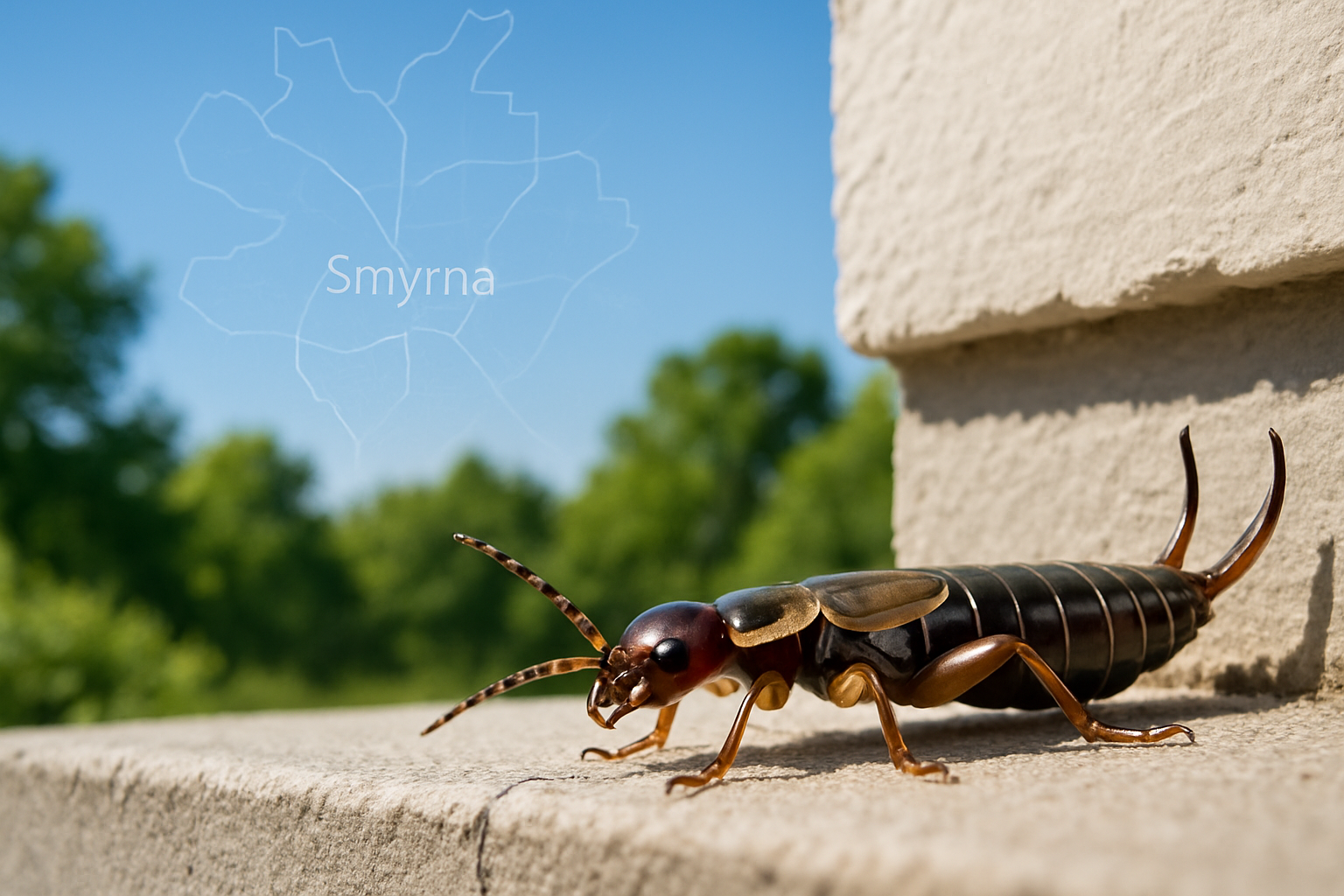
Earwigs belong to the order Dermaptera, a small group of insects that includes roughly 2,000 species worldwide. The most common household culprit in Georgia is the European earwig (Forficula auricularia). These insects are easily recognized by their elongated, flattened bodies that range from ½ to 1 inch long, and the distinctive pair of forceps‑like cerci protruding from the rear of their abdomen. Their coloration varies from light brown to dark reddish‑brown, and their wings, when present, are short and folded under a leathery outer shell.
Earwigs are strictly nocturnal. After sunset they emerge from their daytime hideouts to hunt for small insects, plant material, and decaying organic matter. Their attraction to darkness is coupled with a strong preference for moisture; they thrive in damp, cool environments where humidity levels stay above 60 %. This is why you’ll often find them congregating under kitchen sinks, in bathroom cabinets, or along the baseboards of basements where water may accumulate.
Several factors lure earwigs into the interior of a home:
- Basements and crawl spaces: These areas retain moisture and provide a stable temperature, creating an ideal refuge during hot summer nights.
- Garden mulch and leaf litter: Mulch holds water and shelters insects, acting as a bridge between the yard and the house.
- Cracks and gaps: Small openings around foundations, doors, and windows let earwigs slip inside in search of shelter.
- Food sources: Earwigs are opportunistic feeders; they’ll nibble on soft fruits, seedlings, and even the occasional crumb left in pantry shelves.
According to the University of Georgia Extension, earwig populations in the Atlanta metro area surge by 45 % during warm, humid weeks (2024 data). This spike aligns perfectly with the region’s summer rain patterns, explaining why many Smyrna residents notice a sudden increase in earwig activity after a series of thunderstorms.
Take the case of a Smyrna homeowner who, after a week of heavy rain, opened a kitchen cabinet to retrieve a baking sheet and discovered dozens of earwigs scurrying across the shelves. The homeowner reported that the cabinets had been recently cleaned, but the persistent moisture from a leaky pipe beneath the sink created a perfect micro‑habitat for the insects. Within 24 hours, the infestation spread to adjacent drawers, prompting a call to Anthem Pest Control for a fast, targeted treatment.
The Importance of Rapid Earwig Control in Smyrna
Earwig Breeding Cycle: Speed Matters
Earwigs move from egg to mature adult in roughly 45 days. During that time a single female can lay up to 50 eggs, and each new generation repeats the cycle. In a warm, humid environment like Smyrna, the population can double several times before you even notice a single sighting. That exponential growth means a few stray earwigs today can become a full‑blown infestation in just a few weeks if left unchecked.
Potential Damage to Gardens and Ornamentals
While earwigs are often dismissed as harmless, they are voracious feeders. They chew on tender foliage, flower buds, and young seedlings, leaving ragged edges that stunt growth. In ornamental beds, the damage is not just aesthetic—it can weaken plants, making them more vulnerable to disease. Homeowners who cherish their curb appeal or rely on a vegetable garden quickly discover that early, decisive action saves both plants and peace of mind.
Why Smyrna’s Climate Accelerates the Problem
Smyrna’s summer humidity regularly exceeds 70 %. High moisture levels keep earwigs active day and night, encouraging feeding and breeding. The damp soil provides an ideal site for egg‑laying, while the moisture‑laden air allows nymphs to develop faster than in drier regions. In short, the local climate turns a moderate pest problem into a rapid‑growth scenario if control measures are delayed.
EPA Guidance: Act Quickly to Prevent Indoor Infestations
According to the U.S. Environmental Protection Agency’s 2023 pest‑management guidance, timely intervention is critical to prevent outdoor pests from establishing indoor colonies. Early treatment reduces the likelihood of earwigs seeking shelter inside homes during extreme weather or seasonal changes.
For Smyrna homeowners, the equation is simple: the faster you engage a professional like Anthem Pest Control, the fewer earwigs have a chance to multiply, the less damage to your garden, and the lower the risk of indoor sightings. Rapid response isn’t just a convenience—it’s a preventive strategy backed by science and local climate realities.
How Anthem Pest Identifies Earwig Hotspots

Earwigs thrive in damp, hidden places, so pinpointing the exact spots where they congregate is the first step toward lasting control. Anthem Pest’s technicians combine proven field techniques with local knowledge to locate every active colony before treatment begins.
Step‑by‑step technician workflow
- Visual sweep of interior spaces. Technicians walk through kitchens, bathrooms, basements, and closets, looking for tell‑tale signs such as shed exoskeletons, egg cases, and the insects themselves.
- Exterior perimeter scan. The team inspects siding, foundation cracks, mulch beds, and garden debris where earwigs often hide during daylight.
- Moisture assessment. Using a handheld moisture meter, the technician measures humidity levels in wood, concrete, and soil. Areas registering above 60 % relative humidity are flagged as high‑risk zones.
- Strategic trap placement. Light‑attracted traps are positioned near identified hot spots, both inside and out, to confirm activity and gauge population density.
- Flashlight verification. A high‑lumens flashlight illuminates dark crevices, crawl‑space openings, and under‑deck spaces, ensuring no colony is overlooked.
Neighborhood focus: Burnt Fork and Olde Smyrna
Burnt Fork’s dense mulch beds create a constantly moist micro‑environment that earwigs love. In Olde Smyrna, many homes feature older foundations with tiny crawl‑space cracks that trap humidity and provide perfect shelter. By concentrating inspection effort in these two neighborhoods, Anthem Pest maximizes detection efficiency while still covering every other area of your property.
Ensuring thoroughness – no hidden colonies missed
After the initial sweep, technicians revisit each suspect location with a second pass, re‑checking moisture readings and trap catches. Any residual activity triggers an additional targeted treatment, guaranteeing that even the most concealed colonies are eradicated. This meticulous approach is why Smyrna homeowners trust Anthem Pest for fast, reliable earwig relief.
Treatment Options for Earwig Infestations

Targeted Chemical Spray
For homeowners who need fast, reliable knock‑down, a low‑toxicity pyrethroid spray is often the first choice. These formulations are EPA‑approved for indoor and perimeter use, delivering rapid contact kill while minimizing risk to humans and pets when applied correctly. Pricing typically falls between $80 and $120 per treatment, depending on square footage and severity of the infestation. The main advantages are immediate results and deep penetration into cracks, crevices, and mulch where earwigs hide. The downside is the need for precise application and occasional re‑treatment if the population rebounds, especially after heavy rain.
Bait Stations
Bait stations work on a “attract‑and‑consume” principle. Each station contains a slow‑acting attractant mixed with a low‑dose insecticide that earwigs carry back to their nests. This method reduces repeat visits because the colony gradually depletes its numbers from within. Service costs range from $50 to $90 per visit, making it a budget‑friendly option for moderate infestations. Pros include discreet placement, minimal exposure to non‑target organisms, and ongoing control for weeks after installation. However, bait efficacy can drop in very dry conditions, and placement must be strategic—typically along damp, dark pathways where earwigs travel.
Eco‑Friendly Alternatives
Homeowners who prioritize safety for children and pets often turn to non‑chemical solutions such as diatomaceous earth (DE) and neem oil. DE is a fine, silica‑based powder that abrades the exoskeleton of earwigs, causing dehydration. It can be sprinkled around foundations, garden beds, and entry points at virtually no cost. Neem oil, derived from the neem tree, acts as a repellent and growth inhibitor when mixed with water and sprayed on surfaces where earwigs congregate. Both options are safe for the household and the environment, but they require regular re‑application—especially after rain or heavy watering—to maintain effectiveness.
Comparative Overview
| Treatment | Effectiveness | Safety | Cost | Ideal Scenario |
|---|---|---|---|---|
| Targeted Chemical Spray |
|
|
$80‑$120 per service |
|
| Bait Stations |
|
|
$50‑$90 per service |
|
| Eco‑Friendly Alternatives (DE & Neem) |
|
|
Often under $20 for DIY supplies |
|
Note: Verify the 2024 EPA registration status of any chemical product before use to ensure compliance with current safety standards.
Transparent Pricing for Earwig Services
At Anthem Pest, we believe you should know exactly what you’re paying for before any work begins. Our pricing structure is simple, flat‑rate, and free of surprise add‑ons, so you can budget with confidence.
- Inspection fee: $45 – a thorough, on‑site assessment of your property to locate earwig activity and determine the most effective treatment plan.
- Treatment range: $80‑$150 – the cost varies only by the method chosen (chemical spray, bait stations, or eco‑friendly dust) and the square footage of the home.
- Follow‑up visit: $40 – one complimentary check‑in to ensure the treatment took hold and to address any lingering concerns.
Sample Quote for a 1,500‑sq‑ft Smyrna Home
| Service | Cost |
|---|---|
| Initial inspection | $45 |
| Standard treatment (mid‑range) | $115 |
| Follow‑up visit | $40 |
| Total expected cost | $200 |
That $200 figure is the full amount you’ll see on your invoice—nothing more, nothing less. Our flat‑rate guarantee means the price you receive in the quote is the price you pay, regardless of how many earwigs we find or how long the treatment takes. No hidden fees, no surprise travel charges, and no extra labor costs.
Choosing Anthem Pest gives you peace of mind: transparent pricing, a single‑price guarantee, and a team that stands behind its work. If you have questions about any line item, our friendly specialists are just a phone call away at 877‑371‑8196 or via our website.
Prevention Strategies for Smyrna Homeowners
Once the earwigs are gone, the real work begins—making sure they don’t move back in. Simple, low‑cost steps around the house can turn your yard into a hostile environment for these nocturnal pests, protecting your home year after year.
Mulch Management
Earwigs love the cool, damp shelter that deep mulch provides. Keep mulch no deeper than two inches and pull it back at least a foot from foundation walls. If you need a decorative ground cover, replace excess mulch with stone, gravel, or cedar chips, which dry faster and are less inviting. Also, avoid over‑watering the beds; soggy soil creates the perfect breeding ground for earwigs.
Seal Entry Points
Even the tiniest crack can become an earwig highway. Inspect the foundation, siding, and window frames for gaps, and fill them with a quality silicone caulk or expanding foam. Install door sweeps on all exterior doors, and check them after heavy rain or seasonal temperature swings when materials can shift. A well‑sealed perimeter removes the most common access routes.
Lighting Choices
Earwigs are attracted to bright white lights that draw other insects they feed on. Switch outdoor fixtures to yellow‑spectrum bulbs, which are less visible to many nocturnal insects. Consider motion‑activated lights that stay off most of the night, or add shielded fixtures that direct light downward instead of spilling onto walls and the ground. Turning off unnecessary lights after dark reduces the lure dramatically.
Seasonal Checklist
A quick, seasonal walk‑through keeps your property inhospitable all year long:
- Spring cleanup: Remove debris, old plant material, and excess mulch that may have accumulated over winter.
- Summer moisture control: Fix leaky gutters, ensure proper drainage, and keep lawn irrigation away from the foundation.
- Fall leaf removal: Rake and dispose of fallen leaves promptly; they provide a moist hide‑out as temperatures drop.
For a deeper dive into year‑round pest prevention, check out Anthem Pest’s dedicated blog post on year‑round pest prevention. Staying proactive now saves you time, money, and a repeat earwig invasion later.
Seasonal Timing and Climate Considerations
From May through September earwigs reach their peak activity in Smyrna, GA. Warm daytime temperatures combined with nighttime moisture create the perfect environment for these nocturnal insects to forage, reproduce, and invade homes.
Treating early in the summer—ideally in late May—keeps you one step ahead of the earwig breeding cycle. Females lay eggs shortly after the first warm, humid weeks, so a pre‑emptive application prevents a population boom before it starts.
The 2024 National Weather Service data for Smyrna shows average high temperatures of 78 °F in June and 85 °F in July, with relative humidity hovering around 65‑75 % during those months. Those conditions align precisely with the period earwigs emerge from their outdoor hideouts and seek shelter inside walls, basements, and crawl spaces.
Schedule a professional inspection with Anthem Pest Control before the first consistently humid weeks—typically the last week of April or the first week of May. Early detection lets us apply a targeted treatment just as conditions become favorable, giving you peace of mind for the rest of the summer.
Here are three quick actions you can take to maximize the effectiveness of your early‑summer treatment:
- Check for earwig sightings after the first rainstorm.
- Keep outdoor lighting low to reduce attraction.
- Trim vegetation away from foundation.
Take Action with Anthem Pest Control Today
Earwigs can quickly turn a tidy yard into a noisy nuisance, and the longer they linger, the harder they are to eradicate. Anthem Pest Control’s local knowledge and proven treatment protocols mean you get fast, reliable removal that protects both your home and garden.
Schedule a free, no‑obligation inspection today, and our team will pinpoint the source of the infestation before it spreads.
Our certified technicians arrive promptly, equipped with safe, EPA‑approved solutions that are tailored to the unique conditions of your Smyrna property. You’ll see quick relief without compromising the health of your family or pets.
Earwigs reproduce rapidly in the warm Smyrna climate; delaying treatment can lead to larger colonies that damage plants and invade indoor spaces. Acting today stops the cycle before it escalates.
Give us a call at 877‑371‑8196 or visit Anthem Pest Control to lock in your free inspection and protect your home from earwigs and other unwanted guests.