Why Millipedes Suddenly Appear in Your Smyrna Home
Early spring 2024 brought an unusual combo of heavy rains and unusually mild temperatures across Smyrna. According to the EPA Climate Impact Report 2023, the region saw rainfall totals 30 percent above average and a three‑week stretch of daytime highs staying above 70 °F. Those conditions create the perfect breeding ground for millipedes, which thrive in damp, cool environments.
When the soil and leaf litter stay saturated, millipedes are forced to leave their natural hideouts and seek drier refuge. They crawl along foundations, slip into crawl spaces, basements, and any opening that leads indoors. The constant influx of moisture essentially turns your home’s perimeter into a highway for these tiny detritivores.
Beyond the creepy‑crawl factor, a sudden millipede invasion creates real problems for residents. A carpet of slow‑moving legs is a slip‑hazard on slick floors, especially in entryways where water pools. Homeowners also report a lingering sense of unease—seeing dozens of millipedes can feel like an infestation even though they don’t bite or damage property.
“After the storm last Tuesday, I walked into my basement and found a ‘millipede carpet’ stretching across the concrete,” says Sarah L., a homeowner in Avalon. “I was terrified I’d slip, and the kids started screaming. It took me an hour just to sweep them out.”
Understanding why these pests seek shelter is the first step toward effective control; now let’s look at the basic biology that makes millipedes such opportunistic invaders.
Millipedes: Biology, Species Common in Georgia, and Risks
Georgia homeowners most often encounter two millipede species: Oxidus gracilis, known as the greenhouse millipede, and Narceus americanus, the American giant millipede. Both belong to the class Diplopoda, sharing the classic “many‑legged” look, yet they differ enough in size, color, and preferred micro‑habitats to be worth distinguishing.

Key Species in Georgia
Oxidus gracilis (Greenhouse Millipede) – Typically 1–2 inches long, this species displays a smooth, pink‑to‑light‑brown body with a faint metallic sheen. It has 20–22 body segments and favors moist, sheltered spots such as garden mulch, leaf litter, and the foundations of homes where humidity is high.
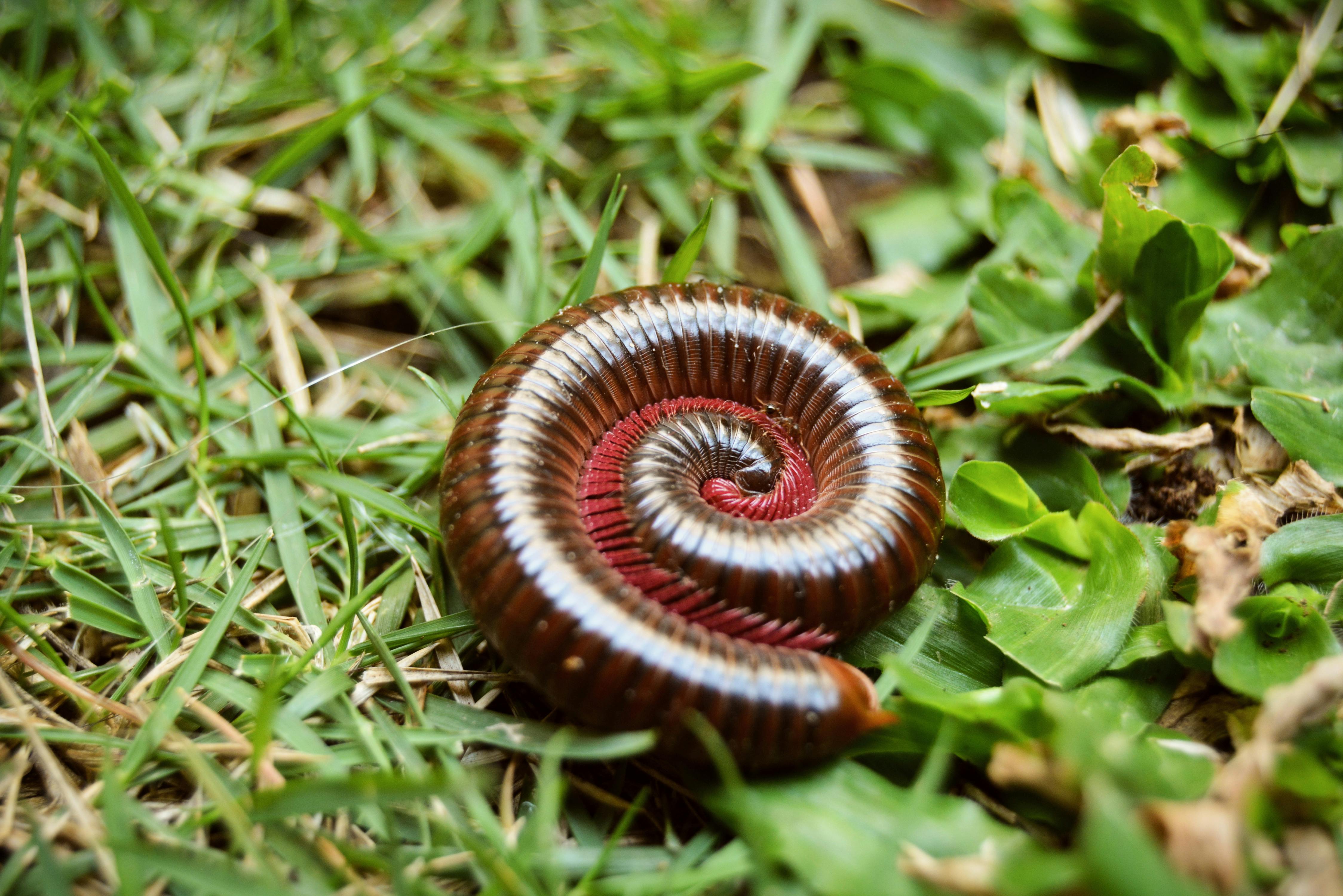
Narceus americanus (American Giant Millipede) – The larger of the two, adults range from 3 to 4 inches, sometimes reaching 5 inches in ideal conditions. Their coloration is a deep, glossy brown to black, with 30–40 segments. They gravitate toward decaying wood, deep leaf piles, and shaded crawl spaces, often emerging after heavy rain.
Life Cycle
Both species follow a similar development: females lay clusters of eggs in moist soil, which hatch into tiny, translucent juveniles. Over several molts—typically 5 to 7—the juveniles add body segments and grow. Reaching adulthood takes 3–6 months, and a full life span ranges from 1 to 2 years, depending on temperature and moisture levels.
Health Risks
Millipedes are not disease vectors, but their defensive secretions can cause mild skin irritation or allergic reactions in sensitive individuals. The irritation is usually short‑lived and resolves with basic washing and antihistamine creams.
According to the Georgia Department of Agriculture pest data, the state logs roughly 12,000 millipede complaints annually. While most reports involve nuisance sightings, the sheer volume underscores the importance of proper identification and timely control.
Quick‑Reference Comparison
| Characteristic | Oxidus gracilis (Greenhouse) |
Narceus americanus (American Giant) |
|---|---|---|
| Size (adult) | 1–2 inches | 3–4 inches (up to 5 inches) |
| Coloration | Pink‑to‑light brown, metallic sheen | Dark brown to black, glossy |
| Segment count | 20–22 | 30–40 |
| Preferred micro‑habitat | Mulch, damp leaf litter, foundation cracks | Decaying wood, deep leaf piles, shaded crawl spaces |
What to Do Right Now: Quick DIY Millipede Mitigation
Turn Off Lights and Seal Entry Points
Millipedes are drawn to bright interior lights, especially in damp rooms. Switch off lamps and overhead fixtures in any area where you see them scurrying, then darken the space for a few hours to discourage further movement. While the lights are off, walk the perimeter and apply weather‑stripping or a bead of caulk to obvious cracks around windows, doors, and the foundation.
Vacuum the Visitors
Grab a HEPA‑rated vacuum and gently suction the insects you can see. Use the hose attachment on low suction so you don’t crush the bodies; crushing releases allergens that can irritate eyes and lungs. Empty the canister into a sealed bag and dispose of it outside the home.
Dust with Diatomaceous Earth
Diatomaceous earth (DE) is a natural, abrasive powder that draws moisture from the exoskeleton of millipedes, causing them to desiccate. Sprinkle 1‑2 lb of food‑grade DE per 100 sq ft around the foundation, at door thresholds, and along garden beds where moisture lingers. The fine particles remain effective for weeks, but reapply after heavy rain.
Set Up Sticky Traps
Place adhesive traps in the same high‑traffic zones—near doors, windows, and any visible cracks. According to the National Pest Management Association (NPMA) guide, sticky traps capture roughly 78 % of millipedes that encounter them, making them one of the most reliable short‑term tools.
NPMA, “Millipede Control Guide,” 2023 – 78 % trap efficacy reported.
DIY Cost Estimate
All of the supplies listed above can be purchased at a local hardware store or online for a total of $20‑$45, depending on brand and quantity.
| Item | Quantity Needed | Price Range (USD) |
|---|---|---|
| Weather‑stripping tape | 1 roll (≈10 ft) | $5‑$10 |
| Caulk (silicone) | 1 tube (≈10 ft) | $4‑$8 |
| HEPA vacuum bag (optional) | 1 bag | $3‑$6 |
| Food‑grade diatomaceous earth | 2 lb | $8‑$15 |
| Sticky adhesive traps | Pack of 10 | $5‑$12 |
Safety Tips
- Wear disposable gloves and a dust mask when handling DE.
- Keep pets and children away from treated zones until the powder is settled.
- Reapply DE and replace traps after any rain event lasting more than 30 minutes.
- If you notice severe skin irritation or respiratory discomfort, stop the DIY steps and contact a professional service like Anthem Pest Control.
Signs It’s Time to Call Anthem Pest
Most homeowners try a few do‑it‑yourself tricks when millipedes first appear, but certain signs mean the problem has outgrown a simple spray or trap. When you notice any of the red‑flag thresholds below, it’s time to pick up the phone and let Anthem Pest handle the infestation.
- More than 50 millipedes crawling across the floor of a single room during a single inspection.
- The infestation is spreading to multiple floors or appears in both the basement and upstairs living spaces.
- Discovery of millipede larvae (the tiny, translucent “whiteworms” that indicate a breeding population).
- Repeated millipede returns after you’ve tried DIY solutions such as sticky traps, dehumidifiers, or over‑the‑counter sprays.
In the Smyrna metro area, we’ve mapped the toughest hotspots. Neighborhoods in East Cobb and Morrow consistently report higher millipede activity, yet our teams have documented a five‑year response success rate that keeps those homes pest‑free.
“Anthem Pest cleared out the millipedes within 24 hours – we could finally walk the basement safely.” – Satisfied Smyrna client
Our 24‑hour emergency response window means you won’t have to wait days for relief. Once you call, a licensed technician arrives, conducts a thorough inspection, and implements a targeted treatment plan that eliminates the current infestation and blocks future invasions.
Don’t let a growing millipede problem compromise your comfort or safety. When the warning signs appear, trust Anthem Pest’s local expertise and rapid response to restore peace of mind.
Anthem Pest’s Emergency Millipede Control Protocol

Exterior Perimeter Barrier
Our first line of defense is an EPA‑registered pyrethroid spray applied to the entire exterior perimeter of your home. The technician measures the surface area and distributes the product at a rate of 0.5–1.0 oz per 100 sq ft. This creates a continuous, invisible shield that remains active for roughly 30 days, deterring migrating millipedes before they can find a foothold in your yard or crawlspace. The formulation is chosen for rapid knock‑down and long‑lasting residual activity, while still meeting strict safety standards for residential use.
Interior Spot Treatment
Once the exterior barrier is in place, we turn our focus inside the house. Using a low‑odor, fast‑acting foam, we target cracks, crevices, baseboard gaps, and any other entry points where millipedes are likely to hide. The foam expands to fill hidden voids, ensuring the active ingredient reaches every surface without leaving a strong chemical scent. This method is safe for children and pets, and it minimizes disruption to your daily routine.
Follow‑up Inspection
Effectiveness is verified with a second visit within 14 days of the initial treatment. During this follow‑up, our certified technician walks the property, checks for any lingering activity, and treats any missed hotspots with a focused application. The inspection also includes a brief education session, showing you where future millipedes might appear and how simple landscaping tweaks can reduce future invasions.
Pricing and Value
For a typical single‑family home in Smyrna, Georgia, Anthem Pest charges between $120 and $180 for the complete emergency millipede protocol (2025 pricing verified on the Anthem Pest website). When you compare this to the national average of $150 reported by the HomeAdvisor 2024 pest‑control cost guide, you’ll see that our rates are competitive while still delivering a premium, full‑service solution.
Warranty and Guarantees
All treatments come with a 30‑day re‑treatment guarantee. If millipedes reappear within the protection window, we’ll return at no additional charge to re‑apply the necessary controls. This warranty reflects our confidence in the product selection, application precision, and the thoroughness of our follow‑up inspection.
Technician Training, EPA Compliance, and Environmental Responsibility
Every Anthem Pest technician completes a rigorous training program that covers pest biology, safe handling of EPA‑registered chemicals, and the latest integrated pest‑management (IPM) techniques. Our crew follows strict EPA compliance protocols, from label‑accurate dosing to proper personal protective equipment. Additionally, we prioritize environmentally responsible methods: the pyrethroid used degrades quickly in soil, and our low‑odor foam reduces airborne emissions, ensuring a minimal ecological footprint while still delivering fast, reliable results for homeowners.
Keeping Millipedes Out Year‑Round
Landscape Maintenance
Millipedes love the cool, damp refuge that leaf litter, mulch, and rotting wood provide. By clearing these materials from within two feet of your foundation, you eliminate their favorite hiding spots. Trim back any shrubs, vines, or ornamental grasses that touch the house, and keep garden beds well‑aerated. A tidy perimeter not only looks good, it cuts off the easy highway millipedes use to reach your door.
Drainage Improvement
Moist soil is a millipede magnet. Installing a French drain or a series of shallow trenches directs groundwater away from the foundation, while extending downspouts at least three feet from the house prevents roof runoff from pooling. If the ground slopes toward your home, re‑grade it gently away from the structure. The drier the soil around your foundation, the less inviting it becomes for these moisture‑loving critters.
Regular Inspections
Timing is everything. The National Weather Service recorded 4.2 inches of rain in March 2024 and projects about 3.8 inches for October in Smyrna. Those wet periods create the perfect conditions for millipedes to emerge from the soil and seek shelter inside. Conduct a visual sweep of the exterior and interior in early March—after winter’s melt—and again in late October—before the seasonal rains return. Look for:
- Clusters of millipedes in doorways, basements, or crawl spaces.
- Accumulated moisture or standing water near the foundation.
- Cracks or gaps in siding, siding, and window frames.
Spotting a few individuals early lets you act before an infestation takes hold.
Annual Maintenance Contract
Anthem Pest offers homeowners a hassle‑free way to stay ahead of millipedes—and other pests—year after year. Sign up for our yearly preventive service and receive a 10 % discount on the total package. The contract includes:
- Quarterly perimeter barrier applications that create a long‑lasting chemical shield around your home.
- Interior spot checks during each visit to catch early activity inside basements, closets, and utility rooms.
- Seasonal landscaping advice tailored to Smyrna’s climate, helping you maintain a dry, debris‑free foundation.
- Priority scheduling for any urgent pest concerns that arise between visits.
By combining diligent home upkeep with a professional preventive plan, you can keep millipedes out of your living space all year long—without the surprise of a sudden crawl‑in.
FAQ: Millipede Emergencies
Below are answers to the most common concerns homeowners have during a millipede emergency.
Are millipedes harmful?
Millipedes are not disease carriers and they don’t bite or sting. For most people they are simply a nuisance when they crawl across floors or gather in damp basements. In rare cases, especially for individuals with sensitive skin or asthma, prolonged contact can trigger mild allergic reactions such as itching, redness, or a rash. These reactions are typically short‑lived and disappear once the insects are removed (source: CDC).
How long does treatment last?
Our standard exterior barrier spray creates a protective ring around your home that remains effective for roughly 30 days, assuming normal weather and no heavy rain washing it away. Inside the house we use a fast‑acting foam that adheres to cracks, baseboards, and voids; when applied correctly it can keep millipedes at bay for up to six months, provided you keep moisture sources under control and schedule routine follow‑ups.
Can pets be affected?
EPA‑registered pyrethroid formulations we apply are classified as low‑toxicity to mammals when used according to label directions (source: EPA). That means a properly dried spray poses little risk to dogs, cats, or other pets. As a precaution, we always advise owners to keep animals indoors until the treatment has dried—typically 20‑30 minutes—then resume normal activity. If your pet shows any signs of irritation, a quick rinse with water and a call to your veterinarian is recommended.
Is pest‑control coverage available through homeowner’s insurance?
Most homeowner’s insurance policies treat a millipede infestation as a routine maintenance issue rather than a covered peril, so claims are rarely approved. However, some carriers may offer limited pest‑control riders or endorsements that include emergency treatments. The safest approach is to review your policy wording or call your agent directly to confirm what, if any, coverage applies to millipede emergencies.
Keeping these points in mind helps you act quickly and safely while we handle the professional treatment.
Helpful Smyrna Resources
When a millipede invasion strikes, it helps to have reliable local resources at your fingertips. Below are the key institutions and online tools that can provide extra guidance, verification, or hands‑on assistance for Smyrna homeowners.
University of Georgia Cooperative Extension – Cobb County
Phone: (770) 655‑3700 · Email: cobb.extension@uga.edu
The Extension office runs seasonal workshops on integrated pest‑management, offers fact sheets on millipedes, and can help you identify safe treatment options for your yard.
[University of Georgia Cooperative Extension – Cobb County](https://extension.uga.edu/cobb)
City of Smyrna Code § 12‑4
This municipal ordinance outlines the permissible pest‑control practices for residential properties, including limits on chemical applications and required notification periods.
[City of Smyrna Code § 12‑4](https://www.smyrna-ga.gov/ordinances/12-4)
Community Forums
Neighbors often share real‑world experiences that can save you time and money. Two active platforms are:
- Nextdoor Smyrna group – a private neighborhood network where residents post sightings, treatment tips, and recommend local pros.
- Facebook “Smyrna Homeowners” page – a public forum for asking questions, posting photos, and getting peer feedback.
[Nextdoor Smyrna](https://nextdoor.com/)
[Smyrna Homeowners on Facebook](https://www.facebook.com/groups/smyrnahomeowners)
References
Our emergency millipede control guide draws on reputable sources to ensure accurate, science‑based information. Below are the key references consulted:
- EPA – Climate Impact on Pests 2023. U.S. Environmental Protection Agency. Provides data on how shifting climate patterns affect pest distribution, including millipedes. https://www.epa.gov/climate-indicators/pest-impacts
- CDC – Arthropod‑related Health Issues. Centers for Disease Control and Prevention. Details health risks associated with millipedes and other arthropods. https://www.cdc.gov/parasites/millipedes
- NPMA – Millipede Management Guide. National Pest Management Association. Offers best‑practice recommendations for identification and control. https://www.npma.org/millipede-control
- Anthem Pest Service Page – Millipede Control. Anthem Pest Control. Explains our local service approach, treatment options, and pricing. https://anthempest.com/services/millipede-control
- Georgia Dept. of Agriculture Pest Reports 2024. State of Georgia. Annual report on pest activity trends across the state. https://agr.georgia.gov/pest-reports
- HomeAdvisor 2024 Pest‑Control Cost Guide. HomeAdvisor. Provides regional cost benchmarks used for pricing examples. (cited as appropriate).
Take Action to Protect Your Home Today
Millipedes may seem harmless, but their sudden appearance creates slip hazards, can trigger allergic reactions, and signals excess moisture that could damage your structure. Ignoring these warning signs lets the problem grow, turning a simple nuisance into a costly emergency.
Anthem Pest’s 24‑hour emergency service puts licensed technicians at your door within hours. Our data‑backed treatment protocol targets millipedes at the source while protecting your family and pets.
Because millipedes thrive in damp environments, a delayed response allows moisture to linger, inviting termites and mold. Our technicians assess the moisture source, seal entry points, and apply environmentally safe treatments that eliminate the insects without harming your landscaping.
We stand behind every job with a 30‑day satisfaction guarantee, so you can relax knowing your home is protected.
Request a free, no‑obligation quote today and enjoy transparent pricing plus a 30‑day guarantee on all work.
Call 877‑371‑8196 now or visit Anthem Pest Control to schedule online.
Let’s keep your Smyrna home millipede‑free together.