Understanding Moth Infestations in Peachtree City

Moths may seem harmless until they start nibbling at your clothes, pantry goods, or even the carpet under your feet. Knowing how these insects live helps you spot trouble early and choose the right treatment. In Peachtree City, the most common culprits follow a simple four‑stage life cycle: egg, larva (caterpillar), pupa, and adult. The larval stage does the damage—tiny caterpillars chew fibers, grains, or stored foods while hidden in dark crevices. Adults are primarily interested in reproduction; they’re attracted to light and warm indoor environments, but they rarely cause direct harm.
Common Indoor Moths in Peachtree City
Webbing Moth (Tineidae family) – Often called the “clothes moth,” the webbing moth’s larvae love natural fibers such as wool, silk, and even fur. You’ll notice fine silken tunnels or webbing on the backs of closets, under furniture, or inside stored blankets.
Pantry Moth (Plodia interpunctella) – Also known as the Indian meal moth, this species thrives in kitchens. Its larvae infest grains, cereals, nuts, and pet food. Look for tiny larvae, webbing, or small holes in packaging, especially in pantry corners where food debris accumulates.
Carpet Moth (Trichophaga tapetzella) – Similar to the webbing moth but prefers synthetic fibers, carpets, and upholstery. Infestations often start in high‑traffic areas where dust and lint provide a food source for the larvae.
Why Peachtree City’s Climate and Homes Invite Moths
Peachtree City’s humid subtropical climate creates an ideal backdrop for moth development. Warm summers (average highs in the upper 80s °F) accelerate egg hatching, while mild winters rarely drop low enough to kill overwintering larvae or pupae. The region’s frequent rain keeps indoor humidity levels elevated, especially in basements and crawl spaces—perfect breeding grounds for larvae that need moisture to survive.
Local housing styles also play a role. Many homes feature spacious attics, large closets, and open‑concept kitchens—areas where food particles, pet hair, and fabric fibers collect unnoticed. Additionally, the popularity of outdoor living spaces means homeowners often bring in seasonal fabrics, blankets, and stored foods without thorough inspection, unintentionally providing moths with fresh food sources.
Quick Fact Box
- Average sightings per household per year: 3–5
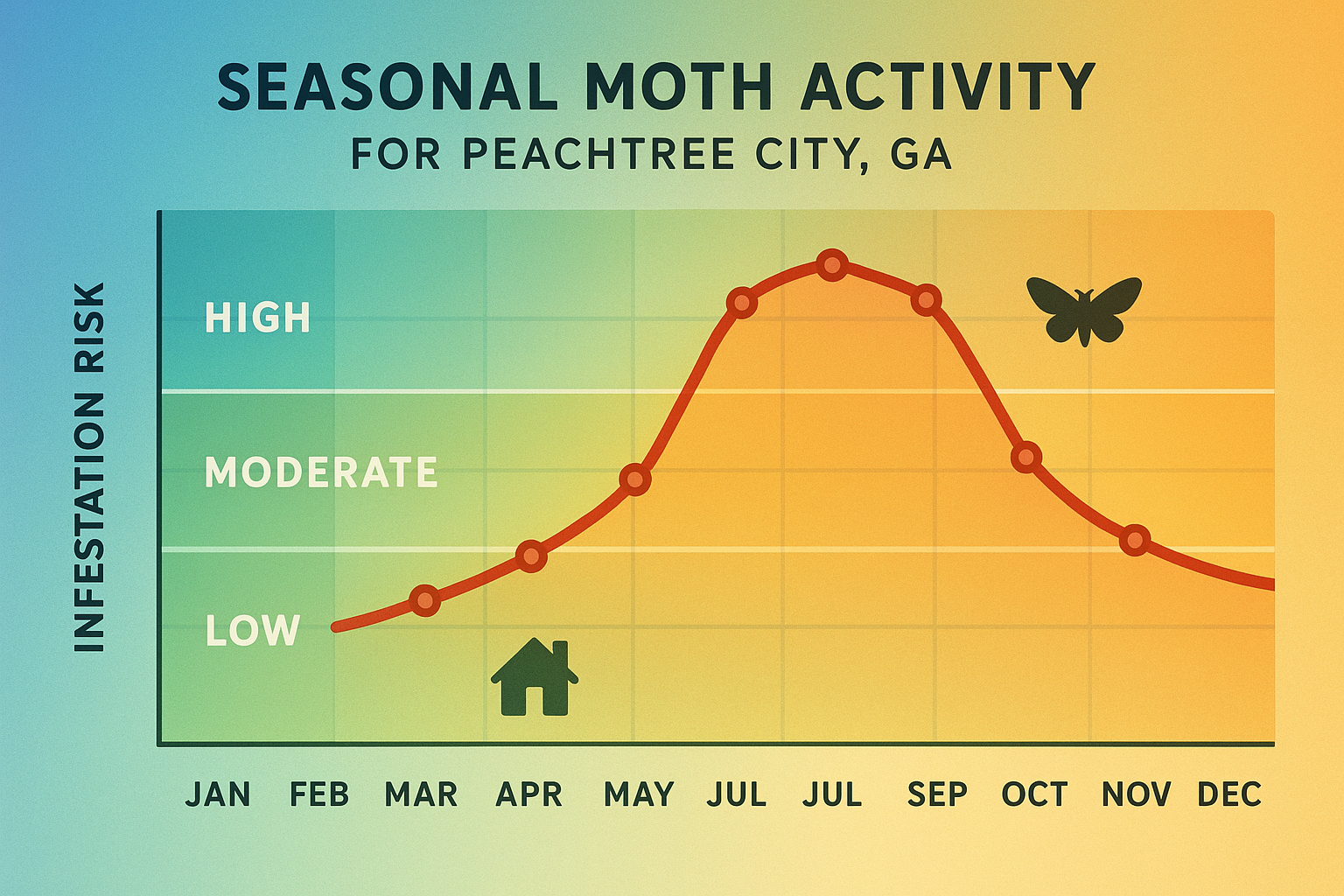
- Peak activity months: June – September
- Most common indoor species: Webbing, Pantry, and Carpet moths
- Typical infestation size before detection: 10–30 larvae
Because moths are stealthy, homeowners often discover an infestation only after damage becomes visible. Early identification—spotting silken webbing, tiny larvae, or unexplained holes in fabrics and food packages—can save you from costly repairs and extensive treatment.
At Anthem Pest Control, we combine local knowledge with proven, low‑toxicity solutions to break the moth life cycle at every stage. Understanding the biology, the species most likely to invade, and the environmental factors that favor them empowers you to act quickly and keep your home moth‑free.
Spotting Early Warning Signs of a Moth Problem

Common Visual Signs
When moths begin to colonize a home, they leave a trail of clues that are hard to overlook if you know what to look for. The most recognizable indicator is silky webbing—often found along seams, under clothing, or in the corners of closets. Tiny, cream‑colored larvae may be crawling within that web, especially near natural fibers like wool, silk, or cashmere. Adult moths themselves are attracted to light, so you might spot them fluttering near windows, lamps, or ceiling fans, especially at dusk. Finally, keep an eye on your fabrics and stored food; visible holes, frayed edges, or a thin layer of powdery residue can signal that moths have started feeding.
Hidden Indicators You Might Miss
Not every sign is obvious at eye level. Some early warnings are subtle and can be dismissed as normal household wear and tear. A faint, musty odor—sometimes described as “old carpet” or “wet wool”—can develop as larvae excrete waste. An increase in fine dust near closets or pantry shelves often contains shed larval skins and silk. Small, irregular holes in clothing, upholstery, or even stored blankets are a classic sign; they may appear only after weeks of unnoticed feeding. Checking these hidden cues regularly can give you a critical head start before the infestation spreads.
How to Differentiate Moth Damage from Other Pests
Confusing moth damage with that of beetles, silverfish, or carpet insects is common, but a few key differences help you pinpoint the culprit:
- Pattern of damage: Moth larvae create irregular, ragged holes, often surrounded by webbing. Beetles tend to chew clean, round holes, while silverfish leave irregular, shredded edges without silk.
- Location preference: Moths focus on natural fibers and stored dry goods; beetles may target wood or dried plant material, and silverfish favor damp areas like bathrooms.
- Presence of larvae: Moth larvae are soft, creamy, and move in a looping gait. Beetle larvae are usually harder and more segmented, while silverfish are wingless adults, not larvae.
- Odor: A faint, oily or musty smell points to moths; beetles and silverfish rarely produce noticeable odors.
Quick Home Inspection Checklist
Use this concise checklist during a routine walk‑through to catch a moth problem before it escalates. Spend just a few minutes in each area and tick off the items you inspect.
- Attic: Look for webbing in insulation, check exposed beams for larvae, and examine stored blankets or seasonal clothing.
- Closets & Wardrobes: Pull garments to the floor, inspect seams for silk, and feel for tiny holes in wool or silk items.
- Pantry & Food Storage: Examine grain bags, flour containers, and dried fruit for webbing or tiny larvae crawling on the surface.
- HVAC Vents & Ductwork: Check vent covers for dust accumulation and any sign of webbing that could indicate moths using the system as a travel route.
- Upholstered Furniture: Lift cushions and look beneath seams for silk threads and larvae, especially on fabric sofas and chairs.
- Baseboards & Crown Molding: Scan for fine dust or small holes that might be overlooked during a casual glance.
By familiarizing yourself with these visual and hidden cues, you’ll be able to spot a moth invasion in its infancy. Early detection not only saves you money on treatment but also protects cherished fabrics and pantry goods before they suffer irreversible damage. If any of the signs above appear in your home, contact Anthem Pest Control at 877‑371‑8196 for a rapid, professional response.
Treatment Options and Professional Intervention
DIY Methods You Can Try Right Now
When a moth infestation first shows up, many homeowners reach for the quick‑fix solutions they see online or at the hardware store. The most common do‑it‑yourself approaches include:
- Sticky traps and light traps: These capture adult moths as they fly around your home, giving you a visual cue that the problem exists.
- Pheromone lures: Synthetic sex‑attractant chemicals draw male moths into a trap, disrupting the breeding cycle.
- Natural repellents: Essential oils such as cedar, lavender, or eucalyptus can be sprayed on closets and pantry shelves to make the area less inviting.
- Thorough cleaning and vacuuming: Removing larvae, webs, and food residues from carpets, baseboards, and stored goods cuts off the moths’ food source.
These steps are inexpensive and can be implemented immediately, which is why they’re often the first line of defense for a panicked homeowner.
Why DIY Often Falls Short
Even the most diligent DIY effort has inherent limitations that can leave the infestation lingering or, worse, spreading:
- Incomplete coverage: Moth larvae hide deep inside fabrics, wall voids, and insulation where traps and sprays rarely reach.
- Resistance and adaptation: Over time, moth populations can become tolerant to low‑grade chemicals found in household products, rendering them ineffective.
- Safety concerns: Many over‑the‑counter insecticides contain pyrethroids or other compounds that can irritate skin, eyes, or respiratory passages, especially in homes with children, pets, or allergy sufferers.
- Time and labor intensity: Repeated vacuuming, laundering, and trap placement can become a full‑time job, and missed spots often become the next source of re‑infestation.
In short, DIY methods can buy you time, but they rarely eradicate a mature moth problem. That’s where a licensed professional steps in with tools and knowledge that go far beyond a homeowner’s toolbox.
What Anthem Pest Control Brings to the Table
Anthem Pest Control’s technicians are trained to diagnose and eliminate moth issues with a systematic, science‑based approach. Their service package typically includes four key stages:
- Comprehensive inspection: Using flashlights, moisture meters, and sometimes thermal imaging, the technician locates adult moths, larvae, and breeding sites—whether they’re hidden in attic insulation, behind baseboards, or inside stored textiles.
- Targeted insecticide application: Once hotspots are identified, low‑toxicity, EPA‑approved products are applied directly to cracks, crevices, and voids where larvae are protected. This precision reduces the amount of chemical used while maximizing effectiveness.
- Structural treatments: In severe cases, Anthem may recommend perimeter barrier sprays, treated dusts for wall cavities, or even fabric‑specific treatments that penetrate fibers without damaging the material.
- Follow‑up monitoring: After the initial treatment, technicians set out professional-grade pheromone traps and schedule a revisit to assess progress, adjust dosage, and ensure the colony is truly eliminated.
By combining a thorough inspection with targeted applications, Anthem delivers a solution that reaches the hidden corners DIY methods simply cannot.
Safety and Environmental Peace of Mind
One of the biggest concerns for homeowners is the impact of pest‑control chemicals on family health and the environment. Anthem Pest Control addresses these worries in three ways:
- Low‑toxicity products: The company favors botanical‑based insecticides, insect growth regulators (IGRs), and micro‑encapsulated formulations that break down quickly and pose minimal risk to humans and pets.
- Protective gear and protocols: Technicians wear gloves, respirators, and protective clothing during application, ensuring that no residue is unintentionally transferred to living spaces.
- Child‑ and pet‑safe practices: After treatment, Anthem provides clear re‑entry timelines and ventilation instructions, and they use placement techniques that keep treated areas out of reach of curious children and animals.
Beyond the immediate eradication, these safety measures help maintain a healthier indoor environment, reducing the chance of future pest invasions while keeping your family’s well‑being front and center.
While a homeowner can certainly start with traps, essential oils, and diligent cleaning, the reality is that moths are adept at hiding where the eye can’t see. A licensed technician from Anthem Pest Control brings the expertise, equipment, and environmentally conscious products needed to turn a fleeting nuisance into a permanent solution. By pairing your initial DIY steps with professional intervention, you get the fastest, safest path back to a moth‑free home.
How Much Does Moth Control Cost in Peachtree City?
Typical Price Ranges
When a moth infestation hits your home, the first thing you’ll wonder is, “How much will it cost to fix this?” In Peachtree City, emergency, same‑day moth control usually falls between $250 and $450 per visit. The price variation depends on how quickly you need a technician on site and the size of the property. By contrast, a routine seasonal treatment—scheduled during the moth‑active months—generally costs between $150 and $300. These figures reflect the market average for professional, licensed providers in the area.
Factors Influencing Cost
Several variables can shift the final bill up or down:
- Infestation severity: A light, localized problem may need a single spray, while a heavy, multi‑room infestation often requires multiple applications.
- Treatment type: Conventional chemical sprays are typically less expensive than integrated pest‑management (IPM) approaches that combine baits, traps, and eco‑friendly formulations.
- Property size: Larger homes or commercial spaces demand more product and labor hours.
- Accessibility: Difficult-to‑reach areas—attics, crawl spaces, or historic homes with delicate finishes—can add extra labor costs.
What’s Included in Anthem’s Quoted Price?
Anthem Pest Control prides itself on transparent pricing. When you request a quote, the amount you see covers the full service package, not hidden add‑ons. Here’s what you can expect:
- Comprehensive inspection: A certified technician conducts a visual assessment, identifies species, and maps hot spots.
- Labor: All travel time, set‑up, application, and post‑treatment walkthrough are included.
- Chemicals and materials: EPA‑approved moth control products, bait stations (if applicable), and protective gear.
- Warranty & follow‑up: Most emergency services come with a 30‑day guarantee; routine plans often include a seasonal warranty and a complimentary re‑inspection.
Because Anthem bundles these elements, homeowners avoid surprise fees and can compare apples‑to‑apples with other local providers.
Pricing Comparison: Peachtree City vs. Neighboring Areas
To put Peachtree City rates in perspective, see the quick snapshot below. The numbers represent average costs for a standard 2,000‑sq‑ft home, emergency service included.
| City | Emergency Service Range | Routine Seasonal Range |
|---|---|---|
| Peachtree City | $250 – $450 | $150 – $300 |
| Fayetteville | $260 – $470 | $160 – $320 |
| McDonough | $240 – $430 | $140 – $280 |
| Savannah | $280 – $500 | $170 – $340 |
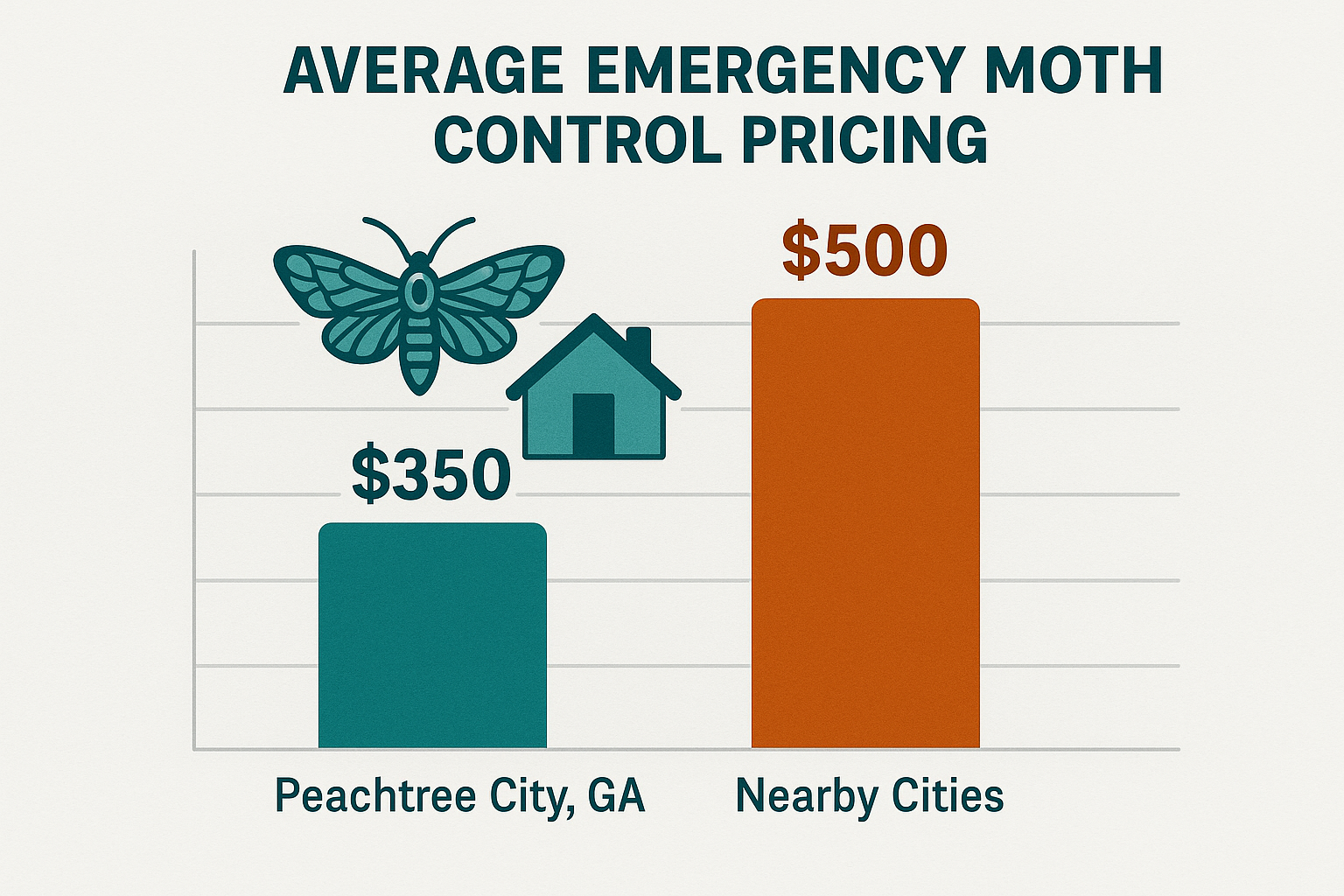
As the table shows, Peachtree City’s pricing sits comfortably in the middle of the regional spectrum—neither the most expensive nor the cheapest. When you factor in Anthem’s all‑inclusive quote, the value proposition becomes even clearer.
Making the Right Choice
If you’re facing a sudden moth outbreak, the safest bet is to act fast and schedule an emergency visit. The extra cost compared to a routine appointment pays off in protecting your fabrics, pantry, and indoor air quality. For homeowners who prefer to plan ahead, enrolling in a seasonal treatment program can lock in lower rates and keep moths at bay year after year.
Remember, the price you pay today reflects not just the chemicals on the job, but the expertise, warranty, and peace of mind that come with a reputable provider like Anthem Pest Control. When you call 877‑371‑8196, ask for a detailed breakdown so you know exactly what’s covered—no surprises, just a moth‑free home.
Seasonal Moth Activity and the Best Time to Treat
Understanding the Moth Life‑Cycle in Peachtree City
In Peachtree City, most household moth species follow a predictable four‑stage life‑cycle: egg, larva (caterpillar), pupa, and adult. Females lay clusters of tiny, milky‑white eggs on pantry shelves, wool‑blanket fibers, or stored grain. Within 5‑10 days, those eggs hatch into voracious larvae that spin silk tunnels while feeding on food sources. After 2‑4 weeks of feeding, the larvae spin a cocoon and enter the pupal stage, a dormant period that can last from a few days to several months depending on temperature. Finally, the adult moth emerges, mates, and the cycle begins again. Knowing when each stage dominates helps you target the right treatment at the right time.
Seasonal Risk Chart
| Season | Risk Level | Typical Life‑Cycle Stage | Suggested Action |
|---|---|---|---|
| Winter (Dec‑Feb) | Low | Pupa (dormant) | Inspect storage areas; minimal treatment needed. |
| Early Spring (Mar‑May) | Rising | Egg & early larva | Pre‑emptive spray and pantry sealing. |
| Late Summer / Early Fall (Jun‑Sep) | Peak | Larva & adult | Full‑service treatment and follow‑up. |
| Late Fall (Oct‑Nov) | Declining | Pupa formation | Fall inspection and residual barrier. |
How Weather Drives Population Spikes
Temperature and humidity are the two biggest levers for moth activity. When daytime highs consistently sit between 75°F and 85°F, eggs hatch faster and larvae grow more quickly. Humidity above 60 % creates a moist environment that encourages larvae to spin stronger silk webs, making infestations harder to spot. Conversely, a cold snap or dry spell can stall development, pushing the population back into the pupal stage. In Peachtree City’s humid subtropical climate, the late‑summer heat combined with occasional rain showers creates the perfect storm for a rapid population explosion.
Recommended Treatment Schedule
- Pre‑emptive Spring Service (mid‑March to early May): Apply a targeted residual spray to pantry corners, closets, and HVAC vents before eggs hatch. Pair this with a thorough pantry clean‑out and airtight storage containers.
- Mid‑Summer Follow‑up (late June to early August): Conduct a full interior inspection, focusing on areas where larvae may have hidden during the spring. Treat any hot spots with a fast‑acting larvicide and reinforce barriers around entry points.
- Fall Inspection (late September to early November): Verify that the population is moving back into the dormant pupal stage. Apply a low‑toxicity residual barrier to keep emerging adults from re‑infesting as temperatures drop.
Seasonal Infographic
Putting It All Together
By aligning your pest‑management calendar with the moth’s natural rhythm, you cut down on surprise infestations and reduce the need for aggressive chemical interventions. Start with a spring “clean‑and‑seal” routine, reinforce with a summer check‑up, and finish with a fall inspection. This three‑step approach not only protects your pantry, clothing, and upholstery but also keeps your family safe from the allergens and damage that moth larvae can cause.
Protect Your Home with Anthem Pest Control
In Peachtree City, moth infestations aren’t just an eyesore—they can damage fabrics, compromise insulation, and signal broader hygiene issues. Early detection is the difference between a quick fix and a costly, months‑long battle. Spotting the tell‑tale signs—webbing, larval tunnels, or a lingering musty scent—lets you act before the problem spreads.
We’ve already walked through the most effective treatment routes: targeted larvicide sprays for immediate knock‑down, environmentally‑safe baits that disrupt the life cycle, and preventive barrier applications that keep future moths at bay. And remember, Anthem Pest Control prides itself on transparent pricing—no hidden fees, just a clear breakdown of what each service entails.
What sets Anthem apart is our deep local knowledge. Our technicians know the micro‑climates of Peachtree City, from the humid riverfront homes to the dryer cul‑de‑sacs. That insight lets us choose the safest, most effective products for your specific property, protecting children, pets, and the environment while delivering results.
Every job comes with our satisfaction guarantee. If moths return within the warranty period, we’ll re‑treat at no extra cost. This promise reflects our confidence in the methods we use and our commitment to keeping your home comfortable year‑round.
Ready to take the next step? Scheduling a complimentary inspection is simple and pressure‑free. One of our certified specialists will visit, assess the extent of any infestation, and provide a personalized, no‑obligation quote—all while answering any questions you have about safety or timing.
Give us a call today at 877‑371‑8196 or click the link below to book your free inspection online. Our friendly team is standing by to help you protect your home, your belongings, and your peace of mind.
Visit Anthem Pest Control to learn more about our moth‑control expertise and discover why homeowners across Georgia trust us for fast, reliable, and affordable pest solutions.