Understanding Termite Risks in Peachtree City, GA

If you own a home in Peachtree City, you’re already sharing the neighborhood with one of the most persistent silent invaders in the Southeast: termites. These tiny insects may be invisible to the naked eye, but their colonies can spread quickly, especially in an environment that feels like a perfect buffet.
Common Termite Species in the Area
Two species dominate the local landscape:
- Subterranean termites (Reticulitermes flavipes) – the workhorse of the South, building mud tubes from soil to wood.
- Drywood termites (Incisitermes minor) – thriving in dry, seasoned timber without needing direct soil contact.
Why Peachtree City’s Climate Is a Termite Magnet
Georgia’s warm, humid summers create an ideal breeding ground. Temperatures regularly hover above 75°F (24°C), and humidity often exceeds 60%, giving termites the moisture they need to stay active year‑round. Add to that the region’s abundant pine and hardwood trees, plus the many wooden decks, fences, and siding typical of local construction, and you have a buffet that’s hard to resist.
Typical Damage Pathways
Termites start where food is easiest to find. Subterranean colonies tunnel up through moist soil, forming mud tubes that reach a home’s foundation. From there, they chew through concrete cracks, wooden sill plates, and framing studs, moving silently toward the interior. Drywood termites, on the other hand, can enter through tiny cracks in exterior wood, then hollow out joists, beams, and even finished trim without ever touching the ground.
Economic Impact on Homeowners
When a colony goes unnoticed, the damage can be staggering. The Anthem Pest Control data shows that the average repair bill for termite damage in Georgia ranges from $5,000 to $10,000 per incident. Beyond direct repair costs, untreated infestations can lower a property’s market value by up to 15 %, making it harder to sell or refinance.
Quick Fact
Termites can cause up to $5,000 – $10,000 in hidden damage per year if left unchecked. That figure includes structural weakening, compromised flooring, and the cost of replacing damaged cabinetry or countertops.
Proactive Protection Starts With Knowledge
Understanding the local termite risk is the first step toward safeguarding your investment. Regular inspections, especially after heavy rain or during the peak summer months, can catch a colony before it reaches the “hidden damage” stage. When you partner with a trusted provider like Anthem Pest Control, you gain access to targeted treatment plans that address both subterranean and drywood threats.
Key Takeaways
| Factor | Impact on Termite Activity |
|---|---|
| Warm, humid climate | Extends active season, promotes colony growth |
| Abundant wood structures | Provides continuous food source |
| Soil moisture levels | Facilitates mud‑tube construction for subterranean termites |
| Construction style (wood framing, decks) | Creates entry points and pathways for drywood termites |
By recognizing these risk factors and acting early, you can keep termites from turning your beautiful Peachtree City home into a costly repair project.
Spotting Early Warning Signs of Termite Activity

Termites work silently, but they leave a trail of clues that a keen eye can catch. Recognizing these early warning signs gives you a head‑start on treatment, often before structural damage becomes costly.
Mud Tubes: The Highway of a Colony
Subterranean termites build ear‑shaped mud tubes to travel between the soil and your home. You’ll find them:
- Along foundation walls, especially where concrete meets soil.
- On the exterior of crawl‑space walls, hugging the footing.
- Inside interior walls where moisture accumulates, such as near leaky pipes.
The tubes are smooth, slightly raised, and usually a light‑tan color. They appear because termites need protection from desiccation while moving above ground.
Wood Damage Patterns: Listening to the Silence
Termite‑eaten wood doesn’t crumble like rot; it feels hollow when tapped. Look for:
- Wood that sounds like a drum when knocked.
- Blistered or cracked surfaces where the interior has been eaten away.
- Fine, sandpaper‑like tunnels on exposed wood—these are the galleries termites leave behind.
These signs are most common in window frames, door jambs, and any wood that touches soil.
Frass: The Dropping Trail
Dry‑termite species (like drywood termites) push out frass—tiny, pellet‑shaped droppings that look like sawdust mixed with tiny wood chips. You’ll typically find frass:
- In small piles near exit holes in walls or furniture.
- At the base of wooden beams.
- Inside attic insulation where termites have migrated.
Frass is usually dry, uniform in size, and may have a faint sweet smell.
Winged Alates (Swarmers): The Seasonal Red Flag
During spring and fall, mature colonies release winged termites—known as alates—to start new colonies. They can be mistaken for flying ants, but there are key differences:
- Alates have two equal‑sized wings that lie flat over the body, while ants have a distinct “pinched” waist and smaller front wings.
- Termite wings are fragile and shed easily; you’ll often find a fine dust of wings near windowsills or light fixtures.
- Swarmers appear in large numbers, especially after a warm, humid night.
Unusual Sounds: The Subtle Click
Active colonies sometimes produce faint clicking or tapping noises as workers grind their mandibles. These sounds are most audible in quiet rooms with wooden flooring or in crawl spaces. While not every click means termites, a persistent, low‑frequency rattling warrants a closer look.
Homeowner’s Visual Inspection Checklist
- Exterior foundation: look for mud tubes, cracks, and damp spots.
- Crawl space walls: inspect for tubes, wood damage, and frass.
- Interior walls and ceilings: tap wood for hollowness, check for blistered paint.
- Window frames, door jambs, and baseboards: search for frass piles or tiny exit holes.
- Attic and roof trusses: glance for sandpaper‑like tunnels and winged insects.
- Basement and garage floors: listen for clicking sounds and scan for moisture.
Documenting What You Find
Before calling a professional, take clear photos of each suspect area and note the location (e.g., “mud tube on north foundation wall, 2 ft above grade”). Write down the date you observed any swarming activity or unusual sounds. This documentation speeds up the technician’s assessment and helps them target treatment more precisely.
Early detection is your most powerful defense. By mastering these visual and tactile cues, you’ll catch termites before they compromise the safety and value of your Peachtree City home.
Seasonal Patterns of Pest Activity in Peachtree City
Reading the Seasonal Activity Chart
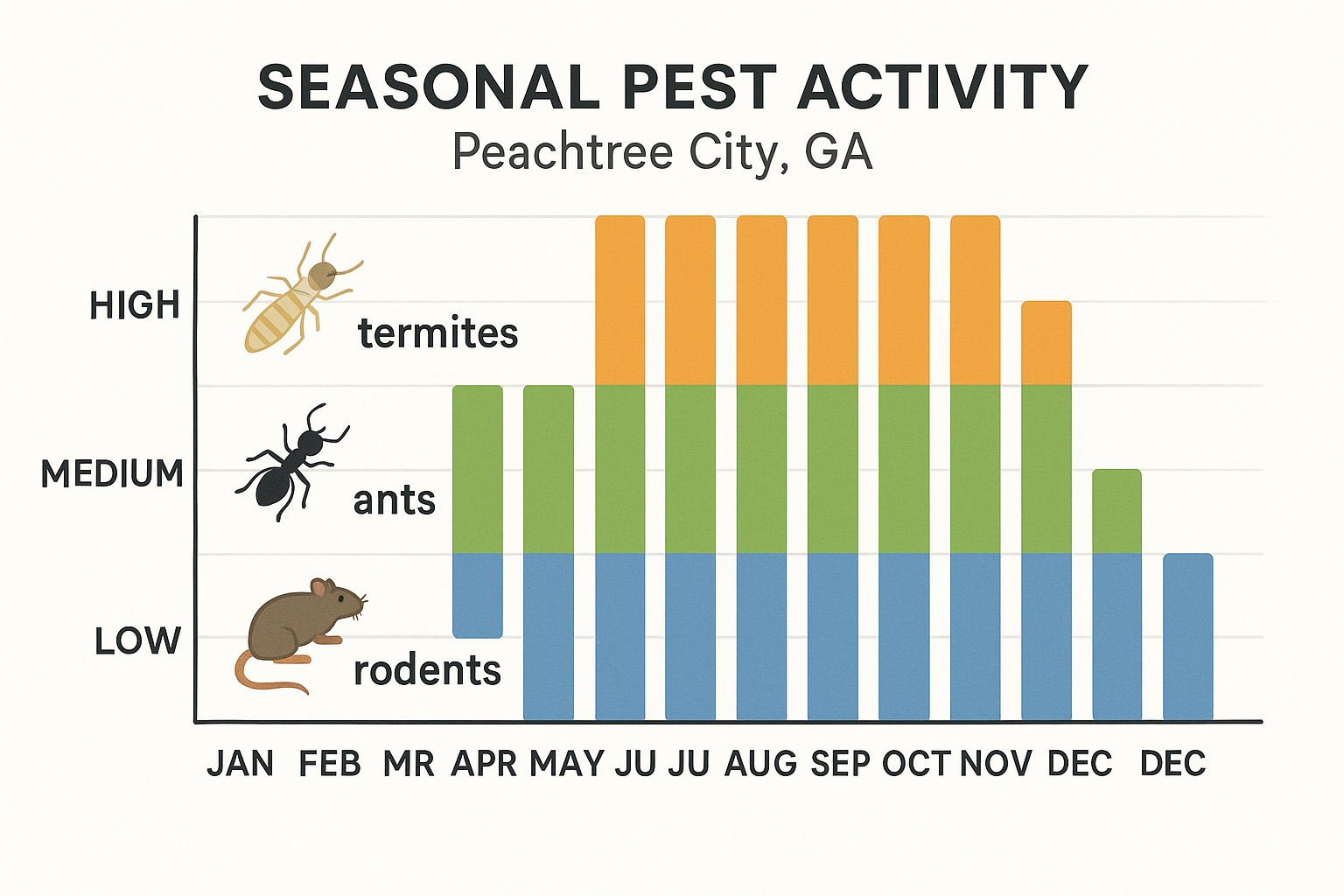
The chart below maps pest pressure month‑by‑month. The horizontal axis lists the twelve calendar months, while the vertical axis rates activity from low (0) to high (5). Darker bars indicate when a species is most likely to be active, giving you a visual cue for when to schedule inspections or treatments.
Termite High‑Risk Months (May – October)
Termites thrive when soil temperature stays above 55 °F and moisture levels rise. In Peachtree City, those conditions typically begin in late spring and extend through early fall. May through October therefore represent the window of greatest risk. Warm, damp wood expands tiny cracks, allowing subterranean termites to infiltrate foundations, crawl spaces, and wooden structures.
Ant and Rodent Peaks: Overlapping Pressures
Ants, especially carpenter and odorous house ants, follow a similar temperature curve, peaking from June to September. Their colonies expand rapidly when food sources and humidity are abundant. Rodents, on the other hand, are most active in the colder months—October through March—seeking shelter from the chill. This creates a seasonal overlap: while termites and ants dominate the warm half of the year, rodents take over as temperatures drop, leaving homeowners with near‑continuous pest pressure.
Timing Your Inspections and Treatments
- Pre‑summer inspection (late April): Catch termites before they start swarming. A professional assessment can identify hidden moisture problems and wood damage.
- Early‑summer treatment (May‑June): Apply termiticides or bait stations before the peak activity window, giving the product time to spread through colonies.
- Mid‑summer ant control (July): Target ant trails and nesting sites while colonies are expanding.
- Post‑winter rodent follow‑up (March): Seal entry points discovered during winter inspections and set traps before rodents settle for the breeding season.
When Weather Breaks the Pattern
Unusual weather can shift these windows. A particularly wet winter can raise soil moisture early, prompting termites to become active in March or April. Conversely, a dry summer may suppress ant foraging, reducing their peak intensity. Homeowners should monitor local forecasts and be ready to adjust treatment dates accordingly—especially after prolonged rain or drought.
Keep the Chart Handy
Print or bookmark the seasonal activity chart and place it in your home‑maintenance binder. Refer to it each spring when planning your pest‑control calendar. By aligning inspections and treatments with the natural rhythm of termites, ants, and rodents, you’ll stay one step ahead of infestations and protect your investment with fewer emergency visits.
Comparing Termite Treatment Options and Costs
When a termite problem surfaces, homeowners often wonder which treatment delivers the best protection without breaking the bank. In Peachtree City, the three most common approaches are liquid barrier applications, bait‑system installations, and foam injections. Each method works differently, carries its own set of advantages, and falls within a distinct price band.
Liquid Barrier
A liquid barrier creates a chemical wall around a home’s foundation, crawl spaces, and any other vulnerable entry points. Professionals apply the solution with a spray rig, allowing it to soak into soil and wood where termites travel. The barrier typically lasts 3‑5 years, providing long‑term peace of mind.
Cost range: $800 – $1,200, depending on property size and soil conditions. This upfront investment is often the most predictable because the treatment is completed in a single visit.
Bait System
Bait stations are placed strategically around the perimeter and monitored regularly. They contain cellulose material laced with a slow‑acting termiticide that termites carry back to the colony, eventually collapsing it from the inside. Because the chemicals stay confined to the bait, exposure to residents and pets is minimal.
Cost range: $900 – $1,300. The price reflects the initial setup plus several months of monitoring and potential re‑baiting, which is essential for full colony eradication.
Foam Injection
Foam injection targets active colonies directly within walls, voids, or other concealed spaces. A specialized nozzle forces a expanding foam mixed with termiticide into the infestation site, delivering rapid knock‑down results. The method is highly effective for localized attacks but can be disruptive if walls need to be opened.
Cost range: $850 – $1,250. The variability stems from how much foam is required and the labor needed to access tight areas.

Quick Comparison Table
| Treatment | Cost Range | Pros | Cons |
|---|---|---|---|
| Liquid Barrier | $800‑$1,200 | Long‑lasting protection; single‑visit application | Higher upfront cost; may require re‑treatment in very porous soils |
| Bait System | $900‑$1,300 | Low chemical exposure; colony eradication over time | Requires ongoing monitoring; slower results |
| Foam Injection | $850‑$1,250 | Fast knock‑down of active colonies; precise targeting | Potential wall disruption; may need multiple treatments for large colonies |
Factors Influencing Price
Beyond the basic method, several variables shape the final bill. Larger homes or properties with extensive foundations demand more product and labor. The severity of the infestation dictates how many treatment points are needed. Accessibility—think tight crawl spaces or finished basements—can add time and equipment costs. Finally, local labor rates in Peachtree City affect the overall quote.
Evaluating Value Beyond the Sticker Price
Price alone doesn’t tell the whole story. A reputable provider like Anthem Pest Control backs each treatment with a warranty, typically ranging from one to three years for liquid barriers and up to five years for bait systems. Look for follow‑up visits that verify the colony’s elimination and address any new activity. Environmental safety is also crucial; choose products that meet EPA standards and have low toxicity to humans and pets.
By weighing the upfront cost against longevity, monitoring requirements, and the level of chemical exposure, homeowners can select the termite solution that fits both their budget and their peace‑of‑mind criteria. The infographic above visualizes these trade‑offs, making it easier to compare at a glance.
Choosing a Trusted Termite Service Provider and Next Steps
Verify licensing, insurance, and certifications
Before you sign any contract, ask to see the company’s state pest‑control license and proof of insurance. A licensed provider has met Georgia’s rigorous training standards, and insurance protects you if an accident occurs during treatment. Look for certifications that indicate the use of EPA‑approved products—these guarantee that the chemicals have been evaluated for efficacy and safety.
Look for guarantees or warranties
A reputable termite service will stand behind its work with a clear warranty that covers re‑infestation for a specified period, typically 1‑5 years. Read the fine print: does the warranty include a free retreat if termites return? Does it cover damage repair? A solid guarantee shows confidence in the treatment method and reduces the risk of unexpected follow‑up costs.
Transparent pricing and detailed service agreements
Pricing should be presented in a straightforward, itemized format. Avoid vague “starting at” figures that can balloon once the inspection is complete. A detailed agreement outlines what’s included—initial inspection, treatment application, monitoring, and any follow‑up visits—so you know exactly what you’re paying for.
Experience with local termite species and building codes
Peachtree City’s climate supports both subterranean and dry‑wood termites. Choose a provider that has proven experience handling these specific species and that understands local building codes and inspection requirements. Technicians familiar with the area can spot hidden infestation routes that a generic contractor might miss.
Safety considerations for families and pets
Homeowners increasingly demand low‑toxicity options that are safe around children and pets. Ask whether the company offers baiting systems, spot‑treatments, or formulations with reduced chemical residues. A provider that prioritizes safety will also explain how to prepare your home before treatment and what precautions to take afterward.
Why Anthem Pest Control stands out
- Nationwide expertise, local focus: Anthem combines a broad knowledge base with technicians trained specifically for Peachtree City’s termite challenges.
- Clear, upfront pricing: All costs are listed before work begins, eliminating surprise fees.
- Prevention‑first mindset: Beyond eradication, Anthem implements monitoring and barrier solutions that keep termites at bay long after the initial treatment.
- Safety‑centric practices: Low‑toxicity products and child‑friendly application methods are standard.
- Strong warranties: Their service agreements include a multi‑year guarantee that covers re‑infestation, giving you peace of mind.
Free, no‑obligation quote and complimentary home inspection
Anthem Pest Control offers a complimentary inspection of your property, followed by a detailed, no‑obligation quote. This initial visit identifies risk zones, assesses current damage, and outlines a customized treatment plan tailored to your home’s construction and your budget.
Take the next step today
Give Anthem Pest Control a call at 877‑371‑8196 or visit anthempest.com to schedule your free inspection. A quick conversation can pinpoint the exact steps needed to protect your home, helping you avoid costly structural repairs down the road. Let a trusted local partner handle the termites so you can focus on what matters most—your family and peace of mind.
Take Action with Anthem Pest Control Today
When it comes to termites, three habits separate a protected home from a costly invasion: catching the problem early, treating at the right season, and trusting the right professional. Throughout this guide we’ve shown how early detection, timing your treatment to the spring and summer surge, and selecting a proven solution can keep your foundation sound and your wallet happy.
Key takeaways at a glance
- Early detection matters. Tiny mud tubes, hollow‑sounding wood, or sudden floor sagging are signals you shouldn’t ignore.
- Seasonal timing is critical. Termites are most active in warm months, so a spring‑to‑early‑fall inspection gives you the best chance to eradicate a colony before it spreads.
- Choosing the right treatment. From liquid termiticides to baiting stations, the best method depends on your home’s construction, soil type, and the species you’re facing.
Even with the best DIY knowledge, managing termites on your own can feel overwhelming. That’s why professional help turns a daunting task into a simple, effective process. Our certified technicians bring years of local experience, state‑approved products, and a step‑by‑step plan that fits your schedule and budget.
If you’ve spotted any of the warning signs or simply want peace of mind, our certified technicians are ready to assess your home and recommend the best solution—at a price you’ll understand. We start with a thorough inspection, explain the findings in plain language, and present a transparent quote before any work begins. No hidden fees, no surprise chemicals—just a clear path to a termite‑free home.
Ready to protect your investment? Call us today at 877‑371‑8196 for a free, no‑obligation quote. Our friendly team will schedule a same‑day or next‑day inspection, answer any questions you have, and walk you through the entire treatment process.
For more details on our services, pricing options, and customer testimonials, visit Anthem Pest Control. You can also book your inspection online, read our seasonal pest calendar, and learn how we keep your home safe year after year.
Take the first step toward a termite‑free future—contact Anthem Pest Control now and let the experts handle the rest.