Why Gnat Problems Matter for Kennesaw Homeowners

Gnats are tiny, flying insects that often go unnoticed—until they turn your porch into a buzzing nightmare. In Kennesaw, the most common culprits are fungus gnats (which love moist soil) and biting midges (the “no‑see‑ums” that leave itchy welts). Their life cycle is short: eggs hatch in a week, larvae develop in 10‑14 days, and adults emerge ready to mate and lay more eggs within a month. Because they thrive in both indoor plant pots and outdoor mulch, gnats can quickly move from garden beds to your living room.
Impact on Comfort, Health, and Property
While gnats rarely cause serious disease, they are a relentless nuisance. Their constant hovering can ruin outdoor gatherings, making it uncomfortable to enjoy a barbecue or a family dinner on the patio. Biting species leave red, itchy bumps that are especially bothersome for children and seniors. Moreover, gnats attract larger pests—spiders, ants, and even wasps—creating a cascade of problems that can damage landscaping and compromise the integrity of outdoor structures.
Why Kennesaw Is a Gnat Hotspot
Kennesaw’s humid summers and abundant vegetation create the perfect breeding ground. Temperatures regularly climb above 80°F (27°C) from June through August, and nightly dew points stay high, keeping soil and mulch moist—exactly what gnats love. The city’s many parks, creek edges, and residential gardens provide endless shelter and food sources, turning the entire county into a seasonal gnat incubator.
The seasonal chart clearly shows peak activity in June, July, and August, aligning with the region’s warm, wet conditions. During these months, homeowners report a noticeable increase in indoor sightings, especially near houseplants and bathroom drains.
Local Data Confirms the Threat
According to the Greater Atlanta service area page, Kennesaw consistently ranks among the top locations for gnat complaints in the metro area. The data reflects higher trap counts and more service requests during the summer months, underscoring that this isn’t a sporadic annoyance—it’s a predictable, seasonal challenge.
Understanding the biology, the health implications, and the local climate drivers equips Kennesaw homeowners to act before gnats become a full‑blown infestation. Early prevention—such as proper drainage, regular plant care, and targeted treatments—keeps your home comfortable, protects your outdoor spaces, and stops gnats from inviting a host of secondary pests.
Identifying Gnat Infestations Early

Visual cues you can’t ignore
Gnats are attracted to moisture and light. You’ll often see a thin, erratic swarm around kitchen sinks, bathroom drains, or any standing water. In homes with over‑watered houseplants, tiny specks hover just above the soil surface. A quick glance at these spots can reveal the first signs of an infestation.
- Swarming near indoor lights after dusk.
- Dark specks on damp potting soil.
- Clusters around slow‑draining kitchen drains.
- Buzzing near birdbaths, pet dishes, or puddles.
Distinguishing gnats from fruit flies, mosquitoes, and midges
Gnats are 1‑3 mm long, have clear, hair‑less wings, and fly with a weak, fluttering motion. Fruit flies are slightly larger with a tan‑brown body and a rapid, zig‑zag flight. Mosquitoes are larger, have long legs and a noticeable proboscis for biting. Midges resemble gnats but are darker and tend to stay close to water.
- Size: Gnats < 3 mm; fruit flies ≈ 4 mm; mosquitoes > 5 mm.
- Wing pattern: Gnats clear; fruit flies spotted; mosquitoes scaled.
- Behavior: Gnats hover; fruit flies dart; mosquitoes bite; midges remain near water.
Common hotspots in a typical home
Moisture‑rich areas are prime real estate for gnats. Basements with poor ventilation, bathrooms with leaky grout, and potted plants with soggy soil host colonies. Unsealed garbage cans, especially those with fruit waste, also provide a breeding ground.
Warning signs that the infestation is spreading
A persistent high‑pitched buzz in several rooms, occasional bites on exposed skin, or gnats landing on patio drinks signal growth. When gnats appear both indoors and on outdoor patios at dusk, the problem is likely expanding.
Why prompt action matters
One female gnat can lay hundreds of eggs in a few days, so populations explode quickly. Addressing the issue before the summer peak stops exponential growth and reduces the need for heavy‑duty chemicals. Simple steps—eliminating standing water, fixing leaks, and scheduling a professional inspection with Anthem Pest Control—can keep gnats at bay. Early intervention also protects pets and children from unwanted bites.
For a deeper dive into gnat identification, visit the University of Georgia Extension guide.
Gnat Control Costs – DIY vs. Professional Services
DIY Options: What’s on the Shelf?
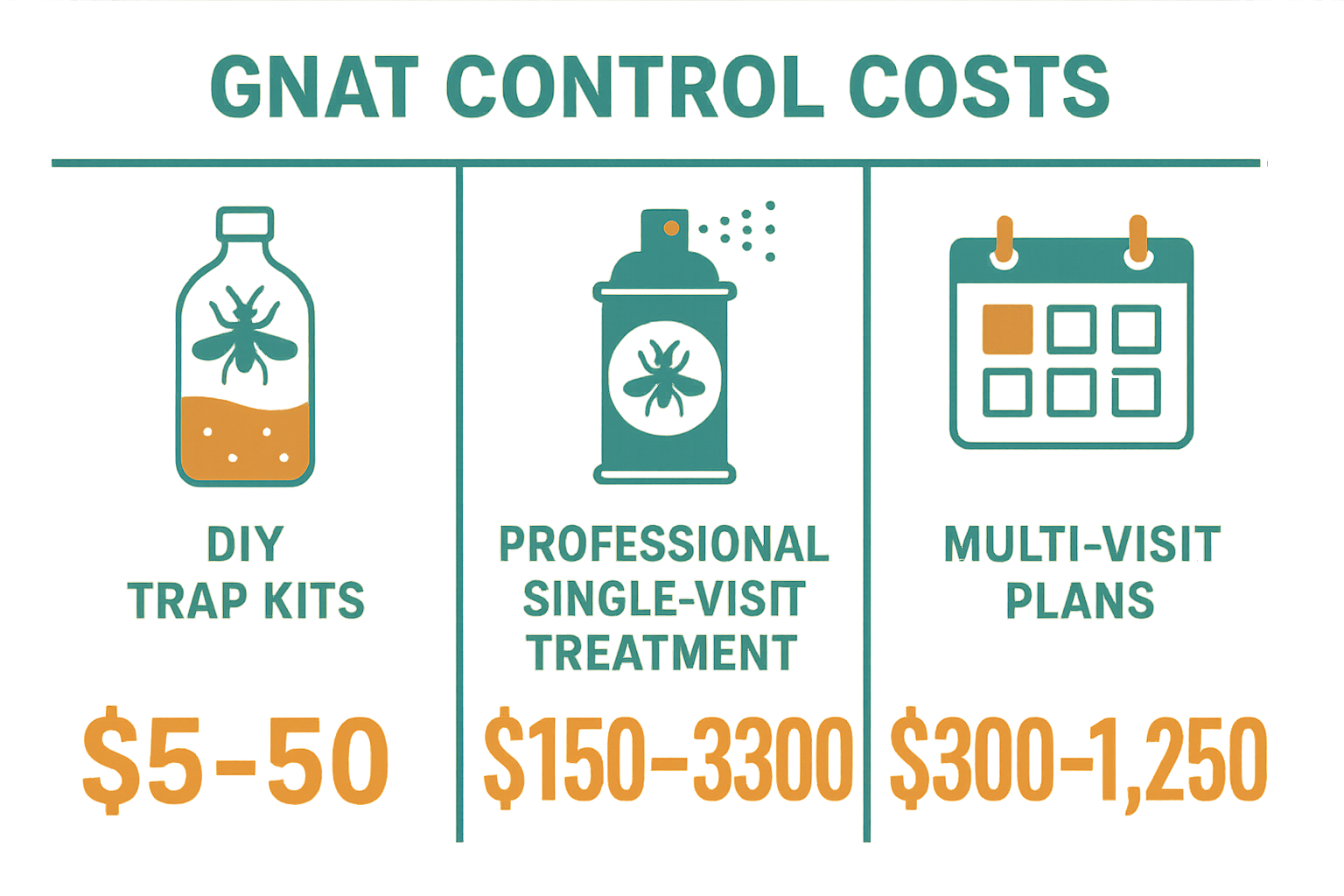
Homeowners often start with the most accessible solutions: trap kits, homemade sprays, and over‑the‑counter insecticides. A basic sticky‑trap kit can be bought for as little as $5, while a more comprehensive set that includes bait stations and a handheld sprayer tops out around $50. These products promise quick relief, but their effectiveness is typically short‑term and limited to the immediate area where they’re placed.
DIY Cost Range and Effectiveness
When you add up the price of a trap kit, a bottle of neem oil or dish‑soap spray, and a few bottles of insecticide, you’re looking at a total spend of $5‑$50. The upside is the low upfront cost; the downside is that the treatment often covers only a small portion of your yard or garden and may need to be reapplied weekly during peak gnat activity. For many homeowners, this means a recurring expense that adds up over the season.
Professional Single‑Visit Treatment
A one‑time professional service in Kennesaw typically runs between $150 and $300. This fee includes a thorough inspection, targeted spray applications by a licensed technician, and a follow‑up visit to ensure the treatment took hold. Because the technician can identify breeding sites that DIY products miss, the results are usually more comprehensive and last longer, often covering the entire property for several weeks.
Multi‑Visit Plans for Ongoing Protection
For homeowners who want peace of mind throughout the warmer months, multi‑visit plans are available for $300‑$1,250, depending on the size of the property and the frequency of visits. These plans bundle regular monitoring, seasonal adjustments, and re‑treatments as needed. The cumulative cost may seem higher, but the value comes from reduced gnat populations, fewer repeat applications, and the assurance that a professional is watching for any resurgence.
Hidden Costs of DIY
Beyond the sticker price, DIY methods can drain your time and resources. You’ll spend hours mixing solutions, setting traps, and re‑applying chemicals—time that could be spent enjoying your outdoor space. Repeated purchases quickly erode the low‑cost advantage, and improper application can harm ornamental plants, lawns, or beneficial insects, leading to additional landscaping expenses.
Why Anthem Pest Control’s Pricing Stands Out
Anthem Pest Control offers a transparent pricing model that eliminates surprise fees. Their single‑visit gnat treatment starts at $179, clearly outlining what’s included: a detailed inspection, targeted spray, and a post‑treatment check. For homeowners seeking year‑round protection, the multi‑visit plan is itemized by visit, so you know exactly how much each seasonal adjustment costs.
Licensing and Expertise Matter
All Anthem technicians are state‑licensed and trained to identify the specific gnat species prevalent in Kennesaw. This expertise means they can target breeding sites—such as damp mulch or standing water—that DIY kits often overlook. The result is a more effective, longer‑lasting solution that protects both your home and your garden.
Sources
Cost data sourced from HomeGuide’s gnat exterminator cost guide and Anthem Pest Control’s pricing page.
Timing Your Gnat Treatment for Maximum Effect
In Kennesaw, gnat activity follows a predictable seasonal rhythm. Understanding that pattern lets you strike before the insects multiply into a nuisance. Below is a quick visual guide that shows when gnats are most active in our area.
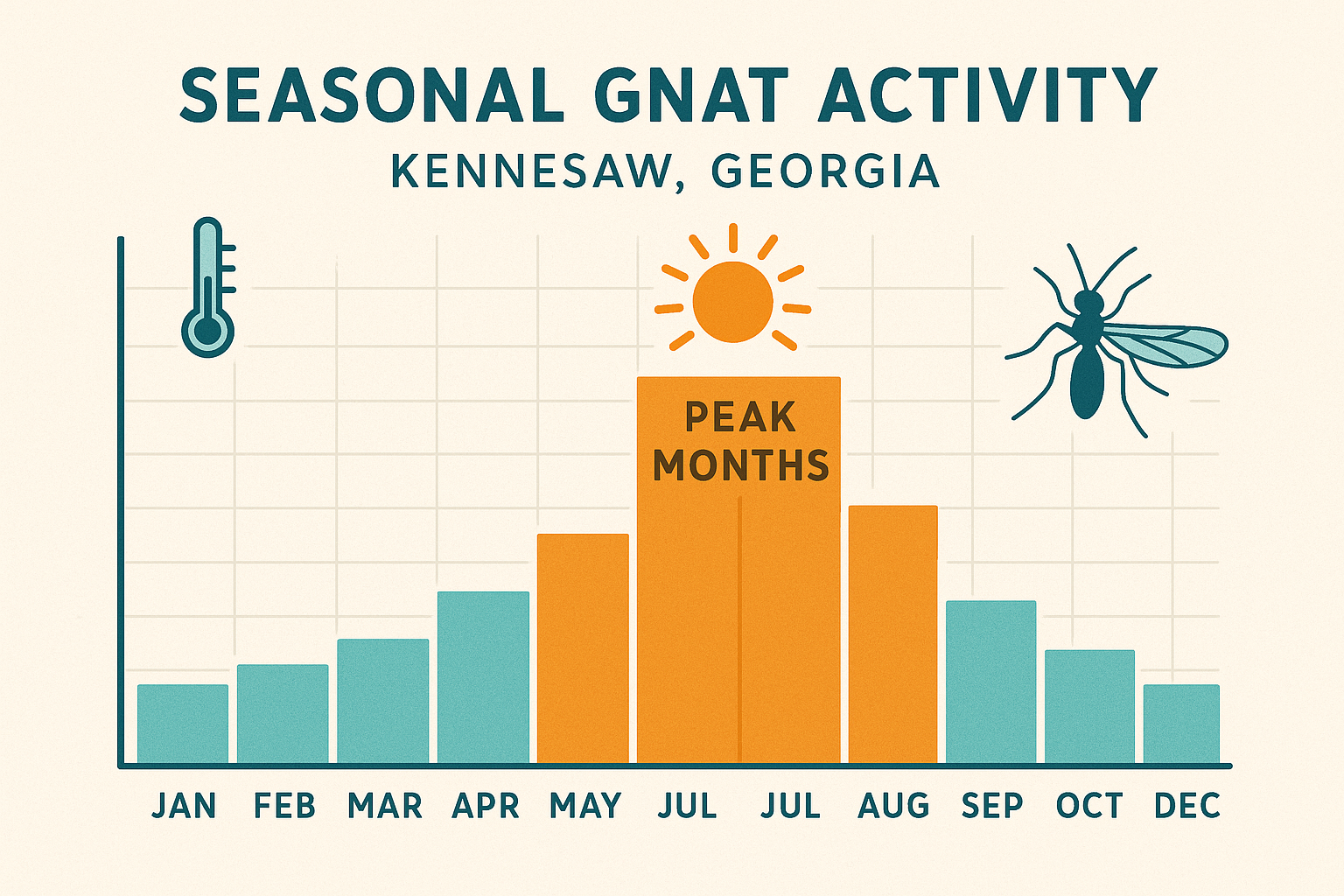
| Month | Activity Level |
|---|---|
| January | Low |
| February | Low |
| March | Medium |
| April | Medium |
| May | Medium |
| June | High |
| July | High |
| August | High |
| September | Medium |
| October | Medium |
| November | Low |
| December | Low |
Why early‑summer matters
Gnats lay eggs in moist, shaded spots. By late May, temperatures consistently hover above 70°F, creating ideal conditions for rapid egg hatching. A pre‑emptive spray at this stage kills emerging larvae before they can mature, preventing the exponential surge that typically peaks from June through August.
Recommended treatment schedule
- Late May – Pre‑emptive spray: Targets first‑generation larvae and reduces the breeding pool.
- Mid‑July – Follow‑up treatment: Eliminates any survivors that escaped the initial application and addresses new breeding sites.
- Early September – Final check: Ensures residual populations are suppressed before cooler fall temperatures slow their life cycle.
Weather’s role in timing
Rainfall can wash away residual insecticide, while sudden temperature spikes accelerate gnat development. If a heavy rainstorm follows your May treatment, schedule a quick re‑application within a week. Conversely, an unusually cool June may delay the July follow‑up by a couple of weeks without compromising effectiveness.
Professional planning vs. DIY guesswork
Anthem Pest Control tailors each visit to the chart above, aligning chemicals with the gnat life cycle for maximum impact. A DIY homeowner who sprays only when gnats become visible often treats a mature population, requiring multiple applications and higher costs. Our coordinated plan reduces chemical use, saves time, and delivers consistent results year after year.
Quick homeowner checklist
- Trim back overgrown shrubs and trees to improve spray penetration.
- Eliminate standing water in birdbaths, gutters, and plant saucers.
- Clear leaf litter and organic debris where gnats like to breed.
- Secure outdoor lighting with yellow bulbs to reduce attraction.
- Notify the technician of any recent heavy rains so timing can be adjusted.
Following this schedule and checklist puts you in the driver’s seat, ensuring your property stays gnat‑free throughout the hottest months in Kennesaw.
Take Control of Gnats with Anthem Pest Today
When gnats swarm your porch, patio, or kitchen, the nuisance quickly turns into a health concern. Untreated infestations can lead to allergic reactions, food contamination, and an overall loss of outdoor enjoyment. While DIY sprays may offer a temporary reprieve, they often miss hidden breeding sites and can cost more in the long run when you have to re‑apply repeatedly. Professional treatment, on the other hand, targets the entire life cycle, delivering lasting relief at a predictable, cost‑effective price.
Why Anthem Pest Is Your Kennesaw Gnat‑Control Partner
- Local expertise: Our technicians know the Kennesaw climate, common breeding hotspots, and the best timing for interventions.
- Safe application methods: We use EPA‑approved products that protect your family, pets, and plants while eradicating gnats at the source.
- Transparent pricing: No hidden fees—just a clear, upfront quote that lets you budget with confidence.
- Comprehensive service: From initial inspection to follow‑up monitoring, we ensure the problem stays solved.
Ready for a Bite‑Free Backyard?
Scheduling a free, no‑obligation quote with Anthem Pest takes only a few minutes. Our flexible appointment windows fit your busy life, whether you prefer a weekday morning or a weekend slot. Simply pick a time that works for you, and our certified team will arrive ready to assess, treat, and educate you on preventing future gnats.
Contact us today:
Phone: 877‑371‑8196
Website: https://anthempest.com/
Let’s enjoy your backyard without the buzz—call us today!