Tick Risks for Homeowners in Woodstock, GA
Climate & Habitat That Invite Ticks
Woodstock sits in the foothills of the Appalachian Plateau, where warm, humid summers and mild winters create a perfect breeding ground for ticks. The region’s average annual rainfall exceeds 50 inches, keeping leaf litter and low‑lying grasses moist—conditions ticks love for staying hidden and hydrated. Even a short period of rain can turn a tidy lawn into a tick‑friendly micro‑habitat, especially if the grass is left untrimmed.
Common Tick Species in the Area
Homeowners in Woodstock most frequently encounter two species:
- American dog tick (Dermacentor variabilis) – thrives in open, sunny fields and is often found on pets.
- Lone Star tick (Amblyomma americanum) – prefers wooded edges and is notorious for causing allergic reactions to its bite.
Both species are active from early spring through late fall, with peak activity in May and September.
Health Threats You Can’t Ignore
The CDC reports roughly 30,000 cases of Lyme disease nationwide each year, and Georgia contributes a growing share as the Lone Star tick expands its range. In addition to Lyme, residents should watch for:
- Rocky Mountain spotted fever – transmitted primarily by the American dog tick; the CDC estimates 5,000–6,000 U.S. cases annually.
- Ehrlichiosis – another Lone Star tick‑borne illness, with about 1,000 confirmed cases each year.
These diseases can cause fever, fatigue, joint pain, and in severe cases, long‑term organ damage. Early treatment is crucial, but prevention starts with knowing where ticks hide.
Typical “Hot Spots” Around Your Home
Ticks are opportunistic hunters; they wait for a host to brush past. The most common zones where they linger include:
- Unmowed lawns and over‑grown borders
- Leaf piles and compost bins
- Wooded edges or shaded garden beds
- Pet bedding and outdoor dog runs
- Rock or log accumulations near foundations
Even a well‑kept yard can develop a hidden tick haven if debris accumulates or moisture pools under shrubs.
Early Warning Signs of an Infestation
Spotting a few ticks on a child’s sock or a dog’s coat is often the first clue. Other red flags include:
- Frequent tick sightings on family members or pets
- Increased activity of deer, raccoons, or opossums in the yard
- Visible clusters of small, dark insects in leaf litter
If you notice any of these signs, it’s time to act before the population explodes.
Why Early Detection Matters
Ticks must attach for at least 24 hours to transmit most pathogens. By catching an infestation early, you reduce the window for disease transmission and keep treatment costs low. Proactive measures—such as regular lawn mowing, removing leaf piles, and treating pet areas—can dramatically cut tick numbers before they become a health hazard.
At Anthem Pest Control, we combine local knowledge with safe, EPA‑approved treatments to protect your family and pets. Early detection, followed by a targeted control plan, is the most effective defense against the hidden threat of ticks in Woodstock, GA.
Seasonal Tick Activity and Optimal Treatment Timing
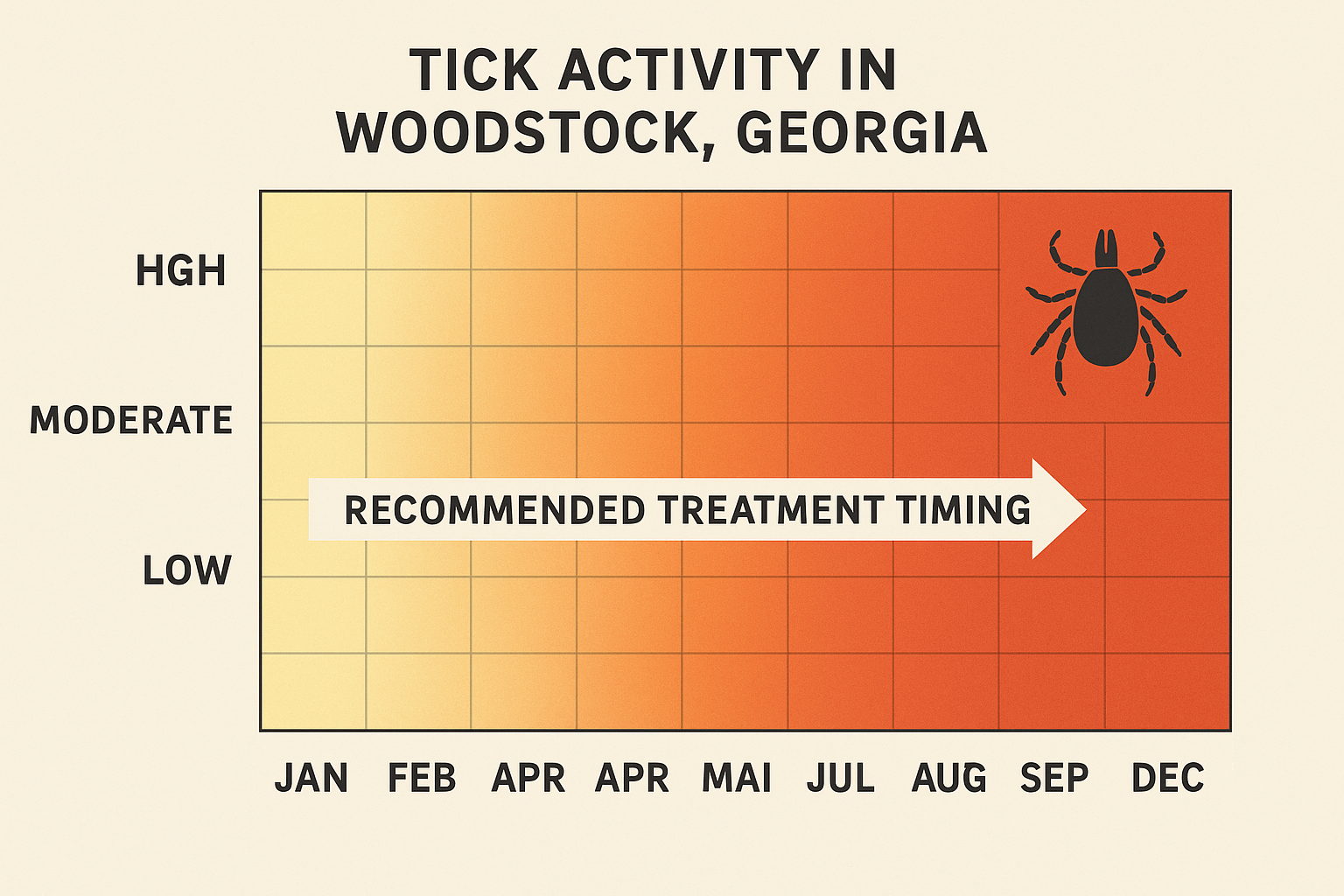
Understanding when ticks are most active in Woodstock lets you line up treatments for maximum impact. The chart above visualizes the ebb and flow of tick activity across the year, tying each month to typical temperature and humidity patterns that drive the bugs’ life cycle.
Month‑by‑Month Activity Levels
- Low activity (January – February): Cold snaps and low humidity keep adult ticks dormant. While they’re not completely absent, the risk to people and pets is minimal.
- Moderate activity (March – May, October – November): As daytime highs climb above 55 °F and evenings stay moist, nymphs begin to emerge. You’ll start seeing more ticks on dogs and in yard edges.
- High activity (June – September): Warm, humid conditions create the perfect breeding ground. Adult females lay thousands of eggs, and the yard can become a tick hotspot.
Why Temperature and Humidity Matter
Ticks are ectothermic—they rely on external heat to move and feed. When daytime temperatures consistently sit between 70 °F and 85 °F, metabolism spikes, accelerating the questing behavior of nymphs and adults. Humidity above 70 % prevents desiccation, allowing ticks to stay on vegetation longer while waiting for a host. In Woodstock, the summer months combine these two factors, which is why the June‑September window sees the highest tick counts.
Optimal Treatment Windows
- Early spring (late March – early April): A pre‑emptive spray creates a barrier before nymphs start questing. This timing also catches any early‑season adult ticks that survived the winter.
- Midsummer boost (mid‑July): A second application reinforces the barrier as the tick population peaks. It also helps control any new larvae hatching from eggs laid earlier in the season.
- Fall follow‑up (late October): A final treatment targets the remaining nymphs before they enter diapause for the winter, reducing the “overwintering” load for the next year.
When Weather Throws a Curveball
Unusually warm winters can shift the calendar forward. If January temperatures hover above 60 °F for several days, you might notice early tick activity. In those years, start your spring spray a few weeks earlier—mid‑February instead of late March—to stay ahead of the curve. Conversely, a cool, dry summer can suppress the midsummer surge, allowing you to skip the July boost without compromising protection.
Homeowner Monitoring Tips
Even with professional treatments, staying vigilant helps you catch any gaps:
- Inspect pets daily, especially after walks in wooded areas. Look for tiny, dark specks at the base of ears, around the neck, and between toes.
- Place sticky tick traps along fence lines and near leaf litter. Check them weekly and replace as needed.
- Walk your property after rain. Ticks are most active when the ground is damp; a quick visual sweep of low grass can reveal hotspots.
- Keep a simple log of sightings. Noting the date, location, and life stage (larva, nymph, adult) gives you and your technician valuable data for fine‑tuning future treatments.
By aligning your treatment plan with Woodstock’s seasonal tick rhythm and staying alert to weather anomalies, you’ll protect your family and pets while keeping your yard comfortable all year long.
One‑Time vs. Seasonal Tick‑Control Plans
When it comes to protecting your Woodstock yard from ticks, the choice of service model can feel like a trade‑off between cost and peace of mind. At Anthem Pest Control we see homeowners weigh a single, deep‑clean treatment against a year‑long schedule of visits. Understanding how each plan works, its strengths, and its drawbacks will help you match the right approach to your property’s unique risk factors.
What is a One‑Time Tick‑Control Treatment?
A one‑time treatment is a single, comprehensive application of EPA‑approved tick control products that targets both indoor and outdoor spaces. Technicians spray the perimeter of your home, treat high‑traffic lawn zones, and may apply a residual barrier inside doorways and windows. The goal is to knock down the existing tick population quickly, giving you immediate relief.
What is a Seasonal Tick‑Control Plan?
A seasonal plan spreads protection over the peak tick months—typically March through October in Georgia. It includes multiple visits (usually 3‑4 per season), each with a fresh application, ongoing monitoring, and an indoor barrier that’s refreshed after heavy rains or landscaping changes. The plan is designed to stay ahead of re‑infestation cycles, especially when wildlife or pets move through the yard.
Pros of a One‑Time Treatment
- Lower upfront cost: You pay for a single service, which can be appealing for tight budgets.
- Quick results: Homeowners often notice a dramatic drop in tick activity within days.
- Simplified scheduling: One appointment means less coordination with work or school calendars.
- Ideal for low‑risk yards: Smaller properties with minimal wildlife traffic may not need ongoing protection.
Cons of a One‑Time Treatment
- Limited residual protection: Most products lose effectiveness after 4‑6 weeks, leaving gaps during peak tick season.
- Potential for repeat visits: If ticks return, you may need additional treatments, which can add up.
- No indoor barrier refresh: Indoor spaces aren’t re‑treated, so ticks hitching inside can remain a problem.
Pros of a Seasonal Plan
- Sustained protection: Each visit renews the residual barrier, keeping ticks at bay throughout the entire season.
- Addresses re‑infestation: Regular monitoring catches new tick hotspots before they become a full‑blown issue.
- Includes indoor treatment: Continuous indoor barrier reduces the chance of ticks entering your home on pets or clothing.
- Peace of mind: Knowing a professional is watching your property reduces the stress of DIY spot‑checks.
Cons of a Seasonal Plan
- Higher total cost: Multiple visits mean a larger overall investment compared to a single treatment.
- Commitment to schedule: You’ll need to keep the appointment calendar open for each service window.
- Potential over‑coverage: For very small or low‑risk yards, the extra visits may feel unnecessary.
Decision‑Making Checklist
- Yard size: Larger lawns (>½ acre) benefit from repeated coverage.
- Wildlife presence: Deer, raccoons, or frequent bird activity increase tick pressure.
- Pet activity: Dogs and cats that roam outdoors are common tick carriers.
- Budget flexibility: Determine if you can spread costs over several months or prefer a single payment.
- Seasonal timing: If you’re planning to spend extensive time outdoors during spring and summer, a seasonal plan offers continuous protection.
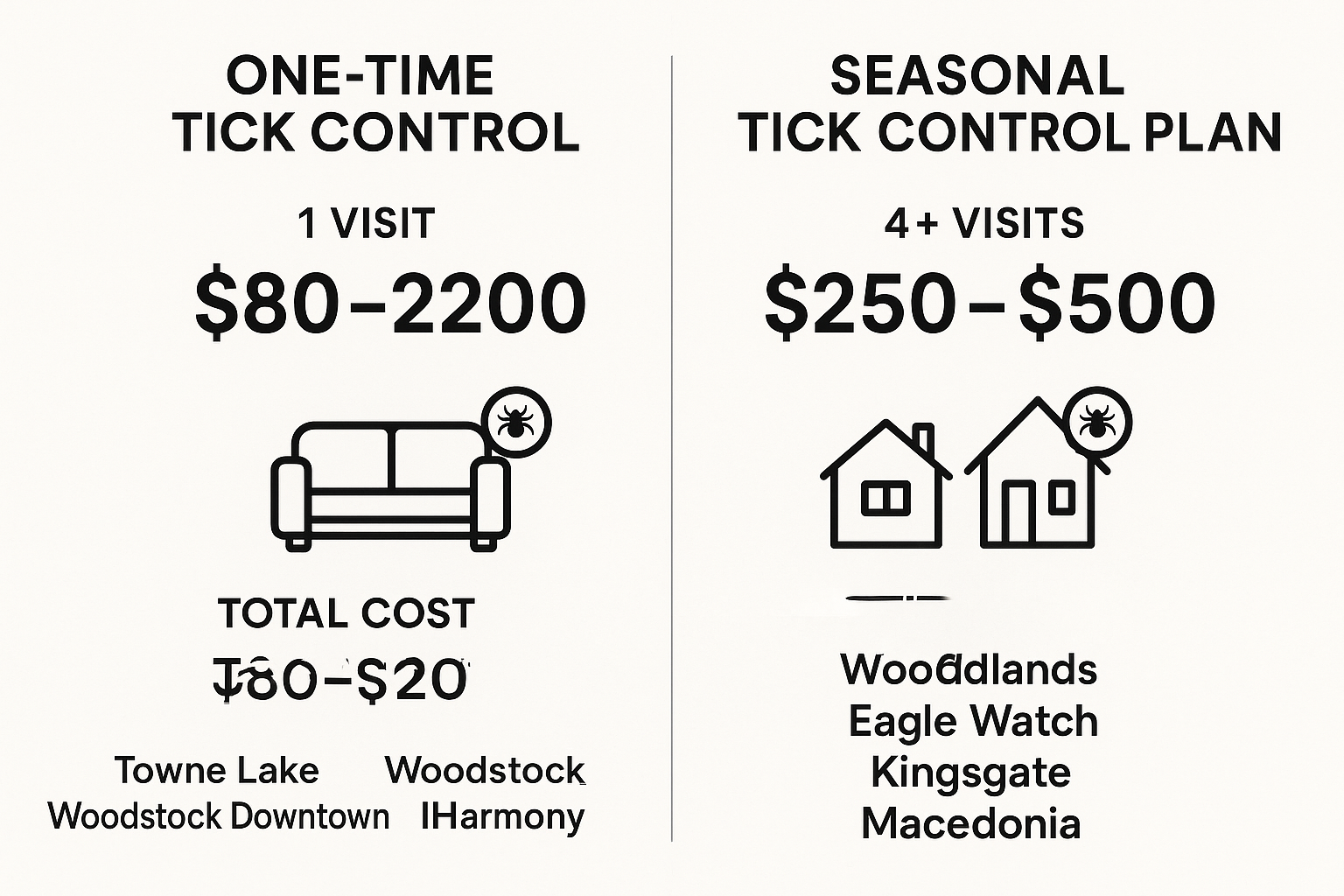
| Feature | One‑Time Treatment | Seasonal Plan |
|---|---|---|
| Number of Visits | 1 (single application) | 3‑4 per season |
| Typical Cost Range (Woodstock, GA) | $120‑$180 | $350‑$550 |
| Coverage Zones | Perimeter & high‑traffic outdoor areas; optional indoor barrier | Full perimeter, lawn, shrubbery, and refreshed indoor barrier each visit |
| Residual Protection Duration | 4‑6 weeks | Up to 8‑10 weeks per visit, continuously renewed |
| Best For | Small yards, low wildlife activity, limited budget | Large properties, active pets, high wildlife traffic, year‑round outdoor use |
By matching the plan to your yard’s size, the amount of wildlife traffic, and how much you’re willing to invest, you can choose the most effective tick‑control strategy for your Woodstock home. Whether you opt for a single, deep‑clean treatment or a full‑season schedule, Anthem Pest Control is ready to tailor the service to keep your family and pets safe from tick‑borne illnesses.
Understanding Tick‑Control Costs in Woodstock
When you call a pest‑control professional, the price tag can feel like a mystery. In Woodstock, the total cost of tick control hinges on a handful of clear factors: how big your property is, how many distinct treatment zones you need, and whether you want indoor protection, outdoor protection, or both.
Key Cost Drivers
- Property size: Larger yards require more product and labor, so a 2,500 sq ft yard will cost more than a 1,200 sq ft lot.
- Number of treatment zones: A single, open lawn is cheaper than a property with multiple zones such as garden beds, patios, and wooded edges.
- Indoor vs. outdoor focus: Adding indoor tick‑prevention (e.g., perimeter sprays inside closets and pet areas) raises the price because technicians must treat additional surfaces.
Typical Price Ranges (Angi Data)
Angi’s recent market survey for Woodstock shows the following averages:
| Service Type | One‑Time Treatment | Seasonal (3‑Visit) Plan |
|---|---|---|
| Standard outdoor only | $180 – $250 | $450 – $620 |
| Outdoor + indoor (pet‑friendly) | $260 – $340 | $560 – $740 |
These figures assume typical residential yards and standard EPA‑approved products. Prices can shift up or down based on the variables listed above.
Additional Fees You Might Encounter
- Pet‑friendly formulations: Using low‑toxicity, pet‑safe sprays often adds $30‑$50 per visit.
- Follow‑up visits: If a tick hotspot persists, many companies charge a $40‑$60 extra for a targeted revisit.
- Emergency or same‑day service: Urgent calls after a tick bite can cost an additional $75‑$100.
How Local Competitors Price Their Services
For regional context, the Mosquito Authority’s Woodstock service page bundles tick control with mosquito treatments. Their seasonal package runs roughly $580 for a 2,500 sq ft yard, which includes three outdoor visits and a complimentary indoor spray. This aligns closely with the Angi averages, confirming that most reputable local firms sit in the same price corridor.
Why EPA‑Approved, Low‑Toxicity Products Matter
Choosing a provider that relies on EPA‑registered, low‑toxicity formulas protects your family, pets, and beneficial insects. These products meet strict safety standards while still delivering a knock‑down effect on ticks. For a deeper dive, see the EPA’s residential pest‑management guidance.
Example Cost Scenario: 2,500 sq ft Yard
Imagine a typical Woodstock homeowner with a 2,500 sq ft yard, a small garden, and a pet‑friendly indoor area. Below is a quick cost comparison:
| Option | What’s Included | Estimated Cost |
|---|---|---|
| One‑Time Outdoor Treatment | Standard EPA spray, 1 visit | $210 |
| One‑Time Outdoor + Indoor (Pet‑Safe) | Standard + indoor pet‑friendly spray, 1 visit | $280 |
| 3‑Visit Seasonal Plan (Outdoor Only) | Three spaced applications, spring‑summer‑fall | $540 |
| 3‑Visit Seasonal Plan (Outdoor + Indoor, Pet‑Safe) | Three outdoor visits + two indoor touch‑ups | $720 |
Notice how the seasonal plan spreads the expense over the year but often saves money per visit and offers continuous protection.
Tips for Getting an Accurate Quote
- Prepare a quick property sketch: note square footage, shaded areas, and any woodlots.
- Specify whether you need indoor treatment, pet‑friendly products, or both.
- Ask if the price includes a guarantee—most reputable companies will re‑treat any missed spots at no extra charge within the treatment window.
- Request a written breakdown so you can compare apples‑to‑apples when reviewing multiple estimates.

Why Choose Anthem Pest Control for Tick Management
Nationwide Experience, Local Know‑How
Anthem Pest Control brings more than a decade of nationwide expertise to the heart of Woodstock, Georgia. While the company operates in every state, each technician is trained on the specific tick species, seasonal patterns, and landscaping styles that are unique to the Woodstock area. This blend of broad knowledge and local focus means you get solutions that are proven across the country yet perfectly calibrated for your backyard, pet‑friendly zones, and nearby woodlands.
Certified Technicians & EPA‑Registered Products
Every Anthem field agent holds industry‑recognized certifications and completes ongoing education on the latest tick‑control technologies. The company exclusively uses EPA‑registered products that have undergone rigorous safety testing for humans, pets, and the environment. By adhering to these standards, Anthem ensures that each application delivers maximum efficacy while minimizing any risk to your family or garden.
Transparent Pricing, No Hidden Fees
Homeowners often worry about surprise charges after a service call. Anthem eliminates that uncertainty with a clear, upfront pricing model. Estimates include all labor, materials, and follow‑up visits, and the contract outlines exactly what’s covered—no “extra fees” for equipment or travel. This transparency lets you budget confidently, whether you’re opting for a one‑time treatment or a seasonal protection plan.
Integrated Pest‑Management (IPM) Approach
Anthem’s tick program follows an IPM framework that moves beyond a single spray:
- Inspection: A detailed walk‑through identifies tick hotspots, breeding sites, and environmental conditions that attract them.
- Treatment: Targeted applications address both adult ticks and larvae, using the right product for each zone (yard, patio, shaded areas).
- Prevention Education: Technicians provide homeowners with practical tips—like proper lawn mowing heights and tick‑check routines—to keep infestations at bay long after the service ends.
What Customers Are Saying
“After a single season with Anthem, we noticed far fewer ticks on our dogs and in our garden. The technician explained every step, and the price matched what was promised—no surprises.” – Emily R., Woodstock, GA
Anthem consistently earns high satisfaction scores:
- 96% of customers rate their experience as “excellent” or “very good.”
- Average response time to service requests: 24 hours.
- Repeat‑service rate: 84%, indicating strong confidence in long‑term tick protection.
DIY vs. Professional Service
| Aspect | DIY Approach | Anthem Professional Service |
|---|---|---|
| Effectiveness | Variable; often misses hidden larvae | Comprehensive, backed by data‑driven inspections |
| Safety | Risk of improper handling of chemicals | EPA‑registered products applied by certified techs |
| Long‑Term Cost | Frequent repurchases; limited results | Seasonal plans reduce repeat spending and lower overall cost |
| Time Commitment | Hours of research, application, and cleanup | One‑time appointment; tech handles all steps |
Service Packages Tailored to Your Needs
Anthem offers flexible options so you can choose the level of protection that fits your lifestyle and budget:
- One‑Time Treatment: Ideal for immediate tick relief before a weekend gathering or outdoor event.
- Seasonal Protection: Quarterly applications that align with peak tick activity in Georgia, ensuring continuous coverage.
- Combined Indoor/Outdoor Plan: Addresses ticks that wander inside, plus a full yard program—perfect for homes with pets that spend time both indoors and out.
Each package includes a detailed post‑treatment report, so you always know what was done, where, and why. By choosing Anthem Pest Control, you gain a trusted partner who not only eliminates ticks but also equips you with the knowledge to keep them away year after year.
Protect Your Yard Today – Get a Free Quote
Ticks aren’t just a nuisance; they’re a health threat that shows up each spring and summer in Woodstock. Over the past sections we’ve covered why ticks matter, when they’re most active, the treatment options that work best, and how Anthem keeps pricing transparent so you know exactly what you’re paying for.
- Tick risks: Lyme disease, Rocky Mountain spotted fever, and other infections can affect both people and pets.
- Seasonal timing: Early spring is the optimal window for a pre‑emptive barrier; a follow‑up in late summer catches any late‑emerging ticks.
- Treatment options: Professional perimeter sprays, targeted spot treatments, and pet‑safe formulations eliminate ticks before they enter your home.
- Cost transparency: Anthem provides a clear, itemized quote with no hidden fees, so you can compare options confidently.
Putting these pieces together gives you a clear roadmap to a safer outdoor space for everyone.
When you choose a professional service, you protect more than just the grass. A properly applied treatment creates a safe zone for your children to play, your grandchildren to explore, and your dogs to romp without the constant worry of a bite. The peace of mind that comes from knowing a licensed technician has inspected, treated, and set up a long‑lasting barrier is priceless.
If you’re ready to safeguard your home, Anthem Pest Control is here to help. Our local technicians understand the unique tick pressures in Woodstock and can tailor a plan that fits your schedule and budget. Give us a call right now at 877‑371‑8196 for immediate assistance. We’ll walk you through the process, answer any questions, and set up a time that works for you.
All new customers receive a free, no‑obligation quote. There’s no pressure to sign up on the spot; you’ll simply have the information you need to decide whether a professional tick barrier is right for your family. Our flexible scheduling means we can work around school drop‑offs, work hours, or weekend plans, ensuring the treatment is convenient and effective.
Take the first step toward a tick‑free yard today. Request your free estimate online or call us at 877‑371‑8196. Click the link below to start the process instantly. Your yard, your family, and your pets deserve the protection that only a trained, local professional can provide.