Why Woodstock Homeowners Need Stink Bug Protection
The brown marmorated stink bug (BMSB) is an invasive pest that arrived in the United States from East Asia in the late 1990s, a spread that has directly influenced the stink bug control cost Woodstock homeowners now face. Since then it has spread rapidly across the Midwest and Southeast, including Woodstock, Georgia. Unlike native stink bugs, BMSB thrives in a wide range of habitats and reproduces quickly, turning a seasonal nuisance into a year-round concern for homeowners.
Stink bugs are master infiltrators. They slip through the tiniest cracks around windows, doors, utility lines, and roof vents. Woodstock’s mild winters and humid summers create an ideal environment for the bugs to seek shelter inside homes, especially when outdoor temperatures dip below 55 °F. Once inside, they hide in wall voids, attics, and even kitchen cabinets, making detection difficult until the odor hits.
The impact goes beyond an unpleasant smell. In gardens, BMSB punctures fruits, vegetables, and ornamental plants, leaving them bruised, watery, and unmarketable. Homeowners can lose weeks of hard‑won produce and see their prized landscape plants suffer cosmetic damage. Inside the house, the defensive spray releases a foul odor that can linger for hours, contaminating linens, curtains, and upholstery.
Did you know? A single adult stink bug can lay up to 400 eggs, and a small infestation can quickly become a massive problem if left unchecked. Source
Understanding the biology and behavior of BMSB sets the stage for effective control. In the next sections we’ll walk you through how to identify these pests, the seasonal patterns that dictate when they’re most active, and the treatment options that Anthem Pest Control offers to keep your Woodstock home bug‑free.

Spotting Stink Bugs and Early Warning Signs
What a stink bug looks like
Stink bugs are easy to recognize once you know the key details. An adult measures roughly a half‑inch to three‑quarters of an inch long, with a broad, shield‑shaped back that tapers toward the head. Their coloration is a mottled blend of brown and gray, often with a faint amber sheen. The most distinctive mark is a small “V” or inverted chevron cut into the dorsal surface, giving the insect a tiny, natural logo.
Where they love to hide inside your home
When the weather turns cooler, stink bugs start looking for warm shelter. In a typical Woodstock house you’ll find them tucked into kitchen cabinets—especially around dry goods—sitting on window sills that catch the afternoon sun, nesting in light fixtures, or slipping behind appliances such as refrigerators and dishwashers. They favor tight crevices because the dark, insulated space protects them from drafts.
Outdoor hotspots you should inspect
Outside, these bugs congregate where food and shelter overlap. Fruit‑bearing trees—especially peaches, apples, and figs—act like all‑you‑can‑eat buffets. Garden beds with flowering plants and vegetable seedlings attract them for both nectar and the occasional insect prey. Mulch piles and leaf litter provide the perfect moisture‑rich hideout, so a quick glance around the perimeter of your yard can reveal early activity.
Behavioral clues that signal an approaching infestation
Stink bugs are most active in late summer and early fall. During this window you’ll notice them swarming in large numbers, often clustering on sunny walls or fence posts to soak up heat. If you disturb a group, a sharp, unpleasant odor—hence the name—will waft through the air. This scent is a defensive spray, and even a small breach can alert you that a hidden population is nearby.
How to tell them apart from harmless look‑alikes
Ladybugs and many beetles share the rounded shape, but they differ in color, pattern, and behavior. Ladybugs are bright red or orange with black spots, and they never emit a foul smell when handled. Ground beetles usually have a shiny, black or metallic exoskeleton and lack the characteristic “V” on the back. If the insect is brown‑gray, shield‑shaped, and releases a stink when pressed, you’re looking at a stink bug.
DIY monthly inspection checklist
- Walk the exterior walls and note any clusters on sunny surfaces.
- Inspect fruit trees, garden beds, and mulch for small groups or individual bugs.
- Open kitchen cabinets and pantry shelves; shake out dry goods and look for hidden insects.
- Check window sills, light fixtures, and behind appliances for faint brown‑gray bodies.
- Gently disturb any suspect insects—if a noticeable odor appears, record the location.
- Document findings in a simple log and compare month‑to‑month trends.
Woodstock’s Stink Bug Seasonality and Optimal Treatment Timing
In Woodstock, stink bugs follow a predictable calendar that aligns with our local climate, which plays a key role in the stink bug control cost Woodstock homeowners may encounter. The seasonal activity chart shows a sharp rise in numbers from early June, peaking through July and August, then tapering off as temperatures dip in September. Understanding this curve lets you intervene before the bugs become a nuisance inside your home.
Temperature, Humidity, and Bug Behavior
Stink bugs thrive when daytime highs hover between 75°F and 85°F and humidity stays above 60%. Those conditions are common in Woodstock’s summer months, especially July when the average high reaches 88°F and the dew point climbs. As the air cools in late summer, the insects seek shelter, prompting the migration from exterior foliage to indoor walls and windows.
Why Early‑Summer Treatments Win
Applying a preventive exterior spray in late May or early June catches the population before it explodes. The insecticide creates a barrier that disrupts the bugs’ breeding cycle, reducing the number that ever makes it inside. A late‑fall spray, by contrast, often targets a dwindling population and provides little protection for the next year, forcing you to start over in spring.
Preventive vs. Spot Treatments
We recommend a full‑coverage exterior treatment two weeks before the first major emergence—typically the second week of June. This creates a protective shield around your foundation, siding, and eaves. Once bugs start appearing indoors (usually mid‑July), a targeted interior “spot” treatment can be applied to cracks, window frames, and attic vents where they congregate.
Leveraging Weather Forecasts
Short‑term forecasts are a valuable scheduling tool. Aim for a window of 3‑5 dry days with temperatures above 70°F before your service appointment; rain can wash away residual chemicals and lower efficacy. Many homeowners track the local National Weather Service alerts or use a simple weather app to pinpoint those optimal days.
Quick Reference: Month‑by‑Month Action Items
| Month | Primary Action | Notes |
|---|---|---|
| May | Inspect exterior for cracks & gaps | Prepare for early‑summer spray |
| June | Preventive exterior treatment | Schedule after 3‑5 dry days |
| July | Monitor indoor activity | Apply spot interior treatment if needed |
| August | Follow‑up exterior check | Touch‑up if heavy rain occurred |
| September | Final interior spot treatment | Target remaining hotspots |
| October‑December | Maintain sealing & monitor | Prep for next spring |
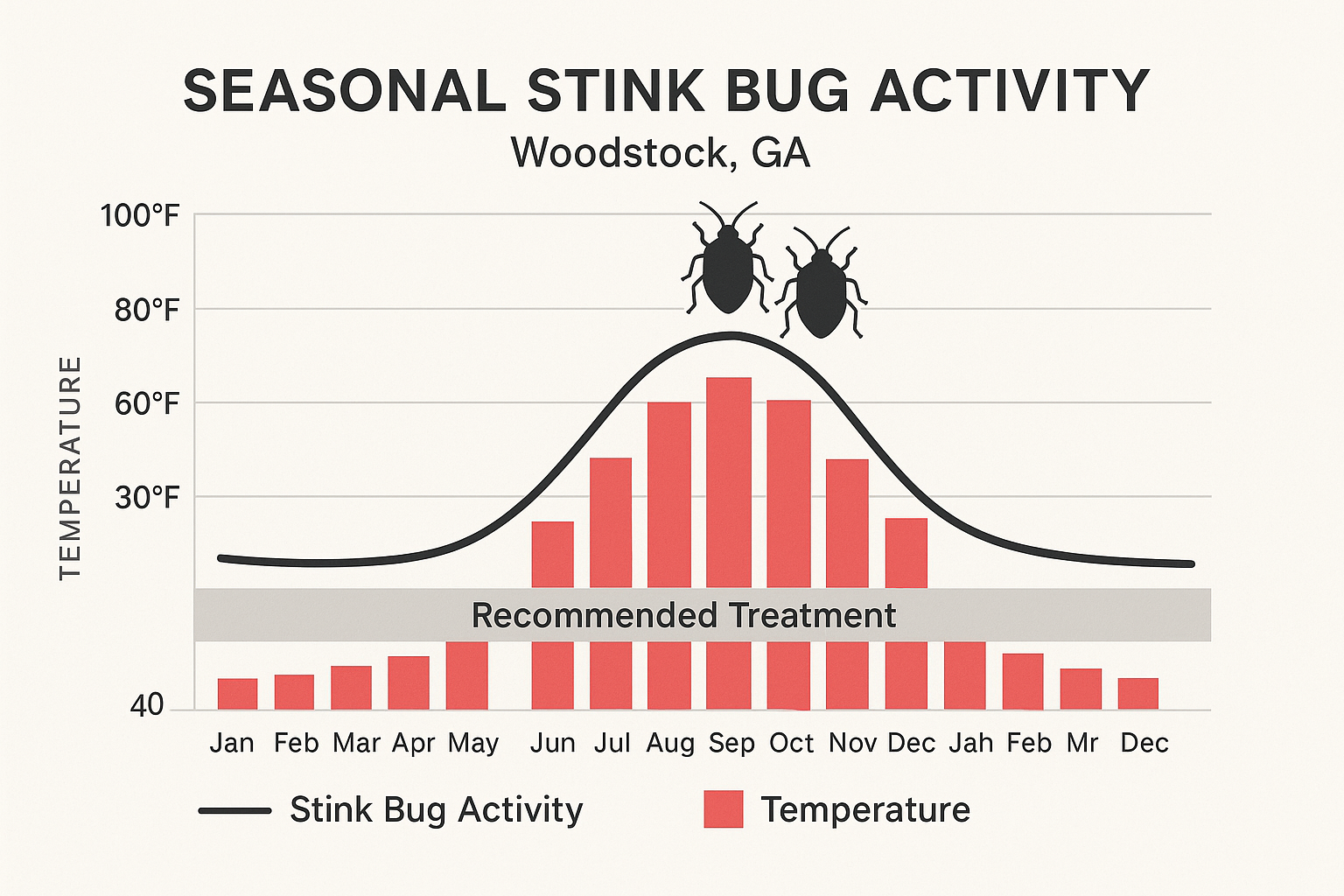
By aligning your service dates with the climate cues outlined above, you not only keep stink‑bug numbers low but also stretch your pest‑control budget. Early‑summer exterior applications typically require fewer follow‑up visits, which translates into lower overall costs for homeowners in Woodstock. If you’re ready to lock in a treatment window, simply reference the month‑by‑month table and contact a local professional who can tailor the spray schedule to your property’s specific exposure.
Treatment Options, Costs, and What to Expect from Professionals
Overview of Common Treatment Methods
Anthem Pest Control uses four primary approaches to eliminate stink bugs in Woodstock homes, with each method designed to address infestation stages that can influence the stink bug control cost Woodstock homeowners may encounter. Each method targets a different stage of the infestation and offers a balance of effectiveness, safety, and convenience.
- Perimeter Spray – A residual insecticide is applied around the foundation, doors, windows, and other entry points. Pros: Creates a protective barrier that lasts 30‑45 days, works well for large properties. Cons: Requires re‑application after heavy rain and may be less effective against bugs already inside the house.
- Indoor Fogging – A fine mist of low‑odor pesticide is dispersed throughout interior rooms. Pros: Reaches cracks, ceiling voids, and attic spaces where bugs hide; quick knock‑down effect. Cons: Home must be vacated for 2‑4 hours; pets and children need to be removed.
- Heat Treatment – Portable heaters raise interior temperatures to 115‑120°F for several hours, killing bugs at all life stages. Pros: Chemical‑free, ideal for families with allergies or pets; leaves no residue. Cons: Higher upfront cost and requires professional equipment and monitoring.
- Targeted Smoke/Fumigation – Specialized smoke machines inject a botanical‑based fog into wall voids, crawl spaces, and other hard‑to‑reach areas. Pros: Penetrates sealed spaces where sprays can’t, minimal disruption to daily life. Cons: Best used as a supplemental treatment rather than a stand‑alone solution.
Smoke‑Machine Technique for Hard‑to‑Reach Voids

The smoke‑machine method shines when stink bugs nest behind siding, inside eaves, or within insulated crawl spaces. A low‑toxicity botanical fog travels through tiny gaps, suffocating bugs without leaving harmful residues. Because the fog is heavier than air, it settles into crevices before dissipating, delivering a deep‑penetration kill that spray lines often miss.
Pricing Breakdown

When reviewing stink bug control cost Woodstock, Anthem’s transparent pricing follows a three-tier structure:
- Initial Visit: $100‑$300 depending on home size and infestation severity.
- Monthly Maintenance: $60‑$90 for ongoing perimeter spray or fogging to keep bugs from returning.
- Factors Influencing Cost: Square footage, number of entry points, severity of the current invasion, and whether services are bundled with other pest programs (e.g., mosquito or ant control).
What a Typical Service Call Includes
A professional stink bug service from Anthem follows a predictable, value‑driven workflow:
- Comprehensive Inspection: A technician walks the property, identifies hotspots, and notes vulnerable entry points.
- Customized Treatment Plan: Based on inspection findings, the technician selects the optimal mix of perimeter spray, indoor fogging, heat, or smoke‑machine application.
- Application & Execution: All chemicals are EPA‑approved and applied with strict safety protocols; heat or smoke treatments are performed with real‑time temperature monitoring.
- Follow‑Up Visit: Within 7‑10 days, the technician returns to assess results, retreat any missed zones, and answer homeowner questions.
- Warranty Details: Most treatments come with a 30‑day satisfaction guarantee; repeat infestations within that window are retreated at no extra charge.
Tips to Maximize Value
- Clear clutter around the foundation and in garages; debris provides hiding spots that reduce treatment efficacy.
- Seal obvious cracks, gaps around windows, and utility penetrations before the first service—this lowers the amount of pesticide needed.
- Schedule seasonal follow‑ups in early spring and late summer, the two peak periods for stink bug activity in Georgia.
- Ask your technician about bundled discounts if you also need mosquito or ant control; combined services often reduce overall per‑service costs.
Protect Your Woodstock Home Today with Anthem Pest Control
Stink bugs surface each spring in Woodstock, drawn by warm homes and ripe fruit. Their numbers explode by midsummer, and once they find a way inside, they hide in walls, attics, and appliances, releasing an unmistakable odor when disturbed. Catching the problem early—before the bugs establish a breeding colony—means you avoid costly damage to garden plants, ruined food, and the frantic, DIY sprays that only mask the issue. Early detection saves both money and the headache of a full‑scale infestation.
Choosing a licensed, Woodstock‑based professional like Anthem Pest Control gives you more than just a pesticide drop. Our technicians use EPA‑approved products that are safe for children and pets, and we back every treatment with a satisfaction guarantee. Because we know the local climate and the bugs’ habits, we can target the exact entry points and nesting sites, delivering results that last through the entire season. Transparent pricing means you’ll know exactly what you’re paying for—no hidden fees, no surprise charges.
Ready to protect your home before the next wave arrives? Call us today at 877‑371‑8196 for a free, no‑obligation inspection and a detailed quote. You can also schedule online by visiting Anthem Pest Control. Our friendly team will assess your property, explain the treatment plan, and set a timeline that fits your schedule—so you can breathe easy knowing the stink bugs are taken care of.
With Anthem Pest Control on your side, Woodstock homeowners enjoy a bug-free environment all year long while gaining clarity on stink bug control cost Woodstock, letting you focus on what truly matters—family, garden, and peace of mind.