Tick Concerns in Marietta, GA – Why Homeowners Should Care
In the past year, Marietta neighborhoods like Kennesaw Mountain and Brookhaven have seen a noticeable spike in tick complaints. Homeowners are reporting more frequent “tick checks” after yard work, children finding tiny parasites on playgrounds, and pets bringing unwanted hitchhikers indoors. This surge isn’t a fluke; it mirrors a broader regional trend that’s turning tick awareness from a seasonal curiosity into a year‑round necessity.
Local pest‑reporting platforms and community Facebook groups have logged dozens of new sightings each month. The numbers may seem modest, but when you consider that a single adult tick can lay thousands of eggs, the potential for rapid population growth is alarming. Moreover, the rise in tick reports aligns with warmer, wetter summers and milder winters—conditions that give these arachnids a longer breeding window than in many other parts of the country.
Georgia’s humid subtropical climate is practically a tick‑friendly greenhouse. Consistently high humidity levels keep the environment moist, which is crucial for tick survival at every life stage. Marietta’s abundant wooded areas, shaded creek banks, and the extensive trail network of Kennesaw Mountain National Battlefield Park create ideal micro‑habitats where ticks can quest for hosts without drying out.
Seasonal leaf litter compounds the problem. As oak, pine, and hickory leaves fall each autumn, they form a thick, damp carpet on the forest floor and in residential yards. This layer not only shelters questing nymphs but also retains moisture, extending the period during which ticks remain active. Even in winter, when most foliage has decomposed, the residual moisture in soil and mulch continues to support tick activity.
The result is a near‑year‑round risk for Marietta homeowners. While adult ticks are most active in late spring and early summer, nymphs—responsible for the majority of disease transmission—can be found from early spring through late fall. The humid winter months often allow a small but steady population to persist, meaning a single backyard walk in December could still expose a family member or pet to a bite.
In this guide, we’ll walk you through everything you need to know to protect your home and loved ones. We’ll break down the typical cost of professional tick control, compare the most effective treatment options, and share practical prevention tips you can start using today.
- Cost Overview: Transparent pricing for inspections, one‑time treatments, and ongoing maintenance plans.
- Treatment Options: From targeted spot‑treatments to full‑property barrier applications, including environmentally‑friendly formulations.
- Prevention Tips: Yard maintenance, landscaping choices, and daily habits that reduce tick habitats.
- Why Choose Anthem Pest: Local expertise, certified technicians, and a commitment to safe, affordable solutions.
Our tone throughout this section is conversational yet professional—think of us as the knowledgeable neighbor who stops by with a toolbox and a clear plan, rather than a distant textbook author. We understand the frustration of finding a tick on a child’s ankle or a dog’s coat, and we’re here to demystify the process of keeping those tiny pests at bay.
By the end of this article, you’ll have a solid grasp of why ticks are a persistent threat in Marietta, what steps you can take right now, and how Anthem Pest can make the battle against ticks both effective and affordable.
Common Tick Species Found in Marietta
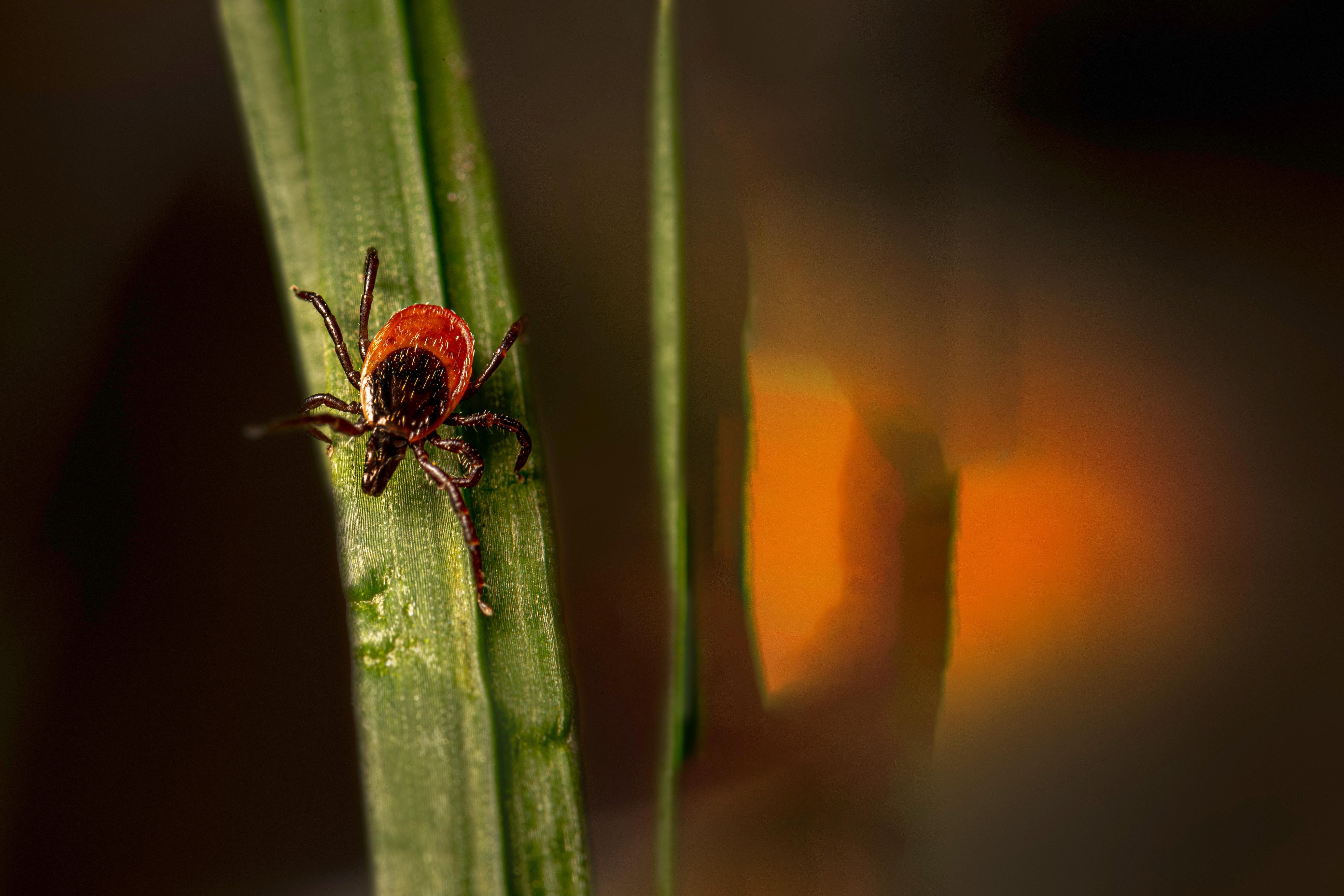
Marietta’s wooded yards, grassy fields, and nearby parks create an ideal habitat for several tick species. Knowing which ticks you’re most likely to encounter helps you spot them early and act before they bite. Below, we break down the three most common culprits, highlight the visual cues that set each apart, and explain why swift identification is a cornerstone of effective tick control.
Black‑legged Deer Tick (Ixodes scapularis)
The black‑legged deer tick, also called the Lyme tick, is the primary vector for Lyme disease in Georgia. Adults measure about 3 mm in length—roughly the size of a sesame seed—while nymphs are even smaller, often invisible to the naked eye. Their bodies are a reddish‑brown color that darkens to almost black after feeding. Key identifiers include:
- Size: Adults 2–4 mm; nymphs 0.5–1 mm.
- Coloration: Reddish‑brown before a blood meal, turning dark gray or black afterward.
- Body shape: A flat, oval back that expands noticeably after feeding.
Because they thrive in leaf litter and shaded underbrush, you’ll often find them on the edges of Marietta’s parks and in the leaf piles of suburban backyards.
Lone Star Tick (Amblyomma americanum)
The lone star tick earned its name from the distinctive white “star” spot on the female’s dorsal side. Adults are larger than deer ticks, ranging from 4–6 mm, and have a reddish‑brown scutum with a darker, mottled abdomen. Important identification points include:
- Size: Adults 4–6 mm; nymphs 2–3 mm.
- Markings: Adult females sport a single white spot; males lack the spot but have a more uniform coloration.
- Legs: Long, dark legs that appear slightly striped.
Lone star ticks favor open, sunny fields and the edges of woodlands, making them common in Marietta’s residential lawns that border undeveloped land.
American Dog Tick (Dermacentor variabilis)
Despite its name, the American dog tick bites humans as often as it does dogs. It’s a sturdy, dark brown tick with a silvery‑gray shield on its back. Adult females have a noticeable white, hour‑glass marking on the underside of the abdomen—a reliable visual cue. Key features are:
- Size: Adults 4–6 mm; nymphs 2–3 mm.
- Coloration: Dark brown to black with a pale, scutum‑like shield.
- Hour‑glass marking: Visible on the ventral side of adult females.
These ticks thrive in sunny, grassy areas and are often found near pet shelters, making them a frequent visitor to Marietta’s suburban yards.
According to the 2024 CDC data, approximately 30,000 Georgia residents are diagnosed with Lyme disease each year. Early detection of the black‑legged deer tick is crucial because it is the primary carrier of the disease‑causing bacterium Borrelia burgdorferi.
Mapping data from the Georgia Department of Public Health shows a concentration of tick‑related reports in zip codes 30060 and 30062. These areas encompass the heart of Marietta’s residential neighborhoods, where dense tree canopies and well‑maintained lawns provide perfect micro‑climates for tick populations.
When you can recognize a tick’s size, color, and distinctive markings, you can intervene faster—whether that means removing the tick promptly, treating your yard, or calling a professional. Early identification not only reduces the risk of disease transmission but also informs the most effective control strategy, allowing Anthem Pest Control to tailor treatments that target the specific species present on your property.
How Professionals Inspect Your Property for Ticks
When you call Anthem Pest, the first thing our technician does isn’t spray or fog – it’s a thorough walk‑through of your yard. Understanding each step of that inspection helps you feel confident that every tick‑prone nook is being evaluated.
1. Visual yard sweep
Our inspector starts at the perimeter, moving slowly along fences, sidewalks, and the edges of your lawn. We look for low‑lying vegetation, tall grasses, and any dense shrubbery where ticks love to wait for a host. By noting the height and density of these plants, we can pinpoint “hot spots” that need trimming or targeted treatment.
2. Tick drag sampling
After the visual sweep, we perform a tick drag – a simple but scientifically proven method. A white, 1‑meter‑by‑1‑meter cloth is pulled across the ground and through the vegetation. Any questing ticks that latch onto the fabric are collected for identification. The white background makes the tiny critters easy to spot, and the sample tells us which species are active in your yard and how abundant they are.
3. Property risk scoring
Every yard receives a risk score based on three key factors:
- Leaf litter depth: More than two inches of leaf mulch creates a humid micro‑environment perfect for ticks.
- Wildlife activity: Deer, raccoons, and even backyard birds can transport ticks from nearby woods.
- Shade coverage: Shaded, damp areas retain moisture longer, encouraging tick survival.Proven Tick Control Treatments
When it comes to protecting your yard and family from ticks, there’s no one‑size‑fits‑all answer. The most reliable results come from a layered approach that combines proven chemical barriers, spot‑specific applications, and long‑term habitat management. Below, we break down the methods that Anthem Pest Control trusts most, explain where each shines, and show you how they fit together in a real‑world scenario.
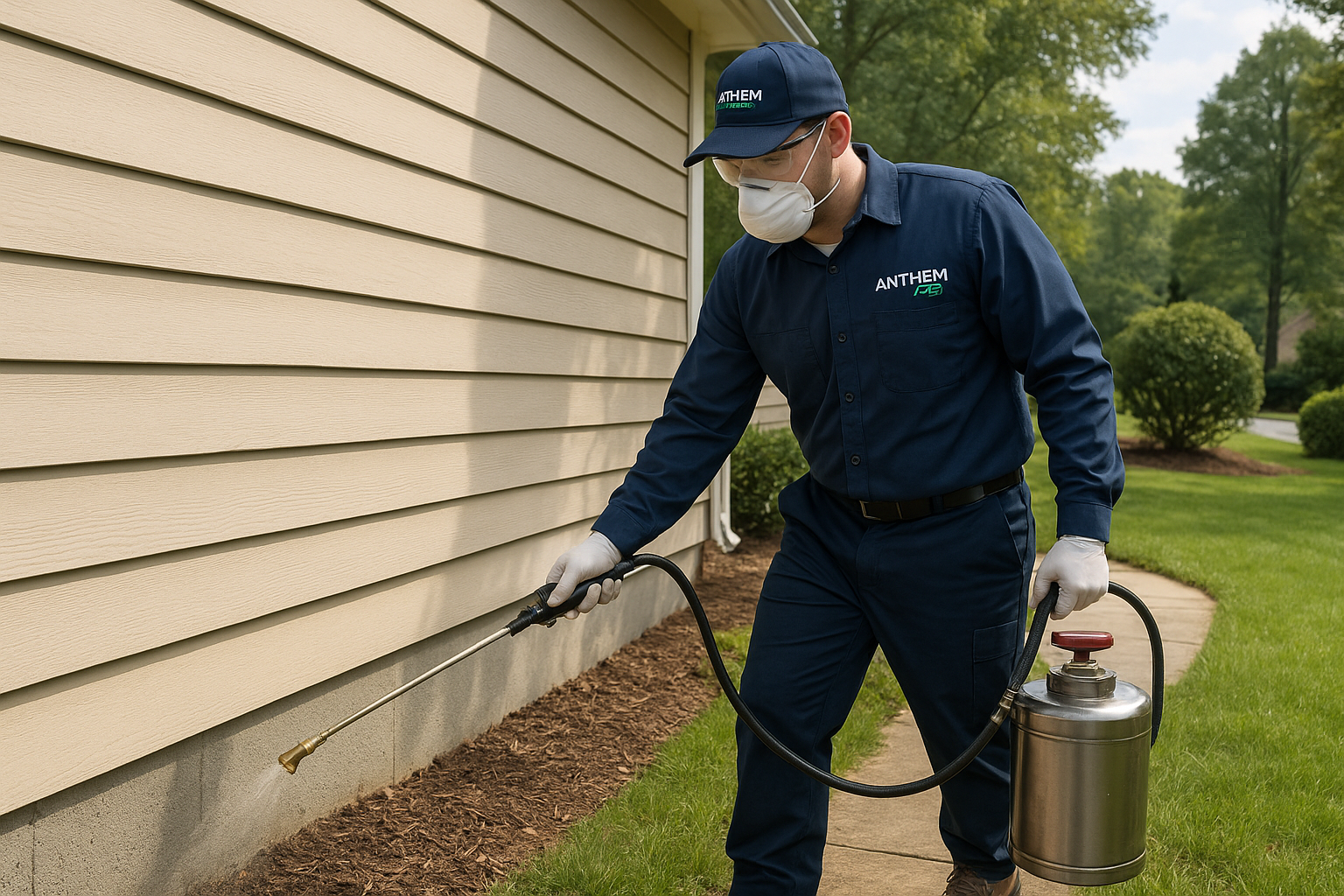
AI-generated image Chemical Perimeter Sprays (Bifenthrin, Permethrin)
EPA‑studied formulations of bifenthrin and permethrin remain the gold standard for rapid, wide‑area tick knockdown. A single, professionally applied perimeter spray creates a protective “moat” around your home, reducing tick activity by 85‑90% for up to six weeks. The chemicals are applied at concentrations that are lethal to ticks but safe for humans, pets, and most beneficial insects when used as directed.
Pros:
- Fast‑acting, visible reduction in tick numbers.
- Broad coverage protects high‑traffic zones in one go.
- Backed by extensive EPA data and field trials.
Cons:
- Effectiveness wanes as the product degrades (typically 4–6 weeks).
- Requires annual re‑application for consistent protection.
- May not reach micro‑habitats like dense leaf litter without supplemental treatment.
Targeted Spot Treatments for High‑Traffic Zones
Playgrounds, pet runs, and outdoor dining areas deserve extra attention because they’re where families spend the most time. Spot treatments focus a lower‑dose spray or granular product directly on these hotspots, delivering a concentrated barrier without over‑treating the entire yard.
These treatments are ideal for:
- Areas with heavy foot traffic where a perimeter spray might be diluted.
- Properties with landscaping features that create micro‑climates for ticks.
- Homeowners who want to minimize chemical use while still protecting specific zones.
Integrated Pest Management (IPM)
IPM is the long‑term backbone of any tick‑control program. It blends cultural, mechanical, and chemical tactics to make your property inhospitable to ticks. Key steps include:
- Habitat modification: Trim back overgrown grass, thin shrubs, and keep tree canopies at least three feet from the ground.
- Landscaping adjustments: Replace dense ground cover with hard‑scapes like stone pathways or mulch that’s less attractive to ticks.
- Debris removal: Regularly rake leaf piles, clear tall grass, and eliminate rodent nests, which serve as tick hosts.
By reducing the tick’s preferred environment, IPM lowers the frequency of chemical applications and keeps your yard safer for kids and pets year after year.
DIY Options: Tick Tubes and Diatomaceous Earth
For homeowners who prefer a hands‑on approach, tick tubes and diatomaceous earth (DE) offer low‑cost, low‑toxicity alternatives. Tick tubes are cardboard cylinders filled with permethrin‑treated cotton; mice collect the cotton for nests, inadvertently spreading the insecticide through their burrows. DE is a fine, silica‑based powder that desiccates ticks on contact when sprinkled in leaf litter.
Benefits:
- Minimal chemical exposure to humans and pets.
- Cost‑effective and easy to deploy.
- Can be combined with professional services for added protection.
Limitations:
- Effectiveness is modest compared to full‑coverage sprays—typically a 30‑40% reduction.
- Requires diligent re‑application, especially after heavy rain.
- DE can be messy and may affect beneficial soil organisms if overused.
Cost Comparison Preview
Below is a quick snapshot of what you might expect to spend on each approach. Detailed pricing and package options will be covered in Part 6.
Estimated cost ranges for common tick‑control methods (per 1,500‑sq‑ft yard) Treatment Type Effectiveness Typical Cost (USD) Chemical perimeter spray (professional) 85‑90% reduction (4‑6 weeks) $150‑$250 Targeted spot treatment (professional) 70‑80% reduction in hotspots $75‑$130 per zone Integrated Pest Management (consultation + implementation) Long‑term 50‑70% reduction $200‑$350 (annual) DIY tick tubes (set of 10) 30‑40% reduction $25‑$45 Diatomaceous earth (5‑lb bag) 15‑25% reduction $15‑$30 Choosing the right mix depends on your yard’s size, tick pressure, and comfort level with chemicals. Most homeowners see the best results when they pair a professional perimeter spray with IPM practices, then supplement with spot treatments during peak season. If budget constraints are a concern, starting with DIY tick tubes and DE while you plan a professional service can still cut tick numbers dramatically.
Pricing and Cost Breakdown for Tick Services
Understanding what you’ll pay for tick control helps you compare options and feel confident that you’re getting real value. Below is a clear, item‑by‑item look at the typical costs you’ll encounter when you choose Anthem Pest for tick management in Marietta, Georgia.
Basic Perimeter Treatment
The most common entry‑point service is a perimeter treatment, which creates a protective barrier around the outside of your home and yard. According to the 2023 NPMA survey, the average price range for a single visit is $99 – $149. This fee includes:
- Inspection of the property’s outer edges
- Application of EPA‑approved tick control products
- Safety briefing for homeowners
Because the treatment targets only the outer boundary, it’s ideal for households that keep their grass trimmed and limit wildlife activity.
Full‑Season Package (4 Treatments)
For year‑round protection, most homeowners opt for a full‑season package. This includes four scheduled visits—typically spaced every six weeks during the tick‑active months (April through October). Pricing for the package generally falls between $350 – $500. The package covers:
- Four comprehensive perimeter applications
- One supplemental interior treatment if ticks are found inside
- Follow‑up inspection reports after each visit
- Discounted rates on any add‑on services you may need later
Bundling the visits reduces the per‑treatment cost and ensures consistent protection throughout the high‑risk season.
Add‑On Services
Ticks often hitch a ride on debris, brush, or even small wildlife. Anthem Pest offers two popular add‑ons that complement the core treatments:
- Yard debris removal: $75 – $120 per visit. We clear leaf litter, tall grass, and wood piles where ticks love to hide.
- Wildlife exclusion: $75 – $120 per visit. We seal gaps, install fencing, and advise on deterrents to keep deer, raccoons, and other hosts away from your property.
These services can be added to any treatment plan and are billed per visit, allowing you to tailor the approach to your specific situation.
Factors Influencing Price
While the ranges above give a solid baseline, the final quote can shift based on several key variables:
- Yard size – Larger lawns require more product and labor.
- Infestation level – Heavy tick populations may need extra applications or a more aggressive product mix.
- Property type – Homes with extensive landscaping, gardens, or multiple structures often need customized treatment maps.
- Frequency of visits – Quarterly packages are more cost‑effective than one‑off services.
Our technicians assess each of these factors during the initial inspection, ensuring you receive a quote that matches your exact needs.
Sample Quote Format (Anthem Pest)
Customer: Jane Doe – 1234 Oak St., Marietta, GA
Service Date: 15 May 2024
Scope of Work:
- Basic perimeter treatment – 1 visit
- Yard debris removal – 1 visit
- Full‑season package (4 treatments) – discounted rate
Cost Breakdown:
- Perimeter treatment: $119
- Debris removal: $95
- Full‑season package: $425
Total: $639
Notes: 10% discount applied for bundled services.
This format shows exactly where each dollar goes, making it easy to compare with other providers.
Keep Your Pricing Up‑to‑Date
Pricing can evolve with market changes, new product approvals, or seasonal demand. For the most current 2024 rates, visit Anthem Pest’s dedicated tick‑control page:
Anthem Pest tick‑control service page
There you’ll find the latest pricing tables, any promotional discounts, and a quick online request form to schedule your free inspection.
Seasonal Treatment Calendar and Prevention Tips
Understanding the Tick Calendar in Marietta
Ticks in Marietta follow a predictable seasonal rhythm that aligns with the region’s temperature and humidity patterns. From March to early April you’ll find newly hatched larvae beginning to quest for hosts—this is the perfect window for a pre‑emptive treatment that targets the first generation before they can spread. The June‑July period coincides with the peak of the nymph stage, when ticks are small enough to slip through clothing but already capable of transmitting disease. Finally, September to October brings the adult tick’s questing activity, making it the ideal time for a second round of control aimed at the larger, more visible insects that are ready to lay eggs for the next year.
Year‑Round Yard Maintenance
Even the best professional service works best when paired with consistent homeowner habits. Simple yard upkeep can dramatically reduce tick habitat:
- Keep grass trimmed to 3 inches or lower. Short grass discourages ticks from climbing up from the soil.
- Remove leaf litter, pine needles, and other organic debris where humidity can linger.
- Install wood‑chip barriers around playgrounds, decks, and garden beds; the dry, coarse material creates a physical moat that ticks avoid.
- Plant tick‑repellent herbs such as lavender, rosemary, or mint along fence lines and pathways. Their aromatic oils act as a natural deterrent while adding fragrance to your garden.
Neighborhood‑Specific Tip for Historic Marietta Square
The historic stone pathways that wind through Marietta Square are beautiful, but they also trap moisture and organic particles—prime tick hideouts. Residents should power‑wash these stone surfaces at least twice a year, preferably in early spring and again in late fall. A high‑pressure stream removes embedded leaf litter and dries the stone, cutting down on the micro‑habitats ticks rely on. This simple, community‑focused step complements any professional treatment plan and helps keep the entire neighborhood safer.
Integrated Approach: Professional Service + Homeowner Action
Anthem Pest Control recommends pairing a licensed tick‑extermination service with the above DIY practices. Our technicians apply targeted, EPA‑approved acaricides during the pre‑emptive and adult control windows, while you maintain the yard’s physical barriers year‑round. This layered strategy not only lowers the overall tick population but also reduces the likelihood of re‑infestation after each treatment.
Quick Seasonal Checklist
- March – April
- Schedule a pre‑emptive professional tick treatment.
- Trim lawn to ≤3 inches.
- Clear leaf litter from garden beds.
- June – July
- Inspect children’s play areas for nymph activity.
- Refresh wood‑chip barriers.
- Plant or prune lavender and rosemary.
- September – October
- Book an adult‑stage tick treatment.
- Power‑wash stone pathways and patio slabs.
- Remove fallen acorns and other debris that retain moisture.
- Year‑Round
- Check pets for ticks after outdoor walks.
- Use tick‑repellent clothing when hiking in wooded areas.
- Maintain a 3‑foot cleared zone around the home’s foundation.
Why Anthem Pest Is Marietta’s Trusted Tick Expert
For more than 15 years, Anthem Pest has been a fixture in Cobb County, and that longevity isn’t a coincidence. Homeowners in Marietta, Brookhaven, and the surrounding neighborhoods have repeatedly turned to us because we understand the local tick landscape better than anyone else. From the humid spring that awakens black‑legged ticks to the late‑summer surge of lone‑star ticks, our field teams have seen every stage of an infestation and know the precise timing for the most effective interventions.
Certified technicians you can rely on
Every technician who steps onto a Marietta lawn is required to hold certification from the Georgia Department of Agriculture. This state‑mandated credential proves they have completed rigorous training on pesticide safety, integrated pest management, and the specific biology of Georgia’s tick species. Our crew members also attend quarterly refresher courses, ensuring they stay current with the latest research and treatment protocols.
EPA‑registered products and a 100 % satisfaction guaranteeFrequently Asked Questions About Tick Control
Do tick treatments affect pets?
We use EPA‑approved, pet‑safe products that target ticks without harming dogs or cats. When the technician arrives, they’ll keep pets inside for a short 15‑minute window to allow the spray to settle. Afterward, a quick rinse with water removes any residue, and your furry friends can safely return to the yard.
How often should I retreat?
In Marietta’s high‑risk zones, we recommend a full retreat every 3‑4 months. This schedule aligns with the tick life cycle and keeps the population below the threshold where bites become common. If you notice a spike in activity after a heavy rain or a particularly humid summer, an extra treatment can be added without penalty.
Can I combine tick control with mosquito services?
Absolutely. An integrated pest‑management plan that tackles both ticks and mosquitoes saves you money and reduces the number of visits needed each season. Our technicians apply compatible products in a single appointment, creating a healthier, more comfortable yard for the whole family.
Is there a warranty on the treatment?
Yes. Anthem Pest offers a 30‑day satisfaction guarantee on all tick applications. If you find live ticks in treated areas within that window, we’ll re‑treat the zone at no additional cost. Extended service plans are also available for homeowners who want year‑round protection.
Are the products safe for children?
All chemicals we use meet strict EPA safety standards for residential use. We advise keeping children inside for the brief drying period—usually 20‑30 minutes—then they can play outside as usual. Our technicians also provide a clear safety sheet that explains any post‑treatment precautions.
What should I do before a professional visit?
Clear away tall grass, leaf litter, and any debris where ticks like to hide. Mow the lawn to a 3‑inch height and remove pet toys or children’s play equipment from the treatment zone. These steps let the spray reach the ground more effectively and improve overall results.
Can I treat my yard myself?
DIY products exist, but they often lack the residual power and coverage that a professional service provides. Home‑applied sprays typically wear off after a few weeks, leaving gaps in protection. Choosing a licensed technician ensures you get a long‑lasting barrier, proper application techniques, and the peace of mind that comes with a certified warranty.
Protect Your Home – Get a Free Tick Inspection Today
Over the past sections we’ve learned how to spot the three tick species that most often invade Marietta homes—lone‑star, American dog, and black‑legged (deer) ticks. Each carries its own set of health threats, from rash‑inducing bites to serious diseases such as Rocky Mountain spotted fever, ehrlichiosis, and Lyme disease. Knowing the life‑stage you’re dealing with—egg, larva, nymph, or adult—helps you target the right treatment at the right time.
Anthem Pest’s pricing stays transparent: a one‑time backyard spray starts at $149, a full‑home tick barrier is $299, and we offer bundled quarterly plans for as low as $89 per visit. Because ticks are most active in spring and early summer, we recommend a pre‑season inspection in March, followed by a treatment before the first green leaves appear. Regular re‑treatments through September keep the tick population below the threshold that poses a health risk.
All of our protocols are EPA‑registered and applied by technicians who know Marietta’s micro‑climates inside out. We use low‑odor, pet‑friendly formulations that target ticks without harming beneficial insects. Our local teams have tackled thousands of tick hotspots in Fulton County, so you benefit from a service that blends scientific rigor with neighborhood know‑how. Transparency, safety, and affordability aren’t just buzzwords—they’re the standards we hold ourselves to on every job.
If you’re ready to protect your family and pets without the guesswork, simply schedule a free on‑site inspection. One of our certified technicians will walk your property, identify any existing tick activity, and provide a customized quote that matches your budget. There’s no obligation, no hidden fees, and the inspection itself is completely complimentary.
Call us today: 877‑371‑8196
Pick up the phone and speak with our friendly staff to arrange a convenient time for your free inspection, or visit Anthem Pest Control to learn more about our tick‑prevention programs and read testimonials from satisfied Marietta homeowners.