Understanding the Termine Threat in Residential Settings

Termites may be tiny, but their appetite for wood is anything but—one of the main reasons termite control Decatur GA homeowners need to take these pests seriously. These social insects live in colonies that can number from a few hundred to several hundred thousand workers, all working together to break down cellulose—the main component of wood. Because they digest wood slowly, damage often goes unnoticed for months, allowing colonies to expand behind walls, under foundations, and within floor joists. For a homeowner, the result is a silent structural weakening that can turn a modest repair bill into a costly reconstruction project.
In the United States, termites are responsible for an estimated $5 billion in property damage each year, according to the National Pest Management Association. Georgia alone accounts for a sizable slice of that total; state‑level studies place annual termite‑related losses at roughly $250 million. Those figures reflect both the prevalence of the insects and the high value of the homes they target. In Decatur, the risk is especially pronounced because the city sits within the humid, warm climate zone that fuels termite activity year‑round.
Urban design plays a hidden role in how quickly an infestation can spread. Dense housing complexes, shared driveways, and tightly packed suburban neighborhoods create continuous pathways of wood—think of shared fences, patio covers, and adjacent foundations. When a single unit becomes infested, the colony can easily migrate through these connections, turning an isolated problem into a neighborhood‑wide concern. This is why many pest professionals, including Anthem Pest Control, stress the importance of community‑wide inspections, especially after a new construction project or a major renovation.
Local data backs up the heightened threat in Decatur. A recent survey on Thumbtack shows that homeowners in the area request termite services at a rate that exceeds the national average. The platform’s heat map highlights clusters of requests around historic districts and newer subdivisions alike, underscoring that both older and newer homes are vulnerable when proper prevention isn’t in place.
Understanding these dynamics sets the stage for the next steps in protecting your home. In the sections that follow, we’ll walk you through the most common visual signs of an infestation, explain how seasonal weather patterns influence termite activity, and outline the treatment options that Anthem Pest Control recommends for Decatur residents. Armed with this knowledge, you’ll be better equipped to spot trouble early, make informed decisions, and keep your home safe from the silent, wood‑eating invaders.
Spotting Early Warning Signs of a Termite Infestation

Common Visual Indicators
Termites are stealthy, but they leave unmistakable clues when they’re active. Keep an eye out for these four tell‑tale signs:
- Mud tubes – Thin, pencil‑shaped tunnels made of soil and wood particles. They often run from the soil up to wooden structures, especially in damp areas.
- Hollow‑sounding wood – Tap a piece of wood; a solid thud means it’s intact, while a dull, hollow sound suggests internal galleries.
- Discarded wings – After a swarm, termites shed their wings in a neat, circular pile near windows, doors, or light fixtures.
- Frass piles – Dry, pellet‑like droppings that look like tiny sawdust nuggets. In drywood termite activity, frass often accumulates at exit points.
DIY Perimeter Check: Step‑by‑Step
Before you call a professional for termite control Decatur GA homeowners rely on, a quick walk-around can reveal early activity. Follow this systematic approach:
- Start at the foundation. Walk the entire perimeter, crouching low enough to inspect the soil‑to‑concrete joint. Look for mud tubes or moist patches.
- Inspect crawl spaces. Crawl under the house using a flashlight. Check wooden joists, support beams, and any exposed insulation for hollow sounds or frass.
- Examine exterior walls. Pay special attention to areas where water collects—near downspouts, gutters, or leaky siding.
- Check windows and doors. Swarm‑season wing piles often settle near light sources. Remove any debris and note its location.
- Listen for activity. Gently tap wooden frames. A hollow response could indicate hidden galleries.
Tools and Resources That Make Detection Easier
While you can spot many signs with the naked eye, a few inexpensive tools sharpen your inspection:
- Flashlight – A bright, focused beam reveals dark mud tubes and hidden frass.
- Moisture meter – Termites thrive in damp wood; a reading above 20% moisture often signals a vulnerable spot.
- Small screwdriver or awl – Gently probe wood; a soft, crumbly feel may indicate termite damage.
- Smartphone camera – Snap close‑ups of any suspect area. Photos help you compare later or share with a professional.
When to Call a Professional
Not every sighting requires a full‑scale treatment, but knowing the line between a minor issue and a looming disaster is crucial:
- Minor sightings only. A few discarded wings or a single mud tube on a well‑maintained deck may be handled with localized bait or spot‑treatment.
- Widespread evidence. Multiple mud tubes, extensive frass piles, or hollow wood in structural members call for a licensed termite specialist. The damage can spread quickly, and professional equipment ensures complete eradication.
- Uncertainty. If you’re unsure whether the signs belong to termites or another pest (e.g., carpenter ants), it’s safest to let a pro confirm the identification.
For a definitive reference, the EPA’s guidance on termite identification outlines these visual cues and offers additional safety tips for homeowners.
Quick Checklist for Homeowners
| Task | What to Look For | Tool Needed |
|---|---|---|
| Foundation walk‑around | Mud tubes, damp soil, wing piles | Flashlight, camera |
| Crawl‑space inspection | Hollow wood, frass, moisture hotspots | Moisture meter, screwdriver |
| Exterior wall check | Water stains, mud tubes, damaged siding | Flashlight |
| Window & door survey | Discarded wings, entry points | Camera |
Spotting these signs early not only saves you money but also protects the structural integrity of your home. If anything feels out of place, remember that Anthem Pest Control is just a phone call away—ready to provide safe, effective, and affordable termite solutions tailored to Decatur homeowners.
Seasonal Patterns of Termite Activity in Georgia
Georgia’s Climate Zones and Subterranean Termites
Georgia spans three primary climate zones—the humid subtropical lowlands, the milder Piedmont, and the cooler mountain regions—conditions that directly impact termite control Decatur GA efforts. Across all zones, average summer temperatures hover between 85-95°F (29-35°C) and humidity regularly exceeds 60%. Those conditions create an ideal environment for subterranean termites, which thrive in warm, moist soil and need a steady flow of moisture to maintain their colonies. Even in the cooler mountain areas, the summer heat and seasonal rains provide enough moisture for termites to expand, making the whole state a fertile hunting ground for these wood-eating insects.
When Termites Are Most Active
Subterranean termites follow a clear seasonal rhythm. Their activity peaks in **late March through early August**, when soil temperatures consistently rise above 68°F (20°C) and rainfall keeps the ground damp. During this window, foraging workers venture farther from the nest, increasing the likelihood of encountering wooden structures. As winter approaches and soil temperatures dip below 55°F (13°C), colonies enter a semi‑dormant state; foraging slows dramatically, and the risk of new damage drops. Homeowners who schedule inspections in late winter or early spring can catch colonies before the summer surge.
How Termite Peaks Compare to Other Common Pests
Understanding overlapping pest threats helps you prioritize treatments. While termites ramp up in spring, **carpenter ants** also become more visible, especially from April to June, as they seek out damp wood for nesting. **Fire ants**, on the other hand, reach their highest activity in the hot, humid months of July and August, often coinciding with the tail end of termite foraging. This overlap means a single summer inspection can uncover multiple problems, but it also underscores the need for timing: treat termites early in the season, then address carpenter and fire ants later when their populations peak.
Timing Your Barrier or Bait Treatment
Barrier installations—such as liquid termiticides applied around a home’s foundation—work best **before the spring surge**, ideally between January and early March. Applying a barrier when soil is still cool ensures the product penetrates deeply and sets before termites become active. Bait stations, however, are most effective when placed **during the early to mid‑spring window** (March‑May). At this stage, foraging termites are actively searching for food, increasing the chance they’ll discover and transport the bait back to the colony. Delaying bait placement until late summer reduces its attractiveness and can allow colonies to expand unchecked.
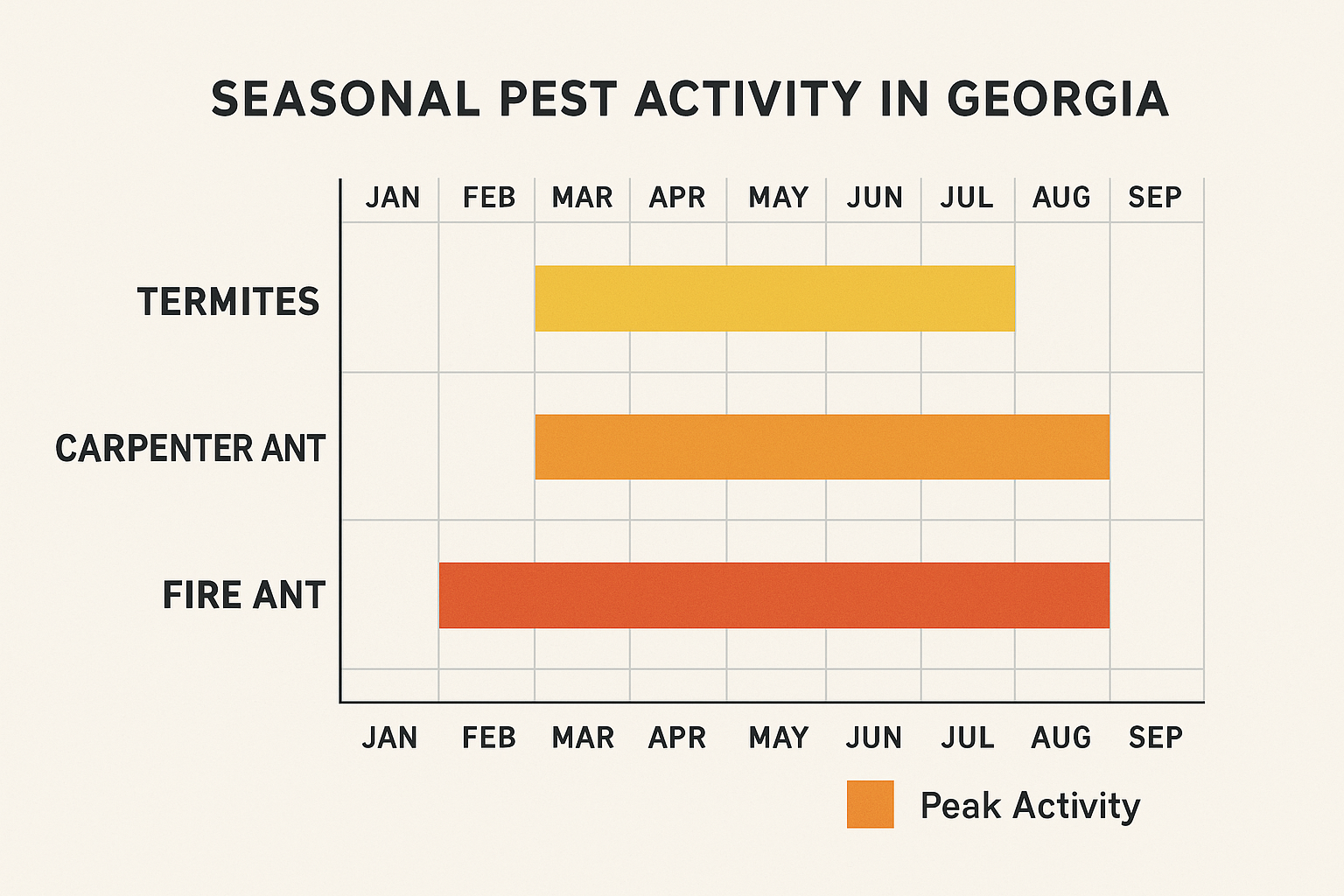
| Pest | Peak Activity (Months) | Dormant / Low Activity (Months) |
|---|---|---|
| Subterranean Termites | Mar – Aug | Nov – Feb |
| Carpenter Ants | Apr – Jun | Dec – Jan |
| Fire Ants | Jul – Sep | Oct – Nov |
Core Termite Treatment Methods Explained
Liquid Soil Barrier
A liquid soil barrier acts like an invisible wall around your home and is a cornerstone of effective termite control Decatur GA professionals recommend. Pest-control technicians mix a termiticide—often a synthetic pyrethroid such as fipronil or imidacloprid—with water and apply it to the soil beneath the foundation, typically at a depth of 12–18 inches. The chemical penetrates the soil matrix and creates a continuous, long-lasting shield that termites cannot cross without dying. Because the barrier is applied to the entire perimeter, it protects both existing colonies and future intruders.
Installation requires trenching around the foundation, sometimes using a specialized injection pump to push the solution into hard‑to‑reach cracks. Once the termiticide dries, it can remain effective for 5 to 10 years, depending on soil composition and exposure to water. Homeowners appreciate the “set it and forget it” nature of this method, especially when paired with regular inspections.
Bait Stations
Bait stations work at the colony level rather than the individual termite. Small, plastic containers are placed strategically in the soil around the property—usually 10 to 15 stations spaced 10–15 feet apart. Inside each station sits a cellulose matrix laced with a slow‑acting active ingredient like hexaflumuron or noviflumuron. Foraging termites feed on the bait, share it with the colony, and ultimately collapse the queen’s reproductive capacity.
Monitoring is key. Technicians check the stations every 2–4 weeks, replace consumed bait, and adjust placement if activity shifts. Bait systems can be integrated with a liquid barrier for added redundancy: the barrier blocks casual foragers while the stations target any that manage to breach the perimeter. This layered approach is popular in Decatur neighborhoods where both subterranean and dry‑wood termites are present.
Localized Wood Treatment
When termite damage is confined to a specific piece of wood—say, a damaged sill or a compromised joist—localized wood treatment is the most cost‑effective fix. Professionals inject or brush a termiticide directly into the affected timber. Common products include borate‑based solutions (e.g., disodium octaborate) and oil‑based termiticides like chlorpyrifos or fipronil emulsions.
Because the treatment is limited to the damaged area, it’s minimally invasive and can often be completed in a single visit. However, it does not protect surrounding wood, so any future infestations must be addressed with a broader strategy. Homeowners should view localized treatment as a repair tool, not a stand‑alone prevention plan.
Pros and Cons at a Glance
| Method | Invasiveness | Typical Cost (Decatur) | Effectiveness |
|---|---|---|---|
| Liquid Soil Barrier | Moderate – requires trenching around foundation | $2,200–$3,500 | High – protects entire perimeter for years |
| Bait Stations | Low – stations placed in soil, minimal disruption | $1,800–$2,800 | High – targets colony, works long‑term with monitoring |
| Localized Wood Treatment | Low – spot‑treatment of specific wood pieces | $150–$500 per affected area | Medium – fixes existing damage but doesn’t prevent new activity |
When to Choose Each Method
Liquid Soil Barrier is ideal for new construction or major renovations where the foundation is exposed. It offers the most comprehensive protection and reduces the need for frequent follow‑ups, making it a solid investment for homeowners who want peace of mind.
Bait Stations shine in established homes where termites have already been detected. Because the stations work from the inside out, they can eradicate a hidden colony without digging up large sections of the yard. Pairing bait with a barrier creates a “double‑lock” system that many Decatur residents trust.
Localized Wood Treatment should be reserved for isolated damage that can be repaired without a full‑scale treatment. It’s perfect for fixing a single termite‑eaten joist or repairing a damaged porch board, but it must be followed by a broader strategy to avoid recurrence.
Pricing Snapshot from HomeYou
According to HomeYou’s Decatur termite treatment cost guide, homeowners typically spend:
- Liquid Soil Barrier: $2,200 – $3,500 for a full‑home application.
- Bait Stations: $1,800 – $2,800, including installation and the first year of monitoring.
- Localized Wood Treatment: $150 – $500 per treated area, depending on the product and wood condition.
These figures reflect the market average for the Decatur area and include labor, materials, and a warranty period. Anthem Pest Control aligns its pricing with these benchmarks while offering transparent estimates and flexible financing options.
Comparing Costs and Protection Durations of Termite Solutions
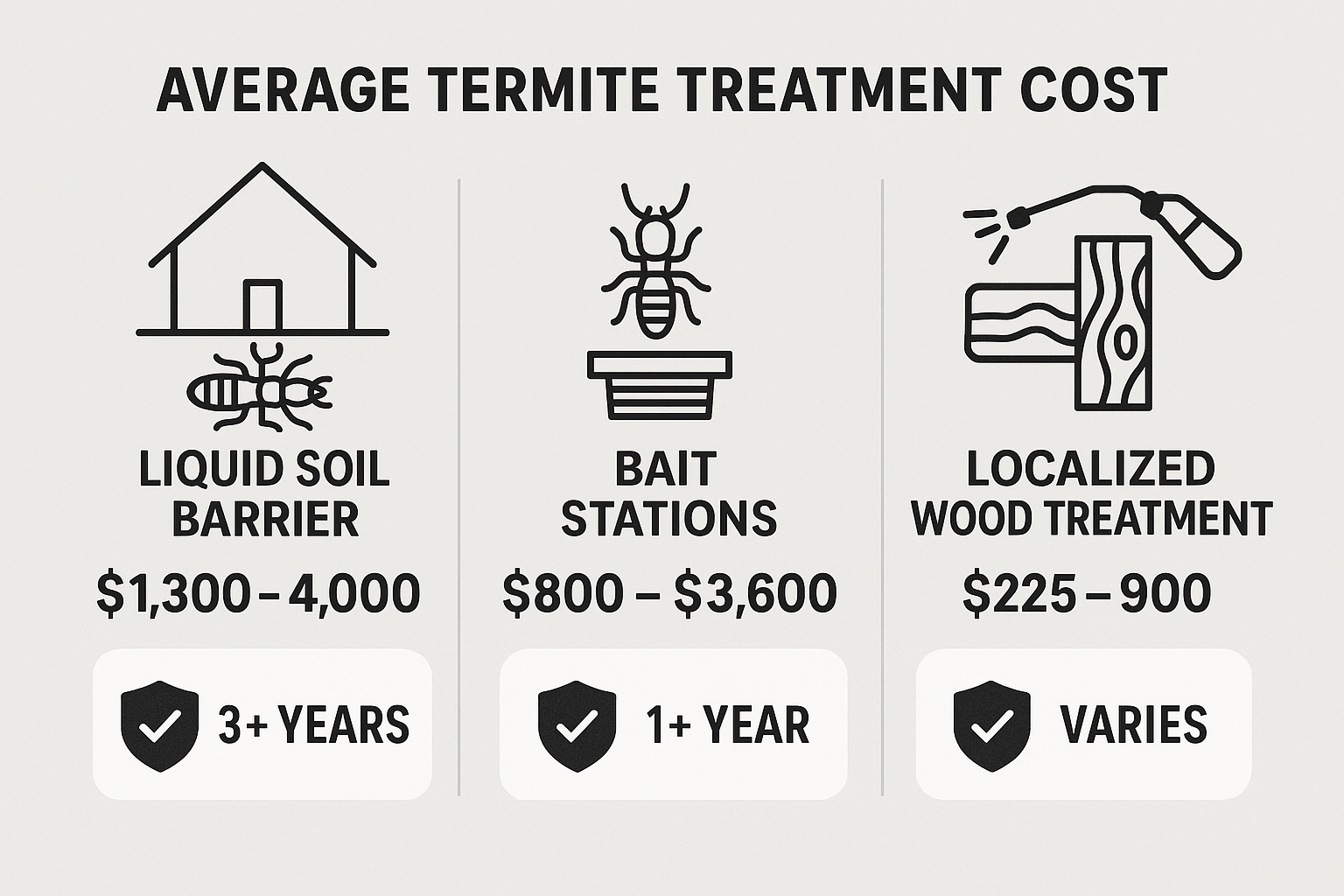
When it comes to safeguarding a Decatur home, the first question most homeowners ask is, “How much will this actually cost, and how long will it protect me?” The three most common termite defenses—liquid chemical barriers, bait‑station systems, and localized wood treatments—each sit in a different price band and offer distinct protection windows. Below is a quick snapshot that lets you line up your budget against the years of peace of mind each option delivers.
| Treatment Type | Average Cost (per home) | Typical Protection Duration |
|---|---|---|
| Liquid Barrier (soil‑applied termiticide) | $1,800 – $3,200 | 5 – 10 years |
| Bait‑Station System (monitor & eliminate colonies) | $1,200 – $2,500 | 2 – 3 years (renewable) |
| Localized Wood Treatment (spot‑treating infested wood) | $300 – $900 per affected area | 1 – 2 years (depends on exposure) |
Liquid barriers are the heavyweight champion of longevity. By saturating the soil around a foundation, they create a continuous, invisible wall that termites cannot cross. Because the chemicals remain active for up to a decade, homeowners often see this as a “set‑and‑forget” solution, especially in areas with high moisture where subterranean termites thrive.
Bait stations, on the other hand, work like a smart trap. Small, discreet stations are placed around the perimeter, each containing a cellulose matrix laced with a slow‑acting growth regulator. Workers carry the bait back to the colony, eventually collapsing it. The system’s advantage is its minimal environmental footprint, but the trade‑off is a shorter guaranteed protection window—typically two to three years—after which the stations need inspection, re‑placement, or topping‑up.
Localized wood treatments are the most targeted approach. When a termite hotspot is identified—say, a rotting sill or a compromised joist—a professional applies a termiticide directly to the wood. This method is cost‑effective for spot repairs, but because it doesn’t address the surrounding soil or colony, the protection period is limited to one or two years, and repeat applications are common.
Hidden Costs to Keep on Your Radar
- Follow‑up inspections: Most providers schedule an annual or bi-annual check as part of ongoing termite control Decatur GA services to confirm that a barrier remains intact or that bait stations are still active. Expect $100–$200 per visit.
- Re‑treatments or station replenishment: After the initial warranty expires, renewing a bait system or re‑applying a barrier can add $300–$800 to the total expense.
- Warranty extensions: Some companies, including Anthem Pest, offer extended warranties for an additional fee—often $150–$400—providing peace of mind beyond the standard coverage period.
These ancillary charges can tip the scales, especially for homeowners who initially choose the lowest‑priced option. A thorough cost‑benefit analysis should factor in the likelihood of repeat visits, the age of the home’s foundation, and any existing moisture issues that could accelerate termite activity.
Transparent Pricing with Anthem Pest
Anthem Pest prides itself on clear, upfront quotes that mirror the industry averages shown above. Whether you opt for a full‑home liquid barrier, a bait‑station network, or a targeted wood treatment, the estimate you receive will break down material, labor, and any optional warranty add‑ons. This transparency helps you compare apples‑to‑apples with other providers and avoid surprise invoices down the line.
Selecting the Right Termite Treatment for Your Property
Factors to Assess Before Choosing a Method
Every home is different, so the most effective termite strategy starts with a quick self‑audit. Ask yourself these five questions:
- Age of the home: Older houses often have hidden wood rot and legacy damage that newer builds lack.
- Construction material: Wood framing, concrete slab, or steel joists each respond to chemicals and barriers in unique ways.
- Extent of infestation: Are you dealing with a few isolated hotspots or a widespread colony that’s already breached multiple structural elements?
- Budget: Liquid barriers, bait stations, and localized spot‑treatments vary widely in upfront cost and long‑term maintenance.
- Willingness for ongoing monitoring: Some solutions, like bait‑based systems, require quarterly checks; others, such as a full‑coverage liquid barrier, are more “set‑and‑forget.”
Decision Checklist: From Home Profile to Treatment Choice
Use the following simple checklist to narrow down the best approach. Tick the boxes that apply, then follow the arrow to the recommended method.
| Scenario | Key Indicators | Suggested Treatment |
|---|---|---|
| New construction or recently renovated | Fresh foundation, minimal wood exposure, budget flexibility | Full‑coverage liquid barrier (pre‑emptive) |
| Limited hotspots (1‑2 active colonies) | Visible mud tubes or damage in isolated areas, moderate budget | Localized spot‑treatment with foam or granules |
| Established infestation across multiple zones | Widespread damage, multiple entry points, larger budget | Integrated approach: liquid barrier + bait stations |
| Historic home with delicate finishes | Preservation concerns, limited chemical tolerance | Targeted bait system with minimal surface applications |
| Homeowner prefers low‑maintenance solution | Willing to invest upfront for long‑term peace of mind | Professional-grade liquid barrier + annual inspection |
Why a Professional Inspection Is Non‑Negotiable
Even the most thorough DIY checklist can miss hidden galleries, underground tunnels, or secondary colonies nesting in crawl spaces. A certified inspector from Anthem Pest uses moisture meters, infrared cameras, and calibrated probes to map exactly where termites are thriving. This data validates the treatment you’ve selected and prevents costly over‑ or under‑treatment.
Professional insight also uncovers secondary risks—such as carpenter ant activity or wood‑decay fungi—that could compromise your chosen termite solution. In short, the inspection turns a guess into a science‑backed plan.
Anthem Pest’s “Safe, Effective, Affordable” Promise in Action
Whatever scenario your checklist points to, Anthem Pest aligns its three‑core promise with your needs:
- Safe: All liquid barriers and bait products are EPA‑registered and applied with precision equipment to protect pets, children, and indoor air quality.
- Effective: Our technicians follow a proven protocol—pre‑treatment moisture control, barrier installation, and post‑treatment verification—to eradicate the colony and keep it from returning.
- Affordable: Transparent pricing means you know exactly what each step costs. For limited hotspots, we offer a “spot‑treat” package that delivers results without the expense of a full‑home barrier.
Because we tailor each plan to the property’s unique profile, you never pay for unnecessary services, and you never compromise on protection.
Next Step: Get Your Free On‑Site Quote
The fastest way to confirm the right treatment is to schedule a complimentary on‑site quote. One of our certified technicians will walk your property, run the inspection checklist, and present a written plan that matches your budget, timeline, and comfort level. Call 877‑371‑8196 or visit anthempest.com to lock in your free evaluation.
Protect Your Home with Expert Termite Services
Detecting termites before they establish a colony, choosing the right time of year for treatment, and selecting a method that matches your home’s construction are the three pillars of effective termite control Decatur GA homeowners need for long-term protection. Early detection lets you address a few hidden mud tubes rather than an entrenched infestation that can compromise structural beams. Seasonal timing matters because termites are most active in the warm, humid months; treating in spring or early summer maximizes product efficacy. Finally, picking a treatment—whether a liquid barrier, bait system, or foam—ensures the solution penetrates where the insects are feeding.
Anthem Pest Control brings that exact level of expertise to every Decatur homeowner. With a nationwide network of certified technicians, the company draws on thousands of successful termite removals to fine‑tune each inspection and treatment plan. Transparency is baked into the process: you’ll receive a detailed estimate before any work begins, so there are no surprise fees. Safety is equally paramount—products are EPA‑approved and applied using industry‑best practices that protect your family, pets, and the surrounding environment. Whether you need a one‑time eradication or an ongoing monitoring program, Anthem tailors the solution to fit your budget without sacrificing effectiveness.
Because termites don’t wait, the best defense is to act now. A quick, no‑obligation inspection from Anthem can pinpoint activity you might have missed and outline the most cost‑effective treatment path. The team works around your schedule, arriving promptly and explaining each step in plain language so you feel confident about the work being done. With transparent pricing displayed up front, you can compare options without hidden charges and choose the plan that matches your home’s specific risk profile.
Key Takeaways for Homeowners
- Early detection stops termites before structural damage begins.
- Spring and early summer are the optimal windows for most treatment types.
- Professional, EPA‑approved solutions provide lasting protection while keeping your family safe.
Take the first step toward peace of mind—let the experts handle the threat before it becomes a costly repair.
Ready to safeguard your home from costly termite damage? Call Anthem Pest Control today at 877-371-8196 for a free, professional quote on termite control Decatur GA homeowners can trust. Our certified technicians will assess your property, explain the best treatment options, and provide transparent pricing—so you can make an informed decision with confidence. Visit Anthem Pest Control to learn more and schedule your inspection.