Understanding Tick Risks in Georgia Yards
Georgia’s warm, humid climate creates an ideal breeding ground for ticks, and homeowners in Holly Springs quickly discover why a yard can feel like a tiny wildlife reserve. Every spring and summer, adult ticks emerge from leaf litter, climb blades of grass, and wait for a passing host. If you spend time outdoors—walking the dog, gardening, or simply playing with the kids—those tiny arachnids can hitch a ride and bring serious health concerns right onto your porch.
Common Tick Species in Georgia
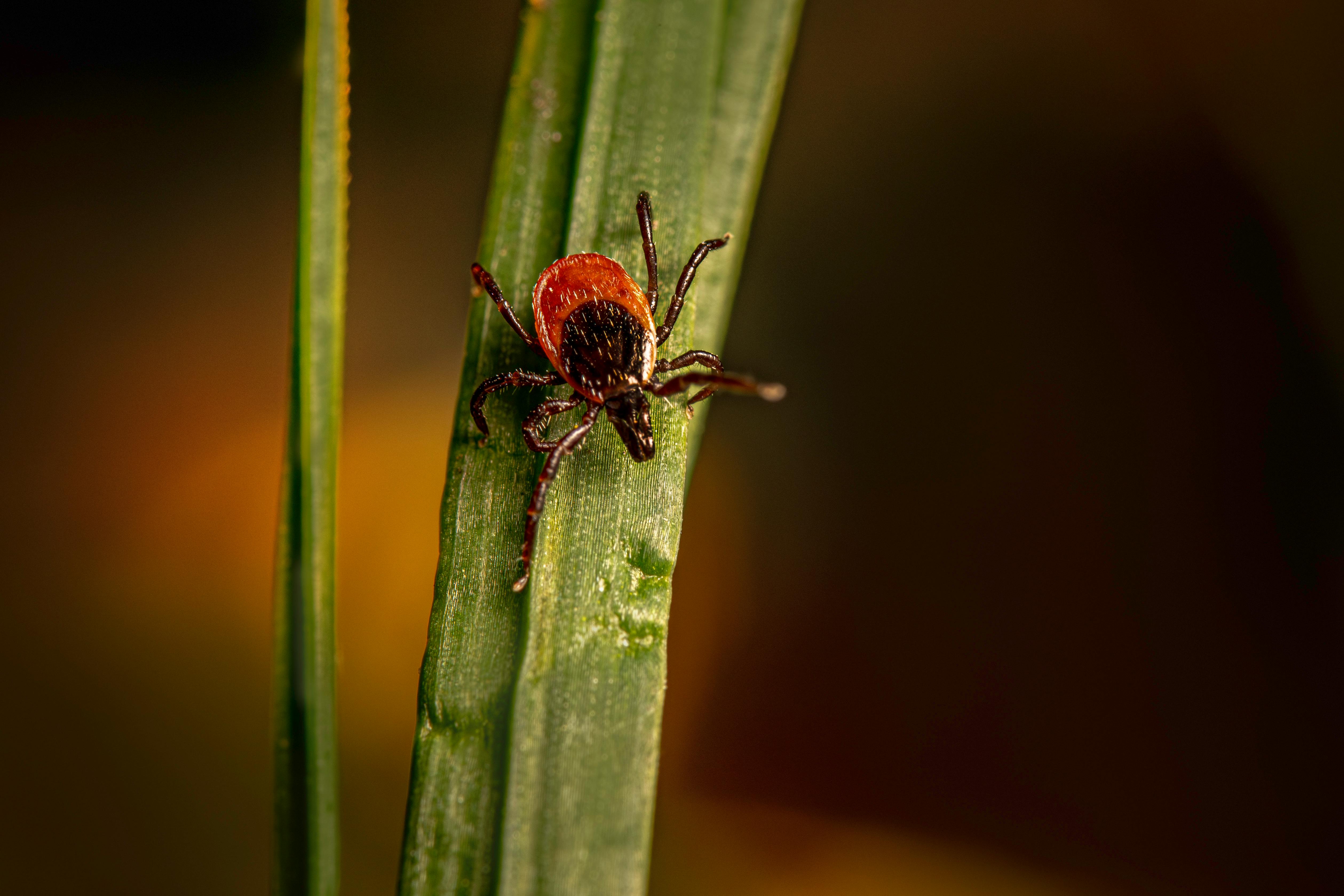
Three species dominate Georgia’s tick population, each with its own preferred hosts and seasonal peaks:
- American dog tick (Dermacentor variabilis) – Frequently found in open, sunny lawns and along fence lines; most active late spring through early fall.
- Lone Star tick (Amblyomma americanum) – Recognizable by the single white spot on adult females; thrives in wooded edges and tall grass, peaking midsummer.
- Black‑legged tick (Ixodes scapularis), also called the deer tick – Prefers shady, moist leaf litter; responsible for the majority of tick‑borne disease cases in the state.
Tick‑borne Diseases You Need to Know
The Centers for Disease Control and Prevention (CDC) tracks more than a dozen illnesses transmitted by ticks in the United States. In Georgia, the most common are:
- Lyme disease – Caused by Borrelia burgdorferi, leading to fever, fatigue, and a characteristic “bull’s‑eye” rash.
- Rocky Mountain spotted fever – A potentially fatal bacterial infection that produces high fever, severe headache, and a spotted rash.
- Ehrlichiosis and anaplasmosis – Both cause flu‑like symptoms, including muscle aches and low platelet counts.
- Southern tick‑associated rash illness (STARI) – Similar to Lyme but generally milder; still requires medical attention.
According to the CDC, Georgia reports thousands of tick‑borne disease cases each year, underscoring why proactive control isn’t a luxury—it’s a health safeguard.
How Ticks Find Their Hosts
Ticks don’t chase you; they practice “questing.” The tiny legs extend from the leaf litter or grass tip, sensing body heat, carbon‑dioxide, and vibrations. When a human or pet brushes past, the tick grabs on and begins to feed. A single bite can last from a few hours to several days, giving pathogens ample time to transfer. Because questing occurs at ground level, any area where you walk barefoot or where pets roam is a potential hotspot.
Homeowner Risk Factors
Not every yard carries the same level of danger. Pay attention to these variables:
- Size of the property – Larger lawns and extensive wooded borders host more wildlife, which in turn supports larger tick populations.
- Presence of wildlife – Deer, raccoons, and opossums are natural tick carriers; frequent sightings increase risk.
- Landscaping choices – Dense, low‑lying vegetation, leaf piles, and mulch create the humid micro‑climate ticks love.
- Pet activity – Dogs and cats that spend time outdoors can bring ticks into the house.
- Water features – Damp areas around ponds or irrigation systems retain the humidity ticks need to survive.
Quick Yard‑Tick Checklist
Use this short list during your monthly yard walk to spot trouble early:
- Inspect grass and leaf litter for tiny, dark specks (ticks are often less than ¼ inch long).
- Check pet bedding, collars, and fur after each outdoor outing.
- Look for clusters of deer or other wildlife activity near fence lines.
- Remove tall grass, prune shrubs, and clear leaf piles at least 3 feet from the home’s foundation.
- Test soil moisture – overly damp areas are prime tick habitats.
Seasonal Tick Activity and When to Act
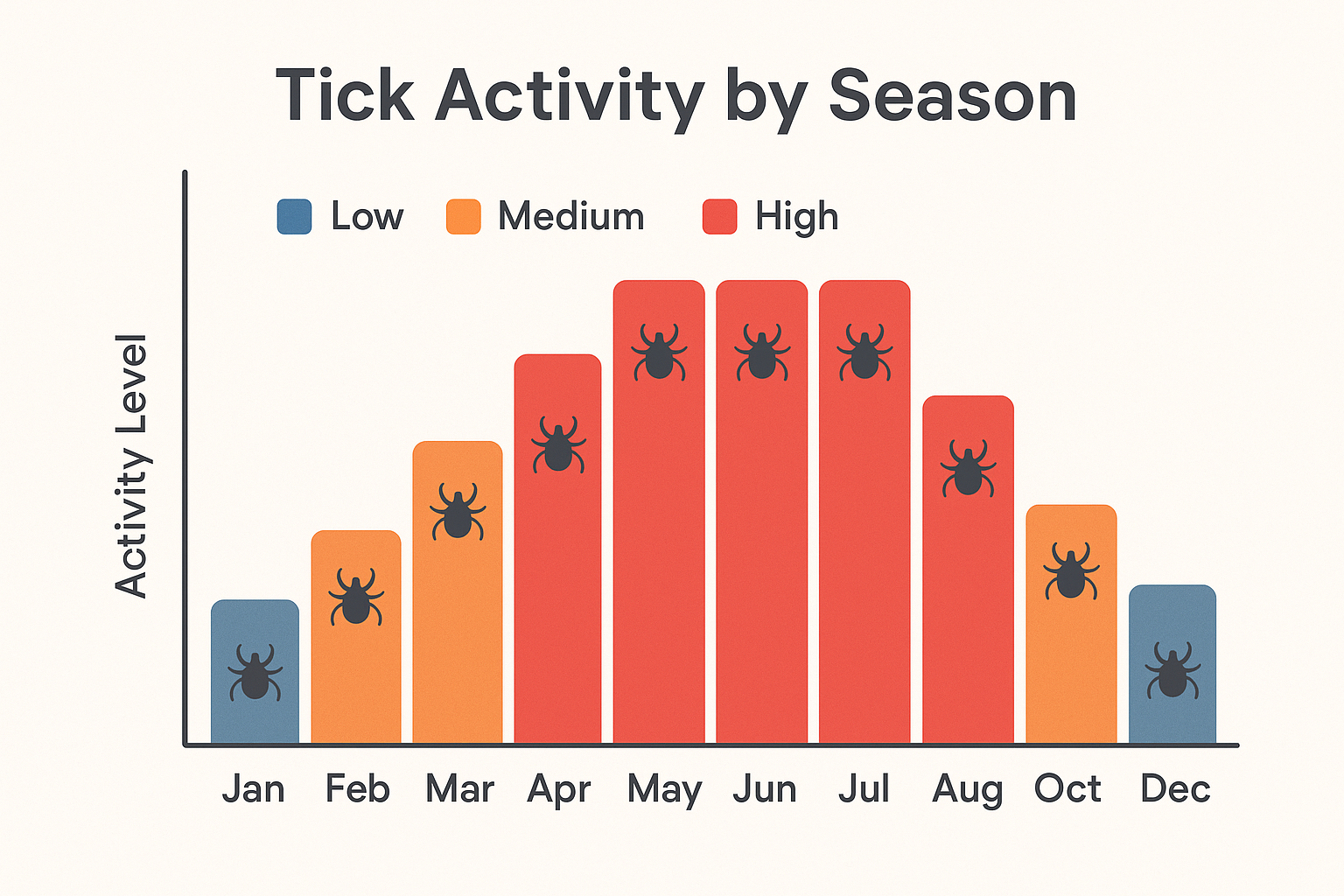
Ticks in Georgia don’t appear at random—they follow a predictable seasonal rhythm. Knowing this pattern lets you intervene before the bugs become a nuisance, saving you time, money, and countless itchy bites.
Understanding the Seasonal Curve
The chart above breaks the year into three risk zones. Low activity runs from November through February, when cooler temperatures keep ticks dormant. Medium activity spans March to early May and returns again in September to early October, as ticks start to quest but haven’t yet reached peak numbers. High activity peaks from late May through August, the period when adult ticks are most aggressive in seeking a host.
Why Ticks Surge in Late Spring & Early Summer
During late spring, nymphs—tiny but hungry—emerge from the leaf litter after a warm spell. By early summer, they mature into adults, dramatically increasing the number of ticks actively searching for blood meals. This is the window when a single untreated yard can become a hotbed for the entire tick population.
Weather’s Role in Tick Activity
Temperature and humidity are the twin drivers of tick behavior. Ticks become most active when daytime highs sit between 70 °F and 85 °F and relative humidity stays above 70 %. These conditions, common from May to August, keep ticks hydrated and motivated to climb onto passing hosts. A sudden dry spell or a cold snap can temporarily suppress activity, but the overall trend remains tied to the warm, moist months.
Action Plan for Homeowners
To stay ahead of the infestation, schedule your inspections and treatments around the seasonal peaks:
- Early‑season inspection (mid‑March): Identify tick habitats—tall grass, leaf piles, and shaded borders.
- First treatment (late March–early April): Apply a perimeter barrier before nymphs become active. This early strike interrupts the life cycle at its most vulnerable point.
- Mid‑season check (late May): Verify coverage and spot‑treat any hot spots that the first round missed.
- Second treatment (late August): Target the fall‑season nymph surge to prevent the next year’s high‑risk period.
- Follow‑up maintenance (monthly through October): Keep grass trimmed, remove leaf litter, and consider tick‑repellent landscaping such as cedar or lavender.
Early‑season treatment is the most cost‑effective strategy because it stops the tick population before it can reproduce. By breaking the life cycle at the nymph stage, you reduce the number of adults that will emerge later in the summer, ultimately lowering the total number of applications needed.
Remember, a proactive schedule—inspection in March, treatment before the first peak, and a follow‑up in late summer—gives you the best chance to keep Holly Springs yards tick‑free all year long.
Professional Tick Control Methods and What to Expect
Common Professional Methods
When you call a licensed pest‑control provider in Holly Springs, you’ll encounter a toolbox of proven techniques. The most frequently used methods include:
- Perimeter sprays: A fine mist of EPA‑approved insecticide is applied along the property’s edges, creating a barrier that kills ticks before they can cross onto your lawn.
- Granular applications: Small, slow‑release granules are spread across the yard and then watered in. The granules dissolve, delivering a residual treatment that remains active for weeks.
- Host‑targeted treatments: Pets and livestock receive a spot‑on or collar product that kills ticks on contact, reducing the chance of re‑infestation from animals that wander through the yard.
- Barrier sprays: Similar to perimeter sprays but applied more broadly across high‑traffic zones—play areas, garden beds, and walking paths—where homeowners spend the most time.
What Happens During a Service Visit
A typical tick‑control appointment follows a predictable, homeowner‑friendly workflow:
- Inspection: The technician walks the property, identifying hot spots such as tall grass, leaf litter, and shaded borders where ticks thrive.
- Treatment plan discussion: Based on the inspection, the specialist explains which methods will be used, why they’re chosen, and how they fit your budget.
- Safety briefing: You’ll receive guidance on keeping children and pets away from treated areas for the recommended time—usually 2‑4 hours for sprays and 24‑48 hours for granules.
- Application: Using calibrated equipment, the technician applies the chosen products, ensuring even coverage and adhering to EPA label directions.
- Cleanup & documentation: Treated zones are marked, a service report is left for your records, and any questions you have are answered on the spot.
EPA‑Approved Products and Safety Considerations
All products used by Anthem Pest Control are registered with the U.S. Environmental Protection Agency and listed on the agency’s EPA Tick Control page. These formulations have undergone rigorous testing for efficacy and human health safety. Technicians wear personal protective equipment (gloves, goggles, and respirators when needed) and follow strict application protocols to protect both the environment and your family.
Fogging and Yard Treatment in Action

Fogging is a rapid‑deployment method that disperses a fine aerosol over dense vegetation. While not a stand‑alone solution, fogging can quickly reduce tick populations in heavily infested zones before a more lasting granular or spray treatment is applied. The image above shows a certified technician using a low‑volume fogger to target a backyard garden, a common high‑risk area for tick bites.
Post‑Treatment Monitoring and Quarterly Maintenance
Even the best‑applied treatment will lose potency over time as rain, sunlight, and soil microbes break down the chemicals. In Holly Springs’ humid climate, a quarterly maintenance schedule is the gold standard for high‑risk properties—especially those with wooded borders or frequent wildlife activity.
- Follow‑up inspections: Every three months, the technician revisits the site, checks for new tick activity, and re‑applies treatment where needed.
- Resident reporting: Homeowners are encouraged to note any tick sightings between visits; this data helps fine‑tune future applications.
- Integrated prevention: Alongside chemical barriers, we recommend landscaping tweaks—like trimming tall grass, removing leaf piles, and creating a sun‑exposed buffer zone—to make the yard less inviting to ticks.
By understanding the methods, the service flow, and the importance of ongoing monitoring, you can set realistic expectations and enjoy a yard where you feel safe from tick‑borne threats.
Pricing Overview and DIY vs Professional Options
Understanding the numbers behind tick control makes budgeting a lot less stressful. Below is a quick‑look infographic that breaks down the typical line items you’ll encounter in Holly Springs, Georgia. The first column shows the inspection fee—the cost of a certified technician walking your yard, identifying hot spots, and recommending a treatment plan. The second column lists the one‑time treatment price, which covers the initial application of an EPA‑approved acaricide. The third column details the quarterly maintenance charge, reflecting the recurring visits needed to keep ticks at bay throughout the tick season. Finally, the fourth column presents the cost of a DIY kit, which usually includes a spray bottle, applicator, and instructions for homeowners to treat the property themselves.
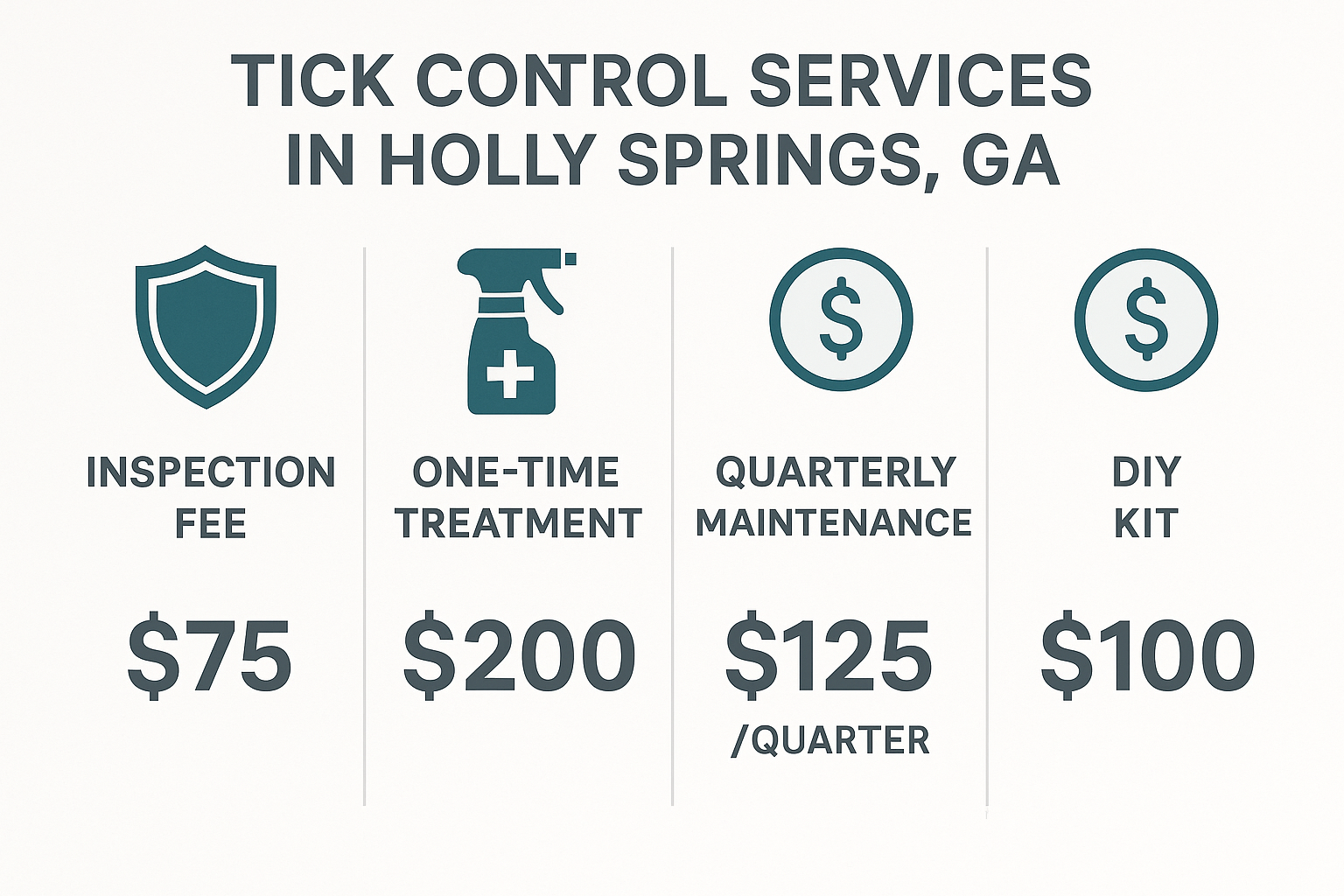
According to the National Pest Management Association (NPMA), the average cost for a professional tick treatment in the Southeast falls between $150 and $250 for a one‑time service, with quarterly maintenance adding roughly $100–$150 per visit. In contrast, a typical DIY kit ranges from $30 to $70, but the efficacy can vary dramatically based on application technique and product quality.
Pros and Cons of DIY Kits
- Lower upfront cost: You can get started for under $50, which is appealing for tight budgets.
- Flexibility: Apply the product on your own schedule, especially after heavy rain.
- Variable efficacy: Success hinges on proper coverage, correct dosage, and thorough re‑application.
- Safety concerns: Homeowners may lack training on protective gear, increasing exposure risks.
- Limited warranty: Most kits offer no guarantee if ticks persist, leaving you to troubleshoot on your own.
Advantages of Professional Services
- Expert application: Trained technicians know how to target tick habitats, such as leaf litter and shaded borders.
- Guaranteed coverage: Many companies, including Anthem Pest Control, back their work with a satisfaction guarantee.
- Safety first: Professionals use EPA‑approved products with proper personal protective equipment, reducing health risks for you and your family.
- Integrated pest management: Treatment is often paired with lawn care advice, reducing future infestations.
- Time savings: You avoid the learning curve and the physical labor of spraying an entire yard yourself.
Budgeting Tips for Tick Control
- Bundle services: Combine tick treatment with mosquito or lawn care packages to secure a 10‑15% discount.
- Seasonal promotions: Look for spring‑time specials; many providers offer reduced rates before the peak tick season.
- Financing options: Some pest companies provide low‑interest payment plans, spreading the cost over several months.
- Preventive maintenance: Regular yard upkeep—mowing, leaf removal, and proper irrigation—lowers the frequency of professional visits, saving money long‑term.
- Ask for a detailed quote: A transparent breakdown helps you compare apples‑to‑apples and avoid hidden fees.
Take the Next Step with Anthem Pest Control
Georgia homeowners face a ticking clock when it comes to ticks. The warm spring months bring a surge in tick activity, and every bite carries a risk of Lyme disease, Rocky Mountain spotted fever, or other serious illnesses. Ignoring the threat can lead to costly medical bills and endless backyard battles. Acting now means you lock in a season‑long shield that protects your family, pets, and outdoor spaces without breaking the bank.
Why professional tick control matters
- Seasonal risk spikes – Ticks are most active from March through September; a pre‑emptive treatment stops the infestation before it starts.
- Health‑first protection – EPA‑approved products target ticks while minimizing exposure to children and pets.
- Cost‑effective peace of mind – One comprehensive service costs far less than repeated DIY sprays or a single emergency visit after an infestation.
Anthem Pest Control delivers confidence
Our technicians are certified in Georgia’s specific tick species and use only EPA‑registered solutions that are proven safe for homes and lawns. We pride ourselves on transparent pricing—what you see in the quote is what you pay, with no hidden fees. Our treatment plans are customized after a thorough on‑site inspection, ensuring every corner of your property receives the right level of protection.
Schedule your free on‑site inspection
Ready to take control? Contact us for a complimentary inspection and a personalized treatment plan tailored to your yard’s size, landscaping, and pet situation. The inspection is completely free, and there’s no obligation to proceed.
Call us at 877‑371‑8196 or visit Anthem Pest Control to request your free quote today. Our friendly team is standing by to answer your questions and schedule a visit at a time that works for you.
Take the next step toward a tick‑free summer—let Anthem Pest Control handle the hard work while you enjoy your outdoor spaces with confidence.