Understanding Moth Threats in Residential Homes

Moths might seem harmless, but in many U.S. households they’re silent destroyers. The EPA’s moth‑control guide warns that several species can quickly turn a tidy pantry, a cozy carpet, or even a structural component into a costly repair job. For homeowners in Holly Springs, Georgia, the threat is especially real because the region’s warm, humid climate creates an ideal breeding ground for these pests.
What Damage Do Moths Actually Cause?
- Pantry (food) moths – Their larvae spin silken tunnels through grains, cereals, nuts, and dried fruit. By the time you notice a few clumped kernels, the infestation may have contaminated an entire bag, rendering the food unsafe to eat.
- Webbing (clothes) moths – These pests target natural fibers such as wool, silk, and cashmere. Their caterpillars chew tiny holes in sweaters, blankets, and upholstery, leaving behind a patchy, weakened fabric that loses both value and comfort.
- Carpet (clothes) moths – While they prefer textiles, some species will also gnaw at carpet backing and even wooden subfloors if food sources are scarce, leading to structural concerns over time.
Each type of moth attacks a different part of your home, but the end result is the same: unexpected replacement costs and the frustration of dealing with a hidden infestation.
Why Holly Springs, GA, Needs to Pay Attention
Georgia’s pest‑management resources highlight that the Southeast sees higher moth activity than many other regions. The combination of mild winters, abundant vegetation, and frequent indoor humidity spikes—especially during the spring and summer months—means that moths can complete multiple life cycles in a single year. Neighbors in nearby towns such as McDonough and Locust Grove report similar patterns, making early awareness a community‑wide advantage.
The Cost of Waiting
Early detection is the single most cost‑effective strategy. A small moth population can be eradicated with targeted, low‑impact treatments. Letting the problem grow, however, often forces homeowners to replace pantry staples, re‑upholster furniture, or even repair damaged subflooring. Those expenses quickly eclipse the modest price of a professional inspection and treatment plan.
What Comes Next?
Understanding the threat sets the stage for practical action. In the sections that follow, we’ll walk you through:
- How to identify the specific moth species lurking in your home.
- The best seasonal timing for inspections and interventions.
- Effective treatment options—from DIY traps to EPA‑approved professional applications.
- When and why calling a local expert like Anthem Pest Control can save you time, money, and stress.
By recognizing the signs early and following a clear, step‑by‑step plan, Holly Springs homeowners can keep their kitchens, closets, and living spaces moth‑free without breaking the bank.
Identifying Common Household Moth Species and Warning Signs

Before you call a professional, the first step in moth control is knowing which species you’re dealing with. The three indoor culprits—pantry moths, webbing moths, and carpet (clothes) moths—look different, eat different things, and leave distinct clues.
Pantry Moth (Indian Meal Moth)
Adult appearance: Small, tan‑brown moths with a wingspan of about ½ inch and two distinctive copper‑colored spots on each forewing. They flutter close to food storage areas and are most active at night.
Larvae and damage: The caterpillars are creamy‑white, about ¼ inch long, and hide inside dry goods. As they feed, they spin thin, silken webs that bind grains, cereals, nuts, and dried fruit together. If you open a box of flour and see a webbed mess or tiny holes, you’re likely looking at pantry moth activity.
Webbing Moth (Family Tineidae)
Adult appearance: These moths are usually gray‑brown, with fringed wings that give them a “tattered” look. They are less attracted to light than pantry moths, preferring dim corners of closets and storage rooms.
Case‑making larvae: The larvae construct portable cases from bits of fabric, hair, and their own silk. They chew on natural fibers—wool, silk, feathers, even fur—leaving irregular holes and a fine, powdery frass (insect droppings). Small, silvery‑gray tubes you find in a sweater are a dead giveaway.
Carpet Moth (Clothes Moth)
Adult appearance: Similar in size to the webbing moth but with a more uniform beige coloration and a subtle, wavy pattern on the wings. They are often seen fluttering near dark, undisturbed areas.
Damage pattern: These moths specialize in keratin‑rich materials—wool blankets, silk curtains, and stored garments. Look for round, clean‑edged holes, especially near seams, and a faint, silky web lining the interior of the fabric.
Visual Cues to Spot Early
- Egg clusters: tiny, off‑white specks on pantry shelves or inside fabric folds.
- Silken tubes or webs: thin strands that bind food particles or form protective cases for larvae.
- Frass: fine, pepper‑like droppings near damaged material.
- Adult flight patterns: pantry moths tend to hover near light sources; webbing and carpet moths stay low and hidden.
DIY Inspection Checklist
Run through this quick audit once a month, especially after a season change.
- Kitchens: Pull out pantry items, check for webbing, broken grains, or tiny larvae. Inspect the underside of containers and the corners of cabinets.
- Closets & dressers: Examine wool sweaters, silk scarves, and stored blankets for holes, silken tubes, or case‑making larvae.
- Basements & storage rooms: Look at stored fabrics, pet bedding, and any cardboard boxes for egg clusters or frass.
- Vacuum & clean: After inspection, vacuum all surfaces and immediately discard any contaminated food or fabric.
When to Suspect an Infestation
A single adult moth caught in a light trap is usually harmless—it’s often just a stray visitor. However, if you notice any of the following, treat it as an active infestation:
- Multiple adults flying or resting in the same area.
- Visible webs, silken tubes, or case‑making larvae.
- Consistent damage to stored food or fabrics over several weeks.
When the signs stack up, it’s time to bring in a professional. For a deeper dive into species specifics and pricing guidelines, visit the NPMA pricing & species info page.
Seasonal Moth Activity and Timing for Treatment
Understanding the rhythm of moth life cycles is the first step toward keeping your closets, pantry, and attic moth‑free. In Holly Springs, GA, temperature and humidity act like a metronome: warm, moist days accelerate egg hatch and larval growth, while cool, dry periods slow everything down. By syncing your prevention and treatment plan with these natural peaks, you can strike before a small infestation balloons into a costly problem.
Life‑Cycle Snapshot
Moths progress through four stages—egg, larva (caterpillar), pupa, and adult. Eggs are laid on or near a food source (fabric, grain, dried fruit). Once the larvae emerge, they feed voraciously for weeks, then spin a cocoon to pupate. Adults live only long enough to reproduce, typically a few weeks, but they can travel several miles to find new homes. The speed of each stage hinges on ambient temperature (optimal 70‑85 °F) and relative humidity (60‑80%).
Month‑by‑Month Activity Chart
| Month | Life‑Stage Dominant | Activity Level |
|---|---|---|
| January‑February | Overwintering pupae | Very low |
| March‑April | Egg hatch & early larvae | Rising |
| May‑June | Rapid larval feeding | High |
| July‑August | Peak adult emergence | Peak |
| September‑October | Late‑season larvae & pupae | Declining |
| November‑December | Diapause (dormant) pupae | Very low |
How Holly Springs Weather Drives Indoor Infestations
The Gulf Coast’s humid subtropical climate means that from late March onward, indoor humidity often mirrors outdoor levels, creating a perfect breeding ground for pantry and clothing moths. Summer thunderstorms can push indoor humidity above 70 %, accelerating larval development inside stored grains, cereals, and woolen garments. Conversely, the cooler, drier winter months force most moths into diapause, giving you a natural lull to conduct deep‑cleaning and preventive measures.
Why Early‑Spring Inspections Pay Off
Scheduling a professional inspection in early March lets technicians locate hidden egg clusters before larvae start feeding. A pre‑emptive treatment—typically a targeted residual spray or pheromone trap—creates a barrier that reduces the first generation of adults in May. Follow‑up treatments after the summer peak (late August) mop up any survivors that escaped the initial barrier, ensuring the next season starts with a clean slate.
Practical Homeowner Tips for High‑Risk Months
- Seal food containers: Transfer grains, flour, and dried fruit into airtight glass or heavy‑wall plastic jars.
- Rotate clothing: Air‑out seasonal wardrobes and launder fabrics before storing them in sealed garment bags.
- Natural repellents: Place cedar blocks, lavender sachets, or mothballs (used sparingly) in closets and pantry corners during May‑August.
- Control moisture: Run dehumidifiers or air conditioners to keep indoor relative humidity below 60 %.
- Regular vacuuming: Focus on baseboards, under furniture, and pantry shelves to remove stray eggs and larvae.
Visual Aid: Seasonal Activity Overview
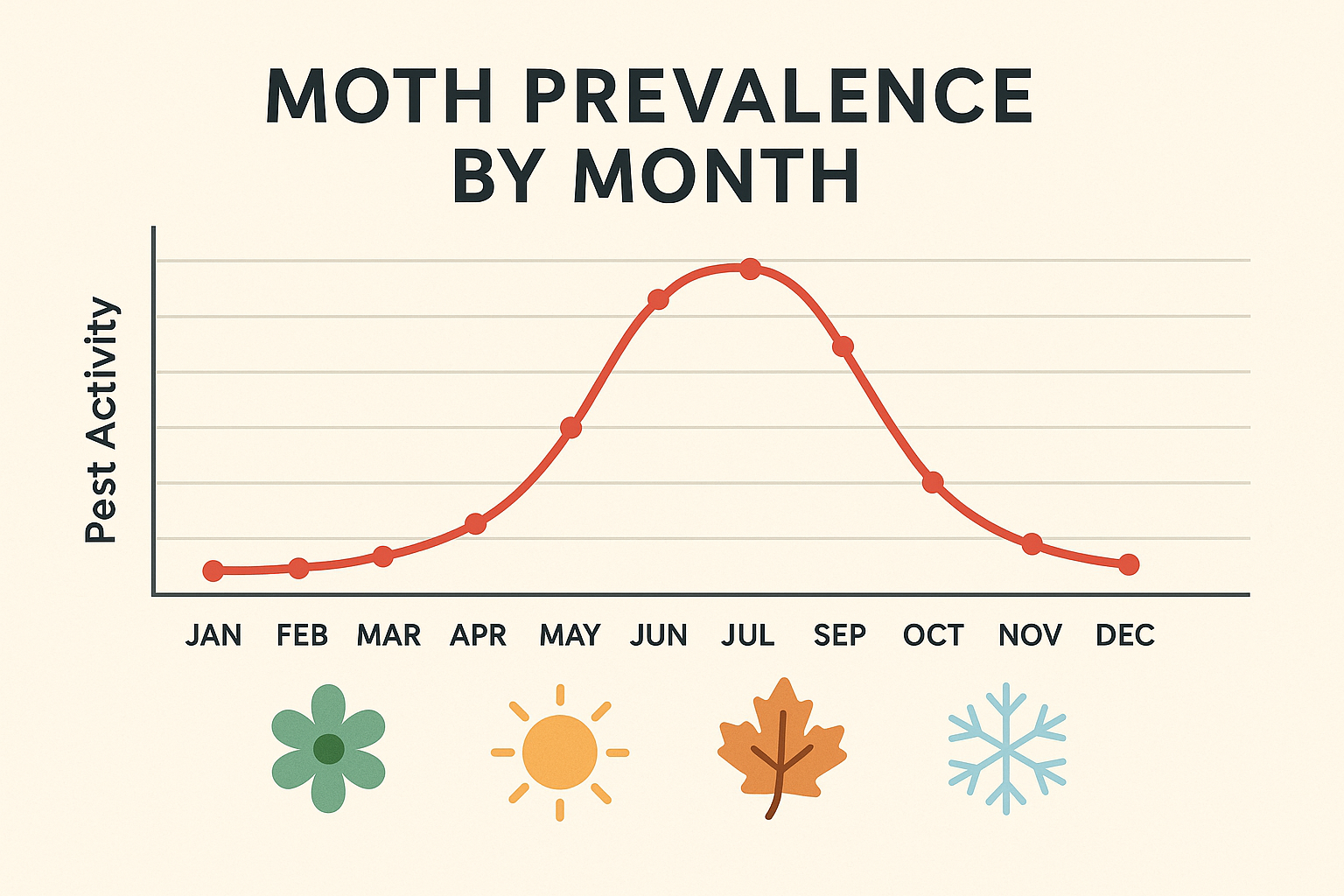
For a deeper dive into state‑wide best practices, consult Georgia’s agricultural pest‑management guidance here. By aligning your prevention schedule with the local climate and moth life cycle, you’ll protect your home while keeping treatment costs predictable and low.
Moth Control Methods, Pricing, and What to Expect
Non‑chemical Strategies You Can Start Today
Before reaching for a spray, many homeowners find success with simple sanitation and monitoring. Removing food sources, storing fabrics in sealed containers, and vacuuming regularly cuts down on larvae and eggs. Pheromone dispensers and light‑attracted traps act as early warning systems, letting you spot an infestation before it spreads. These low‑cost tactics are safe for kids and pets, and they lay the groundwork for any follow‑up treatment.
Chemical Options: Sprays, Dusts, and Spot‑Treatments
When moths have taken hold, EPA‑registered sprays and dusts become the most reliable solution. Professional‑grade products can be applied as a perimeter mist, a targeted spot‑treatment on closets, or a dusting in wall voids where larvae hide. Safety is a top priority: technicians wear protective gear, and products are chosen for minimal residue and low toxicity to humans and animals. Always follow label instructions and ventilate the area after application.
What a Professional Service Looks Like
Anthem Pest Control follows a three‑step process that removes moths and prevents a comeback. First, a certified technician conducts a thorough inspection, identifying hotspots and potential entry points. Next, a customized treatment plan is drafted—combining chemical applications with mechanical controls like traps. Finally, a follow‑up visit ensures the population is eradicated and any residual eggs are dealt with, giving you peace of mind.
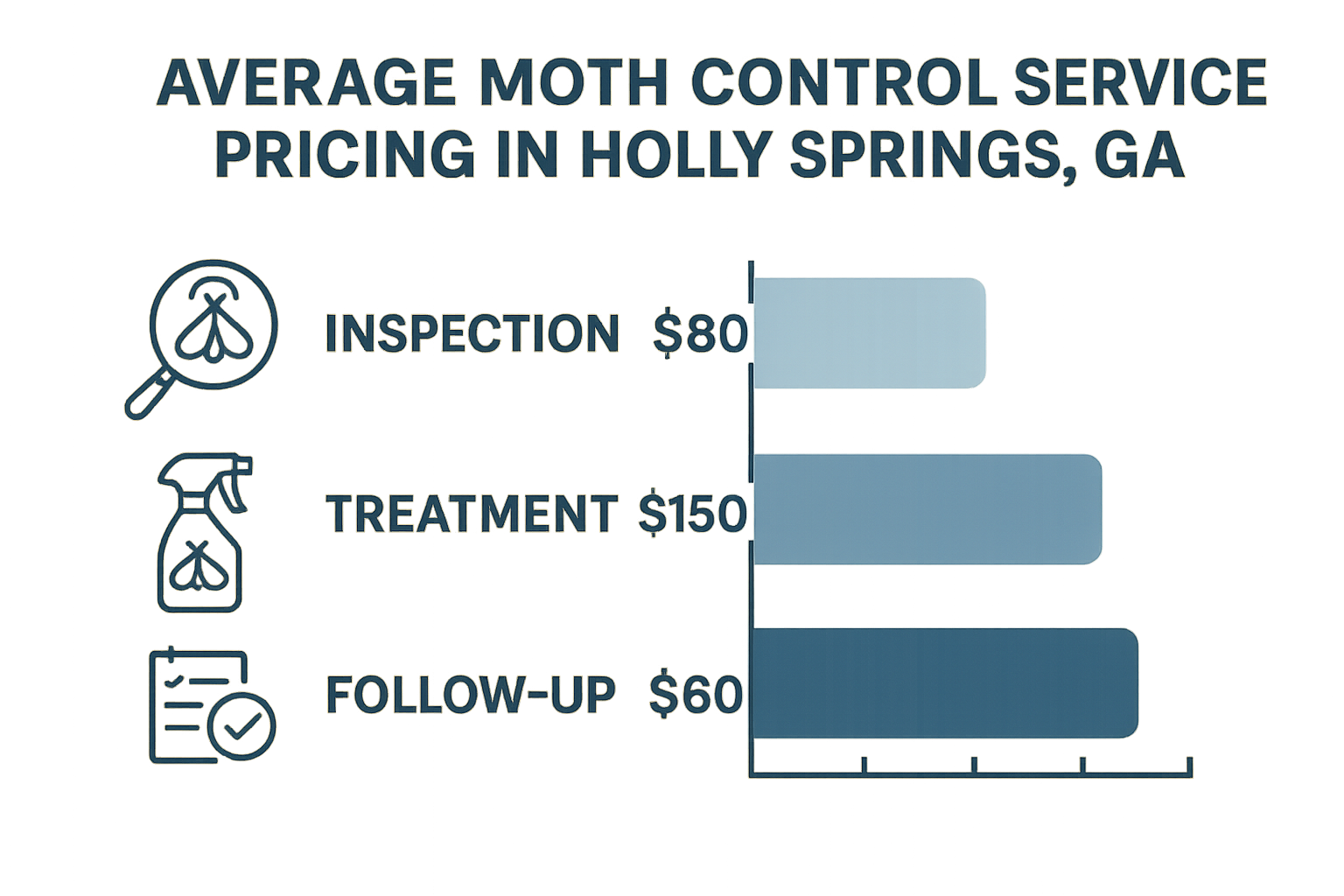
Pricing Breakdown for Holly Springs, GA
| Service | Average Cost |
|---|---|
| Initial Inspection | $80 |
| Primary Treatment | $150 |
| Follow‑up Visit | $60 |
These figures are based on local market data and the NPMA pricing database (NPMA pricing data). Anthem Pest Control mirrors this transparent structure, so you’ll never encounter hidden fees.
DIY vs. Professional: Cost and Effectiveness
- DIY kits – $30‑$80 for sprays or traps. Immediate expense is low, but repeated applications are often needed, and hidden infestations can persist.
- Professional service – $290 total (inspection, treatment, follow‑up). The upfront cost is higher, yet the comprehensive approach eliminates the entire life cycle, reducing the chance of re‑infestation for up to a year.
- Long‑term value – Professionals use integrated pest management, combining chemicals with habitat modification. Homeowners who stick with DIY may spend more over time due to recurring purchases and missed hotspots.
Anthem Pest Control’s Transparent Pricing and Guarantees
Anthem stands out by quoting the full $290 package upfront, with no surprise add‑ons. Their service guarantee includes a free re‑treatment if moth activity resurfaces within 30 days, reinforcing confidence in the result. Because the company tailors each plan to the specific layout of your home, you receive exactly the amount of product needed—no waste, no over‑application.
Quick Visual Reference
Protect Your Home with Professional Moth Control
When it comes to moths, catching the problem early, treating at the right season, and using the correct method can mean the difference between a quick fix and a full‑blown infestation. Early identification lets you target the larvae before they spin new webs in your closets, attic, or pantry. Seasonal timing—usually late spring through early fall in Holly Springs—aligns with the moth life cycle, ensuring that treatments hit the most vulnerable stage. And proper, professionally applied treatments seal cracks, treat hidden spaces, and prevent future generations from taking root.
Partnering with a certified, locally based pest‑control team adds a layer of confidence you can’t get from DIY kits. Anthem Pest Control technicians know the quirks of Holly Springs homes—whether it’s the historic woodwork of older neighborhoods or the newer, tightly sealed constructions. Their training guarantees that every spray, bait, or structural treatment follows state‑approved safety protocols, protecting your family, pets, and prized possessions while eradicating the moth threat.
That’s why we invite you to schedule a free, no‑obligation inspection. One of our experts will walk through your home, pinpoint any early signs of moth activity, and tailor a treatment plan that fits your budget and timeline. There’s no pressure to sign up on the spot—just a clear, honest assessment that lets you decide what’s best for your household.
Give us a call at 877‑371‑8196 or visit our website to book your inspection today. Our friendly staff is ready to answer any questions you have about moth control, pricing, or preventative measures.
At Anthem Pest Control, we’re committed to delivering safe, effective, and affordable solutions that protect your home year after year. Whether you need a one‑time eradication or an ongoing prevention program, our goal is simple: keep your living spaces moth‑free so you can enjoy peace of mind without breaking the bank. Our technicians stay up‑to‑date with the latest integrated pest‑management techniques, ensuring you get the most modern, environmentally responsible service available.