Recognizing Earwigs in Your Home

Earwigs are often the unseen guests that show up when the lights go out. Biologically, they belong to the order Dermaptera and are easily spotted by their elongated, flattened bodies that range from 1 to 2 inches long. The most distinctive feature is the pair of forceps‑like pincers (cerci) at the rear of their abdomen, which they use for defense, mating rituals, and navigating tight spaces. Most earwigs are nocturnal, preferring the cool, damp hours after sunset to scavenge for food and seek shelter.
Where You’ll Find Them Indoors
In a typical Holly Springs home, earwigs gravitate toward areas that stay moist and dark. Common indoor hotspots include:
- Kitchens – especially under sinks, behind appliances, and near food crumbs.
- Bathrooms – around showers, tubs, and any leaky pipes.
- Basements and crawl spaces – where humidity levels are higher.
- Wooden structures – attics, window frames, and door jambs that can retain moisture.
These locations provide the humidity earwigs love, making them ideal staging grounds for a small indoor population.
Harmless vs. Potentially Damaging Species
Not all earwigs are troublemakers. The majority, like the common Forficula auricularia, are harmless scavengers that feed on decaying plant matter, mold, and even other insects. However, a few species—particularly the European earwig—can chew on tender seedlings, ornamental plants, and, in rare cases, soft wood or fabric. While they rarely cause structural damage, their feeding can stress garden beds and indoor potted plants, prompting homeowners to act sooner rather than later.
Common Misconceptions
Many homeowners mistake earwigs for cockroaches or beetles because of their dark color and quick movements. This confusion can lead to unnecessary panic or, conversely, to ignoring a growing infestation. Another myth is that earwigs are aggressive bite‑ers; in reality, they only bite when provoked, and the bite feels like a mild pinch. Early identification helps you decide whether a simple sanitation routine will suffice or if professional intervention is warranted.
Quick Visual Cue Checklist
- Length: 1–2 inches, slender, and slightly flattened.
- Color: Dark brown to reddish‑black.
- Signature pincers at the abdomen’s tip.
- Active at night; may be found near lights.
- Preference for damp, hidden spots.
Spotting these clues early can prevent a small group from turning into a noticeable nuisance. If you notice earwigs regularly appearing in kitchens, bathrooms, or basements, it’s a sign that moisture is accumulating somewhere in your home. Addressing the source—fixing leaks, improving ventilation, and sealing entry points—combined with a targeted treatment plan from Anthem Pest Control, will keep your home earwig‑free without breaking the bank.
Signs of an Earwig Infestation and Potential Damage
Visible signs you can’t ignore
Earwigs are most active at night, so you may first notice them crawling out of sinks, under kitchen cabinets, or along baseboard cracks when the lights come on. A few live insects are a warning, but a steady stream of dead earwigs near drains, window sills, or indoor lighting is a clear indicator that a colony has taken up residence nearby. Homeowners often mistake these sightings for occasional visitors; however, repeated encounters suggest a breeding population that can quickly expand.
Indirect clues that point to a hidden problem
Even when you don’t see the bugs themselves, earwigs leave unmistakable evidence. Look for silky, oval‑shaped egg cases tucked in damp corners, behind appliances, or in garden mulch. Shed skins—tiny, translucent exoskeletons—are another tell‑tale sign of an active molt cycle. In the garden, you may spot tiny bite marks on tender seedlings or a thin, ragged edge on rose petals. These subtle hints often appear before a full‑blown infestation becomes obvious.
Structural damage – what earwigs can chew
Although earwigs are not as destructive as termites, they do feed on a variety of organic materials. In homes with moisture problems, they will gnaw on soft wood, damaged drywall, and even insulation fibers. Over time, this chewing creates tiny tunnels that weaken structural components, especially in areas where water has already compromised the material. If you discover frayed insulation or small, clean‑cut holes in wooden trim, it’s worth inspecting for earwig activity.
Garden impact – protecting your plants
In the yard, earwigs become unwelcome guests to seedlings, roses, and vegetable crops. They prefer the soft tissue of young plants, feeding on leaves, buds, and fruit. While a single earwig rarely devastates a mature rose bush, a large group can strip foliage from seedlings, stunting growth and opening the door to secondary diseases. Gardeners who notice wilted leaves or irregular bite patterns should consider earwig monitoring before the damage spreads to the entire plot.
For a deeper scientific perspective, see the University of Georgia Extension study on earwig behavior and control methods: UGA Extension Publication C1234. This research confirms that early detection of both visible and indirect signs dramatically reduces the need for costly structural repairs and extensive garden remediation.
DIY Earwig Control Methods

Sanitation: The First Line of Defense
Earwigs thrive in damp, food‑rich environments. Start by removing any exposed food crumbs, pet kibble, or fallen fruit from countertops, floors, and pet feeding stations. Next, address moisture sources: fix leaky faucets, improve kitchen and bathroom ventilation, and use a dehumidifier in basements or crawl spaces. Finally, seal gaps around windows, doors, and utility penetrations with caulk or weather‑stripping to block their entry points.
Physical Traps You Can Build in Minutes
- Rolled newspaper trap: Roll a newspaper into a tight cylinder, secure both ends with rubber bands, and place it in a dark corner. Earwigs will hide inside; check the trap daily and dispose of the contents.
- Sticky traps: Purchase inexpensive double‑sided sticky pads from a hardware store. Position them near known travel routes—under sinks, behind appliances, or along baseboards—to capture wandering earwigs.
- Homemade pitfall trap: Fill a shallow dish with a mixture of water and a few drops of dish soap. Bury the rim flush with the floor so earwigs fall in and cannot climb out.
Natural Repellents That Won’t Harm Your Family
When you prefer chemical‑free solutions, these three options work well:
- Diatomaceous earth (DE): Sprinkle food‑grade DE around entry points, under potted plants, and along baseboards. The microscopic silica particles abrade the earwigs’ exoskeleton, causing dehydration.
- Neem oil: Mix one tablespoon of neem oil with a quart of water and a few drops of mild dish soap. Spray the solution in cracks, crevices, and around outdoor lighting where earwigs gather.
- Citrus spray: Combine equal parts white vinegar and water, add the zest of one lemon, and let it steep for 24 hours. Strain and pour into a spray bottle; apply to door frames and windowsills. The strong citrus scent repels earwigs without leaving a toxic residue.
Chemical Options for the Confident DIYer
If you’re comfortable handling low‑toxicity products, look for EPA‑registered insecticidal sprays labeled for “earwigs” or “general indoor insects.” Apply these sprays to cracks, voids, and the undersides of outdoor decks, following the label’s safety instructions. For a targeted approach, bait stations containing a sugar‑based attractant mixed with a reduced‑risk insecticide can be placed in hidden corners; earwigs consume the bait and carry the active ingredient back to their hiding spots.
Safety Precautions and Knowing When to Call a Pro
Even the safest DIY methods require caution. Always wear gloves and a dust mask when handling diatomaceous earth, and keep all chemicals out of reach of children and pets. Test any spray on a small, inconspicuous surface first to avoid staining. If you notice earwig activity persisting after two weeks of diligent DIY effort, or if infestations appear in structural areas like wall voids or attic spaces, it’s time to let a professional step in. A licensed pest‑control technician can assess hidden colonies, apply residual treatments safely, and provide a long‑term prevention plan—often at a cost that still beats uncontrolled damage.
Professional Earwig Treatment vs. DIY – Cost Comparison
What a Professional Service Includes
When you call a licensed pest‑control company like Anthem Pest, the typical package starts with a thorough inspection. Technicians locate nests, identify hidden entry points, and assess the severity of the infestation. From there, you can choose a one‑time treatment that targets both adult earwigs and their eggs, or opt for an annual monitoring plan that includes seasonal visits, retreatments, and a written warranty.
Typical Pricing in the Southeast
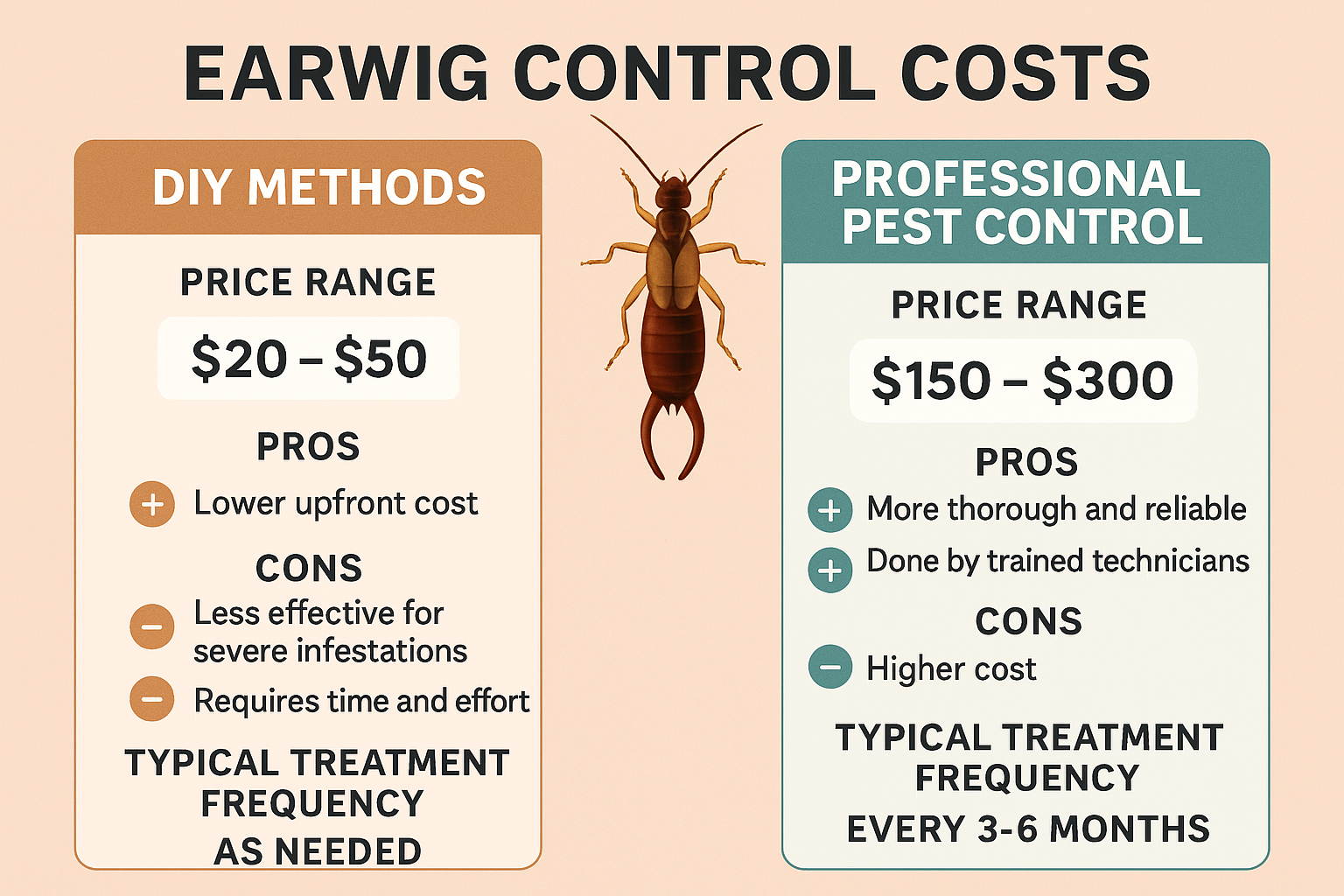
Because earwig activity spikes in warm, humid climates, most Southeast providers price their services within a predictable band. Below is a quick snapshot of what homeowners in Holly Springs, Georgia, can expect:
| Service Type | Cost Range (USD) | Frequency Recommendation |
|---|---|---|
| Inspection Only | $75 – $120 | One‑time, before any treatment |
| One‑Time Treatment | $150 – $300 | Every 6–12 months, depending on infestation level |
| Annual Monitoring Package | $250 – $450 per year | Quarterly visits with retreatment as needed |
Pros of Hiring a Licensed Professional
- Guaranteed efficacy: Technicians use EPA‑approved products and apply them with calibrated equipment, ensuring the active ingredient reaches earwig hideouts.
- Safety compliance: Trained staff follow strict protocols that protect children, pets, and the environment.
- Warranty coverage: Most plans include a written guarantee—if earwigs return within the service window, the company returns for a free follow‑up.
- Time savings: A single visit typically resolves the problem, freeing you from weeks of trial‑and‑error.
Cons of DIY Approaches
- Time investment: You’ll need to scout for nests, purchase multiple products, and reapply on a strict schedule.
- Inconsistent results: Over‑the‑counter sprays often miss hidden crevices, leading to recurring pockets of activity.
- Risk of missed infestations: Earwigs hide under rocks, in mulch, or behind siding—areas most homeowners overlook.
- Potential safety hazards: Improper mixing or application can expose family members to irritants.
Treatment Frequency Recommendations
For most Holly Springs homes, a professional inspection in early spring sets the baseline. If the inspection reveals a light infestation, a single treatment followed by a six‑month check is usually enough. Heavy or recurring problems benefit from an annual monitoring package, which includes quarterly visits and a retreatment guarantee.
DIY enthusiasts should plan to treat every 4–6 weeks throughout the active season (April – October) and re‑inspect after each application. Keep in mind that the cumulative cost of repeated DIY products often approaches, or even exceeds, the price of a professional plan—without the safety net of a warranty.
Seasonal Earwig Activity in Holly Springs, GA and Optimal Treatment Timing
Understanding the Earwig Life Cycle
Earwigs in Holly Springs follow a classic three‑stage life cycle: egg, nymph, and adult. In early spring, females lay clusters of 30‑50 eggs in protected soil cracks or under mulch. These eggs hatch in about two weeks when soil temperatures rise above 55°F (13°C). The emerging nymphs look like tiny, pale versions of adults and molt five to seven times before reaching maturity, usually by midsummer.
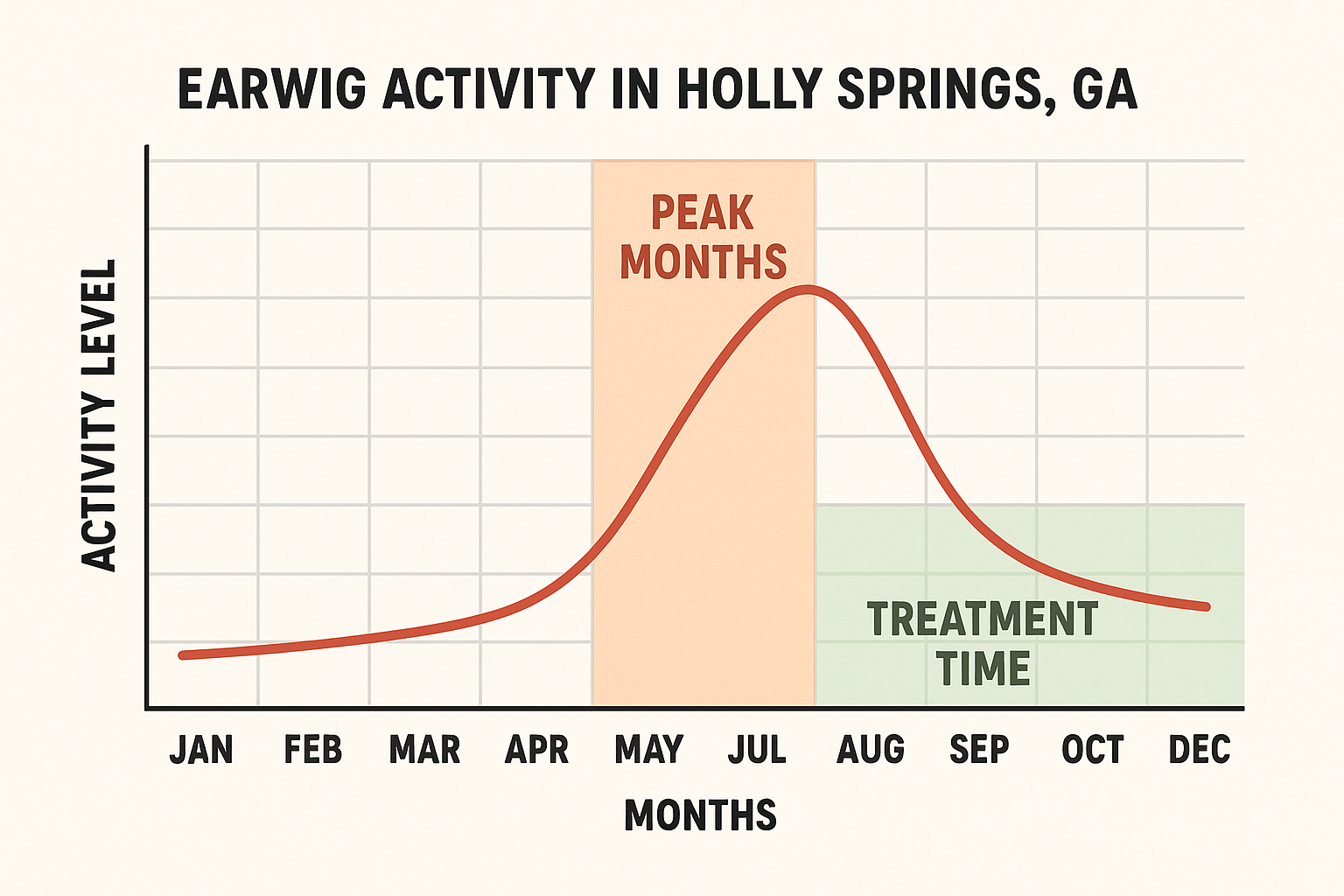
Temperature is the primary driver of each stage. Warm, moist conditions accelerate development, while cooler nights slow it down. As soon as night temperatures consistently stay above 68°F (20°C), you’ll notice a surge in nymph activity, and by late July to early September, the adult population peaks.
Reading the Seasonal Activity Chart
The chart above visualizes earwig numbers month‑by‑month. Notice the gradual climb from April, a sharp rise through July and August, and a tapering off after October. This pattern mirrors the region’s climate: hot, humid summers provide ideal foraging grounds, while cooler fall temperatures push earwigs to seek shelter.
| Month | Activity Level |
|---|---|
| March | Low – eggs beginning to hatch |
| April–May | Moderate – early nymphs emerging |
| June–July | High – rapid nymph growth |
| August–September | Peak – abundant adults |
| October | Declining – adults seeking shelter |
| November–February | Very Low – overwintering adults |
Why Late Summer to Early Fall Is Prime Treatment Time
When earwigs are at their peak, they’re most vulnerable to targeted treatments. Adult earwigs congregate in the same moist hiding spots, making baits and perimeter sprays especially effective. Applying a professional treatment in August or early September reduces the breeding population before females can lay a second batch of eggs, cutting future infestations dramatically.
Pre‑Season and Post‑Peak Maintenance
Spring (pre‑season): Conduct a thorough inspection in late March or early April. Remove excess mulch, leaf litter, and debris that serve as egg‑laying sites. Consider a light preventive spray around foundation cracks and garden beds.
Late Fall (post‑peak): After the first frost, treat again to eliminate any adults that have taken refuge in wall voids or crawl spaces. This “clean‑up” step prevents overwintering populations from emerging the following spring.
Quick Checklist for Homeowners
- ✔️ Schedule a professional inspection by early April.
- ✔️ Trim back mulch and remove standing water in May.
- ✔️ Apply a preventive treatment in late May or early June.
- ✔️ Plan a peak‑season treatment for August – early September.
- ✔️ Perform a post‑peak follow‑up spray in November.
- ✔️ Keep gutters clean year‑round to reduce moisture buildup.
Protect Your Home with Expert Earwig Control from Anthem Pest
Earwigs are the slender, nocturnal insects you might spot scurrying under mulch or inside damp basements. Their elongated bodies, pincers at the rear, and preference for cool, moist spots are tell‑tale signs. Homeowners often notice earwig damage as chewed leaves, shredded fabric, or a faint rustling in crawl spaces. While a quick spray can knock a few out, DIY methods rarely reach hidden nests, and improper chemicals can harm pets or beneficial insects. The most effective window for treatment is early spring through late summer, when earwigs are most active and before they seek shelter for winter.
Why Choose Anthem Pest?
Our technicians combine years of entomology training with a deep understanding of Holly Springs’ micro‑climates. We apply targeted, low‑toxicity solutions that eradicate existing populations and create a barrier that discourages new invasions. Every visit includes a thorough inspection, so we address the source—not just the symptoms.
Transparent Pricing & Local Guarantees
- Flat‑rate, no‑hidden‑fees pricing for a full‑home earwig program.
- Holly Springs‑specific treatment plans that consider local humidity and landscaping.
- 30‑day satisfaction guarantee: if earwigs return, we’ll retreat at no extra cost.
Ready to Keep Earwigs Out?
Give us a call for a free, no‑obligation quote and let our local experts protect your home.
Phone: 877‑371‑8196
Visit Anthem Pest Control to learn more about our earwig solutions.