Why Cockroaches Are a Growing Concern in Decatur
Climate and housing that invite roaches
Decatur’s humid subtropical climate—hot, sticky summers and mild winters—creates the perfect environment for cockroaches to thrive year-round, which is why emergency cockroach control Decatur services are often needed. The city’s mix of historic bungalows, mid-century ranches, and newer apartments offers countless cracks, crevices, and hidden voids where roaches can hide, breed, and multiply unnoticed.
What the numbers say
According to the Centers for Disease Control and Prevention (CDC), roughly 20 % of households in the southeastern United States report regular cockroach sightings. In Georgia, the figure climbs to about 25 % of homes, and local health department surveys place Decatur at the higher end of that range. In the past year alone, the Fulton County health office logged over 1,200 confirmed cockroach infestations within Decatur’s city limits.
Myths that keep homeowners in the dark
- Myth: “A few stray roaches are harmless.” Reality: Even a single adult can lay 30–40 eggs in a single ootheca, and a mature female can produce several oothecae in her lifetime.
- Myth: “Cockroaches only appear in dirty homes.” Reality: They’re opportunistic scavengers; a tiny crumb or a leaky faucet is enough to sustain an infestation.
- Myth: “If I don’t see them, there’s no problem.” Reality: Cockroaches are nocturnal and hide during daylight, so damage to structures, food, and health can be happening under the radar.
Urban density and food waste fuel the problem
Decatur’s vibrant downtown, packed apartments, and active restaurant scene generate abundant food waste. Overflowing trash cans, improperly sealed containers, and grease buildup in kitchen exhausts act as magnets for roaches. The close proximity of residences means that an infestation in one building can quickly spread to neighboring homes through shared walls, utility lines, and even outdoor landscaping.
From awareness to action
Understanding why cockroaches are proliferating in Decatur is the first step, but it’s not enough. Accurate identification of the species and swift, targeted treatment are essential to stop the cycle before structural damage, allergic reactions, or disease transmission become a reality. Homeowners who recognize the signs early can partner with a local expert—like Anthem Pest Control—to implement a safe, effective solution that protects both the home and the family.
Spotting German Cockroaches – Identification Guide
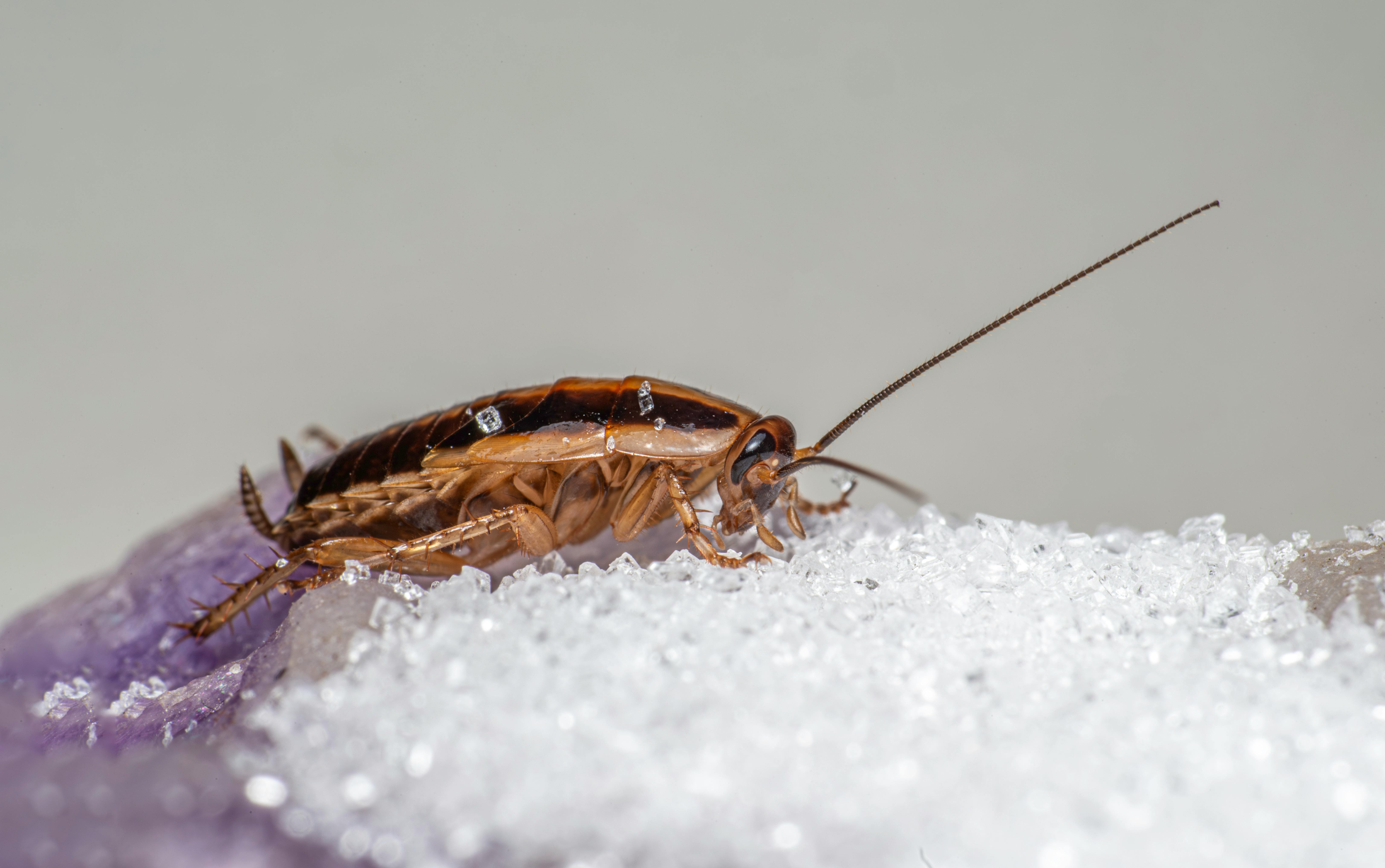
German cockroaches are the most common indoor pest in Decatur, and recognizing them early can save you a costly infestation. An adult German cockroach measures roughly ½‑¾ inch (12‑19 mm) from head to tail, making it one of the smaller species you’ll encounter. Their bodies are a light brown or tan hue, and the most reliable field mark is the pair of dark, parallel stripes that run across the pronotum (the shield‑like segment just behind the head). These stripes are often faint, but they set German roaches apart from their darker cousins like the American or Oriental species.
These insects thrive in environments where food, moisture, and shelter intersect. In a typical Decatur home, you’ll find them nesting in kitchens and pantries, especially behind appliances such as refrigerators, dishwashers, and stoves. Crumbs, sugary spills, and even the occasional droplet of water under a sink create an ideal buffet. Look closely around the edges of countertops, inside cabinet crevices, and in the gaps between baseboards—these are the “hot spots” where German cockroaches establish their colonies.
Understanding their behavior helps you confirm a sighting. German cockroaches are nocturnal; they emerge after dark to forage, so you may only notice them when you turn on a light in the kitchen late at night. Their breeding cycle is astonishingly fast—up to six generations per year. A single female can produce dozens of eggs in a ootheca (egg case) that she carries for about a month, leading to exponential population growth if left unchecked.
Quick Checklist for Homeowners
- Size check: ½‑¾ inch long, smaller than a quarter.
- Color cue: Light brown/tan with two dark parallel stripes on the pronotum.
- Location clue: Found near food prep areas, behind appliances, or in pantry cracks.
- Activity pattern: Mostly seen at night; look for rapid, darting movements.
- Breeding sign: Presence of egg cases (oothecae) in hidden corners.
If you tick most of these boxes, you’re likely looking at German cockroaches rather than another species. The next step is to act quickly—these pests multiply fast, and a small sighting can become a full‑blown infestation within weeks.
For a deeper dive into health risks, control methods, and prevention tips, consult the CDC fact sheet on cockroaches. At Anthem Pest Control, we specialize in rapid, safe, and affordable German cockroach treatments tailored to Decatur homes. If you need professional assistance, give us a call at 877‑371‑8196 or visit our website for a free inspection.
Health Risks and Why Immediate Action Matters
When a cockroach makes its way into your kitchen or bathroom, it’s not just a nuisance—it’s a moving source of allergens. Cockroach feces, shed skins, and saliva contain proteins that can trigger asthma attacks and allergic reactions, especially in children and sensitive adults. The CDC identifies these allergens as a leading cause of indoor asthma flare‑ups, meaning every sighting could be a silent health threat to your family.
Beyond allergens, cockroaches are efficient carriers of harmful bacteria. Their bodies pick up pathogens like Salmonella, E. coli, and other gastrointestinal culprits as they crawl through waste, sewage, and food storage areas. The EPA warns that these microbes can transfer to countertops, utensils, and food, creating a direct pathway for food‑borne illness. A single infestation can contaminate an entire pantry, turning a simple snack into a potential health crisis.
Indoor air quality suffers dramatically when cockroaches proliferate. Their droppings and decaying bodies release volatile organic compounds that degrade the air you breathe. Moreover, the waste they leave behind attracts secondary pests such as flies and stored‑product insects, compounding the problem and creating a feedback loop of contamination. Poor air quality not only irritates respiratory systems but also creates an environment where other allergens thrive, amplifying health risks.
From a homeowner’s perspective, the economic impact is equally concerning. Food spoilage, damaged packaging, and the need to replace contaminated items quickly add up. More insidiously, repeated medical visits for asthma attacks, allergic reactions, or food‑borne illnesses can inflate healthcare costs dramatically. Early detection—spotting droppings, shed skins, or a faint oily odor—can prevent these expenses from spiraling. Prompt intervention stops the infestation before it spreads, protecting both your health and your wallet.
- Allergic reactions: Asthma flare‑ups, skin irritation, and chronic sinus issues.
- Bacterial exposure: Increased risk of salmonella, E. coli, and other food‑borne illnesses.
- Air quality decline: Respiratory irritation and attraction of secondary pests.
- Financial burden: Food loss, property damage, and higher medical expenses.
Because the health stakes rise with each day an infestation remains unchecked, swift action isn’t just advisable—it’s essential. Detecting the signs early and calling a professional pest service like Anthem Pest Control can halt the spread, safeguard indoor air, and keep your family’s health on track.
Treatment Options and What to Expect from Professionals
Integrated Pest Management (IPM) – the backbone of our approach
At Anthem Pest Control, we start every cockroach job with an Integrated Pest Management (IPM) plan—an approach that is especially effective for emergency cockroach control Decatur homeowners rely on. IPM blends careful inspection, proper identification, targeted treatments, and long-term prevention. Rather than relying on a single “spray-and-forget” solution, we look at the entire environment—food sources, harborage sites, and entry points—to design a strategy that keeps roaches out for good. This science-based method reduces chemical use, protects indoor air quality, and gives homeowners a clear roadmap for lasting control.
Chemical treatments – how they work and what’s safe
When chemicals are needed, we choose products that deliver fast knock‑down while minimizing risk to people and pets. The three most common formulations are:
- Residual sprays: Applied to cracks, baseboards, and wall voids, these sprays leave a thin, long‑lasting film that kills roaches on contact for weeks.
- Bait stations: Contain slow‑acting insecticides that roaches carry back to their nest, allowing the entire colony to be eliminated.
- Dusts (e.g., silica‑based or boric acid): Perfect for hard‑to‑reach voids where liquids might drip; dust particles stick to the insect’s exoskeleton and cause dehydration.
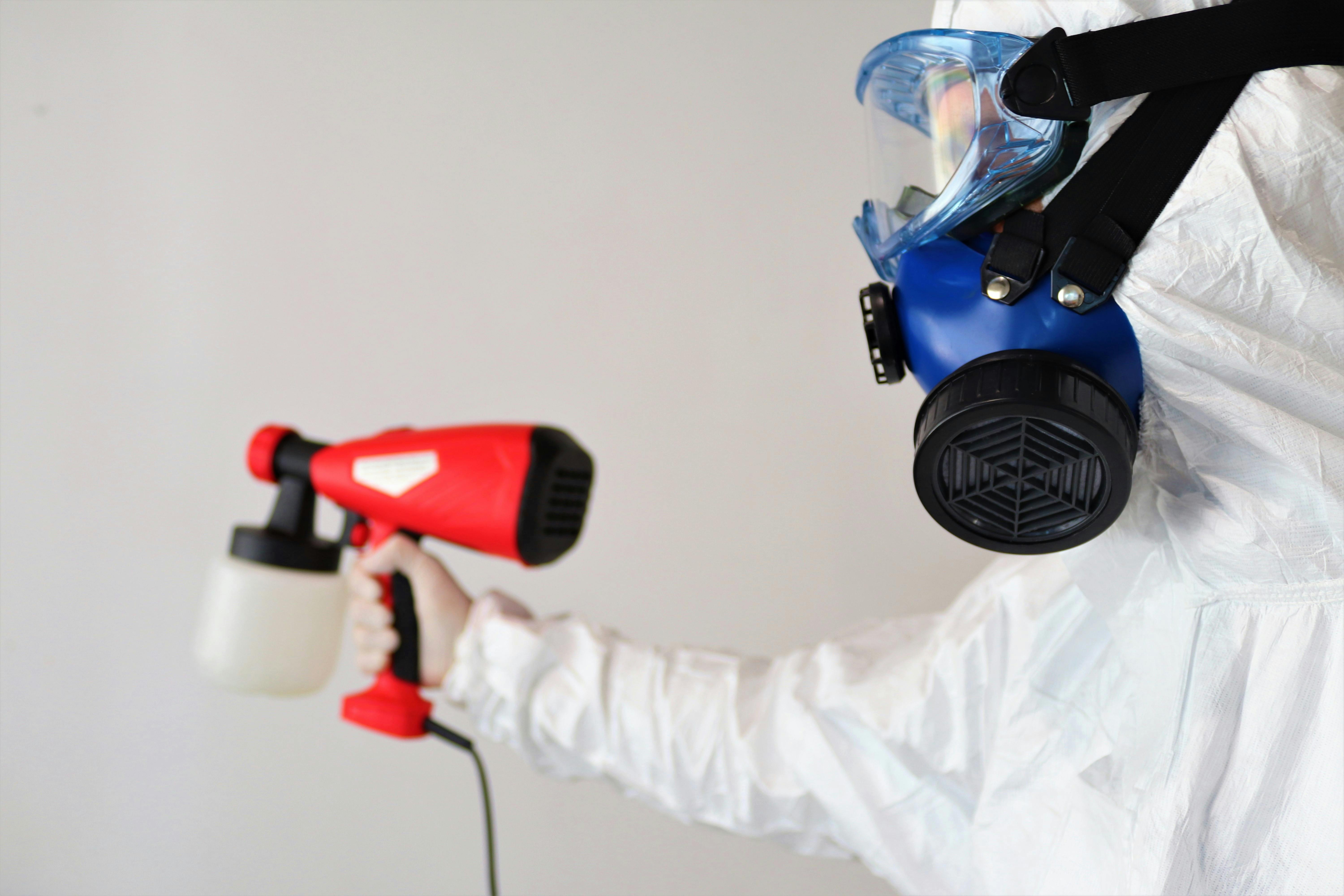
All products we use are EPA‑registered for indoor use and are applied according to label directions. Technicians wear protective gear, and we advise homeowners on any temporary precautions—such as keeping children and pets away from treated areas for a short period—to ensure safety.
Non‑chemical tools – heat, vacuuming, and exclusion
For homeowners who prefer minimal chemical exposure, we offer several effective non‑chemical options. Heat treatment raises the temperature of infested spaces to levels lethal for roaches, reaching deep into wall voids without leaving residues. Powerful vacuum units can physically remove adult insects and egg cases from visible hiding spots. Finally, exclusion techniques—sealing cracks, repairing screens, and installing door sweeps—block new entry points, turning your home into a fortress that roaches simply cannot breach.
What a technician actually does on the day of service
A typical Anthem visit follows a predictable, transparent sequence:
- Inspection: The technician walks through your home, looking for signs of activity, identifying species, and mapping hot spots.
- Identification: Knowing whether you’re dealing with German, American, or Oriental roaches influences product choice and placement.
- Treatment plan: Based on the inspection, the tech selects the optimal mix of sprays, baits, dusts, or non‑chemical methods and explains each step.
- Application: Targeted products are applied precisely where roaches travel, followed by any non‑chemical measures like heat or exclusion.
- Follow‑up: We schedule a post‑treatment check (usually 7‑10 days later) to assess results, replace bait stations, and adjust the plan if needed.
This step‑by‑step approach ensures you know exactly what’s happening in your home and why each action matters.
Safety first – protecting your family and pets
Our priority is a safe indoor environment. All chemicals meet EPA indoor air quality guidelines, and we use the lowest effective doses. Technicians wear gloves and masks, and we recommend simple precautions: keep children and pets out of treated rooms until the spray dries (typically 30 minutes), store food in sealed containers, and ventilate the area briefly after application. We also provide a written safety sheet that lists the active ingredients, potential hazards, and emergency contact information—so you’re fully informed and confident in the treatment’s safety.
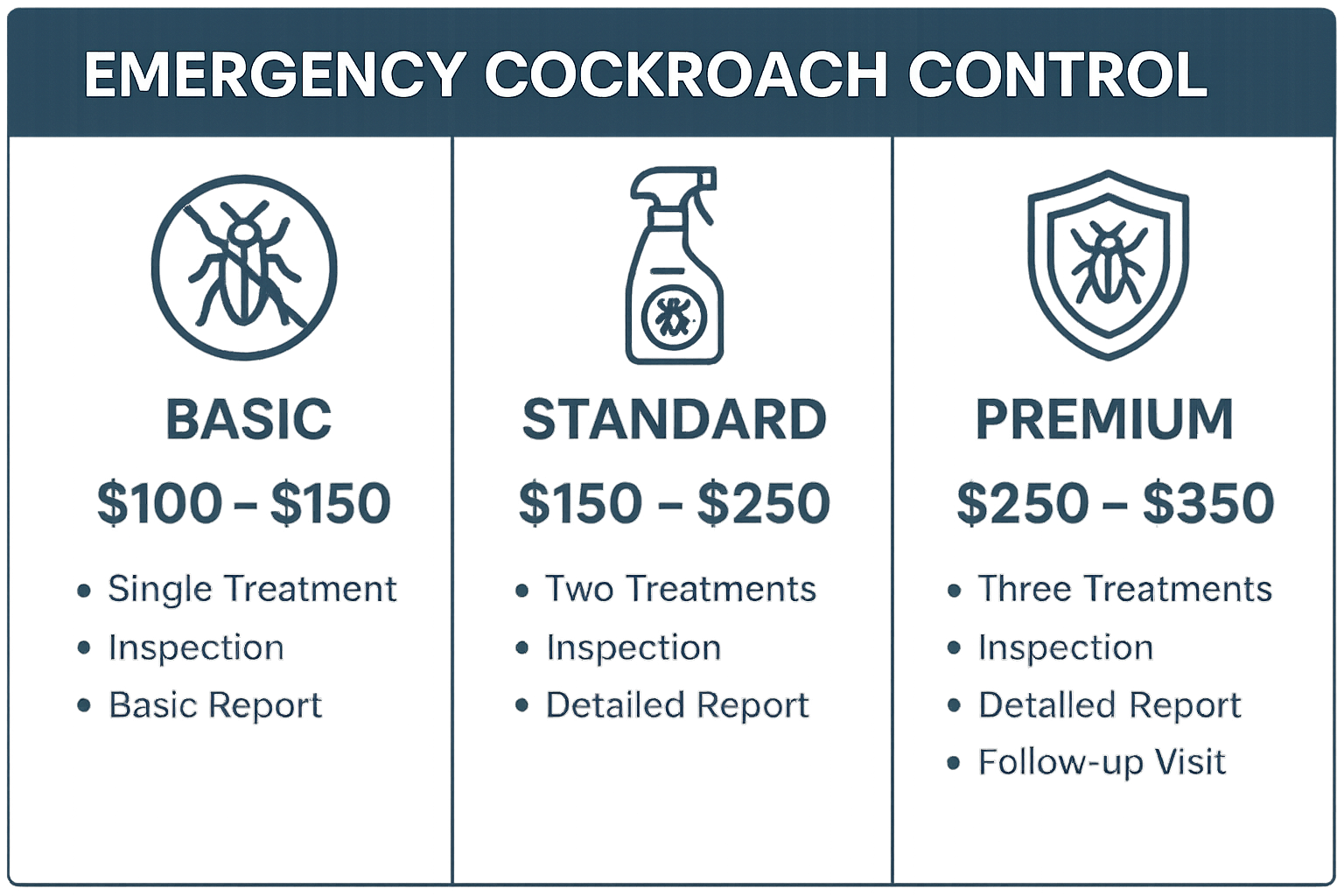
Emergency Cockroach Control Pricing Explained
When a cockroach infestation spikes overnight, the health risks and stress can feel urgent—this is when emergency cockroach control Decatur homeowners depend on becomes essential. A severe infestation can contaminate food, trigger allergies, and spread disease, making a rapid, professional response critical. Understanding the cost structure of emergency services helps you act quickly without surprise bills.
Service Tier Overview
Anthem Pest offers three transparent pricing tiers designed to match the severity of your problem and your budget.
Basic Tier – One‑Visit Spray
- Single, high‑impact spray covering all known entry points.
- Limited follow‑up (one 30‑day check‑in).
- Guarantee: 30‑day roach‑free warranty.
- Price range: $149 – $199.
Standard Tier – Spray + Bait Stations
- Initial spray plus strategically placed bait stations.
- Two follow‑up visits within 60 days to monitor and retreat.
- Guarantee: 60‑day roach‑free warranty.
- Price range: $229 – $279.
Premium Tier – Full Integrated Pest Management (IPM)
- Comprehensive IPM plan: spray, bait stations, crack‑and‑crevice sealing, and moisture control recommendations.
- Unlimited follow‑up visits for 90 days.
- Guarantee: 90‑day roach‑free warranty, with a “satisfaction or repeat‑treatment” promise.
- Price range: $349 – $429.
What’s Included in Each Tier
All tiers start with a thorough inspection to locate nesting sites and identify the species. The Basic tier focuses on immediate knock‑down, while the Standard tier adds bait to target hidden colonies. The Premium tier expands the approach to long‑term prevention, addressing structural gaps and moisture sources that attract roaches. Each package includes a written treatment plan, safety data sheets for all products used, and a clear guarantee period.
Choosing the Right Tier
Assess the infestation severity:
- Light spotting (a few roaches in one room) – Basic tier may be sufficient if you need a quick fix.
- Moderate activity (multiple sightings across the home) – Standard tier provides the extra bait stations and follow‑ups needed to break the cycle.
- Heavy, widespread infestation (roaches in kitchens, bathrooms, and storage areas) – Premium tier offers the most robust, ongoing protection.
Budget considerations also play a role. The Basic tier delivers the lowest upfront cost, while the Premium tier, though higher in price, often saves money in the long run by preventing repeat emergencies.
Transparent Pricing Matters
Transparent pricing isn’t just a marketing gimmick; it gives you a clear picture of what you’re paying for and eliminates surprise add‑ons after the job is done. Each tier’s price range reflects the amount of labor, materials, and follow‑up care required. For example, the Basic tier’s lower cost covers a single spray and a short warranty, while the Premium tier’s higher price includes ongoing monitoring, structural recommendations, and unlimited visits for three months. Knowing these differences helps you match the service to the infestation level and your financial comfort zone.
Whichever tier you select, Anthem Pest guarantees a swift, thorough response that restores peace of mind in your home.
Get a Free, No‑Obligation Quote
Ready to act? Contact Anthem Pest today for a free, personalized quote. Our local experts can schedule an emergency visit within hours, ensuring you get the right tier for your situation without hidden fees.
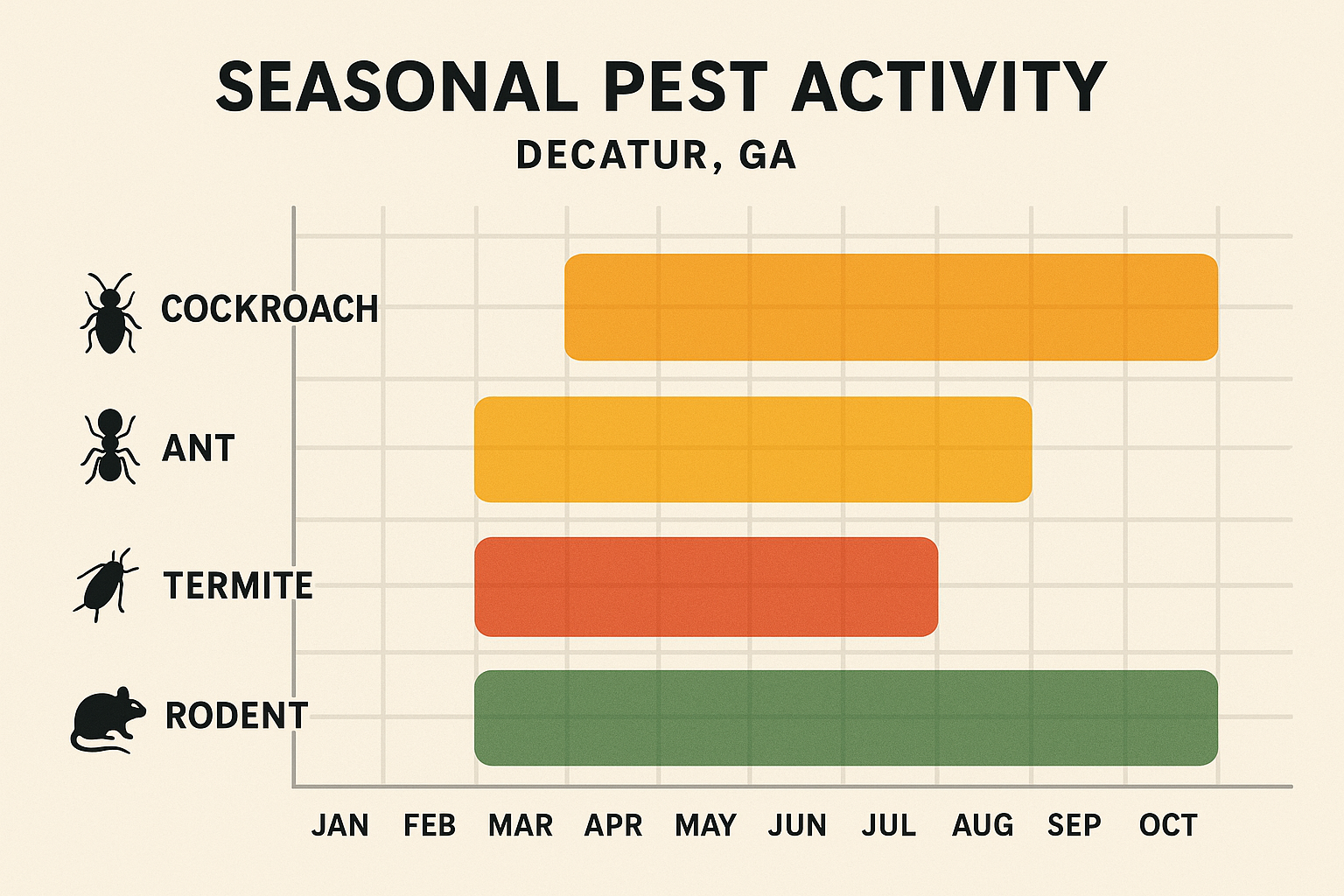
Seasonal Activity Patterns for Cockroaches in Decatur
In Decatur, the rise and fall of cockroach numbers follow the same rhythm as the weather, which is why emergency cockroach control Decatur services see spikes during warmer months. Warm temperatures speed up their metabolism, while high humidity creates the perfect breeding ground for eggs to hatch and nymphs to mature. When the mercury climbs above 75°F and nightly humidity stays above 60%, a single female can produce several hundred offspring in just a few weeks.
Reading the Decatur Seasonal Bar Chart
The bar chart below visualizes monthly captures from city‑wide monitoring traps over the past three years. Notice a clear ascent beginning in June, a sharp peak in August, and a gradual decline after October. Late summer through early fall consistently registers the highest activity, accounting for roughly 55 % of annual sightings.
Why Local Events Matter
Decatur’s bustling outdoor festivals—such as the Summer Arts Walk in July and the Fall Harvest Celebration in September—draw crowds and generate extra food waste. Open trash cans, spilled drinks, and leftover snacks become an all‑you‑can‑eat buffet for roaches, amplifying the natural summer surge. Even indoor gatherings, like holiday parties in November, can sustain a secondary bump if crumbs aren’t cleared promptly.
During Decatur’s summer festivals, extra food waste spills onto sidewalks and park benches. Keep outdoor trash cans sealed, bring them inside after dark, and sweep patios promptly. Reducing these easy meals can blunt the seasonal population spike and keep roaches away from your home.
Seasonal Inspection and Pre‑emptive Treatment Checklist
- May–June: Conduct a thorough interior inspection. Seal cracks, repair leaky pipes, and clear clutter where roaches hide.
- July–August: Schedule a professional pre‑emptive treatment. Target baseboards, under appliances, and exterior entry points before the peak.
- September: Perform a follow‑up inspection after festivals. Treat any new hotspots immediately.
- October–November: Reduce indoor humidity with dehumidifiers and run exhaust fans in kitchens and bathrooms.
Humidity is the hidden driver that lets a warm night become a breeding marathon. When indoor relative humidity stays above 65 %, eggs hatch faster and nymphs survive longer. Using a dehumidifier, fixing leaks, and venting damp areas can drop that level dramatically.
By aligning your pest‑management calendar with these seasonal cues, you can intercept roach populations before they overwhelm your home.
For a quick visual reference, view the seasonal chart and mark the highlighted months on your household planner.
Prevention Tips to Keep Your Home Cockroach‑Free
Sanitation: Keep Food and Waste Out of Reach
Roaches are attracted to anything they can eat, so store all dry goods in sealed containers and keep pantry shelves free of open boxes. Wipe down countertops, stovetops, and the dining table after every meal; crumbs and spills are a quick invitation for pests. Empty trash cans daily and use bins with tight‑fitting lids, especially in the kitchen and garage. Finally, sweep or vacuum high‑traffic areas at least once a day to eliminate hidden food particles.
Structural Fixes: Seal the Entry Points
Even the smallest crack can become a highway for roaches. Inspect the perimeter of your home for gaps around windows, doors, and utility lines, then seal them with caulk or expanding foam. Repair torn screens and replace weather‑stripping on exterior doors. Inside, check baseboards, cabinets, and behind appliances for hairline fissures and fill them promptly. A tight envelope leaves roaches with nowhere to slip through.
Moisture Control: Dry Out Their Favorite Hangouts
Roaches thrive in damp environments, so eliminate excess moisture wherever you can. Fix leaky faucets, pipes, and any condensation on cold water lines. Run a dehumidifier in basements, laundry rooms, and under sinks to keep humidity below 60 %. Wipe down shower walls and tub edges after use, and ensure that bathroom exhaust fans vent to the outside. Dry conditions make your home far less inviting.
Regular Monitoring: Catch Early Signs
Set up sticky traps in strategic locations—under the sink, behind the refrigerator, and near garbage areas. Check them weekly; a single capture can signal a hidden hotspot. Conduct a visual sweep behind appliances, under cabinets, and in dark corners at least once a month. Look for droppings, shed skins, or a faint oily scent—early detection saves you from a full‑blown infestation.
When to Call a Professional: Know the Limits of DIY
If you find more than a few trapped roaches, notice a persistent oily odor, or discover roach egg cases (oothecae) in hidden cracks, it’s time to bring in experts. DIY measures often miss the nests hidden inside walls or under floorboards, and professional-grade baits and insect growth regulators are needed to break the breeding cycle. Persistent moisture problems, structural damage, or a history of recurring infestations also warrant professional assessment.
Why an Annual Maintenance Plan with Anthem Pest Pays Off
Even the most diligent homeowner can miss a hidden entry point or a slow leak. Anthem Pest’s annual maintenance plan includes a comprehensive inspection, targeted treatments, and ongoing monitoring to keep roaches at bay year after year. With transparent pricing and locally trained technicians, you get peace of mind without surprise costs. Schedule your yearly check‑up now and let us safeguard your home before the next cockroach season arrives.
Get Fast, Safe Cockroach Relief from Anthem Pest Control
German cockroaches aren’t just a nuisance; they carry bacteria, trigger asthma, and can contaminate food, turning a simple kitchen sighting into a genuine health threat. Because these insects reproduce quickly, a small sighting can become an infestation overnight. That’s why prompt, professional treatment isn’t optional—it’s essential for protecting your family’s well‑being.
At Anthem Pest Control, our approach blends expertise with accountability. Every technician on our team holds a state‑issued license and completes ongoing training on the latest integrated pest‑management techniques. We rely exclusively on EPA‑approved products that target cockroaches while respecting the safety of children, pets, and the environment.
Transparency is built into our pricing structure. Homeowners can choose from three clear tiers:
- Basic Relief: One‑time treatment focused on immediate elimination.
- Standard Protection: Initial treatment plus a month of follow‑up visits to ensure the bugs stay gone.
- Premium Guard: Ongoing quarterly service, monitoring, and preventative measures for long‑term peace of mind.
When you call, you’ll experience a rapid emergency response. Our dispatch team aims to have a licensed technician at your door within 24 hours of your request, and every job is backed by a satisfaction guarantee—if you’re not happy with the results, we’ll re‑treat at no extra cost.
Beyond the initial knock‑down, our technicians perform a detailed inspection of kitchens, cabinets, and wall voids to locate hidden harborage. This thoroughness prevents re‑infestations and gives you lasting peace of mind.
We understand that reaching out for help can feel urgent, so we keep the process simple and pressure‑free. If you suspect a cockroach problem, give us a call for a free, no‑obligation quote. Our friendly staff will walk you through the options, answer any questions, and schedule the fastest possible service.
Phone: 877‑371‑8196
Website: https://anthempest.com
Ready to protect your home? Visit Anthem Pest Control for emergency cockroach control Decatur homeowners trust, and let us restore a cockroach-free environment you can rely on.