Recognizing German Cockroaches in Suwanee Homes
In Suwanee, Georgia, the German cockroach (Blattella germanica) is the pest most homeowners encounter and a common reason residents seek professional cockroach control Suwanee services. Its rapid life cycle, love of warmth, and ability to squeeze through the tiniest cracks make it the go-to invader in kitchens, bathrooms, and any humid nook. Knowing what to look for can stop a small sighting from turning into a full-blown infestation.
Why German Cockroaches Dominate Suwanee Homes
Unlike larger field species that prefer outdoor debris, German cockroaches thrive indoors. Suwanee’s hot summers and frequent indoor humidity—think steamy showers and cooking steam—create an ideal breeding ground. Their preference for human food sources means they’re rarely seen outdoors; instead, they set up permanent colonies right where you prepare meals.
What They Look Like
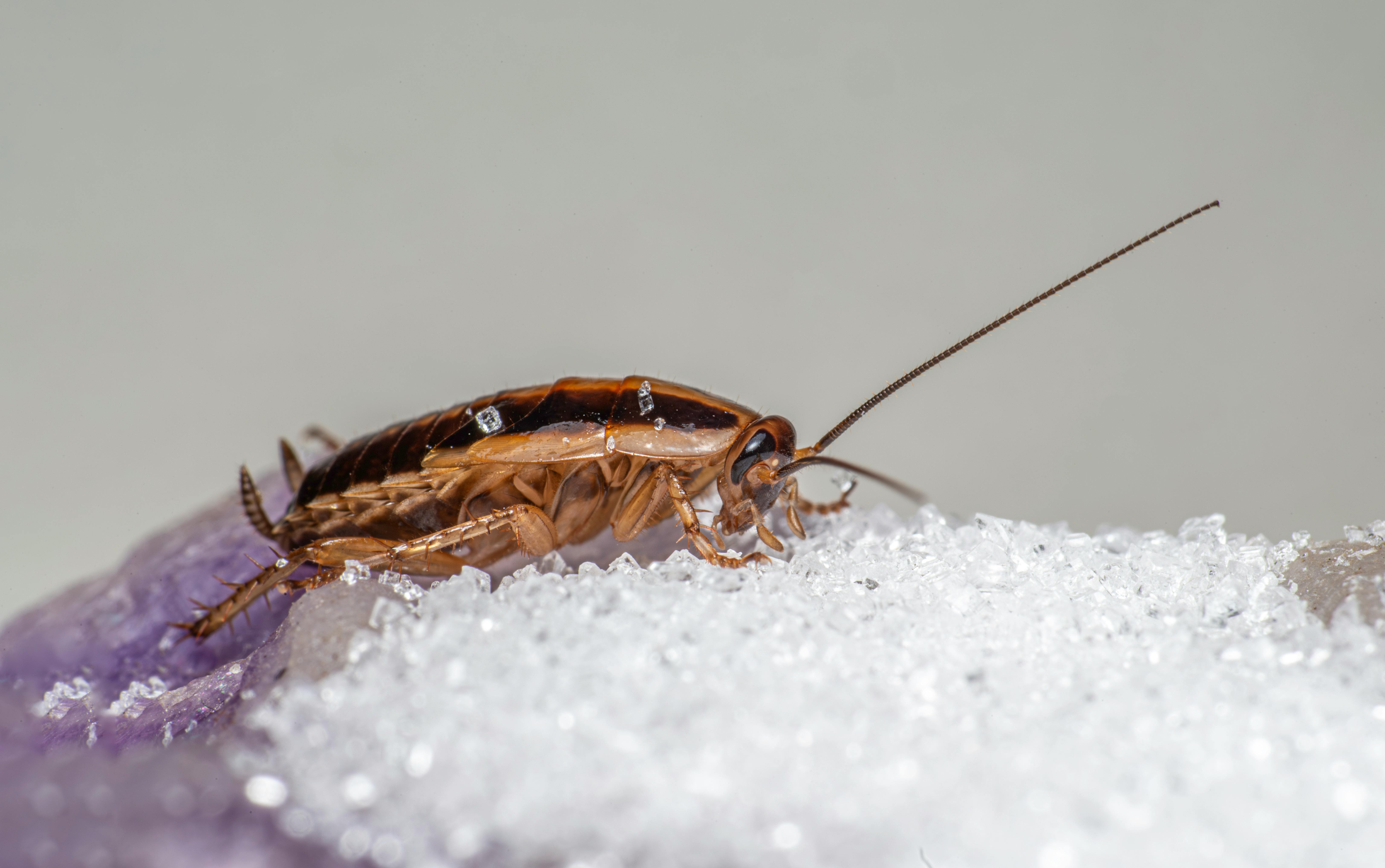
These pests are small but unmistakable. An adult measures about ¼‑inch (6‑7 mm) long, with a light‑tan body and two darker parallel stripes running from head to behind the wings. Their wings are fully developed but usually lie flat, giving them a sleek, oval silhouette. A close‑up macro photo (see below) highlights the delicate veins on the wings and the subtle coloration that separates them from other household roaches.
Where They Hide
German cockroaches are masters of concealment. Typical hiding spots include:
- Kitchens: behind appliances, under the sink, and inside pantry cracks.
- Bathrooms: around the toilet base, in shower drains, and behind tile grout.
- Appliance Gaps: the narrow space between the fridge and wall, or the vent openings of dishwashers.
- Cracks and Crevices: any seam where moisture can linger, such as baseboards or wall joints.
These locations stay warm and moist, providing the perfect micro‑environment for eggs and nymphs to develop.
Early Warning Signs
Before you see a live roach scurrying across the floor, look for these subtle clues:
- Droppings: tiny, pepper‑shaped specks that appear near food prep areas.
- Egg Casings (oothecae): brownish, peanut‑shaped packets often tucked in cracks.
- Faint oily smell: a musty, stale odor that intensifies as the population grows.
- Nocturnal sightings: they are most active at night, attracted to light sources.
Spotting Them Early with IPM
The EPA’s Integrated Pest Management (IPM) principles emphasize early detection, accurate identification, and targeted action. By regularly inspecting the spots above and watching for droppings or egg casings, you can intervene before a colony explodes. For a deeper dive into IPM best practices, visit the EPA IPM Principles page.
Immediate Steps After Spotting Cockroaches
Seeing a roach scuttle across the kitchen floor is a clear warning sign: the infestation could be growing faster than you think. Cockroaches reproduce quickly, and a single female can lay hundreds of eggs over her lifetime. The faster you act, the less chance the population has to explode, and the easier it will be for a professional treatment to succeed later.

Step‑by‑step cleaning routine
- Vacuum every floor surface. Use a hose attachment to pull up crumbs, egg cases, and any roach droppings. Vacuuming also disrupts hiding spots, making the bugs think the area is unsafe.
- Wipe down countertops and cabinets. Mix a mild dish‑soap solution with warm water, then scrub all food‑prep surfaces. Pay special attention to the edges of appliances where crumbs can accumulate.
- Seal food properly. Transfer pantry staples, pet food, and leftovers into airtight containers. Even a small amount of accessible food can sustain a growing colony.
- Fix leaks and reduce moisture. Cockroaches need water to survive. Repair dripping faucets, tighten pipe connections, and wipe up any standing water under sinks or behind appliances.
Short‑term monitoring tools
While you’re cleaning, set up a few simple traps to gauge activity:
- Bait stations. Place ready‑made gel or block baits in corners, under the refrigerator, and behind the stove. The roaches will carry the poison back to the nest.
- Sticky traps. Lay adhesive pads along baseboards and near entry points. They give you a visual record of where the bugs are traveling.
Safe DIY treatments (use with caution)
If you need an extra push before a professional arrives, consider these low‑risk options:
- Boric acid powder. Lightly dust it under appliances and in cracks. It’s deadly to roaches but relatively harmless to humans and pets when used sparingly.
- Diatomaceous earth (food‑grade). Sprinkle a thin layer in dry areas—under sinks, behind cabinets, and along baseboards. The microscopic shards puncture the insects’ exoskeletons, causing dehydration.
Always keep these substances out of reach of children and pets, and avoid applying them on food‑contact surfaces.
Why these steps aren’t a substitute for professional help
The actions above buy you time and reduce the immediate nuisance, but they rarely eradicate an established infestation. Professional pest control technicians bring targeted insecticides, heat treatments, and a thorough inspection that can locate hidden nests and structural entry points. Think of your DIY measures as a first line of defense; a licensed exterminator from Anthem Pest Control will finish the job safely and permanently.
By acting fast—cleaning, sealing food, fixing moisture, and setting up traps—you dramatically lower the odds that a few stray roaches turn into a full‑blown infestation. When you’re ready, give Anthem Pest Control a call at 877‑371‑8196 or visit anthempest.com for a rapid, local response.
Seasonal Patterns and Prevention Strategies in Suwanee
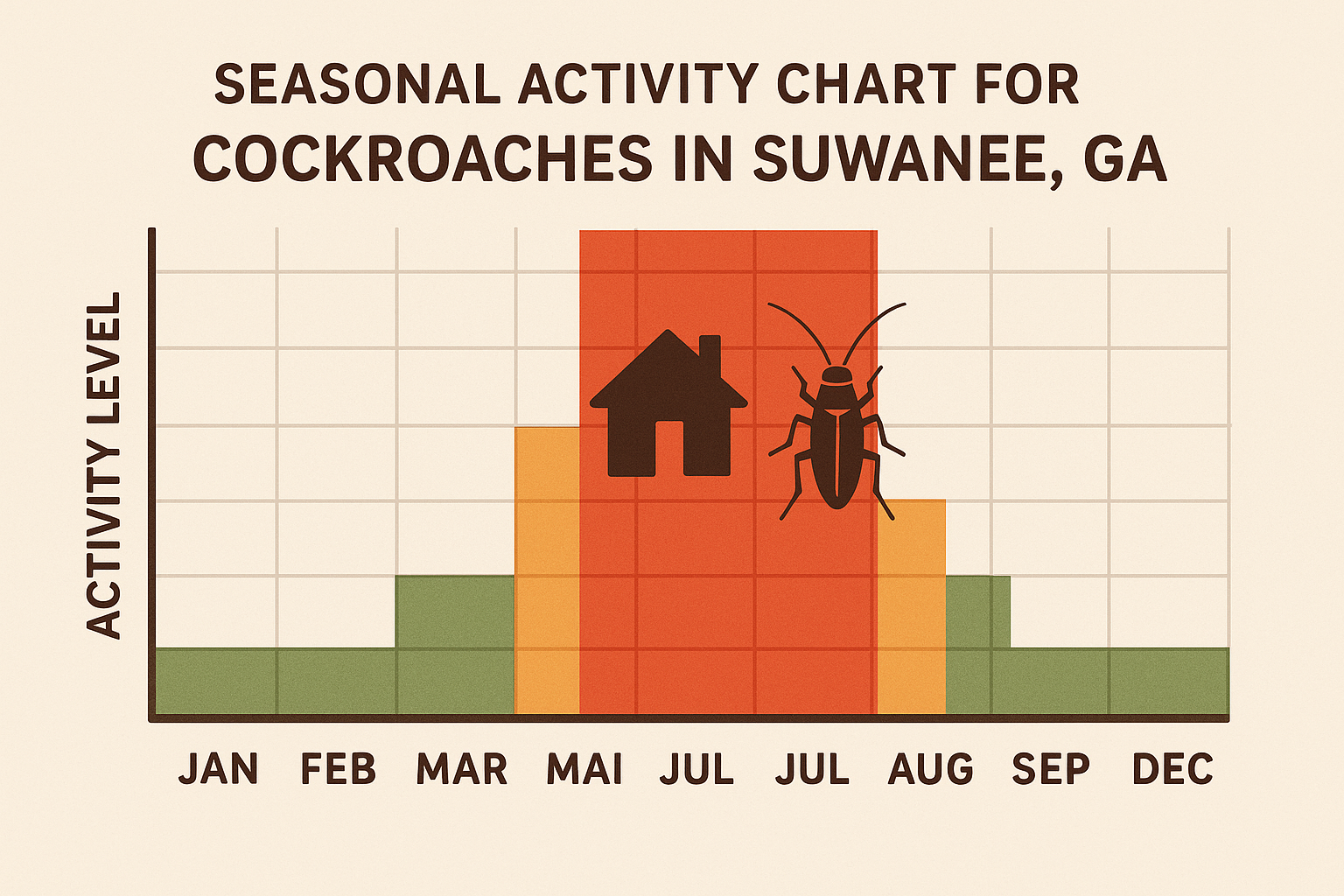
In Suwanee, Georgia, cockroach activity isn’t constant—it follows a predictable rhythm tied to the region’s climate, which is why proactive cockroach control Suwanee homeowners rely on becomes especially important during peak seasons. The seasonal activity chart above makes it clear: the highest risk months are July through September, with a noticeable uptick beginning in late May as temperatures climb. Spring (March–May) and late fall (October–November) present moderate risk, while winter (December–February) sees the lowest indoor activity.
Why Temperature and Humidity Drive Activity Levels
Two environmental factors dominate cockroach behavior: temperature and humidity. Cockroaches are cold‑blooded; they thrive when ambient temperatures stay between 75°F and 85°F. Suwanee’s summer routinely hits that sweet spot, prompting roaches to emerge from cracks, basements, and mulch to forage for food and water.
Humidity plays a supporting role. Moisture‑rich environments—think damp basements, leaky pipes, and over‑watered gardens—provide the water cockroaches need to survive. During the humid summer months, outdoor humidity often exceeds 70%, creating a bridge between outdoor and indoor habitats. When humidity drops in winter, roaches retreat deeper into protected indoor spaces, but their numbers are limited by the colder temperatures.
Seasonal Prevention Checklist
Tailoring your pest‑prevention routine to the calendar maximizes effectiveness. Below is a practical, homeowner‑focused checklist that aligns with each season’s risk level.
- Spring (March‑May)
- Inspect and seal foundation cracks, door sweeps, and window screens before temperatures rise.
- Repair any leaky faucets or roof gutters to eliminate excess moisture.
- Trim back vegetation that touches the house to reduce outdoor harborage.
- Summer (June‑September)
- Deep‑clean kitchens, especially under appliances, to remove food residues.
- Empty trash cans daily and use tight‑fitting lids.
- Maintain yard mulch at a depth of no more than 2 inches and keep it away from the foundation.
- Run a low‑flow faucet overnight to create a dry environment that discourages roach movement.
- Fall (October‑November)
- Clear fallen leaves and organic debris from around the home’s perimeter.
- Store firewood at least 18 inches off the ground and away from the house.
- Check attic ventilation; stagnant air can raise indoor humidity.
- Winter (December‑February)
- Conduct a final inspection of sealed entry points; cold weather can cause new gaps.
- Use dehumidifiers in basements and crawl spaces to keep humidity below 60%.
- Maintain routine indoor cleaning, focusing on hidden corners where roaches may hide.
Outdoor vs. Indoor Activity Distinctions
Understanding where roaches originate helps you cut off their entry routes. Outdoors, cockroaches congregate in trash bins, compost piles, and damp garden beds. Indoors, they gravitate toward food prep areas, cabinets, and plumbing fixtures. By keeping outdoor sources clean—tight‑fitting trash containers, well‑maintained compost, and dry mulch—you reduce the likelihood that roaches will seek shelter inside.
Integrating Integrated Pest Management (IPM)
Anthem Pest Control recommends a three‑pillared IPM approach for sustainable cockroach control:
- Monitoring: Place sticky traps in high‑risk zones (kitchen corners, under sinks) during peak months. Review trap catches weekly to gauge activity levels.
- Exclusion: Seal cracks, install door sweeps, and repair window screens. Exclusion is the most cost‑effective barrier against seasonal invasions.
- Cultural Controls: Adjust homeowner habits—prompt waste removal, regular deep cleaning, and moisture management—to create an environment where cockroaches cannot thrive.
By aligning these IPM principles with the seasonal checklist, Suwanee homeowners can stay one step ahead of cockroach surges, keeping their homes comfortable year‑round.
Treatment Options and Pricing Comparison for Emergency Cockroach Control
When a roach invasion reaches emergency status, you need a solution that works fast and stays effective, which is exactly what professional cockroach control Suwanee services are designed to deliver. Professional pest technicians in Suwanee have four primary tools in their arsenal: gel baits, dust applications, residual sprays, and whole-home fogging. Each method targets a different stage of the infestation and offers a unique balance of speed, durability, and safety.
Gel Baits
Gel baits are a favorite for hidden infestations because they lure roaches to a sweet, poisoned matrix they carry back to the nest. Pros: low‑visibility, long‑lasting (up to 12 months), and safe around children and pets when placed in concealed cracks. Cons: they require a few days to see a noticeable drop in activity and may not work if roaches have already established multiple colonies.
Dust Applications
Dusts such as diatomaceous earth or silica‑based powders are brushed into voids, wall voids, and under appliances. Pros: immediate knock‑down effect and excellent for dry, hard‑to‑reach spots; they remain active as long as the dust is undisturbed. Cons: can be messy, and inhalation hazards mean technicians must wear protective gear; not ideal for homes with small children who play on the floor.
Residual Sprays
Residual sprays create a chemical barrier on surfaces where roaches travel. Pros: quick reduction in visible roaches within hours, and the residue can protect the home for 30‑60 days. Cons: chemicals may be a concern for pets and allergy‑prone residents, and frequent re‑application is needed for long‑term control.
Whole‑Home Fogging
Fogging disperses a fine mist of insecticide throughout the entire house, reaching cracks, crevices, and ceiling spaces that other methods miss. Pros: fastest overall knock‑down, ideal for severe emergencies, and can be combined with other treatments for layered protection. Cons: requires occupants to vacate the home for several hours, and the effect diminishes after a week, so a follow‑up plan is essential.
Pricing Infographic Overview
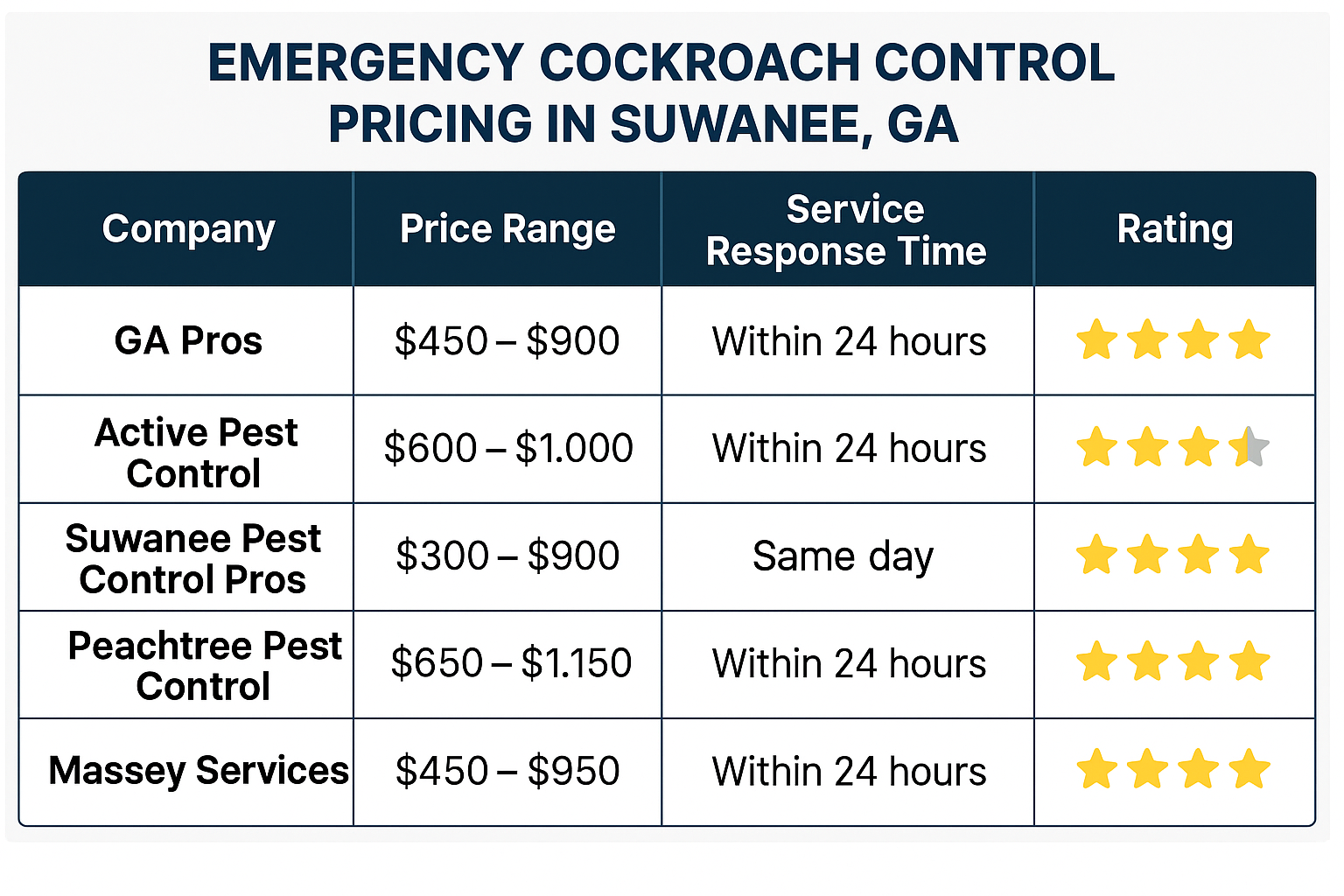
The infographic breaks down three local providers—Anthem Pest Control, GreenShield Exterminators, and Rapid Response Pest—by price range, average response time, and customer rating, helping homeowners compare cockroach control Suwanee service options quickly. Anthem typically quotes $199–$249 for a same-day gel-bait and dust combo, with a 2-hour response window and a 4.8-star rating on Google. GreenShield’s whole-home fogging starts at $279, promises next-day service, and holds a 4.5-star reputation. Rapid Response offers an “Emergency Pack” at $219, guaranteeing 24-hour arrival and includes a one-year warranty on all chemicals.
What “Emergency” Service Really Means
In Suwanee, an emergency designation signals that the pest control company will prioritize your call above routine appointments. Most firms commit to a same‑day visit if you call before noon, or a next‑day slot if you call later in the afternoon. This rapid response often includes a thorough inspection, immediate treatment, and a written action plan that outlines follow‑up visits.
Evaluating Quotes: Hidden Fees and Value Add‑Ons
- Hidden fees: Look for travel surcharges, after‑hour call‑out fees, or extra costs for pet‑friendly formulations.
- Warranty: A solid warranty (typically 30‑90 days) protects you if roaches return after the initial treatment.
- Follow‑up visits: Emergency plans that include a complimentary second visit usually deliver better long‑term results.
- Technician certification: Verify that the technician holds a Georgia‑issued pesticide applicator license; certified pros follow state safety protocols.
By comparing these elements—price, response time, warranty, and certification—you can pinpoint the provider that offers the best overall value, not just the lowest upfront cost.
If you’re ready to stop the roach parade, reach out to a vetted Suwanee pest professional for a free, no‑obligation quote. A quick phone call can secure a same‑day appointment, protect your family, and restore peace to your home.
Protect Your Home with Anthem Pest Control
We’ve walked through how to spot a cockroach invasion, the immediate steps to limit damage, the seasonal habits that make certain months riskier, and the treatment options that actually work. Knowing the signs—droppings, egg cases, a musty odor—lets you act before the problem spreads. Quick actions like sealing cracks, removing food sources, and setting traps buy you time, but lasting control requires a strategic, Integrated Pest Management (IPM) approach.
Anthem Pest Control brings that IPM expertise straight to your doorstep. Our technicians start with a thorough inspection, identify the species, and map out entry points. From there we combine low‑toxicity baits, targeted sprays, and habitat modification to keep roaches out for good. Because we rely on data‑driven decisions, you get a solution that is both safe for children and pets and effective against even the most resilient infestations.
Why Choose Anthem?
- Transparent pricing: No hidden fees—our quote outlines every step, from inspection to follow‑up.
- Nationwide expertise: We apply proven methods refined across dozens of states, including Georgia’s humid climate.
- Safe, affordable solutions: Our products meet EPA standards, and we tailor treatment plans to fit any budget.
When you partner with Anthem, you’re not just hiring a pest‑removal service; you’re investing in a long‑term defense system. Our ongoing monitoring and seasonal prevention tips help you stay ahead of future invasions, protecting your home’s health and value.
Ready to take the next step? Schedule a free, no-obligation inspection today and receive a personalized quote that reflects the exact needs of your home. For fast, reliable cockroach control Suwanee homeowners trust, give us a call at 877-371-8196 or visit Anthem Pest Control to book online. Our team is standing by to turn your cockroach crisis into a thing of the past.