
Recognizing Earwigs and Why They Matter
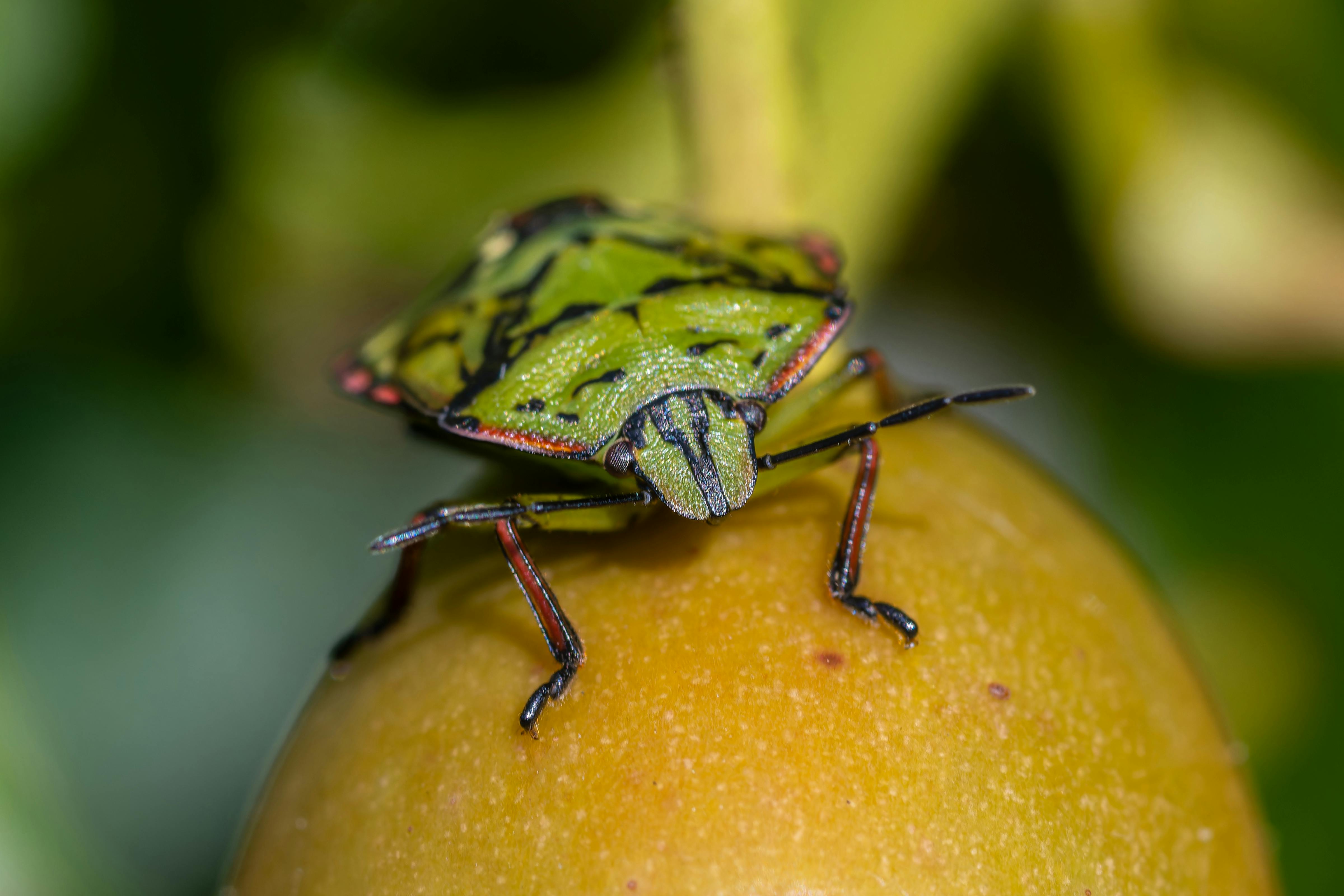
Earwigs belong to the order Dermaptera, a group of nocturnal insects that many homeowners mistake for pests that bite or spread disease. In the United States, the most common household species are the European earwig (Forficula auricularia) and the Southern earwig (Labidura riparia). Both thrive in moist environments and can quickly become a visual nuisance when they wander into basements, kitchens, or garden beds—prompting many homeowners to seek earwig control Suwanee services.
Physical Characteristics
At first glance, an earwig’s elongated, flattened body can look like a beetle or even a green stink bug. The key identifiers are the pair of forceful pincers, called cerci, that jut out from the rear of the abdomen. These cerci are often mistaken for “tails,” but they are actually sensory and defensive tools. Most earwigs have short, leathery forewings that protect a set of delicate hind wings folded underneath—though you’ll rarely see them in flight inside a home. Their coloration ranges from light tan to dark brown, and they typically measure 1½ to 2 inches long.
Typical Habitats
Earwigs love damp, sheltered spots. In Suwanee homes, they’re frequently found in:
- Basements and crawl spaces with poor ventilation.
- Mulch, leaf litter, or compost piles around the foundation.
- Garden beds where soil stays moist after irrigation.
- Cracks around doors, windows, and foundation walls.
These micro‑climates provide the humidity earwigs need to survive and reproduce, so a leaky pipe or over‑watered garden can turn a single insect into a full‑blown infestation.
Common Misconceptions
Despite their intimidating pincers, earwigs are not aggressive toward humans. Bites are rare and usually only occur if the insect feels trapped. The real concern lies in their feeding habits: earwigs chew on tender seedlings, soft fruits, and the foliage of ornamental plants. In large numbers, they can strip young plants of leaves, stunt growth, and open pathways for disease‑causing fungi. Inside the home, they’re more of a visual annoyance than a structural threat, but a sudden swarm can signal a moisture problem that needs attention.
Warning Signs of an Earwig Problem
Spotting a few earwigs isn’t necessarily cause for alarm, but look for these red flags that suggest an established population:
- Dead earwigs accumulating in corners, under appliances, or near trash cans.
- Frequent sightings at night when lights are on—earwigs are attracted to illumination.
- Chewed or ragged edges on seedlings, houseplants, or garden vegetables.
- Silky, web‑like trails in damp basements or behind stored items.
- Increased activity after heavy rain or irrigation cycles.
Quick Tip: Use a Flashlight to Spot Them
Because earwigs are nocturnal, the simplest way to confirm their presence is to turn off the lights, grab a bright flashlight, and scan dark corners, baseboards, and under sinks. Their pale bodies reflect the beam, making them easy to spot. Once you’ve identified the hotspots, you can address moisture sources, seal entry points, and, if needed, call a professional pest service like Anthem Pest Control for targeted treatment.
When Earwigs Are Most Active – Seasonal Trends
Overview of the earwig life cycle
Earwigs in Suwanee follow a predictable annual rhythm that starts in the cooler months. Adult females lay clusters of eggs in protected cracks or under leaf litter during autumn, usually between October and November. Those eggs remain dormant through the first freeze, then hatch as tiny nymphs in early winter. Over the next several months the nymphs molt repeatedly, feeding on decaying organic matter while they grow. By late spring, the final molt produces fully‑grown adults that venture out to mate, feed, and establish new colonies.

Bar chart description
The accompanying bar chart visualizes the seasonal activity pattern. Warm, vibrant colors highlight a sharp peak in July‑August, indicating the highest adult activity when temperatures consistently sit between 75 °F and 85 °F. Spring (April‑May) and fall (September‑October) bars are shaded in softer tones, reflecting moderate activity as temperatures rise or fall. Winter bars, rendered in cool blues, sit near the baseline, showing that earwig movement virtually stalls when indoor heating keeps humidity low.
How temperature and moisture drive activity levels
Temperature is the primary accelerator for earwig metabolism. As soon as daytime highs climb above 70 °F, adults become more mobile, seeking food and mates. Moisture plays an equally crucial role; earwigs thrive in damp environments because their thin exoskeleton can lose water quickly. The EPA recommends maintaining indoor relative humidity below 50 % to deter many pests, including earwigs. Simple actions—using dehumidifiers, fixing leaky pipes, and ensuring proper ventilation in basements and crawl spaces—can dramatically reduce the micro‑climates earwigs love.
Regional variations: coastal vs. inland
While Suwanee sits inland, the broader Georgia region experiences subtle shifts in peak months. Coastal counties, influenced by the Atlantic’s moderating effect, often see their activity peak a month earlier, in June, because warm, humid air arrives sooner. Inland areas like Suwanee tend to hit the July‑August apex, when both temperature and soil moisture reach their maximum. Understanding this nuance helps homeowners in different parts of the state fine‑tune their inspection schedules.
Practical advice for timing inspections and preventive actions
To stay ahead of the summer surge, schedule a thorough exterior inspection in late April or early May as part of a proactive earwig control Suwanee plan. Look for cracks, gaps around foundations, and clogged gutters that could harbor moisture. Treat any identified entry points before the July-August peak, and consider a preventative interior treatment focused on high-moisture zones such as kitchens, bathrooms, and laundry rooms.
After the fall, once adult activity begins to wane and nymphs retreat underground, conduct a second check in late October. This is an ideal window to apply a targeted treatment that interrupts the next generation’s development before winter dormancy sets in. By aligning inspections with the earwig life cycle, you reduce the chance of a surprise infestation during the hottest months.
For more detailed guidance on managing indoor humidity and other pest‑related conditions, consult the EPA’s resource on indoor pest environments: EPA on indoor pest conditions.
Excluding Earwigs from Your Home
1. Locate the Usual Suspects
Earwigs are opportunistic invaders. They slip through the tiniest cracks in a foundation, gaps around doors and windows, utility openings for cables, and even the mesh on vent screens. Walk the perimeter of your house with a flashlight and a thin piece of cardboard; any place the cardboard can be pushed through is a potential entry point.
2. Seal the Gaps – A Quick How‑To
- Caulk the cracks: Choose a silicone‑based exterior caulk for flexibility. Clean the crack with a wire brush, apply painter’s tape on each side to create a clean edge, and run a caulking gun along the seam. Smooth with a wet finger and remove the tape while the caulk is still tacky.
- Weatherstrip doors and windows: Measure the gap, then cut self‑adhesive foam or rubber weatherstripping to length. Peel the backing and press firmly into place, ensuring a snug seal when the door or window is closed.
- Fine‑mesh screens for vents: Purchase a ½‑inch stainless‑steel or fiberglass screen. Cut to size, staple or use screen fasteners around the vent opening, and seal edges with a bead of silicone to keep moisture out.
- Utility openings: For gaps around pipes, cables, or chimney flues, use expandable foam sealant. Spray the foam, let it expand and harden, then trim excess with a utility knife.
3. Cut Down Moisture – Earwigs Love Damp
Moisture is the magnet that draws earwigs indoors. Start by fixing any leaky pipes or dripping faucets; even a slow drip can create a humid micro‑environment. Place a dehumidifier in basements or crawl spaces, aiming for a humidity level below 50 %.
Exterior drainage is equally important. Grade the soil away from the foundation by at least a 2‑inch drop over the first 10 feet. Install or clean existing French drains, and ensure downspouts discharge at least 5 feet from the house.
4. Landscape Adjustments – Keep the Perimeter Uninviting
Mulch and rotting wood are perfect earwig hideaways. Keep mulch at least 12 inches away from the house siding, and replace it annually to prevent it from becoming a damp sponge. Trim back shrubs, vines, and tree branches that brush the exterior walls; these act as bridges for pests.
Inspect the yard for any decaying logs, stumps, or piles of leaves. Remove or relocate them far from the home, and consider stacking firewood on a raised platform rather than directly on the ground.
5. Outdoor Exclusion Demo – A Visual Cue
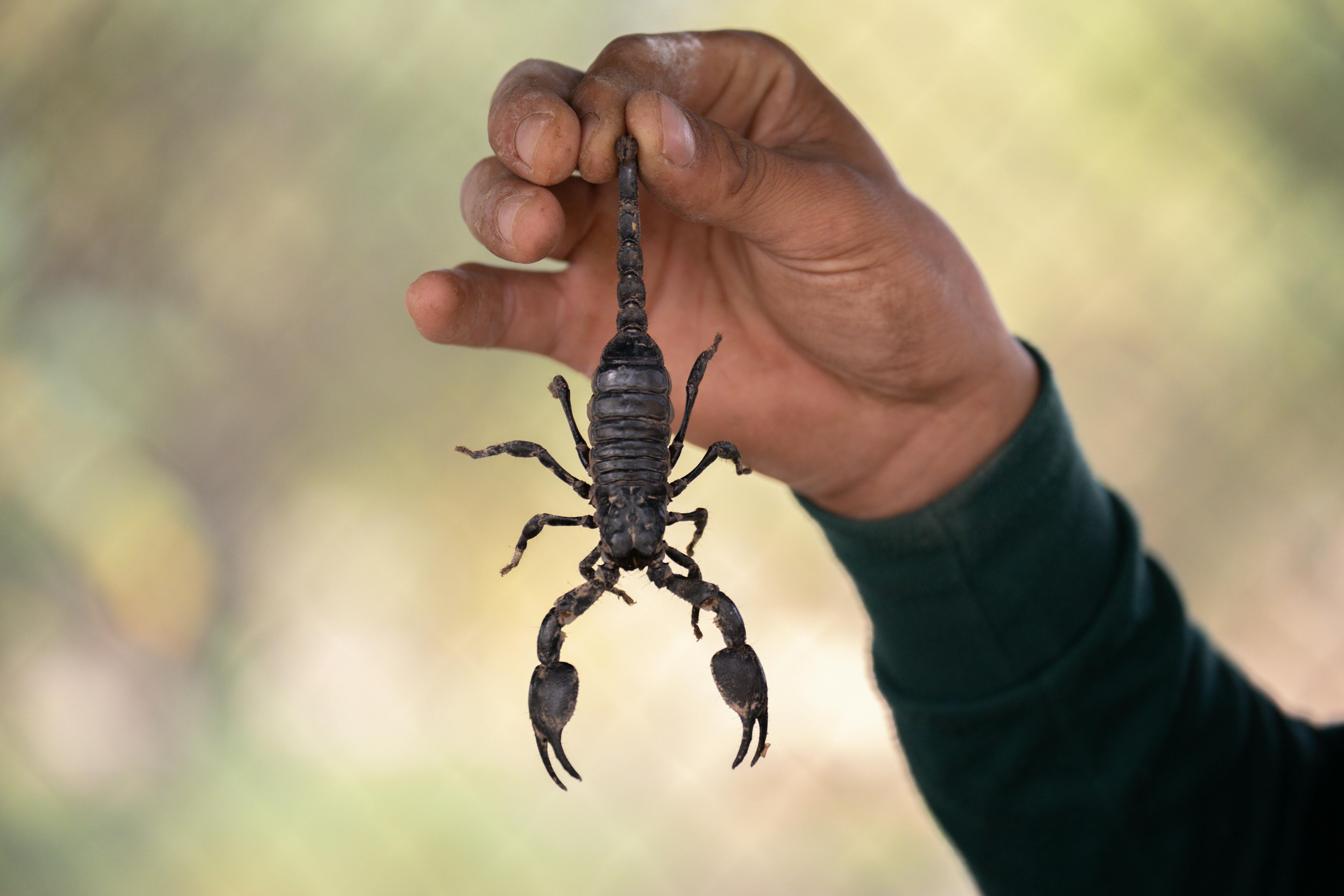
The image above illustrates the careful handling required when sealing gaps around outdoor structures. Just as you would wear gloves when handling a scorpion, protect your hands with sturdy work gloves while applying caulk, foam, or mesh. This prevents cuts from sharp tools and limits direct contact with any pests you might encounter.
6. Safety First – Follow CDC Guidelines
When you’re dealing with chemicals, sharp tools, or unexpected critters, always wear protective gloves and eye protection. The CDC recommends washing hands thoroughly after any pest‑handling activity and keeping work areas well‑ventilated. For a complete safety checklist, visit the CDC pest safety page.
7. DIY Success Checklist
- Inspect the home’s exterior for cracks, gaps, and vent openings.
- Seal each opening using the appropriate method (caulk, weatherstripping, mesh, foam).
- Eliminate indoor moisture sources and improve drainage.
- Adjust landscaping to keep mulch, wood, and vegetation away from the house.
- Wear gloves and follow CDC safety tips while working.
By following these steps, you create a hostile environment for earwigs and dramatically reduce the chance of an indoor invasion. If you ever need a professional touch, Anthem Pest Control is ready to help you protect your home—safely, affordably, and with local expertise.
Treatment Options and Pricing for Earwig Control
DIY Methods: What You Can Do Today
When earwigs start marching across your porch or into your kitchen, many homeowners reach for a quick DIY fix. The most common home‑grown solutions include:
- Bait traps – simple containers filled with rolled oats, fruit, or a sugar‑water mix that attract earwigs at night.
- Diatomaceous earth – a fine powder spread around entry points; it scratches the insects’ exoskeletons and dehydrates them.
- Insecticidal soaps – ready‑to‑use sprays that can be applied to outdoor walls and garden beds.
These methods are attractive because they cost less than a professional visit, often under $20 for the supplies. However, the trade‑off is clear: DIY traps work best for light, localized sightings, and they rarely eliminate a full‑scale infestation. You’ll also need to replace baits and reapply powders regularly, which can become a time‑consuming chore.
Professional Options: Why the Experts Matter
When earwigs have taken up residence inside walls, crawl spaces, or large outdoor areas, a licensed pest‑control company brings tools and knowledge that DIY kits simply can’t match. Anthem Pest’s professional arsenal includes:
- Perimeter spraying – a calibrated mist that creates a protective barrier around your home, targeting earwigs before they cross the threshold.
- Indoor residual treatments – low‑odor, EPA‑approved chemicals applied to baseboards, under appliances, and in cracks where earwigs hide.
- Targeted baits – professionally formulated gel or granule baits placed in strategic locations, ensuring the entire colony consumes the toxicant.
- Emergency “same‑day” services – rapid response crews that arrive within hours of your call, essential for severe or sudden outbreaks.
Professional treatment shines in three key areas: accurate identification (so you don’t waste money on the wrong pest), equipment that reaches hidden voids, and a structured follow-up plan that monitors and re-treats if necessary. For a homeowner dealing with a heavy earwig load, the reliability of a trained technician often outweighs the extra cost when choosing earwig control Suwanee services.
Pricing Comparison: DIY vs. Professional
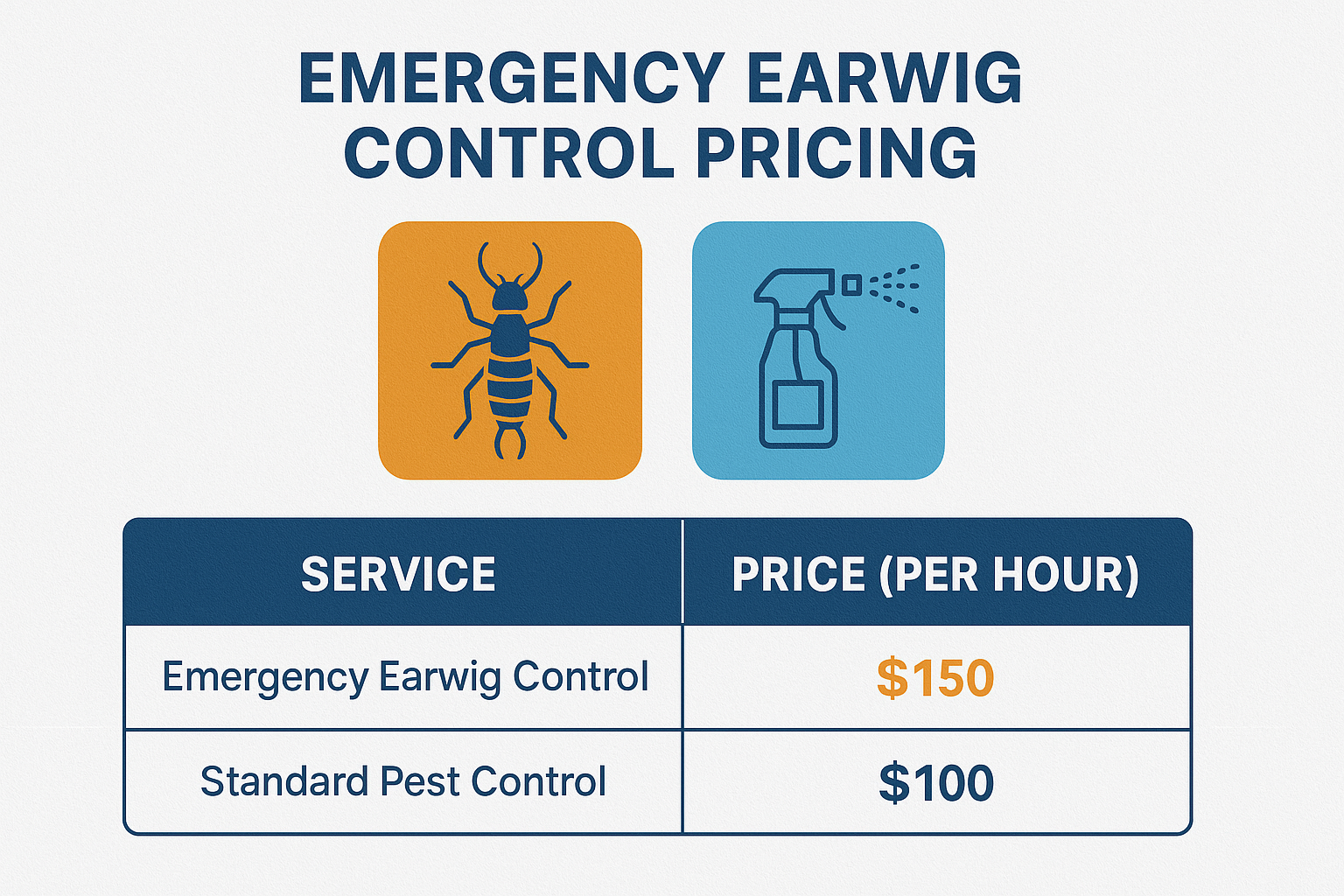
The infographic above breaks down the cost structure you’ll see in Suwanee, Georgia. A typical DIY kit sits under $25, while Anthem Pest’s emergency earwig service is billed per hour at a transparent rate of $99. Standard, scheduled pest‑control plans average $120‑$150 per visit, but they include a broader suite of services (e.g., ant and roach monitoring) that you might not need if earwigs are your sole concern.
Factors That Influence the Final Bill
Even within the same city, pricing can vary based on several measurable factors:
- Property size – larger homes or acreage require more product and longer labor time.
- Infestation severity – a light sighting may need a single treatment; a full‑blown colony can demand multiple visits.
- Treatment type – perimeter sprays are priced differently than indoor residual applications.
- Seasonal demand – earwig activity peaks in late summer; higher demand can affect scheduling fees.
Anthem Pest’s pricing model stays upfront: you receive a detailed quote before any work begins, and there are no hidden surcharges when scheduling earwig control Suwanee services.
Getting Started: Free Inspection Quote & Seasonal Discounts
Ready to move from “I’m seeing earwigs” to “They’re gone”? Anthem Pest offers a free, no‑obligation inspection that pinpoints entry points, assesses colony size, and recommends the most cost‑effective plan. Call 877‑371‑8196 or visit anthempest.com to schedule your visit.
Keep an eye out for our seasonal promotions: during the summer months we often provide a 10 % discount on emergency same‑day services, and a bundled discount when you add earwig control to an existing ant or roach contract.
Industry Reference
For further reading on best practices in pest management, the National Pest Management Association (NPMA) offers comprehensive guidelines that align with our treatment protocols.
Protect Your Home Today with Anthem Pest Control
Quick Recap
Before you call in the pros, make sure you’ve covered the basics:
- Identify earwigs: Look for the slender, dark‑brown bodies and the characteristic pair of pincers at the rear.
- Know the seasonal peaks: Earwigs are most active in late summer and early fall when moisture levels rise.
- Seal entry points: Caulk cracks around windows, doors, and foundation walls; repair damaged screens.
- Choose the right treatment: Decide between a targeted spot‑treatment for a small infestation or a full‑property perimeter spray for larger problems.
Why Choose a Professional Service?
Doing it yourself can work, but a licensed technician brings several advantages you can’t replicate with over‑the‑counter products:
- Safe, EPA‑approved chemicals: Our technicians apply formulations that are effective against earwigs yet safe for children, pets, and the environment.
- Expert knowledge: We know where earwigs hide, how they travel, and which treatment methods work best for Suwanee’s climate.
- Guaranteed results: If earwigs return within the warranty period, we’ll re‑treat at no extra charge.
- Transparent pricing: You’ll receive a clear, itemized quote before any work begins—no hidden fees.
Get a Free, No‑Obligation Quote
Anthem Pest’s locally trained technicians are ready to inspect your home, recommend a customized plan, and answer any questions you have. All treatments use EPA‑approved products, and our free inspection comes with a detailed report and a no‑obligation price estimate.
Give us a call today at 877‑371‑8196 or visit our website at anthempest.com to schedule your complimentary inspection.
Take the first step toward an earwig-free home—reach out now for professional earwig control Suwanee, and let Anthem Pest handle the rest, so you can enjoy a comfortable, pest-free living space without the stress.