Why Flea Emergencies Can’t Wait
Imagine stepping onto the kitchen floor after a long day and feeling a sudden, frantic scratching sensation on your ankle. A quick glance reveals tiny, dark specks darting across the rug—your first unmistakable sign that fleas have moved in. In Smyrna’s warm, humid climate, those specks can multiply faster than you think, turning a minor nuisance into a full‑blown infestation overnight.
Fleas are biological powerhouses. A single adult female can lay up to 100 eggs each day, and over her roughly three‑week lifespan she can produce more than 2,000 eggs. Those eggs hatch within 2‑5 days, releasing larvae that feed on organic debris before maturing into adults in as little as a week. In ideal indoor conditions—moderate temperature, high humidity, and a steady food source of pet blood—the population can double every few days, creating an exponential growth curve that quickly overwhelms any home.
Those numbers illustrate why a single missed flea can quickly become a household crisis.
Beyond the sheer annoyance, flea bites pose real health concerns. Most people experience itchy, red welts that can become infected if scratched excessively. Some individuals develop allergic reactions that intensify the swelling and discomfort. More worrisome, fleas are vectors for diseases such as murine typhus, plague, and flea‑borne spotted fever. The CDC’s overview of flea‑borne illnesses highlights how quickly these pathogens can spread from a single bite to an entire household.
Because the reproductive cycle is so rapid, delaying treatment gives the infestation a chance to explode. One adult flea can give rise to dozens of new adults within a week, and each of those can lay hundreds of eggs. That exponential surge means that what starts as a few stray bites can become a pervasive problem affecting every room, every pet, and every member of the family. Immediate action—whether it’s a DIY spray or a professional treatment from Anthem Pest Control—stops the cycle before it spirals out of control and protects both your home’s comfort and your family’s health.
What Makes Smyrna a Hotspot for Fleas?
Smyrna sits in the heart of Georgia’s humid subtropical zone, where average summer highs hover around 90°F (32°C) and humidity rarely drops below 60%. Those warm, moist conditions accelerate every stage of a flea’s life cycle—from egg to larva, pupa and adult—allowing generations to develop in as little as two weeks when food is plentiful.
Even indoors, Smyrna’s average indoor humidity of 55‑65 % creates a comfortable micro‑climate for adult fleas, allowing them to lay eggs in carpets, pet bedding, and cracks in flooring without desiccating.
Average flea life cycle: 2‑3 weeks under optimal conditions.
But temperature alone isn’t enough. The city’s leafy parks, mature oak canopies, and well‑watered lawns create micro‑habitats that retain moisture in the soil and leaf litter—perfect breeding grounds for flea larvae. When the ground stays damp, larvae can hide and feed on organic debris without drying out.
Common Hosts in Smyrna
- Domestic dogs
- Domestic cats
- Raccoons
- Opossums
- Other small wildlife (e.g., squirrels, skunks)
These animals move freely between backyards and nearby green spaces, transporting adult fleas into homes. A single stray raccoon can carry dozens of fleas, depositing eggs in garden beds that later hatch and migrate onto pets.
According to the 2024 Fulton County Health Department, there were 1,842 documented flea‑related complaints citywide, and a striking 68 % of those originated from Smyrna neighborhoods adjacent to parks or wooded corridors. The combination of a climate that shortens the flea life cycle and a high density of both domestic and wild hosts creates sustained pressure on homeowners.
Understanding how climate and host availability intersect helps residents recognize why flea problems flare up in early summer and linger through fall, prompting timely professional treatment.
What to Do Right Now to Stop the Spread
If you’ve just discovered a flea infestation, time is of the essence. The sooner you interrupt the life‑cycle, the fewer eggs will hatch and the faster you’ll regain control of your home. Follow this emergency checklist—each step can be completed in under an hour and requires only household items or a vetted product.
- Isolate pets and treat them with a vet‑approved flea product. Move dogs and cats to a separate room, away from carpets and bedding. Apply a topical or oral medication that the veterinarian recommends for immediate knock‑down. This stops adult fleas from feeding and laying more eggs on your furry companions.
- Vacuum all carpets, upholstery, and pet bedding thoroughly. Use a high‑efficiency vacuum with a HEPA filter. Go over each surface slowly, pressing the nozzle into seams and crevices where flea larvae hide. After vacuuming, immediately seal the bag or empty the canister into a sealed plastic bag and discard it outside the house.
- Wash bedding, curtains, and removable fabrics at >130 °F. Hot water kills eggs, larvae, and pupae. If a fabric can’t be machine‑washed, place it in a sealed bag and expose it to direct sunlight for several hours; UV rays and heat are lethal to flea stages.
- Apply a temporary EPA‑registered flea spray (e.g., Selvol 15 Insecticide). Follow the label precisely—spray only the areas you’ve just vacuumed and treat cracks, baseboards, and pet‑frequent zones. Do not apply to food preparation surfaces or areas where children play without proper ventilation and protective gear.
“A single flea can lay 2,000 eggs in its lifetime.” EPA Flea Control
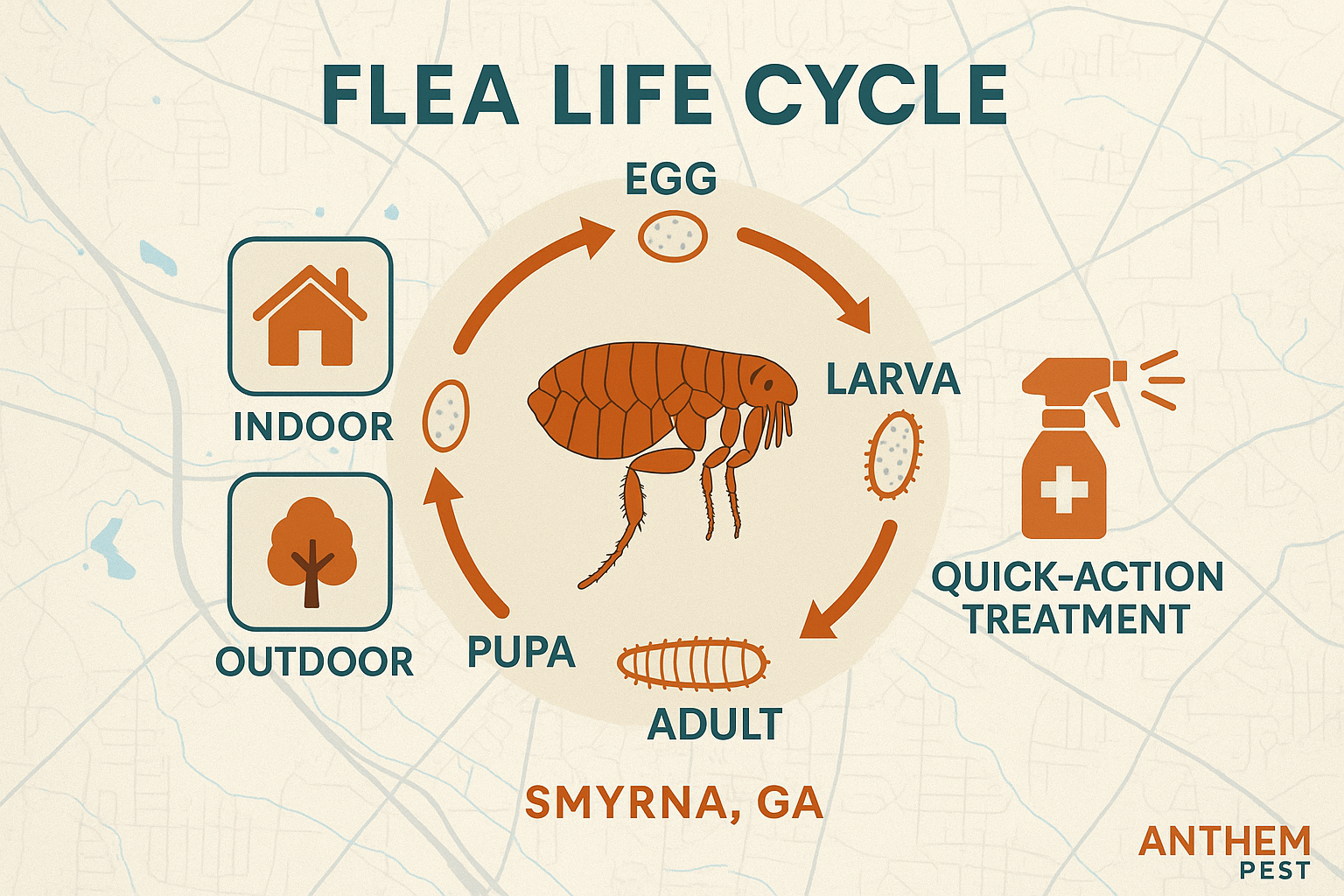
Visualizing the flea’s four‑stage life‑cycle—egg, larva, pupa, adult—helps you understand why each step matters. The infographic below illustrates how quickly eggs hatch into larvae that feed on organic debris, then spin cocoons (pupae) that can remain dormant for months. By vacuuming, washing, and treating surfaces now, you’re essentially crushing the cycle at every vulnerable point.
Remember, these emergency actions are a stop‑gap. Once the immediate surge is under control, schedule a professional follow‑up with Anthem Pest Control. Our EPA‑approved treatments target hidden pupae and provide long‑lasting protection, ensuring your home stays flea‑free long after the emergency measures are done.
Do‑It‑Yourself Options That Won’t Harm Your Family
When a flea invasion hits your Smyrna home, reaching for harsh chemicals isn’t your only option. Safe, non‑chemical DIY methods can knock out eggs, larvae, and adult fleas while keeping children and pets out of harm’s way.
A high‑temperature steam cleaner is one of the quickest ways to destroy flea life stages hidden in carpet fibers, upholstery, and pet bedding. Aim the nozzle at least 130 °F (54 °C) for 10‑15 seconds per spot; the heat ruptures the exoskeleton of eggs and larvae, rendering them dead before they can hatch. Move the steam slowly over high‑traffic zones, then let the area dry completely.
Food‑grade diatomaceous earth (DE) works like a microscopic sandpaper. Sprinkle about one cup for every 100 sq ft of carpet, rug, or floor space, then gently work it into the fibers with a soft brush. Leave the powder in place for 48 hours—this gives fleas enough time to walk through and lose moisture, which kills them. After the waiting period, vacuum thoroughly, disposing of the bag or canister contents outside.
A natural spray can be mixed using lavender or eucalyptus essential oil, both of which have mild repellent properties. Combine 20 drops of oil with 1 quart of water and add a teaspoon of mild dish soap to emulsify. The final concentration stays under 5 %—the safety threshold recommended for indoor use. Lightly mist pet bedding, cracks, and baseboards; the scent discourages adult fleas from settling without irritating sensitive skin.
The National Pest Management Association (NPMA) backs these low‑impact tactics in its Flea Facts guide, noting that mechanical removal and physical barriers are effective first‑line defenses when chemical treatments are avoided. For a deeper dive, see the NPMA’s online resource Flea Facts.
Even natural methods require vigilance. Keep DE away from open mouths and eyes—apply it while children are in another room and vacuum any residue before they return. Essential‑oil sprays should never be used on a wet pet’s skin, and the dilution must never exceed the 5 % limit to avoid respiratory irritation. Always test a small, hidden area first to ensure no discoloration.
Why a Licensed Technician Is the Fastest Path to Relief
Rapid, Targeted Emergency Response
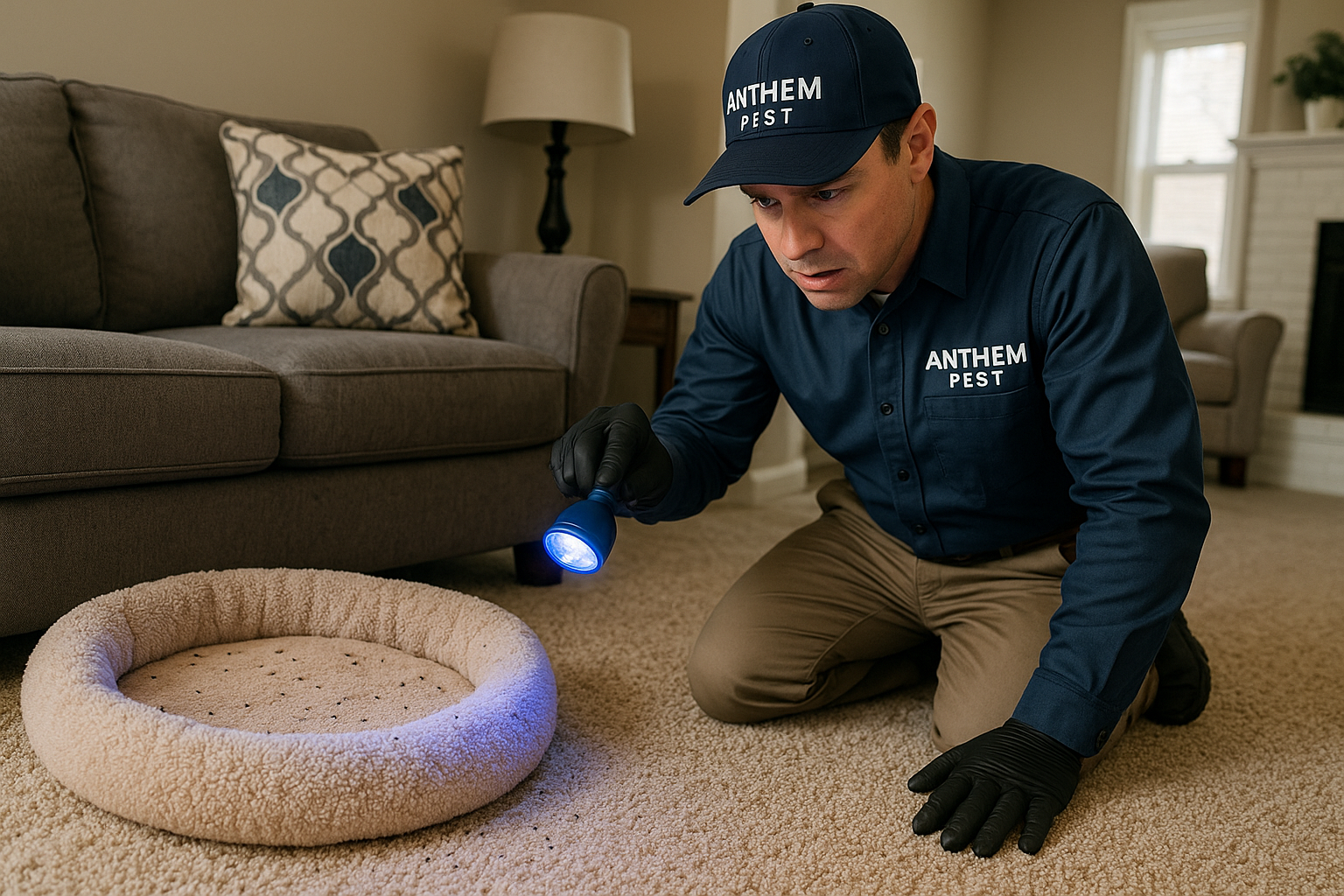
When a flea infestation erupts, every hour counts. Anthem Pest’s licensed technicians arrive equipped with a tri‑step arsenal: indoor fogging to reach hidden larvae, spot treatments for heavily infested zones, and pet‑safe residual sprays that keep the cycle broken for weeks. The fogger disperses microscopic droplets that settle into cracks, carpet fibers, and upholstery—places a DIY spray can’t penetrate. Spot treatments focus on pet bedding and high‑traffic areas, while the residual spray creates a protective barrier that stays effective without harming dogs or cats.
Structured Follow‑Up for Complete Eradication
Fleas have a life cycle that can span three weeks, so a single visit rarely guarantees total elimination. Anthem schedules 2‑3 follow‑up appointments over a 4‑6‑week window. The first follow‑up checks for any surviving adults and re‑applies residual spray if needed. The second (or third) visit confirms that eggs and pupae have been neutralized, giving homeowners peace of mind that the infestation won’t rebound once the treatment dries.
Transparent, Up‑Front Pricing
Homeowners in Smyrna can expect clear, no‑surprise costs. An emergency call‑out is priced between $149 and $199, covering the initial assessment, fogging, and spot treatment. A full‑home treatment—tailored to square footage—ranges from $299 to $449 (2025 pricing). All fees are disclosed before any work begins, and the follow‑up visits are included in the package, so you never face hidden labor charges or unexpected add‑ons.
Proven Results: A Smyrna Success Story
“We called Anthem after spotting fleas on our Labrador and in the carpet. The technician arrived within an hour, fogged the house, and left a pet‑safe spray. After the first visit, we saw far fewer fleas, and by the second follow‑up the count was down 95 %. The family felt relief immediately, and we haven’t seen a single flea since.” – Homeowner, Smyrna, GA
Certified Technicians & EPA‑Registered Products
Every Anthem technician holds a state‑issued pest control license and completes annual continuing‑education courses on the latest flea‑control protocols. They exclusively use EPA‑registered products that have been rigorously tested for efficacy and safety. Before any spray is applied, technicians don’t just wear gloves—they follow a strict safety protocol that includes ventilation checks, pet removal procedures, and a post‑treatment walkthrough with the homeowner to explain lingering precautions.
Keeping Fleas Out Year‑Round in Georgia
Quarterly Home Inspections
Regular inspections are the backbone of a flea‑free home. Schedule a quick walk‑through every season and use the checklist below to catch early signs before they become an infestation.
- Spring (Mar‑May): Look for adult fleas on pets, check bedding for tiny dark specks, and inspect outdoor pet shelters.
- Summer (Jun‑Aug): Scan lawns and patios for flea “jump‑outs,” verify that pet‑treatments are still active, and vacuum high‑traffic rooms.
- Fall (Sep‑Nov): Examine stored firewood and leaf piles for hidden larvae, clean pet bedding, and replace any cracked caulking around doors.
- Winter (Dec‑Feb): Focus on indoor hotspots—carpets, under furniture, and pet crates—since fleas tend to crowd inside when temperatures drop.
Yard Maintenance
A tidy yard removes the outdoor breeding grounds fleas love. Perform these tasks each month to keep your landscape hostile to pests.
- Trim grass to no more than 2‑3 inches; short grass reduces humidity and makes it harder for fleas to hide.
- Rake and dispose of leaf litter promptly, especially in shaded areas where moisture lingers.
- Eliminate standing water in birdbaths, plant saucers, and clogged gutters—flooded spots create ideal micro‑climates for flea larvae.
- Clear debris from pet feeding stations and store food in sealed containers to avoid attracting rodents, which can carry fleas.
Monthly Pet Flea‑Preventive Medication
Pets are the primary carriers of adult fleas, so a consistent preventive regimen is essential. Choose a product that fits your lifestyle—topical spot‑on treatments or oral tablets— and apply it on the same day each month. Most veterinarians recommend starting the schedule in early spring and continuing uninterrupted through winter. If you have multiple pets, treat each one; a single untreated animal can re‑introduce fleas to the whole household.
High‑Risk Summer Months (June‑August)
Georgia’s warm, humid summer provides the perfect breeding conditions for fleas. Use the simple calendar graphic below to remind yourself of extra vigilance during these peak months.
| Month | Action Focus | Risk Level |
|---|---|---|
| June | Intensify yard mowing, double‑check pet meds | High |
| July | Weekly vacuum, inspect outdoor pet gear | High |
| August | Spot‑on treatment audit, clear standing water | High |
| September‑May | Maintain quarterly inspections and yard care | Moderate to Low |
For detailed, EPA‑approved guidelines on preventing flea infestations, visit the EPA Flea Control page.
Neighborhood Tips Specific to Smyrna
Most homes in Smyrna are single‑family houses built on raised foundations, and many include a full basement. Basements tend to stay cool and damp, especially after a Georgia rainstorm. When moisture accumulates in stored boxes, cardboard, or old furniture, it creates the perfect micro‑climate for flea eggs and larvae. Keep basements tidy, use a dehumidifier, and store items off the floor on plastic shelving to break the flea life cycle.
Wildlife that brings fleas into the yard
Raccoons, opossums, and stray or feral cats are common visitors in Smyrna neighborhoods. These animals often carry the cat flea Ctenocephalides felis, which can jump onto pets or even directly onto humans. When a raccoon nests under a deck or an opossum takes shelter in a crawl space, fleas are deposited in the same moist areas where your home’s basement may be humid.
Seal entry points and manage wildlife responsibly
- Inspect the foundation, eaves, and garage doors for gaps larger than ¼ inch and caulk or install steel mesh.
- Fit tight‑closing screens on all vents and utility openings.
- Trim tree branches and shrubs that touch the roof or siding to eliminate animal pathways.
- Use motion‑activated lights or ultrasonic deterrents to discourage nocturnal visitors.
Regularly inspect crawl spaces and garage floors for water or damp insulation, and address any leaks within 24 hours to deny fleas a breeding ground.
If you spot a raccoon, opossum, or stray cat lingering near your home, report it promptly. Smyrna Animal Control can safely capture and relocate wildlife, reducing the chance of flea introductions. Call Smyrna Animal Control at (404) 938‑7400 or dial 311 for non‑emergency assistance.
By keeping basements dry, sealing potential entryways, and working with local animal control, you create a hostile environment for fleas before they ever reach your living spaces.
Quick Answers to Common Flea Concerns
Fleas move quickly, and homeowners often have the same urgent questions. Below are concise answers to the three most common concerns we hear during emergency calls in Smyrna.
Can fleas bite humans?
Yes. Flea bites appear as small, red welts that itch intensely. While most bites are harmless, they can become infected if scratched. In rare cases, fleas transmit diseases such as murine typhus or plague. For a full list of flea‑borne illnesses, see the CDC’s guide here.
How long does a professional treatment last?
A properly applied professional treatment can protect your home for up to eight weeks. Anthem’s technicians use a residual spray that continues to kill emerging fleas and larvae long after the initial application. Because flea life cycles can extend beyond a single treatment, we schedule a follow‑up re‑inspection around the four‑week mark to ensure any hidden pockets are addressed and to determine if a booster is needed.
Is it safe for children and pets?
Anthem only applies EPA‑registered products that are formulated for low toxicity in occupied homes. These products have been tested and approved for use around children and pets when applied according to label directions. Our safety data sheet summary confirms that the active ingredients break down quickly and pose minimal risk when used by trained professionals. As an extra precaution, we advise keeping pets and children away from treated areas for a short drying period, typically 30 minutes to an hour.
Additional Resources and References
For homeowners who want to confirm every step of an emergency flea response, we rely on government and industry publications that are regularly updated and peer‑reviewed. Below are the key references that informed this guide, along with direct links you can bookmark for quick access.
- EPA flea‑control guidelines – Comprehensive recommendations on approved chemicals, application methods, and safety precautions. The EPA also lists state‑specific restrictions, which helps us tailor treatments to Georgia regulations. https://www.epa.gov/pests/flea-control
- CDC information on flea‑borne diseases – Details on illnesses such as murine typhus and plague, plus prevention tips. Understanding these health risks guides our advice on protecting families and pets during an outbreak. https://www.cdc.gov/parasites/fleas/
- NPMA flea facts – The National Pest Management Association’s fact sheet covering flea biology, seasonal activity, and treatment options. It offers a concise overview that our technicians use when explaining why early intervention matters. https://www.npmapestworld.org/pest-library/fleas/
Two data points in this article still require local confirmation. We are contacting the Fulton County Health Department to obtain the most recent 2024 Smyrna flea‑complaint statistics, and we are reviewing Anthem’s current emergency‑service pricing on the official website to ensure the figures remain accurate.
- Verify 2024 Smyrna flea complaint statistics from Fulton County Health Department.
- Verify current Anthem emergency service pricing on anthempest.com.
Take Action Today for a Flea‑Free Home
Flea infestations don’t wait—they multiply fast, bite, and can spread disease, turning a simple nuisance into a full‑blown emergency in just days.
That’s why Anthem Pest Control offers same‑day emergency service staffed by fully licensed technicians who arrive prepared with proven, pet‑safe treatments and a money‑back guarantee if the problem isn’t resolved.
Don’t let the fleas take another night—pick up the phone now for a free, no‑obligation quote and the peace of mind that comes with a rapid, professional response.
When you choose Anthem, you get:
- Same‑day response within hours
- Licensed technicians with ongoing training
- Pet‑ and child‑safe products
- Money‑back guarantee for unsolved infestations
These guarantees mean you can act now with confidence, knowing the problem will be handled quickly and correctly. Our rapid dispatch and thorough inspection eliminate hidden nests before they spread.
Call us today at 877‑371‑8196 or click the link below to schedule your emergency appointment online. Our team is standing by to protect your family and restore comfort to your home.
Visit Anthem Pest Control to schedule your emergency appointment online.