Why Immediate Mouse Control Matters in Vinings

Because mice reproduce fast and travel unnoticed, a single sighting often signals a hidden colony. Left unchecked, they gnaw electrical wiring, insulation, and pantry goods, creating fire hazards and costly repairs. The constant scurrying also spikes anxiety levels for families, especially children who may feel unsafe in their own space.
Vinings’s dense residential neighborhoods, tucked between the Chattahoochee River and several city parks, provide the perfect corridor for rodents. Well‑maintained lawns, abundant leaf litter, and nearby water sources attract mice looking for shelter and food, making the suburb a hotspot for rapid infestations.
In the next sections we’ll walk you through a proven, step‑by‑step emergency plan: immediate inspection, safe DIY traps, quick sanitation tips, and when to call a certified technician. Each action is designed to halt reproduction, protect your belongings, and restore peace of mind within hours.
This article is packed with Vinings‑specific data—such as recent rodent sightings reported by the Fulton County health department—plus practical DIY methods you can start tonight and clear explanations of professional services, pricing, and guarantees offered by Anthem Pest Control.
Acting now isn’t just about eliminating a mouse; it’s about safeguarding your family’s health, preserving the value of your home, and keeping Vinings the quiet, comfortable neighborhood you love.
Every 24‑hour delay can double the size of a colony, so a prompt response is the most cost‑effective strategy you can take.
Health Risks and Local Spike in Mouse Activity
When mice slip into your home, the danger extends far beyond a startled squeak. These nocturnal foragers are carriers of several disease‑causing agents that can affect every member of the household. Recognizing the specific health threats gives you a clear reason to act quickly, rather than hoping the problem will resolve itself.
Major health threats posed by mice
- Hantavirus – a respiratory illness that can become fatal if untreated.
- Salmonella – bacteria spread through droppings, leading to severe gastrointestinal upset.
- Allergens – proteins in urine and dander that trigger asthma attacks and chronic sinus irritation.
- Structural damage to wiring – gnawed wires create fire hazards and expose residents to electrical shocks.
The Centers for Disease Control and Prevention reports that rodent‑borne illnesses affect roughly 3 % of U.S. households each year. While the percentage sounds small, the sheer number of homes in America means thousands of families confront real medical costs, missed work days, and long‑term health complications every year.
Local data from 2024 shows a sharp uptick in mouse sightings throughout Fulton County parks. “We’ve documented a 35 % increase in rodent activity across our recreational areas this spring,” explained Dr. Lisa Monroe of the Fulton County Health Department. The surge is attributed to milder winters and abundant food sources in park picnic zones, which push mice into nearby neighborhoods.
Vinings residents feel the impact firsthand. One family discovered extensive gnawing behind their kitchen cabinets, resulting in damaged electrical wiring and compromised insulation. The repairs alone totaled $1,200, not counting the stress of potential health exposure.
Before the problem escalates, homeowners can perform a quick verification sweep: check for droppings near food storage, listen for nocturnal scurrying, and inspect exposed wiring for chew marks. Spotting these signs early gives you the leverage to call a professional service—like Anthem Pest Control—before a minor sighting turns into a costly, health‑risking infestation.
Spotting Mouse Signs and Entry Points
When mice invade a Vinings home, the first step toward an effective solution is simply seeing the evidence. Small clues—droppings on countertops, gnaw marks on baseboards, or a faint rustling in the walls—tell you exactly where the problem lives and how it got inside.
Visual clues you can’t ignore
- Droppings: Dark, rice‑sized pellets often appear near food sources, along baseboards, or in cabinets.
- Gnaw marks: Fresh cuts on wood, insulation, or electrical wiring reveal a mouse’s constant need to sharpen teeth.
- Rub marks: Greasy streaks along walls or beams are the result of a mouse’s oily fur brushing against surfaces.
- Nesting material: Shredded paper, fabric fibers, or dried plant matter tucked into corners signal an active nest.
- Footprints: Tiny, five‑toed prints in dusty areas or on a fresh layer of flour can pinpoint traffic routes.
Typical entry points
- Utility gaps around water, gas, or electrical lines.
- Foundation cracks larger than a quarter‑inch.
- Vent openings, especially those without metal screens.
- Gaps around pipes, HVAC ducts, and cable entries.
Key indicators that professional help is needed
- More than 10 mouse sightings in a single week.
- Visible damage to electrical wiring, insulation, or stored food containers.
- Discovery of baby mice (pups) or nests tucked away in walls, attics, or crawl spaces.
- Constant nighttime activity that persists despite traps or baits.
Why DIY falls short
Attempting to eradicate a growing infestation on your own often leads to incomplete coverage. Mice can slip through tiny gaps that homemade barriers miss, leaving pockets of activity untouched. In addition, handling droppings or dead rodents without proper protection exposes you to hantavirus, salmonella, and other rodent‑borne pathogens. Even more concerning, unchecked chewing on electrical wires can create fire hazards or cause costly structural repairs.
Health and property hazards
Beyond the nuisance, mice carry diseases such as hantavirus, leptospirosis, and salmonella, which can contaminate surfaces, food, and even your air supply. Their incessant gnawing on insulation, drywall, and especially electrical wiring not only raises fire risk but can also force costly repairs that run into the thousands.
24‑hour emergency response is essential
Professional pest companies in Vinings, Georgia, maintain round‑the‑clock teams that can assess the situation, seal entry points, and apply EPA‑approved treatments safely. A qualified technician brings the right tools—thermal imaging, rodent‑grade baits, and exclusion expertise—to eliminate the problem quickly and prevent recurrence.
What Anthem Pest Control offers
- 24/7 emergency rodent response.
- Comprehensive inspection and exclusion.
- EPA‑approved baiting and safe removal.
Our certified technicians know the Vinings building codes, so every seal and treatment meets local standards while protecting your family.
Dial 877‑371‑8196 for immediate assistance.
Why Anthem Pest Is the Vinings Choice
When a mouse invasion turns your Vinings home into a midnight runway, you need a partner who knows the neighborhood streets, the local building codes, and the most effective rodent‑control tactics. Anthem Pest has built its reputation serving Vinings, Buckhead, and West Cobb, so the company understands the unique housing styles—from historic bungalows to new townhomes—that can invite unwelcome guests.
Local expertise backed by solid credentials
Every technician on the Anthem roster is both EPA‑registered and Georgia‑licensed. That means the chemicals and baits they apply meet strict federal safety standards while also complying with state regulations. Homeowners can feel confident that the treatment won’t jeopardize pets, children, or the environment.
Transparent emergency pricing you can trust
Anthem Pest’s emergency line is staffed 24/7, so Vinings homeowners can reach a certified tech any hour. Once on site, the technician conducts a room‑by‑room assessment, maps every potential entry, and provides a written action plan before treatment begins. This transparency eliminates surprise costs and builds trust from the first call.
Proven results, real homeowner stories
“Anthem Pest arrived within an hour of my call, identified three hidden entryways, and had the house mouse‑free by the next day. Their pricing was exactly what was advertised, and I felt safe knowing a certified tech was on the job.” — Verified Vinings homeowner
Our four‑step protocol—inspect, exclude, bait, follow‑up—ensures mice are removed and prevented from returning. After sealing gaps, we place tamper‑proof bait stations discreetly and schedule a post‑treatment check to verify success.
Ready to protect your home?
Visit the Anthem Pest Rodent Control page to schedule an emergency appointment or learn more about the preventative programs that keep mice out year after year.
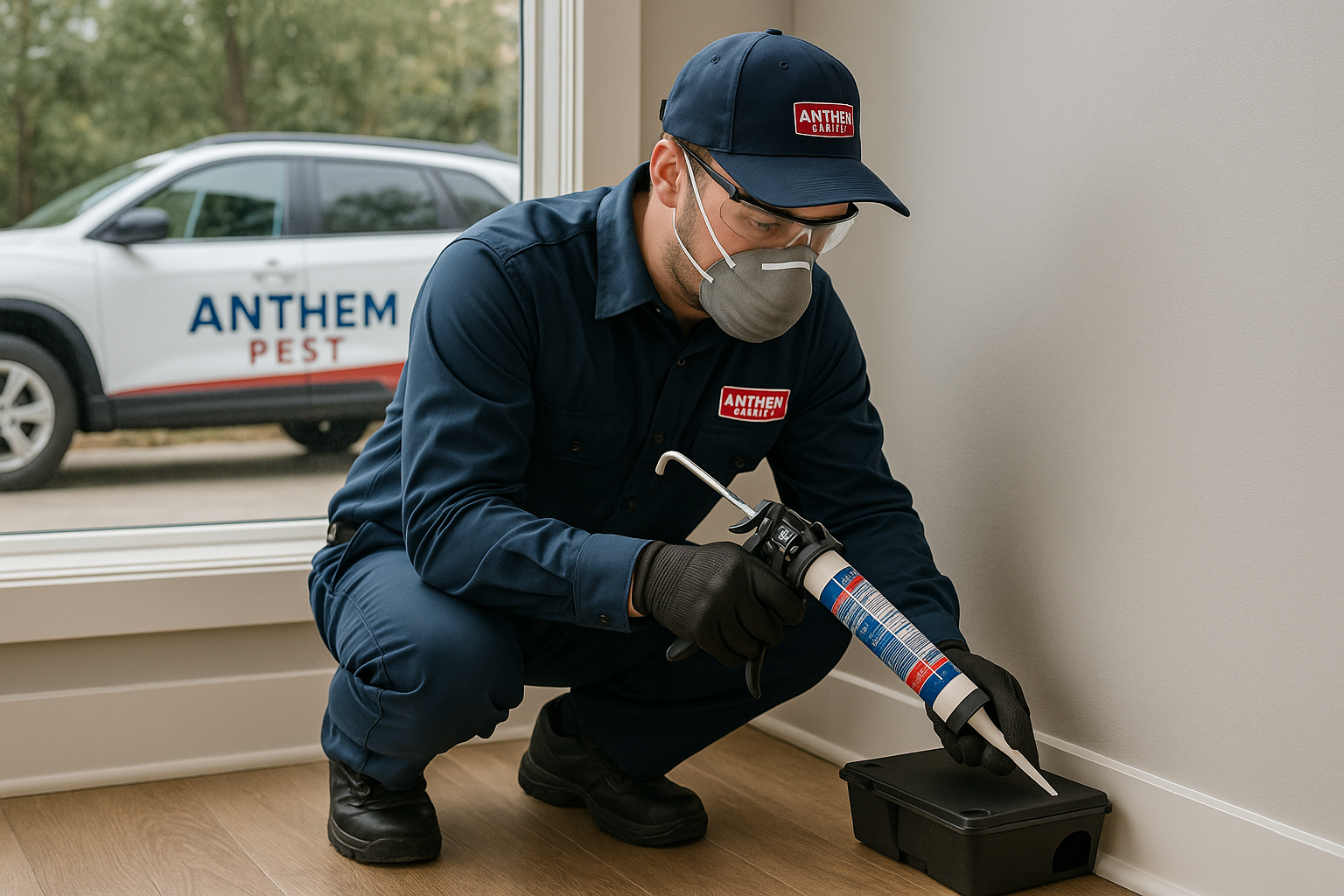
Mouse Treatment Methods and Cost Breakdown
Integrated Pest Management (IPM) Steps
- Thorough Inspection: A certified technician surveys every room, attic, crawl space and exterior foundation to locate mouse activity, droppings, gnaw marks, and potential entry gaps.
- Exclusion (Sealing): All discovered openings—typically ¼‑inch holes around pipes, vents, and utility penetrations—are sealed with steel‑wool, caulk, or hardware cloth to prevent re‑entry.
- Baiting: EPA‑approved bait stations are placed along walls, behind appliances, and in concealed pathways where mice travel.
- Ongoing Monitoring: After the initial treatment, technicians return for follow‑up checks, replace depleted baits, and verify that exclusion measures remain intact.
Treatment Options
- Snap traps – classic, low‑cost mechanical traps that kill instantly.
- Electronic traps – battery‑powered devices that deliver a humane, quick shock.
- Tamper‑proof bait stations – child‑ and pet‑safe containers that hold rodenticide while preventing accidental exposure.
- Structural sealing – permanent closure of entry points using durable materials.
Detailed Cost Breakdown
The transparent pricing model makes budgeting simple:
- Initial inspection: $79 (covers the full‑home walkthrough and report).
- Individual bait stations: $99‑$149 each, depending on the type and quantity of bait.
- Full‑service package (inspection, exclusion, bait stations, and first follow‑up): $229‑$349.
Pricing varies with number of stations and the complexity of exclusion.
How This Stacks Up Nationally
According to the National Pest Management Association’s 2023 cost survey, the average mouse‑control expense across the United States ranges from $250 to $400. Anthem’s bundled package therefore sits at the low‑end of the spectrum, delivering professional service without the premium markup.
Real‑World Example
Mrs. Patel, a Vinings homeowner, opted for the full‑service package at $229. She compared the quote to a competitor’s $349 estimate for a similar scope and realized a direct savings of $120. The comprehensive treatment eliminated the mice within two weeks, and the follow‑up visit confirmed that all
Ongoing Prevention Tips for Vinings Residents
Keeping mice out of your home isn’t a one‑time fix; it’s a habit you build around your property. In Vinings, the mix of mature trees, close‑in neighborhoods, and humid summers creates perfect hiding spots for rodents. By treating the yard and the house as a single ecosystem, you cut off the pathways mice use to slip inside.
Landscape Maintenance
Outdoor spaces are the first line of defense. When vegetation touches your foundation, it offers a bridge for mice to climb onto the roof and find entry points.
- Trim tree branches at least two feet away from the house. This removes a natural highway that rodents love.
- Clear yard debris such as fallen leaves, wood piles, and old furniture. These items become temporary shelters during hot summer nights.
- Seal compost bins and place them at least ten feet from any walls. A tightly fitted lid prevents the scent of food from drawing mice toward your home.
Home Maintenance
Inside the structure, small gaps are mouse magnets. Regular upkeep can eliminate those invitation cards.
- Repair roof vents and eaves with steel mesh or caulk. Mice can squeeze through openings as small as a quarter of an inch.
- Install door sweeps on all exterior doors. A simple brush barrier stops rodents from sliding underneath.
- Store firewood off the ground and keep it at least a foot away from exterior walls. Stacked wood is a favorite nesting site; raising it on pallets reduces contact.
Seasonal Check‑In
Even though the tips above work year‑round, a focused inspection in early spring makes a big difference. Schedule a pre‑emptive walk‑through in March—the time mice begin scouting for warm nesting spots. A quick look at entry points, insulation, and stored food can stop a seasonal surge before it starts.
Neighborhood Collaboration
Rodent control is more effective when the whole block is on the same page. In Vinings, the Glenridge, West Vinings, and Vinings Overlook communities each have unique layouts, but they share common challenges.
- Glenridge: Organize a quarterly clean‑up of common areas, focusing on removing leaf litter and discarded pallets.
- West Vinings: Coordinate with the homeowners’ association to inspect shared drainage ditches for vegetation overgrowth.
- Vinings Overlook: Host a seasonal “Mouse‑Free” workshop where residents learn to seal cracks and properly store pet food.
Anthem Pest Control recommends partnering with local HOA boards to schedule these community events and to provide professional inspections when needed. By staying proactive and working together, Vinings residents can keep mouse populations at bay all year long.
FAQ About Mouse Control
Below are answers to the most common concerns homeowners have when facing an urgent mouse problem in Vinings. Understanding the options and safety measures helps you act quickly and confidently.
Are snap traps humane?
Modern snap traps are designed to kill instantly, reducing suffering compared to glue boards or poison. However, many homeowners prefer non‑lethal options such as catch‑and‑release traps or electronic devices that deliver a quick shock. At Anthem Pest Control we assess your comfort level and can recommend the most humane method that still meets the urgency of an infestation. After a trap kills, we advise proper disposal and thorough cleaning to prevent disease spread.
How long does treatment take?
A professional mouse‑control program typically shows results within a few days, but full elimination usually requires 1‑2 weeks of monitoring and follow‑up visits. Technicians place bait stations, seal entry points, and track activity to ensure no survivors remain. If the problem persists beyond two weeks, we re‑evaluate the approach and adjust tactics at no extra charge. We also offer a guarantee that any new activity within the guarantee period will be addressed at no additional cost.
Will children and pets be safe?
Our technicians use child‑proof bait stations that lock away toxic attractants, making them inaccessible to curious hands or paws. We also employ low‑toxicity baits and place them in concealed locations, following strict EPA safety guidelines. After placement, we provide homeowners with clear instructions on keeping children and pets away until the stations are removed. Once the treatment concludes, we perform a final walkthrough to verify that all bait stations are removed and the area is safe for daily use.
Act Now – 24/7 Emergency Mouse Control
When mice infiltrate your Vinings home, every hour that passes increases the risk of disease, structural damage, and mounting stress. A swift response cuts off food sources, prevents breeding, and protects your family’s health and peace of mind before the problem spirals out of control.
Anthem Pest Control’s Vinings team lives in the community, so we know the local mouse hotspots and the most effective treatment routes. Our technicians are on call 24 hours a day, seven days a week, and arrive fully equipped to diagnose, trap, and seal entry points in a single visit. Pricing is transparent—no hidden fees, no surprise surcharges—so you know exactly what you’re paying for before any work begins.
Don’t let another night go by with rodents roaming your kitchen. Call us now for a free, no‑obligation quote at 877‑371‑8196 or click to Visit Anthem Pest Control. Our friendly crew will schedule an emergency inspection and get your home back to safe, mouse‑free living—fast and affordable.