Why Rat Problems Matter for Decentral Homeowners
Decatur may feel like a quiet suburb, but two rodent species have made it their home: the agile roof rat (Rattus rattus) that scurries through eaves and trees, and the larger Norway rat (Rattus norvegicus) that prefers ground-level burrows and basements. Both thrive in the humid climate and abundant vegetation that characterize the Atlanta metro area, and they’re surprisingly adaptable to the tight spaces of modern homes—making emergency rat control Decatur homeowners rely on more important than ever.
Health risks you can’t ignore
Rats are more than a nuisance; they are disease carriers. Their saliva, urine, and droppings can transmit leptospirosis, hantavirus, and salmonella—illnesses that can affect anyone from toddlers to seniors. Even if no infection occurs, the proteins in rat droppings become airborne allergens, triggering asthma attacks and chronic respiratory irritation for sensitive residents.
Property damage that hits your wallet
Beyond health, rats chew anything that resembles food, including electrical wiring, insulation, and plumbing. A single gnawed wire can spark a fire, while damaged insulation reduces energy efficiency and raises utility bills. Their nesting habits also attract mold and attract other pests, creating a cascade of repair costs that quickly outpace the price of a professional treatment.
Rising sightings in Decatur
Local pest technicians report a noticeable uptick in rat activity over the past five years. Neighborhood surveys show a 27 % increase in homeowner‑reported sightings, especially after heavy rains that flood low‑lying yards and force rodents to seek shelter indoors. The trend aligns with regional data indicating that urban development and warmer winters give rats longer breeding seasons and more entry points into homes.
What the EPA says
The U.S. Environmental Protection Agency warns that “rodents can cause structural damage and spread disease,” and recommends immediate action when signs appear [EPA Rodent Info]. Ignoring the problem not only violates these guidelines but also puts your family’s health and your property’s integrity at risk.
Setting the stage for action
Understanding the species that invade Decatur homes, the health hazards they bring, and the growing frequency of encounters helps you recognize why early detection matters. In the next sections we’ll walk you through the tell‑tale signs of a rat infestation—chewed materials, droppings, gnaw marks—and outline the steps you can take, from simple exclusion techniques to professional emergency treatment, to safeguard your home and peace of mind.
Spotting the Early Warning Signs of a Rat Infestation
Common Signs You Can’t Afford to Miss
Rats are surprisingly tidy when it comes to hiding their activity, but they still leave a trail. Fresh droppings—about half an inch long, dark, and slightly oily—are the most obvious clue. Look for gnaw marks on wood, plastic, or wiring; rats’ incisors leave clean, parallel cuts that are deeper than a squirrel’s nibble.
Open food containers that have been chewed open, especially those with a greasy residue, signal that a rodent has been using them as a snack station. Finally, notice the faint, greasy “runways” they leave on walls or countertops—these are smeared footprints mixed with saliva that help them navigate tight spaces.
How to Inspect Your Modern Kitchen Counter

Start at the back of the counter and work forward, using a flashlight to catch the tiniest specks. Fresh droppings will appear as dark specks about the size of a grain of rice; older ones may be lighter and crumble easily. Run your fingertip lightly across the surface—any greasy smudge that feels slightly sticky is likely a runway left by a rat’s tail.
Don’t forget the edges of cabinets and the underside of appliances. Rats love the shadowed gap between a stove and the wall; a quick glance there can reveal both droppings and tiny gnaw marks on the metal.
Tips for Checking Hidden Areas
Rats are masters of concealment, so expand your search beyond the kitchen. In the attic, inspect insulation for shredded fibers and droppings near joists. Crawl spaces often have a thin layer of dust; any clumped, dark spots are suspect.
Behind refrigerators, dishwashers, and washers, pull the appliances out just enough to see the floor and walls. Look for gnawed cardboard boxes, chewed wiring, and small holes—typically ½‑inch in diameter—where a rat can squeeze through. Exterior entry points are equally critical: examine the foundation for gaps around vents, utility lines, and the garage door seal.
Quick Inspection Checklist
- Check kitchen countertops for dark droppings and greasy smudges.
- Inspect food containers for chew marks and broken seals.
- Look for gnaw marks on wood, plastic, and wiring in cabinets.
- Examine attic insulation and joists for shredded material and droppings.
- Search crawl spaces for dark clumps and tiny entry holes.
- Pull out appliances (refrigerator, dishwasher) and inspect the floor and walls behind them.
- Survey exterior walls for gaps around vents, pipes, and the garage door.
- Listen for scurrying noises, especially at night, when rats are most active.
Why Early Detection Saves Money—and Peace of Mind
Spotting a rat problem when the evidence is still fresh can dramatically lower treatment costs. A small, localized bait or trap placement often resolves the issue before a full‑scale extermination is needed. The longer rats go undetected, the more they gnaw on wiring, insulation, and structural wood—damage that quickly escalates into expensive repairs.
Moreover, early action prevents health risks. Rat droppings carry pathogens that can contaminate food and surfaces, leading to illnesses for your family. By conducting the quick inspection outlined above, you give Anthem Pest Control the best possible starting point for a targeted, affordable solution.
Professional Rat Control Methods and What to Expect
When rats invade a Decatur home, a quick, thorough response is essential. Anthem Pest Control combines proven, non‑chemical barriers with targeted chemical solutions—all delivered by certified technicians who keep safety and transparency front‑and‑center. Below is a step‑by‑step look at what our professional rat control process looks like, so you know exactly what will happen from the first inspection to the final follow‑up.
Non‑chemical Prevention: Exclusion and Sanitation
Before any poison touches a wall, we focus on making your home uninviting to rodents. Our exclusion strategy includes:
- Sealing entry points: All cracks, gaps around utility lines, and openings around doors and windows are closed with steel‑wool, caulk, or metal flashing—materials rats can’t chew through.
- Structural repairs: Damaged siding, roof vents, and foundation cracks are repaired to eliminate hidden pathways.
- Sanitation upgrades: We guide you on proper food storage, waste disposal, and yard clean‑up to remove the attractants that lure rats inside.
These steps dramatically reduce the chance of a reinfestation and set the stage for any chemical treatments to work more efficiently.
Chemical Treatments: Bait Stations and Rodenticides
When exclusion alone isn’t enough, we turn to EPA‑registered rodenticides applied with the utmost care. Our approach includes:
- Bait stations: Secure, tamper‑proof stations are placed along walls, behind appliances, and in concealed areas where rats travel. The stations keep the poison out of reach of children and pets.
- Rodenticide granules: In severe cases, we may apply low‑toxicity granules in hard‑to‑reach crawl spaces, ensuring they’re contained and monitored.
- Application safety: Technicians wear protective gear, follow strict placement guidelines, and document every station’s location for full transparency.
All chemicals are selected for rapid efficacy while minimizing risk to non‑target species, and we provide a clear map of where each product is used.
Integrated Pest Management (IPM) at the Core
Anthem Pest Control follows an Integrated Pest Management framework, meaning we blend prevention, monitoring, and treatment into a single, sustainable plan. IPM emphasizes:
- Continuous monitoring with traps and visual inspections.
- Adjusting tactics based on rat activity patterns.
- Prioritizing low‑impact solutions before escalating to chemicals.
This philosophy not only protects your family and pets but also aligns with local environmental regulations.
Role of a Certified Technician
Our certified technicians are the backbone of the process. During the initial visit they:
- Conduct a thorough inspection to locate nests, droppings, and potential entry points.
- Develop a customized control plan that balances exclusion and chemical options.
- Explain the treatment timeline, safety measures, and homeowner responsibilities.
- Schedule follow‑up visits to assess effectiveness and make adjustments.

Typical Treatment Cycle and Homeowner Responsibilities
A standard rat control cycle with Anthem Pest Control spans about three weeks:
- Day 1 – Inspection & Plan: Technician documents findings, seals major entry points, and places bait stations.
- Days 3‑7 – Monitoring: Traps are checked, bait consumption is recorded, and any additional stations are added as needed.
- Day 10 – Evaluation: Technician assesses activity; if rats persist, targeted rodenticide granules may be applied.
- Days 14‑21 – Follow‑up: Final inspection confirms elimination, and a maintenance schedule is set to keep rodents out permanently.
During this period, homeowners help by keeping food sealed, removing clutter where rats could hide, and notifying the technician of any new sightings. Following these simple steps ensures the treatment’s success and helps prevent future invasions.
Understanding Pricing – Emergency vs. Scheduled Rat Control
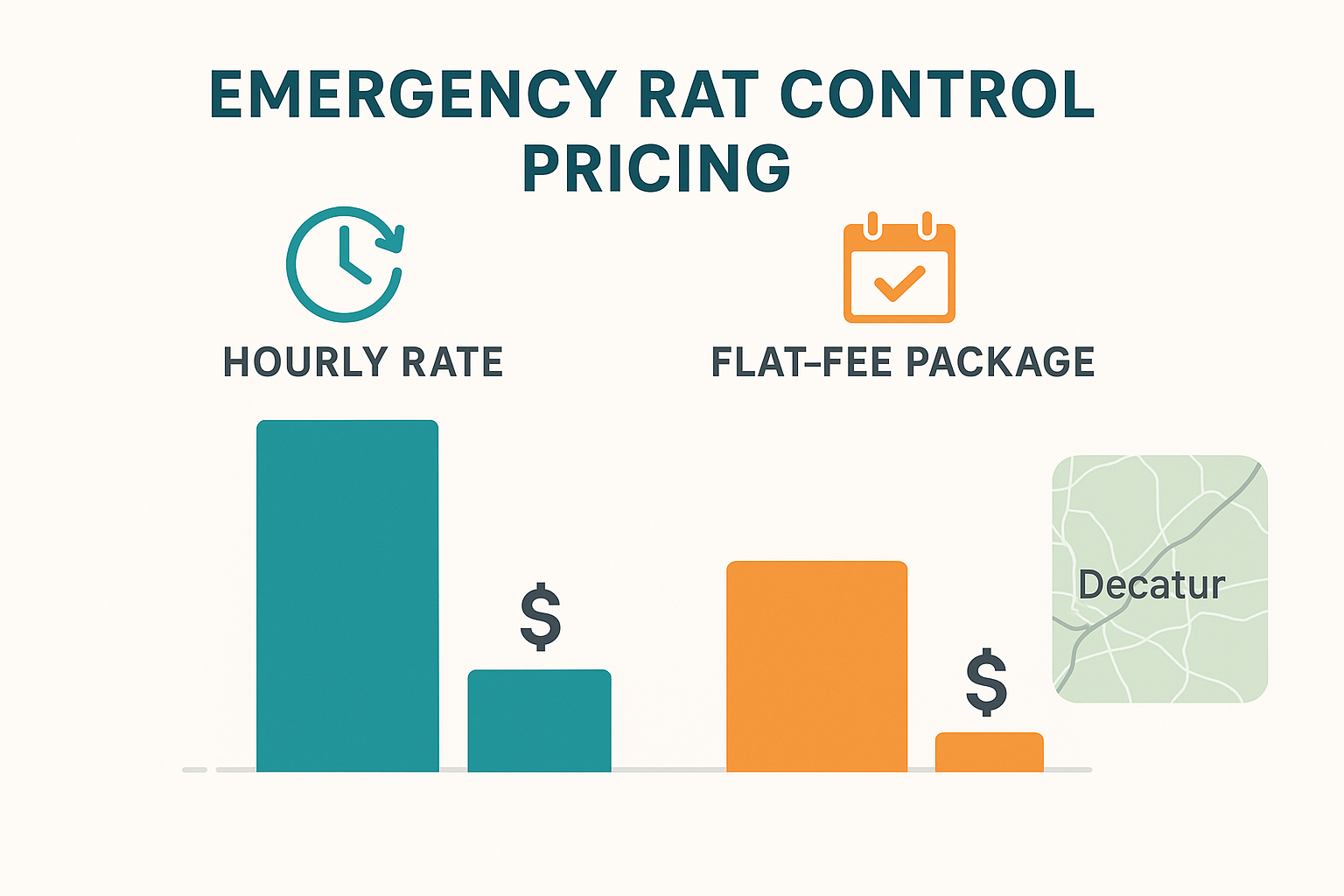
When a rat invasion hits your Decatur home, the first question is often “how much will it cost?” At Anthem Pest Control, we break pricing into two clear categories: emergency rat control Decatur homeowners rely on, which is billed by the hour, and scheduled or flat-fee programs, which bundle inspection, treatment, and prevention into a single price. Knowing the difference helps you decide whether you need an immediate knock-down or a long-term solution that fits your budget.
What Is Emergency Rat Control?
Emergency rat control is designed for situations where speed saves property and health. A technician is dispatched within a few hours, arrives in full protective gear, and begins treatment right away. Because the service demands rapid mobilization, most companies—including Anthem—charge an hourly rate that covers labor, travel, and any materials used on the spot. In Decatur, the typical hourly fee ranges from $120 to $150, plus a modest call‑out surcharge. This model ensures you pay only for the time spent resolving the urgent problem, which is crucial when rats have already caused damage to wiring, insulation, or stored food.
Scheduled / Flat‑Fee Packages
Scheduled packages are built for homeowners who want to stay ahead of infestations. You pay a single, upfront fee that includes a thorough inspection, a customized treatment plan, and follow‑up visits for monitoring and prevention. Flat‑fee rates usually fall between $250 and $400 for an average single‑family home, regardless of how many hours the technician spends on site. The advantage is predictability: you know the total cost before any work begins, and the ongoing maintenance reduces the likelihood of a costly emergency later on.
Factors That Influence the Price
Even within the two pricing models, several variables can shift the final amount. The severity of the infestation is the biggest driver—heavy rodent activity may require more bait stations, traps, and repeat visits. Property size matters, too; larger homes or multi‑unit buildings need more product and longer labor time. Access difficulty—such as tight crawl spaces, attic insulation, or landscaping obstacles—can add extra travel or setup time, which is reflected in the hourly charge for emergencies or a higher flat‑fee for scheduled work.
Tips for Getting the Best Value
Here are practical ways to stretch every dollar while keeping rats out.
- Bundle services. Combine rat control with other pest‑prevention programs (e.g., ant or mosquito protection) to unlock multi‑service discounts.
- Choose an annual contract. A 12‑month agreement locks in a fixed rate and often includes a complimentary emergency call‑out.
- Ask about early‑bird specials. Scheduling inspections before peak rat season (late summer to early fall) can qualify you for reduced fees.
- Maintain clear access. Trim vegetation, seal obvious entry points, and keep storage areas organized to lower labor time and cost.
By understanding how emergency and scheduled pricing differ, and by weighing the factors that affect each quote, you can make an informed decision that protects your home without breaking the bank.
Seasonal Rat Activity in Decatur and Timing Your Treatment
Understanding when rats are most likely to appear in your yard or home is the first step toward effective control. The chart below illustrates the typical activity pattern for Norway and roof rats in Decatur, highlighting a clear surge from June through August—when emergency rat control Decatur homeowners need most often becomes critical. Use this visual guide to plan inspections, treatments, and ongoing maintenance before the population explodes.
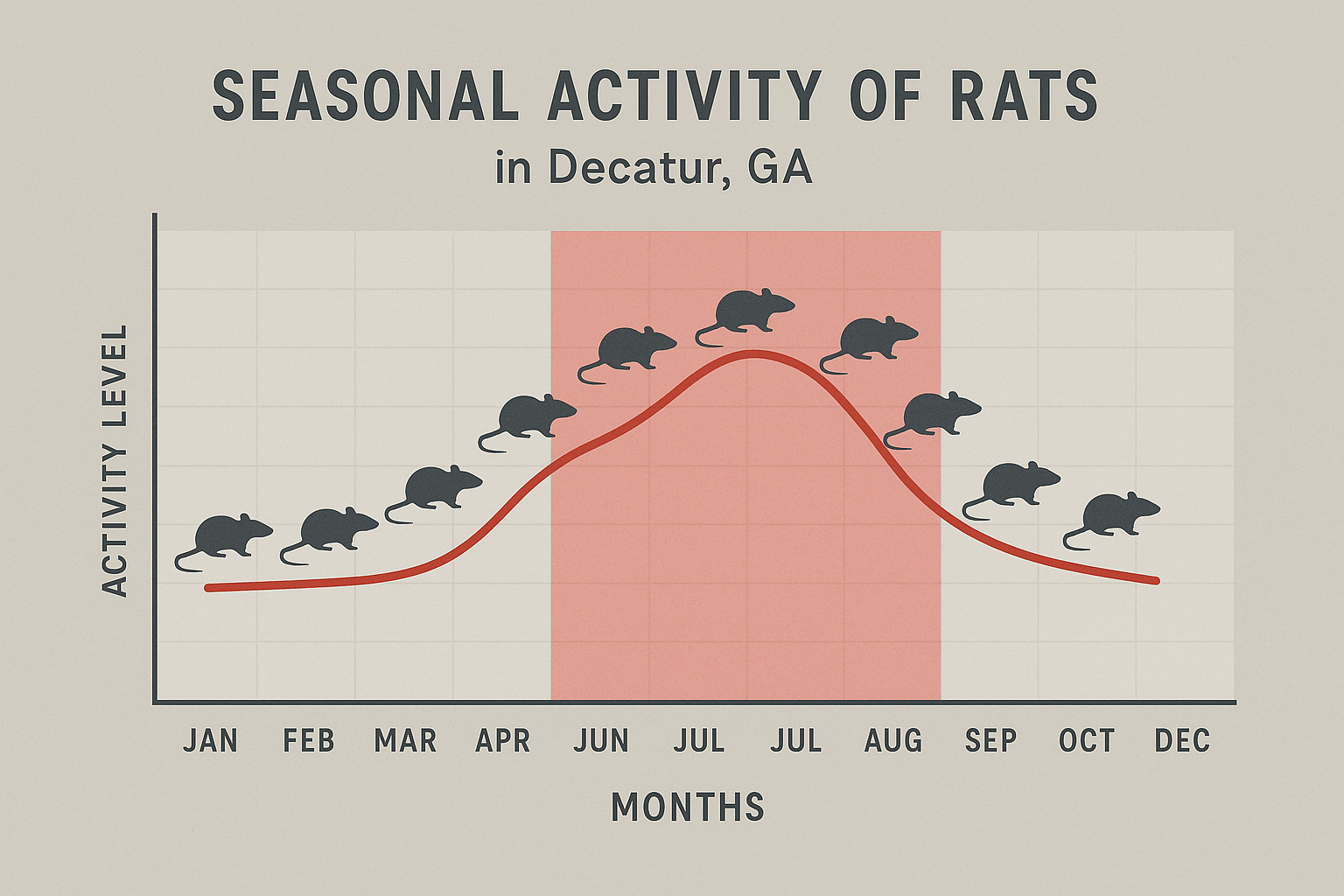
Rats thrive in warm weather for three main reasons. First, higher temperatures accelerate their breeding cycle: a single pair can produce up to five litters a year, with each litter containing 6‑12 pups. Second, summer brings abundant outdoor food sources—fruit trees, garden crops, and unsecured trash bins—making it easier for rodents to find nourishment. Finally, heat softens building materials and expands cracks, creating new entry points that rats exploit to infiltrate homes.
To stay ahead of the peak, schedule a comprehensive inspection in early May. During this pre‑peak visit, a certified technician will seal gaps, trim vegetation away from the foundation, and set up monitoring stations. Early action not only reduces the number of rodents that can establish a colony but also lowers the amount of pesticide or bait needed later in the season, keeping treatment safer for pets and children.
After the summer surge, rats begin to seek shelter for the cooler months. This is the perfect time for post‑peak maintenance. Replace any bait stations that have been emptied, re‑inspect the perimeter for fresh entry points, and keep indoor food storage airtight. Regularly cleaning gutters and removing fallen leaves also eliminates hidden harborage sites that could harbor a winter‑time population.
Below is a quick‑reference table that outlines the ideal action for each month. Follow it like a checklist, and you’ll keep the rat pressure low year‑round.
| Month | Recommended Action |
|---|---|
| January | Inspect interior for signs of winter activity; keep food sealed. |
| February | Check exterior drainage; clear debris that could hide nests. |
| March | Trim trees and shrubs away from the house; start sealing cracks. |
| April | Set up monitoring stations; schedule a professional pre‑peak inspection. |
| May | Conduct thorough exterior treatment; apply bait around entry points. |
| June | Peak activity—maintain bait stations and monitor for new activity. |
| July | Continue baiting; inspect for fresh gnaw marks on structures. |
| August | Begin tapering bait; start post‑peak cleanup of outdoor debris. |
| September | Perform a post‑peak inspection; repair any new entry points. |
| October | Winterize the property; store firewood off the ground. |
| November | Replace bait with low‑toxicity options for indoor use. |
| December | Final sweep of interior spaces; keep pantry items in sealed containers. |
By aligning your prevention plan with the natural rhythm of rat activity, you reduce the chance of a surprise infestation and keep treatment costs predictable. When in doubt, a local Anthem Pest Control professional can verify that your home’s defenses are up to date and recommend the most effective, low‑impact solutions for each stage of the year.
Protect Your Home Today with Anthem Pest Control
Early detection, the right treatment, and timing your intervention to the season are the three pillars that keep a rat infestation from turning into a full‑blown emergency. Spotting droppings, gnaw marks, or hearing nocturnal scurrying gives you the chance to act before rodents multiply, damage wiring, and spread disease. Choosing a treatment that matches the species and the entry points, then applying it during the cooler months when rats are most active inside, maximizes effectiveness and reduces the need for repeat visits.
That’s why partnering with a professional service matters. Anthem Pest Control brings nationwide experience to Decatur homeowners, offering solutions that are both safe for your family and pets and affordable for any budget. Our technicians follow an evidence‑based protocol: they inspect, identify, and customize a plan that targets the source, not just the visible signs. Transparent pricing means you’ll know exactly what you’re paying for—no hidden fees, no surprise add‑ons.
Why Choose Anthem?
- Nationwide expertise: We’ve handled rodent challenges in every climate zone, so we know the habits that drive rats in Georgia.
- Safe, EPA‑approved products: Our treatments protect your home while minimizing environmental impact.
- Affordable plans: Fixed‑rate quotes and flexible payment options keep pest control within reach.
- Clear communication: From the first call to the final walkthrough, you’ll always know what’s happening.
If you’ve noticed any of the warning signs listed earlier—or simply want the peace of mind that comes with a proactive approach—our certified technicians are ready to help. We’ll conduct a thorough inspection, explain the findings in plain language, and provide a free, no‑obligation quote tailored to your situation.
Give us a call today at 877‑371‑8196. One of our friendly specialists will schedule a same‑day or next‑day visit, depending on your urgency, and walk you through every step of the process.
For more details about our services, pricing, and the science behind our methods, visit Anthem Pest Control now for expert emergency rat control Decatur homeowners can trust.