Why Rodent Problems Matter for Suwanee Homeowners
In Suwanee, the warm, humid climate and plentiful landscaping make the area a perfect haven for three common culprits—Norway and roof rats, house mice, and even gray squirrels that sometimes seek shelter inside—making professional rat control Suwanee homeowners depend on especially important. Each of these species is small enough to squeeze through a quarter-inch gap, yet they can quickly turn a tidy home into a bustling nest.
Beyond the nuisance factor, rodents are carriers of serious health threats. The CDC warns that rats and mice can spread Hantavirus, leptospirosis, salmonellosis, and even plague. Their urine, droppings, and shed hair become airborne allergens that trigger asthma attacks, especially in children and seniors.
- Hantavirus: Inhaled particles from dried droppings can cause severe respiratory illness.
- Leptospirosis: Contact with contaminated urine may lead to kidney and liver damage.
- Salmonella & E. coli: Food contamination from gnawed packaging can cause food‑borne illness.
- Allergens: Proteins in rodent saliva and dander exacerbate asthma and allergic reactions.
Rodents also inflict costly structural damage. Their incessant gnawing on electrical wiring creates hidden fire hazards, while chewed insulation reduces energy efficiency. Wood framing, drywall, and even plumbing can be compromised, leading to expensive repairs that often go unnoticed until the damage is severe.
Food stores are not safe either. A single mouse can contaminate an entire pantry, as its saliva and feces spread bacteria across grains, cereals, and pet food. This not only wastes money but also forces homeowners to discard perfectly good items to protect family health.
Early detection is the most powerful tool in a homeowner’s arsenal. Look for tell‑tale signs such as fresh droppings (about ½‑inch long, dark, and tapered), gnaw marks on wires or wood, shredded nesting material, and faint scratching noises in walls or attics. Spotting these clues early can prevent an infestation from spiraling out of control.
Proactive pest management means regular inspections, sealing entry points as small as a dime, and maintaining a clean, clutter‑free environment that offers rodents no shelter. When you act quickly, you limit health risks, avoid costly repairs, and keep your home comfortable for the whole family.
At Anthem Pest Control, we combine local expertise with safe, effective treatments designed for Suwanee’s unique rodent challenges. Prompt action and ongoing prevention are the keys to protecting your property and peace of mind.
Spotting Rodent Signs and Cleaning Contaminated Areas
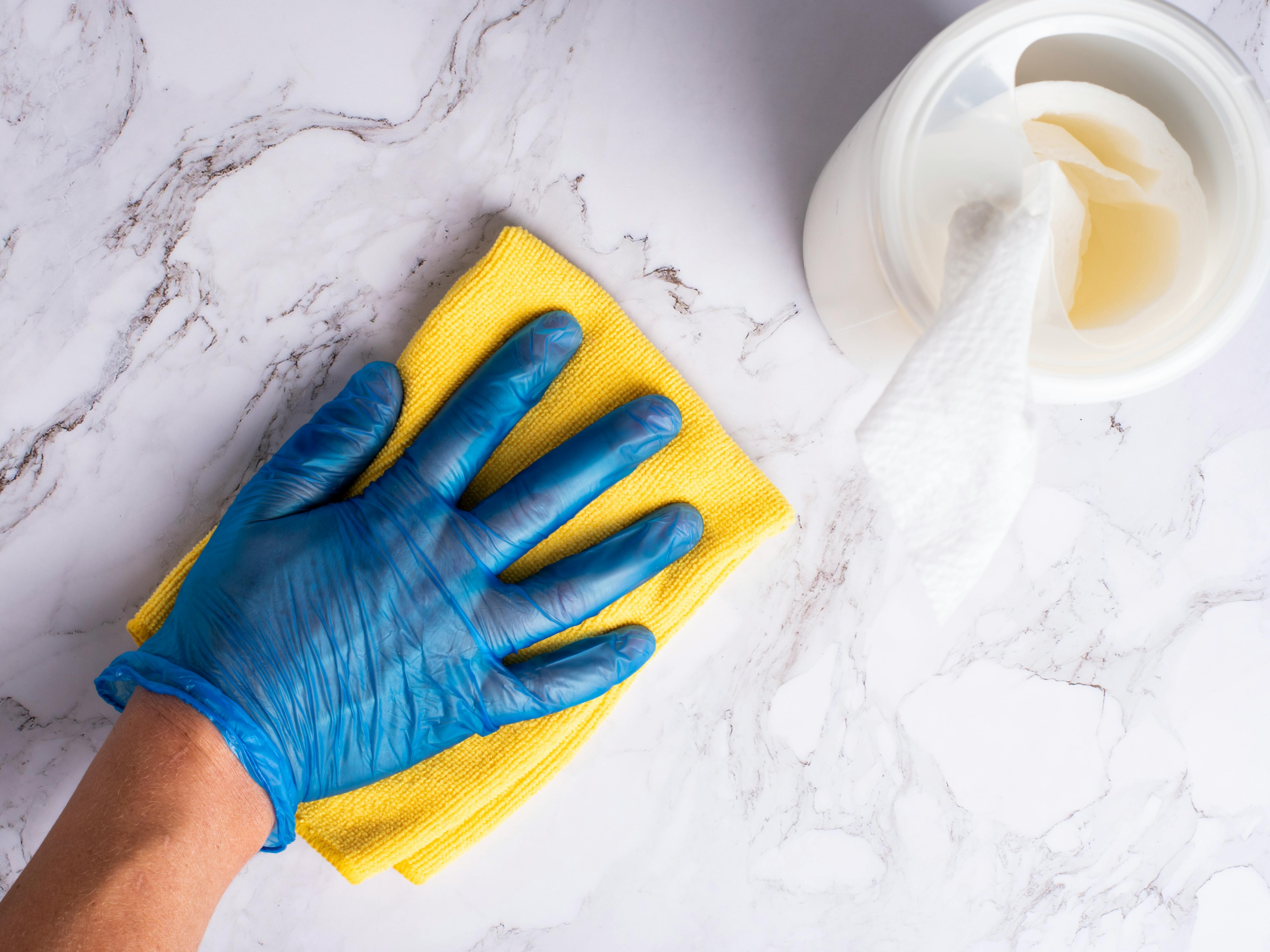
Visual clues that rodents leave behind
Rodents are surprisingly tidy about their messes, but they do leave a trail you can’t ignore. The most common indicators are:
- Droppings: Small, dark pellets about the size of a grain of rice. Fresh droppings are glossy; older ones turn matte.
- Gnaw marks: Parallel scratches on wood, plastic, or wiring. Look for V‑shaped bite marks that are wider at the front.
- Nests: Bundles of shredded paper, fabric, or insulation tucked into corners, behind appliances, or in attic insulation.
- Tracks and smudge trails: Darkened footprints along walls, especially near food sources, and greasy smears from their oily fur.
Where to look: a systematic inspection
Rodents travel along predictable pathways. Conduct a room‑by‑room sweep, focusing on the following hotspots:
- Kitchens: Under the sink, behind the refrigerator, and inside pantry shelves.
- Basements: Around water heaters, stored boxes, and any exposed wiring.
- Attics: Within insulation, near ventilation fans, and atop stored items.
- Exterior entry points: Gaps around utility lines, foundation cracks, and eaves where rodents can slip inside.
Use a flashlight and a mirror to peer into tight spaces. If you spot any of the visual clues above, note the exact location—this information will be invaluable for both your cleaning plan and any professional treatment later.
Cleaning up safely: step‑by‑step protocol
- Gear up first: Put on disposable nitrile gloves, a face mask, and eye protection. Rodent droppings can carry Hantavirus and other pathogens.
- Ventilate the area: Open windows and run an exhaust fan to disperse airborne particles.
- Remove debris: Using a disposable paper towel or a damp cloth, sweep up droppings, nests, and loose material. Place everything directly into a sealed plastic bag.
- Disinfect: Apply a EPA‑registered disinfectant (e.g., a 1:10 bleach solution or a commercial rodent‑specific cleaner) to the affected surface. Let it sit for the recommended dwell time, usually 10 minutes.
- Rinse and dry: Wipe the area with clean water, then dry thoroughly to prevent moisture‑related mold growth.
- Dispose properly: Seal the bag of waste, label it “biohazard,” and discard it in an outdoor trash bin. Wash your hands thoroughly after removing gloves.
Products and safety tips you can trust
Choosing the right cleaning agents makes the job both effective and safe. Consider the following options:
- Bleach solution: Mix 1 cup of household bleach with 1 gallon of water for a powerful, inexpensive disinfectant.
- Enzyme‑based cleaners: Products like Nature’s Miracle break down organic residue and are less harsh on surfaces.
- Quaternary ammonium compounds: Commercial sprays such as Clorox® Healthcare Bleach Germicidal Wipes are EPA‑approved for rodent droppings.
Always read the label for ventilation requirements and wear protective gear. Avoid using abrasive scrubs on delicate surfaces; a soft sponge will do the trick.
Why cleaning matters before treatment
Professional rodent control isn’t just about setting traps or applying bait. Technicians need a clean environment to locate activity hotspots accurately and to ensure that baits aren’t contaminated by food residue or droppings. Moreover, thorough sanitation removes the disease‑carrying particles that could otherwise re‑expose occupants after the extermination is complete. In short, a spotless home sets the stage for a faster, more reliable eradication and protects your family’s health.
Seasonal Rodent Activity Trends in Suwanee
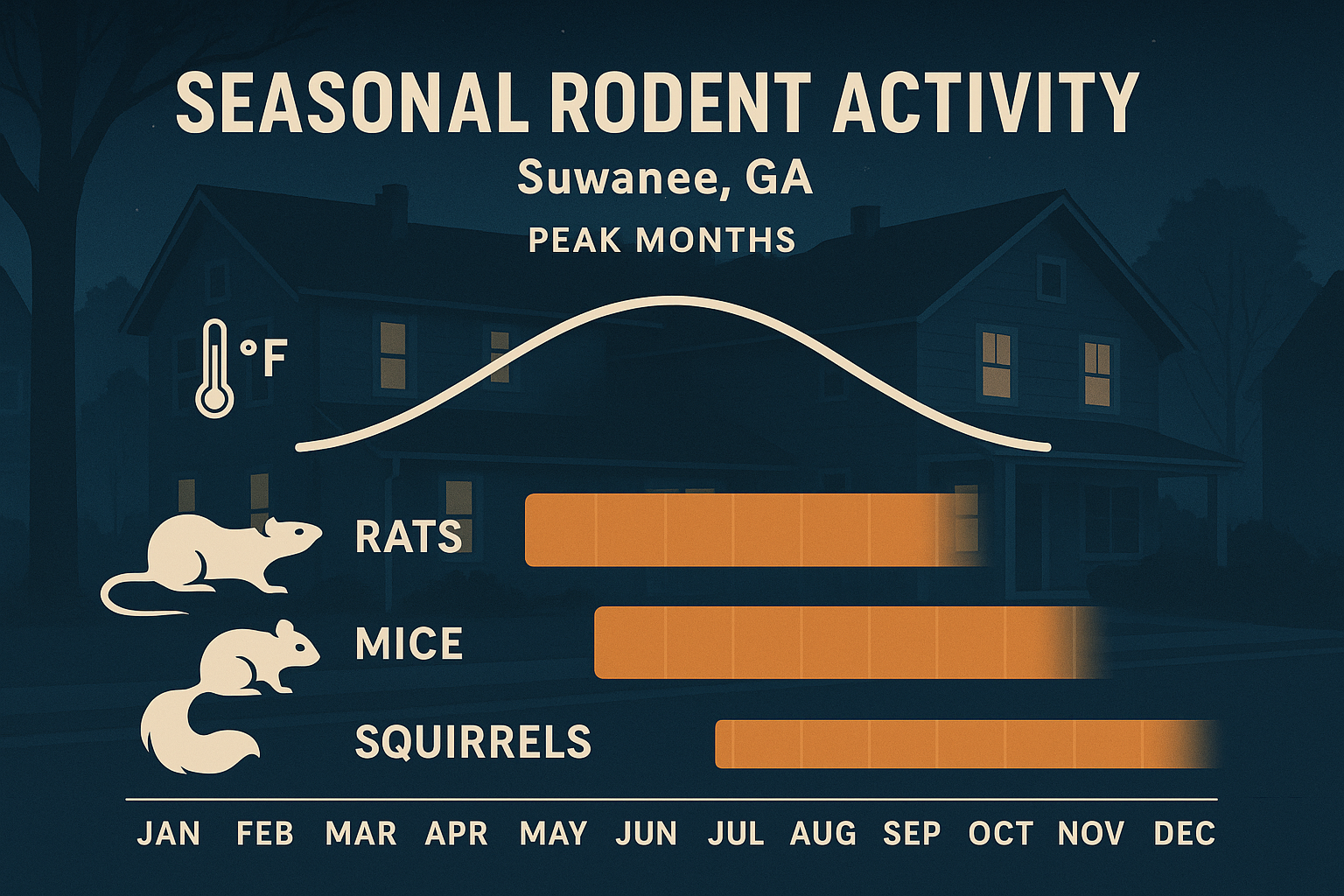
In Suwanee, rodent populations don’t stay static—they rise and fall with the weather, food sources, and breeding cycles, which is why timely rat control Suwanee homeowners rely on is so important. Our seasonal activity chart shows that rats typically peak in late summer, mice dominate the cooler months, and squirrels are most visible in early fall. Recognizing these patterns helps you time inspections and treatments for maximum impact.
Why Temperature and Food Drive Rodent Behavior
Rodents are ectothermic opportunists. Warm temperatures accelerate breeding for Norway rats and house mice, while cooler weather pushes them to seek shelter indoors. At the same time, food availability—think fallen acorns, garden scraps, or unsecured trash—creates a seasonal buffet that lures different species at different times. When the heat drives populations upward, a single missed entry point can become a highway for an infestation.
Month‑by‑Month Activity by Species
Rats (Rattus norvegicus) reach their highest numbers from July through September. The combination of warm nights and abundant outdoor waste gives them the energy to breed rapidly.
Mice (Mus musculus) are most active from October through March. As temperatures drop, they migrate indoors to find warmth and stored pantry items, often nesting in wall voids and basements.
Squirrels (Sciurus carolinensis) surge in August and September when acorn production peaks. They stockpile nuts in attics and crawl spaces, sometimes causing structural damage.
Seasonal Action Steps
- Fall (September–November): Seal cracks and gaps before squirrels begin hoarding. Trim tree branches that touch the roof and clear leaf litter that can conceal nests.
- Winter (December–February): Conduct a thorough interior inspection. Focus on utility penetrations, vent covers, and garage doors where mice love to squeeze in.
- Spring (March–May): Place bait stations strategically around the perimeter as rat activity ramps up. Replace any damaged weather‑stripping on doors and windows.
- Summer (June–August): Keep outdoor trash cans tightly sealed and remove pet food after dusk. Reduce irrigation that creates damp, attractive habitats for rats.
Quick Reference: Month‑by‑Month Actions
| Month | Primary Rodent Concern | Recommended Action |
|---|---|---|
| January | Mice | Inspect interior cracks; set mouse‑specific traps. |
| February | Mice | Seal utility entry points; keep pantry sealed. |
| March | Mice & Rats | Begin perimeter baiting; clear yard debris. |
| April | Rats | Check storm‑drain covers; reinforce door sweeps. |
| May | Rats | Place bait stations; trim vegetation away from foundation. |
| June | Rats | Maintain clean compost; monitor for new burrows. |
| July | Rats (peak) | Inspect attic and crawl spaces; reinforce roof vents. |
| August | Squirrels | Trim overhanging branches; install squirrel guards. |
| September | Squirrels (peak) | Seal attic openings; remove fallen nuts. |
| October | Mice | Check interior insulation; set snap traps. |
| November | Mice | Re‑seal any new gaps; reduce indoor food sources. |
| December | Mice | Final winter sweep; verify all exterior doors close tightly. |
Comparing Emergency Rat Control Options and Pricing
When a rat infestation spikes overnight, waiting isn’t an option, and immediate rat control Suwanee homeowners need becomes critical. Rapid population growth, gnaw-damage, and the health risks of droppings or disease transmission all signal the need for professional intervention. In Suwanee, homeowners who act fast can choose between a standard emergency service and a premium emergency package, each designed to stop the problem before it spreads.
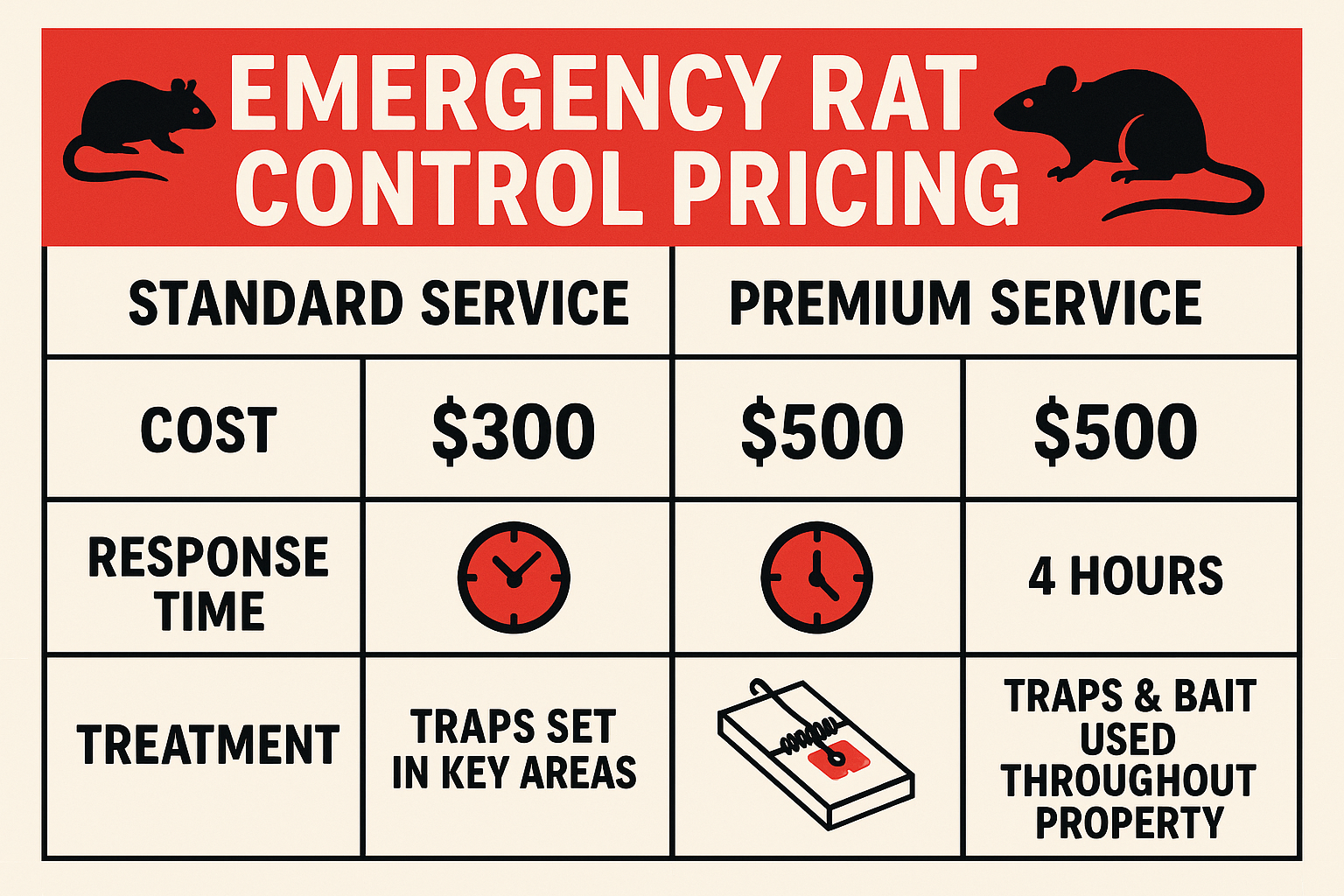
Pricing infographic breakdown
| Service Tier | Cost (average) | Response Time | Treatment Methods | Follow‑up Visits |
|---|---|---|---|---|
| Standard Emergency | $250 – $350 | Within 24 hours | Snap‑in traps & basic bait stations | One 7‑day check‑in |
| Premium Emergency | $450 – $600 | Within 4 hours | Integrated baiting, sealing, and ultrasonic monitoring | Two 7‑day check‑ins + optional 30‑day warranty |
Standard service: pros and cons
Pros
- Most affordable entry point for urgent rat control.
- Effective for single‑point infestations or early‑stage sightings.
- Uses proven snap traps and bait stations that homeowners can understand.
Cons
- Response may take up to a full day, which can be too slow for severe infestations.
- Limited monitoring means hidden nests might be missed.
- Only one follow‑up visit; additional visits incur extra fees.
Premium service: pros and cons
Pros
- Rapid 4‑hour response minimizes damage and health exposure.
- Comprehensive approach—sealing entry points, strategic bait placement, and electronic monitoring.
- Two follow‑up visits ensure any survivors are caught, and the optional 30‑day warranty provides peace of mind.
Cons
- Higher upfront cost, which may stretch a tight budget.
- More extensive treatment can involve additional preparation from the homeowner (e.g., moving furniture).
- May be overkill for a single, isolated sighting.
How to decide which option fits your home and budget
Start by assessing the severity of the problem. If you’ve spotted a few rats near a single entry point, the standard plan often suffices. However, if you notice droppings in multiple rooms, gnaw marks on wiring, or a sudden surge in activity, the premium service’s faster response and deeper monitoring can save you money in the long run by preventing structural damage.
Next, weigh your schedule. Homeowners who can accommodate a 24‑hour arrival window and are comfortable checking traps themselves may prefer the standard route. Those who need immediate relief—perhaps because children or pets are at risk—should lean toward the premium tier.
Finally, consider long-term protection as part of effective rat control Suwanee homeowners can depend on. The premium package includes entry-point sealing and a warranty that can deter future invasions, turning a one-time expense into a preventive investment. If you’ve dealt with rats before, the added monitoring often pays for itself.
Sample cost estimate for a typical Suwanee home (2,200 sq ft.)
Standard Emergency: $299 – includes 24‑hour arrival, trap placement, and one 7‑day follow‑up.
Premium Emergency: $525 – includes 4‑hour arrival, full‑home baiting, sealing of up to five entry points, two 7‑day follow‑ups, and a 30‑day warranty.
Professional Rodent Solutions and How to Get Started

The Role of a Certified Technician
When a licensed pest professional steps onto your property, they bring more than just equipment—they bring expertise, which is essential for effective rat control Suwanee homeowners can trust. A certified technician begins with a thorough inspection, identifying entry points, nesting sites, and signs of activity that most homeowners miss. Based on those findings, they select the most effective treatment—whether it’s a targeted baiting system, exclusion measures, or a combination approach. After the initial service, the technician schedules a follow-up visit to verify that the problem is truly resolved and to adjust the plan if needed.
Anthem Pest Control’s Rodent Program
Anthem Pest Control has refined its rodent program to balance safety, efficacy, and peace of mind. All products used are EPA‑approved and low‑odor, ensuring minimal impact on pets and family members. Each homeowner receives a customized action plan that addresses the specific species, infestation level, and structural layout of the property. The program comes with a results guarantee—if rodents return within the agreed timeframe, Anthem will re‑treat at no extra charge.
What to Expect During a Service Visit
On the day of service, the technician arrives in a clearly marked vehicle, equipped with a toolbox of industry‑standard tools and protective gear. Before beginning, they’ll introduce themselves, explain the steps they’ll take, and let you know if any areas need to be cleared—typically just moving lightweight items away from trap locations. Throughout the visit, the technician works discreetly, keeping your home clean and respecting your privacy. After placement of baits or traps, they’ll provide a brief rundown of what to monitor and how to maintain a rodent‑free environment.
Benefits of Ongoing Prevention Contracts
One‑time treatments can knock out an existing problem, but prevention contracts keep it from returning. With regular quarterly inspections, Anthem adjusts the strategy to match seasonal changes—such as increased activity in the fall when rodents seek shelter. Contracts also include timely exclusion upgrades, like sealing new cracks that appear after weather events. Homeowners who enroll enjoy reduced rates, priority scheduling, and the confidence that a professional is always watching over their home.
Ready to Take the Next Step?
If you’re looking for a transparent, affordable solution for rat control Suwanee homeowners can trust, Anthem Pest Control is ready to help. Call today for a free, no-obligation quote at 877-371-8196 or visit Anthem Pest Control. Our team will walk you through the process, answer any questions, and set up a service plan that fits your budget and schedule—without any high-pressure sales tactics.