Emergency Spider Encounter in a Vinings Kitchen

It’s just after dusk, the kitchen lights are dim, and you’re reaching for a glass of water when a sudden movement catches your eye—a spider skittering across the countertop. Your heart jumps, a cold shiver runs down your spine, and a flood of thoughts rushes through your mind: “What if it’s poisonous? What if my kids or pets get hurt?” That instant surge of fear is exactly why professional spider control Vinings is essential for your home.
While most household spiders are harmless, two species that occasionally turn up in Georgia—black‑widow and brown recluse—carry medically significant venom. A bite from a black‑widow can cause intense muscle cramps, nausea, and, in rare cases, severe systemic reactions. A brown recluse bite may lead to necrotic skin lesions that require professional medical care.
According to the Georgia Department of Public Health’s 2023 report, there were 120 confirmed black‑widow bites across the state that year. Read the full report.
Vinings, nestled in the heart of Fulton County, isn’t immune to these numbers. The proximity to wooded areas and the warm, humid climate create an ideal environment for these spiders to seek shelter inside homes—especially in kitchens where food crumbs and water sources attract insects, their primary prey.
This guide is your data‑driven, locally focused roadmap for handling a spider emergency in Vinings. We’ll walk you through the quick steps you can take the moment you spot a spider, explain why swift professional intervention is often the safest choice, and show how Anthem Pest Control experts use targeted, low‑impact treatments to protect your family without breaking the bank.
Why Immediate Action Is Critical
Medical consequences of venomous bites
Both black‑widow and brown‑recluse spiders carry venom that can cause serious medical emergencies. A black‑widow bite often produces intense abdominal pain, muscle cramps, and sweating, and in some cases triggers a rapid rise in blood pressure and seizures. Brown‑recluse bites are notorious for causing necrotic lesions that can expand over several centimeters, sometimes requiring skin grafts. Systemic reactions such as fever, nausea, and even hospitalization are not uncommon, especially in children, the elderly, or anyone with a compromised immune system.
National impact of delayed treatment
According to the Centers for Disease Control and Prevention, the United States sees roughly 1,500 emergency‑department visits each year because of spider bites. While most bites are harmless, that national figure highlights how even a single untreated bite can quickly become a serious health event. Delayed treatment not only increases the risk of severe tissue damage but also raises the likelihood of costly medical interventions, insurance claims, and lost work days for the entire household.
Why waiting amplifies the problem
Postponing control measures gives spiders the time they need to reproduce and disperse throughout hidden cracks, wall voids, and attic spaces. A single female black‑widow can lay up to 400 eggs, and a brown‑recluse can produce several egg sacs over a season. When you wait, those eggs hatch, hatchlings mature, and the infestation spreads from a single corner to multiple rooms, dramatically raising the chance of another bite. Prompt professional treatment stops the life cycle before it escalates, protecting your family and property.
Hazardous Spiders Found in Vinings
Vinings residents should know that two venomous species regularly turn up in the area. Both the black widow and the brown recluse carry bites that can cause serious medical problems if left untreated. Recognizing their appearance and typical hiding places is the first step toward safe, effective control.
Black Widow
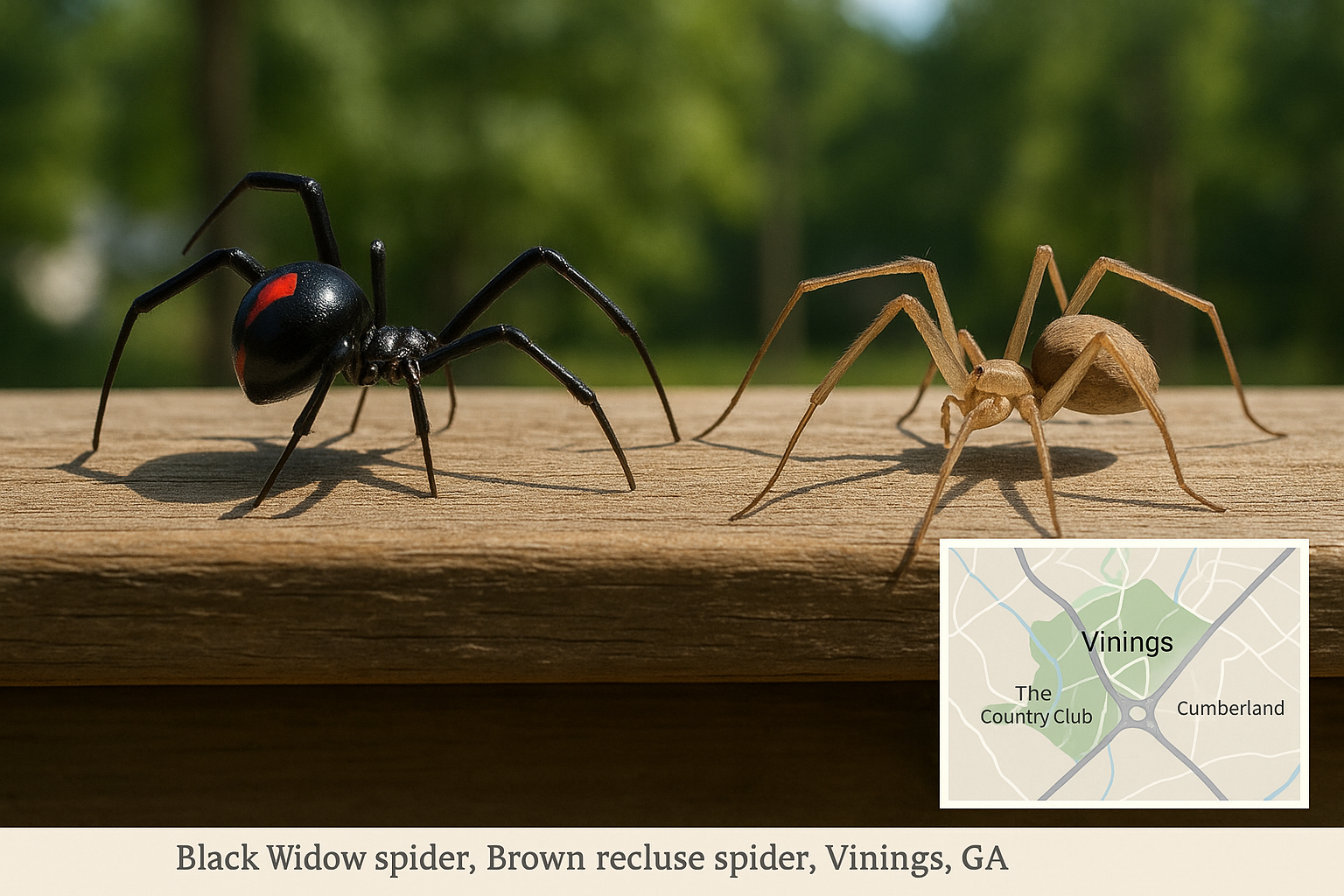
The female black widow is glossy black, about 1.5 inches (including legs) long, and sports the infamous red hour‑glass on the underside of her abdomen. She favors dark, sheltered spots such as woodpiles, garage corners, and the shadows beneath outdoor furniture. A bite delivers neurotoxic venom that often triggers intense muscle cramps, abdominal pain, and sweating. While rarely fatal, the reaction can be severe enough to require emergency medical attention, especially for children or the elderly.
Brown Recluse
The brown recluse is a light‑tan to brown spider, roughly 0.5 inches in body length, with a characteristic violin‑shaped marking on its dorsal cephalothorax. It prefers undisturbed indoor environments—attics, closets, and rarely‑used storage rooms—where it can remain hidden for months. Its bite releases necrotic venom that may develop into a painful ulcer, accompanied by flu‑like symptoms such as fever, chills, and joint pain. Prompt medical evaluation is essential to prevent tissue damage.
Quick Identification Guide
| Species | Color | Hourglass Marking | Size (body length) | Typical Hiding Spots |
|---|---|---|---|---|
| Black Widow | Glossy black | Bright red hourglass on underside | 1.3–1.5 in (including legs) | Woodpiles, garages, dark outdoor shadows |
| Brown Recluse | Light‑tan to brown | None (violin shape on back) | 0.4–0.5 in | Attics, closets, undisturbed indoor storage |
Local news confirmed the threat last spring when a 2024 brown‑recluse sighting was reported in the nearby Cumberland area. The homeowner contacted Anthem Pest Control, and a certified technician safely removed the spider and treated the home. Read the full report here.
Knowing where these spiders like to hide lets you take simple steps to make your home less inviting. Keep woodpiles away from the house, seal garage cracks, and store clothing in sealed containers. Inside, reduce clutter, vacuum corners regularly, and use tight‑fitting screens on attic vents.
If you suspect a bite, clean the area with soap and water, apply a cold pack, and seek medical care promptly. Anthem Pest Control can perform a targeted inspection and apply EPA‑approved treatments that eliminate spiders while protecting family and pets.
For a science‑backed approach to spider management, consult the U.S. Environmental Protection Agency’s guidelines on safe pesticide use and integrated pest management: EPA spider control.
Early Signs of a Spider Infestation
Spotting a spider problem before it spreads can save you both time and money. Homeowners who notice the subtle clues early often avoid the panic‑inducing “spider swarm” scenario that leads to costly emergency treatments.
Visual clues to watch for
- Irregular webs in corners – Unlike the neat, circular orb webs you might see outdoors, indoor spider webs tend to be haphazard, draped across ceiling corners, window frames, or behind furniture.
- Egg sacs tucked in dark crevices – Small, silvery or tan sacs hidden in baseboards, under appliances, or inside closets are a sure sign that females are reproducing.
- Increased nocturnal activity – If you start seeing more spiders scurrying across walls or floors after dark, it indicates a growing population seeking shelter.
Practical detection tools
Even the most observant homeowner can miss a hidden nest. A few simple tools boost your detection accuracy:
- Flashlight inspection – Turn off the lights, grab a bright flashlight, and sweep it along baseboards, behind cabinets, and under furniture. The beam will highlight webs and movement that the naked eye often overlooks.
- Sticky traps – Place adhesive traps in suspected hotspots (e.g., bathroom corners, garage shelves) for 24‑48 hours. Check them daily; a captured spider or its silk threads confirms activity.
Financial upside of early detection
The Environmental Protection Agency (EPA) estimates that catching a spider infestation early can cut treatment expenses by up to 40 %. Early intervention means fewer chemicals, less labor, and a smaller chance of re‑infestation, translating directly into lower bills for you.
By staying alert to these early signs and using the right tools, you protect your home’s comfort and keep your pest control costs under control. If you spot any of the indicators above, give Anthem Pest Control a call at 877‑371‑8196 for a quick, affordable assessment.
DIY Emergency Steps You Can Take Right Now
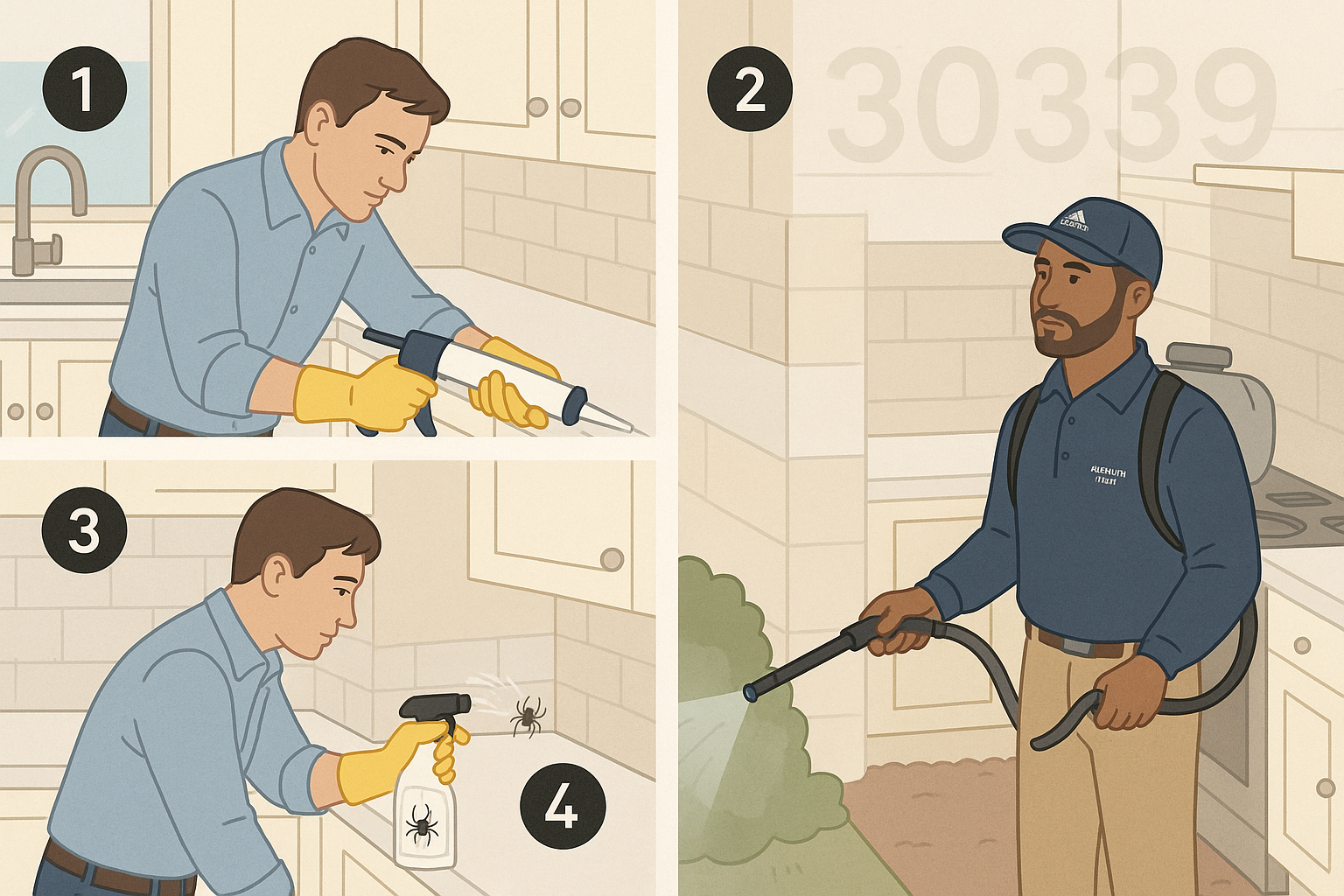
When you discover a spider that looks aggressive or you suspect a hidden infestation, acting quickly can keep the situation from escalating while you wait for a professional. The following low‑risk protocol lets you isolate the problem, remove the immediate threat, and block future entry—all with items you probably already have at home.
These actions are designed to reduce the immediate danger and limit the spider’s ability to spread. While they won’t eradicate an established infestation, they create a safer environment for you and give the exterminator a clearer picture of where the problem originates.
- Isolate the area. Close the door to the room, turn off any interior doors leading to the space, and make sure children and pets stay clear. This simple barrier prevents the spider from wandering into other parts of the house and reduces the chance of a bite.
- Wear protective gear. Put on a pair of disposable gloves and a face mask. Using a clear cup, gently coax the spider onto the cup, then slide a piece of cardboard under it to trap it safely. Carry the cup outside and release the spider far from your home, or dispose of it in a sealed bag.
- Vacuum visible webs. Vacuum any visible webs, especially in corners, under furniture, and along baseboards. Use the hose attachment on low suction, then immediately seal the vacuum bag or empty canister into a plastic bag and discard it outdoors. This removes egg sacs and reduces the chance of new spiders hatching inside.
- Seal cracks. Seal cracks and gaps with silicone caulk. Focus on foundation joints, window frames, door thresholds, and any utility openings where pipes or wires enter the house. A thin, continuous bead of caulk cuts off the spider’s preferred travel routes and makes it harder for future intruders to slip inside.
- Apply a low‑toxicity spray. Apply a low‑toxicity, pyrethrin‑based spider spray to all corners, window sills, and other hiding spots. Follow the label directions for dilution and dwell time, and keep the area ventilated while the spray dries. Remember, household bleach is not a spray for spiders and can create dangerous fumes.
Safety tip: Never use household bleach as a spray; it won’t kill spiders and can release harmful chlorine gas when mixed with other cleaners.
Keep a flashlight handy for night‑time checks and set out a few sticky traps along baseboards and under furniture. Check the traps daily; any capture indicates where you may need additional sealing or a professional follow‑up.
Remember, these DIY measures are a stop‑gap. If you continue to see webs, bites, or live spiders, contact a licensed pest professional—like Anthem Pest Control—who can perform a thorough inspection and apply targeted, long‑lasting treatments.
When to Call a Professional Pest Service
Spotting a lone spider in the corner of a room is usually harmless, but certain signs indicate the problem requires immediate action. If you notice any of the following, it’s time to call for professional spider control Vinings. Delaying treatment lets the spiders multiply, increasing the risk of bites and property damage.
Red‑flag situations that demand a pro
- Multiple bite incidents. One bite might be a freak accident, but several family members or pets showing spider‑related welts signals a growing population that DIY methods can’t contain.
- Egg sacs in living areas. Clusters of silk‑covered egg sacs indicate active breeding. Removing them by hand is risky and often incomplete, allowing hundreds of newborns to hatch within days.
- Infestations in hard‑to‑reach spaces. Spiders love attics, crawl spaces, wall voids and behind baseboards. These hidden zones are difficult for homeowners to treat safely and effectively.
- Vulnerable occupants. Children, seniors, or anyone with a compromised immune system is more likely to suffer severe reactions to spider venom. Protecting them means eliminating the source as quickly as possible.
Anthem Pest’s rapid‑response advantage
For Vinings residents, Anthem Pest offers a 24-hour emergency response window for spider control. Once you call, a certified technician can be on site the same day, assess the severity, and begin targeted spider control treatment before the infestation spreads further.
Why a professional is worth the call
Licensed technicians bring three key benefits that DIY solutions simply cannot match:
- Access to EPA‑registered residual products that continue to kill spiders for weeks after application, providing long‑term protection.
- Expertise in locating hidden entry points and nesting sites, ensuring the entire colony is addressed rather than just the visible spiders.
- Compliance with safety protocols that protect your family, pets, and the environment during and after treatment.
When any of the warning signs appear, don’t gamble with over‑the‑counter sprays. A professional call guarantees a swift, thorough, and safe resolution, restoring peace of mind to your home.
Anthem Pest’s Emergency Spider Control Process
When a spider emergency strikes, you need a plan you can trust. Anthem Pest’s Emergency Spider Control Process provides professional spider control Vinings through a step‑by‑step system designed to locate, eliminate, and prevent unwanted eight‑legged guests while keeping your family and pets safe.
Inspection
Our certified technicians start with a thorough interior and exterior survey. Using a handheld magnifier and reference guide, they identify the exact species—whether harmless house spiders or the more concerning brown recluse—then map hotspot zones such as dark corners, basements, and outdoor vegetation. We also check moisture levels with a handheld meter and inspect attic insulation, because damp wood often attracts spider colonies. This mapping informs every subsequent treatment decision.
Treatment Options
Once the map is complete, we present three fast‑acting options. A spot‑treatment spray targets visible webs and active spiders, delivering a knock‑down effect within minutes. Perimeter misting creates a protective fog around doors, windows, and foundation cracks, stopping new intruders from entering. Our ULV misting equipment creates a fine, even fog that reaches hidden cracks. For lasting indoor defense, we apply a low‑residue residual barrier on baseboards, under appliances, and in crawl spaces, ensuring protection for weeks after the visit.
Pricing Transparency
We believe you should never guess the cost of an emergency call. A one‑time emergency visit, which includes inspection, species ID, and a single treatment, is priced between $149 and $199, depending on the scope of work. For homeowners who want year‑round peace of mind, our full‑home annual spider‑prevention plan runs $299 to $449 and covers quarterly inspections, re‑treatments, and a guaranteed response within 24 hours of any new outbreak.
Safety
Safety is never an afterthought. All formulations we use are low‑odor, child‑safe, and approved by the EPA and Georgia’s Department of Agriculture. Technicians wear protective gear and apply the exact amount needed, eliminating excess chemicals while still delivering a rapid knock‑down. The low‑odor formula leaves no lingering smell, and all residues are pet‑friendly once dried. Our compliance records show zero violations in the past five years, giving you confidence that the treatment protects both your home and the environment.
Immediate Assistance
If spiders have already set up shop, don’t wait for the bite. Call Anthem Pest now at 877‑371‑8196 for immediate, guaranteed service—our technicians are on standby 24/7 to protect your home.
Long‑Term Prevention Strategies for Vinings Homes
Seal Entry Points
Spiders slip through the smallest gaps, so a tight building envelope is your first line of defense. Walk the perimeter of your home and repair any foundation cracks with a concrete patching compound. Install vent covers on crawl‑space openings and attic fans, and apply a bead of silicone sealant around all utility penetrations—pipes, cables, and HVAC ducts. These simple fixes block the highways spiders use to enter during every season.
Landscape Management
What sits outside your walls matters just as much as what’s inside. Keep firewood piles at least three feet away from the house; wood provides a warm, dry refuge that attracts spiders and their prey. Trim shrubs, vines, and any ground‑covering vegetation to within two feet of the foundation. This creates a clear zone that discourages spiders from bridging the gap to your siding and reduces the likelihood of web‑building on exterior lights and eaves.
Reduce Indoor Clutter
Clutter creates hidden corners where spiders can spin unnoticed. Store boxes, seasonal decor, and stored‑away items on shelves rather than on the floor, and use clear plastic containers with tight‑fitting lids. In basements and garages, keep items off concrete slabs and arrange them so air can circulate. Regularly vacuum corners, under furniture, and behind appliances to remove spider webs before they become established.
Schedule Quarterly Professional Inspections
Even the most diligent homeowner can miss a hidden entryway or a growing spider colony. Book a quarterly inspection with a licensed pest control professional, focusing on the peak spider activity window from April through October. Technicians will identify vulnerable spots, apply targeted treatments, and provide a maintenance plan tailored to Vinings’ climate. Consistent professional oversight ensures that early infestations are caught before they turn into a year‑round problem.
By consistently applying these steps, Vinings homeowners can enjoy a spider‑free home year after year, reducing the need for emergency treatments and protecting family comfort.
Seasonal Spider Activity in Vinings
Vinings’ humid subtropical climate creates a perfect backdrop for spiders to thrive year‑round, but the temperature swings dictate when they’re most likely to wander into your home. During the hot summer months, especially from July through September, the intense heat drives many species to seek cooler, shaded spaces indoors. You’ll notice an uptick in cellar spiders, house spiders, and even the occasional brown recluse looking for a break from the sweltering outdoors.
When winter arrives, the story flips. Cooler temperatures push spiders down into basements, crawl spaces, and any insulated voids they can find. Even the hardy garden spiders will retreat to these hidden chambers, where they can stay warm and wait out the frost. This seasonal shift means that the “quiet” months can still hide a growing population ready to emerge when the sun returns.
When to schedule your inspection
Because Vinings experiences these predictable patterns, timing your preventive inspection is key. A pre‑summer check‑up—ideally in late May or early June—gives our technicians a chance to seal entry points, treat vulnerable areas, and set up barriers before the July‑September peak. Homeowners in neighborhoods such as The Country Club and West Vinings benefit most from this proactive approach, as the dense foliage and mature trees in those areas tend to harbor larger spider colonies.
Schedule your pre‑summer inspection now, and you’ll reduce the chance of unwanted eight‑legged guests setting up shop as the temperature climbs. A quick visit from Anthem Pest Control can keep your home comfortable all season long.
Cost Overview and Value Comparison
When a spider invasion turns urgent, the first question is “how much will it cost?” Below is a quick snapshot of the three most common routes homeowners in Vinings take.
- DIY spray kits: $20–$40 per purchase. One‑time buy, but you’ll need to reapply every few weeks and you’re responsible for coverage gaps.
- Professional emergency visit: $149–$199. A licensed technician arrives, identifies the species, treats the hot spots, and provides a written follow‑up plan.
- Annual protection plan (Anthem): $299–$449. Includes two scheduled visits, unlimited emergency call‑outs, and ongoing monitoring.
At first glance the DIY kit looks cheapest, yet the National Pest Management Association (NPMA) found that professional plans cut repeat visits by roughly 70% — see the NPMA spider guide. Fewer repeat visits translate into lower total spend over a year.
Let’s break it down. If you rely on a $30 kit and need three re‑applications, you’re already at $90, not counting the time you spend researching and applying it safely. Add a second emergency call and the cost climbs above $250. By contrast, Anthem’s annual plan caps your out‑of‑pocket expense while delivering a licensed professional, guaranteed treatment, and peace of mind that the spiders stay out.
In the long run, the plan not only safeguards your home but also protects your wallet, making it the most cost‑effective choice for Vinings homeowners facing an emergency spider problem.
Frequently Asked Questions
Answers to the most common spider concerns in Vinings.
Are black‑widow bites fatal?
Deaths from black‑widow bites are extremely rare. The venom can cause severe muscle cramps, nausea, and elevated blood pressure, but most healthy adults recover with prompt medical care. If you suspect a bite, clean the area, apply a cold compress, and seek professional medical attention immediately. Quick treatment greatly reduces the risk of complications. Antivenom is rarely needed, but keeping the victim calm helps slow venom spread.
Can I keep spiders for pest control?
Garden spiders such as orb‑weavers and wolf spiders are natural hunters and can help reduce insects around your yard, but they are not a reliable indoor solution. Venomous species like black widows, brown recluses, or false widows should never be kept; they pose a serious health risk. Instead, let a licensed technician handle dangerous spiders while encouraging beneficial ones outdoors with habitat‑friendly landscaping. A dedicated outdoor ‘spider garden’ with rocks and native plants attracts beneficial species safely.
How often should I treat my home?
In Vinings’ warm, humid climate, quarterly spider‑preventative treatments are ideal. This schedule keeps interior walls, basements, and crawl spaces inhospitable to both nuisance and medically significant spiders. After any bite incident, schedule an immediate follow‑up visit to assess and target the specific species involved. Consistent treatment, combined with regular inspections, offers the best protection for your family. In summer, a treatment after rain can catch new entrants.
Protect Your Home with Anthem Pest Today
When a spider emergency strikes, every minute counts. A swift, professional response stops bites, limits the spread of an infestation, and protects the people you love. In Vinings, where seasonal spiders can appear suddenly, local expertise makes the difference between a quick fix and a lingering problem.
Anthem Pest brings that local know‑how to a full‑time, 24‑hour emergency line. Our licensed technicians arrive promptly, explain the treatment plan, and work with transparent pricing so you never face hidden fees. Every product we use is child‑ and pet‑safe, giving you confidence that the job is done without compromising household health.
If you’ve spotted a spider or suspect an infestation, our Vinings team is ready to act fast and protect your family. Call us for a complimentary quote and peace of mind; we’ll assess the situation, recommend the safest solution, and get your home back to normal.
Phone: 877‑371‑8196
Visit Anthem Pest Control for expert spider control Vinings. Your home’s safety is just one call away.