What Triggers Ant Infestations in Your Home

Ants are opportunistic explorers. In nature they travel long distances searching for food, water, and a safe place to raise their colony—often leading homeowners to call an ant exterminator Druid Hills residents trust when those needs are met indoors. When a home offers a combination of those essentials, ants quickly decide it’s a perfect extension of their nest. Understanding why they enter helps you block the invitation before it becomes a full-blown infestation.
What draws ants inside?
Ants are attracted to any reliable source of nourishment or moisture. The most common indoor lures include:
- Sugar and sweet foods – spilled juice, open cereal boxes, or crumbs left on countertops.
- Grease and protein – pet food bowls, leftover meat, or oily residues on stovetops.
- Water leaks – drips under sinks, damp basements, or condensation on pipes provide the moisture ants need to survive.
How ants sneak in
Even the tiniest opening can become a highway for an ant trail. Typical entry points are:
- Cracks in foundation walls or floors.
- Gaps around windows, doors, and utility penetrations.
- Openings around plumbing, electrical wiring, and HVAC ducts.
- Unsealed vents or chimney flues.
Once an ant discovers a gap, it leaves a pheromone trail that other workers follow, turning a single crack into a bustling corridor.
Seasonal and climate influences
Ant activity spikes when outdoor temperatures rise or when humidity drops. In Druid Hills, the transition from cool spring to warm summer encourages colonies to expand and search for indoor shelter. Heavy rains can also drive ants inside as their nests become flooded.
Early warning signs
Spotting an ant problem early makes treatment easier and less invasive. Keep an eye out for:
- Thin, winding trails along walls, baseboards, or countertops.
- Small piles of discarded wings near windows or light fixtures.
- Chewed or punctured food packaging, especially sugary snacks.
- Moisture stains or tiny water droplets near entry points.
According to the EPA’s guidance on ant control practices, effective management starts with eliminating attractants, sealing entry routes, and, when needed, applying targeted treatments that are safe for occupants and pets.
Identifying Common Household Ant Species and Their Warning Signs
When you spot a line of tiny insects marching across your kitchen floor, the first question is — what kind of ant are they? Identifying the species early helps an ant exterminator Druid Hills homeowners rely on choose the fastest, most effective treatment. In the United States, three species dominate indoor infestations: odorous house ants, carpenter ants, and pavement ants. Knowing their look-alike traits and the damage they cause can save you time, money, and a lot of frustration.
Odorous House Ants (Tapinoma sessile)
These ants earn their name from a faint, rotten‑egg smell released when they’re crushed. They’re small—about 2–4 mm long—and range from light brown to dark brown. Workers are wingless, but during mating season you’ll see larger, winged alates swarming near windows.
- Habitat: Prefer moist environments such as kitchens, pantries, and bathroom cabinets.
- Warning signs: Trails of tiny ants near food sources, greasy or oily residues on countertops, and the characteristic odor when disturbed.
- Damage: Primarily food contamination; they won’t chew wood but can spread bacteria.
Carpenter Ants (Camponotus spp.)
Carpenter ants are the largest household ants, measuring 6–12 mm. Their coloration varies from black to reddish‑brown, often with a glossy sheen. When you find winged reproductives—known as “swarmers”—inside, it’s a clear sign of an established colony.
- Habitat: Favor dry, decaying wood in walls, attics, or under floorboards; they also nest in moist wood if the structure is compromised.
- Warning signs: Frass (fine sawdust) piles, rust‑colored streaks along wood, and hollow‑sounding wood when tapped.
- Damage: They excavate galleries in wood, weakening structural integrity over time.
Pavement Ants (Tetramorium caespitum)
Pavement ants are medium‑sized (about 3–5 mm) and usually dark brown to black. Workers have a distinct “two‑node” petiole (the waist segment), and winged ants appear in late summer.
- Habitat: Outdoor foragers that nest under sidewalks, driveways, or in wall voids that stay dry.
- Warning signs: Long, well‑defined trails leading to entry points, especially around foundations and windows.
- Damage: Mostly nuisance; they can contaminate food but don’t damage structures.
Quick DIY Confirmation
Grab a clear plastic container, add a drop of honey or a piece of fruit, and place it near the suspected trail. After a few hours, observe the captured ants. Compare their size, color, and any odor with the profiles above. Winged alates are a dead giveaway of a mature colony, especially for carpenter and odorous house ants.
| Species | Size | Color | Odor | Preferred Habitat | Typical Damage |
|---|---|---|---|---|---|
| Odorous House Ant | 2–4 mm | Light‑brown to dark brown | Rotten‑egg smell when crushed | Moist indoor areas (kitchens, bathrooms) | Food contamination |
| Carpenter Ant | 6–12 mm | Black to reddish‑brown | No distinct odor | Dry or decaying wood, wall voids | Wood tunneling, structural weakening |
| Pavement Ant | 3–5 mm | Dark brown to black | No distinct odor | Dry outdoor sites, wall voids | Food contamination (nuisance) |
While most ant bites are harmless, certain species can carry bacteria that lead to food‑borne illnesses. For a deeper dive into health concerns, consult the CDC’s ant information page. Recognizing these warning signs early lets Anthem Pest Control intervene quickly, keeping your home ant‑free without unnecessary damage.
Treatment Options, Pricing, and What to Expect
What’s Available?
Anthem Pest Control offers four primary ant-control categories designed by an ant exterminator Druid Hills homeowners trust for effective results. Chemical baits attract foraging workers and deliver a slow-acting poison that spreads through the colony. Perimeter sprays create a protective barrier around your home’s foundation, deterring ants from crossing. Dust applications target cracks, voids, and wall voids where liquid sprays can’t reach. Finally, non-chemical heat or foam treatments use high temperatures or expanding foam to eradicate nests without pesticides, ideal for families with sensitive pets or children.
Fast‑Track vs. Ongoing Maintenance
A one‑time “fast extermination” is perfect when you need immediate relief—think a sudden invasion of fire ants or carpenter ants. The technician applies a rapid‑acting spray or foam, and you see results within hours. For chronic problems or high‑traffic properties, a recurring maintenance plan (usually quarterly) keeps the perimeter fortified, re‑baits colonies, and monitors new entry points, offering long‑term peace of mind.
Pros and Cons of Each Method
- Chemical baits – Excellent for hidden colonies; slow kill gives workers time to share the toxin. May take days to see results.
- Perimeter sprays – Immediate knock‑down and visible barrier. Residual protection lasts 30‑45 days but requires re‑application.
- Dust applications – Penetrates voids where sprays can’t. Low odor, but effectiveness drops if the area gets wet.
- Heat/foam – No chemicals, safe for pets/kids. Best for localized nests; does not provide residual protection.
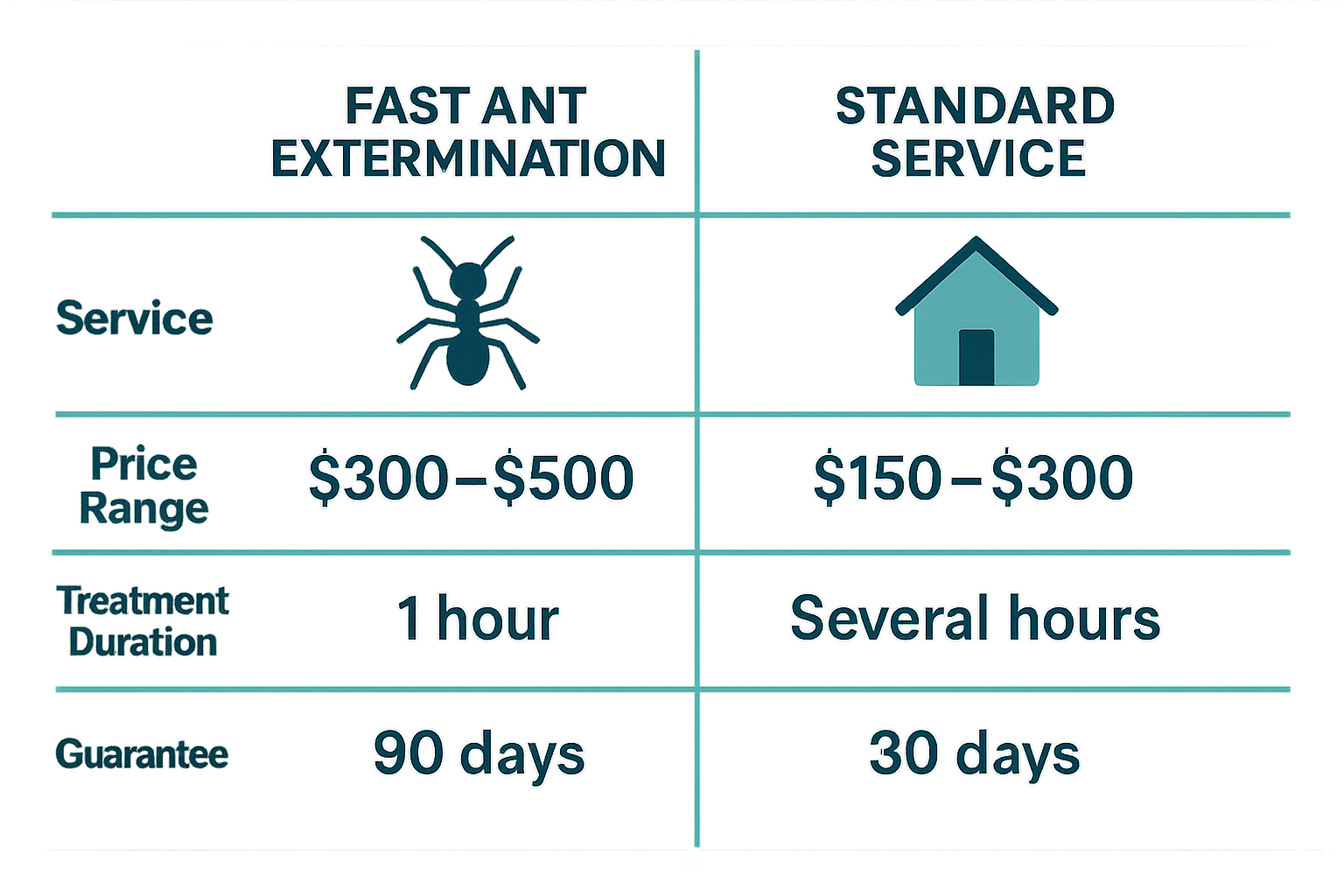
Pricing at a Glance
| Service | Price Range | Treatment Duration | Guarantee |
|---|---|---|---|
| One‑time Fast Extermination | $149 – $199 | Same‑day | 30‑day re‑treatment |
| Quarterly Maintenance Plan | $129 per visit | Each visit 2‑3 hrs | Year‑long protection |
| Heat/Foam Spot Treatment | $179 – $229 | 1‑2 hrs | 45‑day follow‑up |
| Full‑Home Bait & Dust | $199 – $259 | 2‑4 hrs | 60‑day colony collapse guarantee |
Typical Service Timeline
First, our certified technician conducts a thorough inspection—identifying species, nest locations, and entry points. Next, the treatment day begins; most fast‑track jobs are completed within two hours, while a comprehensive bait‑and‑dust service may take up to four. A follow‑up visit is scheduled 2‑4 weeks later to verify colony collapse and apply any needed touch‑ups.
Homeowner Tips for Success
- Keep countertops, floors, and pet dishes spotless; residual food fuels ant activity.
- Seal cracks around windows, doors, and utility penetrations with caulk or weather‑stripping.
- Store dry goods in airtight containers; avoid leaving sugar or protein sources uncovered.
- After treatment, limit heavy traffic on treated zones for at least 30 minutes to allow products to set.
All methods adhere to the NPMA industry standards for professional ant pest control, ensuring you receive safe, effective, and environmentally responsible service.
Seasonal Ant Activity and the Best Times to Treat
Ant Life Cycle Basics
Ant colonies move through a predictable cycle: queens lay eggs in early spring, workers emerge and expand the nest, and foragers search for food throughout the warm months. Because brood development speeds up when temperatures rise, you’ll notice a sharp increase in ant traffic during late spring and summer. By late summer, colonies start to produce new queens and males, preparing for the next year’s swarm.
What the Seasonal Activity Chart Shows

The infographic breaks each month into low, medium, or high ant activity levels. In Druid Hills, GA, activity is low in January‑February, climbs to medium in March, peaks high from May through August, then tapers back to medium in September‑October before dropping to low again.
Regional Nuances
While Druid Hills enjoys a relatively mild climate, even subtle temperature shifts matter. In hotter pockets of the metro area, ants may stay active year‑round, especially species like carpenter ants that tolerate cooler nights. Conversely, homeowners in higher‑elevation neighborhoods see a compressed window—often just May to July—when the soil warms enough for foraging.
Optimal Timing for Treatment Types
- Early‑spring perimeter spray: Apply in late March to early April, before workers are out in full force. This creates a barrier that deters the first wave of foragers.
- Mid‑summer bait placement: Set baits in late July or early August when colonies are actively feeding but before they shift focus to reproduction. Baits are most effective when workers are eager to bring food back to the nest.
- Fall inspection: Conduct a walk‑through in September to catch any late‑season colonies that survived the summer heat.
How Weather Events Trigger Indoor Foraging
Heavy rain can flood underground nests, forcing ants to seek dry shelter inside your walls. Heatwaves dry out food sources, prompting workers to scout aggressively for sugary crumbs. Both scenarios can lead to sudden indoor sightings, even during traditionally low‑activity months. Keeping gutters clear and sealing cracks helps mitigate these weather‑driven incursions.
Seasonal Preparation Checklist for Homeowners
- Trim vegetation at least two feet from the foundation to reduce bridge routes.
- Seal cracks around windows, doors, and utility entries before the spring spray.
- Remove standing water and fix leaky pipes that attract foragers.
- Store pet food in airtight containers and clean up spills promptly.
- Place bait stations along ant trails in late summer, away from children and pets.
- Schedule a professional inspection after the first heavy rain of the season.
Protect Your Home with Professional Ant Control

Ants breach homes looking for food, water, and shelter, and the first step to stopping them is recognizing which species you’re dealing with. Carpenter ants, odorous house ants, and pavement ants each require a distinct approach, and treating the wrong culprit can waste time and money. Timely, season‑appropriate treatment—whether it’s a spring surge of sugar‑loving ants or a summer invasion of fire ants—prevents colonies from establishing deep nests behind walls or under foundations.
At Anthem Pest Control, our certified technicians bring years of local expertise to every job. We rely exclusively on EPA‑approved products that target ants at the source while protecting your family and pets. Transparent pricing means you’ll know exactly what’s included in the service, with no hidden fees or surprise add‑ons.
Our commitment goes beyond eradication. We design safe, effective, and affordable solutions for all common household pests, integrating preventative measures that keep future infestations at bay. From thorough inspections to customized treatment plans, we ensure your home stays ant‑free year after year.
If you’ve spotted ant trails or suspect hidden colonies, let our trained professionals handle the problem quickly and safely. We offer a free, no-obligation quote and can schedule a same-day inspection with an ant exterminator Druid Hills homeowners trust to keep your home ant-free. Call Anthem Pest Control today at 877-371-8196 for your free ant inspection and quote, or visit our website to learn more about our services.