Spotting Carpet Beetles and Early Warning Signs

What Adult Carpet Beetles Look Like
Carpet Beetle Exterminator Druid Hills GA services are essential when you begin noticing tiny beetles around windows, closets, or light fixtures. Adult carpet beetles are tiny powerhouses, typically measuring 2–5 mm in length—about the size of a grain of rice. Their bodies are oval and densely covered with fine hairs, giving them a slightly fuzzy appearance. Most species sport a mottled pattern of black, brown, and white or yellowish scales that create a distinctive “checkerboard” look on the wing covers. This coloration helps them blend into natural debris, but a quick glance at a light source will reveal their subtle, shimmering outlines.
Life Cycle: From Egg to Damage‑Causing Larva
Carpet beetles undergo a complete metamorphosis: egg, larva, pupa, and adult. A female can lay up to 50 eggs in hidden crevices, and each egg hatches in about a week. The emerging larvae—often called “woolly bears”—are the real culprits; they are elongated, creamy‑white with dark brown heads, and they carry tiny hairs that can irritate skin. Over several months, these larvae voraciously chew on natural fibers, accumulating damage before they spin a cocoon and transform into adults. Because the larval stage can last up to a year, the damage often appears long after the initial infestation began.
Where Adults Hang Out Indoors
Homeowners often call a Carpet Beetle Exterminator in Druid Hills GA after noticing adult beetles gathering near light sources. Adult carpet beetles are attracted to light, so you’ll frequently find them perched on windowsills, near lamps, or inside light fixtures. They also love warm, undisturbed areas such as closets, attics, and under furniture. In homes with heavy drapery or stored fabrics, adults may congregate near the edges of curtains or on the tops of wardrobes, using these spots as launch pads to lay eggs on nearby food sources for their larvae.
Early Warning Signs to Watch For
Spotting a problem early can save both time and money. Look for these tell‑tale clues:
- Small specks on wool, silk, or fur—these are often the excrement of larvae.
- Shed skins or “puparia” that appear as translucent, papery shells near fabric seams.
- Fuzzy webbing in corners of closets or under baseboards, a sign that larvae are building protective tunnels.
- Beetle dust—a fine, powdery residue left behind by adult movement.
Carpet Beetles vs. Moths and Other Pests
While both carpet beetles and moths target natural fibers, their damage patterns differ. Moth larvae tend to create irregular, chewed holes, whereas carpet beetle larvae leave a more uniform, grainy surface and produce the characteristic “beetle dust.” Additionally, moths often leave behind silky cocoons, while carpet beetle pupae are encased in a hard, brown shell. If you notice the fuzzy, web‑like material and tiny shed skins, you’re likely dealing with carpet beetles rather than moths.
Quick Self‑Check Checklist
- Inspect windowsills and light fixtures for tiny, speckled beetles.
- Examine closets, especially near wool blankets or stored garments, for shed skins and webbing.
- Run a flashlight over baseboards and attic corners to spot “beetle dust” or adult beetles.
- Feel fabrics for a fine, powdery residue or small puncture marks.
- Compare any damage to moth signs—look for silky cocoons versus fuzzy webbing.
What Carpet Beetles Can Do to Your Home and Belongings
Materials at Risk
Carpet beetles are opportunistic feeders, and they gravitate toward anything made from natural protein fibers. In a typical Druid Hills household, the most vulnerable items include:
- Wool, silk, and cotton textiles – sweaters, blankets, drapes, and bedding.
- Stored food products – grains, cereals, dried herbs, and pet food that sit in pantries or garages.
- Leather goods – jackets, shoes, and upholstered furniture with leather trims.
- Pet hair and fur – especially in pet beds, blankets, and carpeting where shedding accumulates.
Even seemingly tough items like denim or canvas can become targets once the larvae have established a foothold.
Typical Damage Patterns
Unlike some pests that leave obvious chew marks, carpet beetles create subtle, often mistaken‑for‑wear damage. Homeowners usually notice:
- Irregular, round‑shaped holes that appear suddenly on sweaters, socks, or upholstery.
- Thinning spots where the fabric feels almost paper‑thin, especially along seams and edges.
- “Eaten‑away” borders on curtains or pillowcases, giving a frayed, ragged look.
- Fine, powdery frass (fecal pellets) that can be brushed off onto surfaces, indicating active feeding.
Because the larvae work hidden inside seams or under carpet fibers, the damage often goes unnoticed until a favorite garment or heirloom item is beyond repair.
Economic Impact
The financial toll of carpet beetle damage adds up quickly. Replacing a single wool rug can cost several hundred dollars, while a set of silk drapes may run into the thousands. For families in Druid Hills with cherished heirloom textiles—think a grandmother’s quilt or a vintage wedding dress—the loss is not just monetary but deeply sentimental. In many cases, investing in professional carpet beetle treatment early costs far less than replacing damaged fabrics or restoring antique items.
Health Considerations
Beyond property damage, carpet beetles pose health concerns that are often overlooked. As the larvae molt, they shed skins and produce fecal pellets that become airborne. For sensitive individuals, these microscopic particles can trigger:
- Allergic reactions such as sneezing, itchy eyes, or skin rashes.
- Exacerbation of asthma symptoms, especially in homes with limited ventilation.
Regular cleaning can reduce exposure, but the most effective strategy is to eliminate the beetle population before it proliferates.
Real‑World Example: A Druid Hills Homeowner’s Wake‑Up Call
When the Harris family moved into their historic Druid Hills home, they loved the antique wool blankets that adorned their living room. Six months after settling in, they began noticing tiny holes in the blankets and a faint, dusty residue on the carpet. Assuming it was normal wear, they delayed calling a professional.
By the time they finally contacted Anthem Pest Control, the infestation had spread to the master bedroom’s silk curtains and a pair of leather recliners. The larvae had carved out dozens of irregular holes, and the family discovered a lingering allergic rash that matched the timing of the beetle activity.
Anthem’s technicians performed a thorough inspection, identified the beetle hotspots, and implemented a targeted treatment plan. Within two weeks, the beetle population was eradicated, and the Harris family avoided further costly replacements. Their experience underscores why early detection—and swift professional intervention—are essential to protect both belongings and health.
Professional Inspection and Treatment Methods

Pre‑inspection preparation
Before the certified technician arrives, the homeowner plays a crucial role in setting the stage for a swift diagnosis. When preparing for a professional carpet beetle inspection Druid Hills, clear away excess clutter—especially in closets, under beds, and around baseboards—because beetle larvae love hidden pockets of fabric and dust. Identify the rooms where you’ve noticed shed skins, small holes in clothing, or a faint “curry-spice” odor; these are the hotspots the inspector will prioritize.
On‑site inspection
During the visit, the technician uses a combination of low‑light flashlights, handheld magnifiers, and moisture meters. The flashlight reveals the tiny, cream‑colored larvae and pupae that hide in seams or behind wall hangings. A magnifier helps confirm the characteristic oval shape of carpet beetle larvae, while the moisture meter pinpoints damp areas where beetles often congregate, such as leaky basements or poorly ventilated closets.
Sampling techniques
- Tape lifts: Clear adhesive tape is pressed against suspect surfaces; the sticky side captures larvae or eggs for microscopic review.
- Vacuum traps: A specialized vacuum nozzle collects debris from cracks and upholstery, allowing the lab to verify species and infestation level.
- Visual confirmation: In many cases, a quick glance at a moth‑eaten sweater or a carpet fringe is enough to confirm activity.
Treatment options
Once the infestation scope is clear, the technician tailors a treatment plan from three proven methods:
- Targeted insecticide sprays: Low‑odor, EPA‑registered formulations are applied precisely to baseboards, wall cracks, and voids where larvae hide. These sprays leave a residual barrier that kills any beetle that crawls through for weeks.
- Heat‑treatment: For infested furniture, closets, or entire rooms, portable heaters raise the temperature to 120‑130°F (49‑54°C) for several hours. Heat penetrates fabrics and wood, eradicating eggs, larvae, and adults without chemicals.
- Fumigation: In severe, whole‑home cases, a certified fumigant gas is released into the sealed structure. The gas permeates every cavity, guaranteeing complete eradication. This method is reserved for large‑scale infestations because of its complexity and cost.
Safety protocols
Anthem Pest Control prioritizes the safety of your family and pets. Technicians don protective gloves, goggles, and respirators when applying chemicals or handling fumigants. Proper ventilation is established before, during, and after treatment—windows are opened, and fans run to disperse any residual vapors. Children and pets are asked to stay in a separate, sealed area until the technician confirms that the environment is safe for re‑entry.
Follow‑up
Effective pest control doesn’t end when the spray dries. Within 7‑10 days, the technician returns for a post‑treatment inspection, checking for any remaining larvae or new activity. If the area is clear, Anthem provides a written guarantee period—typically 30 days—during which any resurgence is addressed at no extra cost. This follow‑up reinforces confidence that the carpet beetle problem is truly resolved.
Carpet Beetle Extermination Pricing in Druid Hills, GA
Carpet beetles may look harmless, but a single unchecked infestation can ruin clothing, upholstery, and even structural insulation. Knowing exactly what you’ll pay for professional treatment removes the guesswork and lets you focus on protecting your home. Anthem Pest structures its carpet‑beetle programs into three clear service tiers—Basic, Standard, and Premium—so you can match the level of protection with your budget and the severity of the problem.
What’s inside each tier?
- Basic: A comprehensive initial inspection, one targeted spray application that covers all primary attack zones, and a single follow‑up visit to verify that the beetles are gone.
- Standard: Includes the same thorough inspection, two spray applications spaced two weeks apart (to catch any newly hatched larvae), and one follow‑up visit to ensure the treatment held.
- Premium: Offers the full inspection package, three spray applications, a professional heat‑treatment session that penetrates walls, carpets, and insulation where larvae hide, plus two follow‑up visits for long‑term assurance.
Each tier builds on the previous one, adding more applications or advanced methods that increase the likelihood of total eradication—especially in homes with heavy infestations or hard‑to‑reach areas.
Pricing per square foot
Anthem Pest charges by the square foot, a method that keeps pricing transparent and scalable. Below is a snapshot of what a typical 2,000 sq ft home in Druid Hills can expect from each tier.
| Service Tier | Price / sq ft | Typical total cost |
|---|---|---|
| Basic | $0.30 – $0.45 | $600 – $900 |
| Standard | $0.45 – $0.65 | $900 – $1,300 |
| Premium | $0.65 – $0.90 | $1,300 – $1,800 |
These ranges factor in the average number of rooms, typical ceiling heights, and standard access points found in Druid Hills residences. If your home is larger or has a finished basement, the per‑square‑foot rate remains the same, but the total cost scales accordingly.
Factors that can shift the final price
While the table offers a solid baseline, real‑world conditions often influence the final invoice. Understanding these variables helps you budget accurately.
- Infestation severity: A light, localized problem may stay within the quoted range, but a heavy, multi‑room infestation can require extra spray cycles or an additional heat‑treatment pass.
- Access difficulty: Tight crawl spaces, steep attic ladders, or homes with numerous closets increase labor time and may add a modest access fee.
- Special treatments: Pet‑safe formulations, eco‑friendly chemicals, or targeted treatments for stored‑product areas (e.g., pantry or wool rugs) are available for an added surcharge.
- Seasonal promotions: Anthem Pest runs quarterly discounts that can shave 10‑15 % off the listed rates, especially during the early spring when beetle activity spikes.
- Local climate considerations: Druid Hills’ humid summers can accelerate beetle development, sometimes prompting an extra preventive spray to keep future generations at bay.
How the pricing infographic helps you decide
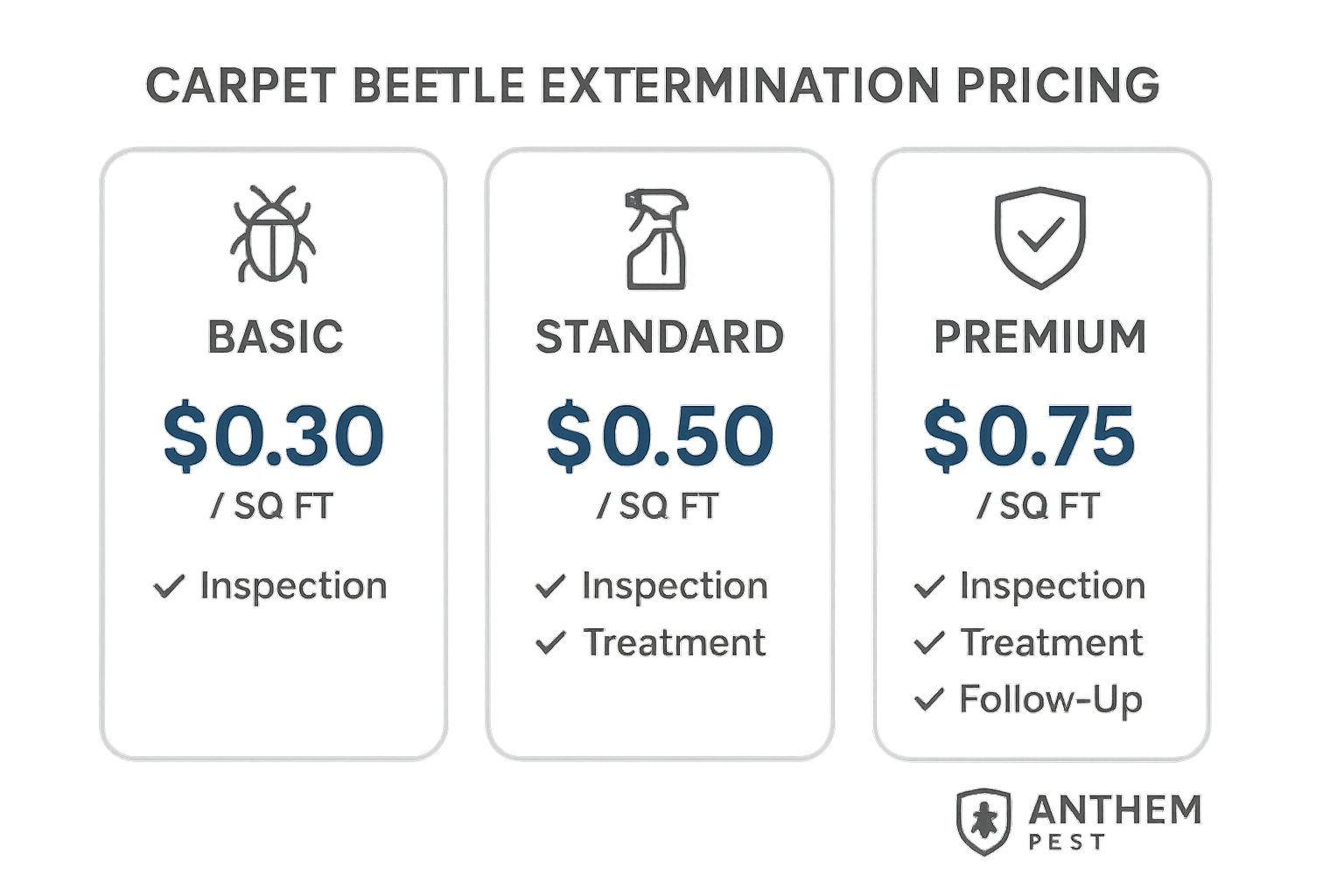
The infographic above condenses the three tiers into a side‑by‑side visual, highlighting the number of spray applications, heat‑treatment inclusion, and follow‑up visits alongside the per‑square‑foot cost. By glancing at the chart, you can instantly see which tier offers the right balance of coverage and price for your home’s size and infestation level.
DIY vs. professional: hidden costs to watch
It’s tempting to grab an over‑the‑counter spray kit and hope for the best, but DIY solutions often hide extra expenses. Homeowners may need to purchase multiple cans, repeat applications weekly, and still miss larvae lurking deep in insulation—resulting in repeated damage to carpets, wool blankets, and stored fabrics. Moreover, improper use of chemicals can pose health risks to pets and children, and most DIY products lack the heat‑treatment capability that physically kills beetle pupae.
Choosing Anthem Pest means you pay a single, transparent price that includes a licensed technician, guaranteed coverage, and liability protection. The tiered structure eliminates surprise fees, and the follow‑up visits ensure the problem stays solved.
Armed with the tier breakdown, square‑foot pricing, and the clear infographic, you can confidently select the plan that fits your budget while safeguarding your home. When you’re ready to lock in a price, call Anthem Pest at 877‑371‑8196 or visit anthempest.com to schedule your inspection.
Seasonal Activity of Carpet Beetles in Druid Hills
Carpet beetles thrive in the warm, humid climate of the Southeast, and Druid Hills is no exception. Their life‑cycle—from egg to adult—accelerates as temperatures rise, creating a predictable rhythm that homeowners can use to their advantage. Understanding when the insects are most active helps you schedule inspections before the damage starts.
Life‑Cycle Timing in a Southern Climate
In Georgia, adult carpet beetles emerge in early spring, lay eggs on natural fibers, and the larvae develop through summer. Because the region’s winters are mild, development never truly stops; instead, it slows to a crawl from January through March. By late spring, the population spikes, and the larvae reach a size that can damage clothing, upholstery, and even stored food.
Reading the Seasonal Activity Chart
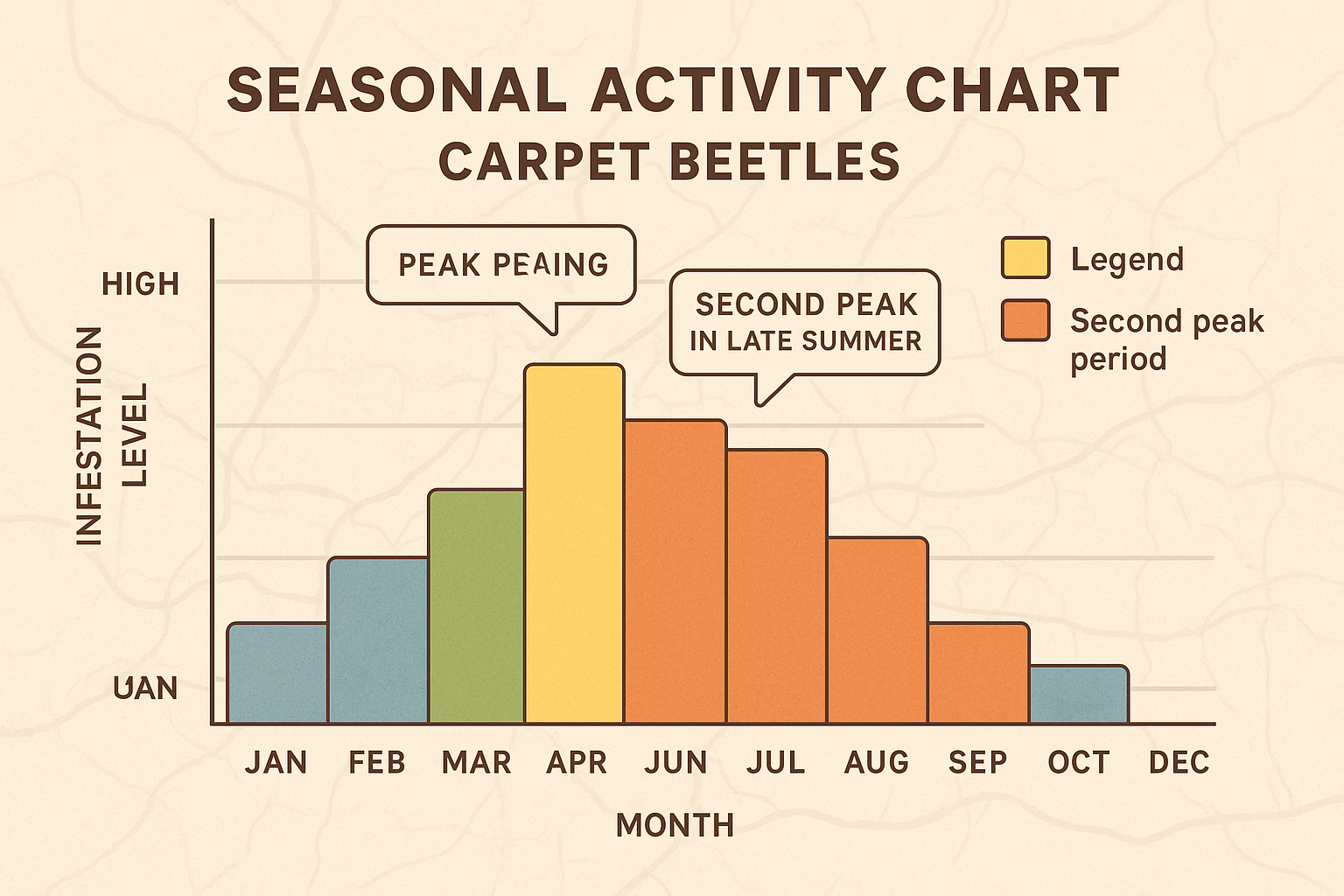
| Month Range | Typical Activity Level |
|---|---|
| Jan – Mar | Low – Adults are scarce, larvae development is minimal. |
| Apr – Jun | Rising – Eggs hatch, larval numbers increase rapidly. |
| Jul – Sep | Peak – Largest larval cohort; most damage occurs. |
| Oct – Dec | Decline – Activity tapers as cooler nights slow growth. |
The chart makes it clear: the hottest months (July through September) host the biggest beetle wave, while the early months are relatively quiet. This pattern mirrors the region’s temperature curve and informs when you should be most vigilant.
Why Midsummer Is the Sweet Spot for Treatment
Targeting the midsummer window—late June to early August—offers two key advantages. First, the larvae are actively feeding, so a well‑timed insecticide penetrates their protective cases and reaches the hidden bugs. Second, treating before the peak prevents the next generation from maturing, effectively breaking the cycle before it explodes.
Attempting treatment in early spring may miss the bulk of the larvae, while waiting until fall often means the damage is already done. A midsummer approach gives you the most bang for your buck and minimizes the need for repeat visits.
Homeowner Tips for Monitoring Peak Activity
- Set pheromone traps. Place a few sticky traps near closets, under furniture, and around windows. Check them weekly during July and August; a sudden increase signals an active infestation.
- Watch outdoor lights. Carpet beetles are attracted to bright bulbs. If you notice a surge of insects around porch lights, it’s a good indicator that adults are flying nearby.
- Inspect vulnerable items. Examine wool blankets, stored sweaters, and pet bedding for tiny, cigar‑shaped larvae. Early detection lets you act before they spread.
Proactive Scheduling with Anthem Pest
Anthem Pest knows Druid Hills’ seasonal quirks and can tailor a treatment plan that lands right in the midsummer window. By booking a pre‑emptive inspection in late May, our technicians can map hotspots, set traps, and apply a targeted, low‑toxicity treatment before the beetles hit their stride.
Regular follow‑up visits during the peak months keep the population in check, and a post‑season check in October ensures any survivors are eradicated before winter. This proactive schedule not only protects your fabrics but also saves you the cost of emergency repairs later in the year.
Protect Your Home and Choose Anthem Pest Control
By now you should be able to spot a fast carpet beetle infestation, recognize the tell‑tale damage to fabrics, and understand why waiting can turn a minor nuisance into a costly repair job. Prompt professional treatment stops the beetles before they lay more eggs, preserves your upholstery, clothing, and heirloom items, and eliminates the hidden larvae that thrive in carpet fibers and hidden cracks.
Quick Prevention Checklist
- Vacuum regularly: Focus on baseboards, under furniture, and closets. A thorough vacuum removes eggs and larvae before they hatch.
- Store fabrics properly: Keep seasonal clothing, blankets, and wool items in sealed plastic containers or vacuum‑sealed bags.
- Seal cracks and gaps: Use caulk or expanding foam around windows, doors, and baseboards to block beetles from entering.
- Schedule routine inspections: A quarterly walk‑through catches early activity and lets you act before damage spreads.
Why Anthem Pest Is the Right Partner
Anthem Pest’s licensed technicians bring more than a spray can—they bring local expertise honed in Druid Hills and a commitment to safety. We use EPA‑approved products that target carpet beetles while protecting children, pets, and indoor air quality. Our pricing is transparent, with no hidden fees, and we provide a detailed work plan so you know exactly what’s being done and why. Because we serve the Druid Hills community, we understand the specific building styles and climate factors that influence beetle activity, allowing us to tailor treatments for maximum effectiveness.
Choosing Anthem means you get a fast, reliable response backed by a company that values your peace of mind. Our technicians arrive on time, explain each step, and answer any questions you have about prevention or follow‑up care.
Take the Next Step—Free Inspection, No Obligation
Ready to protect your home for good? Schedule a complimentary inspection with Anthem Pest today. We’ll assess the extent of any beetle activity, recommend a customized treatment plan, and provide a personalized cost estimate—all with zero pressure and no obligation to proceed. Our team typically responds within 24 hours, so you won’t be left waiting while the beetles multiply.
Call now at 877‑371‑8196 or visit Anthem Pest Control for your free carpet beetle quote.