Understanding German Cockroach Risks in Georgia Homes
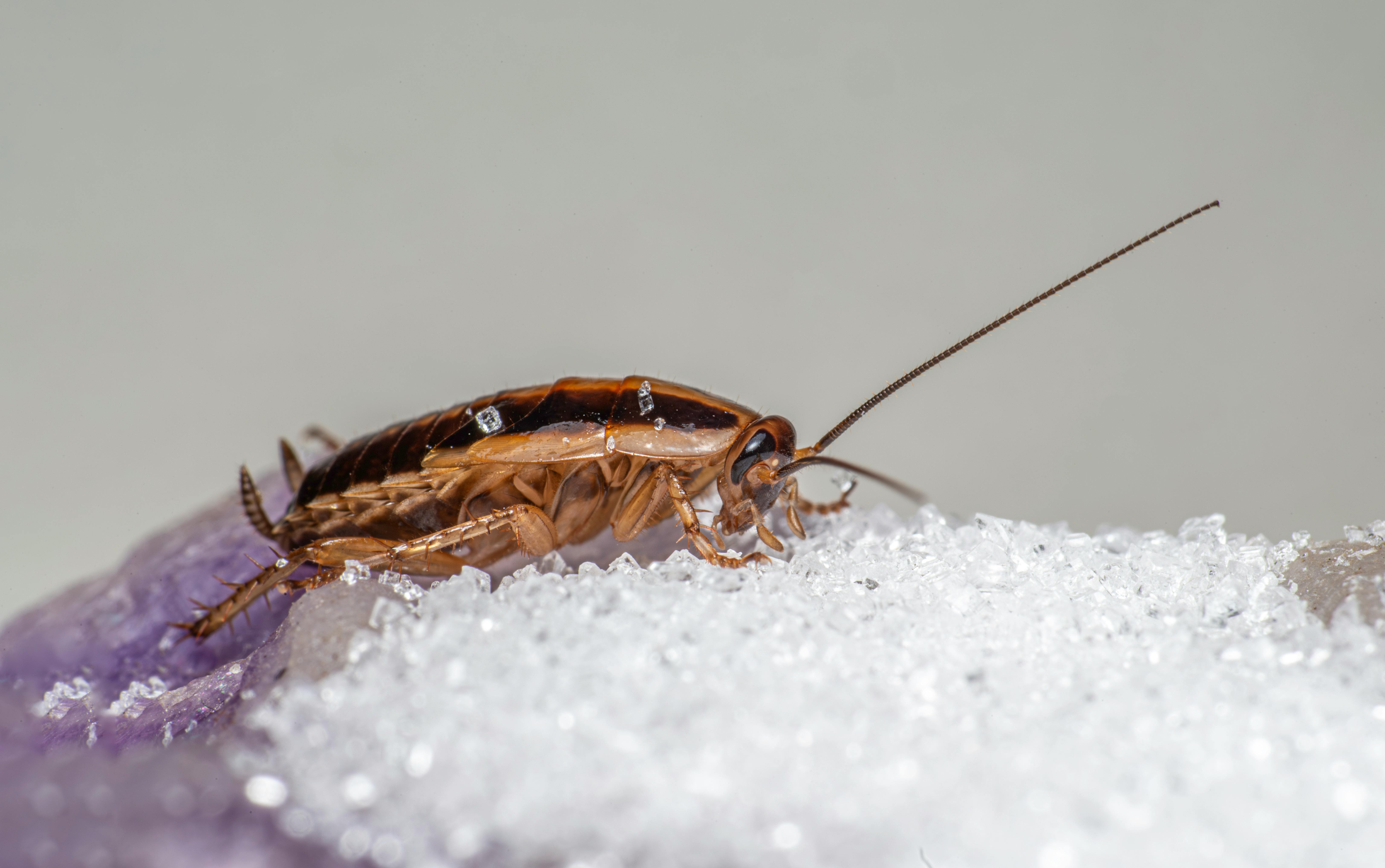
The German cockroach (Blattella germanica) is the most common indoor pest in the United States, and Georgia is no exception—making the expertise of a professional cockroach exterminator Suwanee homeowners trust especially important. Adults measure just 1.1–1.6 cm in length, sporting a light tan body with two dark parallel stripes on the pronotum. Their nymphs look like miniature versions of the adults, changing color as they mature. A single female can lay up to 30–40 eggs in a protective ootheca that hatches in about 28 days, and the entire life cycle—from egg to reproductive adult—can be completed in as little as 60 days under optimal conditions.
Georgia’s warm, humid summers and mild winters create an ideal climate for these pests. The state’s average summer temperature hovers around 85 °F (29 °C) with relative humidity often exceeding 70 %. Such conditions accelerate egg development and increase the frequency of breeding cycles. Moreover, many Georgia homes feature open floor plans, central air conditioning, and kitchen layouts that provide abundant food sources—crumbs, sugary spills, and food residues—making it easy for German cockroaches to establish hidden colonies behind cabinets, under appliances, and within wall voids.
Beyond being a nuisance, German cockroaches pose serious health threats. Their shed skins, droppings, and saliva contain potent allergens that can trigger asthma attacks, especially in children and sensitive adults. Studies have shown that these allergens can linger in dust for months, contaminating bedding, upholstery, and even air filters. Additionally, the insects carry a variety of bacteria, including Salmonella and E. coli, which can be transferred to food surfaces during foraging. A single infestation can therefore become a vector for food‑borne illness, turning a kitchen into a hidden health hazard.
Economically, the impact of an untreated German cockroach problem can be substantial. Property owners may face increased utility bills as infestations force the use of extra cooling to counteract the insects’ heat‑producing activity. Structural damage is less common than with termites, but the pests can gnaw on electrical wiring, leading to short circuits or fire hazards. More immediately, homeowners often incur repeated professional extermination fees when infestations are allowed to grow unchecked. The cost of a single, well‑executed treatment can range from $150 to $300, but repeated visits and supplemental services can quickly exceed $1,000.
To put the speed of growth into perspective, a typical German cockroach colony can expand from a handful of individuals to **over 1,000 insects within six months** if left undisturbed. This rapid multiplication underscores why proactive control is essential—early detection and swift intervention can halt a budding infestation before it reaches a level that threatens health, comfort, and finances.
- Quick Fact: An average infestation can grow to 1,000 insects in just six months.
Recognizing Signs of an Infestation

Common Hotspots in Your Home
Even the most diligent homeowner can miss a tiny roach tucked away in the right (or wrong) place. The first step is to know where they love to congregate:
- Kitchens – especially under sinks, behind the stove, and inside cabinets.
- Pantries – any open food packages or crumbs become an instant buffet.
- Behind Appliances – refrigerators, dishwashers, and washers create warm, humid hideaways.
- Bathrooms – the moisture around tubs, showers, and toilet bases is a perfect breeding ground.
Visual Clues You Can’t Ignore
Spotting a few tell‑tale signs early can save you a full‑blown invasion. Keep an eye out for:
- Egg casings (oothecae) – small, brownish‑tan capsules that look like tiny raisins.
- Shed skins – translucent exoskeletons left behind after a molt.
- Droppings – dark, pepper‑like specks that often appear near food prep areas or along baseboards.
Behavioral Clues That Hint at a Growing Population
Roaches are nocturnal, so their activity often goes unnoticed until you spot the aftermath:
- A faint, sweet, musty odor that intensifies in enclosed spaces.
- Increased movement at night – you may hear a faint rustle when you turn on a flashlight.
- Unexplained food disappearance or small “holes” in packaging.
DIY Quick Inspection: Tools and Technique
A systematic visual sweep can reveal an infestation before it spreads. Here’s a simple step‑by‑step you can do in under ten minutes:
- Gather a flashlight and a small handheld mirror. The light will expose hidden corners; the mirror helps you see behind appliances without moving them.
- Start in the kitchen. Shine the beam under the sink, inside cabinet doors, and around the stove base. Use the mirror to peek behind the refrigerator.
- Move to the pantry. Pull out boxes one at a time, checking for oothecae or droppings on the shelves.
- Check bathrooms and laundry areas. Focus on the underside of sinks, around the tub edge, and behind the washing machine.
- Record what you find. Jot down locations, types of evidence, and how many you see. This information is gold for any professional you later contact.
When to Call a Professional vs. DIY Attempts
Not every sighting warrants a full‑scale pesticide treatment, but knowing the line can prevent a small problem from becoming a nightmare:
- DIY is suitable if you spot a single ootheca or a few droppings and the infestation appears isolated.
- Professional intervention is advised when you notice:
- Multiple egg casings in various rooms.
- Consistent nocturnal activity, especially if you hear rustling sounds.
- Signs of roaches in hard‑to‑reach places like wall voids or ceiling spaces.
- Even a modest infestation can hide in cracks and ducts where over‑the‑counter sprays won’t reach. Anthem Pest Control’s licensed technicians use targeted baits and low‑pressure fogging that penetrate those hidden pathways safely.
By mastering these early-warning signs and performing a quick flashlight sweep, you’ll catch cockroach activity before it spreads. When the clues multiply, don’t hesitate—dial 877-371-8196 and let a trusted cockroach exterminator Suwanee homeowners rely on restore peace of mind to your home.
Seasonal Activity Patterns and Timing Treatments
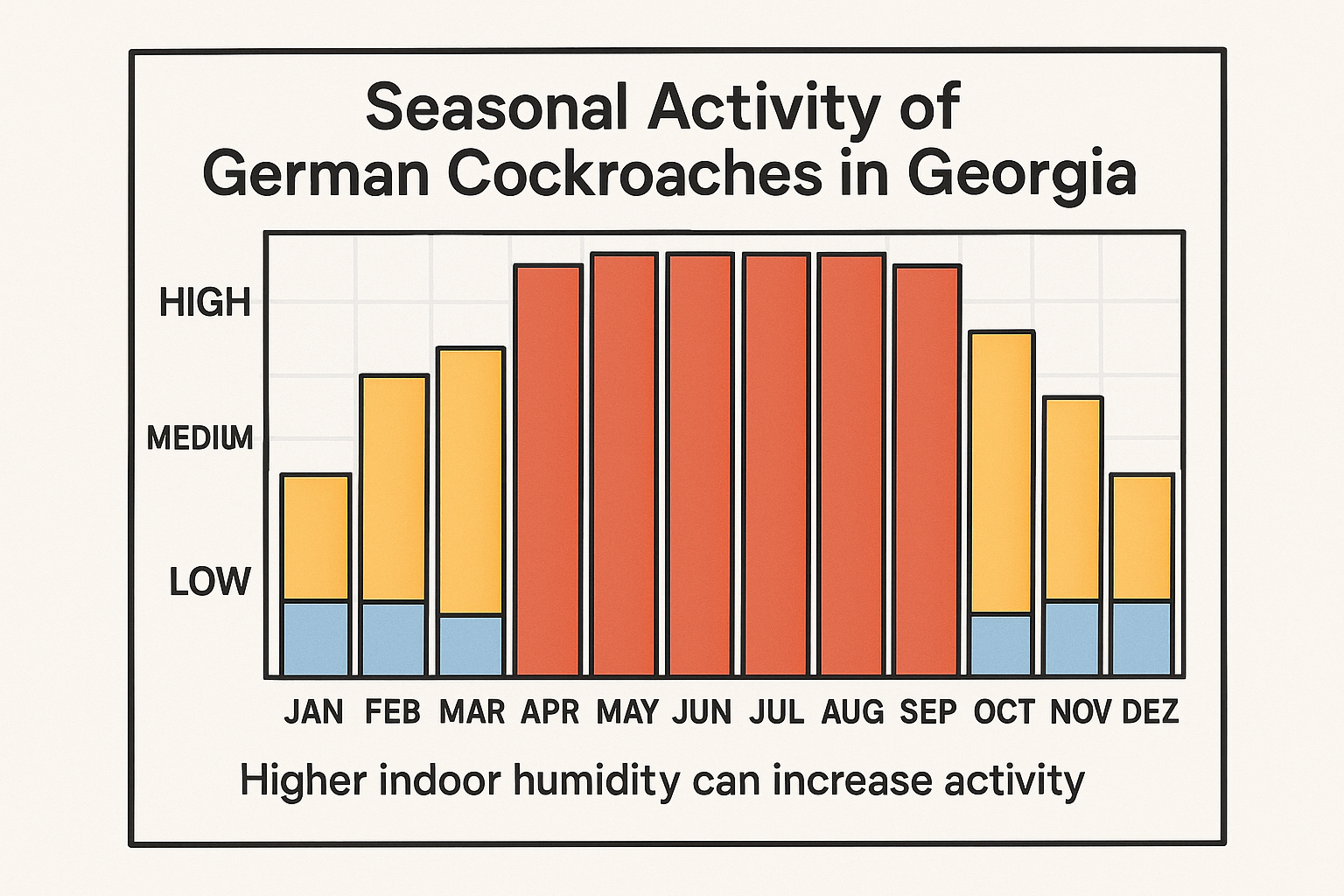
German cockroaches in Suwanee don’t stay static; their numbers rise and fall with the calendar, which is why timely support from a professional cockroach exterminator Suwanee homeowners trust can be critical. The chart above breaks the year into four distinct phases, linking each month to a relative activity level—low (Jan-Mar), moderate (Apr-May), high (Jun-Sep), and tapering (Oct-Dec). Understanding these peaks helps you anticipate when a tiny infestation might explode into a full-blown problem.
Why Summer Humidity Supercharges Reproduction
From June through September, Georgia’s humidity often climbs above 70 %. Moisture is the catalyst German cockroaches need to speed up their life cycle. A female can lay up to 40 eggs in a single ootheca, and under humid conditions those eggs hatch in as little as 28 days. The combination of warm temperatures (mid‑80s °F) and abundant moisture creates a perfect breeding ground, turning kitchens and pantries into nursery rooms within weeks.
Low‑Activity Periods: The Ideal Window for Prevention
Late fall and early winter (October‑December) see a natural slowdown. Cooler nights and reduced indoor humidity push the insects into a semi‑dormant state, extending the time between generations. This lull is the best opportunity to apply preventive treatments—such as residual sprays or bait stations—before the next surge. A well‑placed barrier in October can suppress the population long enough that the spring uptick never reaches damaging levels.
Flattening the Peaks with Indoor Climate Control
Homeowners have a powerful tool at their fingertips: the indoor environment. Simple actions—running a dehumidifier, fixing leaky pipes, and ensuring proper kitchen ventilation—can keep relative humidity below 50 % even on the hottest days. When moisture levels stay low, cockroach reproduction slows, and the seasonal spike flattens. Consistently low humidity also makes bait products more attractive, because the insects are actively foraging for water.
Scheduling Inspections and Follow‑Ups
Use the seasonal chart as a scheduling guide:
- January–March: Conduct a baseline inspection. Identify entry points and install monitoring traps.
- April–May: Perform a pre‑emptive treatment if traps show any activity. This is the “early warning” window.
- June–September: Increase trap checks to weekly. If counts rise, schedule a targeted spray or bait refresh.
- October–December: Apply a comprehensive preventive program and schedule a final post‑treatment inspection before winter settles in.
For the most reliable results, pair each visit with a detailed report from Anthem Pest Control. Our technicians will compare trap data against the seasonal baseline, adjusting product types and placement to match the current activity level. This data‑driven approach maximizes efficacy while minimizing unnecessary pesticide use.
| Month | Activity Level | Recommended Action |
|---|---|---|
| January – March | Low | Baseline inspection & monitoring |
| April – May | Moderate | Pre‑emptive bait placement |
| June – September | High | Weekly trap checks, targeted treatments |
| October – December | Decreasing | Preventive barrier & final inspection |
By aligning your pest‑management calendar with these seasonal patterns, you give Anthem Pest Control the best chance to stay one step ahead of German cockroaches. A timely inspection, combined with smart indoor climate choices, means fewer surprises, lower costs, and a home that stays cockroach‑free all year long.
Treatment Options and Service Packages
Core Treatment Methods
Anthem Pest Control relies on four proven tactics to knock out roaches fast and keep them out for good. Each method targets a different stage of the cockroach life cycle, so we can customize a plan that matches the severity of your infestation.
- Gel Baits: Sweet‑tasting gel placed in hidden corners attracts foraging roaches, which then carry the poison back to the nest.
- Dust Insecticides: Fine, silica‑based dust applied in wall voids and under appliances creates a lethal barrier that roaches walk through.
- Residual Sprays: A spray that clings to surfaces for weeks, killing any roach that contacts it after the initial application.
- Sealing Entry Points: Cracks, gaps, and utility openings are sealed with caulk or steel wool to block new insects from entering.
Pros and Cons of Each Method
| Method | Speed of Control | Safety for Residents & Pets | Durability (Weeks) |
|---|---|---|---|
| Gel Bait | Fast – visible reduction in 2‑3 days | Low – placed out of reach, low‑toxicity formulation | 4‑6 weeks (re‑application optional) |
| Dust Insecticide | Moderate – works as roaches walk through | Medium – dust should stay in concealed spaces | 8‑12 weeks (long‑lasting barrier) |
| Residual Spray | Immediate – kills on contact | Medium – spray is applied to surfaces, keep kids/pets away for a few hours | 3‑4 weeks (residue fades) |
| Sealing Entry Points | Prevention – no immediate kill | High – purely mechanical, no chemicals | Indefinite (if maintained) |
Basic Package – Essential Protection
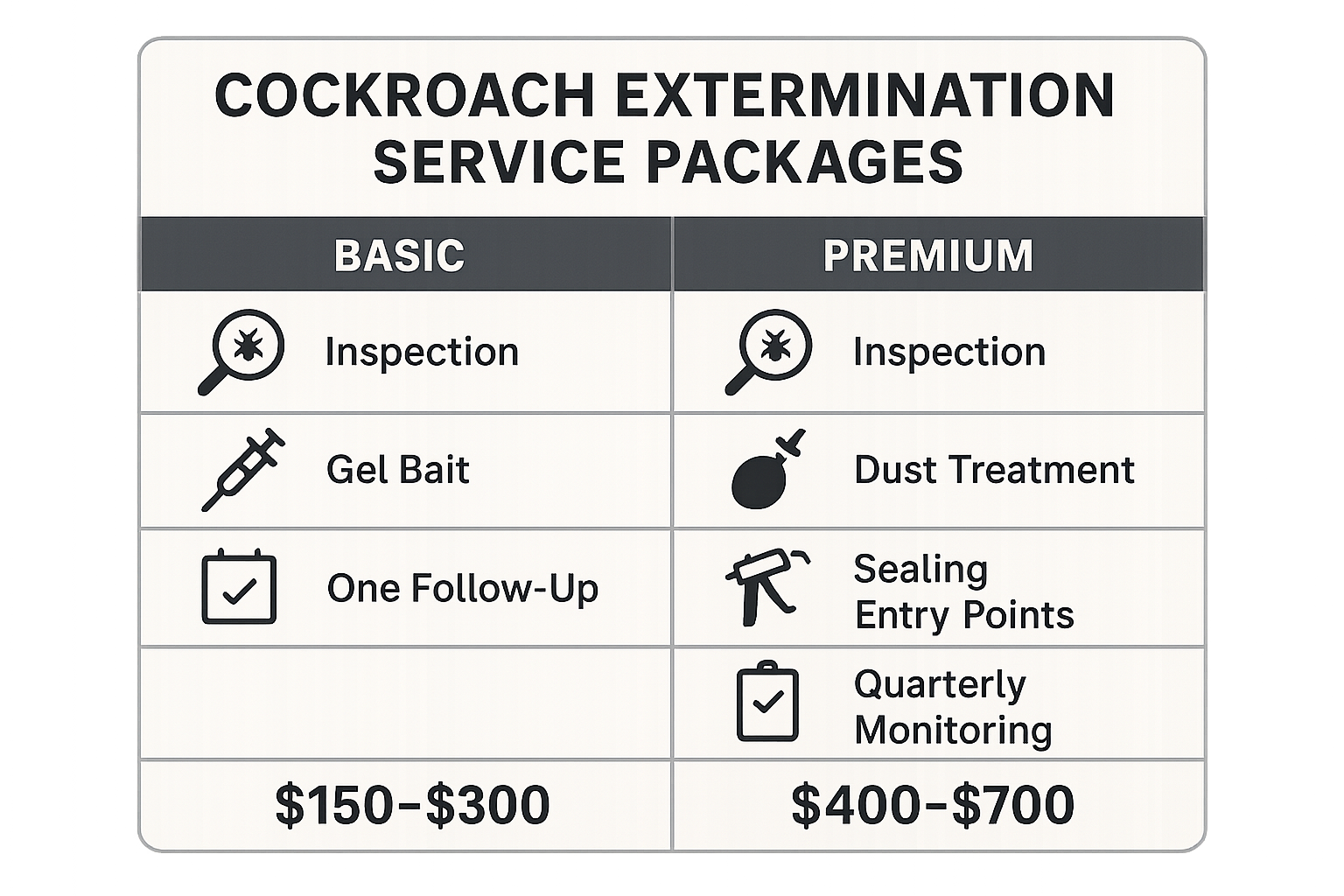
The Basic package is designed for homeowners who notice a few roaches but haven’t yet seen a full‑blown infestation. It includes a thorough on‑site inspection, placement of gel baits in high‑traffic zones, and one follow‑up visit to assess progress and adjust bait locations if needed.
What you get:
- Professional inspection and pest identification
- Application of gel bait in up to 10 strategic spots
- One complimentary follow‑up within 14 days
- Transparent pricing – typically $149‑$199
Premium Package – Comprehensive Defense
When roaches have taken residence in wall voids, cabinets, or under appliances, the Premium package steps in. It builds on the Basic offering by adding dust insecticide treatment, meticulous sealing of entry points, and quarterly monitoring visits to catch any rebound before it becomes a problem.
What you get:
- Full inspection with detailed report
- Gel bait placement plus dust treatment in hidden voids
- Professional sealing of cracks, gaps, and utility openings
- Quarterly monitoring and retreat if needed for a full year
- Pricing range – $299‑$399, delivering strong ROI for severe infestations
How to Choose the Right Package
Start by assessing the infestation severity with guidance from a professional cockroach exterminator Suwanee homeowners trust:
- Light activity (a few sightings): The Basic package usually resolves the issue quickly and keeps costs low.
- Moderate to heavy activity (multiple rooms, night sightings): The Premium package’s dust treatment and sealing provide the extra punch needed for lasting control.
- Budget concerns: Remember that a small upfront investment in the Premium plan can prevent costly repeat treatments later.
If you’re unsure, our technicians will walk you through a quick visual assessment during the initial visit and recommend the tier that balances speed, safety, and long‑term value for your home.
Prevention Tips for Long‑Term Control
Kitchen hygiene: seal, sweep, and dump
German cockroaches thrive on the tiniest crumbs and exposed food. Store pantry items—flour, sugar, cereal, pet food—in airtight containers made of glass or heavy‑wall plastic. A simple snap‑lock lid is enough to block their scent trails. After each meal, wipe countertops with a disinfectant spray, sweep the floor, and vacuum the edges of cabinets where crumbs often hide. Empty trash cans at least once a day, and line them with a bag that seals tightly. Even a small, unnoticed morsel can become a breeding invitation.
Eliminate water sources: dry, fix, and absorb
Moisture is the lifeblood of cockroaches. Inspect under sinks, behind appliances, and around the dishwasher for drips or condensation. Repair leaky faucet washers, tighten pipe joints, and replace cracked gaskets promptly. When a sink is not in use, wipe it dry and leave the faucet turned off. In cabinets that store dishes or food, place small desiccant packets or a shallow dish of silica gel to absorb lingering humidity. The drier the environment, the less attractive it becomes for roaches.
Structural maintenance: seal entry points
Every crack, gap, or unsealed opening is a potential highway for roaches. Use a quality silicone caulk to fill gaps around baseboards, window frames, and where walls meet floors. Install door sweeps on exterior doors; a simple brush or rubber strip prevents insects from slipping underneath. Check window screens for tears and repair them with a fine mesh patch. Even a hairline crack can serve as a hidden corridor, so make sealing a regular part of your home‑maintenance checklist.
Regular monitoring: traps and visual checks
Early detection beats an infestation any day. Place sticky traps in corners of the kitchen, under the refrigerator, and behind the stove. Check them weekly; a few captured roaches indicate you need to tighten hygiene or moisture controls. Conduct a visual inspection each quarter—look for egg casings, shed skins, or small droppings near food prep areas. Document what you find; patterns will reveal hotspots that need extra attention.
When to schedule professional preventive visits
DIY steps are powerful, but a seasoned pest-control partner adds a safety net—especially when working with a professional cockroach exterminator Suwanee homeowners trust. Consider a preventive visit from Anthem Pest Control at the start of each season, especially after heavy rains or before holiday gatherings when kitchens see increased activity. Professionals can apply residual treatments in hidden voids, inspect for structural vulnerabilities you might miss, and provide a customized action plan that aligns with your home’s layout. A short, annual service often costs less than reacting to a full-blown infestation.
By integrating these everyday habits—sealed food storage, moisture control, diligent sealing, and routine monitoring—you create an environment that’s hostile to German cockroaches. Pair your DIY vigilance with periodic professional oversight, and you’ll enjoy a cockroach‑free home for the long haul.
Protect Your Home with Anthem Pest Control Today
German cockroaches may seem small, but in Georgia homes they quickly become a serious health threat. Their rapid breeding cycle, love of warm, humid environments, and tendency to hide in kitchen cabinets, bathroom cracks, and even behind appliances mean they can turn a tidy home into a breeding ground for allergens, bacteria, and unpleasant odors. Left unchecked, a few roaches can multiply into hundreds within weeks, jeopardizing the safety of your family and the cleanliness of your living spaces.
Seasonal Timing & Treatment Options – A Quick Reminder
- Spring & early summer: Ideal for pre‑emptive treatments as temperatures rise and roach activity spikes.
- Fall: Perfect for a “clean‑up” round after the summer surge, sealing entry points before cooler months.
- Integrated approach: Bait stations, residual sprays, and thorough inspections work best together, targeting both adult roaches and hidden egg cases.
Understanding when to act and which methods to combine is essential, but the real difference comes from who applies the treatment. That’s where Anthem Pest Control shines.
Why Choose Anthem Pest Control?
Our team brings local expertise to every job. We know the quirks of Georgia’s climate, the common entry points in Suwanee homes, and the most effective product rotations to prevent resistance. All of our technicians are licensed and fully trained, using EPA‑approved, low‑toxicity formulas that keep pets and children safe while delivering fast, lasting results.
Transparency is built into our pricing model. You’ll receive a clear, itemized quote before any work begins—no hidden fees, no surprise add‑ons. Whether you need a single‑visit eradication or an ongoing prevention plan, we tailor the solution to your budget and your home’s specific risk factors.
Take the First Step Toward a Pest‑Free Home
Don’t let German cockroaches set up shop. Schedule a professional inspection today and let our experts design a targeted action plan for your property. As a special incentive, we’re offering a free, no‑obligation quote to all Suwanee homeowners who reach out now.
Call us at 877-371-8196 or click the link below to request your free quote from a trusted cockroach exterminator Suwanee homeowners rely on. Our friendly staff will arrange a convenient time for a licensed technician to visit, assess the situation, and explain the best treatment options for your home.
Visit Anthem Pest Control and protect your family with the trusted, local expertise that keeps Georgia homes roach‑free.