Recognizing Fruit Flies and Their Impact in Decatur, GA
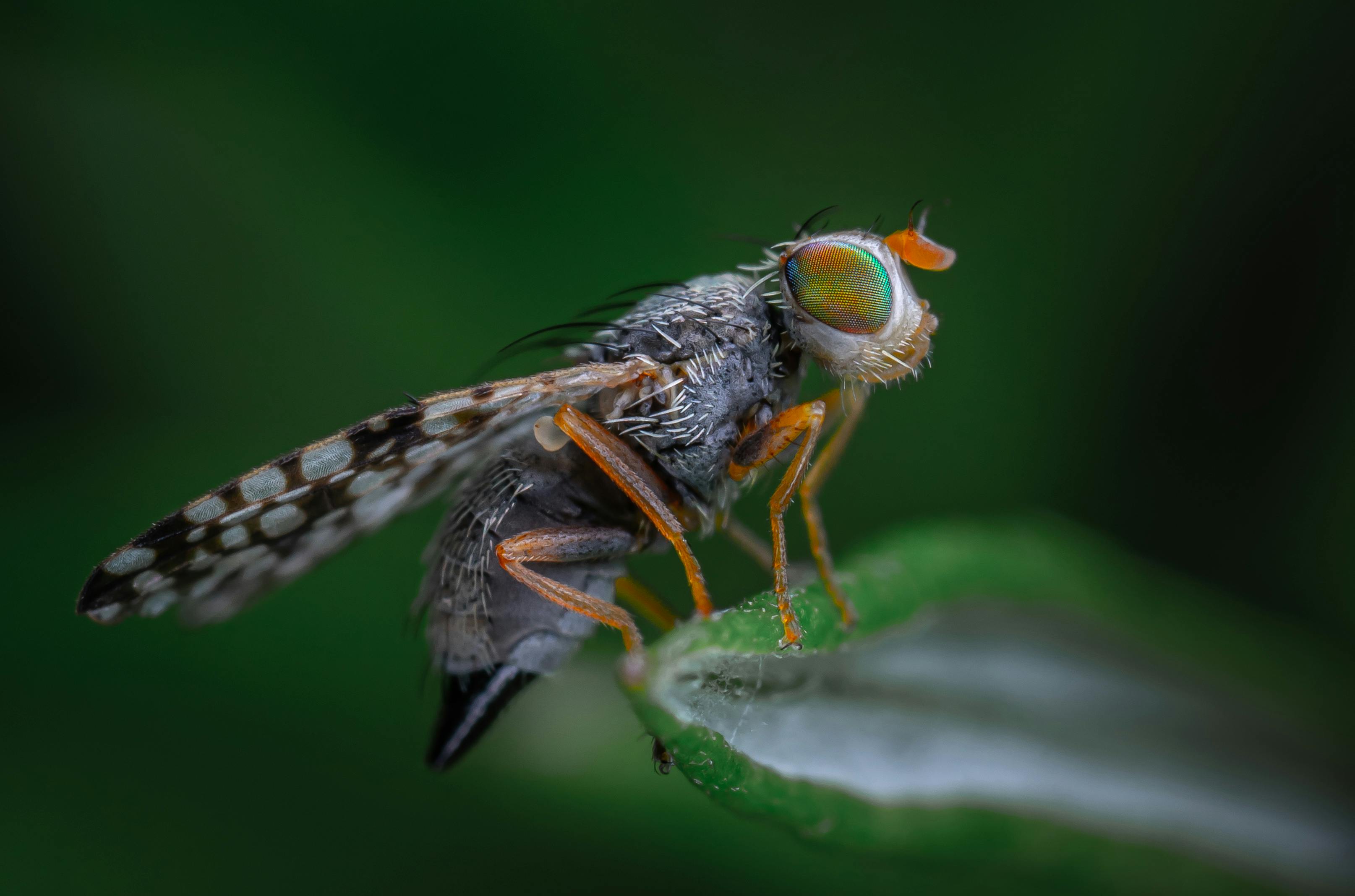
Drosophila melanogaster, the common fruit fly, is a tiny, tan-to-brown insect that thrives in the warm, humid climate of Decatur and frequently prompts homeowners to contact a fruit fly exterminator Decatur. While it’s a favorite subject for genetics labs, in your kitchen it’s anything but welcome. These flies are most at home near fermenting fruit, sugary spills, and damp organic matter—think countertop fruit bowls, compost bins, and even the moist environment inside kitchen drains.
Visual cues for identification
Spotting a fruit fly is easier than you might think. Adults measure just 2‑4 mm—about the size of a sesame seed. Their wings are clear with a faint vein pattern, and they often hover in a rapid, erratic fashion near ripe produce or trash. Unlike house flies, fruit flies have a slightly elongated body and a characteristic “hump” over the thorax. You’ll usually see them performing a quick, looping flight pattern around fermenting items.
Quick checklist: Is your home infested?
- Small larvae (white, worm‑like) inside overripe fruit or in the skin of tomatoes.
- Clusters of adult flies hovering near fruit bowls, garbage cans, or recycling bins.
- Persistent buzzing around kitchen drains, especially after disposing of food scraps.
- Visible “fly‑dust”—tiny specks of feces or residue on countertops near food sources.
If you tick two or more of these boxes, you’re likely dealing with a fruit‑fly population that can multiply quickly. In Decatur’s summer months, a single female can lay up to 500 eggs, leading to an exponential rise in numbers within days.
Why fruit flies matter
Beyond the annoyance of swatting them away, fruit flies pose a genuine health concern. Their larvae feed on fermenting organic matter, which can include contaminated food residues. As they move from one food source to another, they can transfer bacteria such as E. coli and Salmonella. The CDC reports that fruit‑fly‑related foodborne illness, while less common than other vectors, still contributes to thousands of cases annually, especially in households where food is left uncovered.
Moreover, a fruit‑fly infestation signals underlying sanitation issues—uncovered trash, clogged drains, or overripe produce left out for too long. Addressing these root causes not only curbs the flies but also reduces the risk of broader pest problems, such as ants or cockroaches, that are attracted to the same food sources.
Understanding what you’re looking at, and why it matters, is the first step toward a swift, effective solution. In the next sections, we’ll explore how Anthem Pest Control can eliminate the problem and keep your Decatur home fruit‑fly free.
Seasonal Peaks and Health Risks of Fruit Flies in Georgia
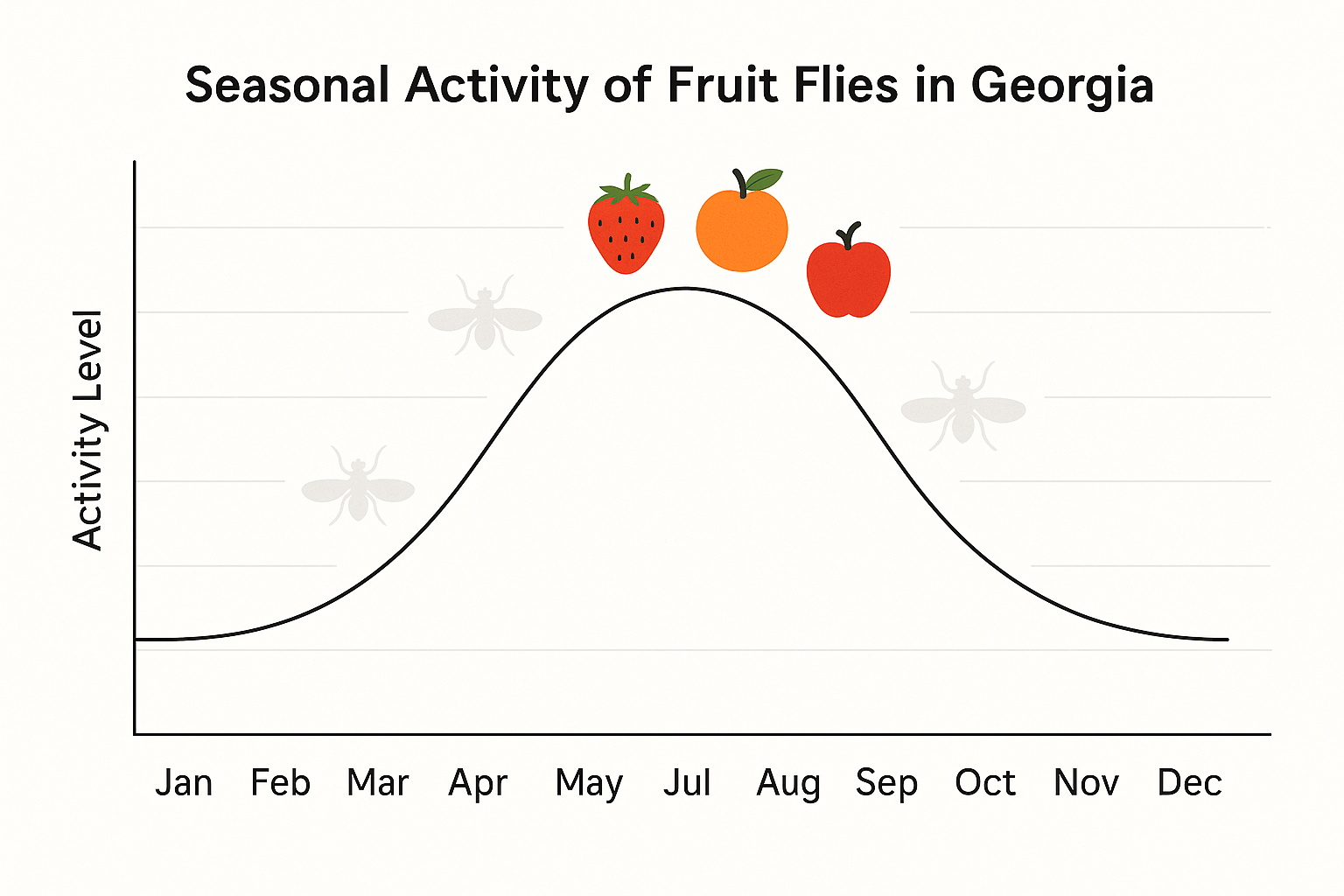
Recent monitoring data plotted on a seasonal line graph shows fruit-fly activity in Georgia climbing steadily from May, spiking sharply in late July through early September, then tapering off after October—when calls to a fruit fly exterminator Decatur typically peak. The visual peaks are highlighted with bright fruit-fly icons, making it clear that the hottest window for infestations falls squarely in late summer and early fall.
Two environmental drivers fuel this surge. First, average daytime temperatures rise above 80 °F (27 °C) during July and August, creating an ideal breeding climate for Drosophila melanogaster. Second, humidity levels hover around 70 % after afternoon rains, and the region’s peach, grape, and tomato harvests provide abundant fermenting fruit and organic debris—perfect food sources for adult flies to lay eggs.
Beyond nuisance, these insects pose genuine health risks. Fruit flies can carry bacteria from decaying produce to clean surfaces, contaminating countertops, utensils, and even open food containers. The CDC warns that mechanical vectors like fruit flies can spread *Escherichia coli* and *Salmonella* when they land on food items, increasing the chance of gastrointestinal illness for household members, especially children and seniors.
For homeowners seeking a science‑backed defense, the U.S. Environmental Protection Agency offers comprehensive guidance on managing pest vectors in residential settings. Following EPA guidance on household pest management—such as sealing entry points, eliminating standing water, and storing produce in airtight containers—greatly reduces the likelihood that fruit flies will become disease carriers.
The timing of local harvests amplifies the problem. In late summer, Decatur’s orchards and backyard gardens produce a surplus of ripe peaches, grapes, and tomatoes. When these fruits fall to the ground or are left on windowsills, they ferment quickly, releasing sugars that attract adult flies. Even a single overripe banana on a kitchen counter can generate enough odor to draw dozens of females looking for a place to lay eggs.
Once eggs hatch, the larvae feed on the sugary substrate, completing their life cycle in as little as five days under optimal conditions. This rapid turnover means a small initial infestation can balloon into a full‑blown swarm within a week. The CDC emphasizes that the mechanical transfer of pathogens occurs when flies move from contaminated waste to ready‑to‑eat foods, turning a simple nuisance into a vector for food‑borne illness.
Preventive actions are most effective when they target both the adult flies and their breeding sites. The EPA’s Integrated Pest Management (IPM) framework recommends: sealing cracks around doors and windows, installing fine‑mesh screens, keeping garbage cans tightly sealed, and regularly cleaning drains and disposal units. In addition, placing non‑toxic fruit fly traps—such as apple cider vinegar bowls covered with perforated film—can dramatically reduce adult populations while you work on long‑term source elimination.
What to watch for this season in Decatur
- Small, tan‑gray flies hovering near fruit bowls, trash cans, or damp compost bins.
- Clusters of larvae in overripe bananas, peaches, or spilled juice.
- Increased activity near indoor plants that retain moisture.
- Visible flies on kitchen countertops during evening hours.
- Unexplained faint buzzing near open windows after sunset.
- Any sudden rise in food spoilage despite normal refrigeration.
Proactive Prevention Strategies for Homeowners

Kitchen Hygiene Basics
Fruit flies love the sweet, moist environment of a busy kitchen. The simplest way to keep them out is to eliminate their food sources. Store all fresh fruit, vegetables, and baked goods in airtight containers or the refrigerator. Wipe up spills—especially juice, wine, or sugary drinks—within minutes, because even a tiny droplet can become a breeding hotspot. Take out the trash every day, and make sure the bin has a tight‑fitting lid. Finally, clean your sink and countertops with a mild detergent before they dry; a clean surface is a hostile surface for fruit flies.
Drain and Disposal Maintenance
Most fruit‑fly larvae develop in the organic film that lines kitchen drains and garbage disposals. A quick, weekly routine can shut down that hidden nursery. Pour a pot of boiling water down each drain to melt away grease and debris. For extra power, follow the hot water with a mixture of one cup of white vinegar and half a cup of baking soda; let it fizz for ten minutes, then flush with hot water again. This inexpensive “DIY drain cleaner” not only clears clogs but also strips away the slime fruit flies love.
Outdoor Tips
Even if your indoor kitchen is spotless, fruit flies can find their way in from the yard. Manage compost piles by keeping them covered, turning them regularly, and placing them at least three feet from the house. If you have fruit‑bearing trees, prune them to improve air circulation and promptly pick up any fallen fruit that can rot on the ground. Finally, eliminate standing water in birdbaths, pet dishes, and clogged gutters—fruit flies need moisture to lay eggs, and a dry perimeter is your first line of defense.
Natural Deterrents
When you want to trap the few flies that do slip through, natural baited traps are both safe and inexpensive. Fill a small jar with apple‑cider vinegar or a splash of red wine, add a drop of dish soap, and cover the opening with plastic wrap pierced with tiny holes. Fruit flies are drawn to the scent, enter through the holes, and cannot escape. Commercial sticky traps placed near trash cans or under sink cabinets provide a visual cue and capture any lingering adults without chemicals.
When DIY Measures Aren’t Enough
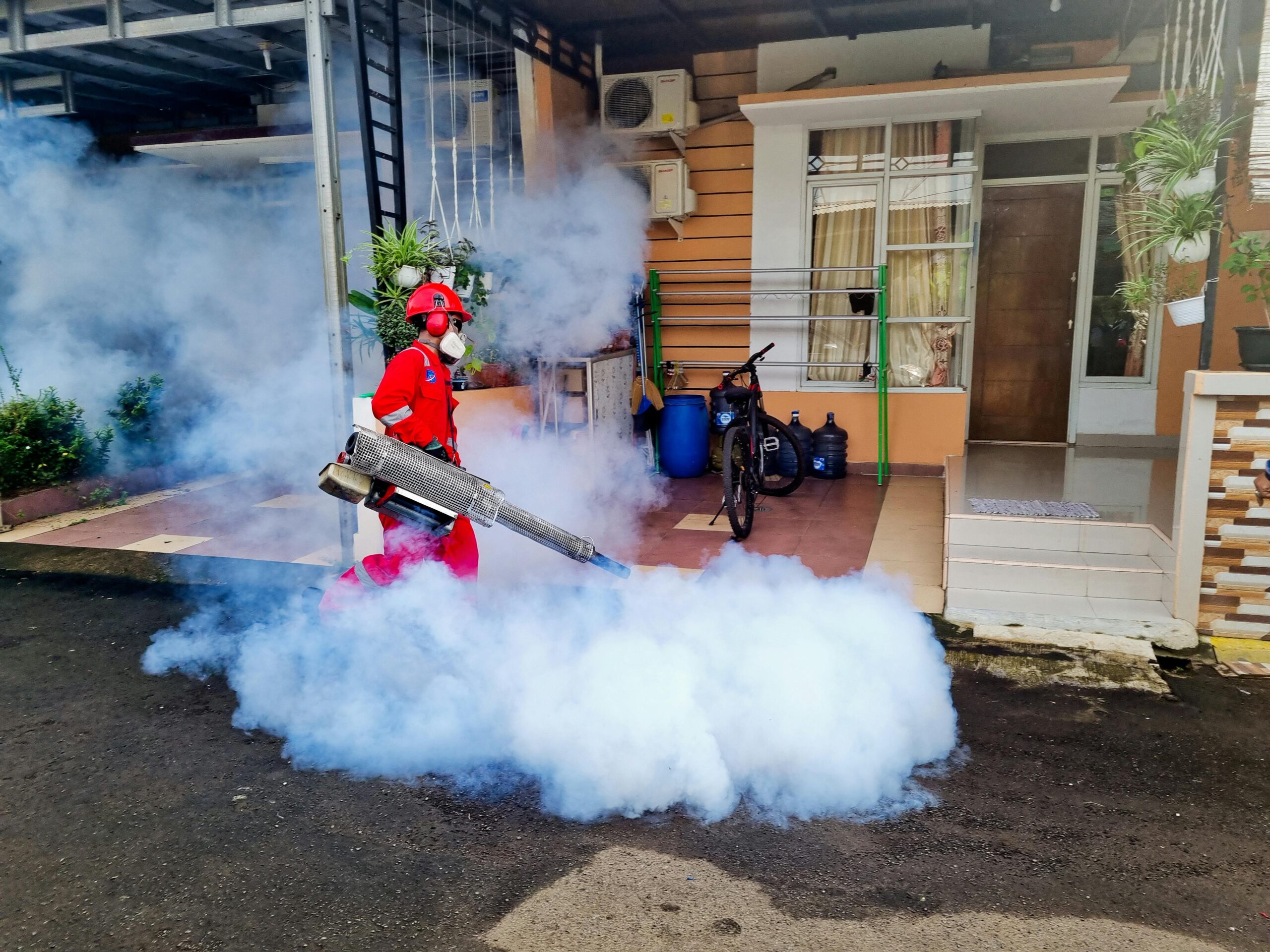
Occasionally, a fruit‑fly population can explode despite diligent housekeeping, indicating a deeper infestation in hidden cracks, wall voids, or HVAC systems. At that point, a licensed technician brings tools and expertise that homeowners simply don’t have—such as targeted insecticide applications, professional-grade foggers, and thorough inspections to locate breeding sites you can’t see. As shown in the image above, a trained professional can quickly assess the situation, apply safe, EPA‑approved treatments, and give you a customized prevention plan that keeps your home fruit‑fly free for the long term.
Treatment Options, Costs, and Choosing the Right Service
Professional Treatment Methods
When fruit flies invade a kitchen, most homeowners first think of a quick spray. Professional pest‑control technicians, however, have three proven arsenals: broad‑spectrum chemical sprays, strategically placed bait stations, and Integrated Pest Management (IPM) programs that combine chemical, mechanical, and cultural controls. Sprays work fast but often require re‑application, while bait stations lure adult flies and interrupt breeding cycles. IPM is the most sustainable approach—technicians assess moisture sources, eliminate breeding sites, and then apply the minimum effective treatment.
What the Numbers Say: NPMA 2022 Effectiveness Study
The National Pest Management Association’s 2022 study evaluated 12 commercial fruit‑fly programs across the United States. Chemical sprays achieved a 78 % reduction after a single visit, bait stations posted a 85 % drop after two weeks, and full IPM protocols delivered a 92 % decline within one month. The data underscore that a layered IPM strategy not only outperforms single‑method treatments but also reduces the likelihood of resistance and re‑infestation.
Cost Landscape in Decatur and Neighboring Cities
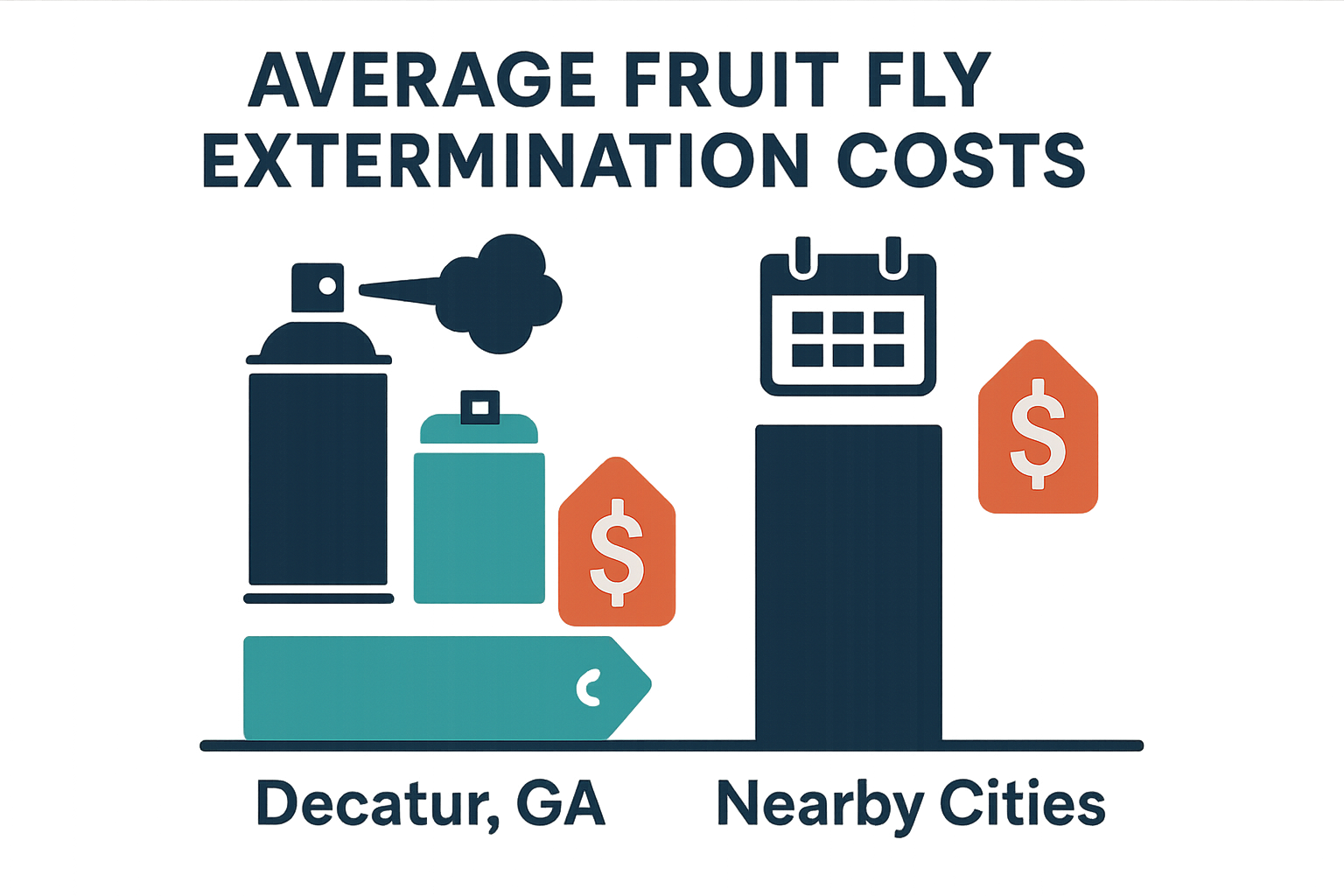
The bar-chart above visualizes average fruit fly extermination costs in Decatur versus Marietta, Lithonia, and Lawrenceville—information many homeowners review before hiring a fruit fly exterminator Decatur. Decatur’s typical one-time service sits at $149, while Marietta averages $165, Lithonia $138, and Lawrenceville $155. Price variations stem from three main factors: the frequency of service visits, the complexity of the chosen treatment (spray-only versus full IPM), and local market competition.
| City | Average Cost | Typical Treatment Type |
|---|---|---|
| Decatur, GA | $149 | Spray + Bait |
| Marietta, GA | $165 | IPM Package |
| Lithonia, GA | $138 | Spray Only |
| Lawrenceville, GA | $155 | Spray + Bait |
How Companies Price Their Services
One‑time service: A single visit that includes inspection, treatment, and a post‑treatment follow‑up. Most homeowners choose this for immediate relief, and the price typically covers the labor and materials needed for a standard home.
Quarterly plans: Four visits per year, each spaced to address seasonal spikes. The per‑visit cost drops to $90‑$110, but the annual commitment averages $380‑$440. Quarterly plans often bundle bait station refills and a complimentary moisture‑assessment report.
Annual contracts: Unlimited visits, priority scheduling, and a guaranteed response time (often within 24 hours). Contracts range from $560 to $720 per year, depending on property size and whether the client opts for full IPM or a spray‑only baseline.
Choosing a Reputable Pest‑Control Partner
- Licensing and certification: Verify that the company holds a valid Georgia pest‑control license and that technicians are certified through the National Pest Management Association (NPMA) or a comparable body.
- EPA‑approved products: Ask for a list of chemicals and baits. Reputable firms use EPA‑registered formulations that balance efficacy with indoor safety.
- Transparent pricing: Look for written estimates that break down labor, materials, and any recurring fees. Hidden charges are a red flag.
- Customer reviews and references: Check Google, Yelp, and the Better Business Bureau for consistent five‑star feedback, especially from neighbors in Decatur.
- Guarantee and follow‑up: A solid guarantee—such as “free re‑treatment within 30 days if flies return”—shows confidence in the chosen method.
Protect Your Home Today with Anthem Pest Control
By now you can identify fruit flies by their tiny tan‑brown bodies and rapid, erratic flight, recognize that warm, humid weather from late spring through early fall spikes their numbers, and implement basic prevention steps—like covering fruit, cleaning drains, and eliminating standing water. You also understand that a one‑time DIY spray rarely eliminates the hidden larvae lurking in your garbage disposals and potted plants, which is why a professional treatment is the most reliable finish.
Why Anthem Pest Control Is Your Best Ally
Anthem Pest Control brings more than a truck and a spray can. Our technicians are trained in the latest EPA‑approved fruit‑fly protocols, ensuring every application is both safe for your family and pets and effective against all life stages of the pest. We serve homeowners across the United States, so you benefit from a network of seasoned experts who understand regional quirks—from the humid subtropics of Decatur to dryer inland climates.
- Safe solutions: Low‑odor, low‑toxicity products that meet strict EPA standards.
- Affordable pricing: Transparent, upfront quotes with no hidden fees.
- Fast results: Targeted treatments that break the breeding cycle within days.
- Ongoing protection: Follow‑up inspections and preventive recommendations to keep fruit flies from returning.
Transparent Pricing and EPA‑Approved Methods
Our commitment to clear pricing means you’ll receive a detailed estimate before any work begins, so there are no surprises on the invoice. All chemicals we use are registered with the EPA and are applied according to state‑mandated safety guidelines—exactly the same standards we highlighted in the “professional treatment” section earlier. This alignment reinforces the advice we gave you: choose a provider that prioritizes health, effectiveness, and cost‑clarity.
Take the Next Step—Free Inspection & Quote
Don’t let fruit flies turn your home into a summer nuisance. Schedule a free, no-obligation inspection with Anthem Pest Control today—your trusted fruit fly exterminator Decatur—and we’ll craft a tailored treatment plan that fits your budget and timeline. Call us now at 877-371-8196 or visit Anthem Pest Control to claim your free quote and enjoy peace of mind.