Millipedes in Peachtree City – What Homeowners Need to Know
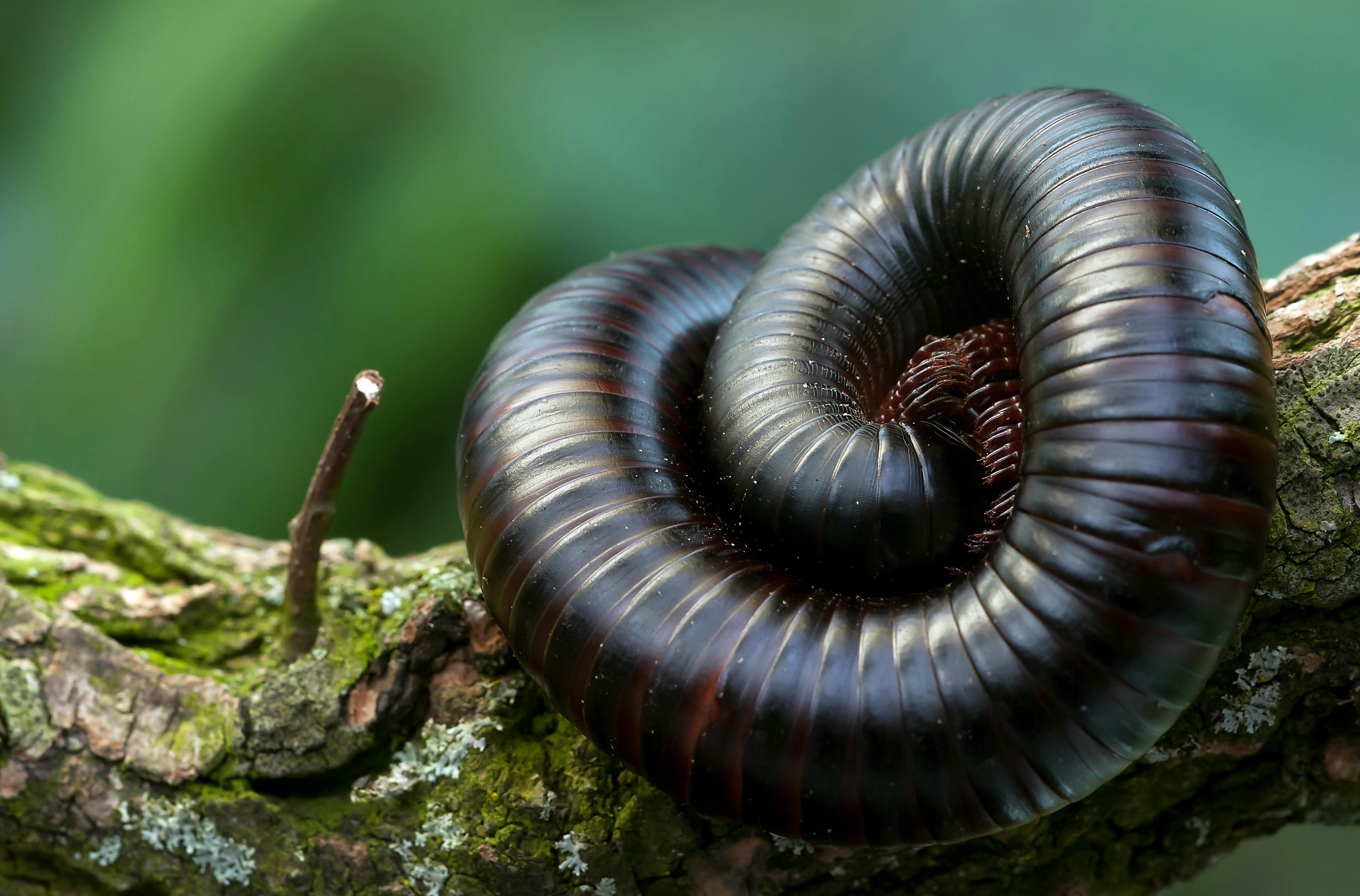
Millipedes are often mistaken for their faster, more aggressive cousins—the centipedes—but they belong to a completely different class of arthropods. With their long, segmented bodies covered in two pairs of legs per segment, most species in Peachtree City measure between 1½ and 2½ inches. Their earthy brown or black coloration helps them blend into leaf litter, and they move at a leisurely pace, curling into a tight spiral when threatened. Despite their many legs, millipedes are harmless to people; they lack venom and cannot bite or sting.
Where Millipedes Hang Out Around Your Home
In the Peachtree City area, millipedes thrive in moist, organic environments. You’ll find them nesting in:
- Stacks of leaf litter and decaying wood near foundations.
- Mulch beds, garden borders, and compost piles.
- Damp crawl spaces, basements, and any area where water accumulates.
These micro‑habitats provide the humidity millipedes need to keep their bodies from drying out.
Why They Slip Inside
When the weather shifts—especially during late summer and early fall—millipedes begin a seasonal migration in search of cooler, drier shelter. Moisture seeping through cracks, gaps around doors, or poorly sealed windows becomes an invitation. Inside, they’re drawn to:
- Organic debris such as pet food, fallen leaves, or moldy cardboard.
- Moisture‑rich zones like leaky pipes or damp basements.
Because they’re attracted to humidity, a single leak can turn your home into a millipede hotspot.
Potential Nuisance and Damage
While millipedes won’t chew through wood or damage structural components, they can cause minor inconveniences:
- Soil displacement: Large numbers can push soil and mulch into entryways, creating a mess.
- Staining: Their defensive secretions, which may appear as a yellowish or black liquid, can leave spots on carpets, clothing, or countertops.
- Rare bites: On the very rare occasion a millipede feels trapped, it might pinch with its mandibles, resulting in a mild, short‑lived irritation.
Red‑Flag Signs of an Emerging Problem
Keep an eye out for these early warnings so you can act before the infestation spreads:
- Clusters of dead millipedes near entry points, especially after rain.
- Visible trails of slime or dark spots on floors and walls.
- Increased activity in damp basements, crawl spaces, or near outdoor mulch beds.
- Frequent sightings in kitchen cabinets or pantry shelves where food debris accumulates.
Spotting these signs early lets you call a professional like Anthem Pest Control to implement targeted, safe treatments—preventing a small nuisance from becoming a full‑blown invasion.
Seasonal Peaks and How They Affect Millipede Activity
Peachtree City’s humid subtropical climate creates a perfect backdrop for millipedes to thrive. Warm, moist conditions in the spring and fall accelerate their life cycle, while the hot, dry summer slows them down. Understanding these patterns helps you spot the right moments to inspect and treat before millipedes march indoors.
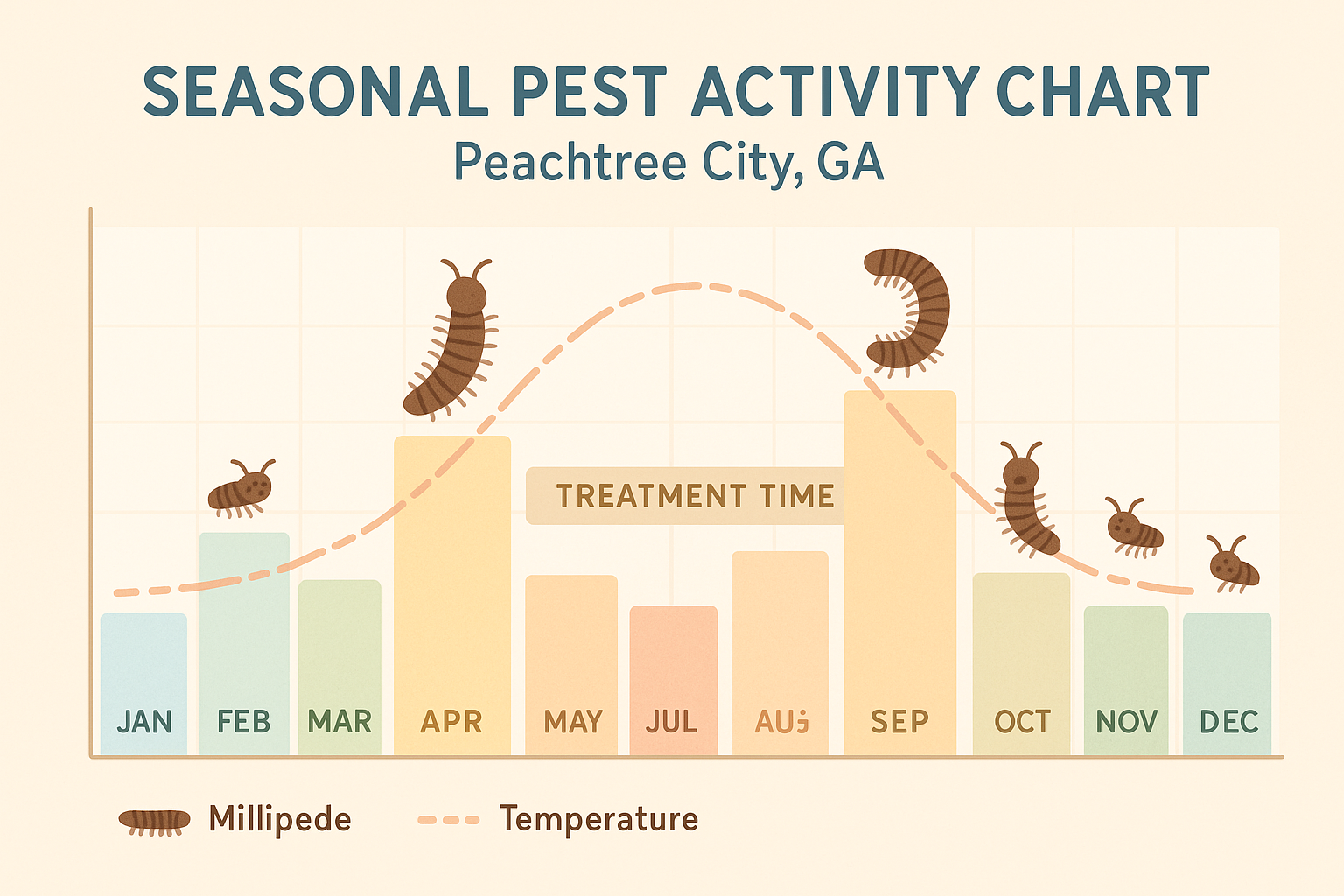
Month‑by‑Month Activity Overview
| Month | Activity Level | Key Climate Factors |
|---|---|---|
| January | Low | Cool temps, occasional rain |
| February | Low | Cold nights, limited moisture |
| March | Moderate | Rising temps, spring showers |
| April | High | Warm days, frequent rain |
| May | High | Consistent warmth, ample humidity |
| June | Moderate | Heat spikes, lower rainfall |
| July | Low | Hot, dry conditions |
| August | Low | Peak summer dryness |
| September | Moderate | Cooling temps, early fall rains |
| October | High | Comfortable temps, frequent showers |
| November | Moderate | Drop in temperature, occasional rain |
| December | Low | Cool, dry period |
Temperature, Rainfall, and Population Spikes
Millipedes are most active when soil moisture exceeds 15 % and surface temperatures stay between 60‑75 °F (15‑24 °C). A single heavy rain after a warm spell can trigger a sudden surge, as the insects emerge to find shelter. Conversely, prolonged droughts in July and August force them deeper into the soil, reducing the chance of indoor sightings.
Inspection Windows & Preventive Actions
- Early Spring (March‑April): Walk your foundation, check crawl spaces, and seal cracks before the first rain.
- Late Spring (May): Apply a perimeter barrier once soil moisture peaks; this is the most effective time to interrupt breeding.
- Summer (June‑August): Conduct a quick visual check; focus on drainage issues that could retain moisture.
- Fall (September‑October): Re‑inspect after the first autumn showers and reinforce entry‑point sealing.
- Winter (November‑December): Perform a final sweep of basements and garages to catch any late‑season stragglers.
Why Early Seasonal Treatment Pays Off
Addressing millipedes during their spring surge or fall peak cuts the breeding cycle short, meaning fewer adults seek refuge in your home during cooler months. A proactive perimeter treatment from Anthem Pest Control creates a moisture‑resistant barrier, keeping the pests where they belong—outside. By timing inspections and treatments with the climate‑driven activity chart, you protect your home while minimizing chemical use and expense.
Spotting a Millipede Infestation Early
Know the look of a millipede
Millipedes are easily recognized by their long, cylindrical bodies covered in dozens of tiny legs—often 30‑plus pairs per segment. In Peachtree City they range from 1‑2 inches (the common “black” variety) to 4 inches for the larger brown species. Their color runs from deep black to reddish‑brown, and they move in a slow, wave‑like crawl rather than a rapid dash. Spotting these visual cues early can prevent a small problem from turning into a full‑blown infestation.
Where they like to hide inside your home
Millipedes are moisture‑loving pests. The most common indoor hotspots include:
- Basements and crawl spaces where humidity is high.
- Bathrooms, especially under sinks or around shower drains.
- Doorways and window sills that lead to the yard.
- Areas where mulch, leaf litter, or garden debris is stored inside.
Signs that they’re already active
Even if you don’t see the creatures themselves, a few tell‑tale signs can alert you:
- Shed exoskeletons—thin, translucent shells left behind after molting.
- Small black droppings that look like pepper grains.
- Clusters of live millipedes near leaky pipes, damp corners, or under houseplants.
DIY inspection checklist
Take a flashlight and follow these quick steps each month, especially after heavy rain:
- Turn off the lights and scan dark corners of basements, crawl spaces, and under bathroom cabinets.
- Lift stored mulch or firewood and shake it gently; any scurrying movement is a red flag.
- Run a thin probe (a ruler or a bent wire) along cracks in foundation walls and baseboards—watch for tiny legs emerging.
- Check around exterior doors for a thin line of moisture; millipedes often gather there before slipping indoors.
When to call a professional
If you find more than a handful of millipedes, repeatedly discover shed skins, or notice them congregating near structural cracks, it’s time to bring in Anthem Pest Control. Our technicians can assess the moisture source, seal entry points, and apply a targeted, low‑toxicity treatment that eliminates the current population while keeping your family and pets safe.
Professional Treatment Options for Millipedes

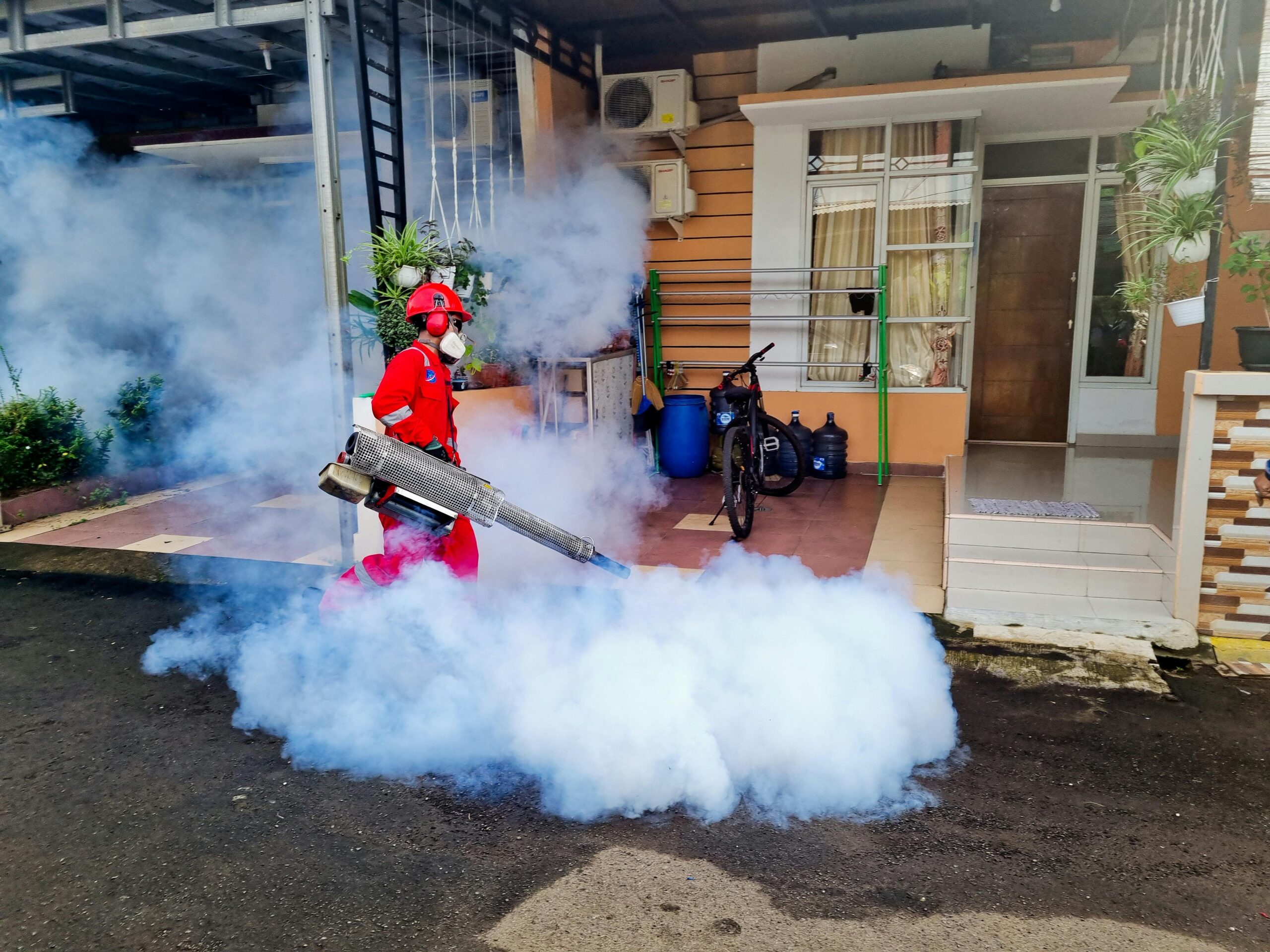
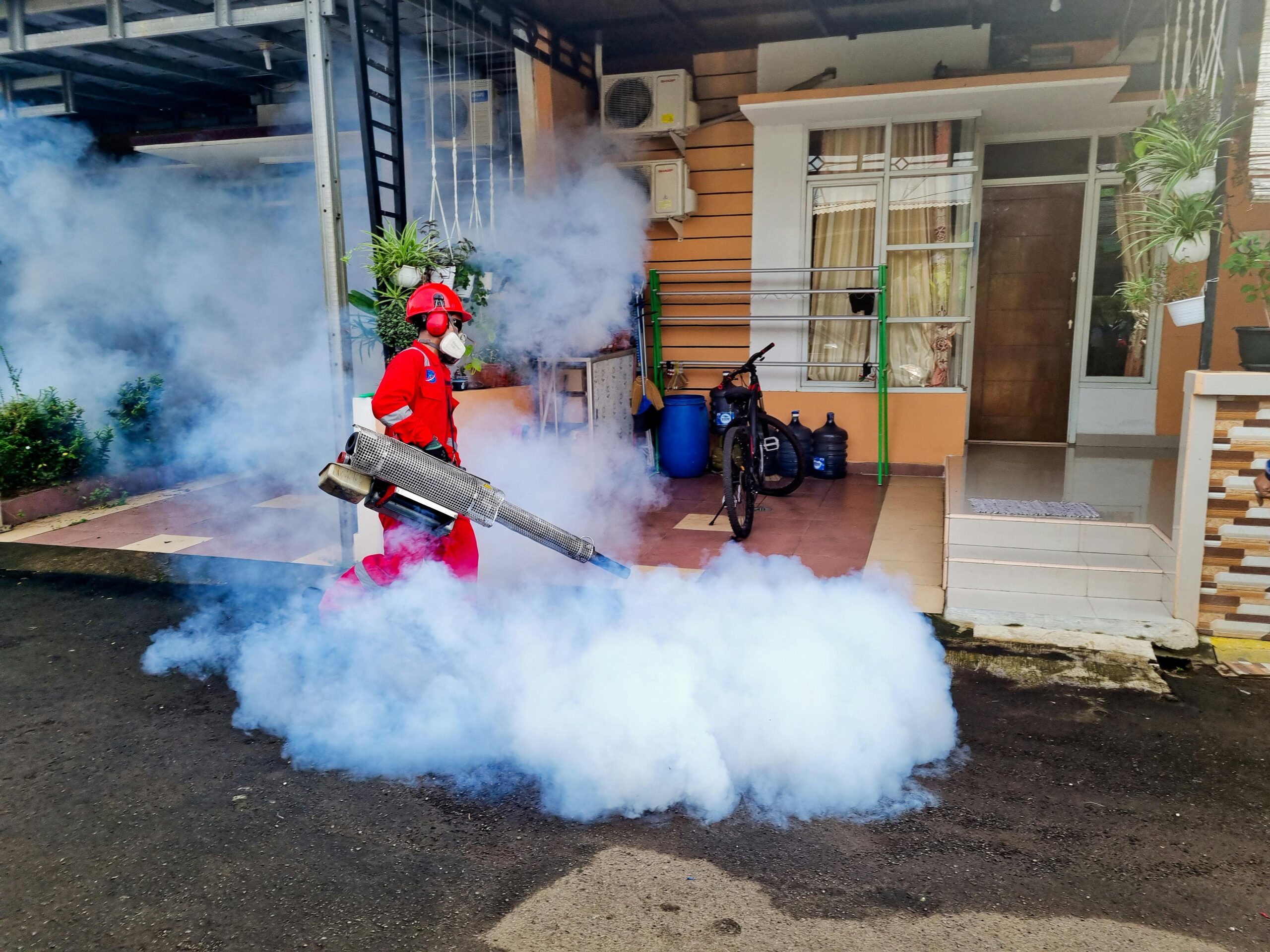
When millipedes spill into your living room, a DIY spray rarely solves the problem for long. A licensed technician brings the right chemicals, equipment, and expertise to keep the critters out while protecting your family and pets.
Exterior perimeter treatments
The first line of defense is a treatment that surrounds your home’s foundation. Technicians apply a soil‑drench formulation that penetrates the top six inches of soil, creating an invisible barrier that kills millipedes as they crawl upward. In addition, a perimeter barrier spray is placed on walls, walkways, and landscaping edges; the residual action lasts 8‑12 weeks, dramatically reducing the chance of re‑entry.
Interior applications
If millipedes have already crossed the line, we focus on targeted spot treatments and crack‑and‑crevice sprays. Spot applications concentrate a fast‑acting insecticide directly on visible clusters, while crack‑and‑crevice sprays penetrate baseboards, under appliances, and behind doors where the insects hide. These interior products are low‑odor and formulated to be safe around children and pets when applied by a certified professional.
Integrated pest management (IPM) approach
Anthem Pest Control pairs chemical treatments with non‑chemical tactics to attack the root causes of millipede infestations. First, we advise homeowners to eliminate excess mulch, leaf litter, and standing water that create a humid micro‑environment millipedes love. Next, we seal foundation cracks, install gutter downspouts, and recommend proper ventilation in crawl spaces. By reducing moisture and shelter, the IPM plan keeps future invasions at bay, often without a repeat spray. We also provide a detailed report after each visit, so you can track progress and see exactly where treatments were applied.
Benefits of hiring a licensed technician
Choosing a certified technician brings several advantages that DIY methods simply cannot match.
- Proper pesticide selection: Professionals choose products that are proven effective against millipedes while meeting state safety standards.
- Regulatory compliance: Licensed applicators follow EPA‑approved guidelines, protecting you from potential legal issues.
- Safety for people and pets: Application techniques minimize exposure and residue risks.
- Warranty and guarantee: All services come with a 90‑day satisfaction guarantee, giving you confidence that the job is done right.
- Ongoing monitoring: Technicians assess results and adjust the plan as needed.
Typical service frequency
Most homeowners start with an intensive initial treatment that covers both exterior and interior zones. After the first visit, we schedule quarterly follow‑ups to refresh the barrier, inspect moisture sources, and adjust the plan as needed. This schedule aligns with the seasonal peaks of millipede activity in the Georgia climate.
Case example: Millipede control in a Peachtree City home
The Johnson family in Peachtree City reported nightly millipede swarms after a heavy spring rain. Our technician performed a soil‑drench around the foundation, applied a perimeter spray, and sealed a gap behind the kitchen sink. Within five days the indoor sightings dropped to zero, and a three‑month follow‑up confirmed that the barrier remained intact. Since then, the Johnsons have reported no new millipede activity during the next two rainy seasons, confirming the lasting impact of an IPM‑driven plan.
How Much Does Millipede Control Cost in Peachtree City?
Typical Price Breakdown
At Anthem Pest Control, a thorough millipede inspection in Peachtree City starts around $80‑$120. The fee covers a detailed visual survey, moisture assessment, and a written report with treatment recommendations. If a one‑time treatment is needed, homeowners can expect to pay between $150‑$250 for a standard residential property (up to 2,000 sq ft). Ongoing protection plans—usually quarterly visits with re‑treatments as needed—run from $350‑$500 per year, depending on the service level.
Cost Comparison: Millipede‑Specific vs. General Pest Control
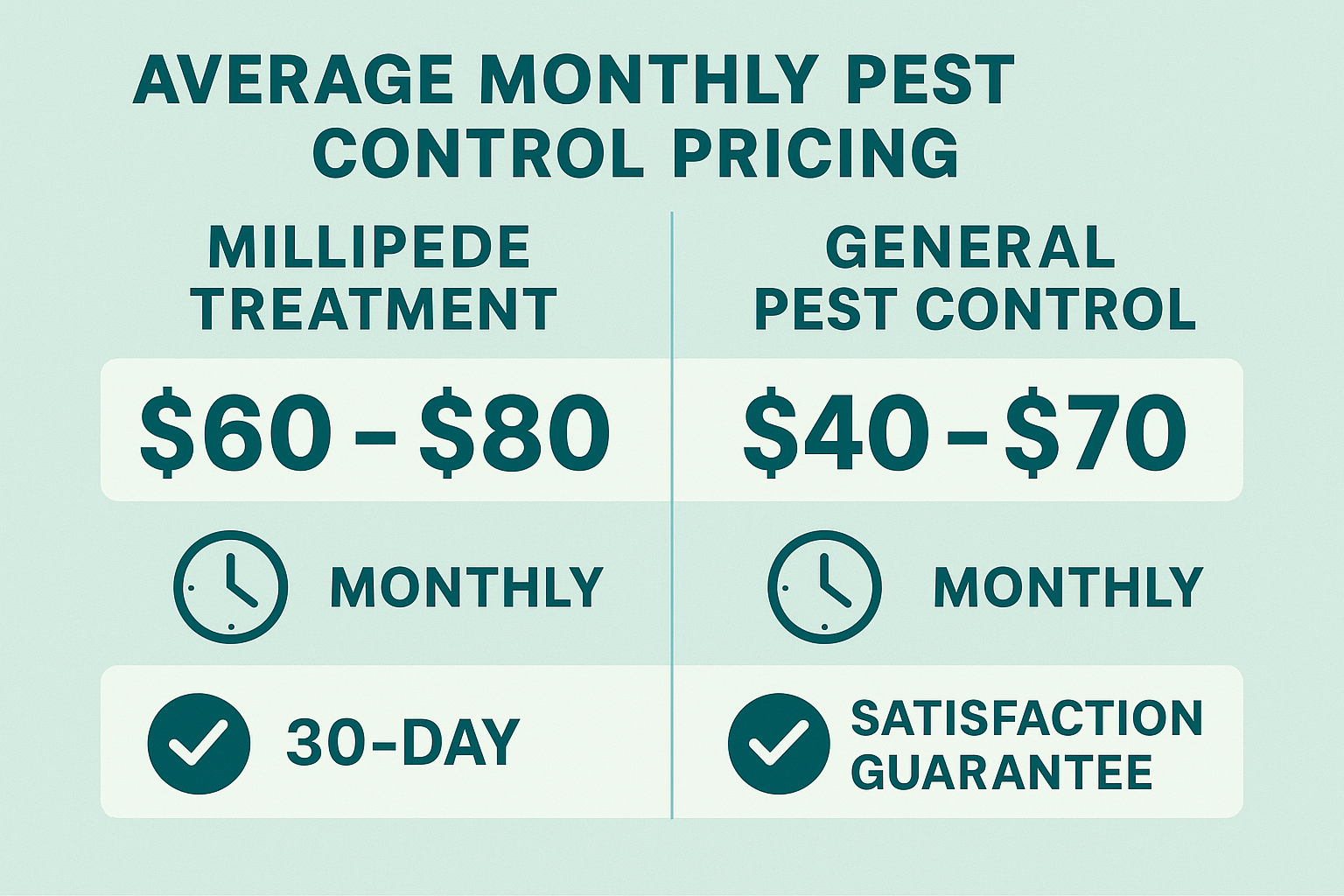
| Service Type | Typical Cost (One‑Time) | Recommended Frequency | Guarantee |
|---|---|---|---|
| Millipede‑Specific Treatment | $150‑$250 | Quarterly for high‑risk homes | 30‑day re‑treatment if activity persists |
| General Pest Control (All‑In‑One) | $120‑$180 | Bi‑annual for most homeowners | 45‑day re‑treatment for any covered pest |
What Drives the Price?
- Property size: Larger square footage requires more product and labor.
- Infestation level: A light sighting may need only a spot treatment; a heavy crawl demands extensive barrier applications.
- Treatment type: Soil drenches, perimeter sprays, and moisture‑control measures each add to material costs.
- Access difficulty: Homes with crawl spaces, basements, or dense landscaping increase labor time.
- Seasonality: Spring and early summer are peak months; scheduling during off‑peak times can sometimes lower fees.
Reading the Infographic
The infographic above visualizes the cost gap: millipede‑specific plans sit slightly higher because they target moisture‑prone zones and use specialized baits. Homeowners should look for three key indicators: the total annual outlay, the number of visits included, and the presence of a guarantee that covers re‑treatment within a set window. If the chart shows a “premium” label, it usually reflects added moisture‑management services, which are crucial for millipedes.
For the most up‑to‑date pricing data, visit our Millipede Pricing Guide for Peachtree City.
Protect Your Home with Anthem Pest Control
Why Millipedes Matter
When millipedes swarm into your yard or crawl across your porch, they’re more than just an eyesore. Their sheer numbers can clog gutters, damage soft‑wood siding, and create a slippery hazard on walkways. Because they thrive in the warm, moist months, a seasonal treatment plan is the most effective way to keep them from turning your home into a millipede highway.
Anthem’s Edge in Millipede Management
Anthem Pest Control brings local expertise and a professional approach that homeowners in Peachtree City trust:
- Licensed technicians: Every crew member holds state‑required certifications and stays current with the latest treatment protocols.
- Safe, EPA‑approved products: We use formulations that target millipedes while protecting pets, children, and the surrounding environment.
- Transparent pricing: No hidden fees—just a clear, upfront quote that matches your budget.
- Local knowledge: Our teams understand Peachtree City’s climate patterns, soil types, and typical entry points, allowing us to customize a plan that works for your property.
Take the Next Step
Ready to stop millipedes before they become a nuisance? Schedule a free inspection or request a no‑obligation quote today. Our friendly staff will walk you through the process, answer any questions, and set up a treatment schedule that fits your calendar.
Call us at 877‑371‑8196 or visit Anthem Pest Control to get started. Visit Anthem Pest Control for fast, reliable millipede extermination in Peachtree City, GA.