Recognizing Silverfish in Your Home
Silverfish (Lepisma saccharina) may look harmless, but they can cause real damage to books, paper, clothing, and starchy pantry items. Homeowners in Decatur, GA often discover them after a few weeks of unnoticed activity, which is why contacting a silverfish exterminator Decatur homeowners trust becomes essential—the longer they linger, the more material they eat. Understanding what they look like and where they hide is the first step toward quick, effective control.
Physical Characteristics to Spot
- Silvery‑blue scales: Their bodies are covered in tiny, overlapping scales that give a metallic sheen.
- Fish‑like movement: They dart in a rapid, wavelike motion, reminiscent of a tiny fish swimming across a floor.
- Size: Adults range from 12 mm to 25 mm (about half an inch to one inch).
- Rear bristles: Three long, hair‑like setae protrude from the end of the abdomen, a key ID feature.
Where Silverfish Like to Hide
Moisture is the silverfish’s favorite companion. In a typical Decatur home you’ll find them in:
- Bathrooms – especially around tubs, sinks, and under tile grout.
- Kitchens – behind appliances, in pantry corners, and near leaky pipes.
- Basements and crawl spaces – any area with high humidity or occasional water seepage.
- Closets and laundry rooms – where fabrics and paper products collect dust.
Signs of an Infestation
Even if you haven’t seen the insects directly, several clues can alert you to their presence:
- Droppings: Tiny, yellow‑brown specks that look like pepper flakes.
- Paper damage: Irregular, ragged holes in books, magazines, or cardboard.
- Starchy food loss: Nibbled edges on flour, cereals, or dried fruit.
- Unexplained odors: A faint, musty scent can accompany large populations.
Confirming the Problem
When you suspect silverfish, a systematic visual inspection will help you verify the infestation:
- Night‑time flashlight: Turn off the lights, shine a bright flashlight along baseboards, under sinks, and behind appliances. Silverfish are attracted to light and may freeze when illuminated.
- Sticky traps: Place a few adhesive traps in suspected hotspots for 48–72 hours. Check them regularly; captured silverfish confirm activity.
- Look for egg sacs: Small, translucent capsules attached to cracks or crevices indicate breeding.
Documenting what you find—photos, locations, and the amount of droppings—will give a professional pest technician a clear picture of the scope of work.
Trusted Sources for Identification
For more detailed taxonomy and control recommendations, consult reputable references such as the NPMA Pest World silverfish guide and the EPA Indoor Air Quality page. Both sites provide science‑backed information that aligns with the treatment protocols we use at Anthem Pest Control.
Seasonal Patterns and Hotspots for Silverfish in Decar Decatur, GA
Life Cycle and Climate Drivers
Silverfish (Lepisma saccharina) move through three stages—egg, nymph, and adult—each of which thrives in warm, moist environments. Their development accelerates when indoor temperatures sit between 75 °F and 85 °F and relative humidity stays above 60 %. Under these conditions, a single female can lay up to 80 eggs, and the nymphs mature in just a few weeks, creating rapid population spikes.
What UGA Extension Says
The University of Georgia Extension notes that silverfish in the Southeast are most active during the late‑summer months when outdoor humidity peaks and homes retain that moisture indoors. Their research (publication C960‑1) emphasizes that even a modest rise in indoor humidity—just 5 %—can double activity levels. The study also highlights that silverfish are nocturnal, hiding in cracks and crevices during daylight and emerging at night to feed on starches, sugars, and mold.
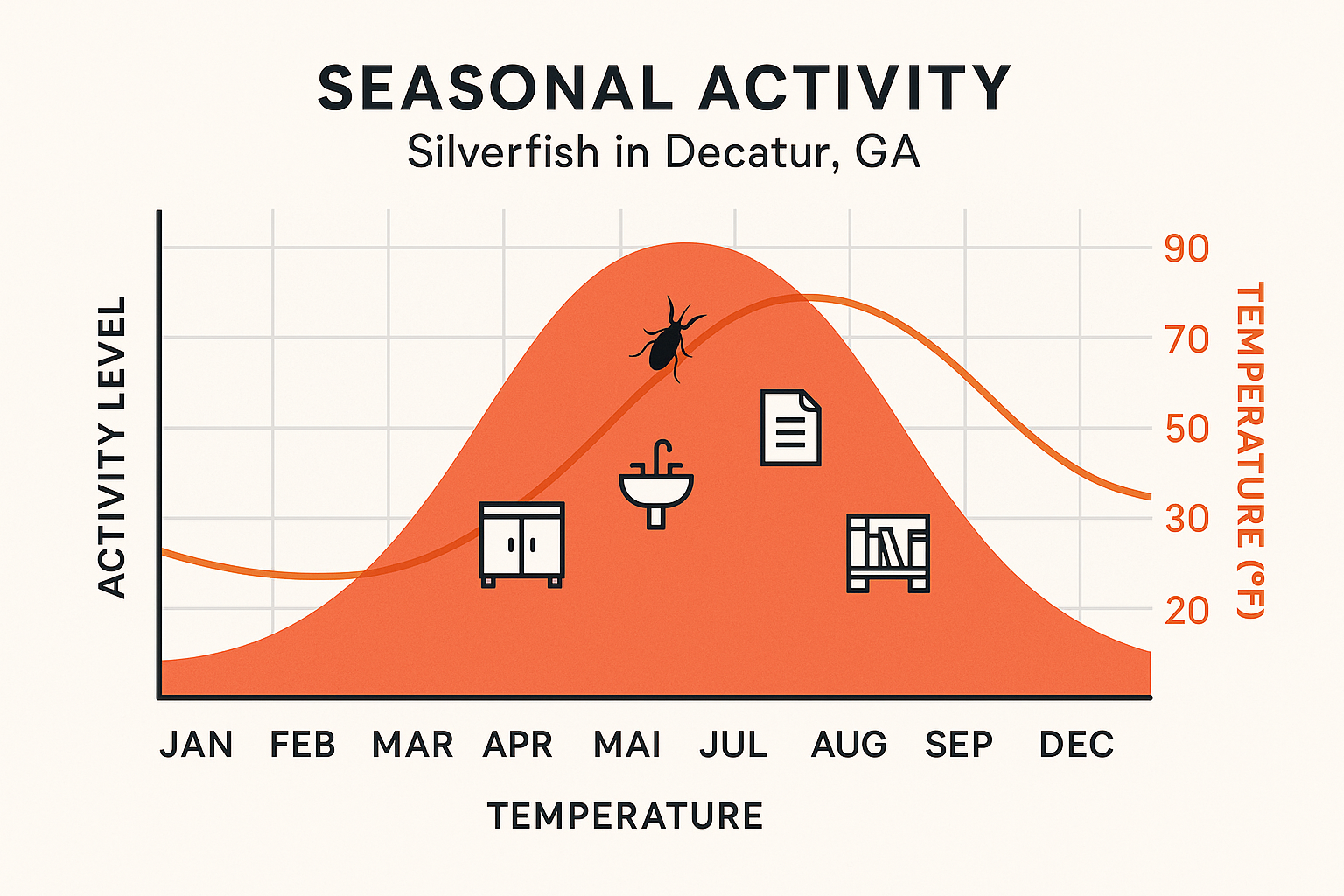
Seasonal Activity Chart for Decatur
| Month | Activity Level | Average Indoor Humidity (%) | Average Indoor Temp (°F) |
|---|---|---|---|
| January | Low | 45 | 68 |
| February | Low | 46 | 69 |
| March | Moderate | 50 | 71 |
| April | Moderate | 55 | 73 |
| May | High | 60 | 77 |
| June | High | 65 | 80 |
| July | Peak | 70 | 82 |
| August | Peak | 72 | 83 |
| September | High | 68 | 80 |
| October | Moderate | 60 | 75 |
| November | Low | 55 | 70 |
| December | Low | 50 | 68 |
Indoor Hotspots to Watch
- Bathroom tiles and grout: Constant steam creates a perfect micro‑climate.
- Kitchen pantry shelves: Crumbs, flour, and occasional moisture from leaks attract silverfish.
- Laundry rooms: Damp washers, dryers, and utility sinks hold residual humidity.
- Basements and crawl spaces: Poor ventilation and occasional water intrusion keep the air moist.
- Areas around plumbing fixtures: Leaky pipes or drips under sinks provide a steady water source.
Practical Moisture‑Control Tips for Homeowners
- Run a dehumidifier in high‑risk rooms (bathrooms, basements) to keep relative humidity below 50 %.
- Repair any leaks immediately—dripping faucets, pipe joints, and roof penetrations.
- Improve ventilation by using exhaust fans during showers and cooking, and leave bathroom doors open when dry.
- Wipe down wet surfaces after use; dry mop floors and countertops before they sit damp.
- Seal cracks around baseboards, window frames, and pipe entry points to eliminate hiding spots.
Treatment Options and Cost Comparison for Silverfish
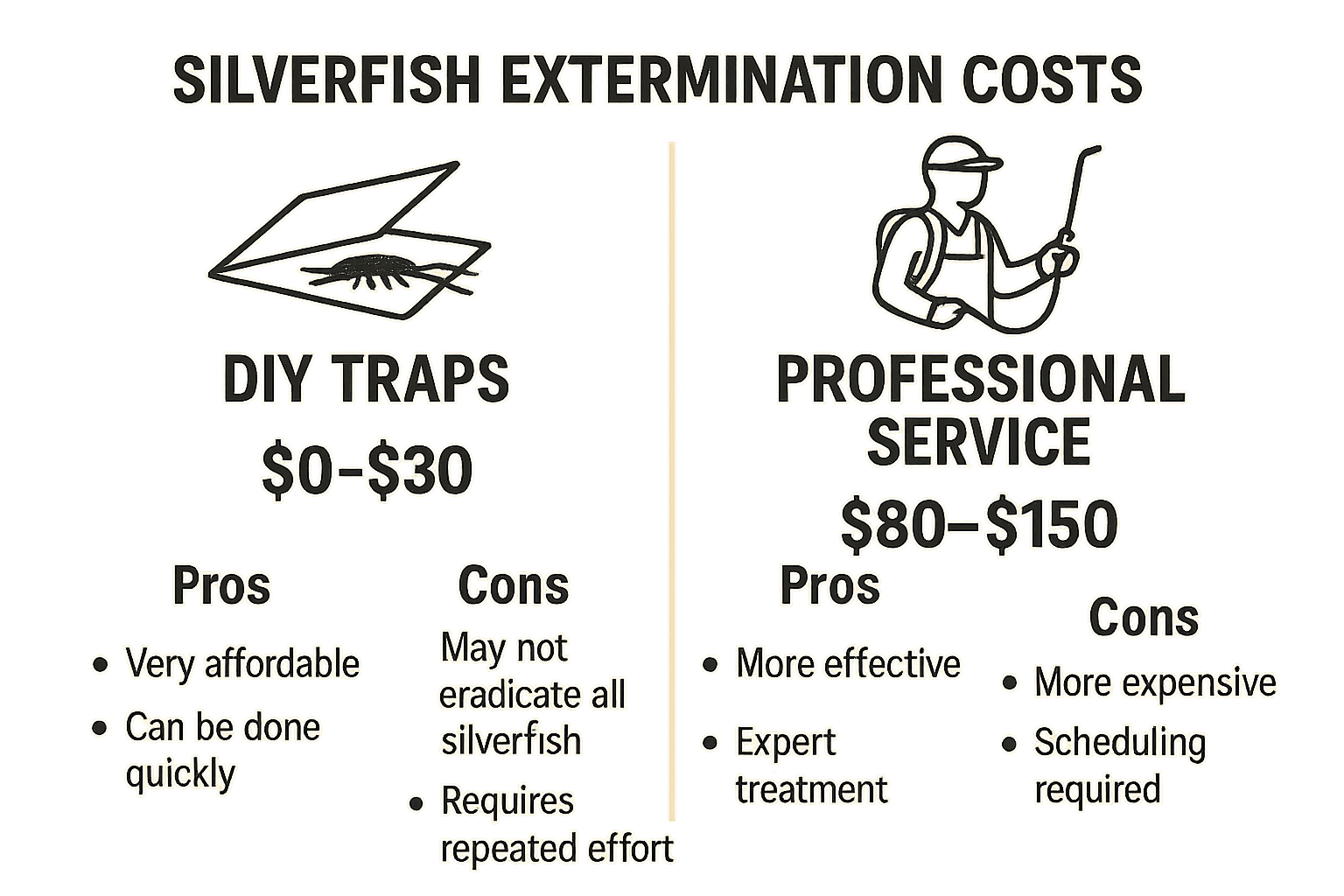
Silverfish are small, nocturnal insects that love the dark, damp corners of a home. When you first notice a few of them, the instinctive reaction is to grab the nearest DIY remedy. While many homeowners successfully reduce a minor problem with household products, larger infestations often demand the expertise of a licensed silverfish exterminator Decatur homeowners rely on for thorough control. Below is a detailed look at the most common do-it-yourself (DIY) tactics, the professional services offered by companies like Anthem Pest Control, and a cost-benefit comparison to help you decide which route fits your situation.
Common DIY Methods
- Sticky traps – Thin adhesive pads placed behind baseboards, under appliances, or in closets to capture wandering silverfish.
- Diatomaceous earth – A fine, food‑grade powder sprinkled in cracks and crevices; it dehydrates the insects when they crawl over it.
- Boric acid baits – A mixture of boric acid, sugar, and water formed into small pellets that attract and poison silverfish.
- Homemade glue traps – A simple blend of white glue and water spread on cardboard; insects become stuck as they walk across.
Advantages of DIY
- Low upfront cost: Most products cost under $20 for a month’s supply.
- Immediate implementation: No waiting for appointments; you can set traps or apply powders the same night you discover the pest.
- Control of minor infestations: For isolated sightings in a single room, DIY can often keep numbers down enough that you never notice them again.
Disadvantages of DIY
- Limited effectiveness on large populations: Sticky traps and powders work best when the infestation is small; they rarely eradicate a well‑established colony.
- Safety concerns: Boric acid and diatomaceous earth can irritate skin, eyes, or lungs if mishandled, especially around children and pets.
- Repeated applications: DIY solutions lose potency over time, requiring you to re‑apply every few weeks, which can become tedious and costly in the long run.
Professional Silverfish Services
Anthem Pest Control and similar licensed providers typically offer a bundled package that includes:
- Targeted insecticide sprays – EPA‑approved chemicals applied to baseboards, wall voids, and other hiding spots.
- Dust applications – Insecticidal dust placed in voids where sprays cannot reach.
- Structural inspection – A thorough walk‑through to locate moisture sources, cracks, and entry points that encourage silverfish activity.
- Follow‑up visits – One or two scheduled returns to assess treatment efficacy and re‑treat if needed.
Advantages of Professional Treatment
- Thorough coverage: Technicians treat hidden spaces that DIY products rarely reach, such as behind wall panels and inside ductwork.
- Expert identification: Professionals can confirm that you’re dealing with silverfish and not another pest, preventing misdirected treatment.
- Guaranteed results: Many companies, including Anthem, offer satisfaction guarantees or a free re‑treatment if the problem persists.
- Safety compliance: Licensed applicators follow strict safety protocols, reducing risk to family members and pets.
Disadvantages of Professional Treatment
- Higher upfront cost: A full service typically ranges from $150 – $300 for a single‑family home, depending on size and severity.
- Scheduling: You must coordinate a visit, which may require waiting a day or two for an available technician.
When to Upgrade from DIY to Professional
Even the most diligent DIYer can hit a wall when the infestation spreads beyond a single room or begins to damage belongings—such as paper, clothing, or stored food. Consider calling a professional if you notice any of the following:
- Silverfish sightings in multiple areas of the house within a week.
- Visible damage to fabrics, books, or wallpaper.
- Persistent moisture problems (leaky pipes, bathroom condensation) that create ideal breeding grounds.
- Allergy‑type reactions or respiratory irritation after applying powders or baits.
In these scenarios, the added expense of a professional service is often offset by faster, more reliable elimination and the peace of mind that comes from a certified expert handling the problem safely.
What to Expect from a Professional Silverfish Extermination

When you call Anthem Pest Control for silverfish relief, the process is designed to be transparent, efficient, and safe for every member of your household—including pets. If you’re searching for a silverfish exterminator Decatur homeowners can trust, here’s a step-by-step look at what happens from the first phone call to the final follow-up.
1. Initial Phone Consultation & Free Quote
Our friendly dispatch team asks a few focused questions: the size of your home, recent sightings, and any moisture concerns you’ve noticed. Because Anthem believes in transparent pricing, we provide a detailed, no‑obligation quote on the spot. This quote outlines labor, materials, and any optional warranty or maintenance plans, so you know exactly what you’re paying for before any work begins.
2. On‑Site Inspection
Within 24‑48 hours, a certified technician arrives equipped with a flashlight, moisture meter, and a portable inspection kit. They’ll:
- Identify active infestation sites—often along baseboards, behind bookshelves, or near bathroom fixtures.
- Locate moisture sources such as leaky pipes, condensation, or poor ventilation that attract silverfish.
- Assess structural vulnerabilities like gaps around doors, windows, and utility penetrations that serve as entry points.
This thorough walkthrough ensures no hidden hotspots are missed, setting the stage for a targeted treatment.
3. Treatment Plan Development
Based on the inspection findings, the technician crafts a customized plan that meets EPA standards. Key components include:
- Selection of EPA‑approved insecticides proven effective against silverfish.
- Application of low‑odor dusts or foggers in concealed spaces—ideal for areas where sprays might be disruptive.
- Clear safety precautions: temporary evacuation of pets, ventilation guidelines, and protective gear for the technician.
All products are chosen for their efficacy and minimal impact on indoor air quality.
4. Execution of Treatment
During the service, the technician:
- Applies targeted sprays or dust directly to infestation zones, focusing on cracks, crevices, and under appliances.
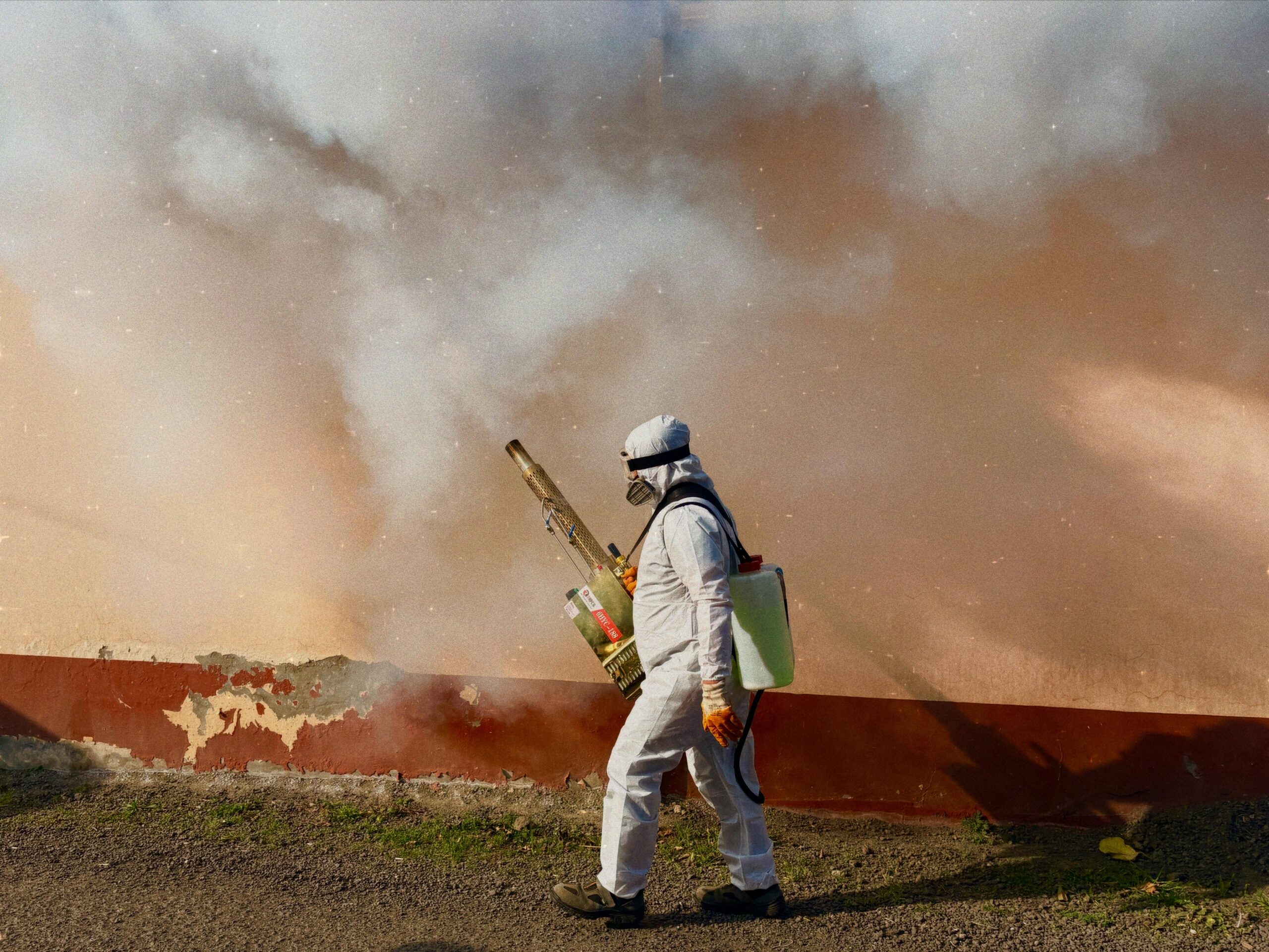
- Uses a smoke machine (as shown in the photo) to verify that the insecticide has penetrated hard‑to‑reach areas.
- Seals obvious entry points with caulk or weather‑stripping, reducing future ingress.
- Provides you with a concise set of homeowner instructions—such as keeping the treated area dry for 24‑48 hours and avoiding immediate cleaning of dust‑treated zones.
5. Post‑Treatment Follow‑Up
Anthem doesn’t disappear after the spray dries. Within a week, a follow‑up call confirms whether you’ve noticed any lingering activity. If needed, a brief re‑inspection is scheduled at no extra charge. Homeowners can also enroll in an optional maintenance program, which includes quarterly visits, moisture control advice, and a warranty that covers re‑infestation within the first six months.
Safety & Environmental Responsibility
Every step respects both your family’s health and the environment. Technicians wear certified protective equipment, use low‑odor formulations, and follow strict disposal protocols for any leftover chemicals. Anthem’s commitment to eco‑friendly practices means you receive effective silverfish control without compromising indoor air quality.
By understanding each phase—from the initial phone call to the post‑treatment warranty—you can feel confident that a professional silverfish extermination with Anthem Pest Control delivers fast, reliable relief while safeguarding your home.
Protect Your Home Today with Anthem Pest Control
You’ve learned how to spot silverfish activity—tiny, fish‑shaped insects scurrying at night, silvery scales on walls, and the tell‑tale paper‑like damage to books or cardboard. You also know the peak risk periods: warm, humid months when they multiply quickly, and the most effective treatment options, from targeted baits to professional residual sprays. Keeping these clues in mind helps you act before an infestation spreads.
Why a Professional Solution Works Best
- Speed: Trained technicians identify hidden hotspots and apply the right product immediately, cutting the life cycle in half.
- Safety: Certified professionals use EPA‑approved treatments that protect children, pets, and your home’s finishes.
- Longevity: A thorough, customized plan prevents re‑infestations, giving you peace of mind for months to come.
Anthem Pest Control offers a free, no‑obligation inspection to assess any silverfish activity in your home. During the visit, a technician will explain the findings, outline a clear treatment roadmap, and provide an upfront price—no hidden fees, no surprise charges.
Serving homeowners nationwide, Anthem combines local expertise with a network of experienced technicians who prioritize safe, effective pest management. Our commitment is simple: transparent pricing, rapid response, and lasting results, so you can enjoy a silverfish‑free environment without worry.
Ready to protect your home? Call us today at 877-371-8196 or visit anthempest.com to schedule your free inspection with a trusted silverfish exterminator Decatur homeowners rely on.
Take the first step toward a silverfish‑free home today.