Why Spiders Are a Concern in Peachtree City Homes
If you’ve ever spotted a spider scuttling across your kitchen floor or noticed a silken web in a corner of the living room, you’re not alone. In Peachtree City, the warm, humid climate creates an ideal backdrop for a wide variety of spiders, from harmless house spiders to the more notorious black‑widow and brown‑recluse. Understanding why these eight‑legged visitors matter is the first step toward keeping your home comfortable and safe.
The southeastern United States, and Georgia in particular, experiences long, mild winters and hot, moist summers. Those conditions encourage insects—crickets, flies, moths, and beetles—to thrive, and spiders follow the food chain. A single spider can lay hundreds of eggs, and the region’s abundant foliage, mulch, and outdoor lighting provide perfect hide‑outs for both juveniles and adults. As a result, it’s common to see spider activity spill over from yards into basements, garages, and even upstairs closets.
Health concerns
Most spiders are harmless, but two species that frequent Georgia homes can pose real medical risks. The southern black‑widow (Latrodectus mactans) carries a neurotoxic venom that, if injected, can cause muscle cramps, nausea, and intense pain that lasts for days. The brown‑recluse (Loxosceles reclusa) delivers a cytotoxic bite that may lead to a necrotic wound, fever, and, in rare cases, systemic illness. Even a non‑venomous bite can trigger an allergic reaction in sensitive individuals, resulting in swelling, itching, or hives. Prompt identification and treatment are essential to avoid complications.
Psychological discomfort and quality of life
Beyond the medical side, spiders can erode the comfort of your home. A single, glossy web draped across a light fixture or bathroom mirror can feel like an unwelcome invitation, prompting homeowners to avoid those spaces altogether. For many, the sight of a spider triggers arachnophobia—a genuine anxiety that can raise heart rate, cause sweating, and make everyday activities feel stressful. When spiders appear in bedrooms, kitchens, or playrooms, the sense of safety that should define a home begins to slip away, and that’s a problem no one wants to live with.
Secondary pest implications
Spiders are not solitary hunters; they are attracted to the insects that infest homes. A sudden increase in flies, ants, or moths often brings a corresponding rise in spider activity as they follow their prey. While a few spiders can actually help keep those minor pests in check, an uncontrolled spider population can signal a larger underlying infestation. In other words, if you’re seeing more webs than usual, you’re likely dealing with an insect problem that needs direct treatment, not just a spider‑centric approach.
What’s next in this guide
Now that you understand why spiders matter—from bite risks to the way they can undermine peace of mind—let’s move on to the practical side of protection. The following sections will walk you through how to identify the most common species in Peachtree City, recognize their seasonal patterns, and choose the right treatment method for your home. We’ll also break down typical pricing, explain what to expect during a professional visit, and show why Anthem Pest Control’s locally‑trained technicians are uniquely equipped to deliver fast, safe, and lasting spider relief.
Common Household Spiders in Georgia and How to Spot Them

Georgia’s warm, humid climate creates an ideal environment for a variety of spiders to wander indoors. While most are harmless, a few venomous species can pose a health risk, especially for children and pets. Knowing the physical cues, favorite hiding spots, and typical behavior of the five most common indoor spiders helps you catch an infestation early and decide when it’s time to call a professional.
1. Black Widow (Latrodectus mactans)
- Size & Color: Females grow 1.5‑2 inches (including legs) with a glossy, jet‑black body. The iconic red hourglass sits on the underside of the abdomen.
- Web Type: Irregular, tangled cobwebs in dark corners, often near undisturbed storage areas.
- Typical Indoor Locations: Basements, garages, closets, and under outdoor furniture that’s been pulled inside.
- Behavior: Shy and reclusive; they bite only when pressed against the skin. Mostly nocturnal, they hide during daylight.
2. Brown Recluse (Loxosceles reclusa)
- Size & Color: About 0.5‑1 inch long, light to dark brown with a distinctive violin‑shaped marking on the dorsal side of the cephalothorax.
- Web Type: Loose, irregular sheets that are often tucked into cracks or crevices.
- Typical Indoor Locations: Attics, basements, closets, and under piles of clothing or boxes.
- Behavior: Extremely shy; prefers to stay hidden. Bites are rare and usually occur when the spider is unintentionally disturbed.
3. Wolf Spider (Family Lycosidae)
- Size & Color: Large, robust spiders ranging from 0.5‑2 inches. Color varies from gray to brown with a mottled, camouflaged pattern.
- Web Type: Does not spin capture webs; instead, it hunts on foot.
- Typical Indoor Locations: Window sills, door frames, and floor corners where they can chase insects.
- Behavior: Fast‑moving and somewhat aggressive when cornered, but they rarely bite humans. Primarily nocturnal hunters.
4. House Spider (Parasteatoda tepidariorum)
- Size & Color: Small to medium (0.3‑0.5 inch), pale brown to gray with faint striping on the abdomen.
- Web Type: Classic spiral orb‑webs in undisturbed corners of rooms, basements, and closets.
- Typical Indoor Locations: Ceilings, corners of rooms, behind picture frames, and under furniture.
- Behavior: Generally shy; they retreat into their webs when approached. Mostly active at night, feeding on other small insects.
5. Orb Weaver (Family Araneidae)
- Size & Color: Varies widely; many are 0.5‑1.5 inches with bright yellows, oranges, or silvers and intricate abdominal patterns.
- Web Type: Large, circular orb webs with a distinctive hub and radiating spokes.
- Typical Indoor Locations: Sun‑lit windows, porches, and any open space where they can anchor a web.
- Behavior: Non‑aggressive; they spend most of their time waiting for prey. Mostly diurnal, especially in bright indoor areas.
Safety tip: Never attempt to handle any spider directly, especially if you suspect it could be a Black Widow or Brown Recluse. Use a sturdy container to trap the spider, seal it, and contact a licensed pest professional for safe removal. Prompt identification reduces the risk of bites and helps us tailor the most effective treatment plan for your home.
For a reliable, state‑approved species guide, visit the Georgia Department of Agriculture’s spider reference page. Accurate identification is the first step toward a spider‑free household.
When Are Spiders Most Active? Seasonal Trends in Georgia
Georgia’s Climate Zones and Their Influence on Spiders
Georgia straddles two primary climate zones: the humid subtropical belt along the coast and the milder, slightly drier interior. In both zones, temperature and humidity act as the master switches for spider development. Warm nights accelerate egg‑hatching, while moist mornings keep webs intact and prey abundant. When the mercury dips below 50 °F, most species retreat to protected cracks or go dormant, slowing reproduction until the next warm spell.
Month‑by‑Month Activity for the Five Common Species
| Month | Black Widow | Brown Recluse | Wolf Spider | Orb Weaver | House Spider |
|---|---|---|---|---|---|
| January | Low | Low | Very Low | Low | Low |
| February | Low | Low | Very Low | Low | Low |
| March | Moderate | Moderate | Low | Moderate | Moderate |
| April | High | High | Moderate | High | High |
| May | High | High | High | High | High |
| June | Moderate | Moderate | High | Moderate | Moderate |
| July | Moderate | Moderate | High | Moderate | Moderate |
| August | Moderate | Moderate | High | Moderate | Moderate |
| September | High | High | Moderate | High | High |
| October | High | High | Low | High | High |
| November | Low | Low | Very Low | Low | Low |
| December | Low | Low | Very Low | Low | Low |
Why Spring and Early Fall Spark Spikes
Spring marks the start of the breeding season for most Georgia spiders. Females lay egg sacs as soon as soil temperatures climb above 60 °F, and the ensuing hatchlings flood basements, garages, and outdoor sheds. Early fall, meanwhile, offers a second surge: insects that survived summer become plentiful again, and spiders capitalize on the bounty before cooler nights force them back into hiding. Both periods also coincide with higher humidity, which keeps webs sticky and prey capture rates high.
Scheduling Pre‑emptive Inspections
To stay ahead of these natural cycles, plan a professional inspection in late February or early March—right before the first activity wave. A second check in late August gives you a chance to address any lingering populations before the October‑November spike. During each visit, technicians will seal entry points, treat vulnerable corners, and advise on yard maintenance that reduces insect prey, effectively breaking the spider life cycle before it escalates.
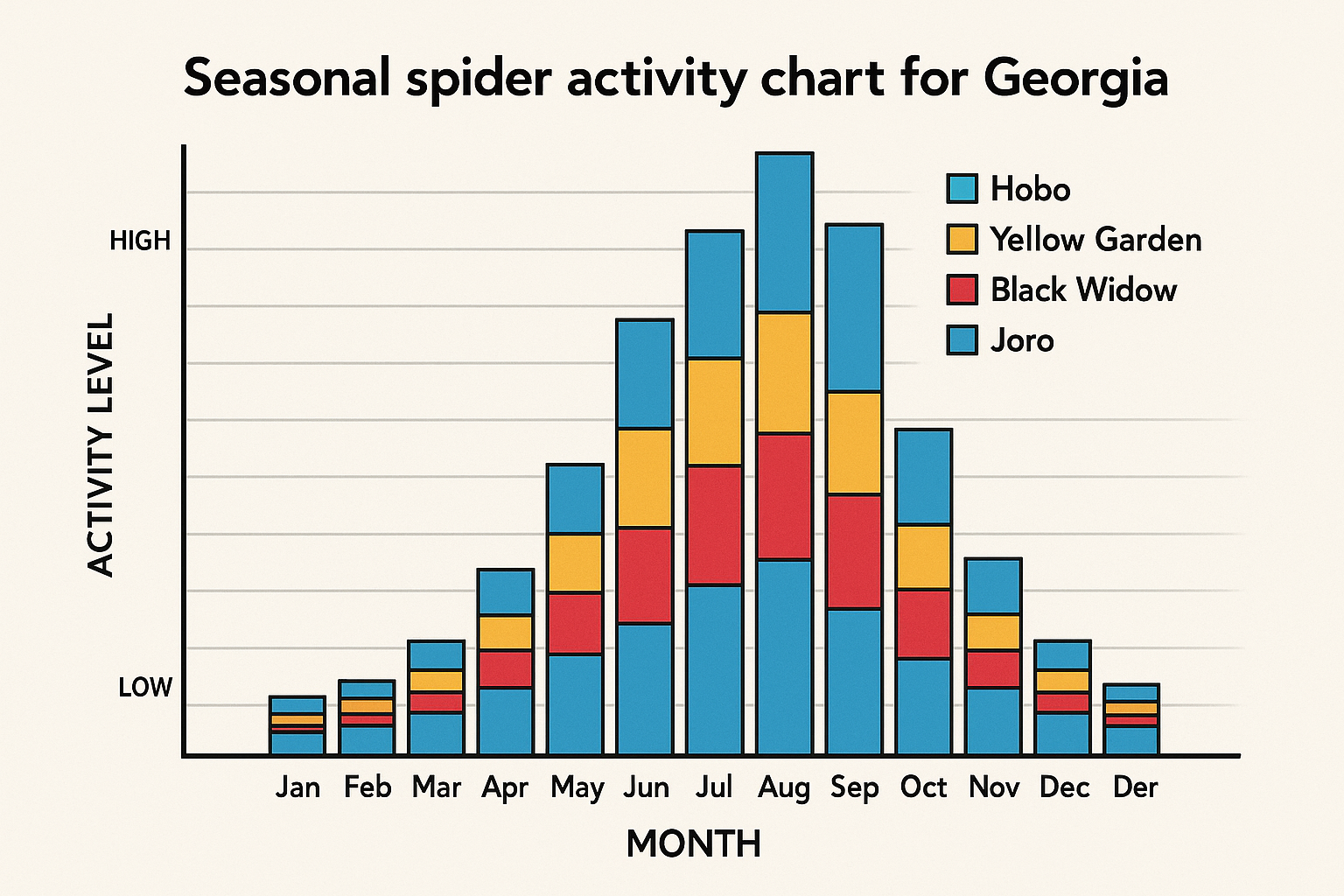
Visual Aid: Year‑Long Activity Plot
The chart below visualizes the ebb and flow of spider activity across the calendar year. Use it as a quick reference when you’re deciding the best weeks for treatment or for scheduling a follow‑up after a service.
Risks and Warning Signs of a Spider Infestation
Visible signs you shouldn’t ignore
Spiders are masters of disguise, but they still leave clues that are easy to spot if you know what to look for. An uptick in webbing—especially in corners, under appliances, or along baseboards—usually means the colony is expanding. You may also find shed exoskeletons near windows or door frames; these are the spider’s discarded skins and a clear indicator of growth.
Another tell‑tale sign is a sudden increase in dead insects around light fixtures or on window sills. Spiders hunt these pests, and a higher kill count often precedes a larger population. Finally, keep an eye on any bite marks on family members or pets. Even if the bite feels minor, multiple marks can signal that spiders are moving closer to living spaces.
Hidden signs lurking behind walls
Not all warning signs are front‑and‑center. Look for silk tunnels in wall voids, attic spaces, or crawl‑spaces. These fine, often invisible, strands can be revealed by shining a flashlight into dark corners; a faint sheen indicates a hidden network.
Spider droppings appear as tiny, dark specks near windows or in corners. While they’re easy to mistake for dust, a concentration of these specks usually points to an active feeding site. In some cases, you may even notice an unusual odor—a faint, musty smell caused by the decomposition of trapped prey. This odor is a subtle cue that a spider colony has established a feeding hub inside your home.
Health red flags after a bite
Most spider bites feel like a mild pinch, but certain reactions should raise alarm bells. Unexplained skin lesions that turn red, swell, or develop a blistering center could be a sign of a venomous bite. If you notice swelling that spreads beyond the bite site or a rash that appears hours later, seek medical attention.
Some people experience flu‑like symptoms—fever, chills, muscle aches, or nausea—after being bitten by a more aggressive species such as the brown recluse or black widow. These systemic reactions are rare but serious, and they warrant immediate professional evaluation.
Structural concerns you may overlook
Spiders don’t just affect comfort; they can impact the very structure of your home. Webs that infiltrate HVAC ducts can restrict airflow, forcing your system to work harder and raising energy bills. Over time, the buildup of silk and dead insects can also degrade insulation, leading to uneven temperatures and moisture retention.
Compromised airflow doesn’t just affect comfort—it can deteriorate indoor air quality. Dust and allergens become trapped in spider webs, circulating through your living space and aggravating asthma or allergy sufferers.
When to call a professional
Recognizing the signs is the first step, but knowing when to call in the experts can prevent a small problem from becoming a costly nightmare. Reach out to Anthem Pest Control if you notice any of the following:
- Multiple spider sightings across different rooms or levels of the house.
- Confirmed presence of venomous species such as black widows, brown recluses, or hobo spiders.
- Webbing in hard‑to‑reach areas like attic insulation, behind baseboards, or inside HVAC ducts.
- Persistent health symptoms that could be linked to spider bites.
- Any combination of visible and hidden signs that suggests a growing infestation.
Our trained technicians use targeted treatments that are safe for families and pets while effectively eliminating the colony at its source. Early intervention not only protects your health but also safeguards the structural integrity of your home.
Treatment Options: DIY vs Professional Extermination

DIY Tools You Might Find at Home
Most homeowners start with the basics: an insecticidal spray that promises quick knock‑down, glue traps tucked into corners, and a handful of essential‑oil repellents such as peppermint or tea tree. Many also reach for the vacuum, believing that sucking up a spider and its web will solve the problem. These products are inexpensive, readily available at hardware stores, and seem harmless enough to use without professional guidance.
Why DIY Often Falls Short
Despite their convenience, DIY approaches rarely achieve complete control. Sprays only treat visible surfaces, leaving hidden cracks, wall voids, and crawl‑space niches untouched. Spiders can develop resistance to the same active ingredients over time, meaning you’ll need to reapply more frequently. Moreover, handling chemicals without proper personal protective equipment (PPE) can expose you to skin irritation, respiratory issues, or accidental ingestion—especially in homes with children or pets.
What Professionals Bring to the Table
Licensed technicians use a suite of targeted methods that go beyond surface sprays. Residual sprays are applied to structural voids where they continue to work for weeks, creating a barrier that deters re‑infestation. For severe cases, indoor/outdoor fumigation or heat treatment can eradicate hidden colonies in wall cavities and crawl spaces. Finally, exclusion techniques—sealing entry points, installing door sweeps, and repairing vent screens—prevent new spiders from entering the home in the first place.
Safety Advantages of Licensed Technicians
Professional pest control teams are trained to handle EPA‑approved products safely. They wear certified PPE, follow strict application protocols, and keep detailed records of chemicals used. This reduces the risk of accidental exposure for you and your family. In addition, technicians stay current on the latest regulations and product formulations, ensuring that the treatment is both effective and compliant with local health standards.
Case Example: Smoke‑Machine Treatment Eliminates Hidden Webs
One recent service call in Peachtree City highlighted the power of a smoke‑machine treatment. Homeowners noticed spiders in the attic but missed the dense webbing lurking in the crawl space beneath the home. A technician deployed a low‑temperature smoke generator that penetrated tight vents and insulation layers, forcing spiders to retreat and exposing their webs for immediate removal. Within hours, the infestation was visibly reduced, and a follow‑up residual spray sealed the area against future returns.
Cost‑Benefit Analysis: DIY Savings vs Long‑Term Value
At first glance, buying a can of spray for $15 seems far cheaper than a professional visit that can range from $150 to $300. However, the hidden costs of DIY quickly add up: repeated purchases, time spent researching and applying treatments, and the potential for health‑related expenses if chemicals are mishandled. Professional services, while higher upfront, often eliminate the need for repeat visits and provide a lasting barrier that protects your home for months.
| Option | Upfront Cost | Long‑Term Cost | Effectiveness |
|---|---|---|---|
| DIY (sprays, traps, oils) | $20‑$50 | Repeated purchases; potential health costs | Partial – often misses hidden sites |
| Professional (residual spray, exclusion, fumigation) | $150‑$300 | Minimal – lasting barrier, fewer repeat visits | High – comprehensive coverage and follow‑up |
When you weigh the numbers, the professional route offers a stronger return on investment. Not only do you gain peace of mind knowing a certified expert has treated every entry point, but you also protect your family’s health by avoiding DIY chemical mishaps. For homeowners in Peachtree City who value quick, lasting relief, partnering with a trusted provider like Anthem Pest Control ensures that spider problems are resolved efficiently and safely.
How Much Does Spider Control Cost? Pricing Breakdown

Service Tiers Explained
Most pest‑control companies in Peachtree City, GA, organize spider treatment into three clear tiers. The Basic treatment is a single‑visit interior spray that targets active spiders inside your home. The Premium treatment adds a perimeter barrier, multiple visits, and often includes a follow‑up inspection to keep spiders from re‑entering. Finally, the Emergency call‑out is a same‑day service for households that need immediate relief, typically after a sudden infestation or a spider bite scare.
Typical Price Ranges in Peachtree City
- Basic treatment: $120 – $180 per visit.
- Premium treatment: $250 – $350 for a full package (usually 2‑3 visits).
- Emergency call‑out: $180 – $260, plus a possible after‑hours surcharge.
These figures reflect the average market rates for residential spider control in the Peachtree City area. Prices can fluctuate seasonally, especially during the late summer when spider activity peaks.
What Influences the Cost?
Several variables shape the final invoice:
- Property size: Larger homes require more product and longer application times.
- Infestation severity: A light, occasional sighting costs less than a full‑blown nest in basements or crawl spaces.
- Species risk: Venomous species such as brown recluse or black widow demand specialized treatments, raising the price.
- Seasonal demand: Summer and early fall see higher demand, which can lead to modest price increases.
What’s Included in Each Package?
Transparent pest control companies break down exactly what you receive. Below is a quick snapshot of typical inclusions:
| Package | Inspection | Application | Follow‑up | Warranty |
|---|---|---|---|---|
| Basic | Visual interior check | One‑time interior spray | None | 30‑day guarantee |
| Premium | Comprehensive interior & exterior assessment | Multiple interior sprays + perimeter barrier | One‑time follow‑up visit | 90‑day guarantee |
| Emergency | Rapid visual assessment | Same‑day interior spray (option for perimeter) | Optional after‑hours follow‑up | 30‑day guarantee |
Anthem Pest Control’s Pricing Compared to the Market
Anthem Pest Control aligns its pricing with the regional averages while emphasizing clear, upfront quotes. For a typical 2,000‑sq‑ft home, Anthem’s Basic treatment starts at $149, the Premium package is quoted at $299, and the Emergency call‑out is $199 plus any applicable after‑hours fee. These numbers sit comfortably within the market range and come with a written estimate before any work begins—no hidden fees, no surprise add‑ons.
What sets Anthem apart is its commitment to a written service agreement that outlines exactly what the homeowner receives: a detailed inspection report, a list of chemicals used (all EPA‑approved and safe for families and pets), and a warranty period that matches the package tier. This transparency helps homeowners budget confidently and compare quotes without guessing what’s “included.”
Visual Summary of Pricing Tiers
| Tier | Price Range | Key Features |
|---|---|---|
| Basic | $120 – $180 | Single interior spray, 30‑day warranty, visual inspection |
| Premium | $250 – $350 | Multiple visits, perimeter barrier, 90‑day warranty, detailed report |
| Emergency | $180 – $260 | Same‑day service, optional after‑hours, 30‑day warranty |
Choose Anthem Pest Control for Reliable Spider Protection
Now that you know how to spot the most common house spiders, understand the seasonal peaks, and recognize the health and structural risks they pose, the next step is clear: let a professional handle the job. DIY sprays may provide a temporary fix, but they rarely address hidden nests, future infestations, or the safety of your family and pets. That’s why a licensed, locally‑trained technician with the right tools and chemicals makes all the difference.
Why Professional Treatment Matters
- Accurate identification: Our technicians can distinguish harmless house spiders from venomous species that require immediate attention.
- Targeted timing: We treat at the optimal point in the spider life cycle—usually early spring and late summer—so you stay one step ahead of the next wave.
- Comprehensive coverage: From interior cracks to exterior perimeters, we seal entry points and apply treatments that keep spiders away for months.
- Health protection: Reducing spider populations also lowers the risk of allergic reactions and secondary infestations by insects they prey on.
Anthem Pest Control’s Credentials
When you choose Anthem, you’re partnering with a company that backs every service with proven expertise:
- All technicians are fully licensed and undergo continuous training specific to the Peachtree City area.
- We use only EPA‑approved products that are proven safe for children, pets, and the environment.
- Our staff are locally trained, meaning they understand the unique spider species and seasonal patterns in Peachtree City, GA.
- Every job comes with a satisfaction guarantee—if you’re not happy with the results, we’ll re‑treat at no extra cost.
Safe, Effective, and Affordable Solutions
Anthem’s approach combines the latest in pest‑control science with transparent pricing you can trust. As outlined in Part 6, our service packages include a clear breakdown of labor, materials, and follow‑up visits, so there are no surprise fees. Whether you need a one‑time extermination or an ongoing protection plan, we tailor the solution to fit your budget without compromising on efficacy.
Ready for a Free Home Inspection?
Take the next step toward a spider‑free home today. Schedule a complimentary inspection, and we’ll provide a personalized quote that reflects the specific needs of your property. Our friendly team will walk you through the recommended treatment plan, answer any questions, and set a convenient appointment time.
Call us now at 877‑371‑8196 or visit Anthem Pest Control to request your free quote.
Visit Anthem Pest Control for more information and to book your inspection.