
Understanding Tick Risks in Georgia Homes

What are ticks and which species lurk in Georgia?
Ticks are tiny arachnids that feed on the blood of mammals, birds, and sometimes reptiles—pests that a tick exterminator Suwanee homeowners trust is trained to identify early. In Georgia, three species dominate residential infestations: the Lone Star tick (Amblyomma americanum), the Black-legged or Deer tick (Ixodes scapularis), and the American Dog tick (Dermacentor variabilis). Each has a distinct appearance—Lone Star ticks sport a white spot on the back of the adult female, while Black-legged ticks are smaller and darker. Knowing these identifiers helps homeowners spot them early before they bite.
Tick‑borne diseases you need to worry about
The health stakes are high. The CDC reports that Georgia accounts for a sizable share of the nation’s tick‑borne illness cases. Lyme disease, transmitted mainly by the Black‑legged tick, can cause fever, fatigue, and a characteristic “bull’s‑eye” rash. Rocky Mountain spotted fever, carried by the American Dog tick, may lead to severe headaches, muscle pain, and, if untreated, organ damage. Ehrlichiosis, spread by the Lone Star tick, often begins with flu‑like symptoms and can progress to serious complications. CDC statistics show thousands of reported cases each year, underscoring the need for vigilance.
How ticks find their way into your yard
Ticks aren’t airborne; they hitch rides on wildlife, pets, or even a gust of wind that stirs leaf litter. In Georgia’s humid climate, tall grass, shaded borders, and piles of leaves create perfect micro‑habitats where larvae and nymphs wait for a host. Your dog or cat can unknowingly transport ticks from a nearby park straight onto your porch, where they drop off and seek a new meal. Once established, a small population can quickly expand, especially after the warm spring and early summer months.
The hidden cost of ignoring an infestation
Beyond the obvious medical bills, untreated tick problems can erode a homeowner’s peace of mind. Frequent bites may force families to limit outdoor activities, reducing the enjoyment of a backyard oasis. Property values can dip if prospective buyers learn of a persistent tick issue. Moreover, the cost of treating advanced tick‑borne illnesses often far exceeds the modest investment in professional prevention. Emotional stress, lost workdays, and the anxiety of protecting children and pets add up quickly.
Why early detection and regular inspections matter
Think of tick control as a routine health check for your home. A quick visual sweep of grass edges, under decks, and pet bedding each month can reveal early signs—tiny black specks or a cluster of nymphs. Professional inspections, performed by experts like Anthem Pest Control, use specialized tools to locate hidden hotspots that the untrained eye misses. By catching a problem before it spreads, you preserve both your budget and your family’s wellbeing, turning a potential crisis into a manageable, seasonal task.
Identifying Ticks and Early Warning Signs
What Adult Ticks Look Like
Adult ticks are easily recognizable once you know what to look for. They range from 3 mm to 6 mm in length—about the size of a sesame seed—when unfed, and can swell to 10 mm after a meal. Their bodies are oval and flattened, with a leathery, gray‑brown shell that may appear darker on the underside. Noticeable legs extend from the front and back, giving them a “spider‑like” silhouette.
Spotting Nymphs and Larvae
Younger stages are trickier. Nymphs are roughly half the size of adults (1–2 mm) and often reddish‑brown, making them blend with leaf litter. Larvae, or “seed ticks,” are the tiniest—about 0.5 mm—so they’re virtually invisible to the naked eye. Because they’re so small, they can easily hitch a ride on pets or clothing without you noticing.
Where Ticks Hide in Your Yard
Ticks prefer humid, shaded micro‑environments. Common hotspots include:
- Edges of lawns where grass meets a wooded border.
- Garden beds with dense foliage or mulch.
- Shaded woodpiles, compost heaps, and rock piles.
- Pet bedding, especially if it’s kept outdoors or in a damp area.
Scanning these zones regularly cuts the chance of an unnoticed infestation.
Doing a Quick “Tick Sweep”
A tick sweep is a low‑cost, effective way to gauge activity. Follow these steps:
- Lay a clean white cloth or sheet on the ground in a suspected area.
- Drag a commercial tick drag (a piece of white fleece attached to a pole) across the grass and leaf litter.
- Alternatively, run a fine‑toothed comb through pet fur or your own hair after outdoor time.
- Inspect the cloth or drag every few minutes; any dark specks are likely ticks.
Red Flags That Ticks Are Already Inside
Early signs of a tick problem include:
- Small, blood‑filled engorged spots on pets—often on ears, neck, or belly.
- Unexplained “tick bites” on family members, typically small red bumps that may expand over a day.
- Increased wildlife activity, such as deer or raccoons frequenting your yard, which can bring ticks along.
Checking People and Pets After Outdoor Activities
Make it a habit to perform a quick inspection:
- Start with the head and work down to the toes, pulling skin taut to reveal hidden ticks.
- Pay special attention to warm, moist areas—behind knees, under arms, and the scalp.
- For pets, run a fine‑toothed comb through the fur, focusing on the neck, ears, and belly.
- If you find a tick, use fine‑pointed tweezers to grasp it as close to the skin as possible and pull upward with steady pressure.
- Disinfect the bite site and wash your hands thoroughly.
DIY Removal vs. Calling a Pro
Minor, isolated encounters can be handled at home with proper removal tools and a diligent sweep. However, if you notice:
- Multiple engorged ticks on pets or family members,
- Persistent tick activity despite regular sweeps,
- Signs of tick‑borne illness (fever, rash, fatigue),
- Or a large, wooded area that’s difficult to treat yourself,
it’s time to call Anthem Pest Control. Our licensed technicians can assess the property, apply targeted treatments, and set up a prevention plan that protects your home year‑round.
Seasonal Tick Activity and Hotspots in Suwanee, GA
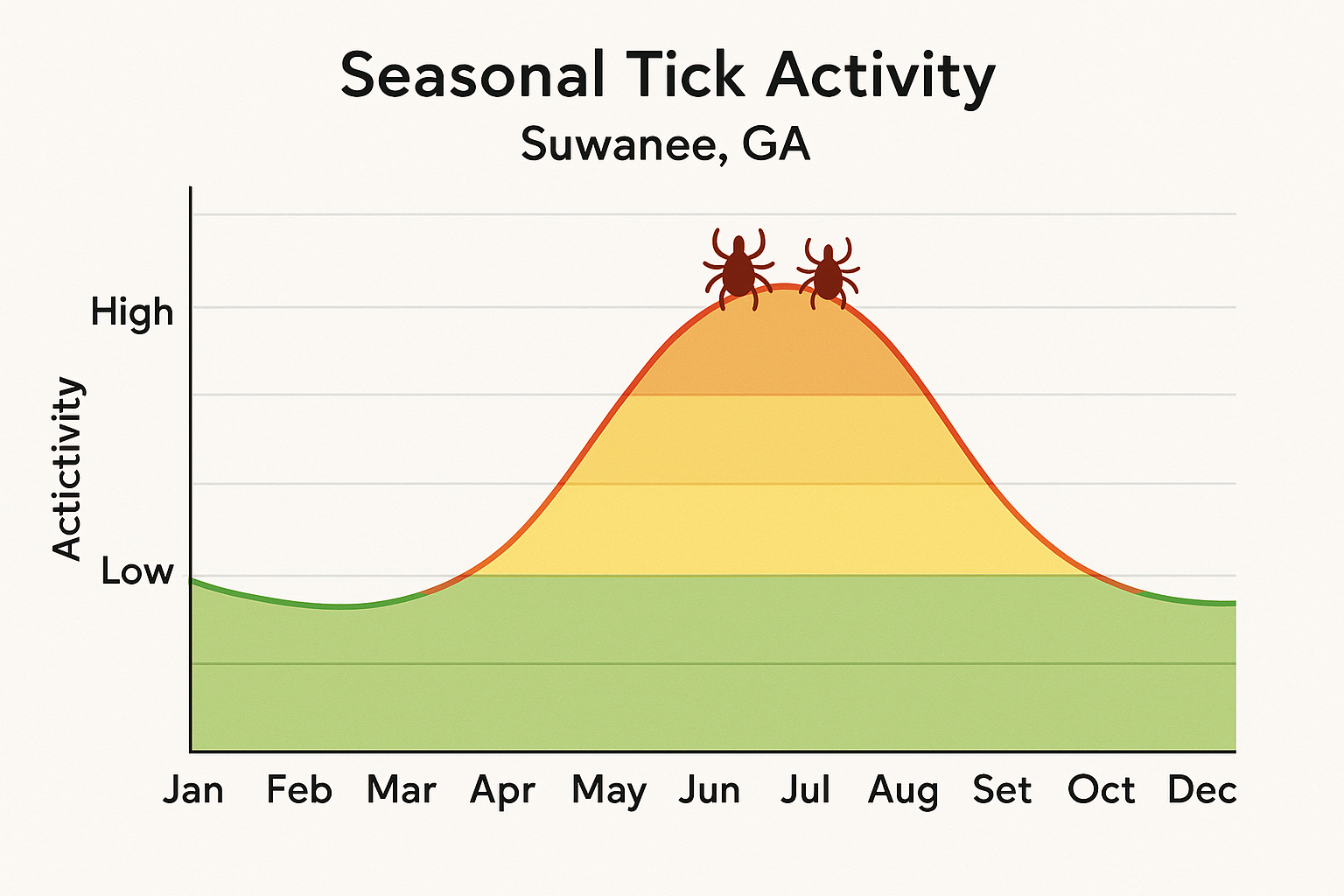
The line chart above illustrates a classic U-shaped pattern for tick activity throughout the year, information a tick exterminator Suwanee homeowners rely on when planning preventive treatments. Activity is minimal during the cold winter months from December to February, climbs to a moderate level in early spring from March to April and again in the fall from October to November, then spikes dramatically in the summer months of May through July. This visual cue helps homeowners see when ticks are most likely to wander onto their property.
Why the Activity Shifts
Three key environmental drivers shape these seasonal swings:
- Temperature: Ticks become active once daily highs consistently exceed 50°F (10°C). Warm summer days accelerate their life cycle, prompting rapid breeding.
- Humidity: Moisture is essential for tick survival. Summer humidity in Suwanee often stays above 70%, creating ideal micro‑climates under leaf litter and in shaded soil.
- Host behavior: Deer, rodents, and even backyard pets are more active in late spring and early summer, providing blood meals that fuel tick reproduction.
High‑Risk Months: May – July
During May, June, and July, adult ticks—especially the lone star and black‑legged varieties—reach peak questing activity. This is the period when they climb onto vegetation and wait for a passing host. Homeowners should treat these months as the “danger zone” and prioritize protective measures.
Geographic Hotspots Within Suwanee
Even within a single neighborhood, tick pressure varies. In Suwanee, the most common hotspots include:
- Wooded edges and riparian corridors that border residential streets.
- Community parks with dense understory, such as Suwanee Town Center Park and Central Park.
- Backyards that feature thick shrubs, leaf piles, or unmanaged grass clumps.
Timing Your Professional Inspection
To stay ahead of the summer surge, schedule a professional tick inspection with a tick exterminator Suwanee homeowners trust before May arrives. An early season assessment allows technicians to identify hidden tick habitats, map hotspot zones, and recommend targeted treatments that will be most effective when the ticks become active.
Integrating IPM Principles
Anthem Pest follows Integrated Pest Management (IPM) guidelines, which emphasize preventive actions, precise timing, and minimal pesticide use. By aligning treatment dates with the charted activity curve, you reduce the need for repeated applications and protect beneficial insects. For a deeper dive into EPA‑approved IPM strategies, visit the EPA IPM page.
In short, understanding Suwanee’s tick calendar lets you act before the problem escalates. Early inspections, focused treatments, and habitat management—combined with professional expertise—provide the quickest, safest relief for your home.
Treatment Options, Pricing, and Prevention Strategies
Professional Treatment Methods
When a tick infestation threatens your yard, most homeowners turn to a tick exterminator Suwanee residents trust for fast, reliable relief. The three most common professional approaches are:
- Perimeter barrier sprays – A low‑toxicity pesticide is applied around the home’s foundation, creating a protective “moat” that kills ticks before they cross onto your property.
- Targeted spot treatments – Technicians focus on high‑risk zones such as shaded leaf litter, woodpiles, and pet‑frequented areas, delivering a concentrated dose where ticks congregate.
- Pet‑safe formulations – Specially vetted products that won’t harm dogs or cats are used in homes with furry family members, ensuring safety while still providing effective control.
Fast Tick Exterminator Service in Johns Creek
Anthem’s Fast Tick Exterminator program is tailored for Johns Creek and surrounding neighborhoods. The service combines a perimeter barrier with a one‑time spot treatment, then follows up with a seasonal check‑up to confirm that the tick population stays below the action threshold. Anthem’s transparent pricing means you’ll know the exact cost before any work begins, eliminating surprise fees.
DIY Alternatives: Pros and Cons
For homeowners who prefer a hands‑on approach, several do‑it‑yourself options exist:
- Tick tubes – Small cardboard tubes filled with treated cotton that mice carry into hidden corners. They’re inexpensive and low‑maintenance but work best when mouse activity is high.
- Granular treatments – Broadcast granules over lawns and garden beds. Granules provide longer residual control than sprays, yet they require careful application to avoid runoff.
- Natural repellents – Essential‑oil blends (e.g., rosemary, cedar) can deter ticks on a small scale. Natural products are safe for pets but typically lack the potency needed for heavy infestations.
Integrated Pest Management (IPM) Steps
IPM blends monitoring, habitat modification, and judicious chemical use. Start by regularly inspecting your yard for tick “hot spots” using a tick drag or visual sweep. Next, reduce habitat by keeping grass trimmed, removing leaf litter, and storing firewood away from the house. Chemical controls—whether professional or DIY—should be reserved for the final step, only after the environment has been optimized for prevention.
Pricing Comparison and Cost‑Benefit Analysis
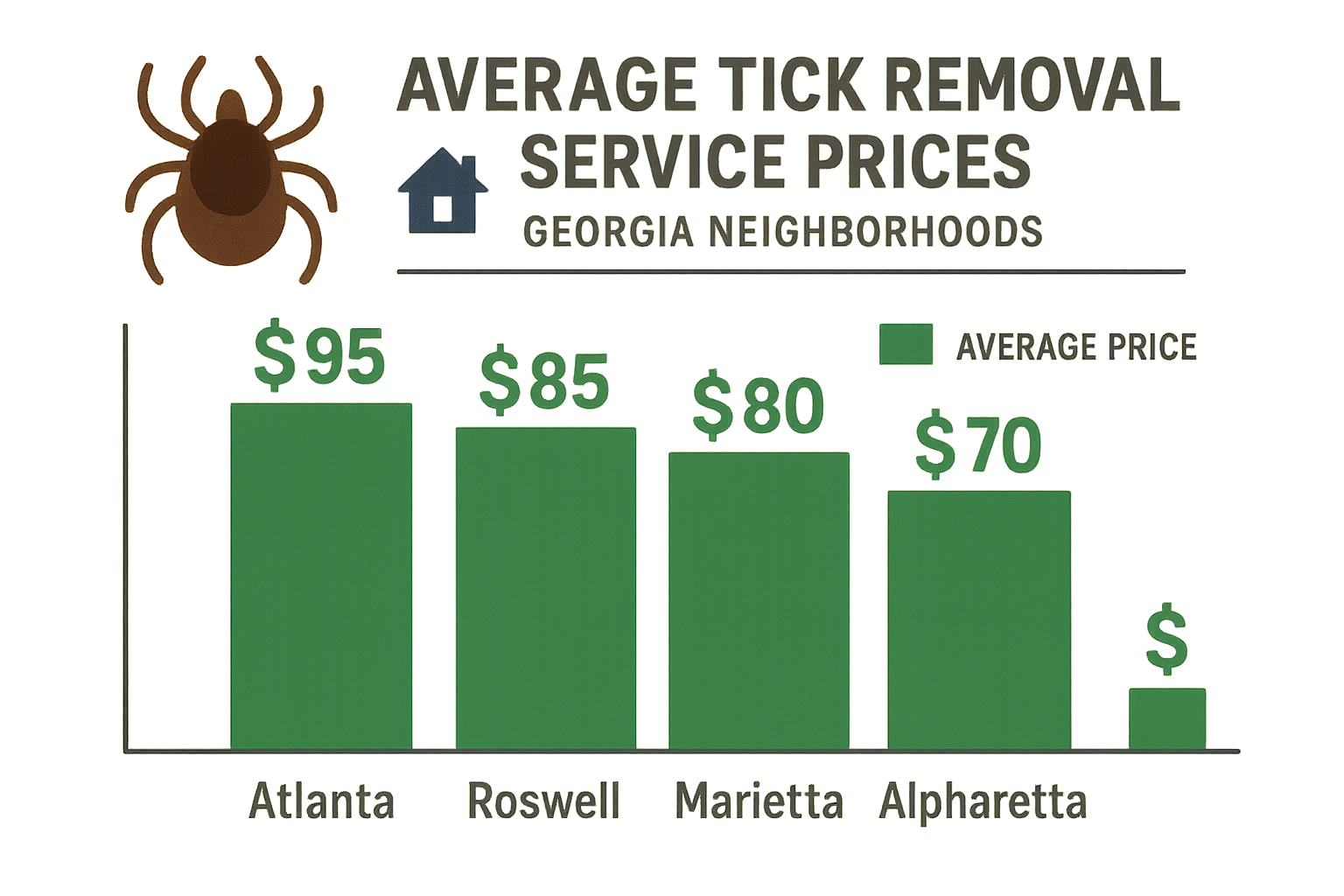
The bar chart above illustrates average treatment costs across local neighborhoods, ranging from $150 for a basic perimeter spray to $350 for a full service package that includes spot treatments and a follow up visit. A tick exterminator Suwanee homeowners rely on, Anthem’s Fast Tick Exterminator sits near the middle of that range, offering a clear itemized quote that covers both application and a post treatment inspection.
While the upfront expense may seem higher than a DIY granule bag, consider the long‑term savings: each tick bite carries a risk of Lyme disease, Rocky Mountain spotted fever, or other serious illnesses. Preventing an infestation now can avoid costly medical bills, lost workdays, and the emotional stress of watching pets suffer.
Safety Considerations for Families, Children, and Pets
During any treatment, keep children and pets indoors until the pesticide has dried—usually 30 minutes for sprays and up to two hours for granular applications. Choose products labeled “pet‑safe” or “low‑toxicity” whenever possible, and follow the technician’s post‑treatment instructions regarding lawn watering or mowing. After the application, maintain a clean yard by regularly raking leaves and disposing of debris, which reduces the chance of re‑infestation and keeps the environment safe for everyone.
Protect Your Home with Expert Tick Control Today
Ticks may be tiny, but in Georgia they pose a serious health risk to you, your family, and even your pets. From Lyme disease to Rocky Mountain spotted fever, these pests can turn a pleasant backyard into a hidden danger zone. The longer they linger, the more likely they’re to embed themselves in your yard, crawl spaces, and even indoor closets. That’s why swift, professional intervention isn’t just a convenience—it’s essential for peace of mind.

Why Anthem Pest Control Stands Out
Our licensed technicians bring years of local expertise to every job. Using EPA‑approved Integrated Pest Management (IPM) practices, we target ticks at every stage of their life cycle while minimizing impact on the surrounding environment. Whether it’s a one‑time treatment or an ongoing prevention plan, we design solutions that are safe for children, pets, and the ecosystem.
Transparent Pricing & No‑Obligation Quote
We believe homeowners deserve clarity before any work begins. Anthem Pest Control offers a straightforward pricing model—no hidden fees, no surprise add‑ons. Request a free, no‑obligation quote and you’ll receive a detailed breakdown of what’s included, how long the treatment will last, and the exact cost. This transparency lets you budget confidently while still getting the highest level of protection.
Take Action Before the Next Peak Season
Tick activity spikes in late spring and early summer. Scheduling an inspection now gives you a head start, ensuring your property is fortified before the insects reach their highest numbers. A quick call or a few clicks online can lock in a convenient appointment, giving you the confidence that your home is shielded from these persistent pests.
Ready to safeguard your yard? Contact a tick exterminator Suwanee homeowners trust by calling us today at 877-371-8196 for immediate assistance, or learn more and book online at your convenience. Our friendly team is eager to answer your questions, provide a personalized plan, and help you enjoy a tick-free season.