Why Carpet Beetles Matter for Homeowners
Biology of Carpet Beetles
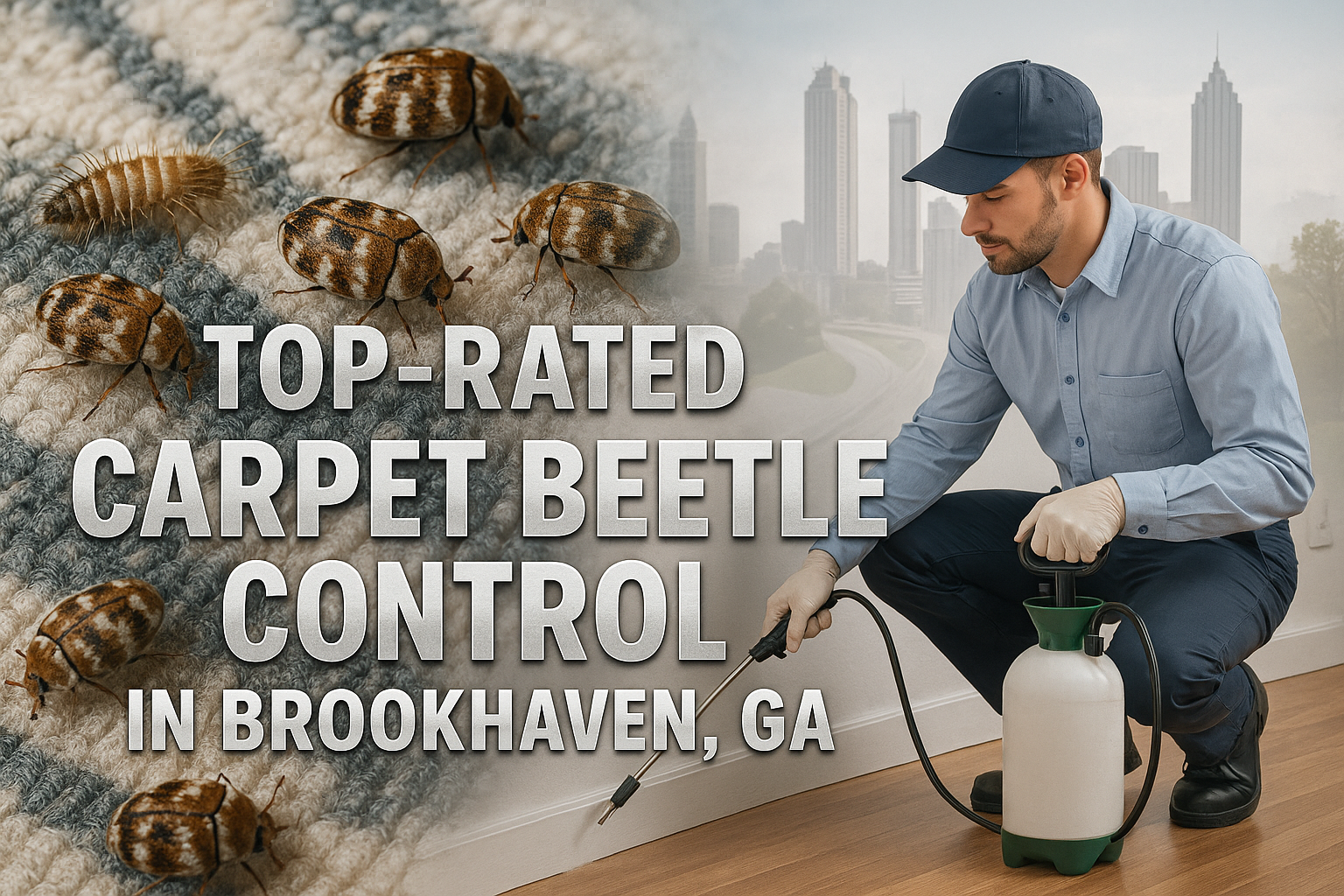
Carpet beetles belong to the Dermestidae family, with the most common household species being the Varied Carpet Beetle (Anthrenus verbasci) and the Black Carpet Beetle (Attagenus unicolor), pests frequently identified by a professional Carpet beetle exterminator Peachtree City homeowners rely on. Their life cycle includes four stages: egg, larva, pupa, and adult. Eggs are laid near food sources, and the larvae—often called “woolly bears”—are the destructive phase. These larvae feed on natural fibers such as wool, silk, fur, and even synthetic blends that contain protein-based stains. Adults are short-lived, typically only a few weeks, and they primarily seek out mates and lay eggs, not causing damage themselves.
Damage They Can Cause
When carpet beetle larvae infest a home, they chew irregular, round holes in carpets, rugs, and upholstery. Clothing made of wool or cashmere may develop tiny, ragged patches, while stored items like blankets, quilts, and museum specimens can suffer extensive loss of fibers. Over time, the cumulative damage can weaken the structural integrity of carpets and diminish the aesthetic value of cherished heirlooms.
How Infestations Start and Spread
Infestations often begin with a single adult beetle hitching a ride on a piece of furniture, clothing, or a moving box. Once inside, the adult deposits eggs near a food source. Larvae hatch and start feeding, producing waste that further attracts other insects. Because carpet beetles are adept at moving through wall voids, floor joists, and HVAC ducts, a localized problem can quickly become a whole‑home issue, especially in homes with high humidity or cluttered storage areas.
Early Warning Signs Homeowners Should Watch For
- Small, irregular holes in carpet fibers, especially near baseboards.
- Fine, brownish fecal pellets that look like pepper on the floor or in seams.
- Shed larval skins—transparent, oval shells that appear in corners or under furniture.
- Clusters of tiny, white larvae moving slowly across dark surfaces.
- Unexplained damage to woolen clothing, blankets, or upholstery.
Importance of Early Detection
Spotting these signs early can prevent a minor nuisance from turning into an expensive repair. Carpet replacement, professional cleaning, or restoration of damaged textiles can run into the thousands. Moreover, a small infestation can expand rapidly; larvae mature in as little as six weeks under optimal conditions. By acting quickly—vacuuming thoroughly, sealing entry points, and contacting a qualified exterminator—homeowners can contain the problem before it escalates, preserving both the beauty and the value of their home.
Spotting Carpet Beetle Activity Inside Your Home
Carpet beetles are tiny, but the damage they cause can be anything but. By learning the visual clues and where they like to hide, you can catch an infestation before it turns your favorite fabrics into a patchwork of holes.

What the bugs look like
- Larvae: Cream‑white, slightly hairy, and about a half‑inch long. They often curl into a C‑shape when disturbed.
- Adult beetles: Reddish‑brown, black, or striped varieties ranging from 1‑3 mm. Their bodies are smooth and oval, with tiny mottled patterns that blend into fabrics.
- Webbing: Fine, silken threads left behind by larvae as they move. You’ll see them especially in corners of closets or under rugs.
- Damage patterns: Small, round holes in wool, silk, or fur items; a “chewed” appearance on upholstery; and irregular patches where fibers have been stripped away.
Where to look
Carpet beetles favor undisturbed, dark spaces where they can feed on natural fibers. Systematically scan these hotspots:
- Under and behind sofas, chairs, and other heavy furniture.
- Along baseboards and crown molding where dust accumulates.
- Inside closets, especially on stored blankets, coats, and wool sweaters.
- Beneath area rugs and wall‑to‑wall carpeting.
- In HVAC vents and air‑return grilles—beetles can hitch a ride on airflow.
Using a vacuum for safe sampling
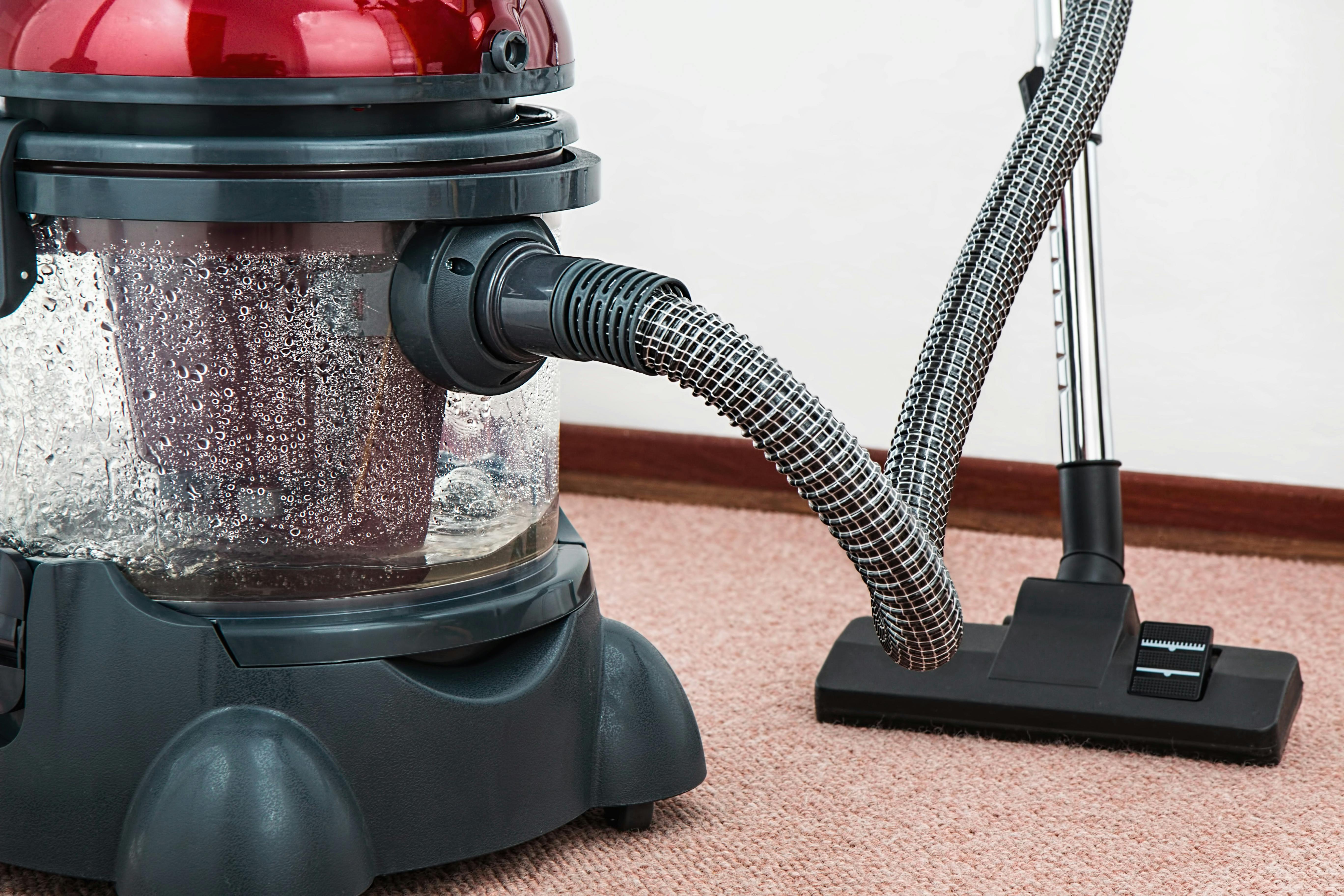
Grab a red, high‑efficiency vacuum (the one with the bright handle that stands out on a patterned rug) and follow these steps:
- Set the vacuum to its lowest suction setting to avoid scattering larvae.
- Place the hose tip directly over any suspected webbing or beetle clusters.
- Run the vacuum for 15‑20 seconds, then turn it off and detach the canister.
- Seal the canister in a plastic bag and label it “Carpet Beetle Sample.” This sample can be shown to a professional for identification.
DIY detection: Sticky traps
Sticky traps are an inexpensive way to confirm activity. Cut a few small pieces of double‑sided tape, fold them into a “V,” and tape them to the underside of furniture legs, along baseboards, and inside closet corners. Check the traps after 48 hours—any trapped beetles or larvae confirm a presence.
When to call a professional
While a single beetle or a few larvae can often be managed with thorough cleaning and traps, consider professional help from a carpet beetle exterminator Peachtree City homeowners trust if you notice any of the following:
- Widespread damage to multiple rooms or large fabric items.
- Repeated findings despite regular vacuuming and trap placement.
- Infestations in hard‑to‑reach places like HVAC ducts or ceiling tiles.
- Uncertainty about proper identification—mistaking carpet beetles for other pests can lead to ineffective treatment.
Anthem Pest Control offers a targeted carpet beetle inspection and treatment plan that’s safe for pets and children. If your quick visual check points to a larger problem, give us a call at 877‑371‑8196 or visit our website for a free quote.
Treatment Options – DIY Kits vs Professional Services
DIY Treatments: What’s on the Shelf?
Homeowners often reach for the nearest insecticidal spray, dust, or a heat-treatment kit when carpet beetles appear, especially before contacting a carpet beetle exterminator Peachtree City residents trust for severe infestations. Sprays are convenient for quick spot-treatments on baseboards, window sills, and upholstery. Dust formulations—usually silica-based or boric-acid powders—work best when applied in wall voids, under floorboards, and inside closets where beetles hide. Heat treatments involve renting a portable heater and raising room temperature to 120 °F (49 °C) for at least an hour, a method that kills every life stage without chemicals. Each option requires strict adherence to label directions, proper ventilation, and protective gear to avoid skin irritation or accidental exposure.
Pros and Cons of Going DIY
- Lower upfront cost: A single spray bottle or a dust can cost between $15 and $40, while a heat‑treatment rental may run $100‑$150 for a day.
- Flexibility: You can treat the problem on your own schedule, revisiting hotspots as needed.
- Risk of incomplete eradication: Beetles hide in hard‑to‑reach cracks; missing a single niche can allow the colony to rebound.
- Safety concerns: Improper mixing or inadequate protective equipment can lead to skin burns, respiratory irritation, or accidental contamination of food surfaces.
- Time investment: Thoroughly applying dust, sealing entry points, and repeating heat cycles can consume several evenings.
Professional Service Workflow
When you call a licensed provider like Anthem Pest Control, the process begins with a detailed inspection. Trained technicians locate active beetle sites, identify the species, and assess the extent of damage. Based on that data, they choose a targeted treatment—either a low‑odor, EPA‑approved chemical spray, a residual dust, or a controlled heat‑treatment performed with industrial‑grade equipment. Most plans include a follow‑up visit within 2‑4 weeks to verify that the population is gone and to apply a preventive barrier that discourages future infestations.
Cost & Effectiveness at a Glance
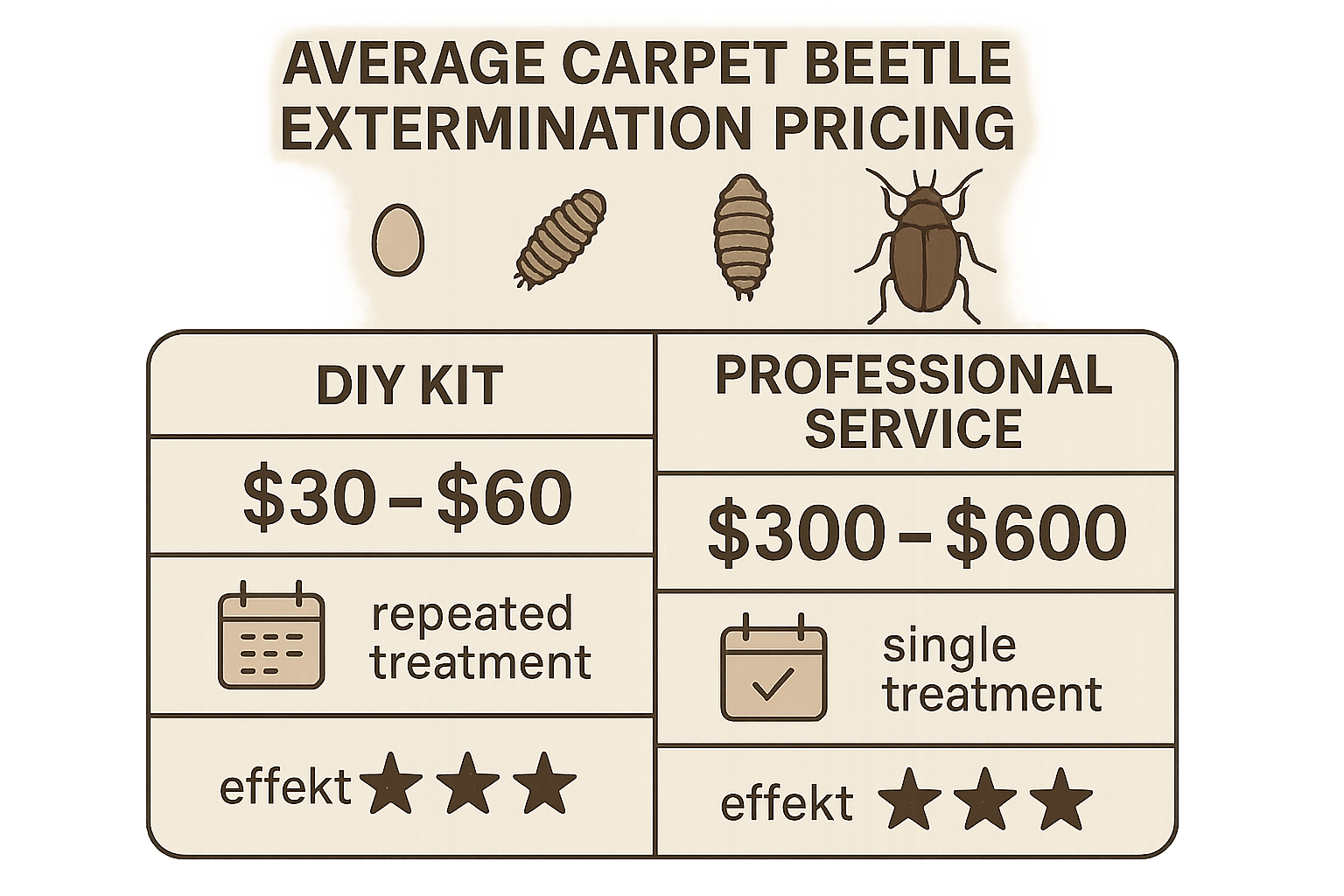
| Option | Cost Range (USD) | Recommended Frequency | Effectiveness Rating (1‑5) |
|---|---|---|---|
| DIY Spray or Dust Kit | $15 – $40 per product | Every 3–4 weeks until beetles disappear | 2 – 3 |
| DIY Heat‑Treatment Rental | $100 – $150 per day | One‑time intensive session | 3 – 4 |
| Professional Service (Inspection + Treatment) | $250 – $500 per home | Initial treatment + 1‑2 follow‑ups | 4 – 5 |
Choosing the Right Path for Your Home
If the infestation is limited to a single closet and your budget is tight, a DIY spray combined with diligent vacuuming may suffice—provided you follow label safety instructions and repeat applications until no beetles are seen. However, when carpet beetles have spread to multiple rooms, woven rugs, or stored fabrics, the risk of missed colonies rises sharply, making it wise to consult a carpet beetle exterminator Peachtree City homeowners trust. In those cases, the higher upfront expense of a professional service often pays off by delivering a complete, fast-acting solution and a preventive barrier that protects against re-infestation.
Ask yourself three questions before deciding: (1) How severe is the problem? (2) Can you safely apply chemicals or manage a heat‑treatment on your own? (3) Does your schedule allow for the repeated effort DIY requires? If you answer “yes” to the first two but “no” to the third, a professional visit is likely the smarter choice. Conversely, a minor, early‑stage sighting coupled with a willingness to invest time and caution can make a DIY kit a cost‑effective bridge until you’re ready for a full‑service plan.
Seasonal Prevention Strategies for Carpet Beetles
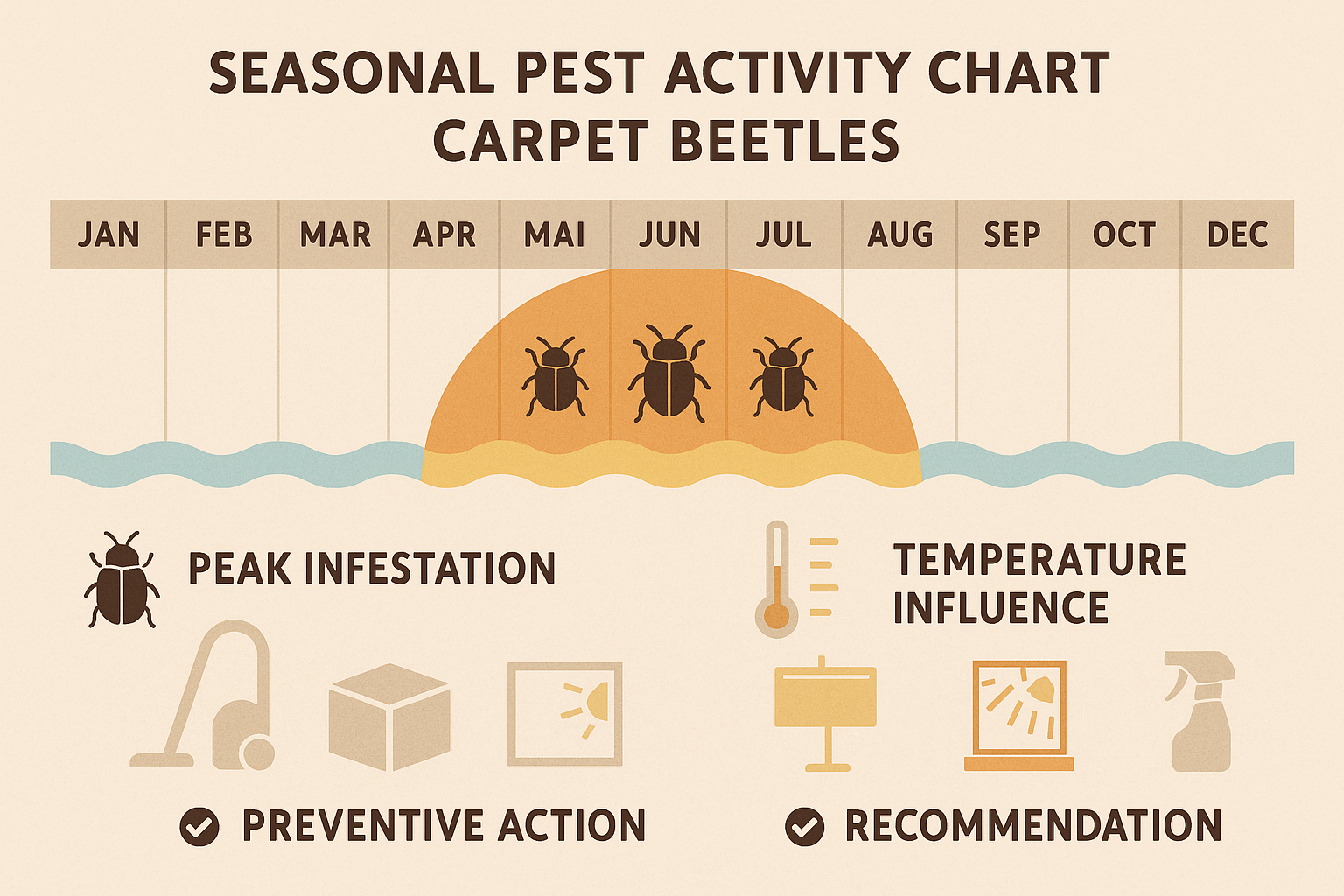
Carpet beetles thrive when temperatures climb above 70°F (21°C). Warm indoor climates speed up their life cycle, allowing eggs to hatch and larvae to feed on natural fibers. In the summer, homes often retain heat, and humidity can rise, creating an ideal breeding ground. By understanding this pattern, you can time your defensive actions to hit the beetles when they’re most vulnerable.
Month‑by‑Month Prevention Plan
Below is a practical calendar that aligns with the beetles’ activity peaks. Follow the recommended tasks each month to stay one step ahead.
| Month | Beetle Activity Level | Key Prevention Actions |
|---|---|---|
| January – February | Low | Store off‑season clothing in sealed bags; vacuum heating vents. |
| March – April | Moderate | Wash and dry all woolens; inspect stored items before bringing them out. |
| May – July | High | Increase vacuuming frequency; use cedar or lavender sachets in closets. |
| August – September | High | Rotate rugs; deep‑clean upholstery; check pet bedding. |
| October – December | Moderate | Seal any cracks around windows; perform a final deep‑clean before winter. |
Seasonal Action Checklist
- Winter (Dec‑Feb): Vacuum heating ducts, store delicate fabrics in zip‑lock bags, and place cedar blocks in closets.
- Spring (Mar‑May): Launder all wool, silk, and fur items; inspect stored blankets for holes before use.
- Summer (Jun‑Aug): Vacuum weekly, especially under furniture; rotate area rugs to expose hidden larvae; add lavender sachets to drawers.
- Fall (Sep‑Nov): Deep‑clean carpets with a hot‑water extraction machine; seal cracks around doors and windows; store seasonal décor in airtight containers.
Cleaning & Maintenance Tips
Carpet beetle larvae love dust, pet hair, and food crumbs. Keep these attractants at bay with a disciplined routine:
- Vacuum high‑traffic areas twice a week, using a brush attachment for baseboards and upholstery.
- Launder blankets, pillowcases, and curtains on the hottest setting safe for the fabric.
- Rotate rugs every 30 days to reveal the underside, where larvae often hide.
- Inspect stored items (seasonal clothing, quilts) before winter; shake out and brush any debris.
Year‑Round Attractant Reduction
Even when beetles are dormant, a clean home denies them food sources. Simple habits make a big difference:
- Wipe down kitchen counters after meals to eliminate crumbs.
- Pick up pet hair daily; consider a lint roller on furniture.
- Store natural‑fiber items (wool, silk, fur) in sealed plastic containers rather than open baskets.
- Use door‑snake or weather stripping to block outdoor insects that could introduce beetles.
By syncing your household chores with the beetles’ life cycle, you create a hostile environment that interrupts breeding and feeding. If you spot signs of an infestation despite these efforts, a professional inspection from Anthem Pest Control can pinpoint hidden hotspots and apply targeted treatments—keeping your home safe all year long.
Protect Your Home with Expert Carpet Beetle Control
By now you should be able to spot the tell‑tale signs of a carpet beetle invasion, choose the right treatment method for your situation, and understand how seasonal habits influence prevention. Whether you’ve discovered shed skins in your closets, noticed tiny holes in woolen fabrics, or simply want to stay ahead of the next infestation, the steps outlined earlier give you a solid foundation for keeping these silent destroyers at bay.
Why Trust Anthem Pest Control?
Even the most diligent DIY approach can miss hidden larvae or leave residues that attract future pests, which is why working with a carpet beetle exterminator Peachtree City homeowners trust, like Anthem Pest Control, brings a layer of expertise that turns a good plan into a guaranteed result:
- Licensed Technicians: Every technician holds state‑required licenses and ongoing training, ensuring they know the latest beetle biology and treatment protocols.
- Safe & Effective Products: We use EPA‑approved solutions that eradicate beetles while protecting your family, pets, and delicate furnishings.
- Transparent Pricing: No surprise fees—our quotes break down labor, materials, and follow‑up visits so you know exactly what you’re paying for.
- Satisfaction Guarantee: If beetles return within the warranty period, we’ll re‑treat at no extra cost, giving you peace of mind.
Take the Next Step—Free, No‑Obligation Quote
Ready to move from “maybe” to “definitely”? Anthem Pest Control offers a complimentary inspection and quote, allowing you to see the scope of work and cost before any commitment. Our team will walk through your home, pinpoint vulnerable areas, and recommend a customized plan that fits your budget and timeline.
Give us a call today at 877-371-8196. One of our friendly representatives will schedule a convenient time for a certified carpet beetle exterminator Peachtree City homeowners trust to visit your home.
Don’t let carpet beetles silently damage your cherished belongings. Schedule your free quote now and protect your home with the confidence that only a trusted professional can provide.