Rat Challenges in Peachtree City Neighborhoods

Peachtree City, GA, enjoys a climate that is both pleasant for residents and surprisingly hospitable for rodents. Average summer highs hover around 90°F (32°C) with high humidity, while winters are mild, rarely dipping below freezing. This steady temperature range allows rats to remain active year‑round, never experiencing the harsh cold that would otherwise curb their breeding cycles.
Beyond the weather, the city’s network of waterways—most notably the Flint River, Lake Peachtree, and a series of man‑made lakes—creates an abundance of water sources and lush vegetation. These riparian zones provide both shelter and a steady food supply, especially during the spring and early summer when insects and plant material proliferate. Historic districts such as Old Town and the downtown core feature mature trees, dense shrubbery, and older brick structures, all of which offer hidden pathways and nesting sites for rats.
What the numbers say
- According to the Peachtree City Health Department’s 2023 pest‑reporting summary, there were 1,842 confirmed rat sightings across the city, a 12% increase from the previous year.
- The Environmental Protection Agency (EPA) estimates that over 30% of U.S. households experience some form of rodent activity annually, with the Southeast ranking among the top three regions for rat infestations.
- Nationally, the EPA reports an average of 4.5 rat infestations per 1,000 homes in areas with similar climate and water features.
These statistics illustrate that Peachtree City’s rodent problem is not an isolated anomaly but part of a broader regional trend amplified by local conditions.
How the built environment fuels the problem
Peachtree City’s signature underground utility tunnels—originally designed for the city’s extensive golf cart system—double as covert highways for rats. These tunnels connect residential neighborhoods, commercial districts, and the many lakes, allowing rodents to travel unseen and bypass surface barriers. Dense landscaping, a hallmark of the city’s aesthetic, often includes deep mulched beds, ornamental shrubs, and wooden decks. While beautiful, these features create perfect cover and easy access to food crumbs, pet food, and garden waste.
Additionally, many homes feature crawl spaces and basements with limited ventilation. When gutters become clogged with leaves or debris, water pools near foundations, encouraging rats to seek shelter in these damp, dark areas. The proximity of homes to the river and lakes also means that flood events can wash debris and organic matter directly onto yards, instantly turning a tidy lawn into a banquet for rodents.
Seasonal cycles and breeding spikes
Rats reproduce rapidly, with a single female capable of producing up to seven litters per year, each litter averaging six pups. Warm, wet conditions in late spring and early summer accelerate this cycle, leading to noticeable population booms. As temperatures dip in the fall, rats seek indoor warmth, often moving into attics, wall voids, and HVAC systems. This seasonal migration explains why homeowners hear increased scurrying noises in October and why droppings appear near stored pantry items during winter.
Even during the cooler months, the mild Georgia winter means rats remain active longer than in northern states. They may spend more time foraging outdoors, increasing the likelihood of contact with humans and the spread of disease.
Why vigilance matters year‑round
Given the combination of favorable climate, abundant water sources, and a built environment that unintentionally shelters rodents, Peachtree City homeowners cannot afford to be complacent. Regular inspections of crawl spaces, prompt repair of leaky gutters, and strategic trimming of dense vegetation are essential preventive steps. Understanding the local dynamics—especially the hidden utility tunnels and seasonal breeding patterns—helps residents recognize early warning signs and act before a minor sighting becomes a full‑blown infestation.
Spotting the Early Warning Signs of Rats
Physical Signs You Can’t Ignore
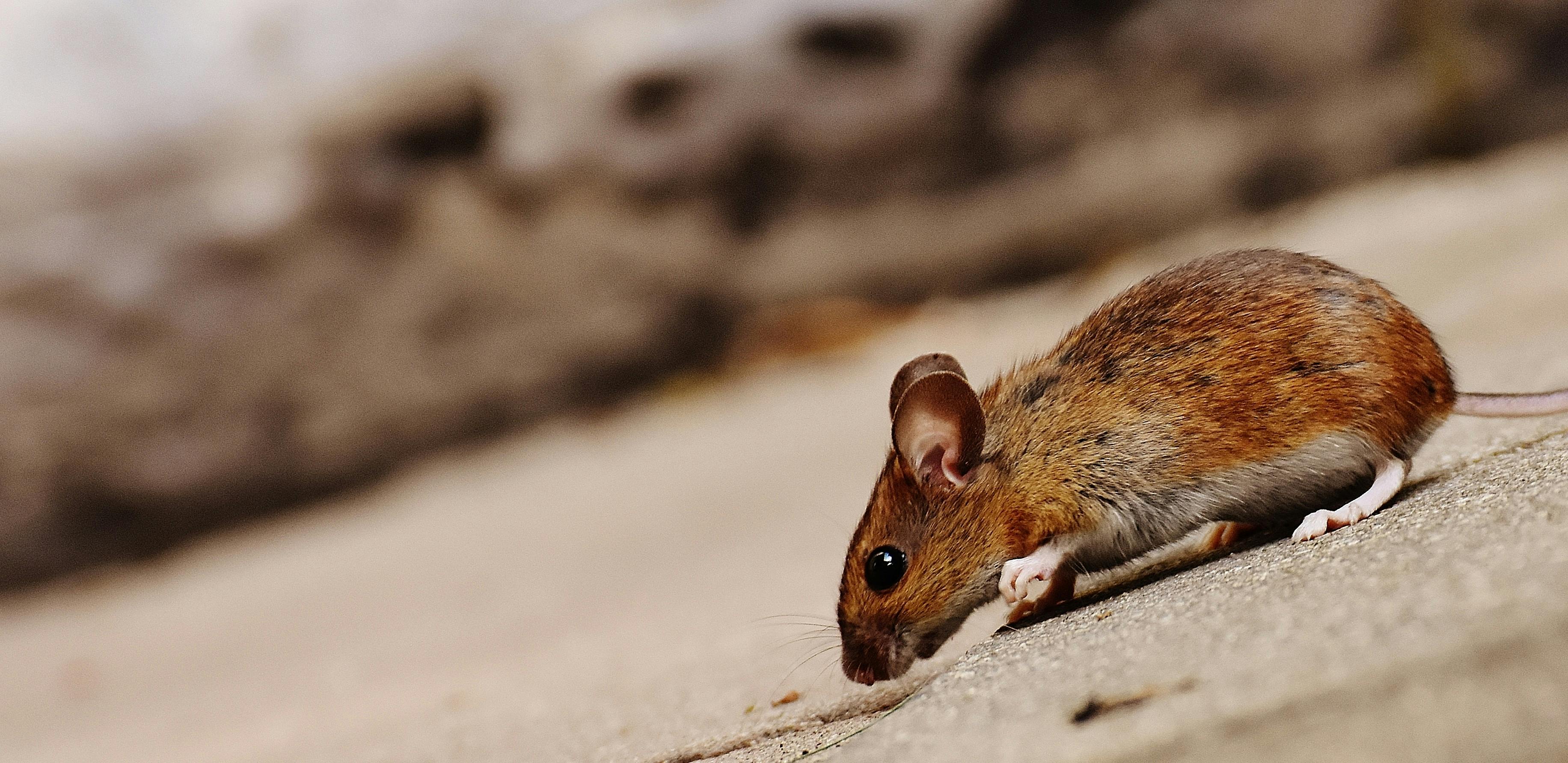
Rats leave a trail of evidence wherever they travel. The most reliable visual cue is fresh droppings—small, dark, and typically ¼‑inch long. Look for them along baseboards, under appliances, and in pantry corners. Gnaw marks tell a similar story; rats constantly file their incisors, so you’ll notice shredded wood, plastic, or even copper wiring with clean, parallel cuts. Grease‑smudged pathways appear in kitchens where rats have brushed against walls, leaving a faint oily film that darkens over time. Finally, check insulation in attics and crawl spaces; shredded, chewed fibers indicate a rodent has made a home behind your walls.
Behavioral Clues That Echo Through Your Home
Even if you don’t see the critters, you can hear them. A persistent scratching or scurrying noise behind drywall, especially at night, is a classic sign of rats foraging for food or building nests. These sounds are usually rhythmic and can be louder in colder months when rodents seek warmth. Pets are surprisingly sensitive to rodent activity—if your dog or cat suddenly becomes alert, freezes, or barks at seemingly empty walls, it may have detected the subtle movements of a hidden rat.
Evidence of Nesting – What to Look For
- Shredded paper, tissue, or newspaper tucked into concealed corners.
- Bits of fabric, old clothing, or insulation material tangled together.
- Soft, mound‑shaped piles of plant material or dried leaves near hidden entry points.
- Crumbled cardboard boxes or torn packaging left near food storage areas.
Health Risks Tied to Rat Droppings and Urine
Rats are more than a nuisance; they are vectors for serious disease. The U.S. Environmental Protection Agency (EPA) warns that rodent droppings and urine can spread hantavirus, leptospirosis, salmonella, and even plague. When droppings become airborne—such as when you sweep or vacuum without proper protection—tiny particles can be inhaled, delivering pathogens directly to the lungs. Direct contact with contaminated surfaces can also lead to skin infections or gastrointestinal illness. For these reasons, spotting the early signs and acting quickly is essential for protecting your family’s health.
Quick DIY Inspection Checklist
- Enter each room and scan the floor for dark, pellet‑shaped droppings.
- Run a flashlight along baseboards, behind appliances, and inside cabinets; note any gnaw marks or grease smudges.
- Listen for scratching or scurrying sounds for two minutes in quiet moments, especially after sunset.
- Inspect attics, crawl spaces, and garage corners for shredded insulation, paper, or fabric.
- Check exterior foundations for holes larger than ½ inch—rats can squeeze through very small gaps.
- If you find any evidence, seal entry points with steel wool and caulk, then contact a professional rodent control service for safe eradication.
How Seasonal Activity Affects Rat Populations
Breeding cycles and temperature
Rats are opportunistic breeders, and their reproductive calendar is tightly linked to ambient temperature. In Peachtree City, when daytime highs consistently stay above 68°F (20°C), females can conceive every 21 days, producing litters of 6‑12 pups. Warm months accelerate hormone production, shorten gestation, and extend the breeding season. Conversely, a dip below 50°F (10°C) slows metabolism, causing females to enter a semi‑dormant state and delaying pregnancies. This temperature‑driven rhythm explains why rat numbers swell in summer and shrink in winter.
Reading the seasonal activity chart
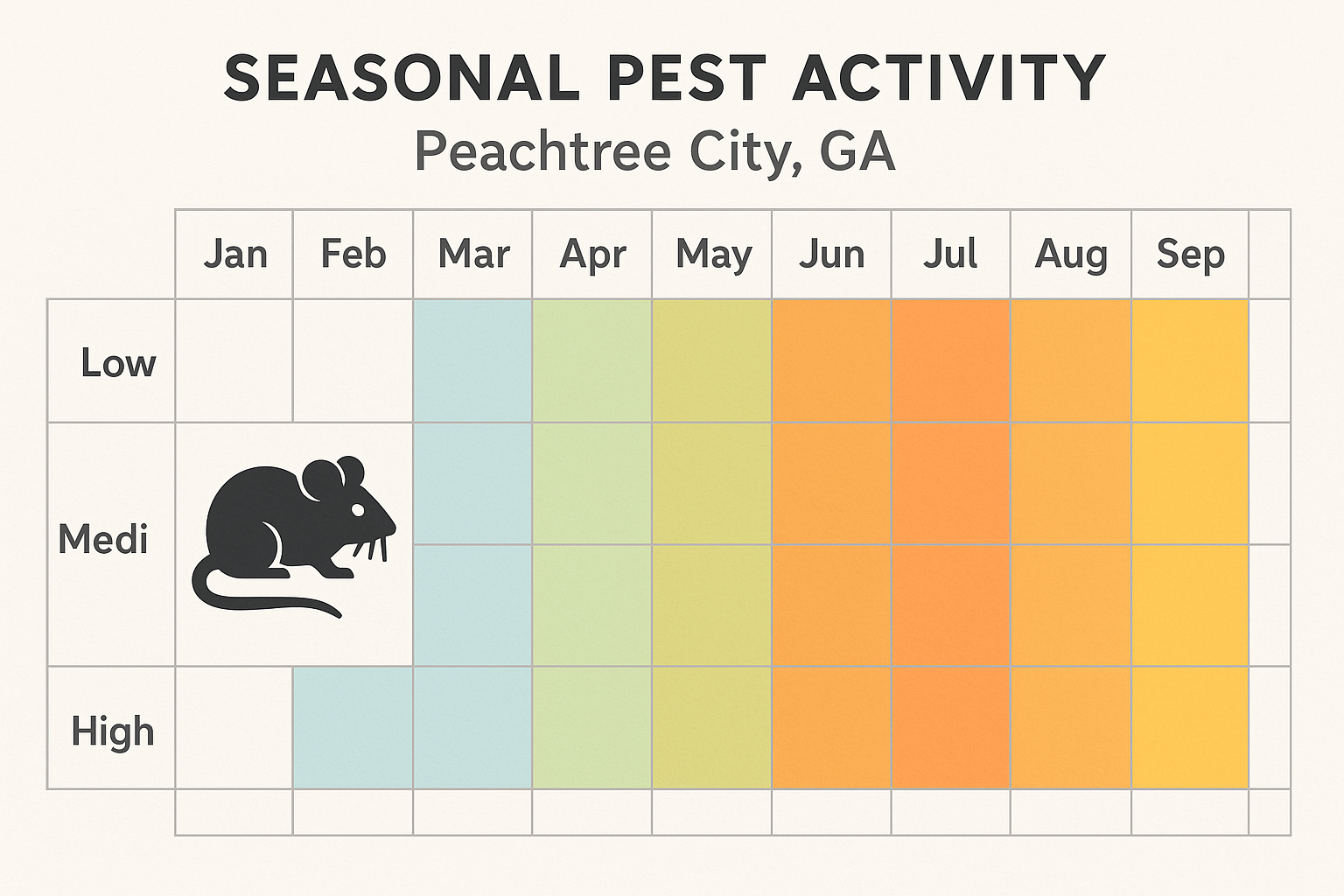
The chart above visualizes the typical ebb and flow of rat sightings throughout the year. Peaks appear in July and August, reflecting the optimal breeding temperature window. Spring (April‑May) and fall (September‑October) show moderate activity as rats begin to explore new foraging grounds after winter. Winter (December‑February) dips to its lowest point, but it never disappears completely—rats will still seek shelter in heated homes.
Entry points that open with the rains
Heavy spring showers and occasional summer thunderstorms can damage foundations, crawl‑space walls, and exterior siding. Cracked concrete, displaced brick, and warped wood create fresh gaps that rats love to exploit. Flood‑damaged basements often retain moisture, turning the space into an attractive nesting site. Even a one‑inch opening around a utility pipe can become a highway for a determined rodent, especially when food sources are abundant outside.
Pre‑emptive inspections before the peak
Scheduling a thorough inspection in late April or early May gives you a head start before the breeding surge. A qualified technician from Anthem Pest Control will:
- Check the integrity of foundation walls, crawl‑space vents, and roof eaves.
- Seal gaps larger than ¼ inch with steel wool, caulk, or metal flashing.
- Identify interior harborage sites such as stored boxes, attic insulation, and pet‑food containers.
- Recommend a targeted pre‑emptive baiting program that aligns with the upcoming activity spike.
Addressing vulnerabilities now reduces the number of entryways that rats can use when their population explodes in June.
Homeowner tips for high‑activity periods
- Secure waste containers: Use tight‑fitting lids and keep trash cans away from the house’s exterior walls.
- Eliminate outdoor food sources: Store birdseed in sealed containers and clean up fallen fruit or garden debris promptly.
- Maintain a tidy yard: Trim dense shrubbery, stack firewood off the ground, and remove clutter that could serve as shelter.
- Inspect drainage: Ensure gutters and downspouts direct water away from the foundation to prevent moisture‑laden entry points.
- Monitor for signs: Look for fresh droppings, gnaw marks, or greasy runways along walls, especially after a warm spell.
Treatment Options, Pricing, and What to Expect
Inspection Services: What Professionals Look For and How Fast They Respond
When you call Anthem Pest Control, the first step is a thorough on‑site inspection. A certified technician will trace droppings, gnaw marks, and entry points, then assess the size of the infestation and the surrounding environment. They’ll also check for structural vulnerabilities—such as gaps around utility lines or unsealed vents—that rats love to exploit. In Peachtree City, most companies schedule an initial visit within 24‑48 hours of your call, recognizing that rat activity can spike quickly during warm months.
One‑Time Treatment Options
After the inspection, you’ll have several stand‑alone solutions to choose from, each suited to different infestation levels and homeowner preferences.
- Snap Traps: Classic, mechanical traps that deliver an instant kill. They’re inexpensive (often under $10 per unit) and require no chemicals, making them a popular choice for families with pets.
- Electronic Traps: Battery‑powered devices that detect a rat’s presence and deliver a lethal shock. They’re reusable, easy to monitor, and eliminate the mess associated with snap traps.
- Bait Stations: Secure containers that hold anticoagulant or non‑anticoagulant rodenticides. Professional placement follows EPA guidelines to keep children and pets safe while targeting hidden rats.
- Exclusion Sealing: The most preventative one‑time action. Technicians seal cracks, gaps, and openings using steel wool, caulk, or metal flashing, effectively cutting off entry points.
Ongoing Plans: Monitoring, Bait Replenishment, and Structural Repairs
For homeowners who want long‑term peace of mind, Anthem offers monthly or quarterly maintenance packages. These include:
- Routine inspection of trap locations and bait stations.
- Replacement of depleted bait and repositioning of traps as needed.
- Follow‑up exclusion work—tightening seals, repairing damaged screens, and reinforcing vulnerable structures.
- Detailed activity reports so you can see exactly what’s been done and what’s still pending.
Consistent monitoring not only reduces the chance of a re‑infestation but also helps you catch early signs before they become costly problems.
Pricing Overview – Quick Reference
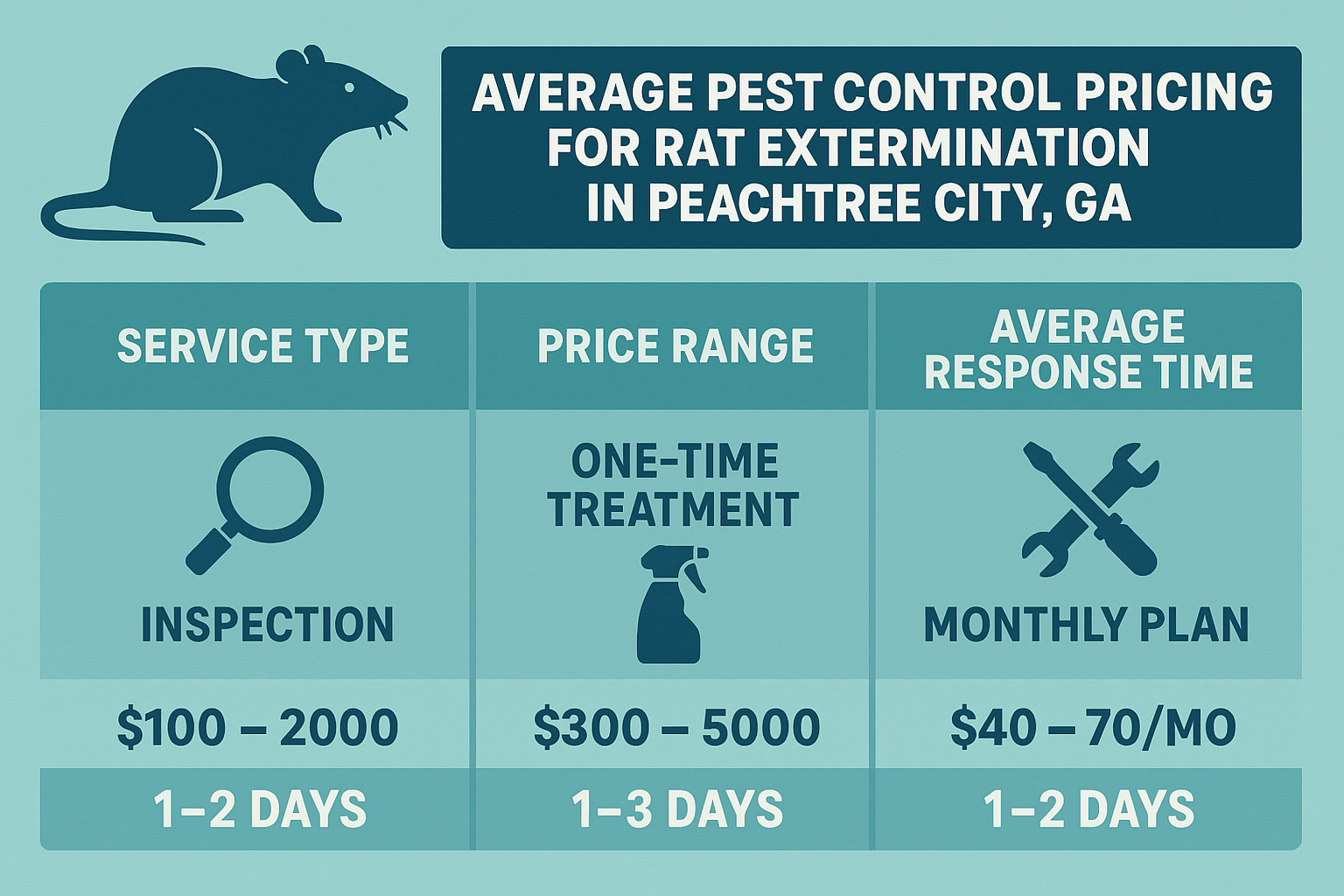
The infographic above summarizes typical price ranges you’ll encounter in Peachtree City:
| Service Type | Typical Price Range | What’s Included |
|---|---|---|
| Initial Inspection | $80 – $120 | Comprehensive assessment, report, and treatment recommendation |
| Snap/ Electronic Traps (per unit) | $10 – $35 | Device, placement, and removal instructions |
| Bait Stations (per station) | $45 – $70 | Station, EPA‑approved bait, safe‑placement service |
| Exclusion Sealing | $150 – $350 | Materials, labor, and post‑seal inspection |
| Monthly Monitoring Plan | $120 – $180/month | Trap checks, bait replenishment, and quarterly structural review |
Safety Considerations: Child‑ and Pet‑Friendly Options
Anthem follows EPA regulations to the letter. When we use bait stations, the products are placed out of reach—inside tamper‑proof boxes that only rats can access. For families with curious kids or dogs, we often recommend mechanical traps or electronic units, which contain no chemicals at all. All exclusion work uses non‑toxic materials, so you can feel confident that your home remains a safe environment while we eliminate the rodents.
Warranty Periods, Follow‑Up Visits, and Measuring Success
Every treatment comes with a built‑in warranty. One‑time services typically include a 30‑day guarantee: if rats reappear within that window, we’ll return at no extra charge to reassess and adjust the approach. Ongoing plans feature a 90‑day satisfaction guarantee and scheduled follow‑up visits to verify that traps remain effective and seals stay intact.
Success isn’t just “no rats seen.” We evaluate progress by:
- Tracking trap captures and bait consumption.
- Inspecting previously identified entry points for new activity.
- Reviewing homeowner feedback on sightings or noises.
When these indicators show a downward trend over two to three weeks, you can be confident the infestation is under control. If activity persists, we’ll adjust the strategy—adding more traps, reinforcing exclusions, or switching to a different bait formulation.
What to Expect on the Timeline
Most homeowners notice a reduction in rat activity within the first 7‑10 days after the initial treatment. Full eradication, especially in larger properties, may take 2‑4 weeks of consistent monitoring and trap maintenance. The key is patience and cooperation: keep food sources sealed, maintain clear pathways for technicians, and report any new signs immediately.
By understanding the options, costs, and safety measures, you can choose a plan that fits your budget and peace‑of‑mind goals. Anthem Pest Control’s transparent pricing and locally‑tailored approach make it simple to protect your Peachtree City home from unwanted rodent guests.
Take the Next Step with Professional Rat Control
When it comes to rats, catching the problem early, treating at the right season, and trusting a qualified professional are the three pillars of lasting protection. An infestation that starts in spring can multiply before summer, and DIY traps often miss hidden entry points. That’s why a prompt, expert assessment is the smartest move for any Peachtree City homeowner.
Anthem Pest Control brings more than just a service call. Our technicians specialize in rodent exclusion—identifying and sealing the tiniest cracks that rats love to exploit. We use safe, EPA‑approved baiting methods that target the entire colony without endangering pets or children. Because we live and work in Peachtree City, we know the local landscape, typical building styles, and the seasonal patterns that dictate rat activity.
- Transparent pricing: No hidden fees; you’ll see a clear, itemized estimate before any work begins.
- Free on‑site quote: Our team comes to your property, evaluates risk factors, and explains options at no cost.
- Satisfaction guarantee: If rats return within the warranty period, we’ll re‑treat at no additional charge.
Ready to take the next step? Schedule a complimentary inspection so we can pinpoint entry points, assess food and water sources, and design a customized action plan for your home. The inspection is entirely free and carries no obligation—you simply gain a professional perspective on how vulnerable your property truly is.
We understand that inviting a pest‑control partner into your home is a big decision, so we keep the process straightforward and pressure‑free. If you have questions, need clarification on treatment options, or just want to learn more about how we protect homes in Peachtree City, give us a call. Our friendly, licensed technicians are happy to chat.
Take action now: If you suspect rats are making themselves at home in your Peachtree City property, don’t wait until the problem spreads. Contact Anthem Pest Control today for a free, no‑obligation quote. Our licensed technicians will assess the situation, recommend the most effective solution, and protect your home with safe, affordable methods. Call us at 877-371-8196 or visit Anthem Pest Control to get started.