Why Ants Are a Growing Concern for Decatur Homeowners
Decatur’s humid subtropical climate delivers hot, humid summers, mild winters, and steady rainfall throughout the year—conditions that often lead homeowners to search for an ant exterminator near me Decatur. Those conditions are a magnet for ants, which flourish when temperatures stay above 60°F and moisture is plentiful. The city’s lush landscaping, mature oak trees, and many older homes with wood framing create natural highways for colonies to move from soil to structure. Because the weather rarely drops low enough to force ants deep underground, they remain active for most of the year, slipping into kitchens, pantries, and crawl spaces the moment they detect a food or water source.
Beyond the nuisance factor, ant infestations can bite into a homeowner’s budget and peace of mind. Carpenter ants, for example, excavate wood to expand their nests, weakening structural members such as floor joists, roof supports, and window frames. Over time, this damage can compromise the integrity of a home and lead to costly repairs. Even non‑destructive species contaminate food stores, forcing families to discard pantry items and increasing grocery expenses. Moreover, visible ant trails and swarms lower curb appeal, which can reduce property value if the problem goes untreated during a resale.
Common Ant Species in Decatur
- Carpenter ants – large, black or reddish workers that prefer moist wood and can cause structural damage.
- Odorous house ants – emit a sour‑lemon smell when crushed and are attracted to sugary foods.
- Pavement ants – small, dark brown ants that build nests under sidewalks, driveways, and foundation cracks.
Understanding which species you’re dealing with sets the stage for effective control. In the sections that follow, we’ll walk you through a step‑by‑step identification guide, an activity calendar that maps peak seasons for each ant type, a transparent pricing comparison between DIY options and professional services, and finally, how Anthem Pest Control can tailor a safe, affordable treatment plan for your home.
When it comes to eliminating ants, safety matters as much as efficacy. The U.S. Environmental Protection Agency (EPA) advises homeowners to choose products that are specifically labeled for indoor use, follow label directions precisely, and store pesticides out of reach of children and pets. Professional exterminators are trained to apply EPA‑approved formulations in a way that minimizes exposure while delivering lasting results.
Spotting the Ants on Your Property
Before you call a professional ant exterminator near me Decatur, you can often tell which ant is making a home on your property just by watching its behavior. Look for the classic signs of ant activity: thin, winding trails that lead to a hidden nest, small piles of soil or wood shavings near the foundation, and foragers gathering around outdoor lights at night. These clues tell you that a colony is active and give you a starting point for identification.
Carpenter Ants
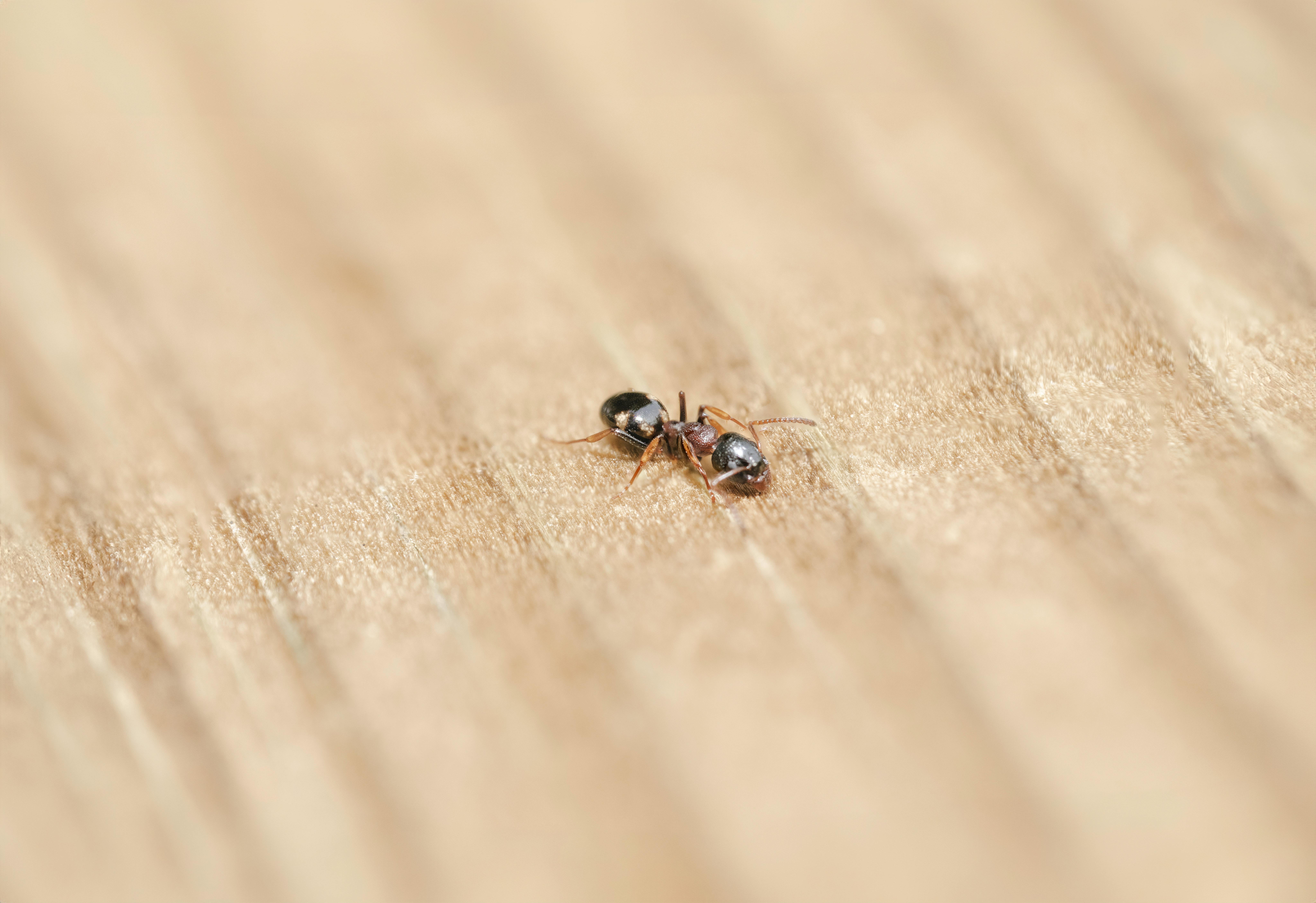
Carpenter ants are the largest of the three common species you’ll encounter in Decatur, typically measuring between ½ and ¾ inch long. Their bodies are a glossy black or dark brown, and the thorax often has a slightly lighter, reddish‑brown hue. These ants love moisture, so you’ll find them nesting in damp, decaying wood—think rotting window frames, leaky roof supports, or areas where water has seeped into the foundation.
Damage is subtle at first. You might hear a hollow “knocking” sound when you tap a wooden beam, or discover fine wood shavings (frass) near a wall. Unlike termites, carpenter ants do not eat wood; they simply hollow it out to create galleries for their colony.
Odorous House Ants
Odorous house ants are much smaller, usually about ¼ inch long. Their coloration ranges from dark brown to almost black, and they have a smooth, shiny exoskeleton. The name comes from a distinctive rotten‑egg odor they release when crushed—an easy field test if you’re unsure.
These ants are indoor specialists. You’ll often spot them inside kitchens, pantries, or along baseboards, especially near food sources. They form long, steady trails that can lead back to a hidden nest in wall voids, under appliances, or in the insulation of your attic.
Pavement Ants
Pavement ants are the tiniest of the trio, measuring roughly ⅛ inch in length. Their bodies are a light brown with a slightly darker head, and they prefer to build nests under concrete, sidewalks, driveways, or the cracks of a stone patio. Because they favor the outdoors, you’ll see them most often in late spring when colonies are expanding.
During warm evenings, pavement ants swarm toward porch lights, creating a glittering river of activity. Their nests are usually shallow, but they can spread under the foundation, making them a nuisance when they start foraging indoors.
Quick Visual Checklist
- Size: Carpenter (½‑¾ in) | Odorous (¼ in) | Pavement (⅛ in)
- Color: Carpenter (dark black/ brown) | Odorous (dark brown/black) | Pavement (light brown)
- Habitat: Carpenter (moist wood, structural damage) | Odorous (indoor kitchens, pantries) | Pavement (under sidewalks, driveways)
- Behavior: Carpenter (quiet foraging, wood shavings) | Odorous (strong odor when crushed) | Pavement (visible near lights in spring)
- Damage clues: Carpenter (hollow wood, frass) | Odorous (food contamination) | Pavement (no structural damage, but may enter homes)
Matching what you see to this checklist will help you pinpoint the culprit and decide whether a DIY approach is enough or if professional intervention is needed. For a more detailed identification guide, the EPA’s Ant Identification Guide offers species‑specific photos and management tips.
Carpenter Ant Spotlight – The Wood‑Destroyer
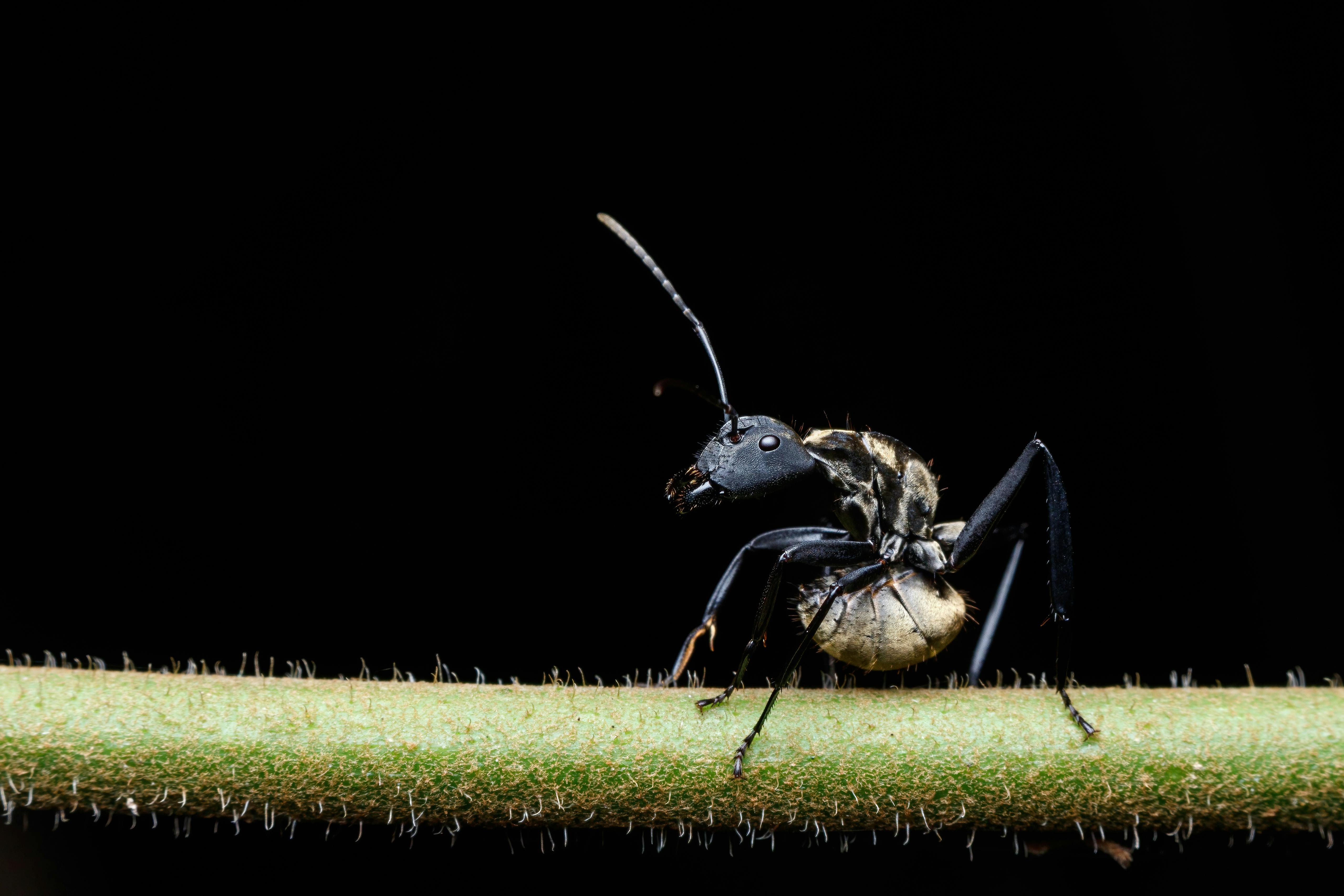
Carpenter ants (Camponotus spp.) are among the largest ant species you’ll encounter in Georgia, with workers ranging from a half‑inch to an inch in length. Their bodies are glossy black or reddish‑brown, and the workers sport a distinct thorax that appears broader than the head, giving them a “smooth‑shouldered” silhouette. Colonies are organized around a single queen who can lay thousands of eggs each year, while sterile workers maintain the nest, forage for food, and care for the brood.
Unlike termites, carpenter ants do not consume wood for nutrition. Instead, they excavate wood to create smooth, dry galleries that serve as protective tunnels and chambers for their larvae. This behavior weakens structural components over time, especially when the ants target moisture‑laden timber. The key visual cue is the clean, sand‑like sawdust—often called frass—that accumulates near entry points.
Where They Set Up Shop in Decatur Homes
In Decatur’s humid climate, carpenter ants gravitate toward areas where moisture seeps into wood. Common nesting sites include:
- Roof voids and attic spaces where leaks have softened shingles.
- Exterior decks or porches that have been left untreated for years.
- Window frames and door jambs that sit against damp siding.
- Basement joists that sit directly on concrete slab without a vapor barrier.
Signs That a Colony Has Moved In
Homeowners often hear the first warning: a faint rustling or crackling sound emanating from walls or ceilings at night, when the workers are most active. Look for these additional clues:
- Fine piles of sawdust near wood‑to‑wood joints, especially around window sills.
- Visible foraging trails at night, often illuminated by a flashlight.
- Small, dark, oval‑shaped eggs or larvae tucked into the frass.
- Winged alates (reproductive ants) swarming in late summer, usually near light sources.
Prevention: Simple Steps to Keep Carpenter Ants Out
Because carpenter ants thrive on moisture, the most effective defense starts with water management.
- Reduce moisture: Fix roof leaks, clean gutters regularly, and install a dehumidifier in damp basements.
- Trim vegetation: Keep tree branches and shrubs at least two feet away from the house to prevent direct contact with siding.
- Seal entry points: Use caulk or expanding foam to close gaps around windows, doors, and utility penetrations.
- Maintain wood: Apply a protective sealant or paint to exposed decks, porch rails, and exterior trim.
DIY Baiting vs. Professional Intervention
For a small, isolated infestation, homeowners can set up ant bait stations near suspected foraging trails. The bait’s slow‑acting poison allows workers to carry it back to the colony, gradually reducing the population. However, baiting has limits:
- If the nest is deep within structural timber, bait may never reach the queen.
- Multiple satellite colonies can exist, each requiring its own bait network.
- Moisture‑related wood damage continues unchecked while you wait for the bait to work.
When you notice persistent frass, structural wood that feels soft to the touch, or a steady stream of night‑time activity, it’s time to call a professional. Anthem Pest Control’s certified technicians can locate hidden nests with infrared cameras, assess the extent of wood damage, and apply targeted, low‑toxicity treatments that protect your family and pets. A professional also provides a written warranty, ensuring that the problem stays solved long after the initial visit.
In short, carpenter ants are not just a nuisance; they are a silent wood‑destroyer that can compromise the integrity of your home. By recognizing their biology, spotting early warning signs, and taking proactive prevention steps, you can keep these insects at bay. When the infestation exceeds what a DIY approach can handle, trust a local expert to safeguard your Decatur residence.
When Are Ants Most Active in Decatur?
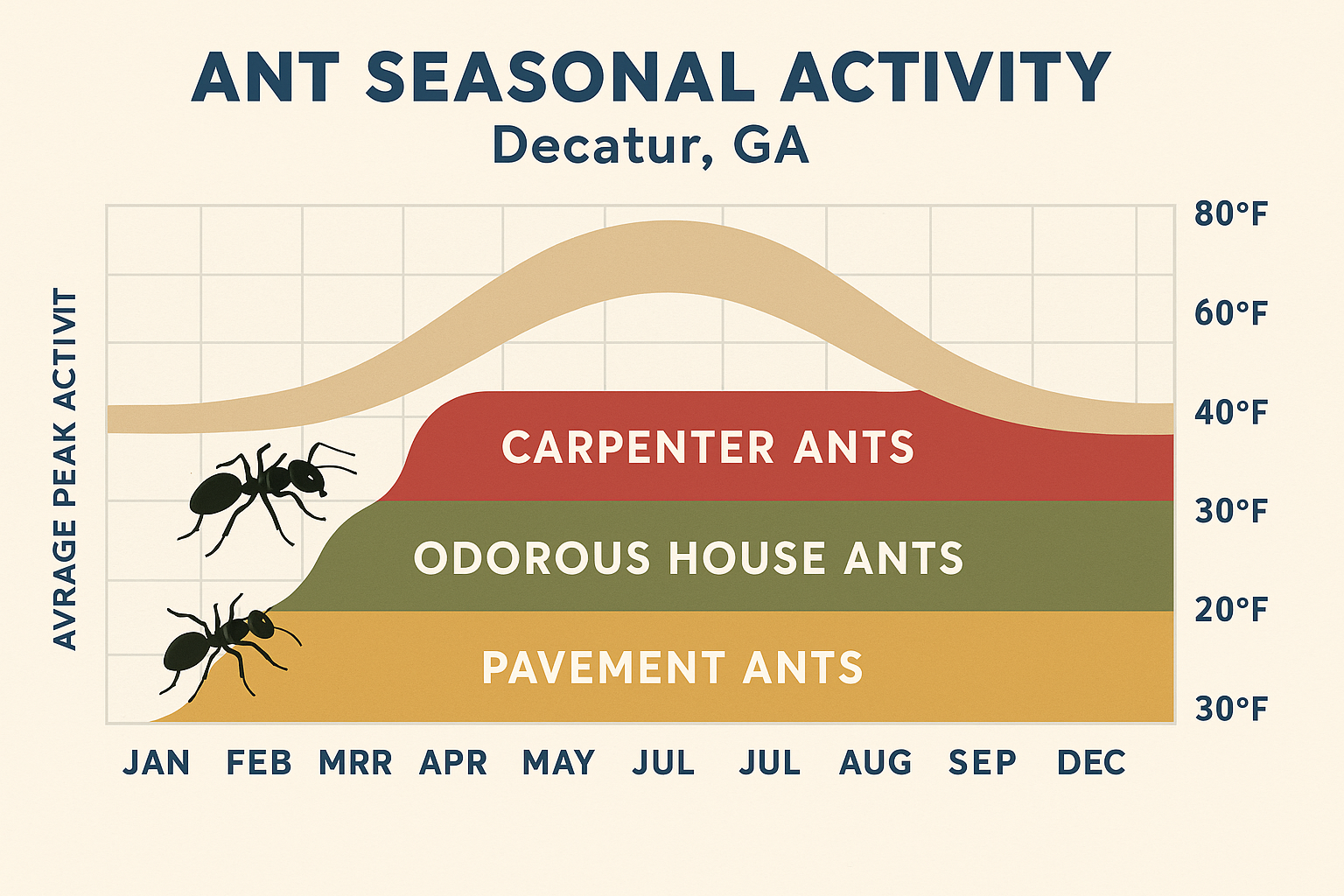
Ants are ectothermic, meaning their metabolism and behavior are dictated by the environment around them. In Decatur, the interplay of temperature and humidity creates distinct windows when each species ramps up foraging, breeding, and nest expansion—timing that an experienced ant exterminator near me Decatur uses to schedule inspections before colonies explode and apply treatments when they’ll be most effective.
Temperature, Humidity, and the Ant Life Cycle
Most ant colonies stay hidden underground or inside wall voids during the cooler months. As daily highs climb above 68 °F (20 °C) and relative humidity climbs past 60 %, workers emerge to search for food and water. Warmth accelerates brood development, while moisture prevents the desiccation of eggs and larvae. In short, a warm, humid spell equals a busy ant season.
Peak Activity by Species
| Ant Species | Peak Months | Why This Window? |
|---|---|---|
| Carpenter Ants | Late summer – early fall (August – October) | Colony swarms to establish new satellite nests before winter; wood moisture from late‑summer rains makes timber more attractive. |
| Odorous House Ants | Spring – summer (April – July) | Warmer days trigger nuptial flights; abundant outdoor food sources drive them indoors for shelter. |
| Pavement Ants | Early spring (March – May) | Rising soil temperatures awaken overwintering colonies; they forage along sidewalks and foundation cracks seeking moisture. |
Decatur’s Seasonal Weather Meets Ant Behavior
According to the National Weather Service, Decatur’s average high temperatures run about 55 °F (13 °C) in March and climb to 88 °F (31 °C) in July. Rainfall peaks in May and September, delivering the humidity spikes ants love. This climate syncs perfectly with the table above: pavement ants take advantage of the early‑spring warmth, odorous house ants flourish when midsummer heat and humidity peak, and carpenter ants seize the late‑summer moisture before cooler nights set in.
Scheduling Inspections & Pre‑emptive Treatments
- March–April: Conduct a thorough inspection focused on pavement ant activity around foundations, driveways, and garden beds. Apply a perimeter treatment if you spot foraging trails.
- May–July: Shift attention to odorous house ants. Look for tiny, fast‑moving workers inside kitchens and pantry areas. A targeted bait program works best during this window when the colony is actively feeding.
- August–October: Prioritize carpenter ant checks in wood structures, especially decks, porches, and any moisture‑prone framing. A pre‑emptive wood‑injection treatment can stop a budding colony before it damages structural timber.
By aligning your service calendar with these natural cycles, you reduce the chance of a surprise infestation and keep pesticide use to the minimum needed for control.
EPA Guidance on Timing Pesticide Applications
The U.S. Environmental Protection Agency (EPA) advises that pesticide applications be timed to target the most vulnerable life stage—usually the foraging workers—while avoiding periods of heavy rain that could wash chemicals into storm drains. In Decatur, this translates to:
- Applying perimeter sprays early in the morning or late afternoon when temperatures are moderate (70–80 °F) and dew has evaporated.
- Choosing products labeled for “early‑season” or “late‑season” use, matching the species‑specific peaks outlined above.
- Recording application dates and weather conditions to ensure compliance with local regulations and to help your pest‑control professional fine‑tune future treatments.
Following these EPA‑backed timing strategies not only maximizes efficacy but also safeguards nearby water sources and the health of your family.
With a clear picture of when each ant species is most active, you can plan inspections, bait placements, and professional treatments with confidence—keeping your home ant‑free year after year.
Ant Control Options and Cost Comparison for Decatur Residents
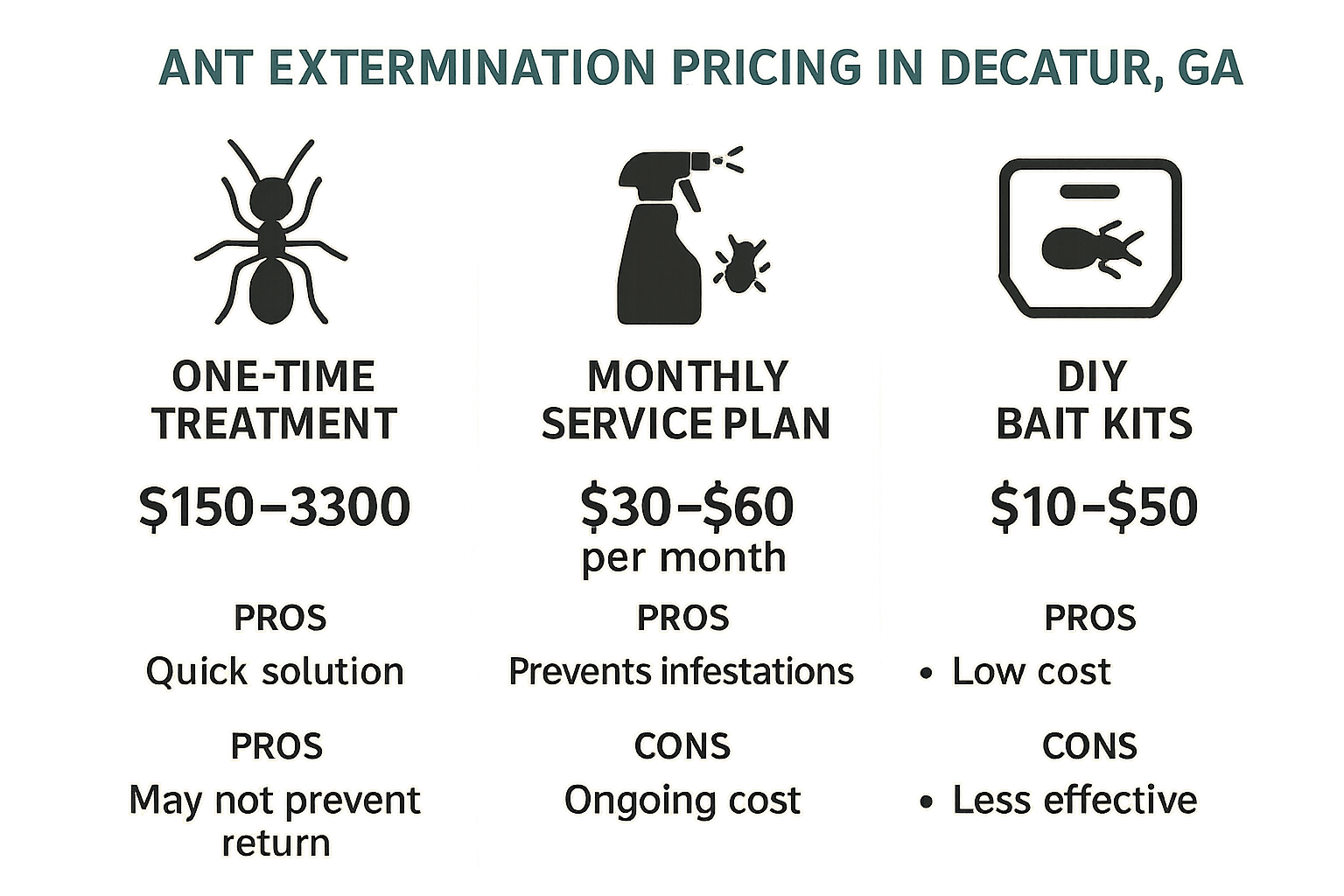
When ants start marching across your kitchen counter, the first question most homeowners ask is, “How much will it cost to get rid of them?” In Decatur, you have three practical routes: a one‑time professional treatment, a monthly service plan, or a do‑it‑yourself bait kit. Below we break down each option, the typical price range you’ll see locally, and the key advantages and drawbacks to help you budget wisely.
One‑Time Professional Treatment
A single visit from a licensed technician includes a thorough inspection, targeted spray or dust application, and a follow‑up call to ensure the colony is eliminated. In Decatur, most reputable companies quote between $150 and $250 for this service.
- Effectiveness: High – a trained professional can locate hidden nests and apply the right product for the species you’re dealing with.
- Convenience: Very convenient; you schedule a time, the technician arrives, and you’re done.
- Long‑Term Protection: Limited to the treatment window; if the colony re‑establishes, you’ll need another visit.
- Cost Predictability: Fixed price upfront, no monthly commitment.
Monthly Service Plans
Monthly plans spread the cost over time and include regular inspections, preventive applications, and often a guarantee against re‑infestation. Decatur residents typically pay $30 to $50 per month, which translates to roughly $360‑$600 annually.
- Effectiveness: Consistently high because pests are monitored and treated before they become a problem.
- Convenience: Very convenient – the same technician returns on schedule, so you never have to remember a call‑out.
- Long‑Term Protection: Strong – ongoing treatments create a barrier that deters new colonies.
- Cost Predictability: Predictable monthly billing, but the total yearly cost is higher than a single treatment.
DIY Ant Bait Kits
Do‑it‑yourself kits are sold at home‑improvement stores or online for anywhere between $20 and $40. They usually consist of a plastic bait station filled with a slow‑acting insecticide that worker ants carry back to the nest.
- Effectiveness: Moderate – works well for small, isolated colonies but can miss hidden nests.
- Convenience: Requires you to place stations, monitor them, and replace as needed.
- Long‑Term Protection: Minimal – once the bait is exhausted, protection ends.
- Cost Predictability: Low upfront cost, but you may need multiple kits over time.
Cost Comparison Table
| Method | Typical Cost (Decatur) | Pros | Cons |
|---|---|---|---|
| One‑Time Professional | $150‑$250 | High effectiveness, no ongoing fees, quick resolution | Limited long‑term protection, may need repeat visits |
| Monthly Service Plan | $30‑$50 per month | Continuous monitoring, strong preventive barrier, convenience | Higher annual cost, long‑term commitment |
| DIY Bait Kit | $20‑$40 per kit | Low upfront cost, can be effective for minor issues | Requires hands‑on effort, less reliable for large infestations |
How Anthem Pest Control Structures Its Pricing
Anthem Pest Control prides itself on transparent pricing. For a one‑time ant treatment, Anthem quotes a flat rate that includes inspection, product application, and a 30‑day warranty. There are no hidden service fees or surprise travel charges. If you opt for a monthly plan, the invoice clearly lists the monthly service fee, the scope of each visit, and any applicable discounts for multi‑year contracts. This clarity helps homeowners compare apples‑to‑apples when weighing Anthem against other providers.
Tips for Evaluating Value Beyond the Price Tag
- Warranty Coverage: Look for a guarantee that covers re‑treatment if ants return within a set period (30‑90 days is typical).
- Follow‑Up Visits: A reputable company will schedule a check‑in after the initial treatment to confirm success.
- Safety Certifications: Verify that technicians hold state‑required licenses and that the products used meet EPA standards.
- Customer Reviews: Local feedback on reliability and effectiveness can be a stronger indicator of value than price alone.
- Scope of Service: Some plans include treatment for other pests (spiders, cockroaches) at no extra cost, which can add savings if you have multiple issues.
Putting It All Together
Take a moment to compare the infographic above with your household budget and the severity of your ant problem. If you’re dealing with a small, isolated line of ants and want to keep costs low, a DIY bait kit may be sufficient. For larger colonies or peace‑of‑mind protection, a one‑time professional treatment or a monthly service plan from a trusted provider like Anthem Pest Control will likely deliver the best return on investment. By understanding each option’s price range and what you actually get for that price, you can choose the solution that fits both your wallet and your comfort level.
Protect Your Home Today with Anthem Pest Control
Quick Recap: What You’ve Learned
By now you should be able to spot the most common ant species invading Decatur homes, know the optimal windows for treatment—late spring through early fall—and understand the factors that shape service pricing, such as colony size, treatment method, and the need for follow‑up visits. Armed with this knowledge, you’re ready to make an informed decision before the next wave of foragers arrives.
Why Delaying Is Dangerous
Ants may seem harmless, but a postponed response can quickly turn a minor nuisance into a costly problem. Carpenter ants, for example, excavate wood to build galleries, weakening structural members and creating pathways for moisture damage. Even smaller species can attract predators, contaminate food, and spread to neighboring units, turning a single household into a neighborhood infestation. The longer you wait, the more extensive the treatment will become—and the higher the price tag.
Anthem’s Edge: Local Expertise Meets Professional Standards
When you choose Anthem Pest Control, you’re tapping into a team of licensed technicians who specialize in the ant species that thrive in Decatur’s climate. Our crew uses EPA‑approved products that are both effective against colonies and safe for families and pets. Because we operate locally, we understand the nesting habits of pavement ants, odorous house ants, and the dreaded carpenter ants that target Southern homes. This regional insight lets us tailor each inspection and treatment plan to the unique conditions of your property, reducing the need for repeat visits and keeping costs transparent.
Take the Next Step—No Obligation, No Pressure
Ready to safeguard your home without breaking the bank? Anthem offers a free, no‑obligation quote and can schedule an on‑site inspection at a time that fits your busy life. Our technicians will walk you through the findings, explain the recommended treatment, and answer any questions you have before any work begins. It’s a simple, risk‑free way to ensure your home stays ant‑free.
Contact Anthem Pest Control Today
Call now for a free quote: 877‑371‑8196
Visit our website to request your personalized estimate and set up an inspection with an ant exterminator near me Decatur homeowners trust: Anthem Pest Control.