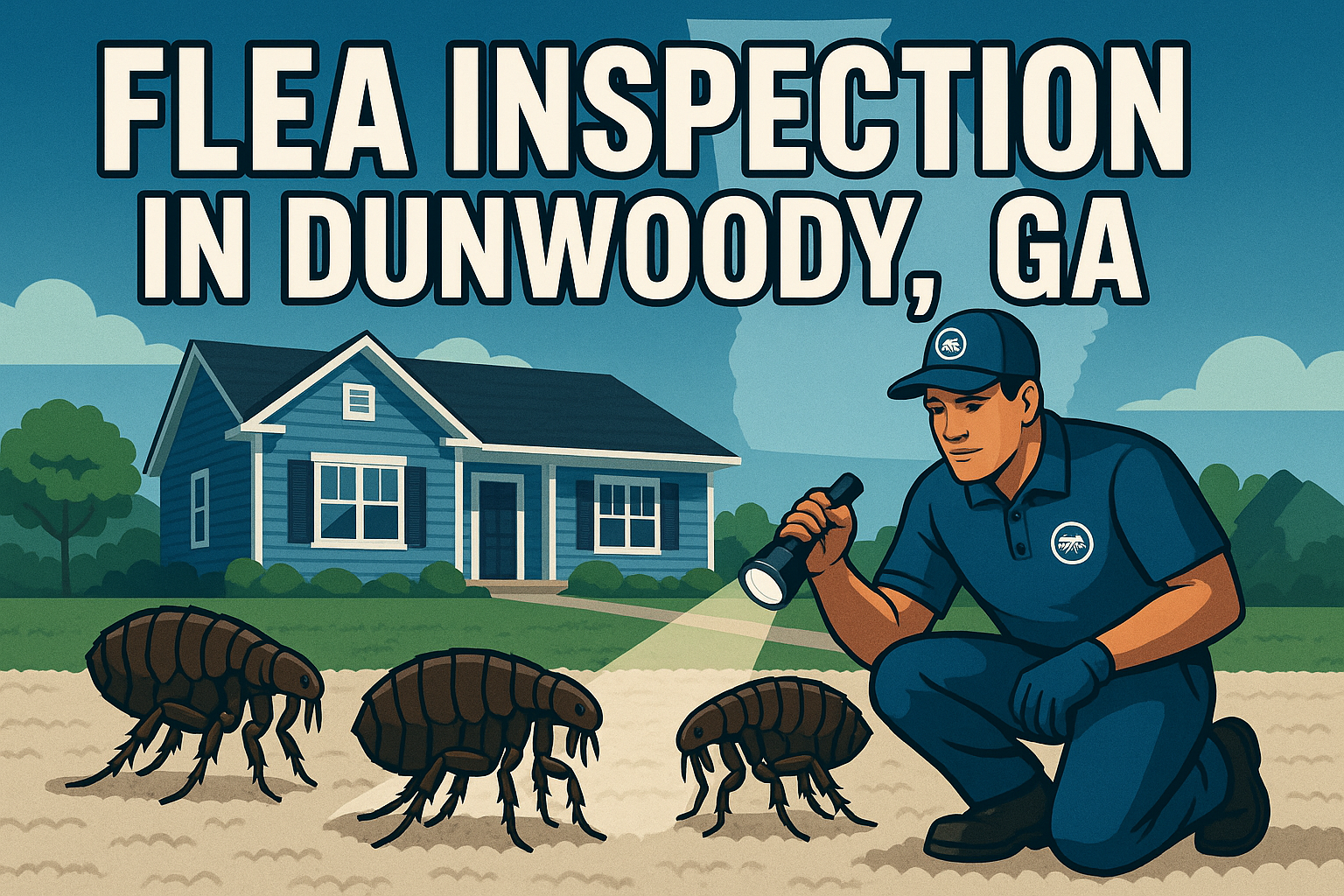
Why Flea Inspections Matter in Dunwoody

Flea bites may seem like a minor annoyance, but they can quickly turn into a serious health concern. A single bite often causes itching, redness, and swelling, while some people experience allergic reactions that lead to hives or even secondary skin infections. That’s why a professional flea inspection Dunwoody is essential to identify infestations early. In rarer cases, fleas act as vectors for diseases such as murine typhus, which can produce fever, headaches, and a rash that mimics other illnesses.
Beyond health, an unchecked flea infestation can drain a homeowner’s wallet. Repeated over‑the‑counter sprays or DIY treatments rarely eradicate a well‑established population, leading to escalating costs for professional extermination. Pets also suffer; frequent vet visits for flea‑related dermatitis, anemia, or tapeworm infections add up quickly. Moreover, fleas can damage upholstery, carpets, and even wooden flooring as they lay eggs and larvae in hidden cracks.
Recent CDC data highlights the growing relevance of flea‑borne illnesses in Georgia. In 2024, the agency reported a noticeable uptick in murine typhus cases linked to flea exposure, underscoring the need for vigilance (CDC Flea‑borne disease data). While the numbers are modest compared to larger states, each case represents a preventable health risk for a family.
Dunwoody’s suburban layout amplifies these risks. The city boasts a high rate of pet ownership, with many households caring for dogs and cats that roam yards and nearby parks. Lush, well‑maintained lawns and shaded garden beds provide ideal micro‑habitats for flea larvae to develop unnoticed. This combination of pets and green space creates a perfect storm for flea populations to thrive.
This guide will walk you through what to expect during a professional flea inspection, how to spot early warning signs, and when it’s time to call a pro. By understanding the health, financial, and comfort stakes, you’ll be better equipped to protect your home and loved ones before fleas become a full‑blown problem.
Understanding the Flea Life Cycle
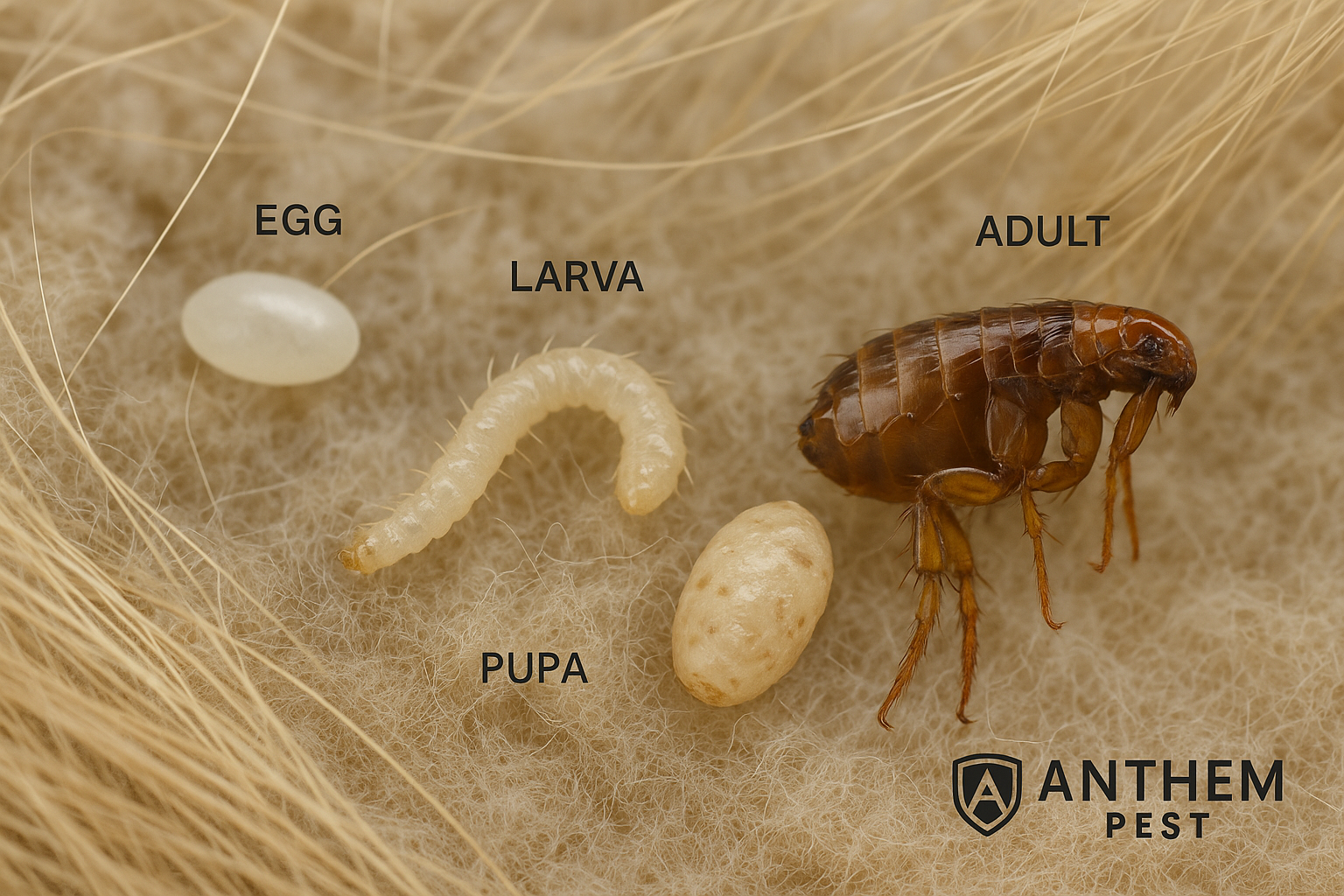
Fleas may seem like a simple nuisance, but their life cycle is a rapid, four‑stage process that can turn a single stray insect into a full‑blown infestation in just weeks. Knowing each stage helps homeowners spot problems early and act before the numbers explode.
Egg
Adult females deposit tiny, oval eggs on the host animal or in nearby carpet fibers and bedding. Each egg is less than 0.5 mm in length—practically invisible to the naked eye. Under ideal indoor conditions (70‑85 °F and 70 % humidity), eggs hatch in 1–3 days.
Larva
Once hatched, the flea larva is a small, grub‑like creature that avoids light and hides in the crevices of floors, rugs, and pet bedding. It feeds on organic debris, adult flea feces (which contain blood), and mold spores. This stage lasts 5–11 days, during which the larva molts three times, growing larger each time.
Pupa
When ready, the larva spins a silken cocoon and enters the pupal stage. The cocoon offers protection from cleaning, vacuuming, and most insecticides. Inside, the pupa remains dormant for 5–14 days, but can extend to several weeks if environmental cues—like vibrations or carbon dioxide from a host—are absent.
Adult
The adult flea emerges fully formed, capable of jumping up to 150 times its body length. Within 24–48 hours of emergence, a female can begin feeding and reproducing. Adults live on the host for up to several weeks, but without a blood meal, they can survive several days to a couple of weeks in the environment.
All four stages together typically span 2–3 weeks under optimal indoor conditions. This speed means that a tiny, unnoticed egg batch can become a visible problem before most homeowners even realize there’s an issue.
Adding urgency, a single female flea can lay up to 5,000 eggs over her lifetime. Those eggs are scattered throughout the home, not just where the pet sleeps, creating hidden reservoirs that are difficult to eradicate without professional intervention.
According to the NPMA 2023 Flea Fact Sheet, a typical suburban home with one pet can see flea populations double every 5‑7 days during peak season. In just a month, a modest infestation can swell from a handful of adults to several hundred, overwhelming DIY treatments.
Recognizing these timelines empowers you to act at the first sign—whether it’s a pet’s scratching, tiny black specks on bedding, or a sudden increase in pet hair loss. Early detection and prompt professional treatment are the most effective ways to keep your home flea‑free.
Local Factors That Encourage Fleas
Living in Dunwoody means enjoying warm, humid summers and relatively mild winters. Those conditions are a perfect recipe for flea development because adult fleas thrive when temperatures stay between 70°F and 85°F and relative humidity hovers around 70 %. In the summer months, the combination of frequent thunderstorms and the region’s lush vegetation keeps the ground moist, allowing flea eggs and larvae to survive for weeks before they emerge as adults.
According to the Georgia Department of Public Health 2024 climate averages for Fulton County, Dunwoody experiences an average high of 89°F in July and an average low of 30°F in January, with annual precipitation of roughly 52 inches. Those figures translate to more than 120 days each year when humidity exceeds 60 %, creating a consistently damp environment that speeds up the flea life cycle from egg to adult in as little as two weeks.
Dunwoody ranks among the highest pet‑ownership neighborhoods in the Atlanta metro area, with recent surveys indicating that roughly 58 % of households own at least one dog or cat. The community’s family‑friendly reputation encourages residents to maintain fenced backyards, dog runs, and pet‑friendly amenities such as the Perimeter Center dog park and the green spaces of Brookhaven and Dunwoody Village. Each of these outdoor areas provides a humid micro‑climate where flea larvae can hide in leaf litter, mulch, or damp soil.
When yards are closely spaced—typical of many Dunwoody subdivisions—fleas can easily jump from one pet to another during a simple backyard visit. Shared pathways, community playgrounds, and the popular dog‑walking trails create a network of contact points where an untreated flea problem on one property quickly becomes a neighborhood issue. Even a single infested pet can deposit thousands of eggs in a few days, and those eggs hatch into larvae that blend into the surrounding grass and compost, ready to bite the next animal that steps nearby.
Because the climate, pet density, and shared green spaces keep flea populations thriving, a routine flea inspection is the smartest first step for any Dunwoody homeowner. A qualified technician can locate hidden larval hotspots—under decks, in mulch, or in pet bedding—and recommend targeted treatments before an infestation spreads.
Step‑by‑Step Flea Inspection Process
Pre‑inspection preparation
Before the technician arrives, a quick homeowner prep helps your flea inspection Dunwoody run smoothly and gives the pest professional a clear view of any problem areas. Follow these simple steps:
- Declutter: Remove piles of magazines, toys, or clothing that can hide fleas and their eggs.
- Vacuum thoroughly: Run the vacuum over carpets, rugs, and upholstery, then discard the bag or empty the canister into a sealed bag.
- Secure pets: Keep dogs and cats in a separate room or crate during the inspection to protect them from the UV light and to give the technician unobstructed access.
- Remove pet bedding: If possible, wash or set aside pet blankets, cushions, and crates for later cleaning.
Inspection steps
During the 60‑90 minute visit, the technician follows a systematic approach designed to catch fleas at every life stage.
- Visual survey of floors and furniture: The inspector examines baseboards, carpet edges, and seams of upholstered pieces, looking for adult fleas, eggs, and the tell‑tale “flea dirt.”
- Pet bedding check: Even if you’ve removed bedding, the technician will inspect any remaining pet accessories for hidden eggs or larvae.
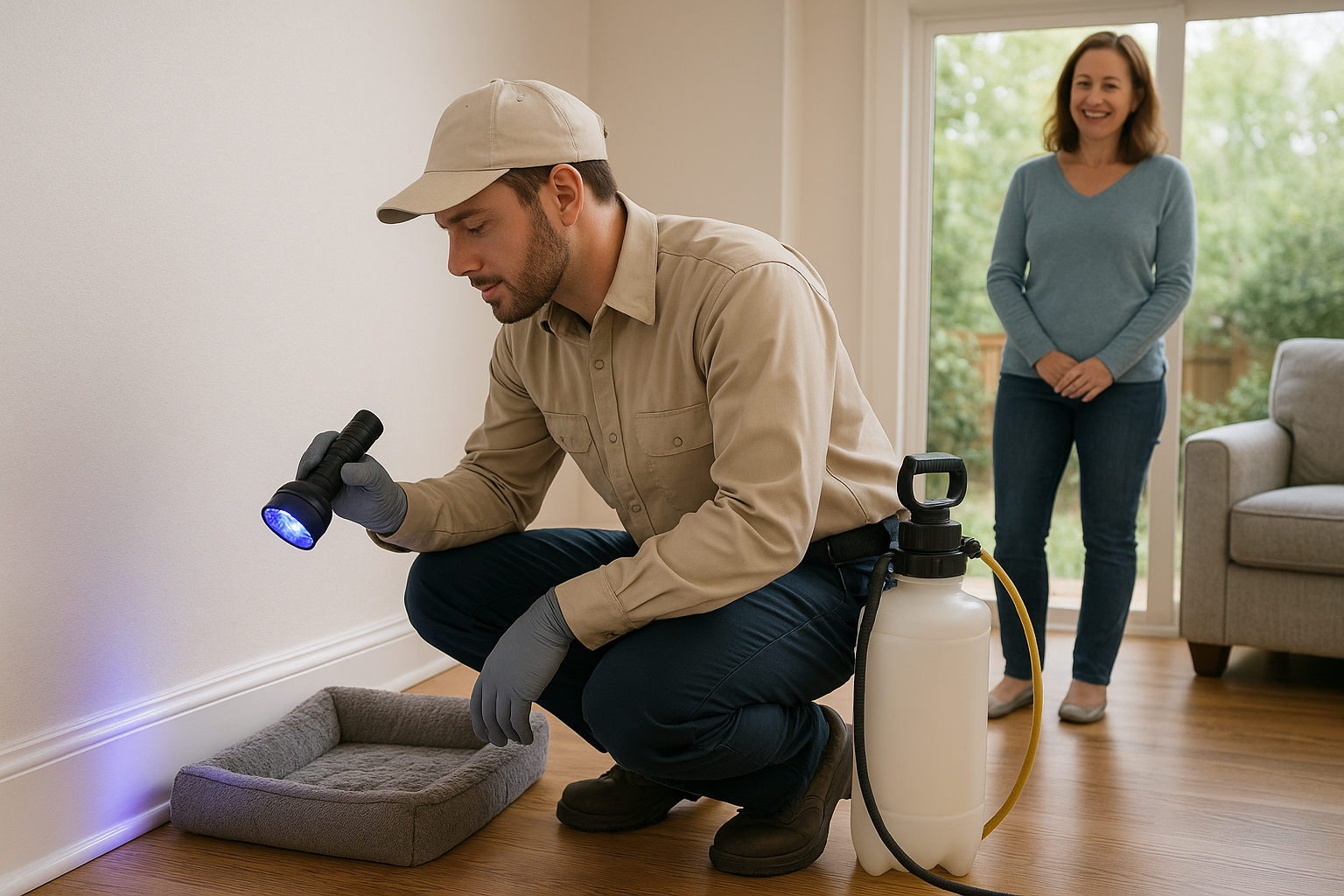
- Handheld UV light scan: Using a specialized ultraviolet light, the pro shines a beam onto surfaces; flea feces fluoresce a bright amber‑green, making otherwise invisible infestations easy to spot.
- Perimeter assessment: Doors, windows, and entryways are inspected for cracks, gaps, or moisture that could harbor fleas migrating from the yard.
- Moisture detection: A moisture meter helps locate damp spots under floorboards or behind walls where flea larvae thrive, especially in humid Georgia summers.
Typical duration
A comprehensive flea inspection usually takes between 60 and 90 minutes. The time varies with home size, clutter level, and whether the property has multiple floor types. The technician will keep you informed throughout, noting any areas that may need deeper treatment.
Technician professionalism and equipment
Anthem Pest’s certified technicians arrive in uniform, equipped with a portable kit that includes the UV light, a calibrated moisture meter, and a high‑efficiency vacuum for on‑site sampling. Their training emphasizes gentle handling of pets, respect for personal belongings, and clear communication of findings. After the inspection, you’ll receive a concise report outlining hot spots, recommended next steps, and an estimate for any follow‑up treatment.
Signs Your Home Needs Immediate Flea Treatment
Fleas multiply faster than you can say “itch.” When they’re spotted early, a simple DIY approach may suffice, but certain signs scream “call a professional now.” Below is the checklist every Dunwoody homeowner should keep handy.
Red‑Flag Symptoms to Watch For
- Bite clusters on ankles or lower legs – especially after a night spent indoors. Flea bites often appear in groups of three to five, leaving tiny, red welts that become increasingly uncomfortable.
- Flea “dirt” (black specks) in carpet, on upholstery, or in pet bedding. These are digested blood particles; a quick damp‑paper test (wet a paper towel and rub the specks) will turn pink if they’re flea feces.
- Pets scratching excessively or showing signs of irritation such as hair loss, scabs, or red patches. A cat or dog that can’t stop rubbing its belly is often reacting to a hidden infestation.
- Visible adult fleas on pets, bedding, or floor surfaces. Adult fleas are tiny (about 1‑3 mm), dark, and jump when disturbed.
- Unexplained “puff” of movement when you brush a rug or shake a blanket. Fleas will leap to escape, creating a brief cloud of tiny insects.
Quick Decision Tree
- Spot any of the above signs? →
- Check pet bedding, carpets, and furniture for flea dirt or live insects? →
- If you count more than two indicators, it’s time to call a professional.
Why the “two‑indicator” rule? Flea populations can explode within days, and a partial DIY treatment often leaves eggs and larvae behind, leading to a rebound. A licensed technician can assess the full scope, treat all life stages, and set up a prevention plan.
Pricing Snapshot for Dunwoody Homeowners
| Service | Typical Cost Range |
|---|---|
| Comprehensive flea inspection | $120 – $180 |
| Initial treatment (includes pet‑safe products & follow‑up) | $150 – $250 |
When those red flags appear, don’t wait for the bites to multiply. A prompt, professional flea inspection Dunwoody not only stops the infestation but also protects your family and pets from the discomfort and health risks fleas bring.
Treatment Options & Prevention
Understanding Your Choices
Flea infestations can be tackled from several angles, each with its own strengths and trade‑offs. In Dunwoody the most common categories are:
- Topical pet products – monthly spot‑on treatments or collars applied directly to dogs and cats.
- Indoor foggers – aerosol cans that disperse a fine mist throughout a room, targeting adult fleas and larvae.
- Professional sprays – EPA‑registered solutions applied by licensed technicians to cracks, baseboards, and pet‑friendly zones.
- Integrated Pest Management (IPM) – a holistic program that blends chemical, mechanical, and cultural controls for long‑term suppression.
What the Data Says
According to the U.S. Environmental Protection Agency, a single application of an EPA‑verified professional spray can reduce indoor flea populations by 95 % within two weeks (EPA pesticide efficacy). This rapid knock‑down is why many Dunwoody homeowners turn to licensed pros for the initial “burst” treatment.
Pros and Cons at a Glance
| Method | Cost | Safety | Duration of Control | Key Pros | Key Cons |
|---|---|---|---|---|---|
| Topical pet products | Low‑to‑moderate (per pet) | High when used as directed | 1 month | Directly treats the host; easy monthly routine | Only protects treated pets; may miss environmental eggs |
| Indoor foggers | Low (single can) | Moderate – requires vacating home for several hours | 2–3 weeks | Quick coverage of large areas; inexpensive | Limited penetration into cracks; chemical residue concerns |
| Professional sprays | Moderate‑high (service call) | Very high – EPA‑registered, applied by trained technicians | 4–6 weeks | Deep‑reach into voids; proven 95 % efficacy | Higher upfront cost; requires scheduling |
| Integrated Pest Management (IPM) | Variable (often bundled service) | Highest – combines low‑toxicity products with non‑chemical steps | Season‑long when maintained | Reduces reliance on chemicals; addresses source habitats | Requires homeowner participation (cleaning, vacuuming) |
Seasonal Timing for Dunwoody Homeowners
Fleas thrive when temperatures stay above 65 °F and humidity hovers near 70 %. In the Atlanta metro area, that window typically runs from early June through late September. To stay ahead of the peak, follow this quarterly schedule:
- Early May – Pre‑seasonal treatment: Apply a professional spray or start an IPM program before adult fleas emerge.
- Mid‑July – Mid‑season boost: Re‑apply foggers or refresh pet topicals to cover any new hatchlings.
- Early October – Post‑season wrap‑up: Perform a final professional spray to eliminate lingering eggs before cooler weather stalls development.
- Every 3 months year‑round: Schedule routine inspections and preventive applications, especially if pets spend time outdoors.
Why Choose Anthem Pest?
Anthem Pest’s technicians use only EPA‑registered products, guaranteeing the same 95 % reduction rate cited by the agency. Our safety guarantees include:
- Child‑ and pet‑friendly formulations applied with calibrated equipment.
- Full disclosure of active ingredients and re‑entry times.
- A 30‑day service warranty that covers any resurgence of fleas after a proper initial treatment.
By blending professional sprays with an IPM plan tailored to your property, we give Dunwoody homeowners a reliable, long‑lasting shield against fleas—without sacrificing safety or budget.
FAQ – Flea Inspection & Control
Below are concise answers to the questions homeowners most often ask after a flea inspection.
How long does it take for fleas to disappear after treatment?
Professional applications target adult fleas first, so you’ll typically see the majority of biting insects gone within 1‑2 weeks. Eggs and larvae can linger for another week or two, so a full three‑week window is normal before the infestation is completely eradicated. A follow‑up visit after two weeks confirms that no new adults have hatched.
Are the chemicals safe for children and pets?
We use only EPA‑registered products that have been evaluated for indoor use. Technicians follow strict safety protocols: pets and children are asked to stay out of treated rooms until the spray or fogger has dried and ventilation is restored. Once the area is clear, the chemicals are considered safe for normal household activity. If you have a senior pet or a child with sensitivities, let the technician know; alternative low‑odor options are available.
Can fleas survive outdoors year‑round in Dunwoody?
Dunwoody’s mild winters allow a small number of adult fleas to survive in shaded, humid spots, but outdoor populations drop sharply once temperatures dip below 50 °F. Inside homes, where temperature and humidity are controlled, fleas can thrive year‑round, which is why indoor treatment and prevention are essential. Regular yard mowing and removing leaf litter further reduces the chance of outdoor reinfestation.
All treatment recommendations are based on current EPA guidelines and local climate data.EPA, 2023
Protect Your Home and Family Today
Detecting fleas early and having a professional inspection in Dunwoody can mean the difference between a quick fix and a full‑blown infestation. When you catch the problem at the first sign—tiny bite marks, restless pets, or a sudden increase in scratching—you stop the bugs before they multiply.
Anthem Pest brings local expertise to every job. Our technicians know the neighborhoods, the seasonal patterns, and the hidden hotspots where fleas love to hide. We use only EPA‑registered products that are proven safe for children, pets, and the environment, while delivering the aggressive control you need. Our treatment plan also includes a follow‑up visit to verify that every life stage of the flea has been eliminated.
What sets us apart is a satisfaction guarantee that backs every treatment. If fleas return within the warranty period, we’ll revisit the property at no extra cost, ensuring your home stays pest‑free.
Ready to take the next step? Schedule a free inspection quote today and let our certified team give you a clear, no‑obligation plan. Call us at 877‑371‑8196 or visit Anthem Pest to book online.
Protecting your home now means fewer bites, healthier pets, and peace of mind for the whole family. Don’t wait for the itch to become an emergency—schedule a professional flea inspection Dunwoody today and let the experts handle the rest.