Fruit Flies in Decatur – Why They’re a Summer Nuisance

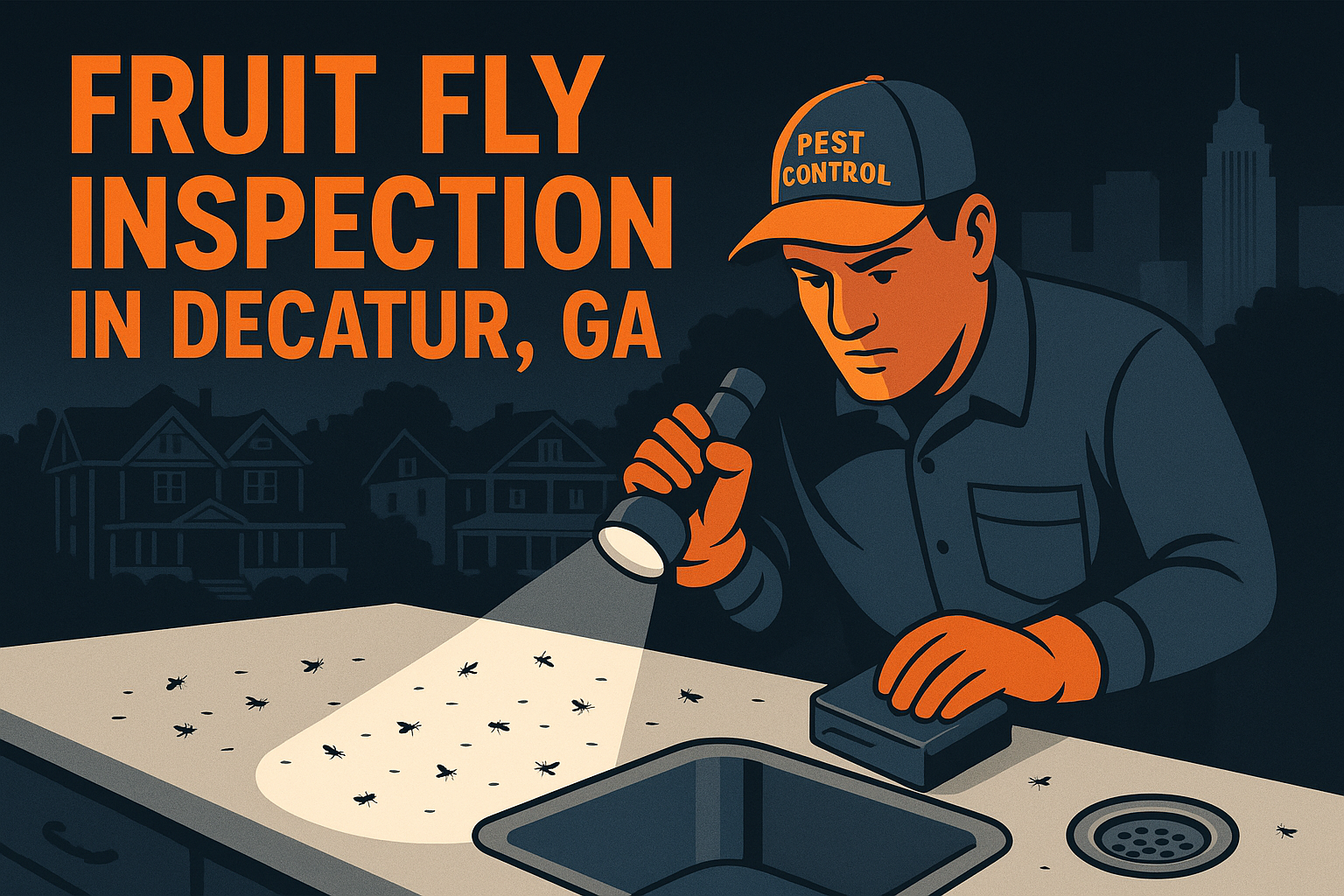
Fruit Fly Inspection Decatur homeowners trust often begins after hearing a soft “buzz” near a bowl of sliced peaches or a dish of wine-y sauce. When that happens, you’re likely dealing with fruit flies. These insects are tiny—about 1/8 to 1/5 of an inch in length—and sport a tan-brown body that blends easily with ripe or fermenting produce. Their attraction to the sweet, moist scent of ripening fruit, vegetable scraps, and even discarded wine makes them unwelcome guests on many kitchen countertops throughout Decatur.
Georgia’s Humid Summer: A Perfect Breeding Boiler‑Room
Decatur sits in the heart of a humid subtropical climate, where summer temperatures routinely top 85 °F (29 °C) and humidity hovers in the 70‑80% range. For a fruit fly, this environment is a breeding furnace. A single female can lay up to 200 eggs in a handful of ripe fruit, and those eggs hatch in just 24 to 48 hours. Within a week, the first generation of adults is already swarming the kitchen, laying the next wave of eggs, and the cycle repeats. The warm, moist air acceler‑ates the life cycle, turning a modest “few flies” into a full‑blown infestation in a matter of weeks.
What the Numbers Tell Us
According to the Georgia Department of Agriculture’s 2024 seasonal pest report, the state sees an average of 2.3 fruit‑fly complaints per 1,000 households each summer. While the figure may seem modest, it translates to thousands of families in the Atlanta‑Metro area—Decatus included—dealing with the nuisance of these tiny pests every summer season.
Why This Guide Matters</h‑3>
Our goal here at Anthem Pest Control is simple: to demystify the Fruit Fly Inspection Decatur homeowners rely on and give you a clear path to decide when it’s time to call a professional. This guide is built on the latest local data, but we’ve written it in a friendly, step-by-step style that any homeowner can follow. By the end, you’ll understand what makes fruit flies thrive in Decatur, how to spot the first signs of an invasion, and why early intervention can save you both time and money.
What’s Next?
In the sections that follow, we’ll walk you through the step-by-step process of a Fruit Fly Inspection Decatur residents can expect from a certified technician, the key signs that signal a deeper problem, and the most effective, family-friendly treatment options available in the area. Armed with this knowledge, you’ll be better prepared to keep your kitchen—and your home—free of the seasonal nuisance that fruit flies can create in Decatur.
What a Professional Fruit Fly Inspection Looks Like
When a certified technician steps onto your doorstep, you’re not getting a quick “look‑around.” You’re inviting a trained professional who follows a proven, systematic process to locate every potential fruit‑fly harbor. At Anthem Pest Control, each inspector is fully licensed, EPA‑registered, and has passed a thorough background check, so you know the person in your home meets the highest industry standards.
Who’s Behind the Inspection?
Our technicians hold state-issued pest-control licenses and are listed on the EPA’s pesticide applicator database. This dual credentialing guarantees they understand both the biology of fruit flies and the safest, most effective treatment methods used during a Fruit Fly Inspection Decatur homeowners schedule. In addition, every team member undergoes criminal-background screening and regular continuing-education courses, keeping them up to date on the latest inspection techniques and local regulations in Decatur.
Tools of the Trade
During the walk‑through, the inspector relies on a handful of purpose‑built tools that make hidden infestations visible:
- Flashlight: Bright, focused light reveals flies and larvae in dark corners, under appliances, and inside cabinet cracks.
- Inspection mirror: A small, angled mirror lets the technician see behind sinks, under countertops, and inside vent ducts without dismantling anything.
- Drain brush: Fruit‑fly larvae love the organic film that builds up in kitchen drains; a quick brush removes that film and provides a sample for lab analysis.
- Portable traps: Sticky or liquid traps are placed strategically to capture active adults, confirming the presence and intensity of an infestation.
Where the Inspection Happens
The inspection covers two main zones, each with its own checklist.
- Interior zones: Kitchen work surfaces, fruit bowls, pantry shelves, garbage disposals, bathroom sinks, and any area where moisture meets organic matter.
- Exterior zones: Window screens, door sweeps, outdoor trash cans, compost bins, and the perimeter around patios or decks where flies can enter from the yard.
By moving methodically from zone to zone, the inspector maps potential breeding sites during a Fruit Fly Inspection Decatur homeowners request. This systematic walk-through uncovers hidden sources a casual glance would miss—like a forgotten fruit rind behind the refrigerator or a clogged outdoor drain. After the assessment, you’ll receive a clear, written report with findings and recommended next steps, whether that’s a simple cleanup, targeted treatment, or a full-scale prevention plan tailored to your Decatur property.
Kitchen‑Focused Inspection Steps
When fruit flies set up shop in a kitchen, they’re usually hiding where moisture and organic residue mingle. Our technicians start with a systematic walk‑through, checking every surface that could serve as a breeding ground. By pinpointing the exact spots, we can apply targeted treatment instead of a blanket spray that often misses the real source.
Where We Look First
- Countertops and backsplash – Even a thin film of spilled juice or food crumbs can sustain a small fly population.
- Sink drains and garbage disposals – The warm, damp environment inside pipes is a favorite incubator for larvae.
- Trash cans and recycling bins – Unsealed lids and leftover food particles create a perfect buffet.
- Behind appliances – Stoves, refrigerators, and dishwashers often have hidden gaps where moisture collects.
During a professional fruit fly inspection in Decatur, we use a bright flashlight and a handheld magnifier to spot the faint, whitish bio-film that fruit flies love to lay their eggs in. This film is invisible to the naked eye but leaves a subtle sheen that our trained technicians can detect before it develops into a larger infestation.
Brush‑Gel Combo in Action
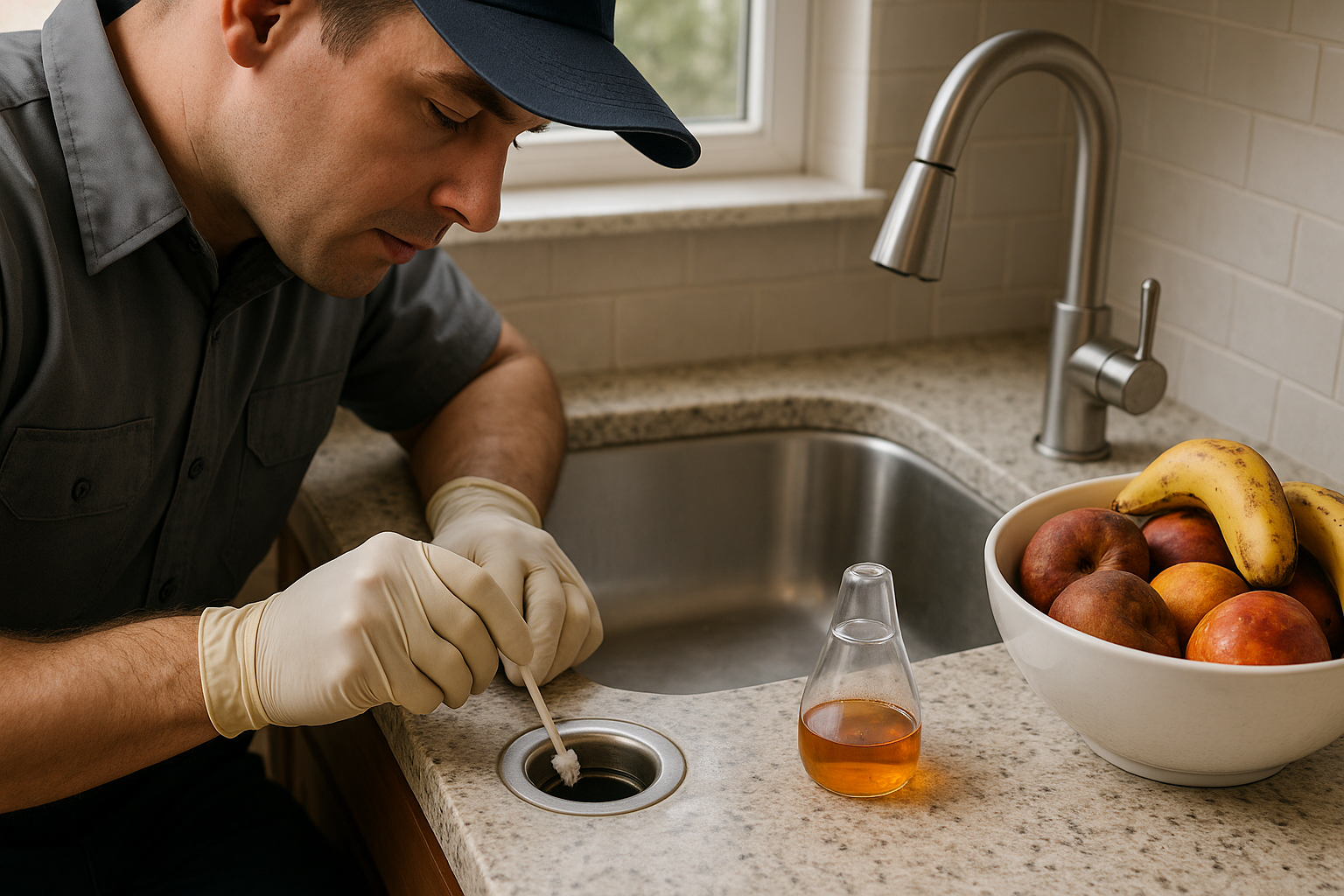
Once a suspect area is identified, we reach for our signature brush‑gel combo. The process is simple yet effective:
- Insert a flexible, stainless‑steel brush into the drain or disposal opening.
- Apply Bio‑Gel Drain Treatment directly onto the brush bristles.
- Rotate the brush to scrub away the bio‑film, allowing the gel to soak into the pipe walls.
- Flush with hot water to carry the dislodged residue out of the system.
The gel contains enzymatic agents that break down organic buildup, while the brush physically removes the protective layer that fruit flies use for egg‑laying. The result is a clean pipe, no more hidden food source, and a dramatic drop in fly activity within 24‑48 hours.
Real‑World Example: Oakhurst Home
In early summer, a homeowner in Oakhurst called us after noticing dozens of fruit flies hovering around the kitchen sink. Our inspection revealed a thin layer of bio‑film deep inside the garbage disposal’s secondary pipe—a spot most homeowners never see. After applying the brush‑gel combo, the hidden film was completely removed.
Within the first 24 hours of the fruit fly inspection Decatur, the fly count dropped from an estimated 150 per day to fewer than five. By day three, no new flies were observed, and the homeowner reported a return to a fly-free kitchen. This case underscores how a seemingly minor buildup can fuel a massive infestation—and why targeted inspection and treatment steps are essential for long-term control in Decatur homes.
For most Decatur homes, the same routine—thorough visual check, targeted brush‑gel treatment, and a follow‑up inspection—keeps fruit flies at bay. If you notice flies gathering near your sink, trash, or behind appliances, it’s a clear sign that bio‑film may be feeding them. Give Anthem Pest a call, and we’ll bring the same proven process to your kitchen.
We schedule a second visit within a week to verify that the treatment held and to apply a preventative barrier around the kitchen perimeter, ensuring long‑term protection.
Hunting Hidden Breeding Sites
Fruit flies are tiny, but they’re incredibly opportunistic. While a rotting banana on the counter is an obvious invitation, the real trouble-makers often hide in places homeowners overlook. During a professional fruit fly inspection Decatur, trained technicians look for these covert reservoirs before the flies turn your kitchen into a buzzing mess.
Common Yet Overlooked Breeding Reservoirs
- Fermenting fruit and vegetables: Anything that’s soft, sweet, or beginning to decompose—think overripe berries, sliced melons, or wilted herbs—creates the sugary vapor fruit flies love.
- Pet waste: Dog or cat litter boxes, especially those with a moisture‑rich substrate, can become miniature fermentation chambers if not changed promptly.
- Compost bins: Outdoor or indoor compost containers that aren’t emptied regularly develop a steady supply of fermenting organic matter.
- Thin water films: Stagnant water in sink drains, over‑filled plant saucers, or even a damp mop bucket provides the humidity fruit flies need to lay eggs.
What the Science Says
According to the University of Georgia Extension, a single female fruit fly can deposit up to 500 eggs in a suitable site. Those eggs hatch in just 24‑48 hours, and the larvae mature into adults within 7‑10 days. That rapid life cycle means a hidden breeding spot can generate a full‑blown infestation in less than two weeks.
Printable Pre‑Inspection Self‑Audit
Before you call a professional, run through this quick checklist. Print it out, tape it to your fridge, and tick each item daily for a week. If you find multiple “yes” answers, it’s time to call Anthem Pest Control.
- Check fruit bowl daily – remove any bruised or overripe pieces.
- Empty and rinse pet waste containers every 24 hours.
- Empty indoor compost bin every 48 hours; clean the container.
- Scrub sink drains, garbage disposals, and dishwasher filters weekly.
- Wipe down countertops and tables after meals; don’t leave food scraps.
- Keep plant saucers empty or change water daily.
- Seal all trash bags tightly and store outdoor bins away from the house.
Why Early Detection Saves You Money
Finding and eliminating these micro-habitats before the flies complete a full life cycle dramatically cuts the amount of pesticide needed. During a professional fruit fly inspection in Decatur, technicians can target a few pinpoint locations rather than spraying the entire home, which reduces both labor time and chemical expense. In short, the sooner hidden breeding sites are identified, the fewer treatment visits you’ll need—and the lower your overall bill.
What the Pros Do Differently
During a formal inspection, Anthem’s technicians use a combination of visual surveys, moisture meters, and strategic “fly traps” to confirm breeding activity. They also inspect less obvious areas such as under appliances, behind cabinets, and inside ceiling tiles—places where a homeowner rarely looks but where a thin film of moisture can linger unnoticed.
By understanding where fruit flies love to breed and acting quickly with the checklist above, you give the professionals a clear starting point. That collaboration shortens the treatment timeline, limits the number of follow‑up visits, and keeps your home fruit‑fly free for good.
Full Property Scan and Entry‑Point Check
Typical Entry Points
During a fruit‑fly inspection we start on the outside, looking for any gap that lets a tiny fly slip inside. Common culprits include:
- Broken or torn window screens that no longer keep insects out.
- Doors that are left ajar or lack proper sweeps.
- Vent openings—especially those for dryers, range hoods, or attic fans—that are missing mesh covers.
- Foundation cracks, gaps around utility lines, and any deterioration in the building envelope.
Each of these openings can become a highway for fruit flies, especially when they’re drawn to the moisture and organic matter that often collect nearby. By sealing or repairing them, we cut off the insects’ primary route into your home or business.
Decatur’s Older Neighborhoods
Decatur’s charm comes with historic housing stock, and that charm sometimes means aging construction. In areas like Decatur Heights and Downtown Decatur, you’ll find many homes built before modern building codes were in place. These properties often have:
- Settled foundations that develop hairline cracks over time.
- Original wooden windows with screens that have warped or torn.
- Older door frames that no longer seal tightly.
Because fruit flies are attracted to the dampness that can accumulate in these cracks, a thorough exterior scan is essential. We’ll document each issue, recommend targeted repairs, and explain how a simple caulk or screen replacement can dramatically reduce the likelihood of an infestation.
Commercial Considerations
For restaurants, cafés, and other food‑service businesses, the stakes are higher. A fruit‑fly presence can jeopardize health‑department compliance and damage a brand’s reputation. Our commercial inspection adds three key layers:
- Fly lights and monitoring devices: Strategically placed UV fly traps help us gauge activity levels and pinpoint hotspots.
- Integrated Pest Management (IPM) monitoring: We set up a schedule of regular checks, using low‑impact controls and sanitation protocols that align with industry best practices.
- Compliance reporting: After the scan, we provide a detailed report that outlines findings, corrective actions, and a timeline for remediation—exactly what health inspectors expect.
By combining a meticulous exterior sweep with proactive IPM tactics, we help commercial clients keep fruit flies out of food prep areas, maintain a clean image, and stay on the right side of local regulations.
Whether you’re a homeowner in a historic Decatur neighborhood or a restaurant manager looking to protect your kitchen, a full property scan and entry‑point check is the first line of defense against fruit flies. At Anthem Pest Control, we bring local expertise and a systematic approach to every inspection, ensuring that no crack or vent goes unchecked.
Species Identification and Treatment Options
When you spot a tiny fly buzzing around your kitchen, the first step is to know whether you’re dealing with a fruit fly or a house fly. Though they may seem similar at a glance, their size, coloring, and behavior give them away.
Visual differences you can spot today
- Size: Fruit flies are typically 1/8‑inch long, roughly the size of a sesame seed, while house flies range from ¼ to ½ inch.
- Eyes: Fruit flies sport bright red eyes that stand out against their dark bodies. House flies have compound, dark‑gray or black eyes.
- Habitat: Fruit flies hover near ripening fruit, fermenting vegetables, or damp organic matter. House flies land on exposed surfaces—counters, garbage, pet food—and are more likely to be seen crawling on walls.
Identifying the pest correctly helps us choose the most effective treatment. At Anthem Pest, we tailor our approach to the species and the location of the infestation.
Our treatment arsenal
- Foam‑spray for exposed surfaces: A quick‑acting foam is applied directly to flies resting on countertops, trash cans, or fruit bowls. The foam collapses the insect’s exoskeleton on contact, delivering instant knock‑down.
- Residual insecticide for cracks and voids: We place a low‑odor, EPA‑registered residual spray into wall voids, baseboard cracks, and other hidden entry points. According to the EPA label, the product can provide up to 30 days of protection against re‑infestation.
- Drain gels for pipelines: Fruit flies often breed in the organic film that lines kitchen and bathroom drains. Our Bio‑Gel formula clings to pipe walls, starving larvae and preventing future hatches.
“Residual treatments can provide up to 30 days of protection.” – Anthem Pest
Each method works best when paired with simple homeowner actions: keep fruit covered, clean up spills promptly, and empty trash regularly. By combining accurate identification with our targeted treatments, you’ll see a rapid decline in fly activity and keep your home comfortable year‑round.
When Homeowners Should Call a Professional
DIY Timeline – Give It a Realistic Trial Period
Most fruit‑fly problems can be tamed with a short, focused do‑it‑yourself effort. Start by removing any overripe fruit, vegetables, or fermenting liquids from countertops and the pantry. For the next 1–2 weeks, take out the trash daily, set up simple vinegar‑soap traps (a cup of apple cider vinegar topped with a few drops of dish soap works wonders), and give drains a thorough clean with a boiling‑water flush or a commercial enzymatic drain cleaner. If the flies disappear within this window, you’ve likely solved the issue without professional help.
Red‑Flag Indicators – When the DIY Route Isn’t Cutting It
Not all infestations bow to kitchen tricks. Keep an eye out for these warning signs that signal it’s time to pick up the phone:
- Persistent swarms that return after each trap replacement.
- Fruit flies appearing in multiple rooms—especially bathrooms, laundry areas, or even the living room.
- Presence in a home‑based kitchen or a commercial food‑prep space (e.g., a home bakery or catering setup).
- Visible larvae or pupae in the drain traps, garbage disposals, or the bottom of trash cans.
Health Note – More Than a Nuisance
Fruit flies are not just annoying; they can act as mechanical vectors for bacteria such as Escherichia coli. When they land on contaminated surfaces and later touch food, they may transfer pathogens, increasing the risk of food‑borne illness. The CDC’s guidance on fruit‑fly safety underscores the importance of prompt control, especially in homes with children, seniors, or immunocompromised family members.
Local Trigger – Decatur’s Summer Rain Spike
In Decatur, a noticeable uptick in fruit‑fly sightings follows heavy summer rainstorms. The moisture creates ideal breeding grounds in soggy compost, over‑watered houseplants, and clogged drains. If you’ve experienced a recent downpour and the DIY steps above haven’t reduced the population, the environmental conditions are likely sustaining the infestation, making professional intervention the smarter choice.
Decision‑Tree Summary
| Situation | DIY Action | Call a Pro? |
|---|---|---|
| First sighting, limited to kitchen | Remove attractants, set vinegar‑soap traps, clean drains for 1‑2 weeks | No |
| Flies persist after 2 weeks of DIY | Continue traps, double‑check hidden breeding sites | Yes |
| Swarm in multiple rooms or commercial food‑prep area | Limited effectiveness of traps | Yes |
| Recent heavy rain in Decatur + rapid increase | Environmental moisture may overwhelm DIY methods | Yes |
| Concern about bacterial spread (e.g., E. coli) | Basic sanitation helps but not guaranteed | Yes |
When any of the red‑flag scenarios appear, or when the local weather has created a perfect breeding storm, it’s time to let Anthem Pest Control step in. Our technicians know the hidden hotspots in Decatur homes and can deliver a fast, safe, and affordable solution—so you can get back to enjoying your kitchen without a buzzing audience.
Cost Overview for Decatur Residents
When you call Anthem Pest in Decatur, the first thing you’ll notice is our commitment to clear, upfront pricing. Our standard service tiers are designed to fit both simple inspections and full‑scale treatments, so you know exactly what you’re paying for before any work begins.
| Service | Price Range |
|---|---|
| Inspection only | $80 – $120 |
| Inspection + treatment | $150 – $250 |
| Commercial package (multiple units) | $300 – $500 |
Several factors influence where a specific job falls within these brackets:
- Property size: Larger homes or multi‑unit buildings require more time and product, pushing the price toward the upper end of the range.
- Infestation severity: A light, early‑stage presence may be handled with a single treatment, while a heavy, entrenched population often needs a multi‑visit approach.
- Follow‑up visits: Some cases call for a second or third appointment to ensure the flies are completely eradicated, which adds labor and material costs.
How does this compare to the broader market? The National Pest Management Association (NPMA) reports that the average cost for a fruit‑fly inspection nationwide sits between $90 and $130, while treatment typically ranges from $140 to $260. NPMA data confirms that Anthem Pest’s pricing aligns closely with, and often undercuts, the national average—especially when you factor in our comprehensive service guarantees and locally‑trained technicians.
In short, Decatur homeowners can expect transparent, competitive rates that reflect the real work needed to eliminate fruit flies. By understanding the cost drivers—size, severity, and follow‑up—you can make an informed decision and avoid surprise charges later on. If you’re ready to protect your home, give Anthem Pest a call at 877‑371‑8196 or visit anthempest.com for a free quote.
Prevention and DIY Tips Before & After Inspection
Store Fruit Properly
Fruit flies are attracted to the sweet scent of ripe or rotting produce, so the first line of defense starts in your kitchen. Keep bananas, berries, and other soft fruits in the refrigerator or transfer them to airtight containers as soon as they’re harvested or purchased. If you notice any fruit turning soft, mushy, or overly fragrant, discard it immediately—don’t let it sit on the counter where flies can locate it within minutes.
Weekly Drain Maintenance
Drains are hidden breeding grounds that often go unnoticed until an infestation erupts. Once a week, pour a pot of boiling water down each kitchen and bathroom drain, then follow with a half‑cup of baking soda and let it sit for 10‑15 minutes before flushing with more hot water. For a more hands‑off approach, enzyme‑based cleaners work by breaking down organic buildup, starving flies of the food source they need to reproduce.
DIY Vinegar‑Soap Traps
Setting traps is an inexpensive way to monitor and reduce adult fly numbers while you wait for a professional inspection. Fill a small jar with equal parts apple cider vinegar and water, add a few drops of dish soap, and cover the opening with plastic wrap secured by a rubber band. Poke several tiny holes in the wrap; flies are drawn to the scent, slip through, and can’t escape. Position these traps in high‑activity zones—near fruit bowls, trash cans, and sink areas—and replace the solution every seven days for maximum effectiveness.
Smart Landscaping Practices
Outside the home, compost and organic debris can act as a satellite hatchery for fruit flies. Keep compost bins tightly sealed and locate them at least ten feet away from house foundations to prevent flies from drifting indoors. Regularly turn the compost to accelerate decomposition, and consider a double‑layered lid system that lets moisture escape while keeping insects out.
Neighborhood Success Story: Avondale, GA
In the nearby Avondale community, a group of homeowners banded together to tackle a recurring fruit‑fly problem that was spilling over into multiple households. By committing to a simple weekly drain‑cleaning routine—boiling water followed by baking soda—and reinforcing proper fruit storage, they reported a 70 % drop in re‑infestations within just two months. The collective effort also reduced the need for emergency pesticide applications, saving both money and time.
Putting It All Together
Before you call a professional, these low‑cost, high‑impact steps can dramatically lower the chances of a fruit‑fly resurgence after an inspection. Consistency is key: keep fruit sealed, maintain clean drains, run traps, and manage compost responsibly. When you do schedule a pest‑control visit, share the preventive measures you’ve already taken—technicians will appreciate the groundwork and can focus on any lingering hotspots, delivering a faster, more targeted treatment.
Choosing Anthem Pest – Local Expertise Spotlight
When a fruit fly invasion starts buzzing around your kitchen, the first thing you want is a partner who knows Decatur inside and out. Anthem Pest delivers that local edge with a blend of state‑mandated licensing, round‑the‑clock responsiveness, and technicians who call Decatur home.
Fully Licensed, Locally Based Technicians
Every Anthem Pest technician in the Atlanta‑Metro area holds the Georgia Department of Agriculture’s pest‑control license, which means they’ve passed rigorous training on safety, pesticide application, and integrated pest‑management (IPM) practices. Because they live and work in Decatur, they understand the neighborhood’s older homes, tree‑lined streets, and the seasonal patterns that bring fruit flies indoors. This familiarity translates into faster diagnosis and a treatment plan that fits the unique construction and landscaping of your property.
24‑Hour Emergency Response
Pests don’t wait for business hours, and neither does Anthem Pest. A 24‑hour response line guarantees that if fruit flies appear at 2 a.m., you can reach a qualified professional within the hour. The company’s dispatch system prioritizes emergency calls, sending a Decatur‑based technician to your door the same day, often within a few hours of your call.
Free Walk‑Through Guarantee & Written Action Plan
Before any chemicals are applied, Anthem Pest offers a complimentary walk‑through inspection. The technician walks you through every room, points out breeding hotspots, and explains why fruit flies are attracted to those areas. After the inspection, you receive a detailed, written action plan that outlines the recommended treatments, timing, and any preventive steps you can take yourself. This transparent approach eliminates surprise costs and empowers you to keep your home pest‑free long after the initial treatment.
Contact Anthem Pest Today
Ready to reclaim your kitchen? Call 877‑371‑8196 or visit anthempest.com. The friendly staff will schedule your free walk‑through and set the wheels in motion for a swift, effective resolution.
What Decatur Homeowners Are Saying
“I called Anthem Pest after spotting fruit flies near my fruit bowl, and they were at my door the same afternoon. The technician was polite, explained the source, and had my kitchen clear in just two visits. I appreciated the written plan and the fact they used low‑impact products safe for my kids and pets. Highly recommend Anthem for any pest issue!” — Maria L., Decatur, GA
Frequently Asked Questions
Homeowners in Decatur often have the same basic concerns when they call for a fruit‑fly inspection. Below we address the three most frequently asked questions so you know exactly what to expect.
How long does an inspection take?
A typical first‑time inspection of a single‑family home takes about 45‑60 minutes. Our technician will start by reviewing any recent sightings you’ve reported, then systematically examine kitchen areas, garbage collection points, plumbing fixtures, and any potential breeding sites. The walk‑through includes a visual inspection of trap‑catch areas, moisture‑prone zones, and the exterior of the house. By the end of the hour we’ll have a clear picture of the extent of the problem and can discuss the most effective treatment plan.
Will the treatment affect pets?
We use only EPA‑approved, low‑toxicity products that are specifically formulated for residential use. Technicians follow strict pet‑safe protocols: they apply the product in areas that are inaccessible to pets, advise you to keep pets out of the treatment zone for the recommended dwell time, and avoid applying directly to pet‑friendly surfaces such as pet dishes or bedding. In practice, most homeowners see no adverse effects, and any temporary restrictions are clearly outlined in the service contract.
Can fruit flies return after treatment?
With proper sanitation and a scheduled follow‑up, the likelihood of a resurgence drops below 5 %. The key is eliminating the breeding source—typically over‑ripe fruit, damp organic material, or clogged drains—and maintaining a clean kitchen and trash area. We recommend a short‑term “watch” period after the initial treatment, during which we may apply a second‑stage application if needed. By combining the initial treatment with your daily hygiene practices, you can keep the flies at bay for the long term.
Final Thoughts and How to Get Started
When you schedule a fruit‑fly inspection in Decatur, a professional will sweep both the interior and exterior of your home. They’ll hunt down hidden breeding sites—those damp drains, overripe fruit bowls, and forgotten trash cans—while using data‑driven tools to map activity hotspots. Once the problem areas are pinpointed, the technician applies targeted treatments that focus on the life cycle stage of the flies, ensuring you get lasting relief instead of a quick, temporary fix. All of this comes with transparent pricing, so you know exactly what you’re paying for before any work begins.
Timing matters. Fruit flies multiply fastest when the weather warms up, so the smartest move is to book your inspection before the peak summer months. Acting early prevents a small nuisance from turning into a massive swarm that can infiltrate kitchens, pantries, and even your bedroom. An early intervention not only protects your family’s comfort but also saves you money by avoiding extensive treatments later in the season.
Ready to take the next step? If you want a thorough, data‑driven inspection that leaves no stone unturned, Anthem Pest is just a phone call away. Our local experts combine years of experience with the latest detection technology to give you peace of mind.
- Free, no‑obligation quote
- Clear, upfront pricing
- Safe, effective treatments tailored to your home
Give us a call today at 877‑371‑8196 or visit Anthem Pest Control to schedule your inspection. Let us help you enjoy a fruit‑fly‑free home this summer—without the stress of hidden costs or guesswork.