Cricket Problems in Woodstock, GA – Why Homeowners Should Care

Woodstock’s climate is a perfect storm for house crickets, which directly influences the cricket control cost Woodstock homeowners often face. Nestled in the foothills of the Appalachian Mountains, the city enjoys warm, humid summers and mild winters. Average summer temperatures hover between 85°F-90°F, while humidity often climbs above 70%. Those conditions keep the soil moist and the vegetation thriving—exactly what crickets love for breeding and feeding.
What Homeowners Hear (and See)
When crickets move inside, the first thing you’ll notice is the relentless chirping. Male house crickets produce a high‑pitched trill to attract mates, and in a quiet bedroom it can sound like an alarm clock at 2 a.m. Beyond the noise, residents report:
- Unsightly nests tucked into wall voids, attic corners, or under kitchen cabinets.
- Chewed or wilted indoor plants—crickets love tender leaves and can quickly turn a thriving houseplant into a buffet.
- Small, crunchy “cricket crumbs” scattered on countertops or floors, a clear sign they’ve been foraging inside.
Health and Structural Concerns
While crickets aren’t disease vectors like mosquitoes, they can still pose health risks. Their droppings and shed exoskeletons can trigger allergic reactions in sensitive individuals, leading to sneezing, itchy eyes, or skin irritation. If crickets infiltrate food storage areas, they may contaminate dry goods with feces or body parts, prompting unnecessary waste and potential food‑borne concerns.
Structurally, a large cricket population isn’t likely to chew through wood like termites, but dense nests can attract moisture and create a humid micro‑environment. Over time, that moisture can encourage mold growth or accelerate wood rot, especially in older homes with existing gaps or cracks.
Local Insight
For a data‑driven look at how cricket activity spikes throughout the year in North‑Georgia, see the Anthem Pest Cricket Control Insights. The report highlights seasonal peaks, common entry points, and why Woodstock’s specific climate makes early detection essential.
Spotting an Infestation Early
Early recognition saves homeowners from sleepless nights and costly remediation. Look for the tell‑tale signs: a sudden increase in nighttime chirping, tiny holes in window screens, and the faint, musty odor that accompanies large cricket colonies. If you notice any of these clues, it’s time to inspect potential entry points—cracks around doors, gaps in siding, and unsealed utility openings.
By understanding why crickets thrive in Woodstock and the ripple effects they create, you’ll be better equipped to act before a minor nuisance turns into a full‑blown infestation.
Spotting a Cricket Infestation – Signs and Identification
Crickets may seem harmless, but when they gather in your home they can become a noisy and unsightly nuisance. Recognizing the early signs lets you act before the population explodes and causes damage. This section walks you through the visual and auditory clues that signal a cricket problem in Woodstock, Georgia, so you can catch it early and decide whether a DIY check‑up is enough or it’s time to call a professional.
What the common Woodstock cricket looks like
The species most often found in Woodstock homes is the field cricket (Gryllus assimilis). Adults measure 1.5–2 inches (38–50 mm) from head to wing tip, with a robust, dark‑brown to black body and a faint, creamy stripe along the sides. Their forewings are short and leathery, covering longer, transparent hind wings that are folded flat when at rest. Males have a pronounced, slightly curved ovipositor and, most importantly, a pair of well‑developed hind legs that produce the characteristic chirping sound when rubbed together.
Where crickets like to hide
- Crawl spaces and basements: Warm, damp areas provide ideal shelter during cooler months.
- Wall voids and behind baseboards: Crickets slip through tiny cracks and stay hidden in the insulation.
- Indoor plant soil: Moist potting mix mimics the outdoor environment they love.
- Attics and roof spaces: Heat rises, and crickets follow, especially in late summer.
Auditory clue – the nightly chirp
Male crickets produce a steady “chirp‑chirp‑chirp” by rubbing their wings together—a behavior called stridulation. In Woodstock, you’ll typically hear 2–4 chirps per second after sunset, with the volume peaking between 9 p.m. and midnight. To locate the source, pause the music, listen for the loudest spot, and then follow the sound toward walls or floor joists. A simple smartphone recorder can help you pinpoint the exact area for inspection.
Evidence of damage
Beyond the noise, crickets leave tangible signs:
- Chewed foliage on houseplants, especially the tender new leaves.
- Small, irregular holes in fabric or upholstery—crickets occasionally nibble on soft material.
- Dark, pellet‑shaped droppings (about 1 mm long) scattered near hiding spots.
- Stained or discolored spots on walls where moisture from cricket activity has accumulated.
DIY inspection checklist
Use this quick checklist during a calm evening when you can hear the chirping:
- Turn off all interior lights and listen for chirps from each room.
- Inspect crawl spaces and basements for live crickets, shed skins, and droppings.
- Check behind baseboards, under sinks, and inside wall voids with a flashlight.
- Examine indoor plant soil—lift the top inch and look for movement or small holes.
- Feel for damage on fabrics, curtains, and upholstery; note any chew marks.
- Record the location of the loudest chirp to target treatment.
- Document findings (photos or notes) before deciding on next steps.
When to hand the job over to a professional
If you discover more than a handful of crickets, hear continuous chirping from multiple rooms, or notice extensive damage to plants and fabrics, it’s time to call Anthem Pest Control. Understanding the cricket control cost Woodstock homeowners typically face also helps you act quickly and avoid more expensive repairs later. Professionals can:
- Identify hidden colonies deep within wall cavities or structural voids.
- Apply targeted, low‑toxicity treatments that reach the source without harming pets or family members.
- Implement preventative measures—such as sealing entry points and moisture control—to keep crickets from returning.
Early detection saves you time, money, and the frustration of a full‑blown infestation. Use the checklist above, and when the signs point beyond a simple DIY fix, trust the local expertise of Anthem Pest Control to restore a quiet, cricket‑free home.
Professional Cricket Treatment Methods
Integrated Pest Management (IPM) for Crickets
Integrated Pest Management is a science‑based framework that blends prevention, monitoring, and control tactics to keep cricket populations below damaging levels. In Woodstock, Georgia, a licensed provider like Anthem Pest Control starts with a thorough inspection to identify entry points, breeding sites, and environmental conditions that favor crickets. By understanding the pest’s life cycle, the technician can target the most vulnerable stages—usually the nymphs that hide in moist mulch or under deck boards—while minimizing unnecessary pesticide use.
Chemical Options: Low‑Toxicity Sprays, Baits, and Perimeter Treatments
When chemicals are needed, professionals opt for products that pose the lowest risk to humans and pets. Low‑toxicity sprays, often based on pyrethrins or neem oil, are applied directly to cracks, gaps, and outdoor lighting fixtures where crickets congregate. Bait stations containing slow‑acting insect growth regulators (IGRs) are placed in concealed locations; crickets ingest the bait, and the IGR disrupts molting, preventing the next generation from maturing. For broader protection, a perimeter treatment—typically a fine mist around the home’s foundation—creates a chemical barrier that deters adult crickets from crossing onto the property.
Non‑Chemical Options: Physical Barriers, Habitat Modification, and Moisture Control
Non‑chemical tactics are the backbone of long‑term cricket suppression. Physical barriers such as fine mesh screens on vents and doorways block insects from entering indoor spaces. Landscape adjustments—like trimming grass to a maximum of 3 inches, removing excess leaf litter, and relocating woodpiles away from the house—eliminate the shelter crickets love. Moisture control is equally critical; fixing leaky irrigation lines, installing proper drainage, and using dehumidifiers in damp basements reduce the humidity that crickets need to thrive.
Combining Methods for Long‑Term Suppression
A seasoned technician weaves chemical and non‑chemical tools into a cohesive plan. First, they seal entry points and recommend habitat changes. Next, they apply targeted low‑toxicity sprays and set up IGR bait stations to address any existing population. Finally, they schedule a perimeter misting session to establish a protective shield. This layered approach not only reduces the immediate cricket count but also prevents future infestations, delivering the cost‑effective, sustainable results homeowners expect.
Safety Considerations for Families and Pets
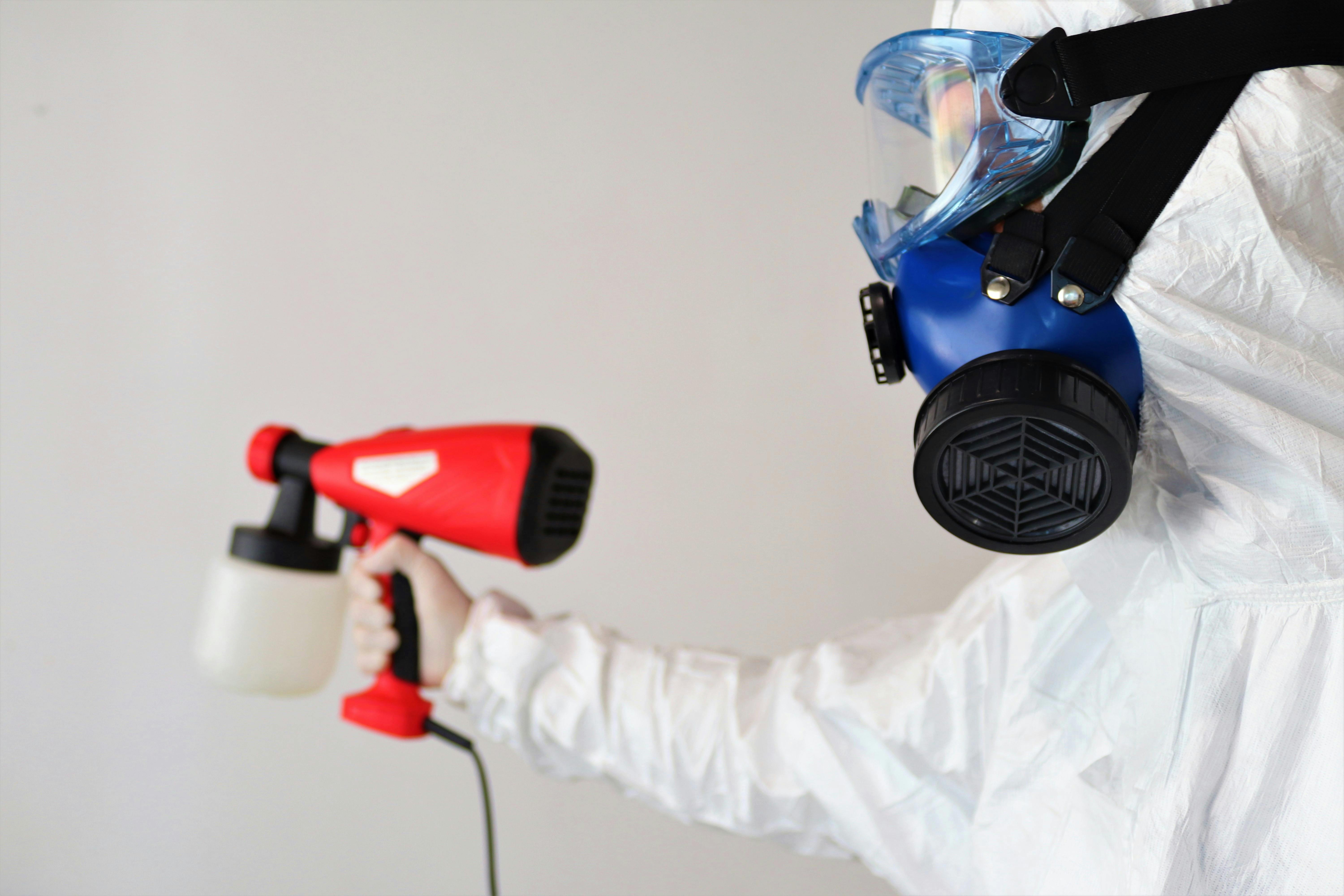
Anthem Pest Control adheres to strict safety protocols. All products used are EPA‑registered and applied at label‑specified rates to ensure minimal exposure. Technicians wear protective gear, keep children and pets out of treatment zones during application, and provide clear post‑treatment instructions—such as waiting 30 minutes before re‑entering the treated area. By prioritizing low‑toxicity options and thorough communication, professionals safeguard the health of the household while eliminating crickets.
What a Typical Service Visit Looks Like
Inspection: The technician conducts a visual walk‑through, uses a flashlight to spot hidden crickets, and notes moisture sources and structural gaps.
Treatment Plan: Based on findings, they recommend a customized mix of barrier sealing, landscape tweaks, and selective chemical applications. A written estimate outlines the steps, pricing, and timeline.
Implementation: Low‑toxicity sprays are applied to identified hotspots, bait stations are positioned, and a perimeter mist is performed around the foundation.
Follow‑Up: One week later, a technician returns to assess effectiveness, refill baits if needed, and advise on any additional habitat modifications. Ongoing quarterly visits keep the cricket population in check year‑round.
Cricket Control Pricing in Woodstock – What to Expect
Understanding how much you’ll pay for cricket control helps you avoid surprise invoices and choose the service that fits your budget. At Anthem Pest Control, we break down every cost component so you know exactly what you’re investing in—whether you need a single knock‑out treatment or ongoing protection throughout the season.
Common Cost Structures
When reviewing cricket control cost Woodstock, homeowners typically choose between two pricing models:
- One‑time initial treatment: A single application designed to eliminate the current cricket population.
- Recurring plans: Monthly or quarterly services that combine treatment with regular monitoring, ensuring any new activity is caught early.
Typical Price Ranges for Woodstock Homes
Based on local data and our field experience, the following ranges represent what most residents pay for effective cricket control:
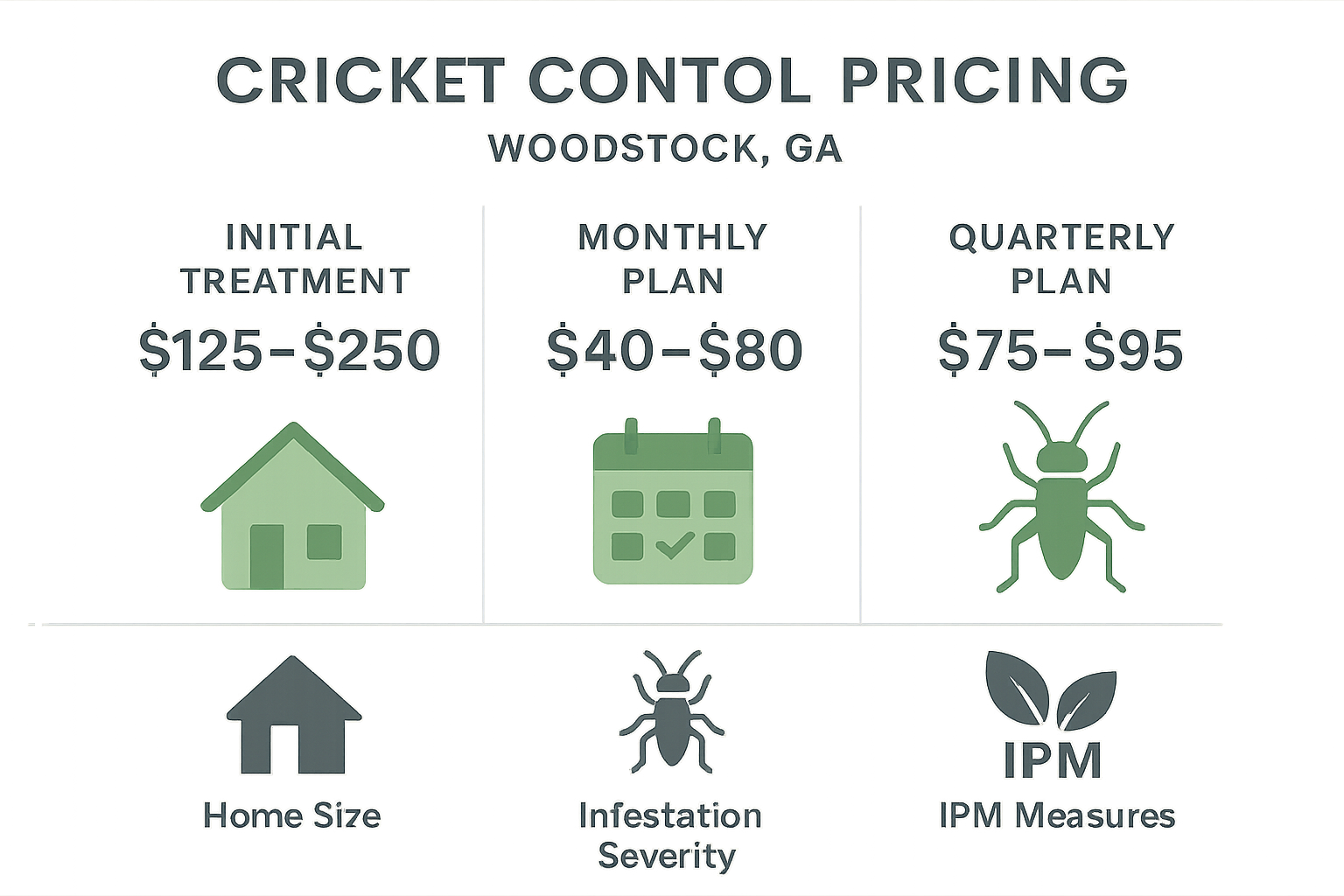
- Initial Treatment: $125 – $250 per visit, depending on home size and infestation level.
- Monthly Plan: $40 – $80 per month, covering a scheduled visit, treatment, and a follow‑up inspection.
- Quarterly Plan: $75 – $95 every three months, which includes a more comprehensive treatment and a detailed progress report.
Factors That Influence the Final Price
When assessing cricket control cost Woodstock, several variables can push a quote toward the high or low end of the ranges above:
- Home size: Larger square footage requires more product and longer labor time.
- Infestation severity: Heavy cricket activity may need multiple applications during the initial visit.
- Integrated Pest Management (IPM) measures: Adding habitat reduction, sealing entry points, or installing physical barriers adds to the service scope.
- Seasonal timing: Early‑season treatments can be priced lower because the population is still building.
Benefits of Each Plan Type
Choosing the right plan goes beyond the dollar amount. Consider these advantages:
- Single‑Shot Treatment: Immediate relief, ideal for homeowners who need a quick fix before a special event.
- Monthly Monitoring: Continuous protection, early detection of re‑infestations, and the flexibility to adjust treatment intensity as needed.
- Quarterly Service: Balanced cost‑to‑benefit ratio, with thorough seasonal coverage and detailed reports that help you track progress.
Evaluating Value Beyond Price
When comparing cricket control cost Woodstock quotes, look for these value-adding factors:
- Guarantees: Many providers offer a satisfaction guarantee or free re‑treatment if crickets return within a set period.
- Technician expertise: Certified technicians who understand local cricket behavior can target hidden breeding sites more effectively.
- Transparent product usage: Knowing which low‑toxicity, EPA‑approved products are applied gives you peace of mind for pets and children.
- Customer support: A responsive service line for follow‑up questions or emergency visits adds intangible value.
By weighing the upfront cost against these quality indicators, you can select a plan that not only fits your budget but also delivers lasting control. Anthem Pest Control’s transparent pricing and locally‑tailored IPM approach make it easier for Woodstock homeowners to protect their homes without hidden fees.
Seasonal Cricket Activity – Timing Your Treatment for Maximum Effect
Crickets in Woodstock follow a predictable life cycle that drives when you’ll hear the familiar evening chirp. Eggs hatch in early spring, nymphs mature through the warm months, and adults emerge in late summer. This is why the loudest activity spikes from July through September, when temperatures consistently sit above 75°F and humidity remains high.
Understanding the Year‑Round Activity Chart
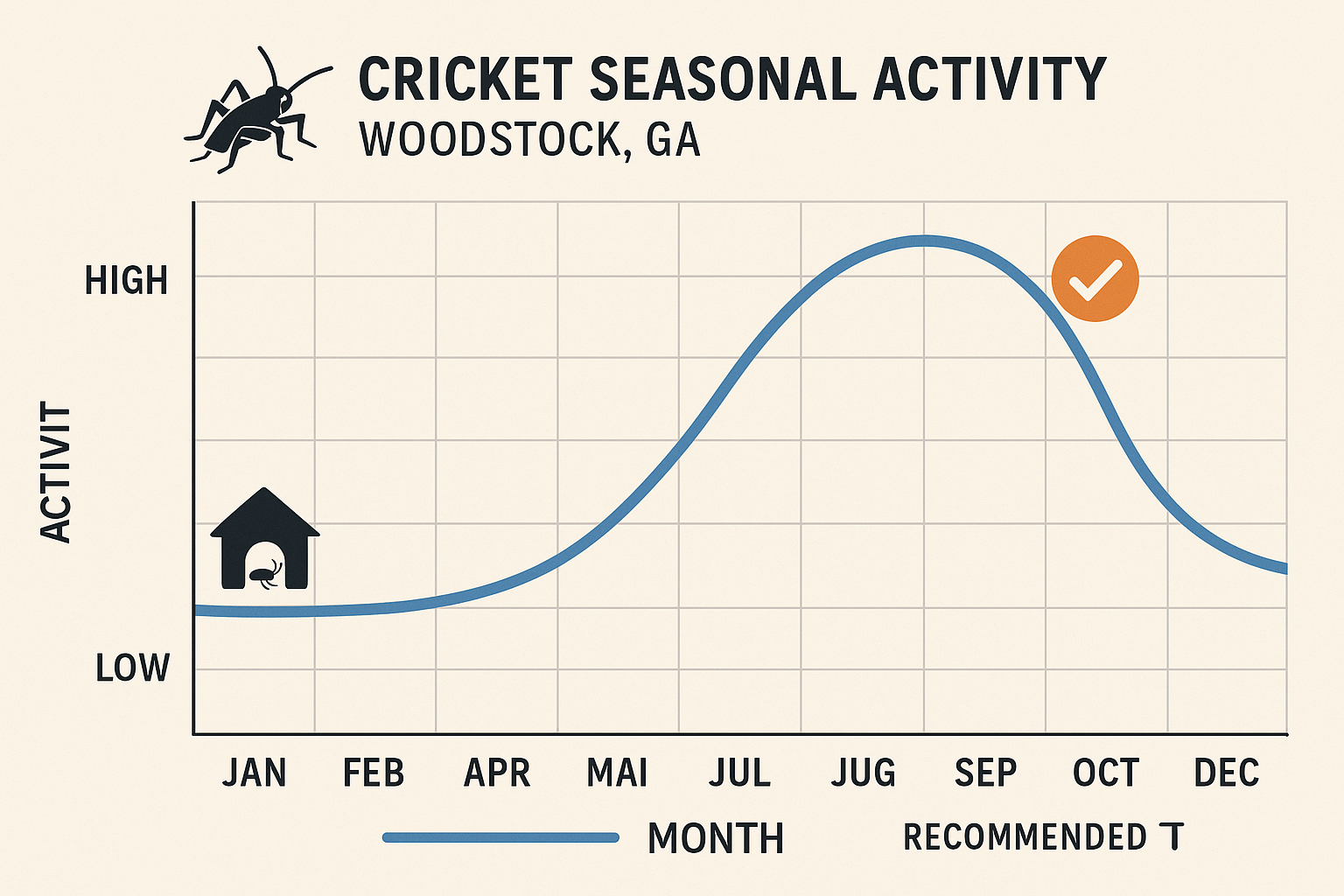
The chart breaks the year into three clear phases:
- January–April: Minimal outdoor activity; eggs lie dormant in soil.
- May–June: Nymphs appear, but numbers are still low.
- July–September: Adult crickets reach peak numbers, creating the notorious nightly chorus.
- October–December: Adults die off, and the cycle resets.
Optimal Treatment Windows
Targeting each phase maximizes control while keeping costs low. Our recommended schedule aligns with the chart’s peaks:
- Pre‑emptive Spring Barrier (mid‑April): Apply a perimeter treatment that creates a chemical shield in the soil and around foundation cracks. This stops emerging nymphs before they can establish colonies.
- Midsummer Interior Spray (late July): Focus on indoor voids, wall voids, and attic spaces where adult crickets congregate. A low‑odor, residual spray keeps the chirping at bay during the busiest month.
- Fall Follow‑up (early October): Treat any remaining entry points and re‑apply a light barrier to catch late‑season stragglers before they lay overwintering eggs.
Seasonal Entry Points and Sealing Tips
Crickets exploit different openings as the weather changes. Knowing where they get in helps you and your technician seal the house effectively.
- Spring: Gaps around foundation vents and drainage pipes open as soil expands.
- Summer: Unscreened windows, attic vents, and eaves become attractive pathways for flying adults.
- Fall: Cracks around exterior doors and utility penetrations widen with temperature fluctuations, allowing overwintering adults to re‑enter.
Seal these points with weather‑resistant caulk, steel wool for larger gaps, and fine mesh screens for vents. A well‑sealed envelope dramatically reduces the amount of pesticide needed, translating to lower invoices.
How a Professional Schedule Saves You Money
Anthem Pest Control coordinates its service calendar with the cricket life cycle, so you never overpay on cricket control cost Woodstock services or pay for a blanket treatment that misses the critical window. By applying a barrier before nymphs emerge, we prevent the exponential growth that would otherwise require multiple interior sprays. The midsummer spray tackles the loudest adults, reducing the need for repeat visits. Finally, the fall follow-up ensures no eggs survive to hatch next spring, cutting future labor and product costs.
When you follow this three‑step timing plan, you’ll notice fewer crickets, quieter evenings, and a more predictable pest‑control bill—exactly the kind of peace of mind every Woodstock homeowner deserves.
Protect Your Woodstock Home with Anthem Pest Control
Crickets may seem harmless, but when they arrive in swarms each summer they become a noisy, unsightly nuisance that can hide in walls, crawl spaces, and outdoor lighting fixtures. Their rapid breeding cycle means a small problem can quickly turn into a full‑blown infestation, especially if left unchecked until the heat of July. Early, professional intervention stops the cycle before it starts, preserving your home’s comfort and curb appeal.
Why Anthem Pest Control Is Your Best Choice
Anthem brings deep local knowledge of Woodstock’s climate and pest patterns, allowing us to target crickets when they’re most vulnerable. Our Integrated Pest Management (IPM) approach blends low‑impact treatments, habitat modification, and ongoing monitoring to keep pests at bay while protecting family and pets. Transparent pricing means you’ll know exactly what you’re paying for—no hidden fees, just a clear, affordable plan that fits your budget.
Comprehensive Protection for Every Season
Beyond cricket control, Anthem offers a full suite of services designed to safeguard your property year‑round:
- Termite inspections and treatments
- Mosquito barrier applications
- Rodent exclusion and removal
- Bed bug eradication
- Ant, cockroach, and other common household pest control
This all‑in‑one strategy means you can rely on a single, trusted partner for every pest challenge, eliminating the need to juggle multiple contractors.
Take the First Step Toward a Cricket‑Free Home
Ready to enjoy a quiet, pest‑free summer? Schedule a free, no‑obligation quote today. One of our certified technicians will assess your property, explain the recommended treatment plan, and answer any questions you have. Call us at 877‑371‑8196 or click the link below to learn more and book your appointment.
Visit Anthem Pest Control for more information on cricket control cost Woodstock and to request your free estimate.