Why Spider Problems Matter in Sugar Hill, GA
Spider control cost Sugar Hill is heavily influenced by the area’s humid subtropical climate—warm summers, mild winters, and plentiful rainfall—which creates a perfect year-round habitat for spiders. The combination of outdoor vegetation, abundant insects, and moisture-rich basements means spiders can thrive in every season, from the sweltering heat of July to the cooler months when they seek shelter inside homes.
Many homeowners cling to the comforting myth that “all spiders are harmless,” but the reality is more nuanced. While most species are indeed beneficial predators, a handful can deliver painful bites, trigger allergic reactions, or simply cause intense psychological discomfort. Black widows, for example, possess neurotoxic venom that can lead to severe muscle cramps and nausea, while the brown recluse’s bite may result in necrotic skin lesions that require medical attention. Even non‑venomous spiders can provoke anxiety, especially for families with young children or pets who might inadvertently disturb a hidden web.
Local pest reports from the Georgia Department of Agriculture and community surveys indicate that roughly 68 % of Sugar Hill households report seeing a spider inside their home at least once a year. In the peak summer months, sightings jump to over 85 % as spiders follow the influx of flying insects. These numbers are higher than the state average, underscoring how the town’s micro‑climate amplifies spider activity.
Leaving a spider infestation unchecked can have hidden costs beyond the occasional bite. Dense webs collect dust, pollen, and even mold spores, which can damage furnishings, block ventilation, and degrade indoor air quality. Moreover, a surge in spider populations often signals a broader insect problem—spiders are attracted to homes teeming with flies, mosquitoes, and cockroaches, so their presence can be a red flag for other pests that may cause structural damage or spread disease. When medical treatment becomes necessary, a single bite can lead to emergency room visits ranging from $150 to $1,200, depending on severity and required follow‑up care.
Beyond health and comfort, the financial impact of an untreated spider problem can creep up quickly. Homeowners may find themselves paying for professional cleaning to remove stubborn webs, replacing damaged fabrics, or investing in broader pest control measures once the underlying insect infestation is uncovered. In the long run, proactive spider management is a cost‑effective strategy that protects both the property and the family’s well‑being.
Understanding the specific spiders that call Sugar Hill home is the next step toward effective control. In the following section, we’ll break down the most common species you’re likely to encounter, how to spot them, and what each one means for your household.
Identifying the Most Common Spiders in Sugar Hill

Living in Sugar Hill means sharing your home with a handful of spider species that are both familiar and, at times, a cause for concern. Knowing how to spot each one can save you a lot of stress—and help you decide when to call a professional. Below is a quick guide to the five spiders you’re most likely to encounter around the house.
Southern House Spider (Kukulcania hibernalis)
Size & Coloration: Adults range from ½ to ¾ inch (including leg span). Their bodies are dark brown to black with a subtle glossy sheen. The abdomen often shows faint, lighter markings.
Web Type & Habitat: Builds messy, funnel‑shaped webs in dark corners, closets, and under eaves. You’ll find them near windows, in basements, or tucked away in crawl spaces.
Health Implications: Their bite is comparable to a mild bee sting—redness, itching, and occasional swelling. Rarely medically significant, but a bite can be uncomfortable.
Seasonal Pattern: Most active from late spring through early fall, especially when indoor humidity rises.
Brown Recluse (Loxosceles reclusa)
Size & Coloration: About ¼ to ½ inch long. Light to medium brown with a characteristic dark violin‑shaped marking on the cephalothorax.
Web Type & Habitat: Constructs irregular, tangled webs in undisturbed places—attics, closets, and behind furniture. Often hides in piles of clothing or stored boxes.
Health Implications: Medically significant. Bites can cause necrotic lesions, fever, and flu‑like symptoms. Prompt medical attention is essential.
Seasonal Pattern: Peaks in late summer and early autumn when they seek cooler indoor shelter.
Black Widow (Latrodectus mactans)
Size & Coloration: Females grow up to 1.5 inches with a shiny black body and a distinctive red hourglass on the underside of the abdomen. Males are smaller and less vividly colored.
Web Type & Habitat: Builds irregular, sticky webs in dark, secluded spots—garage corners, woodpiles, and under eaves.
Health Implications: Bites are neurotoxic. Symptoms include severe muscle cramps, abdominal pain, nausea, and sweating. While rarely fatal, medical care is recommended.
Seasonal Pattern: Most common in the warm months of June through August, when outdoor activity drives them indoors.
Wolf Spider (Family Lycosidae)
Size & Coloration: Large, robust spiders ranging from ½ to 1 inch. Their bodies are mottled gray or brown with a distinctive eye pattern—four small eyes on top and four larger eyes below.
Web Type & Habitat: Does not spin webs to catch prey. Instead, they roam the ground, hiding under rocks, leaf litter, and in garden beds.
Health Implications: Bites cause localized pain, swelling, and mild itching. Not considered dangerous.
Seasonal Pattern: Active year‑round, but most visible in spring and early summer when juveniles emerge.
Orb Weaver (Family Araneidae)
Size & Coloration: Varies widely; many are ½ inch or larger. Often have bright, patterned abdomens—yellow, orange, or white with striking markings.
Web Type & Habitat: Famous for their circular, wheel‑shaped webs found in corners of rooms, porches, and garden fences.
Health Implications: Bites are harmless, typically resulting in a minor red bump.
Seasonal Pattern: Most prolific in late summer when web building coincides with abundant insect prey.
Quick “Look‑and‑Feel” Checklist for Home Inspections
- Size: Measure length (including legs) to narrow down possibilities.
- Color & Markings: Note any distinctive patterns—violin shape, hourglass, or bright abdomen.
- Web Type: Funnel, tangled, wheel, or none at all?
- Location: Dark corners, undisturbed storage, ground level, or outdoor structures?
- Season: Match the time of year with known activity peaks.
By keeping this guide handy, you’ll be able to spot the difference between a harmless orb weaver and a potentially dangerous brown recluse or black widow. When in doubt—especially with brown recluses or black widows—reach out to Anthem Pest Control. Our local expertise ensures safe, effective treatment before a bite becomes a problem.
DIY Prevention Tips to Keep Spiders Out

1. Build Exterior Barriers
Spiders can only enter your home through openings they find. By tightening those entry points you cut off the main highway they use.
- Seal cracks and gaps: Use silicone caulk around windows, doors, utility penetrations, and the foundation. Even a hairline crack can become a spider tunnel.
- Install door sweeps: The space under exterior doors should be no wider than a quarter‑inch. A simple rubber sweep blocks both insects (spider prey) and the spiders themselves.
- Mind the landscaping: Keep mulch, leaf piles, and firewood at least two feet away from the house. Trim shrubs and vines so they don’t brush against walls, creating a bridge for spiders.
- Remove debris: Stacks of boards, old tires, or garden tools are perfect hiding spots. Clear them away or store them off the ground.
2. Adopt Interior Habits That Starve Spiders
Spiders are opportunistic hunters; if there are no insects to eat, they’ll move on. Simple housekeeping habits can dramatically reduce their food supply.
- Declutter: Boxes, piles of clothes, and unused furniture give spiders shelter. Keep storage areas tidy and elevate items off the floor.
- Vacuum regularly: Focus on corners, ceiling edges, and behind furniture where webs often start. Empty the vacuum bag or canister immediately to prevent captured spiders from escaping.
- Control food sources: Clean up crumbs, store food in sealed containers, and take out the trash nightly. Fewer insects mean fewer meals for spiders.
- Manage moisture: Leaky pipes or damp basements attract insects. Fix leaks and use a dehumidifier in high‑humidity rooms.
3. Chemical and Non‑Chemical Deterrents You Can Use Safely
When you need an extra push, a handful of household‑friendly products can keep spiders at bay without harming your family or pets.
- Essential oils: Mix 10‑15 drops of peppermint, citrus, or tea‑tree oil with water in a spray bottle. Lightly mist door frames, window sills, and dark corners. The strong scent overwhelms spider sensory receptors.
- Diatomaceous earth (DE): Sprinkle food‑grade DE along baseboards, under appliances, and in crawl spaces. Its microscopic sharp edges dehydrate any spider that walks across it.
- Indoor sprays: Look for EPA‑registered, low‑toxicity spider repellents. Apply to cracks, behind baseboards, and other hidden pathways, following the label’s safety instructions.
- Sticky traps: Place a few in high‑traffic zones such as closets or under sinks. They capture wandering spiders and give you visual confirmation of activity levels.
4. When DIY Efforts Aren’t Enough
Even the most diligent homeowner can hit a wall. Watch for these warning signs that indicate a professional touch is required.
- Large, dense webs covering entire rooms or corners.
- Frequent sightings despite regular cleaning and deterrent use.
- Any bite‑like reactions, especially from species such as brown‑recluse or black‑widow.
- Infestations in hard‑to‑reach places like attics, crawl spaces, or behind wall panels.
When you notice one or more of these clues, it’s time to call a licensed technician who can assess the scope and apply targeted treatments.
5. A Peek at the Tools Professionals Bring
Technicians from Anthem Pest Control have a toolbox that goes beyond what’s available to the average homeowner. Two of the most effective pieces are:
- Smoke machines: These devices release a fine, pesticide‑infused vapor that penetrates cracks, voids, and wall cavities where spiders hide. The smoke coats the insects and their webs, delivering a quick knock‑down.
- Targeted spot treatments: Using a calibrated applicator, pros apply a low‑volume, high‑potency formula directly to spider harborage zones. This method minimizes chemical use while maximizing impact.
While DIY methods can keep the numbers low, professional tools ensure that any hidden colonies are eliminated, giving you lasting peace of mind.
Professional Spider Control Options and Pricing
When spiders set up shop inside your Sugar Hill home, a DIY spray often only tackles the visible culprits, doing little to reduce the overall spider control cost Sugar Hill homeowners may face over time. A licensed pest-control professional brings the right products, equipment, and expertise to eradicate hidden colonies and keep them from returning. Below is a clear look at the service types Anthem Pest Control offers, how each treatment works, and what you can expect to pay.
Service Categories
- One‑time interior treatment – A single visit focused on the inside of your house, targeting webs, corners, and high‑traffic rooms.
- Quarterly preventive plan – Four visits per year that combine interior treatment with a scheduled exterior barrier, designed to stop new spiders before they cross your threshold.
- Full‑home exterior barrier – A comprehensive spray around the entire property’s perimeter, sealing cracks, doorways, and foundation gaps that spiders use as entry points.
Treatment Methods
Anthem’s technicians choose the method that matches the infestation level and the spider species you’re dealing with. The most common approaches include:
- Residual insecticide sprays – Long‑lasting chemicals that remain active on treated surfaces for weeks, killing spiders that walk across them.
- Dusts – Fine, insecticidal powders placed in wall voids, under appliances, and in crawl‑space cracks where sprays can’t reach.
- Bait stations – Enclosed containers that attract spider prey (like insects) and deliver a lethal dose to the predator.
- Smoke‑machine fogging – A low‑pressure fog that penetrates hidden webs, ceilings, and attics, breaking down silk and delivering a quick knock‑down effect.
Why Choose a Professional?
Professional spider control isn’t just about throwing chemicals at a web. Our licensed technicians bring three core advantages:
- Expertise and certification – Technicians are trained to identify spider species, understand their habits, and select the most effective product for your specific situation.
- Guaranteed results – Most plans include a satisfaction guarantee, meaning we’ll return at no extra charge if spiders reappear within the warranty window.
- Safety for pets and children – We use EPA‑approved products applied at concentrations that are safe for indoor environments, and we follow strict safety protocols during and after each visit.
Pricing Breakdown
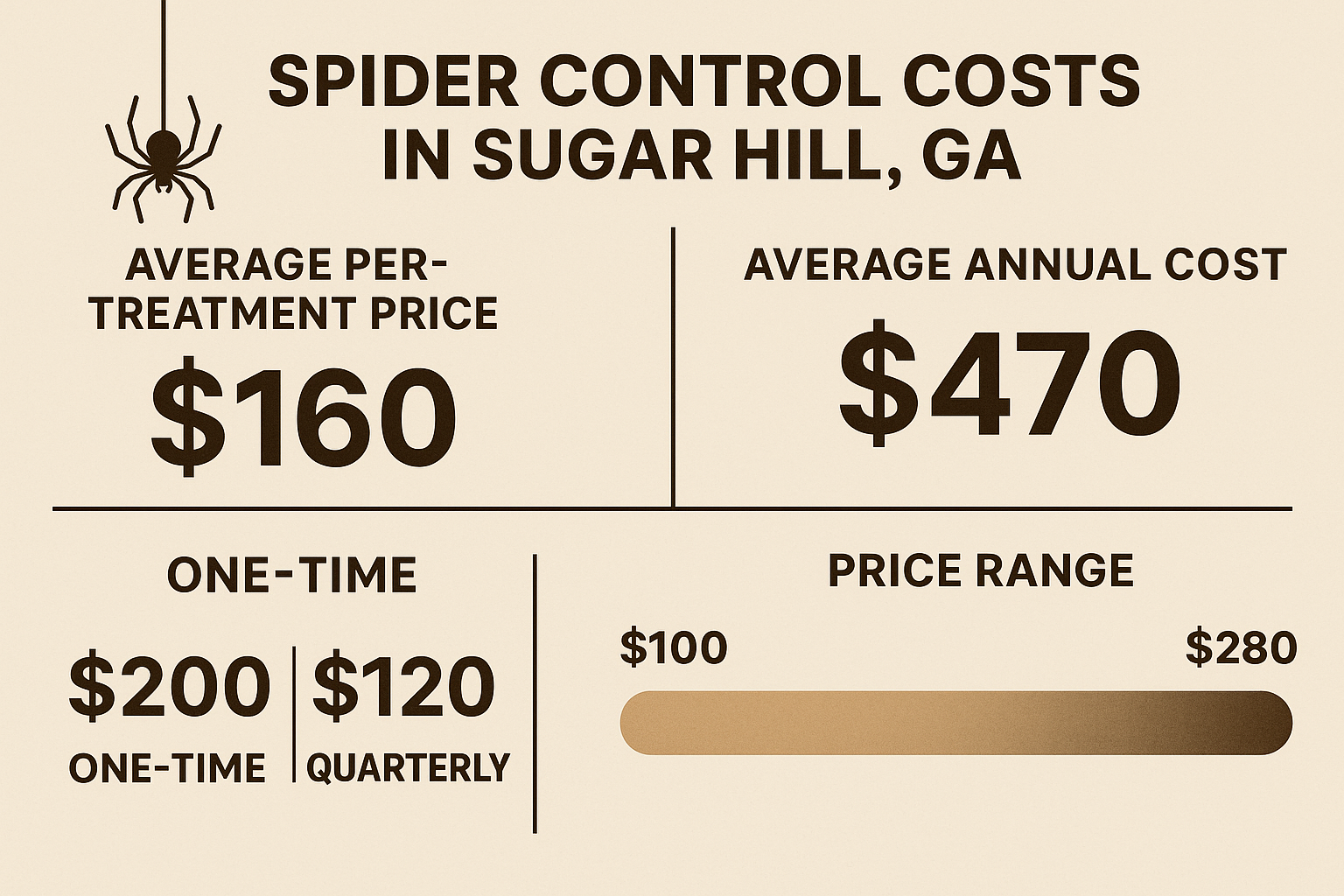
Below is a snapshot of average costs for homeowners in Sugar Hill, GA. Prices can vary based on home size, infestation severity, and any special requests, but the table gives a reliable baseline for budgeting.
| Service Type | Average Cost per Visit | Annual Cost (if applicable) | What’s Included |
|---|---|---|---|
| One‑time interior treatment | $149 – $199 | N/A | Residual spray, dusting, optional fogging |
| Quarterly preventive plan | $119 – $149 per visit | $475 – $560 | Interior spray + exterior barrier each visit, follow‑up inspection |
| Full‑home exterior barrier (single application) | $199 – $259 | N/A | Perimeter spray, crack sealing, foundation treatment |
Comparing the numbers, a one‑time interior visit typically runs about $150, while a quarterly plan spreads the expense over four visits, lowering the per‑visit price and delivering continuous protection. Homeowners who add a full‑home exterior barrier to a quarterly plan can expect an additional $200‑$260 upfront, but the combined approach reduces the likelihood of re‑infestation.
Evaluating Value Beyond the Price Tag
When you’re weighing options, look beyond the headline cost and consider these value drivers:
- Warranty terms – Anthem offers a 30‑day guarantee on one‑time treatments and a 90‑day guarantee on quarterly plans. A longer warranty means fewer surprise visits later.
- Follow‑up visits – Quarterly plans automatically include a post‑treatment inspection to verify that spider activity has dropped and to address any missed spots.
- Customer reviews – Local homeowners often highlight punctuality, thoroughness, and the “spider‑free” feeling that lasts weeks after the final fogging. Checking recent reviews on Google or Angi can give you confidence before you sign up.
- Integrated pest management (IPM) – Anthem’s approach combines chemical treatments with structural recommendations (like sealing vents or trimming vegetation) that lower future pest pressure without extra cost.
By matching the service category to your home’s risk level, and by factoring in warranty coverage, follow‑up inspections, and real‑world customer feedback, you can choose a plan that delivers both peace of mind and a clear return on investment.
Seasonal Spider Activity and Choosing the Right Service
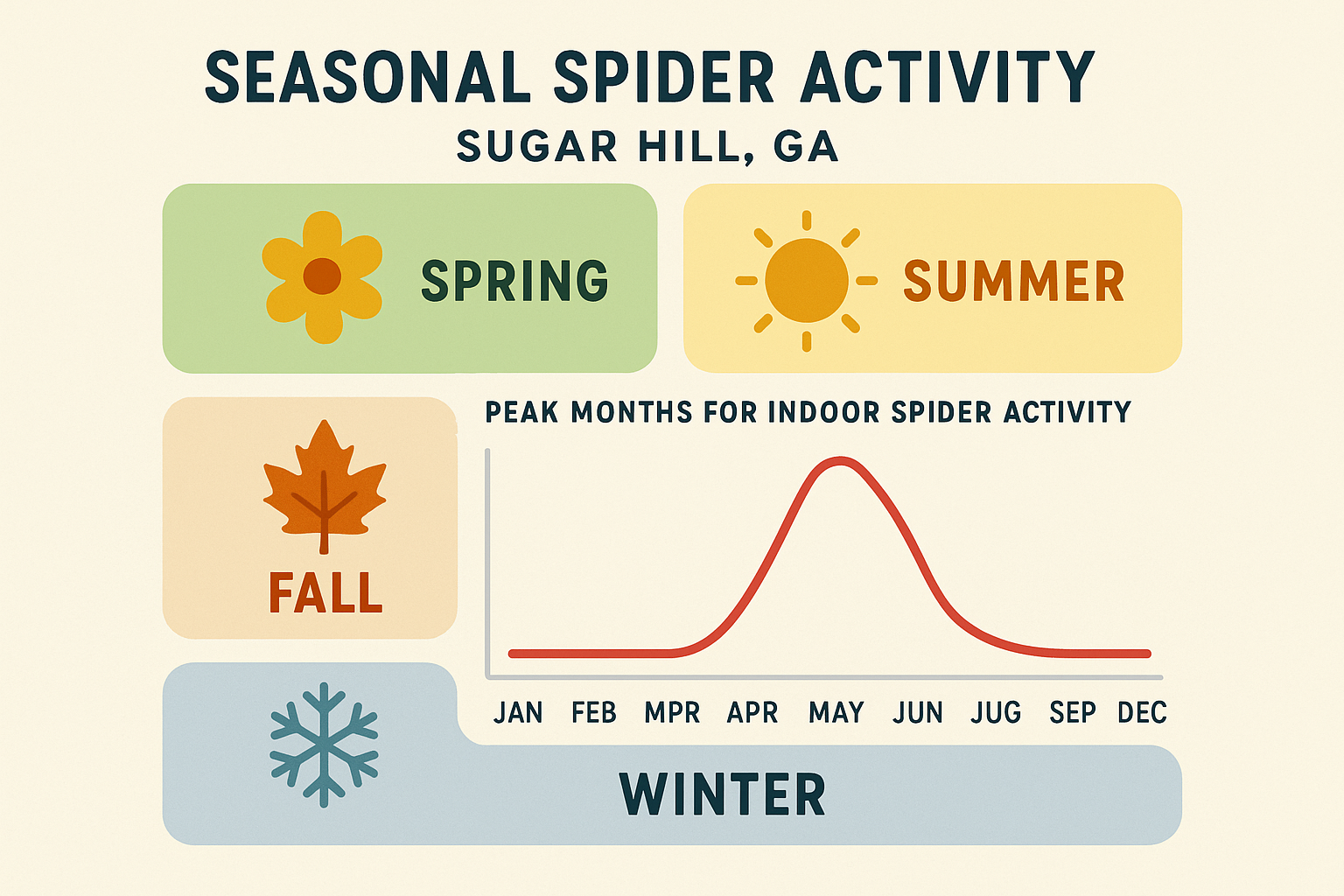
In Sugar Hill, Georgia, spiders follow a predictable rhythm that aligns closely with our weather patterns and daily habits. The chart above shows the two periods when homeowners see the most indoor encounters: a sharp rise in July‑August and a smaller bump in late March to early May. Understanding these peaks lets you intervene before the eight‑legged guests become a nuisance.
Why the Summer Surge Happens
July and August bring the highest humidity and steady nighttime temperatures above 75°F. Warm, moist air creates an ideal breeding environment for common house spiders such as the American house spider and the Southern house spider. At the same time, residents tend to keep windows open for cooling breezes, and HVAC systems circulate indoor air, inadvertently drawing wandering spiders inside.
Spring’s secondary peak is driven by the same temperature rise, but humidity is lower, so the numbers aren’t as dramatic. Still, it’s a crucial window for early‑season species that lay eggs in hidden corners before the summer rush.
Optimal Treatment Windows
- Pre‑summer spray (late May to early June): Apply a perimeter and interior barrier before the July peak. This creates a chemical shield that discourages spiders from crossing into your home.
- Early‑spring application (mid‑March): Target egg sacs and outdoor harborage areas to cut the population before it expands in May.
- Post‑peak follow‑up (late August to early September): A final treatment removes any survivors and tackles newly hatched spiderlings before they settle for the cooler months.
Scheduling these treatments at the right time not only reduces the number of spiders you see but also limits the need for repeat visits, saving you money in the long run.
Checklist for Evaluating Pest‑Control Companies
- Local licensing and insurance: Verify that the company holds a Georgia pest‑control license and carries liability coverage.
- Experience with regional spider species: Ask how many years they’ve treated Southern house spiders, brown recluse, or cellar spiders in the Sugar Hill area.
- Transparent pricing: Look for written estimates that break down service, product, and any follow‑up visits.
- Customer service responsiveness: A reliable provider offers prompt scheduling, clear communication, and a satisfaction guarantee.
- Integrated pest‑management (IPM) approach: Preference should be given to companies that combine chemical barriers with exclusion techniques, such as sealing cracks and advising on proper ventilation.
Real‑World Success: A Pre‑Summer Treatment Case
Meet Laura, a homeowner in Sugar Hill who noticed a steady increase in spider sightings each July. After a quick consultation, she booked a pre‑summer spray in early June with a locally licensed provider. The treatment focused on exterior wall voids, window frames, and indoor corners where spiders often hide.
When August arrived, Laura reported only a handful of solitary spiders—about an 80% reduction compared with previous years. She also appreciated the follow‑up visit in September, which addressed any late‑season hatchlings. The result? Fewer spider webs, less anxiety about bites, and a clear demonstration that timing truly matters.
Putting It All Together
By aligning your pest‑control schedule with Sugar Hill’s seasonal spider activity, you stay one step ahead of the insects that love our humid climate. Use the checklist above to vet potential service providers, and remember that a pre‑emptive treatment—ideally before the July‑August surge—delivers the most noticeable drop in indoor sightings. When you partner with a knowledgeable, transparent company, you protect your home while keeping costs predictable.
Protect Your Home Today with Anthem Pest Control
Why identification, prevention, and professional treatment matter in Sugar Hill
Spiders may look harmless, but many species in Sugar Hill can spin webs in your attic, crawl into basements, or even bite when provoked. Correctly identifying the culprit tells you whether a simple seal‑up will suffice or if a targeted treatment is required. Proactive prevention—like removing clutter and sealing cracks—stops new invaders before they set up shop, while professional treatment eliminates hidden colonies that DIY sprays can’t reach. Ignoring these steps often leads to larger infestations, higher repair costs, and unnecessary stress for you and your family.
Anthem’s expertise you can trust
Anthem Pest Control deploys fully licensed technicians who understand the unique spider species that thrive in the Georgia climate. Our crews use a safe smoke‑machine for immediate knock‑down and follow up with residual treatments that keep spiders at bay for months. Every service comes with transparent pricing, so you’ll never be surprised by hidden fees. Whether it’s a lone brown recluse sighting or a seasonal surge of cobweb‑weaving house spiders, we have the tools and knowledge to act quickly and effectively.
Affordable, effective solutions backed by local knowledge
We know Sugar Hill’s seasonal patterns—spider activity spikes in late summer and early fall when indoor humidity rises. Because we serve the community year‑round, we tailor each plan to the exact time of year, using the most cost‑efficient products without compromising safety. Our commitment to affordable solutions means you receive a comprehensive treatment plan that fits your budget, while still delivering the lasting results you expect from a professional service.
Ready for a spider‑free home?
Don’t wait for a single spider to become a full-blown invasion. Understanding the spider control cost Sugar Hill homeowners may face starts with a proper inspection. Schedule a free, no-obligation inspection today and let Anthem Pest Control craft a personalized treatment plan just for your home. Our friendly team will walk you through every step, answer your questions, and ensure you feel confident about the protection you’re receiving.
Call us now at 877‑371‑8196 or visit anthempest.com to book your inspection. Protect your family, your property, and your peace of mind—let Anthem handle the spiders so you don’t have to.