Why Ants Are a Growing Concern for Buford Homeowners
Buford’s warm, humid summers and mild winters create a perfect playground for ant colonies. The region’s average temperature hovers around 72°F (22°C) with humidity often exceeding 70% during the peak months of June through August. These conditions accelerate the growth of subterranean nests and keep foraging trails active year‑round. For a homeowner, that means ants can establish a foothold quickly—sometimes before you even notice a single worker marching across your kitchen counter.
What an Ant Infestation Can Do to Your Home
Beyond the obvious nuisance, ants pose several real threats:
- Food contamination: Carpenter ants, odorous house ants, and pharaoh ants are attracted to sugary crumbs, pet food, and even grease. Their constant traffic can leave behind bacteria and foul odors that compromise pantry items.
- Structural damage: While termites are the primary wood‑eating pests, carpenter ants excavate galleries in moist or damaged wood. Over time, these tunnels weaken support beams, door frames, and exterior siding.
- Allergic reactions: Some people experience skin irritation or respiratory issues after prolonged exposure to ant bites or the pheromone trails ants leave behind.
Rising Ant Complaints in Buford
Local 311 service data shows a steady climb in ant‑related calls. In 2021, the city recorded 312 reports; by 2023, that number jumped to 382—a 22% increase. Neighbors in the historic district have shared stories of ant swarms appearing after new landscaping projects, suggesting that disturbed soil and mulch provide fresh entry points for colonies.
Red‑Flag Checklist: Spot Ant Activity Early
- Visible trails of small, uniform workers marching between a food source and the outdoors.
- Small, soil‑filled mounds near foundations, sidewalks, or garden beds.
- Fine, dark droppings (ant frass) near pantry shelves or under appliances.
- Sudden appearance of winged ants (alates) during late summer, indicating a mature colony.
Spotting any of these signs early can save you time, money, and the hassle of a full‑scale infestation. In the next section, we’ll dive deeper into the most common ant species you’ll encounter in Buford and how to tell them apart.

Identifying the Ant Species Most Common in Bufton
Carpenter Ants
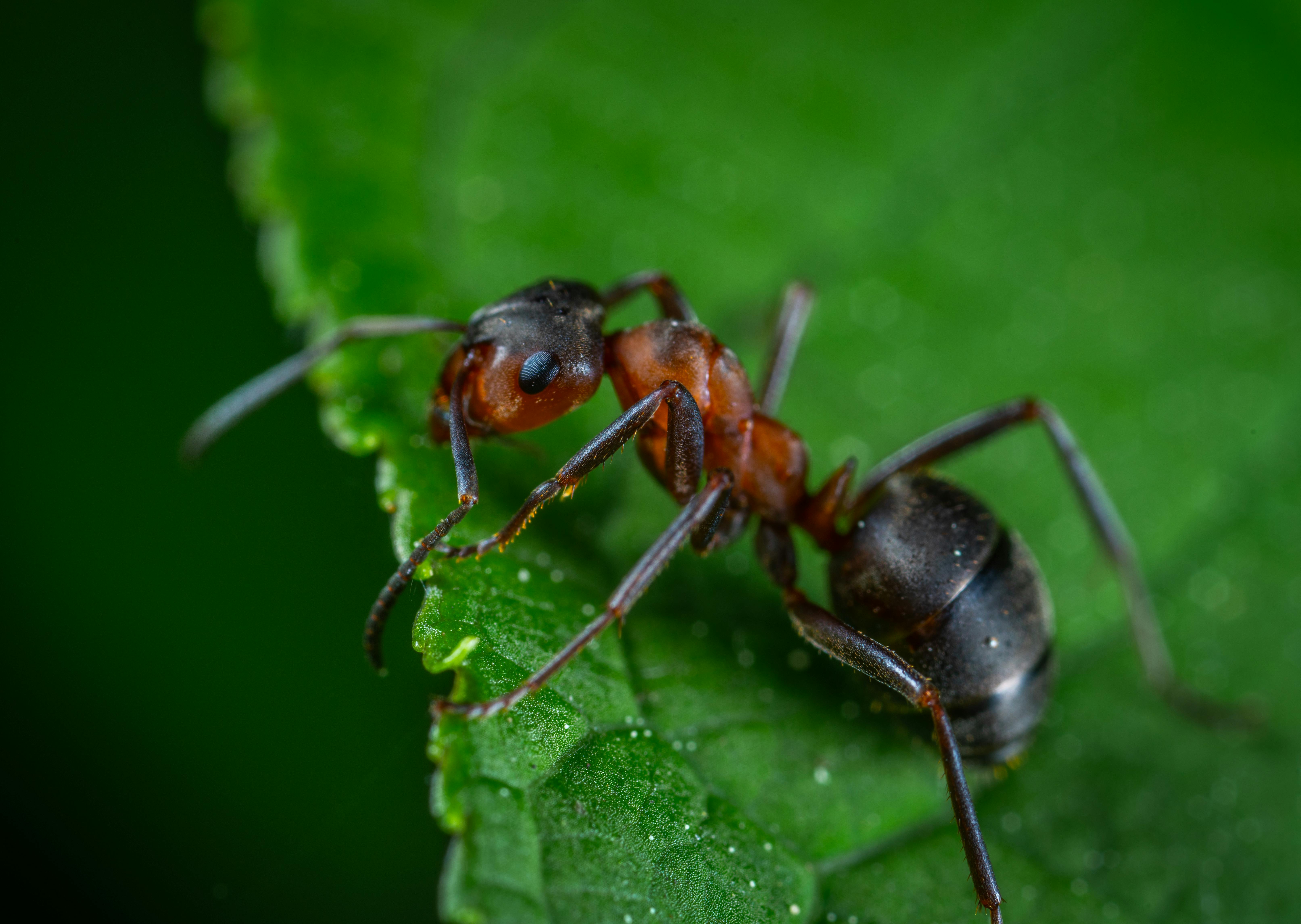
Carpenter ants are the largest of the three, ranging from ½ to ¾ inch in length. Their bodies are glossy black or dark brown, and the thorax often shows a faint reddish‑brown tint. They prefer nesting in damp wood—inside walls, under decks, or in hollow tree stumps.
Foraging pattern: Workers travel in well‑defined trails, especially at night, seeking sugary foods, protein (like dead insects), and honey‑dew from aphids. You’ll often find them near window sills or baseboards where moisture is present.
Risks: While they don’t eat wood, they excavate galleries that can weaken structural components over time, leading to costly repairs if left unchecked.
Pavement Ants
Pavement ants are small, about ¼ inch long, with a dark brown to black head and a lighter brown or reddish abdomen. They build nests under sidewalks, driveways, and in the cracks of foundation walls.
Foraging pattern: These ants are active during the day, forming broad foraging lanes that spill into kitchens. They’re attracted to greasy crumbs, pet food, and sugary spills.
Risks: Primarily a nuisance, pavement ants can contaminate food surfaces and may indicate moisture problems in the foundation that need attention.
Pharaoh Ants
Pharaoh ants are the tiniest, measuring ⅛ inch, with a light yellow‑tan body and darker abdomen. Their nests are highly adaptable—found in wall voids, behind baseboard trim, or even inside electrical outlets.
Foraging pattern: They move in erratic, multi‑directional trails, often inside cabinets and pantries, drawn to sweets, protein, and even the occasional toothpaste.
Risks: These ants are notorious carriers of bacteria; they can spread pathogens from garbage to food prep areas, posing a health concern for families.
Confirming an Infestation
- Follow the trail: Look for continuous lines of ants from the entry point to a hidden nest.
- Check likely nesting sites: Inspect under sinks, behind appliances, and in wall voids for ant activity or discarded wings.
- Use a flashlight: A beam held against walls can reveal the faint glow of ant traffic at night.
- Set up a simple bait: Place a drop of sugar water or a piece of fruit near suspected areas and observe which species is attracted.
- When to call a professional: If you see more than a few foragers, notice damage (especially with carpenter ants), or the infestation recurs after DIY attempts, it’s time to contact Anthem Pest Control. Our technicians can accurately identify the species, locate hidden colonies, and apply targeted treatments that protect both your home and family.
Seasonal Ant Activity in Buford and the Best Times to Treat
Buford’s climate swings between a gentle spring thaw, scorching summer days, and surprisingly mild winters. Those temperature shifts dictate when ants leave their nests, forage, and eventually try to move inside your home. Understanding this rhythm lets you strike before the colonies become a costly problem.
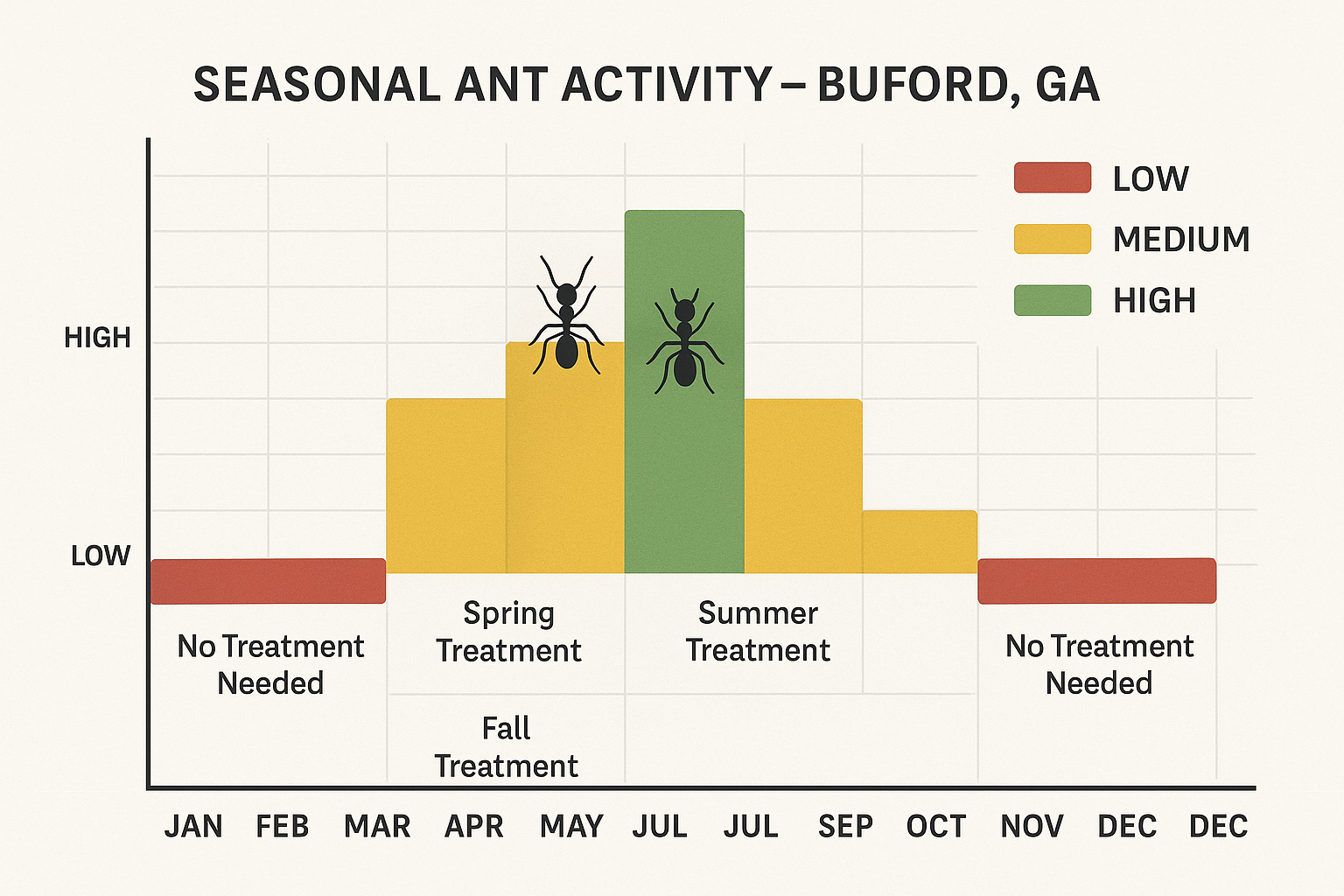
| Month | Activity Level | Key Ant Species |
|---|---|---|
| March – May | High (pre‑nest expansion) | Carpenter, Pavement |
| June – August | Very High (foraging peaks) | Carpenter, Fire, Odorous |
| September – November | Moderate (nest consolidation) | Carpenter, Pharaoh |
| December – February | Low (colony slows) | Carpenter (indoor survivors) |
Pre‑emptive spring spray is the most cost‑effective move. As temperatures rise above 60°F, colonies awaken and send workers scouting for food. A barrier treatment applied in March or early April stops them before they breach your foundation, saving you from multiple follow‑up visits later in the season.
During the summer heat, ants are at their most aggressive. A second, lighter barrier in June reinforces the spring work and tackles any new colonies that may have slipped through. This “summer shield” reduces indoor sightings and keeps your landscaping safe from the damage fire ants can cause.
When fall arrives, ant activity begins to wane, but nests are still full of workers. A deep‑clean treatment in September—targeting nests under decks, mulch, and siding—helps eliminate residual colonies before they go dormant. This timing also prepares your home for the milder winter months when indoor infestations become harder to detect.
Delaying treatment until an infestation is visible often means more chemicals, extra labor, and higher bills. Ants that establish a foothold can damage wood, compromise structural integrity, and even attract other pests like termites. Acting early cuts both the chemical load and the overall cost.
While you wait for the next service window, keep indoor attraction low by:
- Wiping down kitchen counters and vacuuming crumbs nightly.
- Storing pet food in sealed containers.
- Repairing leaky pipes and using dehumidifiers in damp areas.
- Keeping mulch and wood piles at least 12 inches away from the house.
Ant Control Options and Pricing for Buford Residents
Living in Buford means dealing with a variety of ant species—from tiny odorous house ants to aggressive carpenter ants that can damage wood structures. Fortunately, there’s a toolbox of treatment methods that can match any infestation level and budget. Below, we break down the most common approaches, weigh their pros and cons, and show how Anthem Pest Control tailors a solution that protects your home without breaking the bank.
Overview of Treatment Methods
- Chemical Barrier Sprays: A licensed technician applies a residual insecticide around the home’s perimeter, foundation, and entry points. The spray creates an invisible wall that kills ants on contact.
- Baiting Systems: Stations filled with attractant laced with a slow‑acting toxin are placed near trails. Worker ants carry the bait back to the colony, eventually eliminating the queen.
- Eco‑Friendly Products (e.g., Bora‑Care): Low‑toxicity, plant‑based formulas that target ants while minimizing risk to children, pets, and the environment. Ideal for homeowners seeking greener solutions.
One‑Time Treatments vs. Monthly Protection Plans
One‑Time Treatments
- Best for isolated sightings or a single infestation hotspot.
- Immediate knock‑down effect; you see results within hours.
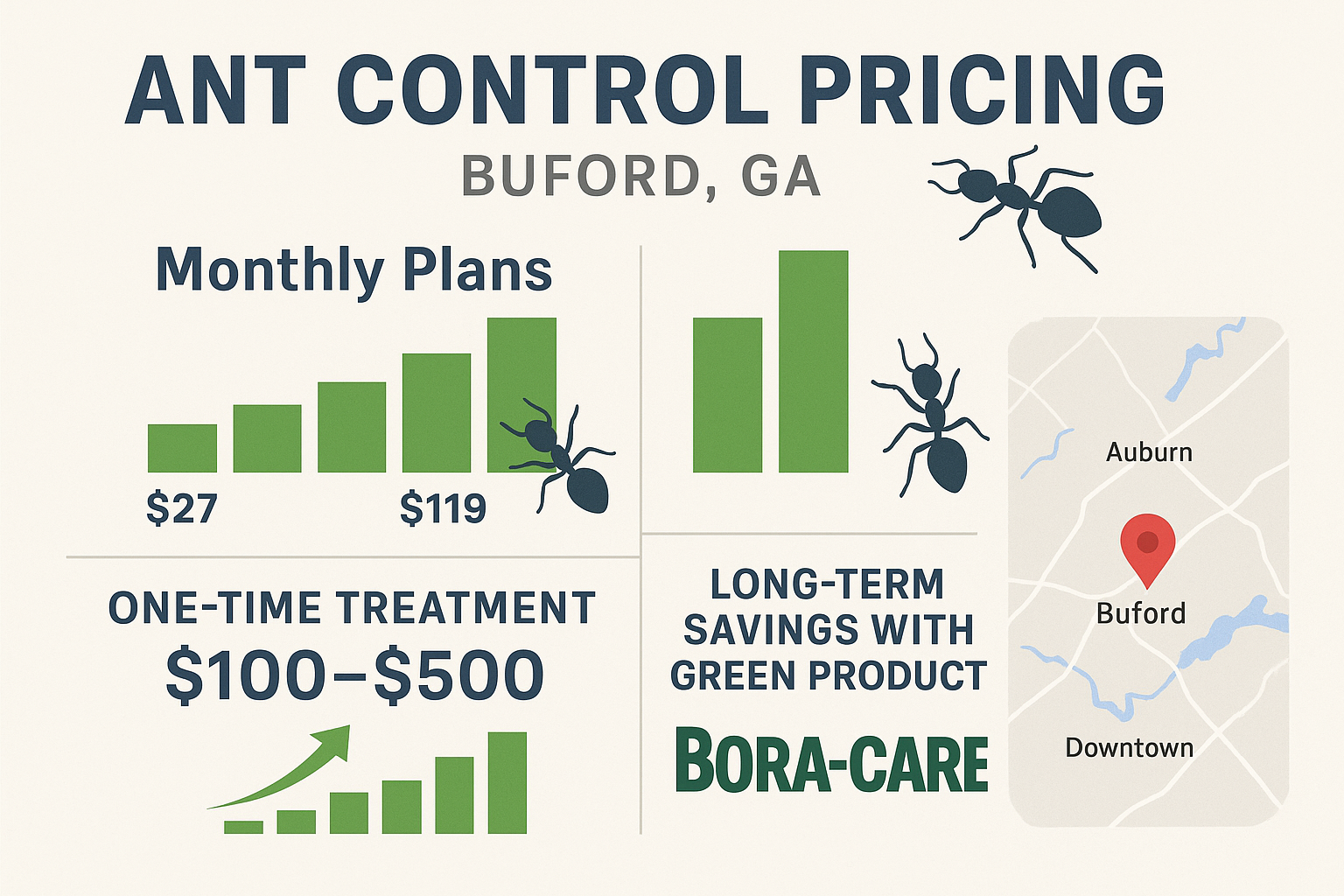
- Higher upfront cost (typically $100‑$500) because the technician applies a full‑strength product and may need multiple visits.
- May require repeat applications if the colony re‑establishes.
Monthly Protection Plans
- Designed for ongoing prevention, especially in homes with recurring ant activity.
- Includes quarterly inspections, barrier re‑applications, and bait replenishment.
- Lower monthly outlay ($27‑$119) spreads the expense and often saves money over two years compared to repeated one‑time services.
- Provides peace of mind—your pest technician monitors changes in ant behavior and adjusts treatment accordingly.
Pricing Tiers at a Glance
| Plan Type | Cost Range | What’s Included |
|---|---|---|
| One‑Time Spot Treatment | $100 – $250 | Single visit, targeted spray or bait placement, post‑treatment report. |
| One‑Time Full‑Home Treatment | $250 – $500 | Comprehensive barrier spray, interior bait stations, follow‑up call. |
| Monthly Basic Plan | $27 – $59/month | Quarterly barrier refresh, 2 bait stations, annual inspection. |
| Monthly Premium Plan | $80 – $119/month | Monthly barrier touch‑ups, unlimited bait stations, priority scheduling, eco‑friendly product option. |
Long‑Term Savings with Green, Low‑Toxicity Solutions
Choosing a product like Bora‑Care may seem pricier per application, but the reduced need for repeated chemical re‑applications can translate into real savings. Green formulas tend to have longer residual activity on porous surfaces, meaning fewer visits. Over a two‑year horizon, a homeowner on the Premium Plan with eco‑friendly products can save up to 15 % compared to conventional chemicals that require quarterly re‑treatments.
How Anthem Pest Control Customizes Your Ant Management Plan
Every Buford home is different—some have cracked foundations, others sit near wooded areas that serve as ant highways. Our technicians start with a thorough inspection to gauge infestation severity, identify the species, and locate the colony’s entry points. From there, we build a proposal that aligns with two key factors:
- Infestation Severity: Light sightings may only need a baiting system, while a large carpenter ant colony warrants a full‑home barrier plus targeted wood treatment.
- Homeowner Budget: We match the chosen method to your financial comfort zone, offering flexible payment options for both one‑time and monthly plans.
Once the plan is set, Anthem Pest Control assigns a dedicated technician who tracks progress, adjusts bait placement, and provides transparent invoices—so you always know where your money is going.
Protect Your Home Today with Anthem Pest Control
Understanding the enemy is the first step to winning the battle. Correctly identifying the ant species, treating at the right season, and knowing the true cost of service are three pillars that keep infestations from returning.
- Ant identification: Different ants require different treatment methods; knowing whether you’re dealing with carpenter ants, odorous house ants, or fire ants guides the right solution.
- Seasonal timing: Spring and early summer are peak activity periods, making early intervention far more effective and economical.
- Transparent pricing: Clear rates prevent surprise fees and let you budget for a lasting, pest‑free environment.
At Anthem Pest Control, our certified technicians bring years of local experience to every job. We use EPA‑approved, low‑toxicity products that protect your family and pets while eliminating the colony at its source. Our pricing model is straightforward—no hidden charges, just a fair rate that matches the scope of work.
Ready to take action? We offer a free, no‑obligation inspection so you can see the problem before any treatment begins. Our team will walk you through the findings, recommend a customized plan, and answer every question you have about safety, timing, and cost.
Give us a call today at 877‑371‑8196 or fill out the online request form. Acting now means you stop ants before they establish a permanent foothold, protecting your home, your food storage, and your peace of mind.
Don’t wait for the next trail to appear—visit Anthem Pest Control and schedule your free inspection now. Our friendly staff is ready to answer any concerns, and our quick response time ensures treatment begins within 24 hours of your call.